Hodges' Model: Welcome to the QUAD: strategy

Hodges' model is a conceptual framework to support reflection and critical thinking. Situated, the model can help integrate all disciplines (academic and professional). Amid news items, are posts that illustrate the scope and application of the model. A bibliography and A4 template are provided in the sidebar. Welcome to the QUAD ...

Showing posts with label strategy. Show all posts

Friday, October 09, 2026

POISONING THE WELL AND SILENCING IN ARGUMENTATION: ONLINE WORKSHOP - Student Commentators Needed!

WE ARE LOOKING FOR STUDENT COMMENTATORS FOR THE ONLINE WORKSHOP ON POISONING THE WELL AND SILENCING IN ARGUMENTATION.

The expressions of interest from student commentators deadline is November 15th (the submission deadline for the associated 
Topoi issue is 15th February) PLEASE SEE BELOW FOR DETAILS!


What is this about?

Among the fallacies traditionally regarded as particularly dangerous, poisoning the well stands out. The literature describes poisoning the well as an argumentative move that consists in providing information about an interlocutor to diminish the credibility of what they have already said, or will say, thereby “poisoning” their ability to contribute - silencing them. Despite the fallacy’s importance, work on it and on silencing in argumentation is limited. 


The Poisoning the Well and Silencing in Argumentation Online Workshop (and the associated call for papers at Topoi) will contribute to filling this gap.


Student Commentators Needed!

We are now looking for student commentators! Student commentators will receive the paper they comment on two weeks before the workshop. Commentaries will be ten minutes long.


Look here (scroll down a little) to find the papers that will be presented at the workshop: 
Critical Thinking and Civic Engagement Lab
.


If you are interested in commenting, please contact Amalia Haro Marchal/Katharina Stevens under 
ahmarchal AT fcsh.unl.pt and katharina.stevens AT uleth.ca by November 15th!


Make sure to state your first, second and third choice for papers to comment on with a short explanation, we will assign based on interest and compatibility!


My source (and via KS): Philos-L "The Liverpool List" is run by the Department of Philosophy, University of Liverpool https://www.liverpool.ac.uk/philosophy/philos-l/ Messages to the list are archived at http://listserv.liv.ac.uk/archives/philos-l.html.

Sunday, April 26, 2026

Invite to an In-person Interactive Workshop to Advance Action on SDoH [Geneva]

Advancing the Social Determinants of Health during the World Health Assembly

Dear Colleague

Is it possible to share in HIFA Network the following announcement?

Thanks a lot for your precious help

Dr Eric Comte Director of the Geneva Health Forum https://genevahealthforum.com

HIFA profile: Eric Comte is Executive Director, Geneva Health Forum, External Affairs Directorate, Geneva University Hospitals. eric.comte AT unige.ch

Bonjour,

We are pleased to invite you to take part in an interactive workshop dedicated to advancing action on the social determinants of health.

Forty years after the Ottawa Charter, there is broad consensus on the importance of health promotion and the determinants of health. Yet, translating this knowledge into effective policies and concrete action remains a major challenge. In a context marked by climate change, growing inequalities, rapid urbanisation and geopolitical instability, the need for more integrated, preventive and equity-oriented approaches has never been greater.

Building on this observation, this session will bring together, NGO, practitioners, policymakers and experts to move beyond general principles and focus on what really enables implementation in practice. Through the exchange of real-world experiences and case studies, participants will collectively identify actionable lessons, key barriers, and practical ways forward.

The expected outcome is a set of clear, operational messages to strengthen collaboration across sectors and support the implementation of strategies addressing the social determinants of health in diverse contexts. The session will also provide an opportunity to identify concrete avenues for further work, including potential projects that the Geneva Health Forum could support.

The workshop will take place on Tuesday 19 May from 9.00 to 12.30 at Campus Biotech in Geneva.

We would be delighted to count on your participation and active contribution to this important discussion.

👉 More information and registration on the link : https://worldhealthassembly2026.genevahealthforum.com/rethinking-determinants-of-health-in-todays-global-context-from-knowledge-to-action/

Space is limited, so only register if you really want to attend.

Registration is free but required so we can print badges and organize the workshop.

Link with the World Health Assembly discussions

This workshop is directly aligned with the strategic discussions taking place at the World Health Assembly, particularly in relation to document EB158/27 on well-being and health promotion. This report highlights the growing recognition of health promotion and the social determinants of health as essential pillars of public health, while also emphasizing the persistent gaps in implementation and the need to strengthen multisectoral action, governance, and measurable impact.

In particular, it calls for better integration of health promotion across the full continuum of policies and systems, stronger cross-sector collaboration, and a renewed focus on addressing structural determinants of health, including through more effective implementation mechanisms and improved coordination across actors.

Our session contributes to this agenda by focusing on practical experiences and implementation challenges, with the aim of identifying concrete, actionable lessons that can help accelerate the translation of global commitments into real-world action. In doing so, it also seeks to feed into ongoing reflections at the global level and to support more effective implementation of the priorities discussed at the World Health Assembly.

You are receiving this message because you are a member of the community HIFA - Healthcare Information For All.

View this contribution on the web site

Sunday, April 19, 2026

c/o HIFA "Help Shape Global Guidance for Rural & Remote Health"

Guidance on Evidence-Based Healthcare Strategies 
to Serve Rural & Remote Communities

Rural and remote communities are not peripheral — they are central to the fabric of our societies.

Through the Communities of Practice for Remote and Rural Health, in collaboration with Rural Wonca, The National Center for Rural Health Professions, Rural Coordination Centre of British Columbia, and Rural Doctors Network, we have developed a draft Guidance on Evidence-Based Healthcare Strategies to Serve Rural and Remote Communities.

Now, we are inviting the wider TUFH Network to help strengthen it.

This draft Guidance: 

  • Brings a rural lens to global health systems 
  • Focuses on access as the defining challenge in rural health 
  • Addresses funding, workforce, infrastructure, culture, and equity 
  • Recognizes socioeconomic overlays and preventable disease burdens 
  • Highlights vulnerable groups, including Indigenous communities, women, the elderly, and people with Disabilities
  • Draws on global case studies from Canada, Australia, South Africa, Thailand, Ethiopia, and beyond
  • Proposes actionable, adaptable strategies grounded in evidence and expert consensus

Importantly, the paper intentionally shifts away from a deficit narrative toward one that recognizes rural strengths, resilience, and community-driven solutions.

We Need Your Input

We are seeking feedback that helps us ensure this Guidance is: 

  • Globally relevant across diverse rural contexts 
  • Practical and implementable 
  • Inclusive of LMIC realities 
  • Clear in its recommendations 
  • Strengthened by lived experience and frontline practice

Through the consultation survey, we are specifically inviting your reflections on: 

  • Clarity of definitions (e.g., rurality, generalist workforce, access)
  • Gaps in evidence or missing priority issues 
  • Feasibility of implementation strategies 
  • Cultural responsiveness and community engagement 
  • Additional case studies or models to include 
  • Areas needing further research or clarification

Your expertise — whether as a policymaker, academic, practitioner, community leader, or advocate — is essential.

We request your input in any of the following forms by April 30th.

Specific Feedback Forms (Deadline for Feedback is April 30th)

Access Draft Paper 📑<https://thenetworktufh.us9.list-manage.com/track/click?u=742357d7350b0bf9f9591c8ab&id=2d170bf5cf&e=95c553a647>

1. If you have any suggestions on specific content, additional references to cite existing or new information, or other updates, please fill out this form:

Guidance Document - Content Body – Fill out form 📝<https://thenetworktufh.us9.list-manage.com/track/click?u=742357d7350b0bf9f9591c8ab&id=ff3084197e&e=95c553a647>

2. If you have any specific information that can be used to include solutions and successes that could better reflect rural realities for each of the document sections, please fill out this form:

Guidance on evidence-based healthcare strategies to serve rural and remote communities. – Fill out form 📝<https://thenetworktufh.us9.list-manage.com/track/click?u=742357d7350b0bf9f9591c8ab&id=392220cca9&e=95c553a647>

3. If you have specific lessons from regions that can be included in the Guidance Document, please fill out this form:

Guidance Document - Lessons Learned from Different Regions – Fill out form 📝
<https://thenetworktufh.us9.list-manage.com/track/click?u=742357d7350b0bf9f9591c8ab&id=de2ab21951&e=95c553a647>

4. If you have specific evidence that can be used to describe the relative contribution of patient factors and access factors in rural disease, please fill out this form:

Evidence-based relative contribution of patient and access factors for rural disease – Fill out form 📝<https://thenetworktufh.us9.list-manage.com/track/click?u=742357d7350b0bf9f9591c8ab&id=3d8527953c&e=95c553a647> 

Communities of Practice

Why This Matters

Health disparities in rural and remote communities are rarely about incidence alone. They are about access, equity, and systems design.

This Guidance aims to support: 

  • Policymakers designing rural-responsive systems 
  • Health workforce planners 
  • Universities and training institutions 
  • Community health leaders 
  • Global partners advancing Universal Health Coverage

Join us at TUFH 2026 in Manila, Philippines
https://tufh2026.com/

We look forward to welcoming you for TUFH 2026! 

If you need assistance with registration or have any other questions, please contact -
secretariat AT thenetworktufh.org

Join The Network: Towards Unity For Health (TUFH): https://thenetworktufh.org/

You are receiving this e-mail from the Office of the Secretariat from The Network: Towards Unity For Health

Our mailing address is: The Network: Toward Unity for Health (TUFH) 970 Sproul Road Bryn Mawr, PA 19010

My source:  David Cawthorpe via HIFA -
HIFA profile: David Cawthorpe is Adjunct Assistant Professor at the University of Calgary, Canada. His professional interests include: Human Development, Developmental Psychopathology, and Delivery of low bandwidth medical education curriculum. cawthord AT ucalgary.ca

Monday, January 26, 2026

'Drama classes help GPs handle difficult patients' c/o BBC

'Hull Truck Theatre has just won the Innovation prize at the Stage Awards for their new training scheme for GPs. Associate Director Tom Saunders and GP Dr Eman Shamsaee discuss why drama classes are helping doctors treat patients.' 

BBC Radio 4 'Front Row' https://www.bbc.co.uk/sounds/play/m002q2jz (15 mins ...)

◇

Holly Phillips, East Yorkshire and Lincolnshire and Ian Youngs, Culture Reporter

Published - 21 January 2026

'A theatre company is using drama training to help doctors deal with challenging patients.

Hull Truck Theatre's classes feature actors performing difficult GP consultations, with GPs giving feedback before taking over the consultation themselves.

The theatre recently won the Innovation Award at the Stage Awards for the programme.

Dr Eman Shamsaee, who has taken part in the training scheme, described it as a "really creative way of doing GP training".'

BBC News:  Drama classes help GPs handle difficult patients

INDIVIDUAL
|
 INTERPERSONAL    :     SCIENCES               
HUMANISTIC --------------------------------------  MECHANISTIC      
SOCIOLOGY  :   POLITICAL 
|
GROUP


The training programme has completed its pilot stage and is now in the delivery phase


A reminder of co-working to deliver STORM training with a Clinical Psychologist colleague. 

See also: 'communication' : 'primary care' : 'GP' : 'drama'

Thursday, August 21, 2025

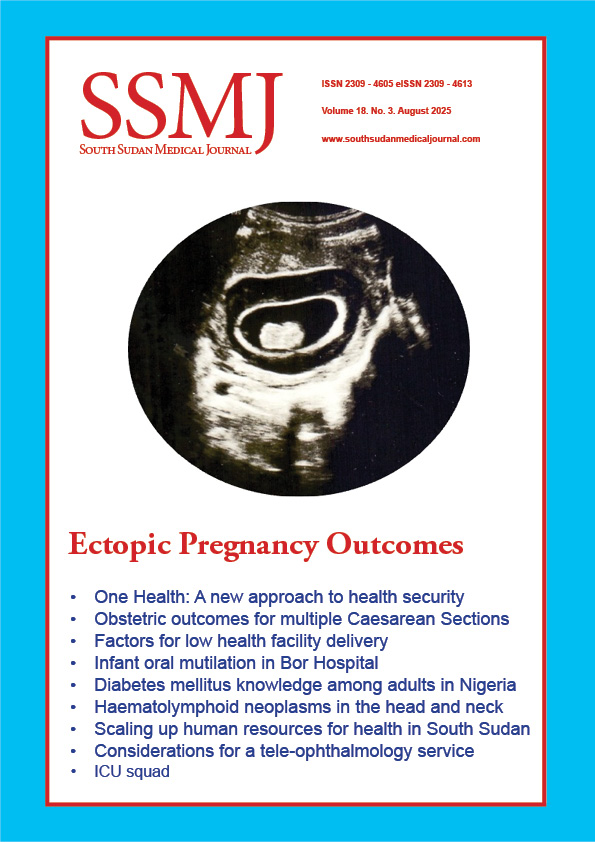
South Sudan Medical Journal. August 2025 18:3.

Dear Reader,

The full issue of our August 2025 issue is now available online here; the articles are listed below.

Also note that SSMJ is looking for a volunteer with time and interest in South Sudan, and experience in academic editing to join our Editorial team.

Editorial

Research Articles

Review Articles

  • A review of recent publications on haematolymphoid neoplasms in the head and neck region Karthik Shunmugavelu and Arun Vijaianandh A.
  • Scaling up human resources for health in South Sudan: A strategic imperative for achieving universal health coverage Gabriel Loi
  • Eyes in the sky: Considerations for a tele-ophthalmology service in South Sudan Garang M. Dut

Case Reports

  • Ectopic gestational-sac encapsulated in an ovarian cyst: A case report  Adam Moyosore Afodun, Alain Jabo, Mecthilde Mukangendo, Akeem Ayodeji Okesina, Olivier Mizero, Emmanuel Adeyemi Odumeru and Khadijah Kofoworola Quadri
  • Death due to ruptured tubal pregnancy: A case report P. Vinod Kumar 
  • ICU Squad: A possible solution for critical care service in low-resource areas Esraa Suliman Omer Abdelmageed and Ihab B Abdalrahman

Short Communications

  • The role of government in advancing private hospitals to improve healthcare services in South Sudan Jok Thikuiy Gang
  • 10th East African Health and Scientific Conference
  • Letter to the Editor: Self-medication Thomas Akuith Ngong 
  • Obituaries: Dr Baba Allan Ngachigoi Lanyanga and Dr Abdu Mohammed Abdudrbo Gilo
  • Call for Abstracts: Association of Surgeons of South Sudan First Scientific Conference

We thank the copyeditors and reviewers who helped prepare these papers. 

Articles in SSMJ are indexed by Scopus,  African Journals Online (AJOL), and the  Directory of Open Access Journals (DOAJ), and as well as being on our website. SSMJ is included in the EBSCO scientific research collection.
 
Thanks to everyone who supports SSMJ. Invite your colleagues to join our mailing list here.
 
The SSMJ team
Email: southsudanmedicaljournal AT gmail.com 
Website: http://www.southsudanmedicaljournal.com
Follow us on X  @SSMedJournal and our Facebook Group,

SSMJ is published by the Health and Social Science Research Institute of South Sudan (HSSRI-SS)
All links provided at - 
https://www.southsudanmedicaljournal.com/archive/august-2025/

Friday, March 28, 2025

Africa's Nutrition Movement: Seizing the Window with Primary Health Care

Africa's mission to eliminate malnutrition is more critical than ever. Bubbling down the high level commitments to strategic programmable goals will be critical at primary health care and community levels.

The continent has made significant progress in recent years, but the COVID-19 pandemic has highlighted the need for sustained efforts to address the complex issues surrounding malnutrition, particularly for women and children as we build traction to meet the sustainable development goals by 2030.

"The year 2025 will also be significant as it marks the end of the UN Decade of Action on Nutrition. N4G Paris will serve as a multi-stakeholder summit, advocating for ambitious financial and political commitments and fostering dialogue among diverse actors from around the world, including governments, international organizations, research institutions, civil society organizations, philanthropies, private sector entities, and more." - #N4G

Connecting dots is a a key imperative as we build Africa's nutrition movement. One of them is viewing nutrition from a programmable health systems lens. Have we given this enough traction ?

"The N4G conference presents a crucial opportunity for Africa to gain traction on its mission to eliminate malnutrition. The conference aims to mobilize ambitious financial and political commitments, foster dialogue among diverse stakeholders, and put nutrition at the center of the sustainable development agenda." - United Nations SDGs Professional Support Group for Africa

One of the key lessons from COVID-19 is the importance of strengthening health systems, particularly at the primary healthcare level. The pandemic has exposed weaknesses in many health systems, highlighting the need for increased investment in health care infrastructure, workforce, and services which will ultimately impact on nutrition delivery at the base of the health system.

The upcoming Africa Primary Health Care Forum , scheduled for Abuja on July 14-15, 2025, will provide a platform for stakeholders to discuss the importance of primary health care(PHC) in achieving universal health coverage (UHC) and health security, as well addressing malnutrition in PHC systems. The forum will also explore the role of digital health, digitised workforce, partnerships and financing in strengthening primary healthcare systems and improving general health outcomes.

More details continued at: https://www.phc.africa/

Tuesday, December 10, 2024

Webinar: 11 December - Universal Health Coverage (UHC) Day 2024

"The UHC Compass and Social Participation:
empowering patient organisations to hold governments
 accountable for universal health coverage"

Register for the UHC Compass launch!

To mark Universal Health Coverage (UHC) Day 2024, IAPO will officially launch the UHC Compass at an exciting webinar titled "The UHC Compass and Social Participation: empowering patient organisations to hold governments accountable for universal health coverage" on 11 December 2024, from 11:30 to 13:00 GMT via Zoom.

The webinar will be conducted in English with simultaneous interpretation into Spanish.

Panellists include:
  • Dani Mothci – International Alliance of Patients’ Organizations (IAPO) 
  • Dr Pamela Cipriano – UHC2030 & International Council of Nurses
  • Lara Brearley – Special Programme on Primary Health Care Universal Health Coverage - Life Course, World Health Organization
  • Dumiso Gatsha – Success Capital NGO & Civil Society Engagement Mechanism for UHC2030 (CSEM)
  • Nicola Bedlington – Global Patient Think Tank & Millwater Partners
  • Smitha Sadasivan – Global Patient Think Tank, Inclusive Health Policy, Disability Rights India Foundation & CSEM 
  • Paul Mendoza – Psoriasis Philippines and Psoriasis Asia Pacific & IAPO
The UHC Compass is a dynamic tool created by patients for patients, empowering local leaders and communities to advance universal health coverage (UHC). In the context of the World Health Assembly resolution on social participation and UHC Day 2024, this session will explore how the Compass can serve as a tool to hold governments accountable for investing in UHC.

Co-created by the Global Patient Think Tank (GPTT), a diverse group amplifying the patient voice in the UHC movement, the Compass is proudly hosted by IAPO. Our mission is to ensure this resource reaches and benefits our global network of patient organisations.

Join us to discover how the UHC Compass can help make UHC a reality for everyone!

Learn more & register [https://www.iapo.org.uk/node/15686] Share https://iapo.cmail19.com/t/d-fb-sfiudt-iuqjytrli-o/ Tweet https://iapo.cmail19.com/t/d-tw-sfiudt-iuqjytrli-b/ Share [https://iapo.cmail19.com/t/d-li-sfiudt-iuqjytrli-h/]

[http://www.iapo.org.uk]

The International Alliance of Patients’ Organizations is registered in England and Wales as charity no.1155577 and company limited by guarantee no.08495711.

Registered office: Hounslow House, 7 Bath Road, Hounslow TW3 3EB, UK.

It is also the IAPO's 25th Anniversary.
More details at:

https://www.iapo.org.uk/node/15687

I will post again in the New Year.

My source: HIFA

Previously: compass : UHC : patients

Thursday, July 18, 2024

A Workforce Strategy for Adult Social Care in England

"For the first time ever, the adult social care sector has come together, led by Skills for Care, to develop the Workforce Strategy it needs. Adult social care needs a workforce strategy to ensure we have enough of the right people with the right skills to provide the best possible care and support for the people who draw on it. 
Development of this vital Strategy has been truly collaborative and it could not have been developed without the expertise, time and commitment of many stakeholders."
Individual
|
      INTERPERSONAL    :     SCIENCES                   
HUMANISTIC  --------------------------------------  MECHANISTIC      
 SOCIOLOGY  :    POLITICAL 
|
Group
Job satisfaction

Personalisation - Belongings

Motivation

Attitudes, Opportunities, Incentives

Access to Training


Activities, Reablement

Arts, Dance, Music

Dental and other services

Systems view - Demographics

Collaboration / Liaison


Social Care: At home & residential care

Job status

Local community, schools

Funding of Social Care

Integrated & Person-centred Care

Workforce strategy

Pay - terms and conditions

Government policy

Workforce recruitment & retention:

National - International


Source: Email - Skills for Care and BBC Radio 4 Today.

Friday, May 03, 2024

Help us build the future - Medical Aid Films' Annual Survey 2024

On Tuesday, 30 April 2024 at 14:37:02 BST, Helen Coombe, UK <helen AT medicalaidfilms.org> wrote:

At Medical Aid Films, we are asking ourselves how we can respond to the scaling up of innovative digital information and communication technologies whilst continuing to place our primary audiences at the centre of our work – ‘ensuring people-centred systems that are enabled by digital health[i]’, one of the objectives of the WHO Digital Health Strategy 2020 – 2025. It is important to us that any digital strategy reflects the needs and aspirations of the healthcare professionals we serve. We invite any healthcare professional to complete our 2024 online annual survey to help inform forthcoming digital initiatives. Your insights will provide us with a comprehensive understanding of what matters most around training and health education and how we can best serve your needs. 

c/o Medical Aid Films 

The survey can be accessed here - now closed.

the deadline to respond is Monday 13th May. 

Thank you for helping support our work.


[i] WHO Global strategy on digital health 2020-2025, https://www.who.int/health-topics/digital-health#tab=tab_1


Helen Coombe, Head of Research, Monitoring, Evaluation and Learning. Medical Aid Films, c/o Zavros Mintikkis Associates Ltd, 1st Floor, 446a Green Lanes, London, N13 5XD

HIFA* profile: Helen Coombe is Head of Evaluation and Research at Medical Aid Films, UK.

helen AT medicalaidfilms.org

*My source.

Wednesday, August 03, 2022

The Phillips Ives Review

Call to action:  please share widely across your networks.  If you would like our comms pack to promote the review in your organisations in health and social care, please let me know.  

The Phillips Ives Review has launched and will provide evidence and inform strategy; ensuring that nurses and midwives are given access to the knowledge, skills and education required for safe, effective digitally-enabled practice.

We’d like to invite anyone working in nursing or midwifery practice, or interested in this area to share your ideas, case studies and experiences on our engagement platform until 21 August. 


"The Phillips Ives Review was launched virtually on 26 May 2022 by its Chair, Dr Natasha Phillips, Chief Nursing Information Officer (CNIO), NHS England and International Vice-Chair Dr Jeanette Ives Erickson (USA).

This year long in-depth study will identify what is required to enable the meeting of the CNIO NHS England's aims for Nurses & Midwives:

  • To ensure nurses and midwives are empowered to practice and lead in a digitally-enabled health and social care system, now and in the future.

  • To ensure nursing and midwifery practice is fully supported by the use of digital technology and data science.

The Review will bring together national and international experts with expertise in nursing and midwifery and beyond, to investigate, critically appraise and make recommendations to ensure the breadth of ambition and scope of future practice of the pre and post registration nursing and midwifery workforce is captured."


My source: FutureNHS - https://future.nhs.uk//home/grouphome

Wednesday, July 20, 2022

Reflecting on The Times Education Commission 2022

"At the Apple headquarters in Cupertino, California, Susan Prescott, vice-president of enterprise and education marketing, argued that economic prosperity depended on human ingenuity. “Creativity doesn’t mean ‘Have a music and an arts class’. Creativity means across disciplines, how can you bring in ways for kids to engage in the material differently? How do you bring in opportunities for kids to reflect their learning in new ways? How do you use it to get a different, broader view rather than the fact-based stuff?" p.58. (with my emphasis and below)

Included in the 12-point plan for education:

1 A British Baccalaureate

It would offer broader academic and vocational qualifications at 18, with parity in funding per pupil in both routes, and a slimmed-down set of exams at 16 to bring out the best in every child.

2 ‘Electives premium’

This should be offered for all schools to be spent on activities including drama, music, dance and sport and a National Citizen Service experience for every pupil, with volunteering and outdoor pursuits expeditions to ensure that the co-curricular activities enjoyed by the most advantaged become available to all.

3 New cadre of Career Academies

These would be elite technical and vocational sixth forms with close links to industry, mirroring the academic sixth forms that are being established and a new focus on creativity and entrepreneurialism in education to unleash the economic potential of Britain.

4 Significant boost to early years funding

The extra funding should be targeted at the most vulnerable. A unique pupil number would be given to every child from birth, to level the playing field before they get to school. Every primary school should have a library.

5 Army of undergraduate tutors

The students would earn credit towards their degrees by helping pupils who fall behind to catch up.

6 Making the most of tech

A laptop or tablet for every child, greater use of artificial intelligence in schools, colleges and universities to personalise learning, reduce teacher workload and prepare young people better for future employment.

7 Wellbeing at the heart of education

A counsellor should be placed in every school and an annual wellbeing survey of pupils carried out to encourage schools to actively build resilience rather than just support students once problems have arisen.

8 Bring out the best in teaching

The profession’s status and appeal would be increased with better career development, revalidation every five years and a new category of consultant teachers, promoted within the classroom, as well as a new teaching apprenticeship.

9 A reformed Ofsted

Ofsted should work collaboratively with schools to secure sustained improvement, rather than operating through fear, and a new “school report card” with a wider range of metrics including wellbeing, school culture, inclusion and attendance to unleash the potential of schools.

10 Better training

Teachers should be trained to identify children who have special educational needs, a greater focus should be placed on inclusion and a duty put on schools to remain accountable for the pupils they exclude to draw out the talent in every child.

11 New university campuses

New campuses should be created in 50 higher education “cold spots”, including satellite wings in further education colleges. In addition, pay and conditions in the FE sector should be improved and a transferrable credit system between universities and colleges created to boost stalled British productivity.

12 A 15-year strategy for education

The strategy should be drawn up in consultation with business leaders, scientists, local mayors, civic leaders and cultural figures, putting education above short-term party politics and bringing out the best in our schools, colleges and universities.

Obviously idealised but mapped here to Hodges' model the long-term - policy, strategic, funding, resource and workforce emphasis is apparent.

INDIVIDUAL
|
 INTERPERSONAL    :     SCIENCES               
HUMANISTIC --------------------------------------  MECHANISTIC      
SOCIOLOGY  :   POLITICAL 
|
GROUP

7 Wellbeing at the heart of education

reflection
critical thinking,
communication
and creativity


2 ‘Electives premium’
(outdoors) ...

6 Making the most of tech

7 Wellbeing at the heart of education


2 ‘Electives premium’
(drama, music, dance) ...


1 A British Baccalaureate

2 ‘Electives premium’
(National Citizen Service experience)

3 New cadre of Career Academies

4 Significant boost to early years funding

5 Army of undergraduate tutors

8 Bring out the best in teaching

9 A reformed Ofsted

10 Better training

11 New university campuses

12 A 15-year strategy for education


What, if anything, is missing?

With its recommendations, the Commission is not intended to be prescriptive, specifying educational methods, methodologies and resources. But the aims and mapping above, point to the need to link education and health as per #7 Wellbeing at the heart of education. 

There is surely an avenue here - via the sustainable development goals, which the UK must also 'achieve'. Consider the following too:

"The system doesn’t measure creativity; it measures what you can remember of other people’s facts.” p.11.

"A British Baccalaureate at 18, an equally rigorous but broader qualification than A-levels with academic and vocational options under the same umbrella. Pupils studying for the academic Diploma Programme would take six subjects — three major, three minor — covering humanities and sciences as well as units on critical thinking, communication and creativity. Those on the Career-related Programme would combine learning (which could include BTecs or a T-level) with work experience. There would be the option for students to “mix and match” elements of both programmes to create the qualification that best suited them. All pupils would do an extended project, community service and some literacy and numeracy through to 18. Digital skills would be woven through the whole curriculum." p.95.

What is missing is understandably the aforementioned tools to facilitate creativity, but let state this as follows and join the dots with wellbeing.

  • We need to respect, support and encourage students to be and become curators of their lifelong learning and life chances. 
  • The reference p.11 to students being measured on what they can "remember of other people’s facts" is a key statement. As a curator, students should be the marshal of their own 'memory palace' pushing the boundaries, their envelope as the lifelong learning (constant test-pilot) of what we hope is a long career - and not just while in 'work'.
  • In the above mapping, we can see what is recognised in 'wellbeing'. Pupils need a foundation, they need the confidence and self-esteem to explore, express and explain any difficulties commensurate with their unique situation and identity. The importance of security (nationally, locally and personally) as the basis to address the social determinants of health are essential to integrate short and long-term policy aims and objectives, individual and collective success.

This is identified in the findings:

"Lee Elliot Major, a professor of social mobility at the University of Exeter, said there were 'bold and compelling reform' in the commission’s findings.

He welcomed the adoption of his recommendations for undergraduate tutors to help poorer pupils, adding: 'We need to consider radical reset to ensure that the education system fulfils the potential of all children.'”

https://www.thetimes.co.uk/article/times-education-commission-report-welcomed-by-tony-blair-john-major-qwc3b7ktx


The Times Education Commission 2022, 

https://www.thetimes.co.uk/society/education/education-commission

'Health career' - 'life chances'
Friday, December 31, 2021

Occam's razor (i)

"2. The virus of encyclopedism in definitions should be
recognized and resisted
. There is a role and a place for
illustrative detail, but that role and place is not in a

definition. Social science is content to tolerate excep
-
tions to its theories—it is satisfied with explanations

covering most cases, not each and every one. In the

definition of strategic concepts, more detail inevitably

promotes less clarity and therefore less understanding.

William of Occam should be regarded as the patron

saint of wordsmithing for strategic conceptualization.

3. Ideas matter: Concepts for theory have practical
consequences
. The way in which we behave strategi-
cally is not dictated strictly by the way in which we

conceptualize its challenges and intellectually order

our possible responses, but our concepts educate our

perception and interpretation of events, and they find

expression in the doctrine that shapes our behavior.
52
Of course, strategic behavior should be adaptable to

unanticipated events, but frequently it is not. Strategic

and military culture can and does change, but at any

one time it is going to help mold action now in ways

organized doctrinally in the light shed by authorita
-
tive strategy concepts." (p.46).

 
Gray, C. S. (2012). CATEGORICAL CONFUSION?: THE STRATEGIC IMPLICATIONS OF RECOGNIZING CHALLENGES EITHER AS IRREGULAR OR TRADITIONAL. Strategic Studies Institute, US Army War College. http://www.jstor.org/stable/resrep11257

Thursday, January 07, 2021

Special Malaria Issue: South Sudan Medical Journal

EDITORIAL

Special Malaria Issue

South Sudan’s New National Malaria Strategic Plan 2021-2025 is a Game Changer

Harriet Akello Pasquale

Director, National Malaria Control Program, National Ministry of Health, Republic of South Sudan

The Ministry of Health of the Republic of South Sudan has just approved an ambitious 5-year National Malaria Strategic Plan 2020-2025 to control and prevent malaria, the third since South Sudan became an independent country in 2011. Read more.


See all articles from Issue 13 5 December 2020


We look forward to receiving manuscripts relevant to health care in South Sudan from you  - remember we can help you prepare these.  Also, encourage colleagues to join the mailing list here, follow us on Twitter @SSMedJournal and find previous SSMJ articles at African Journals Online (AJOL) and the Directory of Open Access Journals (DOAJ).

Kind regards,

The SSMJ team
Email: admin AT southernsudanmedicaljournal.com

Saturday, December 12, 2020

AI: Watch your P's and Q's

individual
|
INTERPERSONAL : SCIENCES
humanistic ----------------------------------------------- mechanistic
SOCIOLOGY : POLITICAL
|
group
"How to Talk When
a Machine Is Listening:
PROCESS
PRACTICE
Corporate Disclosure
in the Age of AI" ...


... and still ensure that corporate responsibilities are achieved (surpassed), value and values - ethical and social are upheld.

Cao, Sean S. and Jiang, Wei and Yang, Baozhong and Zhang, Alan L., How to Talk When a Machine is Listening: Corporate Disclosure in the Age of AI (August 31, 2020). Available at SSRN: https://ssrn.com/abstract=3683802 or http://dx.doi.org/10.2139/ssrn.3683802

My source:

Wigglesworth, R. (2020) Robo-surveillance shifts tone of CEO earnings calls, FT Weekend, 5-6 December, p.19. 


The 4P's in Hodges' model:

SCIENCES: Process

INTRA- INTERPERSONAL: Purpose

SOCIOLOGY: Practice

POLITICAL: Policy

Tuesday, January 07, 2020

Paper: Rose, G. "Sick Individuals and Sick Populations" 1985

individual
|
INTERPERSONAL : SCIENCES
humanistic ----------------------------------------------- mechanistic
SOCIOLOGY : POLITICAL
|
group - population


Sick Individuals


Sick Individuals


Sick Populations


Sick Populations


Geoffrey Rose, Sick individuals and sick populations, International Journal of Epidemiology, Volume 30, Issue 3, June 2001, Pages 427–432, https://doi.org/10.1093/ije/30.3.427


My source - with thanks:
Stewart Brock - message on FutureNHS Collaboration Platform