Hodges' Model: Welcome to the QUAD: outdoors

Hodges' model is a conceptual framework to support reflection and critical thinking. Situated, the model can help integrate all disciplines (academic and professional). Amid news items, are posts that illustrate the scope and application of the model. A bibliography and A4 template are provided in the sidebar. Welcome to the QUAD ...

Showing posts with label outdoors. Show all posts

Thursday, October 16, 2025

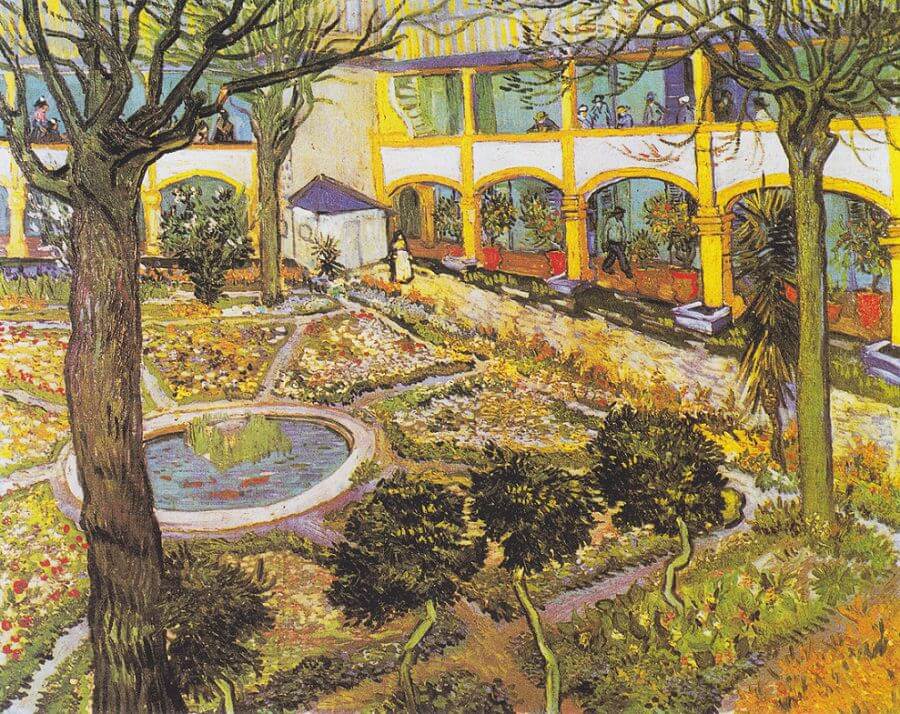
Recovery, Rehabilitation, Reablement by Van Gogh

Individual
|
      INTERPERSONAL    :     SCIENCES               
HUMANISTIC =========================  MECHANISTIC      
 SOCIOLOGY  :    POLITICAL 
|


My source: Van Gogh exhibitions (at least two); and Robin Lane Fox. Two years in Provence, House&Home, FTWeekend, 11/12 January 2025. p.10. 

Image source: https://www.vincentvangogh.org/the-asylum-garden-at-arles.jsp

Wednesday, July 20, 2022

Reflecting on The Times Education Commission 2022

"At the Apple headquarters in Cupertino, California, Susan Prescott, vice-president of enterprise and education marketing, argued that economic prosperity depended on human ingenuity. “Creativity doesn’t mean ‘Have a music and an arts class’. Creativity means across disciplines, how can you bring in ways for kids to engage in the material differently? How do you bring in opportunities for kids to reflect their learning in new ways? How do you use it to get a different, broader view rather than the fact-based stuff?" p.58. (with my emphasis and below)

Included in the 12-point plan for education:

1 A British Baccalaureate

It would offer broader academic and vocational qualifications at 18, with parity in funding per pupil in both routes, and a slimmed-down set of exams at 16 to bring out the best in every child.

2 ‘Electives premium’

This should be offered for all schools to be spent on activities including drama, music, dance and sport and a National Citizen Service experience for every pupil, with volunteering and outdoor pursuits expeditions to ensure that the co-curricular activities enjoyed by the most advantaged become available to all.

3 New cadre of Career Academies

These would be elite technical and vocational sixth forms with close links to industry, mirroring the academic sixth forms that are being established and a new focus on creativity and entrepreneurialism in education to unleash the economic potential of Britain.

4 Significant boost to early years funding

The extra funding should be targeted at the most vulnerable. A unique pupil number would be given to every child from birth, to level the playing field before they get to school. Every primary school should have a library.

5 Army of undergraduate tutors

The students would earn credit towards their degrees by helping pupils who fall behind to catch up.

6 Making the most of tech

A laptop or tablet for every child, greater use of artificial intelligence in schools, colleges and universities to personalise learning, reduce teacher workload and prepare young people better for future employment.

7 Wellbeing at the heart of education

A counsellor should be placed in every school and an annual wellbeing survey of pupils carried out to encourage schools to actively build resilience rather than just support students once problems have arisen.

8 Bring out the best in teaching

The profession’s status and appeal would be increased with better career development, revalidation every five years and a new category of consultant teachers, promoted within the classroom, as well as a new teaching apprenticeship.

9 A reformed Ofsted

Ofsted should work collaboratively with schools to secure sustained improvement, rather than operating through fear, and a new “school report card” with a wider range of metrics including wellbeing, school culture, inclusion and attendance to unleash the potential of schools.

10 Better training

Teachers should be trained to identify children who have special educational needs, a greater focus should be placed on inclusion and a duty put on schools to remain accountable for the pupils they exclude to draw out the talent in every child.

11 New university campuses

New campuses should be created in 50 higher education “cold spots”, including satellite wings in further education colleges. In addition, pay and conditions in the FE sector should be improved and a transferrable credit system between universities and colleges created to boost stalled British productivity.

12 A 15-year strategy for education

The strategy should be drawn up in consultation with business leaders, scientists, local mayors, civic leaders and cultural figures, putting education above short-term party politics and bringing out the best in our schools, colleges and universities.

Obviously idealised but mapped here to Hodges' model the long-term - policy, strategic, funding, resource and workforce emphasis is apparent.

INDIVIDUAL
|
 INTERPERSONAL    :     SCIENCES               
HUMANISTIC --------------------------------------  MECHANISTIC      
SOCIOLOGY  :   POLITICAL 
|
GROUP

7 Wellbeing at the heart of education

reflection
critical thinking,
communication
and creativity


2 ‘Electives premium’
(outdoors) ...

6 Making the most of tech

7 Wellbeing at the heart of education


2 ‘Electives premium’
(drama, music, dance) ...


1 A British Baccalaureate

2 ‘Electives premium’
(National Citizen Service experience)

3 New cadre of Career Academies

4 Significant boost to early years funding

5 Army of undergraduate tutors

8 Bring out the best in teaching

9 A reformed Ofsted

10 Better training

11 New university campuses

12 A 15-year strategy for education


What, if anything, is missing?

With its recommendations, the Commission is not intended to be prescriptive, specifying educational methods, methodologies and resources. But the aims and mapping above, point to the need to link education and health as per #7 Wellbeing at the heart of education. 

There is surely an avenue here - via the sustainable development goals, which the UK must also 'achieve'. Consider the following too:

"The system doesn’t measure creativity; it measures what you can remember of other people’s facts.” p.11.

"A British Baccalaureate at 18, an equally rigorous but broader qualification than A-levels with academic and vocational options under the same umbrella. Pupils studying for the academic Diploma Programme would take six subjects — three major, three minor — covering humanities and sciences as well as units on critical thinking, communication and creativity. Those on the Career-related Programme would combine learning (which could include BTecs or a T-level) with work experience. There would be the option for students to “mix and match” elements of both programmes to create the qualification that best suited them. All pupils would do an extended project, community service and some literacy and numeracy through to 18. Digital skills would be woven through the whole curriculum." p.95.

What is missing is understandably the aforementioned tools to facilitate creativity, but let state this as follows and join the dots with wellbeing.

  • We need to respect, support and encourage students to be and become curators of their lifelong learning and life chances. 
  • The reference p.11 to students being measured on what they can "remember of other people’s facts" is a key statement. As a curator, students should be the marshal of their own 'memory palace' pushing the boundaries, their envelope as the lifelong learning (constant test-pilot) of what we hope is a long career - and not just while in 'work'.
  • In the above mapping, we can see what is recognised in 'wellbeing'. Pupils need a foundation, they need the confidence and self-esteem to explore, express and explain any difficulties commensurate with their unique situation and identity. The importance of security (nationally, locally and personally) as the basis to address the social determinants of health are essential to integrate short and long-term policy aims and objectives, individual and collective success.

This is identified in the findings:

"Lee Elliot Major, a professor of social mobility at the University of Exeter, said there were 'bold and compelling reform' in the commission’s findings.

He welcomed the adoption of his recommendations for undergraduate tutors to help poorer pupils, adding: 'We need to consider radical reset to ensure that the education system fulfils the potential of all children.'”

https://www.thetimes.co.uk/article/times-education-commission-report-welcomed-by-tony-blair-john-major-qwc3b7ktx


The Times Education Commission 2022, 

https://www.thetimes.co.uk/society/education/education-commission

'Health career' - 'life chances'
Tuesday, April 06, 2021

Just because they have 'eco' in common ...

... don't assume you can monitise*

 the world's ecosystems 

by their roots and branches ... 


individual
|
INTERPERSONAL : SCIENCES
humanistic ----------------------------------------------- mechanistic
SOCIOLOGY : POLITICAL
|
group


  E
ECOSYSTEMS

  O
  N
  O
  M
   I
  C
  S


*despite the ongoing 'project' ...?

Sunday, November 22, 2020

Nature, Arts + Sciences: Dear Nancy and Tim ...

 individual 
|
INTERPERSONAL : SCIENCES
humanistic ----------------------------------------------- mechanistic
SOCIOLOGY : POLITICAL
|
group
Soft sciences

[Soft] observation

Arts, creativity

Innovation

Wild mental 'grounding'

Mary  ::   Tim

HARD sciences

[Hard] Observation

Students need a mixture of Art and Science A levels

A Natural History GCSE

Taking young people outdoors

Forest school

Colwell :: Smit

Arts

Nature literate society

Curricula

The human-ities in Politics?


My sources:

Woolcock, N. (2020) Pupils should mix arts and science, says woman leading top universities, The Times, 24 October, p.6.

Today, BBC Radio 4, 16 November, 2020, 0845-0851 Available for 25 days)


Saturday, January 18, 2020

Book* - "Healing Spaces"


- plus, five care knowledge domains*

and a question...?


individual
|
INTERPERSONAL : SCIENCES
humanistic ----------------------------------------------- mechanistic
SOCIOLOGY : POLITICAL
|
group - population


"What is missing from the book is a precise figure on just how great a contribution a restful atmosphere makes to healing - something health chiefs are sure to demand before making changes in our hospitals. Nevertheless, it provides a pleasant glimpse of the possible future of rest and recuperation." p.45.


Which, if any, healing space - or care domain in Hodges' model should be the priority?
 
Justify your choice and subsequent ordering.


My source:
Geddes, L. (2009) Books&Arts, A view to recovery, New Scientist, 9 May 2009, 202:2707. p.45.

See also:
Ulrich, R. (1984) View through a window may influence recovery from surgery. Science, 224: 4647, 420.
https://doi.org/10.1126/science.6143402

Tuesday, October 30, 2007

Northern Skies: Comet Holmes in outburst

If you've dark skies (and even if you are under urban skies) look out for Comet Holmes, which has brightened suddenly:

http://antwrp.gsfc.nasa.gov/apod/ap071026.html

See also an animated Astronomy Picture of the Day

More to follow in 2008!

Saturday, October 27, 2007

Long Man of Wilmington

Long Man of Wilmington


Although Brian Hodges created the model in the 1980s the key elements have been around a long time!


Thanks to the Culture Show BBC2 27 Oct 2007

Saturday, October 13, 2007

Drupal, Northern England CHE group

It's been a busy week...

On Wednesday night the turnout for the 1st NW England Drupal user group was excellent. A great springboard for next month. I've ordered another book! The title reflects an aspirational air. Although search inside helps, there's nothing like having chance to open the book for real and scan. Especially, when you've also been shown (thanks Chris!) some basics of installation and must-have modules. So, if this blog suffers through the Solstice well you know why ;-).

Today, the Yorkshire Sculpture Park proved a great find for me; with Criggy and Andy there were just three of us for the Northern England CHE group meet. It was overcast and drizzled occasionally, but the conversation and exhibits ensured it was really warm and sunny. Walking and bike riding in the 90s around Grizedale Forest I remember Andy Goldsworthy's work: brilliant! Hope to go back before this exhibition ends in January. Strange how I'd seen it featured on the Culture Show - BBC 2 and the programme returned for a new series tonight.

Back very soon... CBT and CMHNs: - Anyone for tennis?

Monday, October 01, 2007

Northern England CHE group - Oct 13 Yorkshire Sculpture Park

There is a change of plans for the 3rd Northern England Centre for Human Ecology group on 13 October.

People are struggling to get over to Rivington, Bolton; so Andy Wynne has suggested we meet at 11.00 at the main entrance of the Yorkshire Sculpture Park to see the Andy Goldsworthy exhibition. I think I saw this featured earlier in the year on the Culture Show BBC 2, it looked great on TV so...

Dressed for wet weather and walking we will decide on how to play it when we meet taking the weather into account.... We won't have a meeting place as such although there is a restaurant and cafe.

Well-being is still a very worthy topic in human ecology, sustainable communities and of course health and social care. With Rivington a major water capture area that is another ecological theme.

Apparently, entrance to the exhibition is free - great value - all day parking needs 4x£1 coins. I'm heading over to Manchester to get a lift with Andy and hope my daughter will come along too.

The idea is to look around for a couple of hours, then have lunch and perhaps those who are so inclined could take the long walk around to the other gallery and the outside intallations followed by coffee/tea in the afternoon. We'll chat informally as we go around and possibly more formally at the breaks.

Before this weekend meet, there's the Drupal NW UK User Group event in Preston 10 October. Not sure how this will pan out with two of us so far attending and seven 'watching'...

Sunday, June 24, 2007

Well-being: a great place to be!

Working in mental health you certainly don't take mood, mental state and that nebulous notion of well-being for granted.

Depression is a terrible thing and given the thin red line that we all walk in terms of mental health, it's a place no one wants to venture.

There's a lot of emphasis being placed on well-being (happiness!) at present. The usual retinue of number of this and that measures count for little if at the end of the day well-being or the individual's happiness is not improved, or perhaps more accurately 'satisfied'.

Source: BBCWatching Glastonbury it's all about music and well-being amid lots of mud.

Well-being is taken for granted like so many things in life. Take it away and it's noticed - very quickly.

They say that the best lessons are those we learn for ourselves. Being lost and finding your way is another pivotal lesson. At key times and places this journey can be a rite of passage no less.

In order for health promotion to deliver, people need to understand well-being, that is the many ingredients that contribute to that feeling, that sense, that inner magic that lights us up and those around us...

Hodges' model can help people with that journey, especially at a time when a fellow traveller may be needed.

Health and social care services are so often about signposting these days.

Hodges' model can help people signpost for themselves...

Photo: BBC

Thursday, May 31, 2007

Ecotherapy: Hey Surf's Up - Better grab your sunbed

Having an eye for 'therapy-this' and 'that-therapy', a report on ecotherapy has appeared on the MIND website, blogs and other media. It's not new really, although the researched approach is very welcome. The mental health benefits of volunteering and the great outdoors have been recognised for countless years.

This summer - August in fact, there's an opportunity to do something different that also has an outdoor theme. It means putting that surf board down and getting the sun bed out: after midnight. Now is the time to do some networking and planning - at that time of night of course you must be safe and this is an experience to share with people you know and trust.

This is 'astrotherapy' which is connected to ecotherapy because venturing out you realise how light it is at night - where is the night sky!

Why go out and find dark skies? It's the PERSEID meteor shower and this summer with maximum the 12-13 August there is no full moon.

You can also check on whether the International Space Station (AND Space Shuttle on this occasion!) will pass within sight for your location.

When you can and do look at the stars it's quite a trip. If you are feeling depressed or lacking in self-esteem, if you let the view work its magic - it sure can make you feel insignificant and yet so very special. Gifted: to look the infinite in the eye...

Mind - Go green to beat the blues - Executive Summary
Some obvious tips: If travelling somewhere even with others check the site during the day. If needed: get permission - tell someone; take extra clothes and a hat - midges, mozzies. If you've a torch cover it with a transparent red film (red hanky even) so it doesn't mess your (and others!) night vision as much. Support your neck properly, you can't stand and crane your neck for hours - besides you'll look daft the next day walking into work - hey I know. If you are in the back garden and see a meteor don't shout out. The buckets of water will fly. Give yourself a good 10-15 minutes to light-dark adapt. Don't forget the flask! Be patient and I'm sure you'll be rewarded...
