Hodges' Model: Welcome to the QUAD: literacy

Hodges' model is a conceptual framework to support reflection and critical thinking. Situated, the model can help integrate all disciplines (academic and professional). Amid news items, are posts that illustrate the scope and application of the model. A bibliography and A4 template are provided in the sidebar. Welcome to the QUAD ...

Showing posts with label literacy. Show all posts

Monday, October 05, 2026

The Lancet Series on the digital determinants of health: (What only three papers?)

Published: October 4, 2026

Executive summary

Digital technologies have become embedded within the systems and environments that shape health and wellbeing. They influence how people access information, communicate, learn, work, access health care, participate in society, and make decisions about their lives. Understanding and governing these determinants has therefore become a critical public health priority. This three-paper Series proposes a new approach for conceptualising and responding to the digital determinants of health, and sets a bold agenda for future research, practice, and governance.

https://www.thelancet.com/series-do/digital-determinants-of-health

My source: 'Unnecessary Services in Clinical Medicine & Public Health' group. 

Whether it is a journal, a clinic, community disciplinary team, a government committee, or an APPG - all-party parliamentary group, a university course (outside 'general studies') ... we are dealing with knowledge silos. Even more so, in the case of a journal series, special issue, or most conferences. 

There is always a case for expertise, in-depth perspectives and evidence-based understanding. Finding cures for cancer, diseases, the future of AI as relates to humanity's continuity are prime examples. When we speak of integrated care, if that care begins with education and self-care, then we need to consider all the determinants. Not only that, we need to conduct this investigative task concurrently with all the literacies. Otherwise, theory, practice, management, policy and ongoing research may struggle to cohere. Integration is essential, to facilitate sustainability, measurement and subsequent reporting. Hodges' model can assist.

Saturday, July 18, 2026

Hodges' conceptual framework: A model for Narrative Medicine ...

Abstract

The effective practice of medicine requires narrative competence, that is, the ability to acknowledge, absorb, interpret, and act on the stories and plights of others. Medicine practiced with narrative competence, called narrative medicine, is proposed as a model for humane and effective medical practice. Adopting methods such as close reading of literature and reflective writing allows narrative medicine to examine and illuminate 4 of medicine's central narrative situations: physician and patient, physician and self, physician and colleagues, and physicians and society. With narrative competence, physicians can reach and join their patients in illness, recognize their own personal journeys through medicine, acknowledge kinship with and duties toward other health care professionals, and inaugurate consequential discourse with the public about health care. By bridging the divides that separate physicians from patients, themselves, colleagues, and society, narrative medicine offers fresh opportunities for respectful, empathic, and nourishing medical care. ...


Charon R. Narrative Medicine: A Model for Empathy, Reflection, Profession, and Trust. JAMA. 2001;286(15):1897–1902. doi:10.1001/jama.286.15.1897 

With my emphasis.

#Identity #Group #Individual #Collective #Mind #Body #TheOdysseyHasBegun

Friday, January 02, 2026

Nothing new under the Sun ...

 ... unless you're a 'health' service, or gathering dust on a shelf

January. Is the time of Janus: we look forward and back.

In April, this blog 'Hodges' model: Welcome to the QUAD - W2tQ' will be twenty years young. A blog post will follow with some metrics and statistics, although the 'analytics' that accompany many websites is not the main objective here. Preceding W2tQ and that first post, was the now archived website:

https://web.archive.org/web/20150316193042/http://www.p-jones.demon.co.uk/index.htm

Running from 1998-2015, the site's emergence ran as per:

Taught and applied Hodges' model on
 Community Psychiatric Nursing Certificate course 1987-1988.
Using the model in my practice and sharing with colleagues.
Gaining online access 1997.

Finding the Nursing Theory Development Site - NTDS 
(no longer available)
which was at https://www.ualberta.ca/en/index.html 
Meeting Brian Hodges at Manchester Met. University in May 1997.
Publishing the website in 1998.

Listed at the NTDS was a broad range of models of nursing and nursing theories. Brian's model, as anticipated was missing. I asked about Brian Hodges's model being added as a resource. Back then I thought, and still do, that Brian's work deserves recognition and more importantly, actually being used by practitioners and learners. It was a shame I thought, that such a person-centered and integrative model should be sat on a shelf (like other great ideas) gathering dust?

Still limping along in theme, functionality and accessibility, at least W2tQ has outlived the original website.

Academia and professional bodies across healthcare disciplines stress the need for research in practice. As a consequence, I've wondered about the pool of research questions that a healthcare, nursing, community nurse might have in mind? Ready and waiting, for those instances when specific funding materialises for a project. How many of these questions might feature as recurring characters? Once articulated, there for a new team member, are several starter-questions, a primer, to encourage exploration and critical thought. (Of course, a researcher needs to frame the question themselves; even if they do not 'own' them - public, patient engagement in research?).

With sustainability still on the political agenda (whatever the media suggests), is there a plan gathering dust, for the redesign, no less, of the National Health Service? Having squandered the demographic dividend of the 1950-1980s, how do we create concurrent health caring and preventive/educational services and systems?

Now, there is a project that Hodges' model could assist with! Better check the shelves (floppy disks!) and blow the dust-off real quick!

Sunday, August 10, 2025

"Readers! Where exactly does this go?"


Individual
|
      INTERPERSONAL    :     SCIENCES               
HUMANISTIC  --------------------------------------  MECHANISTIC      
 SOCIOLOGY  :    POLITICAL 
|
Group
?

?

?
?


Frankfurt, H. G. (2025). On bullshit. Anniversary Edition. Princeton University Press. https://press.princeton.edu/books/hardcover/9780691276786/on-bullshit

Thursday, August 07, 2025

'Finding the Signal through the Noise' - WHO EARS

It is deprived communities who desperately want to do their best for family, but struggle to have access to and make sense of many sources of information. News and information not just through 'traditional' channels, but social media. Trying to be objective, non-judgemental it can still be surprising how TVs and smartphones are the key personal and furniture items.

Outside of London, Liverpool has a low uptake of immunisation against measles:

Liverpool, now has cases and a child's death from measles:

https://liverpool.gov.uk/council/public-health-liverpool/measles-on-the-increase/

https://www.liverpoolecho.co.uk/news/liverpool-news/alder-heys-plea-after-child-32050189

Located in-between, I often visit Manchester and Liverpool. I wonder now if I should visit Liverpool less. My daughter and her partner expecting their second child have a decision to make next year.

I noticed on X a reference to 'social listening'. This was missed while drafting a paper on COVID, technology, social media and information disorder. More positively, work on 'infodemic' was captured and posted. 

Blowing the dust of another draft, I will reassess this stream of work and seek specific literature, especially contributions to improved outcomes - public (mental) health.


McGowan B. S. (2022). World Health Organization's Early AI-supported Response with Social Listening Platform. Journal of the Medical Library Association : JMLA, 110(2), 273–275. https://doi.org/10.5195/jmla.2022.1398

See also:

Fryer, Jon. “Information Literacies – Learning, to Thrive in a Digital Age” IRMS Bulletin 230 (2022): 16-21.

Jones, P. (1996) Humans, Information, and Science, Journal of Advanced Nursing, 24(3),591-598.

Friday, July 11, 2025

'Thinking outside the box ...' iii by Amber Javis

Third response to a blog post by Amber Jarvis on The Mental Elf:

Thinking outside the box: alternatives to standard inpatient mental health care

Amber's post considers a study by:

Griffiths, J. L., Baldwin, H., Vasikaran, J., Jarvis, R., Pillutla, R., Saunders, K. R., … & Johnson, S. (2025). Alternative approaches to standard inpatient mental health care: development of a typology of service models. International Journal of Mental Health Systems, 19(1), 1-13: https://pubmed.ncbi.nlm.nih.gov/40247283/

A Community Psychiatric Nurse since 1985, on first contact patients were often upset initially at the prospect of a visit. Not the fact it was a nurse, but a psychiatric, 'mental' nurse. If the patient was OK about it, their family may have had qualms. Discretion was always exercised, essential in terms of maintaining confidentialty. Not infrequently, as a team we had a conflict of interest. A colleague already had a client a few doors down; or they lived around the corner. Socio-politically, there was never an issue back then with shop fronts, but homelessness has a long history of course. I've worked in intermediate support, visiting someone 2-3 times in a day. That continuity helps, in contrast to the experience of older adults in social care. It could be that the potential stigma elicited by intensive home care is now attenuated by:
  • The public's increased awareness mental health & illness;
  • The fragmentation of neighbourliness means people really aren't interested?
In the conclusion on Griffith's et al's study Amber notes:

'The authors’ classification of alternative service models could help planners and commissioners understand ‘the whole range of options’ when deciding which improvements to prioritise and invest in.

However, future studies should investigate the implementation challenges surrounding these alternative models – that is, what might make certain models easier or more difficult to introduce? Research investigating their effectiveness in practice is also required – are there particular models that are better suited to certain individuals, at particular times? As the authors put it: “what works best for whom, when and how”!'

The government in England has launched a trial regards people who are sick, and their work status:

'GP surgeries in England can offer advice to patients on getting back to work, including career coaching or exercise classes, as part of a pilot project to reduce the number of people who are signed off work sick.

The aim is to help people return to the workplace more quickly to reduce the length of time they need fit notes - better known as sick notes.

These are issued by health professionals if a patient is unwell or cannot work for more than seven days.

A total of £1.5m is being made available to 15 regions in England, and will be shared between GP practices in these areas to hire coaches or occupational therapists to support patients in their return to work.'

Hugh Pym, Health editor: https://www.bbc.co.uk/news/articles/cwyx880d1w8o 

Individual
|
      INTERPERSONAL    :     SCIENCES               
HUMANISTIC  --------------------------------------  MECHANISTIC      
 SOCIOLOGY  :    POLITICAL 
|
Group
Career coaching
Exercise classes
Counselling
Reduce time spent 'ill - sick - off-work'
Motivation - Mindset

FIT - SICK:
physically only of course!
Seven days
What can't I do?
What can I do?


Social Prescribing
Occupational Therapists
Physiotherapist
Support workers
Horticultural groups
Local history


FIT NOTES - SICK NOTES
£1.5m across 15 regions
Policy
Welfare budget
Behavioural Economics
Integrated Care & Social Policy


Given the rise of mental health related provblems in the population, some might argue that increased awareness of, and education about mental illnesses is part of the problem. But this isn't literacy then?

With the standing of the mental health nursing curriculum called into question, policymakers have some serious decisions to make. Social prescribers and care navigators are not the only people preoccupied with signposting. Griffith et al. write:

'Inpatient care is also costly; even though only 3% of people in England accessing mental health care in 2018/19 received inpatient mental health care, National Health Service (NHS) trusts in England still invest more in inpatient than community services [].'
Hodges' model: Axes & Domains

You can appreciate just how far away prevention and a health literate population truly are. Budgets will have to be re-directed. Now that is 'care-ordination'.

Griffith et al. and Amber's response, calls care that is simultaneous person-centred and service-centred. 

In Hodges' model it is as if the vertical axis, is turned and the 'individual' aligned with the humanistic (person-centred) and group - the mechanistic (service-centred) axis. This gives us self-care, individualised healthcare, personalised medicine through to population health.


Griffith does not venture into literacy and education (not their study's purpose, of course); but using Hodges' model, we can see two critical related issues. In addition to reducing the time a person is physically, and mentally indisposed, unwell, ill, sick ...
  1. We need to improve the lot of children excluded from school;
  2. Seriously address the determinants of health socio-politically.


Monday, May 05, 2025

Knowledge - Ignorance: Political leaders always seek an informed citizenry. Discuss?

c/o 'The war on knowledge' Simon Schama 
Life&Arts :: FTWeekend


individual
|
INTERPERSONAL : SCIENCES
humanistic ------------------------------- mechanistic
SOCIOLOGY : POLITICAL
|
group


'As the Founders saw it, the great driver of freedom was knowledge. Two decades before independence, the lawyer and essayist William Livingston insisted in a journal called The Independent Reflector that "knowledge among a people makes them free, enterprising and dauntless; but Ignorance enslaves, emasculates and depresses them".

Are you an 'Independent Reflector'?


MIND

'In 1779, Thomas Jefferson (who would make sure that his role as "Father of the University of Virginia would be inscribed on his tombstone) championed a Bill for the More General Diffusion of Knowledge. Its purpose would be to "illuminate ... the minds of the people at large" - excluding of course, women and the enslaved - "and more especially to give them knowledge of those facts . .. [that] they may be enabled to know ambition under all its shapes." The 1780 Constitution of the Commonwealth of Massachusetts, primarily drafted by Adams, committed itself to "The Encouragement of Literature" so that "Harvard-College in Cambridge" would be the institution through which the diffusion of "wisdom and knowledge" would ensure health of the body politic.'

BODY
PUBLIC


'The informed citizenry'


Public understanding of the sciences.


POLITIC

'As Richard D Brown's important history The Strength of a People: The Idea of an Informed Citizenry in America, 1650-1870 points out, all of America's first four presidents (including James Madison) assumed that the security of the republic depended on the "equation of virtue and knowledge". A century later, Calvin Coolidge might assert that "the chief business of the American people is business", but a rich stream of ideas flowing from the learned optimism of the Founders, through the creation of land-grant colleges and the "brain trust" administrations of Franklin Roosevelt, assumed that professors were not the "enemy" but a resource that was indispensable for the good of the nation. The true enemy of American democracy was not professors, but ignorance.'


My source:
Simon Schama. 'The war on knowledge', Life&Arts, FTWeekend, 26-27 April, 2025, pp.1-2.

Previously: 'knowledge' : 'ignorance' : 'political'

Wednesday, April 16, 2025

AI, Beliefs, Helplessness, Misinformation ...

Viewing this debate and SDGs both as information spaces, and mental health/illness can provide some insights.

'Learned helplessness' is an established phenomenon in psychological studies and history.

Adam Grant in Life&Arts, FTWeekend 29-30 March 2025, p.2. 

( https://adamgrant.net/book/think-again/ )
writes in 'HOW TO UNLEARN HELPLESSNESS'
'Many people believe that in a world of echo chambers and misinformation, it's not possible to talk anyone out of their convictions. They`re wrong. Even a bot can do it.

In recent experiments psychologists recruited thousands of Americans who believed in unfounded conspiracy theories ranging from the moon landing being faked to 9/11 being an inside job. After the participants described their views, the psychologists randomly assigned some of them to discuss these views with an AI chatbot that was prompted to refute them.

After less than 10 minutes of conversation with a ChatGPT-based LLM, more than a quarter of participants felt uncertain about their views - and those doubts persisted two months later. Short exchanges were even enough to move the opinions of strong believers.

Why? It's not just that ChatGPT has access to infinite knowledge. It turns out that AI chatbots are better listeners than the average human. The researchers found that chatbots were persuasive because they presented information that directly challenged the reasons behind people's beliefs.'
Also helpful, as per discussion to consider AI as a new / emerging 'information space' as a literal frontier, a new territory with unknowns that businesses wish to conquer and the public must learn to trust - even as users. What knowledge - understanding is needed of what is happening in the 'box'?

Once again (within Hodges' model) we can potentially draw in (ask questions of - all) the literacies:

3Rs, information, IT, media, culture, spiritual, financial, health, sciences, civic - national, international...

This also means to what extent are existing imbalances in parity of esteem - between the mind and body dichotomy perpetuated, even increased?

It is not surprising that there is an imbalance, in the distribution of datasets - LLMs on huggingface:

https://huggingface.co/docs/hub/en/datasets

e.g. INTRA- INTERPERSONAL [MIND]

BioBert 1.1
UCI ML Drug Review dataset - Subset 
LOST arXiv:2306.05596 [cs.CL]
Mindwell https://doi.org/10.1007/978-981-97-3601-0_34

SCIENCES [BODY]

eScience kidney factomics (PubMed titles)
BioBert 1.1
SAVSNET sample (VetCN) - Important in terms of Zoonotic diseases and planetary health*.

Image datasets: 
Lung Cancer IQ-OTH/NCCD 
Surface Crack Detection 
Oxford-IIIT Pet 
BreastMNIST 
DermaMNIST 
PneumoniaMNIST 
BloodMNIST 
RetinaMNIST

There is overlap also.

Ack. *As mentioned late 2024, the datasets were discussed at: https://www.bcs-sgai.org/health2024/

'ChatGPT (40) Differentiating reliable information from misinformation (12)'

Sunday, April 13, 2025

In 'health' can health itself be treated as aPOLITICAL?

That is, across medicine, nursing, social work, psychology, allied health professionals, public health . . . in theory, practice, management, policy and education ...?

- with all the talk of the biomedical model,
the bio-psycho-social model -
you do do you wonder?


individual
|
INTERPERSONAL : SCIENCES
humanistic ------------------------------- mechanistic
SOCIOLOGY : POLITICAL
|
group

INTRA- INTERPERSONAL


SCIENCES

SOCIOLOGY
freedom

the science
of snowflakes

coherence

unilateral
power

POLITICAL


Sunday, March 16, 2025

Caring for babies and young children - what can older children do?

Dear All

I'm delighted to tell you that we have successfully raised funding for the completion of the Children for Health ten poster series.

On completion we will have many more posters than ten as we have other posters linked to projects on Diabetes and Eye Health, Oral Health and Life Skills.

All our posters feature 10 messages for young adolescents to learn and share (on the front) and lots of ideas on how to use the posters and additional activities to get children mobilised on the back. If you haven't seen our posters PLEASE take a look here. They are being used in so many ways!

www.childrenforhealth.org/resources

...and any feedback is always welcome.
Please also share with your networks.

I am looking for specialists in early years to help us revise our existing set of 10 messages on the topic of 'Caring for Babies and Young Children' for the new poster. It is a voluntary role. The process lasts about 3 months as we involve practitioners too and work with schools to get children reviewing the messages. It's usually about 3 rounds of review and then an art work review. I'd be very pleased to hear from those who feel they have the time and expertise to help.

Meanwhile take a look at our posters. We have three new ones!

WASH: https://www.childrenforhealth.org/WASHposter

Coughs and Pneumonia: https://www.childrenforhealth.org/CoughsPoster

Intestinal Worms: https://www.childrenforhealth.org/WormsPoster

HIFA profile: Clare Hanbury is director of Children for Health. She qualified as a teacher in the UK and then worked in schools in Kenya and Hong Kong. After an MA in Education in Developing Countries and for many years, Clare worked for The Child-to-Child Trust based at the University of London's Institute of Education where, alongside Hugh Hawes and Professor David Morley she worked to help embed the Child-to-Child ideas of children's participation in health – into government and non-government cchild health and education programmes in numerous countries. Clare has worked with these ideas alongside vulnerable groups of children such as refugees and street children. Since her MSc in International Maternal and Child Health, Clare focused on helping government and non-government programmes to design and deliver child-centered health and education programmes where children are active participants. Clare has worked in many countries in East and Southern Africa and in Pakistan, Cambodia and the Yemen. In July 2013, Clare founded the NGO, Children for Health and develops health education materials and and works on health education programmes alongside partners all over the world.

https://www.hifa.org/support/members/clare clare AT childrenforhealth.org

Thursday, March 06, 2025

Understanding Mathematics + Domains towards Corridors

It is for others to judge - whether it is helpful or distracting; but I find concepts defined by other disciplines, or professions illuminating and insightful. Especially so, when it comes to 'domain'. In Hodges' model - all four of them. Five! When (not if), we include the spiritual:
'Greeno (1991) argued that students develop understanding when

"a domain is thought of as an environment, with resources at various places in the domain. In this metaphor, knowing is knowing your way around ir the environment and knowing how to use its resources. This includes knowing what resources are available in the environment as well as being able to find and use those resources for understanding and reasoning. Knowing includes interactions with the environment in its own terms - exploring the territory appreciating its scenery and understanding how its various components interact. Knowing the domain also includes knowing what resources are in the environment that can be used to support your individual and social activities and the ability to recognize, find, and use those resources productively. Learning the domain, in this view, is analogous learning to to live in an environment: learning your way around, learning what resources are available, and learning how to use those resources in conducting your activities productively and enjoyably. (p. 175)"

In particular, in chapter 8, Nemirovsky et al. use the metaphor of becoming familiar with a new place (e.g., a town, a train station) and the process of learning a new mathematical concept.' p.7.

Greeno, J. (1991), Number sense as situated knowing a conceptual domain.,Journal for Research in Mathematics Education, 22(3), 170-2 18. 

Understanding Mathematics and Science Matters
. Edited by Thomas A. Romberg Thomas P. Carpenter Fae Dremock University of Wisconsin-Madison. EA LAWRENCE ERLBAUM ASSOCIATES, PUBLISHERS 2005 Mahwah, New Jersey London. (I hope there is a 2nd edition?)

(I will try to add the Nemirovsky et al. reference when I can.)

Previously: 'territory' : 'map' : 'vocabulary'

Monday, December 23, 2024

Comment: Menopause - a global health and wellbeing issue that needs urgent attention

On 'X', I noticed a comment piece from the Lancet:


Menopause: a global health and wellbeing issue that needs urgent attention
Gayathri Delanerolle, Peter Phiri, Sohier Elneil, et al. The Lancet Global Health, Volume 0, Issue 0.
Publication History: Published December 18, 2024 
DOI: 10.1016/S2214-109X(24)00528-X

As usual I searched 'Welcome to the QUAD' [W2tQ] for previous posts tagged 'menopause'. The result '0' was a surprise, as there are several posts re.'menstruation' 

https://hodges-model.blogspot.com/search?q=menstruation

And many tagged 'women':

https://hodges-model.blogspot.com/search?q=women 

And this despite, a partner and family members experiencing the effects and impact of menopause. I was also asked in the summer to sort a list of signs & symptoms for menopause that can be associated with mental health nursing.

Interesting to see reference to the Roy Adaptation Model in the paper:
Klotzbaugh R, Fawcett J. Gender minority persons’ perceptions of peer-led support groups: a Roy Adaptation Model interpretation. ANS Adv Nurs Sci 2023; 46: 59–74.
And to address the global health extent and context of menopause:
'The stigma is such that open dialogue is inhibited in the majority of LMICs and the first-generation migrants from these LMICs to high-income countries (HICs); the paucity of broader understanding and acceptance in society exacerbates the mental and emotional strain of menopause and can lead to social isolation, particularly in these stigmatised contexts.' [my emphasis]
If needed there may be a CPD exercise for student nurses, or those qualified with revalidation pending? Hodges' model (the template) can help in achieving a broader understanding of menopause, and women's health to include menstruation and social attitudes, beliefs and attitudes. The paper does not refer to shame, and self-stigma, which may prevent a person from seeking help? So, there is a reflective exercise in reading the text and mapping the recommendations in the paper:

Panel - Recommendations to improve health outcomes for individuals with menopause 
  • Lifestyle modifications 
  • Mental health support
  • Holistic approaches
  • Culturally competent care 
  • Personalisation of hormone replacement therapy care 
  • Peer support groups or social prescribing 
  • Conduct comprehensive research 
  • Improve accessibility
  • Understanding various risk factors, such as lifestyles, environment, and climate
If anyone has events, journal special issues for 2025 ... I can help publicise, please let me know.

Ack. https://x.com/raj_psyc

See also:
Delanerolle, Gayathri & Forbes, Anna & Cavalini, Heitor & Taylor, Julie & Riach, Kathleen & Hinchliff, Sharron & Atkinson, Carol & Potočnik, Kristina & Briggs, Paula & Kurmi, Om & Talaulikar, Vikram & van Vlymen, Jeremy & Shetty, Ashish & Irfan, Muhammad & Kareem, Rabia & Kemp, Helen & Palo, Subrata & Rathnayake, Nirmala. (2024). An Exploration of the Mental Health Impact Among Menopausal Women: The MARIE Project Protocol (UK arm). American Journal of Biomedical Science & Research. 22. 10.34297/AJBSR.2024.22.002992. 

Thursday, December 19, 2024

Just one library ... A world of difference

Born in Walton.

 'good prose is like a windowpane'

George Orwell, WHY I WRITE

<>

Walton, Liverpool, UK 12th December 2024
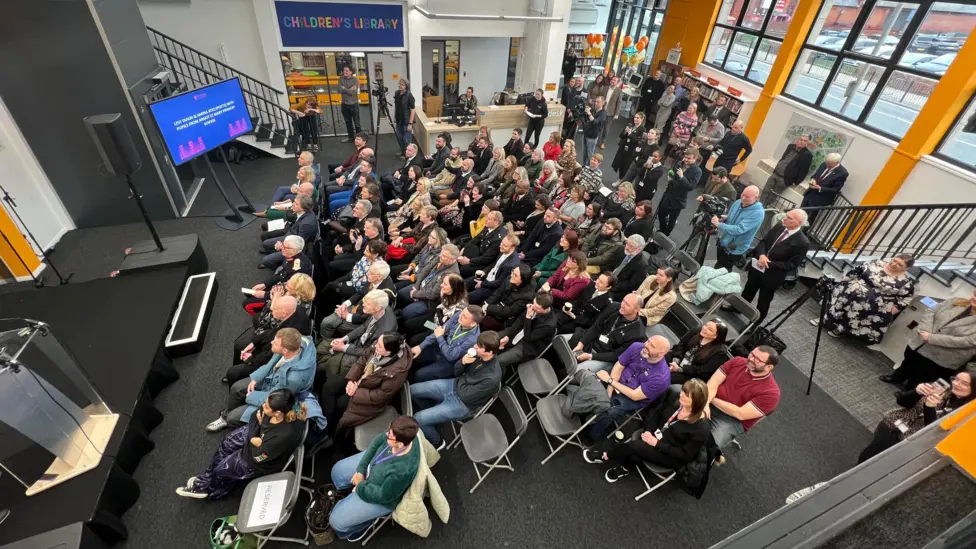
'Spellow Library, in Walton, Liverpool, was forced to close when it was set alight on 3 August amid unrest which swept across the country after the stabbings in Southport.

The city was determined to not let hatred win, with £250,000 raised and books being donated from the Queen and a host of celebrities.

An official ceremony marked the re-opening, including readings from Liverpool poet Levi Tafari while a letter from Queen Camilla was also read aloud.' ..


Claire Hamilton/BBC: An official ceremony marked the re-opening on Thursday morning


Break the Windows on Learning and
New Ones Will be Found to Look Out on the World.


INDIVIDUAL
|
INTERPERSONAL : SCIENCES              
humanistic ------------------------------- mechanistic
SOCIOLOGY : POLITICAL   
|
GROUP

My Learning
My Literacies


'The World(s) of Learning'

Society - Community
Social Justice

Justice
Social/Public Services


Previously:

Related post: 'forms of Hygiene'

literature : window

Thursday, December 12, 2024

forms of Hygiene

A gift for Hodges' model:

 'good prose is like a windowpane'

George Orwell, WHY I WRITE


'How is it that Orwell has become the single answer to so many questions, in so many different subjects, for so many people? His name conjures an amorphous idea of fair play and “common sense”; his spare prose supposedly brings cool nonpartisanship to a world of impassioned blusterers. In keeping your sentences clean, the theory goes, you practise intellectual hygiene (“good prose is like a windowpane” and all that). A single word, “Orwellian”, evokes the great man’s foresight about the dangers of an overweening nanny state, a censorious far-left or whatever else may be getting your goat that day.'
Naoise Dolan, Why weak thinkers love Orwell, FT Weekend Magazine, October 19/20, 2024, pp.16-18.


INDIVIDUAL
|
INTERPERSONAL : SCIENCES              
humanistic ------------------------------- mechanistic
SOCIOLOGY : POLITICAL   
|
GROUP
INTELLECTUAL
MENTAL - EMOTIONAL - SPIRITUAL
(Coping with the 21st Century)

SELF-LIFE SKILLS
(control anxiety - being organised)


Health Literacy: Knowledge and aptitude for forms of HYGIENE

PERSONAL
ENVIRONMENTAL
DOMESTIC
FOOD

HANDS (How to sneeze, cough)
ORAL - DENTAL
CLOTHES
BODY
HAIR (frequency?)

Sustainability - balance


SOCIAL
COMMUNITY/RACIAL HYGIENE
Insertion of memory lest we forget
Insertion of a hook to do - think as we
tolerance for x,y,z


POLITICAL HYGIENE
aka. The Paradox
To Vote : To be counted
CIVIC


Reflecting about this in some contexts, more than others(?) I'm struck by the overlap between hygiene and literacy.

Completing, or attending to, being motivated to undertake - complete hygiene duties depends on knowledge and ability to act. Having basic needs met.
'
'Opening windows always ...'

literature : window

Tuesday, October 22, 2024

Consultation: CHANGE NHS


Our NHS is broken, but not beaten. Together we can fix it.    
[ c/o https://change.nhs.uk/en-GB/ ]

The NHS has been there for us for over 76 years. But to make sure the NHS is here for the next 76 years, doing all it can to support the health of everyone, we need your help.

We want to have the biggest ever conversation about the future of the NHS.

It doesn’t matter whether you have a lot or a little to say. Your views, experiences and ideas will shape a new 10 Year Health Plan for England. 

This is open to everyone. If you are a member of the public or someone who works in health and care in England, 'Start Here', to tell us how the NHS needs to change.

If you are contributing as a representative of an organisation, complete the organisation questionnaire. This is an early opportunity to share your insights as we begin an extensive programme of engagement to develop the 10 Year Health Plan. 

If you register your email address, we will stay in touch to seek your views as the 10 Year Health Plan develops.

[video no longer available]

'change' in Hodges' model

The NHS and people's health is more than 
a machine, more than a mechanistic thing 
that if broken can be fixed.

By definition you cannot be 'inclusive'
if you do not achieve balance
with the humanistic; and the
values of humanity and
 the spiritual as per context.


individual
|
INTERPERSONAL : SCIENCES
humanistic ------------------------------- mechanistic
SOCIOLOGY : POLITICAL
|
group

purposes

person-centredness

personalised care experiences

continuity

mental state; mental health

attitudes - mindset

expectations (public education)

my health literacy (all of them: education)


processes
(care inc. 'writing' records, 'gates' access)
demographically-driven care 

define 'success' - metrics - data

utilise evidence

peak CO2
peak obesity

physical health:
chronological age - pathological age

encourage self-care to support sustainability

social care

social attitudes

child support - support for families

proven practices that delivers

community as resource

community: homes for living in -
not profiting from

Public involvement: 
#NHSCHANGE #CHANGENHS

Protect / Create green spaces for outdoor play


funding, finance, budgets, economics

POLICY:
FROM: National ill-Health Service
TO: National Health Service 

long-termism

E3^ for all the literacies

address: food quality, 
air, water, noise, litter

SOCIO-tech approach to applied technology

Teach Hodges' model to teens, and prisoners
as part of PSHE and rehab programmes


E3^ education, education, education - by literacies we include: information, emotional, media, finance, spiritual, cultural, scientific, religious, climate...

'delivers' includes: improved care experiences, integrated care (related to all the domains), patient, carer, public safety, cost effectiveness, research questions, accurate - valid reporting.

All health disciplines / professionals, social care, and APPGs ... share a common model - a conceptual framework for critical thinking and reflective practice.

Monday, May 13, 2024

Salt Awareness Week

Individual
|
      INTERPERSONAL    :     SCIENCES               
HUMANISTIC  --------------------------------------  MECHANISTIC      
 SOCIOLOGY  :    POLITICAL 
|
Group
[My] attention, priorities, beliefs, mindset(s) ..
Knowledge
Health literacy
(All literacies)
Choices
Decision making
Motivation
My health:
Physical AND Mental


Responsible for..?
Culture
Lifestyle
Friends - Family
Dining custom & practice

Food Industry
National - Global action
Policy - Law
Health Economics (Price of foods)
Food labelling
Impact of Climate Change


My source: Twi/X

Saturday, April 13, 2024

'Political sovereignty' by JFK


Individual
|
      INTERPERSONAL    :     SCIENCES               
HUMANISTIC  --------------------------------------  MECHANISTIC      
 SOCIOLOGY  :    POLITICAL 
|
Group


John F.


Kennedy


"Political sovereignty is but a mockery without the means of meeting poverty, illiteracy, and disease."


My source: 

Alan Capps, Alexandria, VA, US - FT Letters.
https://www.ft.com/content/de67db92-3e7b-45ee-b39e-0140d582306a 

Thursday, February 15, 2024

Questions in eclipse

 Last Friday 9th I had a Zoom chat for 30 mins, regards Hodges' model with faculty in the USA.

We touched upon:

  • background to Hodges' model
  • courses taught across the water and interests
  • overlaps, inc. person-centered care - socio-technical
  • informatics & literacies
  • maths/logic

As an outcome it was suggested I forward some questions I'm currently of Hodges' model. Questions that for me, are challenging, put me in the dark, and may not even be valid?

Going through my draft notes I picked out 20, beginning with the working title:

Hodges’ Model as a mathematical object and relational ontology:
category theory or category mistake?

  1. Can it be argued there is what amounts to a care locus - that can 'locate' person-centredness?

  2. Can the model's domains be seen as functions?

  3. Are the domains placeholders?

  4. Is there a case to test, and if logical implement co-domains (e.g. parity of esteem)?

  5. Are there other 'structures' in Hodges' model,  for example L-shaped forms, that is relations that involve three domains and (seemingly) omit one?

  6. Are there practical - case studies - that can be associated with such structures?

  7. Can Hodges' model be considered as a single conceptual space (Gärdenfors), or a series of four? (blog posts)

  8. Can Hodges' model be used to identify and apply threshold concepts (Meyer & Land)? (blog posts)

  9. Can we argue that the structure of Hodges’ model as defined by the axes extent, provides and invites inverse relations?

  10. Is Hodges' model as a structure only (a template) equivalent to an empty set (empty set as an initial object)?
  11. Is this a mathematical analogue (being neutral) to a practitioner's unconditional positive regard?

  12. Taking its axes and four (care/knowledge) domains can Hodges' model be reduced to a graph?

  13. If Hodges' model acknowledges/incorporates Cartesian duality, are there Cartesian products?

  14. In these Cartesian products are critical operations, e.g. relating to psychotropics - physical health; eating disorder - physical/mental health; complex emotional needs - policy (evidence-based care)?

  15. If the model is inverted, mirrored ... what follows: is the structure - function - consistency retained?

  16. Is Hodges' model 'closed' in comparison with Buzan's (open?) approach to mind-mapping?

  17. There is an 'equation of time': is there an 'equation of care'?

  18. Thought experiments: (semantic distance... cognitive linguistics)

    Which concept (INTERPERSONAL :: SCIENCES) is closer to the ‘INDIVIDUAL’ axes; which is closest to the ‘GROUP’ (SOCIOLOGY :: POLITICAL)?

    Which concept (SOCIOLOGY :: INTERPERSONAL) is closer to the HUMANISTIC axes; which is closest to the MECHANISTIC (SCIENCES :: POLITICAL)?

  19. Role of 'types' in Hodges' model - that is, patient / model as a whole as objects (with identity)?

  20. What significance can be gleaned given commonality between several mathematical terms, e.g. group, object, (co-)domain and Hodges' model?

I can no doubt structure - group these questions, and I've not picked out many concerned with Hodges' model as a set, or, as yet, those venturing into category theory. I am wondering, what the commutative law might tell us about holistic, integrated care, and parity of esteem when applied through Hodges' model? Also refining 3-4 case examples to explore and illustrate the same?

While it is maths that prompts this diversion, perhaps ultimately health care disciplines can determine its own formal approach that can produce its own context-sensitive rules, that straddle mathematics/logic and the humanities?

In initial emails, I'd noted the forthcoming eclipse across the USA. Checking, my interlocutor is just N of the path of totality (I wish!) for April's total eclipse. I'm enjoying the darkness here too.

https://science.nasa.gov/eclipses/future-eclipses/eclipse-2024/where-when/

#TotalEclipse2024 #SolarEclipse2024

Saturday, January 20, 2024

c/o Eliot Higgins: 'Moment of truth' or 'Movement to Critical Thinking'?

   moment

a : tendency or measure of tendency to produce motion especially about a point or axis

b : the product of quantity (such as a force) and the distance to a particular axis or point

https://www.merriam-webster.com/dictionary/moment


Here on W2tQ in posts applying Hodges' model I have tended to equate the subjective and the objective with the humanistic and mechanistic domains respectively. Of course, these mappings - conceptual placements are idealised. In reality there is a great deal of overlap. 

"Social media platforms such as X, once celebrated as democratising forces, are under even more scrutiny. The challenge isn't just rogue posts or unchecked algorithms. It reflects a deeper malaise, rooted in societal distrust, exacerbated by business models and perpetuated by reactive policies. The ramifications of disinformation spill on the streets with tangible, often devastating real-world consequences. 
These processes were already underway in 2014, when I founded the open-source investigative group Bellingcat." p.1. 
"The delicate balance between combating misinformation and ensuring digital freedoms remains elusive. ...

Addressing the root causes of disinformation requires a grassroots approach. Education stands at the forefront of this strategy. The idea is simple yet transformative: integrate open-source investigative and critical thinking into the curriculum. Equip the youth with the skills to navigate the labyrinthine digital realm, to question, analyse and verify before accepting or sharing information. ...

The potential of such a grassroots movement doesn't stop at school gates. Envision a world where universities become hubs of open source investigation, with national and international networks of students sharing methodologies, tools and insights. As these students move into their professional lives, they carry forward not just skills but a mindset - one that values critical thinking over blind acceptance." p.2.

Higgins, E. Moment of truth, Life&Arts, FT Weekend, 16-17 December 2023, pp.1-2.
 

 Individual
  |
    INTERPERSONAL    :     SCIENCES               
HUMANISTIC --------------------------------------  MECHANISTIC      
SOCIOLOGY  :   POLITICAL 
|
Group

mental well-being

critical thinking

education - learning

subjective
PSYCHO-

physical well-being

fact (checking)

digital media literacy

objective


social well-being

society

social impacts of info disorder


-POLITICAL
political well-being

policy - regulation

political impacts of info disorder


https://thestudentview.org/

https://citizenevidence.org/

Access to education to combat information disorder, through digital media literacy is essential. There are now many claimed forms of literacy, and informatics. Engaging students must not just rest with  universities and graduate level education; especially as the 'professions' are set to change and new ones arise.

Previous posts 'information disorder' , 'ignorance'.

Wednesday, June 21, 2023

Thanks for the memories . . .

. . . may they last your life time and then some . . .

INDIVIDUAL
|
INTERPERSONAL    :     SCIENCES               
HUMANISTIC --------------------------------------  MECHANISTIC      
SOCIOLOGY  :   POLITICAL 
|
GROUP
53.38737144811205, -2.6100497479996965
Peter Jones 20 June, 2023, Warrington, UK

 self-storage (physical)


Photo: Peter Jones 20th June, 2023, Warrington, UK.