Hodges' Model: Welcome to the QUAD: reading

Hodges' model is a conceptual framework to support reflection and critical thinking. Situated, the model can help integrate all disciplines (academic and professional). Amid news items, are posts that illustrate the scope and application of the model. A bibliography and A4 template are provided in the sidebar. Welcome to the QUAD ...

Showing posts with label reading. Show all posts

Friday, August 07, 2026

'From Tree to Sea [5] - The Bare Necessities' c/o BBC R4

My name is not Robinson Crusoe, but I feel privileged to live on an island. The sea has always been close. Liverpool (Scouser) has a history, to celebrate and seek forgiveness for. It was a surprise and yet wasn't from the map in the Bluecoat of the slave ships that plied the route to West Africa, to the West Indies and USA to see the same reflections in the dock area of Nantes in May 2025.

These reflections followed a BBC Radio 4 programme this afternoon (one of a series):

5. From Tree to Sea - The Bare Necessities

https://www.bbc.co.uk/sounds/play/m002ztzy

'We are living in turbulent times and it is easy to feel anxious about the state of the world. The pace of change is fast, and the future often seems uncertain and out of our control. Given our reliance on technology, any sort of outage could be catastrophic. Could you survive - and thrive - in a world without global supply chains, the internet and 24-hour energy?

In this series the writer Dan Richards seeks out the tradition bearers and carriers of ancient knowledge who actively choose to live in close connection with the natural world around them. A return to first principles of what it means to be human and the kind of people you would like to be around if things fell apart.

Dan heads to Whithorn in Dumfries and Galloway where he meets Traditional Boat Builder Gail McGarva who is putting the finishing touches to a skiff before its launch. Gail has gathered knowledge of the ancient craft of wooden boat building through her relationship with tradition bearers and mentors, without whom the knowledge would disappear completely. What Dan finds is that this small wooden boat represents not only an evolution of form and process, but soul. The souls of all who have gone before and how they might influence a sustainable future with community at the heart of it.'

In making the skiff there is a marvellous observation about:

 "when the boat hits the water it knows what to do ..".

For students entering a profession or trade (any) that strikes a chord.

Monday, March 30, 2026

Lavoisier: Math - Chemistry; Quantity, Quality, Principle ...

The philosophy of science, can not avoid being viewed historically, which leads us to learn how mathematics literally took hold, from physics, to chemistry and biology. The application of mathematics to chemistry provides many and ongoing insights:

'Curiously enough, Kant’s own student, Jeremias Benjamin Richter (1762-1807), would only a few years later disprove his professor with his PhD dissertation On the use of the mathematical method in chemistry (Richter 1789). It laid the groundwork for stoichiometry as an algebraic approach to chemistry, including what was later called the ‘law of constant proportion’ that John Dalton used for his atomism on chemical grounds (Richter 1792-3, Dalton 1808). Moreover, at the time of Kant’s writing, experimental philosophy was taking over most of the centers of European research to become the mainstream methodology of modern science, which would later denounce the ideal of a priori knowledge in science as ‘mere’ metaphysics. Although some philosophers of mathematical physics still adhere to that ideal today, Kant was a late partisan in the struggle for the methodological priority of mathematics in the study of nature as it was exemplified by the old field of ‘rational mechanics’. Yet, his view on science became marginalized as much as his verdict on chemistry, that it would be alien to mathematics, was refuted.'

The pitfalls presented and Schummer's 2.4 A methodological suggestion for defining mathematical chemistry are helpful.

Joachim Schummer. Why Mathematical Chemistry Cannot Copy Mathematical Physics and How to Avoid the Imminent Epistemological Pitfalls. HYLE--International Journal for Philosophy of Chemistry, Vol. 18, No.1 (2012). pp. 71-89. https://www.hyle.org/journal/issues/18-1/schummer.htm

Maths is filled with tragedy, but the personal manifestation in my lack of ability, pales to insignificance to the many scientific and human tragedies history reveals. Consider Galois, and Lavoisier:

‘Only a moment to cut off that head and a hundred years may not give us another like it,’ lamented the 18th-century French mathematician Joseph Louis Lagrange. The head in question had belonged to the French aristocrat and chemist Antoine Laurent Lavoisier, who was executed at the hands of French revolutionaries on 8 May 1794. Lavoisier’s ideas changed the face of chemistry. He is best remembered for overthrowing the phlogiston theory, but perhaps his greater and more lasting achievement was to impose order on the language and symbolism that have shaped the thoughts of chemists.'

Paul Board, The Aristocrat who revolutionised chemistry, New Scientist. May 7, 1994 (Volume 142, Issue 1924). https://www.newscientist.com/article/mg14219243-300/

In an essay in the Charles Coulston Gillispie's essay in the history of scientific ideas, Chapter VI. The Rationalization of Matter, describes how Lavoisier sought to develop an algebraic approach:

'But what is most interesting is Lavoisier's mode of representing these results, so correct in quantity, so wrong in principle. In order to sec what he was about, one has to follow him into some detail. It is obvious, he writes, that acidification of a metal involves many variables-heat, concentration, chemical affinities, etc. each of which is a force acting with characteristic energy. Therefrom results a problem complex and difficult of solution: [my emphasis]

"Better to exhibit the state of the question in this respect, and in order to show at a glance the result of what happens in metallic solutions, I have constructed formulas of a sort, which could at first be taken for algebraic formulas, but which have not the same object, and do not derive from the same principles . . ."'

Gillispie, Charles Coulston. The Edge of Objectivity: An Essay in the History of Scientific Ideas. Princeton, N.J.: Princeton University Press, 1960.

Gillispie quotes at length to demonstrate Lavoisier's approach*. There is a more accessible (for me, here) source in -

Stefano Zambelli (2012). Chemical Kinetics, an Historical Introduction, Chemical Kinetics, Dr Vivek Patel (Ed.), ISBN: 978-953-51-0132-1, InTech, Available from: 
http://www.intechopen.com/books/chemicalkinetics/chemical-kinetics-an-historical-introduction

Please see page 6: 3. Chemical equilibrium conception: The law of mass action.

To close, there is reading and advice to be carried forward in:

Guillermo Restrepo & José L. Villaveces, "Mathematical Thinking in Chemistry". Special Issue: Chemistry and Mathematics, Part 1. HYLE--International Journal for Philosophy of Chemistry, Vol. 18, No.1 (2012). pp. 3-22. https://www.hyle.org/journal/issues/18-1/restrepo-villaveces.htm

Gillispie concludes his illustrated exploration of Lavoisier:

'Is this not the most tantalizing memoir in the history of chemistry, and in Lavoisier's the most appealing? Here alone, one gets a sense of modesty. He never claims for these expressions the dignity of algebra. "We are still very far from being able to introduce mathematical precision into chemistry, and I beg, therefore, that no one consider these formulas . . . as more than simple annotations, of which the object is to ease the labors of the mind." (But compare this disclaimer with what he says of algebra itself in the Method of Chemical Nomenclature: "Algebra is the analytical method par excellence: it was invented to facilitate the labors of the mind, to compress into a few lines what would take pages to discuss, and to lead, finally, in a more convenient prompt and certain manner to the solution of very complicated questions.")' p.245.

*in - Lavoisier, A.L. (1782). Considerations sur la dissolution des metaux dans les acides, Mémoires de l’Académie des sciences 1782, pp. 492-527, Available from http://www.lavoisier.cnrs.fr/ice/ice_book_detail-fr-text-lavosier-Lavoisier-49- 5.htm
Thursday, December 19, 2024

Just one library ... A world of difference

Born in Walton.

 'good prose is like a windowpane'

George Orwell, WHY I WRITE

<>

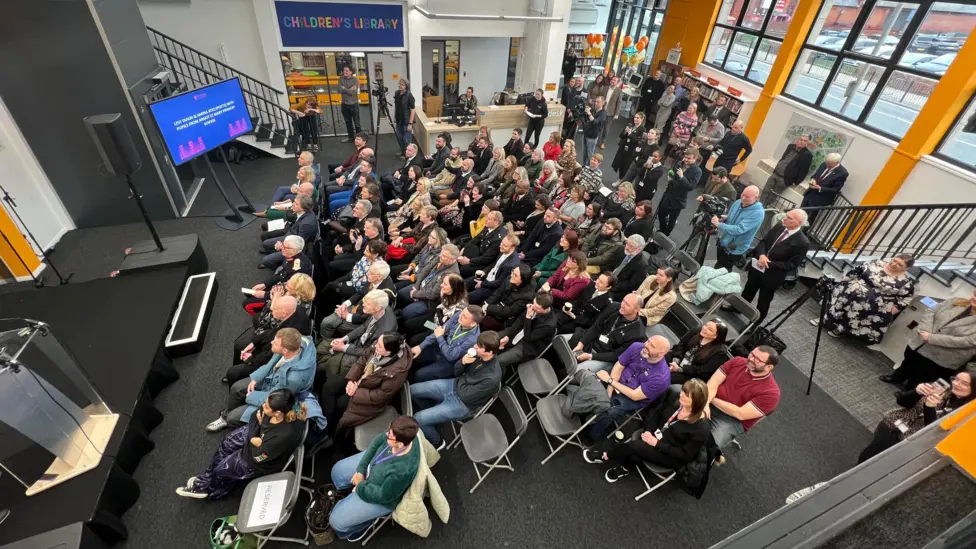
Walton, Liverpool, UK 12th December 2024
'Spellow Library, in Walton, Liverpool, was forced to close when it was set alight on 3 August amid unrest which swept across the country after the stabbings in Southport.

The city was determined to not let hatred win, with £250,000 raised and books being donated from the Queen and a host of celebrities.

An official ceremony marked the re-opening, including readings from Liverpool poet Levi Tafari while a letter from Queen Camilla was also read aloud.' ..


Claire Hamilton/BBC: An official ceremony marked the re-opening on Thursday morning


Break the Windows on Learning and
New Ones Will be Found to Look Out on the World.


INDIVIDUAL
|
INTERPERSONAL : SCIENCES              
humanistic ------------------------------- mechanistic
SOCIOLOGY : POLITICAL   
|
GROUP

My Learning
My Literacies


'The World(s) of Learning'

Society - Community
Social Justice

Justice
Social/Public Services


Previously:

Related post: 'forms of Hygiene'

literature : window

Sunday, August 22, 2021

Why the posts about books?

Since I started this blog in April 2006 book tagged posts are numerous; almost 300 in fact.

https://hodges-model.blogspot.com/search?q=book

As with the previous post "Spare Parts" many are not even a review of the book in question. Use of about here is a misnomer. Currently, there are 51 posts tagged 'review', probably not all text book.

So, why bother? These posts are intended to suggest and possibly show the scope of Hodges' model. The placement of the book within a particular care (knowledge) domain is no accident.

Even though there is often overlap between the domains there is often a primary placement. 

This is were you the reader (learner, teacher, policy maker ...) come in, as the model invites you to interrogate the book's title and often, its very informative (for commercial reasons) subtitle.


Saturday, October 17, 2020

Infinite space: Where do you 'read' the model?

individual
|
INTERPERSONAL : SCIENCES
humanistic ----------------------------------------------- mechanistic
SOCIOLOGY : POLITICAL
|
group - population
"The mind is king of infinite space, Hamlet said,

"A book is better to read in the spot of choice..."
... and no better spaceship has yet been found than a book."

"... 4.38 million books -

"But if one is banged up by lockdown, a book is a rope of knotted sheets."

- were bought in the first week of this month."

"Escape is not the same as escapism."

My source:

Editorial, Infinite shelf space, The Daily Telegraph, 8 October, 2020, p.15.

Saturday, October 12, 2019

"Ecoliteracy and the trouble with reading" by Code JM.

From:
Jonathan M. Code (2019) Ecoliteracy and the trouble with reading: ecoliteracy considered in terms of Goethe’s ‘delicate empiricism’ and the potential for reading in the book of nature, Environmental Education Research, DOI: 10.1080/13504622.2018.1558438

"Literacy in the context of health literacy—another type of literacy given distinct status in recent times—is defined as the ability to use information about health in a meaningful way (Velardo 2015)". ...

 individual
|
INTERPERSONAL : SCIENCES
humanistic ----------------------------------------------- mechanistic
SOCIOLOGY : POLITICAL
|
group - population
... "To be health literate is to have access and understanding of the knowledge, motivational factors, and competencies for appraising and applying health information so that decisions and judgements can be made about healthcare, disease prevention and health promotion in everyday life (Sorensen et al. 2012)".


"Perhaps one of the greatest oversights in terms of most ecological, scientific accounts of ecoliteracy is that science has yet to adequately address the mystery of life (a point raised by many authors and succinctly argued by Schumacher (2011)[1977] already several decades ago). This oversight has led to the tendency to approach ‘the book of nature’ in materialistic and mechanistic terms whereas the challenge that emerges through critical considerations raised by Kuhlewind and others is that it is a living book that we—as readers—can potentially participate in if we develop ways of knowing adequate (Schumacher 2011[1977]) to the task".


Wither "The Book of Nature" / "The Book of Science"?

Jonathan gave a presentation at Threshold Concepts Conference in Dundee which I attended. This reminded me of how I have been wanting to re-read Bortoft and related texts, especially Schumacher.

Wednesday, July 24, 2019

Marrakech Treaty - NZ responding to global 'book famine'

individual - self
|
INTERPERSONAL : SCIENCES
humanistic ----------------------------------------------- mechanistic
SOCIOLOGY : POLITICAL
|
group- population


Marrakech Treaty to Facilitate Access to Published Works for Persons Who Are Blind, Visually Impaired, or Otherwise Print Disabled

Wednesday, February 28, 2018

Book: Poetry Pharmacy

individual
|
INTERPERSONAL : SCIENCES
humanistic --------------------------------------- mechanistic
SOCIOLOGY : POLITICAL
|
group


Tuesday, November 03, 2015

Papers - reading: Metalearning, Case-Based Learning, Reflection and Threshold Concepts

Working on the latest paper for module 4...

Jones, P. R. (1995) Hindsight bias in reflective practice: An empirical investigation. Journal of Advanced Nursing, 21(4), 783-788.

Within any web tool-resource based on Hodges' model can I try to ensure that reflection is a more 'contemporaneous' activity?

Ward, Sophie C., & Meyer, Jan H. F. (2010) Metalearning Capacity and Threshold Concept Engagement. Innovations in Education and Teaching International, 47(4), 369-378.

Metacognition, metalearning, reflection, reflective practice?

Kinchin, I., & Miller, N. (2012) ‘Structural transformation’ as a threshold concept in university teaching. Innovations in Education and Teaching International, 49(2), 207-222.

McDonald, K. (2013) Is reflective practice a qualitative methodology? Nurse Education Today, 33, 13–14. doi:10.1016/j.nedt.2012.07.011

Reflective practice as a single case study?

Kantar, L.D. & Massouh, A. (2015) Case-based learning: What traditional curricula fail to teach. Nurse Education Today, 35(8), E8-E14.

Three learning practices that were developed by the case study approach: (a) recognizing the particulars of a clinical situation, (b) making sense of patient data and informing decisions, and (c) reflection. Indepth analysis of these practices helped unravel four professional attributes that form the tenets of case-based learning: (1) a salience of clinical knowledge, (2) multiple ways of thinking, (3) professional self-concept, and (4) professional caring.

Several forms of situatedness are also described.

I am wondering about the possible role of 'worked examples', but am also aware through Kantar  & Massouh and others of the labour intensive nature of producing case studies (as worked examples). Is there another way to present them? One that is also student produced?

Situated Noticing
Drawing on students’ experiences in CBL, three categories emerged from the data to describe the sequence of noticing activities: (1) grasp of patient data, (2) holistic grasp of every aspect of the patient, and (3) clinical imagination (e10).

Assumpta, A. (2015) Transdisciplinary technology education: a characterisation and some ideas for implementation in the university, Studies in Higher Education, 40:9, 1715-1728, DOI: 10.1080/03075079.2014.899341

No mention of 'holis*' interesting for that?
Figure 1. Conceptual framework to understand complexity theory (Jackson and Ward 2004).

Figure 2. Traits of transdisciplinarity as a process group (Wenger 2000, 233) - includes 'A set of maps'.

(btw - the first paper is not mine.)

Thursday, September 25, 2008

Knowledge site 'Pass It Along' [IBM] & 6 New Scientist Autumn Specials

There is a new beta site for software and systems developers... by IBM 'Pass It Along' for sharing knowledge and expertise:

Pass It Along


Also received - news of 6 weeks of New Scientist Autumn Specials:


Starting this week and running until 25th October issue, New Scientist will be featuring a series of special reports:

Sept 20th - Future car: electric or hydrogen?

Sept 27th - The seven biggest mysteries about the Earth

Oct 4th - Outer limits of the brain

Oct 11th - What would a world run on renewable energy look like?

Oct 18th - Excess: why we need a new economic model

Oct 25th - Defeating cancer

Thursday, November 08, 2007

From Sinclair and [BBC] BASIC to PHP, AJAX, Javascript and Drupal?!

Starting the server and delving into Drupal I'm reading too:

Babin's - Beginning Ajax with PHP
Darie et al. - AJAX and PHP

The code in these and most books is available on-line and while this makes life easier, I've realised that the time spent in the 1980s typing code into the Sinclair ZX81 (with 16k RAM pack) and BBC microcomputer provided a great way to learn programming structures and syntax. Now, I don't have time for typing even though I'm no keyboard slouch (and yet - posture! posture!).

Another thing I've never faced up to the challenge represented by the PC in terms of programming and networks. Lots of reasons including family, day job, a static website, some publications and amongst the excuses is the arrival of OOP (object oriented programming). I found myself using C+ on my degree course (philosophy:computing) and worked through the assignments 'OK', but this was no springboard.

In the books you can feel short-changed as the code examples include repeated functions - browser checking, error handling and such like. So what to do? Well, re-use of code is a key principle of programming and so whether a case of typing or copy-paste re-use makes sense.

I've got some of the chapter exercises working including this AJAX grid, which I know is no great shakes. What I think will help push me forward is to flavour this with data related to Hodges' model. That's a problem too - having meaningful data.

Anyway, must go - to check if the three updates in the image to the left are actually in the database table. MySQL is another thing to get to grips with and I notice that the latest version of PHP can be used to write object oriented code - OOPs - no escape!

Wednesday, June 13, 2007

i3: Inclusion, Integration, Informatics

As well as studying Bortoft over several months, I've been reading Oberski's (2003) paper 'A Goethean way of seeing inclusively' (ref. below) which discusses inclusion within special education. The second page in - I sat up. Although the subject is education, inclusion and integration are central drivers in care service development and improvement. Let's face it, you can't read or listen anywhere without coming across 'i' this and that.

Usually, ask a philosopher to justify their existence and amongst other earnest pursuits they will point to their detailed critique and qualification of the way words are used in our routine daily lives, both domestic and working. They do us a great favour, as the world would grind to a halt if everyone was blinded by the light of uncertainty and what would be perpetual philosophical deliberations.

In this paper, Oberski refers to sources that highlight some crucial differences between inclusion and integration. In this context inclusion means the school must adjust to accommodate and include the child with special educational needs.

As for integration, it is the child [individual] who must 'fall-in-line' and match themselves to the institution the school.

Of course, [special needs] education is not health - is it? Whatever the extent of education within health and social care, it must play a far greater role in future. That's why distinctions like this are important.

The policy push is ongoing - integrated services, public involvement (inclusion?), patient engagement (self-assessment, carer assessment, self-care = inclusion?). How does all this fit together and :-

1. is it generally consistent?
2. are these terms consistent as applied across the h2cm domains:

- INTERPERSONAL; SOCIAL; SCIENCES and POLITICAL?

There's an exercise here if you care to try?

Actually, if inclusion and integration are not used consistently across the care domains, what does that mean for #1 and the general situation? Surely declaring a conflict of definition - should any exist - is as important as declaring a conflict of interest?

If a conflict is found do we freeze in panic, transfixed in the glare of uncertainty?

Or do we just play it cool. Reach for the sunglasses and watch as informatics pulls it all together?

Oberski, I. (2003). A Goethean way of seeing inclusively, Eur. J. of Special Needs Education, 18, 3, 333-340.

Sunday, April 01, 2007

Buckets and Spades - Fit to Drupe...

I'm away for two weeks from Tuesday on holiday with my wife and daughter. So you can have a break too!
Never been to Crete before, but I believe the wild flowers and Easter time is very special. We plan to get into the mountains as well as the coast and ancient sites. I love the Med. Greece, Turkey, Italy... The people, history, food, climate and snorkelling great, although not sure it will be that warm for us. I think we are actually the first flight out for the season. Not sure if it will be possible so early on to visit Santorini - we'll see.
BBC4 has featured programmes on the Med covering geology and art.
Holiday reading includes Drupal. I’ve downloaded files including text and screencasts. What I really need is a block of time to fully grasp the basics on my PC and in my head! As mentioned previously I had a bare bones Drupal site successfully installed using XAMP. When I went back to it - yep I'd lost the plot. In the end I scrubbed it all. It may have salvageable, but my book David Mercer's 'Drupal' uses Apache2Triad. So I went with that. Now I've successfully installed another bare bones Drupal test site, learning in the process.
Some things I've noticed already:
Drupal content types includes blog, book, forum, story and much more...
The blocks to build a site are the usual elements of header, main, side bar(s) and footer.
I think this blog Welcome to the Quad will continue, but there's two other possibilities:
  1. They say there's a book in everyone (which of course includes our readers!). So unsurprisingly, the Drupal book content type might be really useful to begin a collaborative outline for a open source book on Hodges' model. Believe me this won't happen without the views and input of others, but h2cm is a cognitive currency that must be shared. I say currency not in the monetary sense but the sense of a shared value.
  2. There's a world of expertise out there and c/o the Global Alliance for Nursing and Midwifery there's the possibility of a community of practice devoted to Global Frameworks for Health. This is about being open-minded in terms of other generic high-level frameworks. In resorting to Drupal I don't want to reinvent the wheel, if there are existing communities to join then let's get on with it.
It will be great to put together a dynamic site and look for a serious hosting solution. I should have done this years ago. Maybe though (to rationalise a little) everything happens in its own time - whatever that means...

Finally started a banner for the blog (so far it's erm a bit bubbly) and podcast 2 is nearly there. I have still not heard about the Serres-Hodges chapter effort (the web version is not that submitted), was supposed to last month.
Ruby's going on holiday too (for reading) and something lighter for the sake of the case and relationships. There's another post about the great books and music that somehow passes us by. I've never read Don Quixote - so I could put that right.
I’ll pack an art pad too. The door to that room is going to creak like mad, but it will be worth pushing ajar and walking through. Once there, at least five other doors beckon. Something to share with Beth. Bye for now.
See you sometime after the 18th!

Wednesday, December 06, 2006

What are you - mathematician, book-reader or book-reading clock-watcher?

Sometimes you don't realise you are on a long-term cherry-picking escapade. I say escapade because this captures the rather haphazard, accidental and part-time nature of my fruit gathering.

In 1992 in the Engineering Computing Newsletter [SERC] Science and Engineering Research Council's EASE programme #38 p.4-5 Michael McCabe asked readers How would you label the quadrants of this diagram? - "How would you label the quadrants of this diagram?"


I cannot find the brief article "Human Factors Aspects of User Interfaces Design" on the web, but I kept the original. It obviously meant something to me, McCabe shows why...

As a mathematician you might choose - from top left clockwise 2,1,4,3

A clock-watcher - from top left 4,1,2,3


from top left 1,2,4,3 - for a book-reader.

And a book-reading clockwatcher - from top left 1,2,3,4

So, how would you label Hodges' model and does this say anything about how you would populate and read the model?

Monday, August 28, 2006

Photos & Google Analytics

Now three months since last post! Like they say things get worse, before they get better...

Good excuse of course with summer holidays, lounge and dining room decorated, still more jobs to do especially with the nights getting longer.

I posted on Flickr quite a while ago, finally uploaded some photos inc. some holiday snaps:

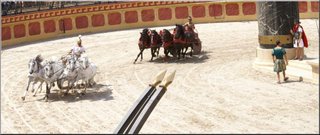
This shot was taken at the theme park Puy Du Fou, just SE of Nantes. The night spectacular was indeed superb and a nice contrast to the usual theme park fare, running through the history of the people of the Vendee. Over a thousand actors contributed to the show, the stage huge, the night 28 July star-lit clear from the start 10.30pm to 00.30am.

On the site - AddfreeStats has been really useful for many years, but I've taken the plunge with Google Analytics. Short on details about the pages that people are visiting, look forward to reading the reports.

In 2003 I started reading some of the translated books by Michel Serres, a French philosopher. It's a concentrated read, constantly going back and re-reading, but the way Serres' approach marries with Hodges model is amazing. I had to write and now what a saga. You see, the paper sort of wrote itself, so there was no audience in mind and it shows. After several rejections more to follow on this.

Bye for now...