Hodges' Model: Welcome to the QUAD: therapy

Hodges' model is a conceptual framework to support reflection and critical thinking. Situated, the model can help integrate all disciplines (academic and professional). Amid news items, are posts that illustrate the scope and application of the model. A bibliography and A4 template are provided in the sidebar. Welcome to the QUAD ...

Showing posts with label therapy. Show all posts

Tuesday, August 11, 2026

Philosophical Counselling - Reading group: Taylor 2002 'Central Value of Philosophical Counseling'

In addition to Kantian Desert (this p.m.) it is proving helpful to join a reading group on Philosophical Counselling. Being able to combine clinical and therapy experience* with philosophy is a welcome and rather overdue development. The reading for tomorrow (online for me I hope) is: 

Taylor J.S. (2002) The Central Value of Philosophical Counseling. International Journal of Philosophical Practice. 1 (2):1-9.

ABSTRACT: The title of this paper is deliberately ambiguous. It could refer either to the central value that philosophical counseling has for philosophy in general, or else it could refer to something (such as personal autonomy, or personal well-being) that philosophical counselors believe to be of value, and that they are able to help their clients pursue. In fact, this paper will be addressing both of these topics in order to demonstrate
the links that hold between them, and, in so doing, will attempt to further elucidate the nature of philosophical counseling itself.

Taylor (and related papers) also joins the dot (object?) that is Hodges' model, for example (with my emphasis):

'In this vein philosophical counseling is viewed as a Socratic drawing out of the knowledge that the client already possess, and that may be revealed through the careful questioning of a well-trained practitioner of the elenchic method.' pp.1-2.

I've long used guided discovery, by which the students (usually)/audience co-produce the model through a discussion.

'However, the difference between Socrates as a seeker after truth and the philosophical counselor as a professional who helps his or her client map out his or her own world-view in order to address particular problems that he or she is concerned with should not be overstated.' p.2.

'Furthermore—and perhaps most galling of all to philosophical counselors—academic philosophers often seem to view philosophical counseling as not being “real” philosophy at all, but more perhaps a species of social work, or an unsophisticated variant ofpsychotherapy.' p.4.

'Again, this information may be used by the counselor to help the client reflect more acutely upon her own views concerning the morality of abortion.' p.6.

'Given these two senses of “autonomy” it appears that the philosophical counselor is most concerned with enhancing autonomy in the second, Millian, sense of this concept. This is because philosophical counselors often try to aid persons in making decisions (or discoveries) about what it is that they really want to do, what their personal value-system or world-view really consists of.' p.11. 
(A contribution to person-centredness? Critical thinking is also noted by Taylor.)

 See also: https://www.igpp.org/english

 *Including, counselling, family, cognitive and behavioral therapies, plus psychosocial intervention.

Thursday, May 07, 2026

Interviews, playwriting, and clinical encounters: pause for breath - Roger Lewin

It can be surprising how you know something. Something that should be obvious to you. It's your 'Bread and Butter' as the saying goes. And yet for a variety of reasons, you persist in not seeing it, or you frame it in a way that ultimately reveals a bias, influence, and may even mask several aspects of truth. It might be the influence of work over four decades plus. Sitting down, or frequently finally getting out for a walk after several weeks of nudging, in a one-to-one therapeutic context. Or, ever since secondary school, that distant performed encounter with the Crucible. And, more recently as 'Ken', a Post Office subpostmaster and his wife (a brief 10-12 mins), and over the years a desire to write dialogue.

Reviews of Roger Lewin's Complexity, vary in their conclusions about the book's quality. No surprise there, but reading the book it was a revelation to see the method: a series of interviews and the resulting dialogues. 

'In this revision of his book originally published in 1992, Roger Lewin explains what the science of complexity is all about through interviews with some of its most important practitioners (and critics) organized around some of the central ideas. As such this is both a fine introduction to the subject and an interesting read. Lewin includes 16 pages of photos of the scientists he interviewed captioned with a significant quote from each. He has added an afterword on the application of complexity science to business, and an appendix about John Holland, whom he dubs, "Mr. Emergence."

"Everything works toward an ecology" is an old dictum of mine. I have the sense that I came up with that myself, but I probably read it somewhere years ago. At any rate, what is being said here is that complex systems work toward a state of equilibrium near a transition phase, near "the edge of chaos." This equilibrium can be an ecology (Darwin's "tangled web"); indeed it can be the entire planet, as in the concept of Gaia in which "the Earth's biological and physical systems are tightly coupled in a giant homeostatic system" (quoting Stuart Kauffman on page 109).'

Source: https://www.goodreads.com/en/book/show/384547.Complexity

There's nothing profound in this post, and yet this melange of interviews, playwriting, and clinical encounters gives me pause for breath.

Previously: 'Our broken sticks' c/o Roger Lewin "Complexity: life at the edge of chaos"

Sunday, March 22, 2026

Slingshot AI? Meet the Earthshot (Prize ...!)

Slingshot AI

Ash
"the first AI designed for therapy"
 

'In January 2024, we set out to build a 
foundation model for psychology. 

The mental health crisis sweeping across 
our communities isn’t going anywhere, 
and what we’re doing clearly isn’t enough. 
Therapists have one of the hardest jobs in the world,
and there just aren't enough people 
or resources to help everyone in need.
And we all know in our hearts that everyone 
could use some help with their mental health. ...'

'We need a foundation model for psychology.'
 
🔷 
 
Plus a bit more ...? 
 
INDIVIDUAL
|
    INTERPERSONAL    :     SCIENCES               
HUMANISTIC --------------------------------------  MECHANISTIC      
SOCIOLOGY  :   POLITICAL 
|
GROUP

The four primary therapeutic approaches used by Ash are:
  1. Cognitive Behavioral Therapy (CBT): Focuses on identifying and modifying dysfunctional thoughts, emotions, and behaviors.
  2. Dialectical Behavior Therapy (DBT): Teaches skills for emotion regulation, distress tolerance, and interpersonal effectiveness.
  3. Acceptance and Commitment Therapy (ACT): Focuses on accepting difficult emotions while committing to actions that align with personal values.
  4. Psychodynamic Therapy: Explores unconscious patterns and early life experiences to understand current behaviors. [ Google AI Overview* ]
?

?

?


Our 'Intelligence' is embodied.
The whole of Hodges' model is / can be 
embodied - embedded within the SPIRITUAL.

My source: Electronic therapy - Machines of loving grace, The Economist, November 15th-21st, 2025. Vol. 457: #9474. pp.72-73.

 *"slingshot ai - what are the four therapeutic approaches used by ash?"

 
Previously: 'health' : 'ai' : 'parity of esteem' : 'foundation' : 'language' : 'embodied'

Thursday, January 08, 2026

Hodges' model: An algebra for care - seeking axioms?

Although Oliver had been brought up by philosophers, he was not theoretically acquainted with the beautiful axiom that self-preservation is the first law of nature.
                                                                                    
- Charles Dickens, Oliver Twist

Coady, C. A. J. (1990). Hobbes and “The Beautiful Axiom.” Philosophy, 65(251), 5–17. 
http://www.jstor.org/stable/3751240

"It is an axiom in therapeutics that the more remedies there are proposed for a disease the less likely is any of them to be effective."

[- William Osler]

Mountin, J. W. (1943). Nursing: A Critical Analysis. The American Journal of Nursing, 43(1), 29–34. https://doi.org/10.2307/3416264

Individual
|
     INTERPERSONAL    :     SCIENCES               
HUMANISTIC  --------------------------------------  MECHANISTIC      
 SOCIOLOGY  :    POLITICAL 
|
Group
 
'One of the core tenets of pragmatism, despite its various formulations by William James, Jane Addams, John Dewey, and neo-pragmatists like Rorty, Habermas, and Putnam, is an epistemological axiom first formulated in 1868 by Charles Sanders Peirce. This maxim, often dubbed the pragmatic maxim, states that the meaning of our ideas is best expounded when we can spell out the implications or the effects of these ideas in real-world experience and practice (Peirce 1878).' pp.105-106.
(Racine, 2024).

physical - SELF - My body[?]


'The lack of consideration of downside risks applies to all COVID-19 countermeasures, including mass-masking (e.g. the social and psychological consequences of mask-wearing for all kinds of social interaction, most notably in educational and childcare settings) and to the accelerated approval of vaccines. The latter is particularly noteworthy because the need for rigorous testing of new medications to guard against the risk of side effects is a standard axiom of contemporary ethical medical practice. Given that the vaccines in question employed novel mechanisms, not testing them sufficiently to assure their longer term safety was stratospherically risky: it meant that the possibility that this vaccination programme would do more harm than good could not be excluded. Yet, the medical establishment stood foursquare behind it, insisting on the safety and efficacy of the vaccines and pillorying any, including those within it, who demurred.' p.55. (Kelly, 2023).


'“Never have we been so free. Never have we felt so powerless”: this, according to Bauman, is the paradox of our time. Verhaeghe writes with a variant: “Never before have we in the West had it so good, and never have we felt so bad.”33 Because neoliberal axioms determine the standards of what is healthy and normal, society sees those who do not want to participate as sick or abnormal.' pp.97-98. (Vanheste, 2023).
 

My emphasis

Racine, E. (2024). What Participatory Research and Methods Bring To Ethics: Insights From Pragmatism, Social Science, and Psychology. Kennedy Institute of Ethics Journal 34(1), 99-134. 
 https://dx.doi.org/10.1353/ken.2024.a943431.

Kelly, M.G.E. (2023). Securing the Pandemic: Biopolitics, Capital, and COVID-19. Foucault Studies 35, 46-69. https://muse.jhu.edu/article/940834.

Vanheste, J. (2023). Half a Century of Exhaustion and Madness: The Fiftieth Anniversary of Pink Floyd's The Dark Side of the Moon. Soundings: An Interdisciplinary Journal 106(1), 87-109. 
https://muse.jhu.edu/article/950363.

See also: 'axiom' : 'algebra' : 'pragmatism'

Person-centred care = care axiomatics at a collective and individual level?

The first rule (axiom?) of first aid is...?

Monday, October 13, 2025

Book: Love's Labour by Stephen Grosz

They had loved and hated,
but they were still a couple, 
still doing love's labour ...

Luminous and necessary stories from the psychoanalyst's consulting room; on desire, heartbreak and learning how to love.

When it comes to love why do we find things so difficult? Drawing on over forty years of candid and surprising conversations with his patients, Stephen Grosz asks, what gets in the way of our falling in love? And what must we do to stay there? Penguin UK.
<>
'Ravi, a maths lecturer, is tormented by his wife Sonal's supposed infidelity, but won't look at the CCTV - even though that might reveal her to be innocent. This chapter has a sting in its tail when 19 years later Grosz is contacted by Sonal. She is dying of cancer and Ravi is cruelly neglecting her. Grosz feels that he missed a vital clue all those years ago, concerning Ravi's ingratitude and envy.

This moment of "failure" on Grosz's part forms an aspect of this small book's power. It shows that the psychoanalyst is not a machine, and the process is fallible. But it is also a testament to human complexity. When he hasn't understood the patient sufficiently, Grosz brings the case to his supervisor, and we, the reader, are witness to their exchange.' Life&Arts, FTWeekend.
Individual
|
      INTERPERSONAL    :     SCIENCES               
HUMANISTIC =========================  MECHANISTIC      
 SOCIOLOGY  :    POLITICAL 
|
My source: Kathy O'Shaughnessy. The hard work of seeing ourselves. Books, Life&Arts, FTWeekend, 27-28 September 2025, p.11.


Iamge: https://cdn2.penguin.com.au/covers/400/9780701188979.jpg

Tuesday, June 03, 2025

Self, ego, life and death

The INDIVIDUAL - GROUP axis continues to fascinate:


individual
|
INTERPERSONAL : SCIENCES
humanistic ------------------------------- mechanistic
SOCIOLOGY : POLITICAL
|
group

SELF - IDENTITY - PERSONHOOD

ego superego id

mood - depression - mania

psychoactive substances

ego death - reset, reconstitition, re-birth?

NATURE

 personhood -
rivers, mountains, trees, land

medicine(s)

psychedelics

cultural identity, knowledge

social history, practices

corporate personhood

law 'person'


See also:

Pahnke, Walter N. “The Psychedelic Mystical Experience in the Human Encounter with Death.” The Harvard Theological Review 62, no. 1 (1969): 1–21. http://www.jstor.org/stable/1509131.

Adler, Nathan. “Ethics, Ethos, and Actualization: The Paradigm of the Antinomian Therapies.” Issues in Criminology 5, no. 1 (1970): 85–99. http://www.jstor.org/stable/42912546.

Blainey, Marc G. “Forbidden Therapies: Santo Daime, Ayahuasca, and the Prohibition of Entheogens in Western Society.” Journal of Religion and Health 54, no. 1 (2015): 287–302. http://www.jstor.org/stable/24485257.

Nail, Thomas. “How to Read the Nature of Things.” In Contemporary Encounters with Ancient Practice, edited by Abraham Jacob Greenstine, Ryan J. Johnson, and Dave Mesing, 1st ed., 299–321. Edinburgh University Press, 2025. http://www.jstor.org/stable/10.3366/jj.17381661.21.

Corporate personhood
https://en.wikipedia.org/wiki/Corporate_personhood

Friday, May 16, 2025

Theatre - the best way to learn ...

Pardon me, while I stay local - in Liverpool . . . 

I've always been interested in drama since school days (aged 13-14) and playing Francis Nurse in Arthur Miller's Crucible. Recent reading (inc. Theatre of the Absurd, The Shifting Point), see 'drama' - with more to follow) encouraged me to find out more. As a community mental health nurse on a visit, I've sometimes thought of this script being written as we engage with each other. Framed within  interpersonal skills and the society 'outside', there's a sense in which a screenplay is also writ large. 

The fact of whether the session is therapeutic, progressive, person-centred, structured, ethical, purposeful, has tea and custard creams ... is the drama of course.

In a way the creators of formal psychotherapies are playwrights - directors:

After all, they keep producing 'original' therapy manuals, don't they?


In the new year I noticed a community message about a theatre group Valley Theatre Group, planning a 'Living Newspaper' for a drama festival that took place last month. There is another performance next month in Liverpool, as per the edited message below:

People have been asking what’s going on and when for our Hope Street performances June 6-8th. So here’s the details.

W
e start each evening with the play about a 1930s Socialist Theatre group, “Unity”. (Cast: Peter Merrill, Ted Grant, Steve Donegan, Meggan Pye, Day Sheehan and Donna Lauder)

Then, on Friday 6 June, in the second half, we have our first Living Newspaper. This is the one that has most of the sketches submitted by outside writers and developed at the workshops. Then on Saturday 7th, second half, we have the Leverhulme group (The one that won the award at the festival) with their Living Newspaper. Finally, on Sunday 8th, in the second half, we have the last of the Living Newspapers, the one with slightly longer pieces like Scouse Man. This final one also has an original sketch from a 1930s Living Newspaper, the Munich Pact.

Tickets are on sale at the Hope Street Theatre website (link below) and from Ticket Quarter. Please come along and try to get other people along as well.  It'll be a good night's theatre! 

Thanks for all your support. The WTM team

Ticket link:  www.hopestreettheatre.com

Phone: 0344 561 0622

Tuesday, April 08, 2025

Book TSR ii - Mental illness/health: History, process and progress

As posted yesterday through a book review, I developed an awareness for the role of process much earlier than previously thought. It wasn't Enid Mumford's work on the benefits of a socio-technical approach to successful deployment of information systems. I only discovered this well after the advent of home computing with the ZX81 and BBC micro 1981-1995.

It was 1978-79 to be more exact; on an admission ward during my three year student Registered Mental Nursing course at Winwick Hospital. On first recollection, I thought it was a clinic, with patients coming in for Clomipramine (Anafranil) infusion on to the ward. As students on placement we were allocated to support the clinic, completing regular observations, including pulse and blood pressure. Clearly, it was a long time ago. There is a paper (paywall), quite a significant one for me:
O’Flanagan PM. A Clomipramine (Anafranil) Infusion Unit. Journal of International Medical Research. 1973;1(5):375-381. doi:10.1177/030006057300100519 
I remember this Consultant's name being mentioned, but this was before my time(?). From the paper's first - accessible - page I can see the patients involved were actually in-patients. Which given the procedures, safety, observation makes better sense. There is reference to a film, in a hospital newsletter 'The Standard':
'Anafranil Film
In response to the interest shown in the film on Anafranil Infusion, Dr. P. O'Flanagan was present in the In-Service Training Room on Monday, October 29th for a second showing of the film, and to answer any questions from the audience.'
I wonder if the film is archived somewhere?

It isn't a surprise to see my former Community MH manager and friend David McKendrick listed on the Publications Committee. I do miss David - a great mentor!

In the previous post about 'The Sleep Room' I contrasted the mind-body dichotomy. In terms of evidence on 'both sides' of this divide, many people have made the observation of how you can see a broken arm, or leg, and other physical ailments, but mental health issues are often not obvious:
Powell J, Clarke A. Information in mental health: qualitative study of mental health service users. Health Expect. 2006 Dec;9(4):359-65. doi: 10.1111/j.1369-7625.2006.00403.x. PMID: 17083562; PMCID: PMC5060370.

The evidence-base of general medicine - physical health and psychiatry must be dynamic. The volume of publications bears testimony to the relentless change across all the sciences, research, technologies, knowledge, theory, practice, management and policy. On Twitter there is constant 'debate' between psychiatry and anti-psychiatry. 

Studies of intravenous clomipramine continue, the intervention much changed from the 1960-70s:

Fallon BA, Liebowitz MR, Campeas R, et al. Intravenous Clomipramine for Obsessive-Compulsive Disorder Refractory to Oral Clomipramine: A Placebo-Controlled Study. Arch Gen Psychiatry. 1998;55(10):918–924. doi:10.1001/archpsyc.55.10.918

Persson M-L. Adler Mats y Hetta J. Pulse Intravenous Clomipramine as an alternative antidepressant treatment to ECT: A pilot study. Eur. J. Psychiat. [online]. 2007, vol.21, n.4 [citado 2025-04-07], pp.263-267. Disponible en: <http://scielo.isciii.es/scielo.php?script=sci_arttext&pid=S0213-61632007000400003&lng=es&nrm=iso>. ISSN 0213-6163.

Karameh WK, Khani M. Intravenous Clomipramine for Treatment-Resistant Obsessive-Compulsive Disorder. Int J Neuropsychopharmacol. 2015 Jul 28;19(2):pyv084. doi: 10.1093/ijnp/pyv084. Erratum in: Int J Neuropsychopharmacol. 2016 Apr 27;19(10):pyw031. doi: 10.1093/ijnp/pyw031. PMID: 26221004; PMCID: PMC4772819.
Perhaps, someone can please enlighten me? Given the time between William Sargant's practice, and today how much more do we know? We know the gap can't be fully closed (phenomenologically?), but has the evidence-gap been reduced? What are the evidential mile[Km]stones in psychiatry - mental health nursing? What are 'the standard' measures? If we look at a model that is bio-psycho-socio-political, what difference might this make, to the 'debate', theory, practice, research, management and politics (policy)? 

'Woke' is a tainted word these days, but in mental health care and nursing we all need to wake up and in a safe space.

Monday, April 07, 2025

Book: 'The Sleep Room' by Jon Stock i

Somewhat indirectly - I must emphasize, a book review reminded me of my Registered Mental Nursing student nursing days; and the mind - body divide. Without realising it then I heard the sound of two keys out of the five in Hodges' model. There were positive role models in the staff nurses involved; plus, learning in the routes and modalities of physical and psychological responses to treatments; in the form of medication and therapy. 

'The Sleep Room' highlights the dangers of unbounded belief in recourse to physical treatments. Such books are designed of course to 'sell', to be emotive, sensational. But mental illness - the asylum systems, presents a history of humanistic intent and mechanistic horrors. If mental illness, severe emotional responses can render us as a rag-doll, pursuit of physicalist solutions to the nth degree, is tantamount to shaking the doll: violently.


individual
|
INTERPERSONAL : SCIENCES
humanistic ------------------------------- mechanistic
SOCIOLOGY : POLITICAL
|
group
mental

physical 

treatment


SOCIO-
resistance?

-POLITICS of health


More to follow - ii ...

Sansom, I. Abused by a 'hero' of British medicine, Review. The Daily Telegraph, 29 March 2025. p.15. 

Tuesday, March 25, 2025

Trauma - MUSIC PRESCRIPTION - James Rhodes

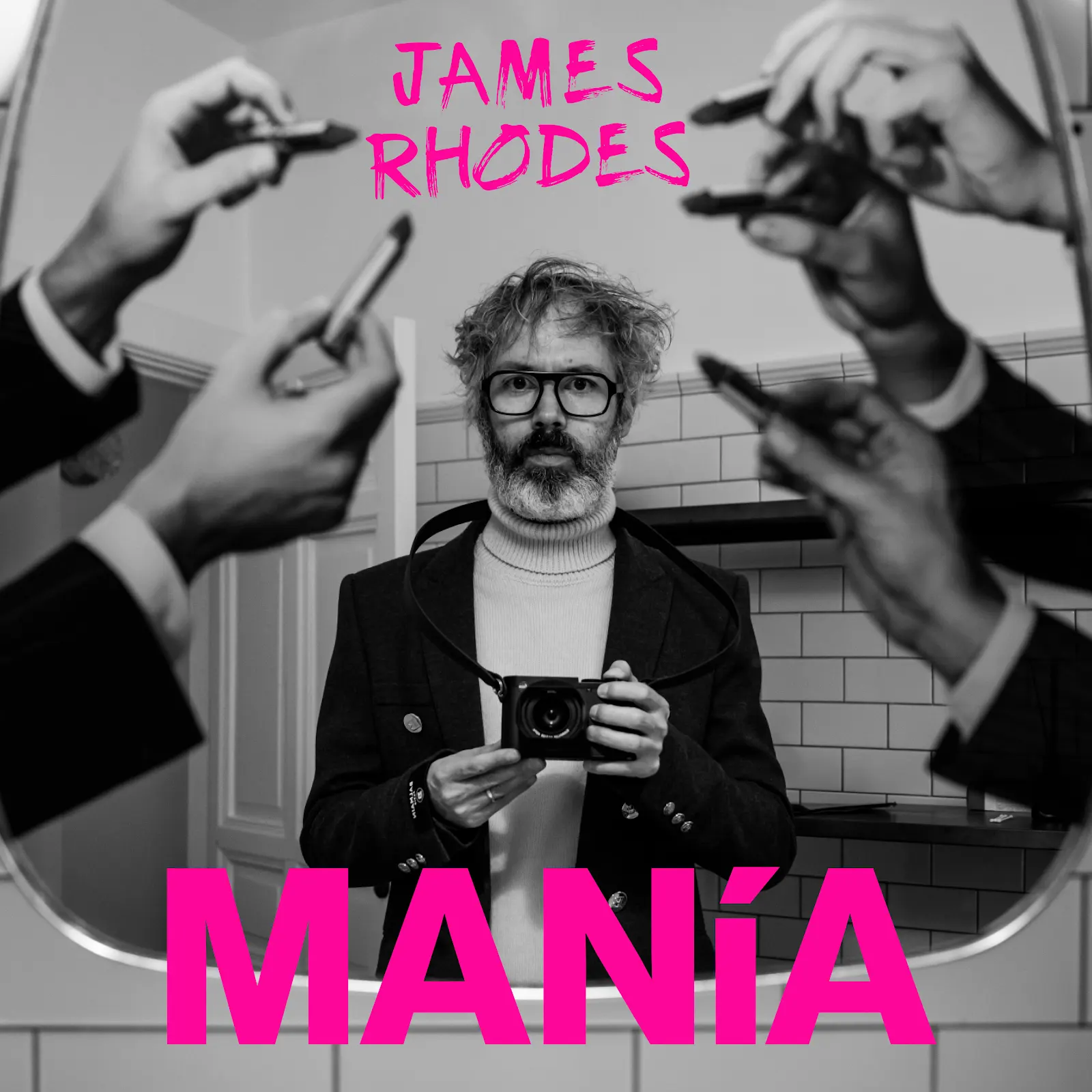
 'By now we're all familiar with the idea of music as therapy. For James Rhodes, however, music can be equivalent - at times even preferable - to  medication in the management of mental health. "Obviously, I am in favour of medication when it is necessary to save lives," says the 49-year-old British-Spanish classical pianist, when I meet him at Peregrine's, an upmarket piano shop in Clerkenwell, central London. "I was on medication and it genuinely saved my life. What I'm not in favour of is medication as a kind of easy option instead of doing other things that will also have the same effect. And there's no question that music [can]." 
 Manía, Rhodes's new album, is driven by that philosophy. Traversing swaths of classical territory, from JS Bach to 20th-century Argentine composer Alberto Ginastera, it is an attempt to profile the therapeutic properties of music from all angles, "I've always loved this idea of prescribing pieces," says Rhodes. As someone who has struggled with his own mental health, he says he has selected works that "accompany me and my insomnia, my anxiety, my desperation and my fears in the middle of the night"'. p.13.


My source:
Nepilová, H. Music on prescription, Arts, Life&Arts, FTWeekend. 8-9 March 2025. p.13.


INDIVIDUAL
|
      INTERPERSONAL    :     SCIENCES               
HUMANISTIC  --------------------------------------  MECHANISTIC      
 SOCIOLOGY  :    POLITICAL 
|
GROUP
MANiA

DRUG
PRESCRIPTION

ARTS
PRESCRIPTION

...


SOCIAL
PRESCRIBING


Wednesday, February 05, 2025

HC@AIxIA: AI&Health Seminar - FEBRUARY 13 3:30 CET ... the model of Bronchopulmonary Dysplasia and Post-prematurity Respiratory Disease

The context around artificial intelligence in medicine:
the model of Bronchopulmonary Dysplasia and Post-prematurity Respiratory Disease

Dear Madam/Sir,

This is to officially announce the SECOND seminar of the "AI & Health: Seminars 2025" series as hosted by HC@AIxIA, i.e., the "Artificial Intelligence for Healthcare" working group of the Italian Association for Artificial Intelligence.

  *** Save the date: 13 FEBRUARY 2025. 3:30 CET ***

We hope you will attend and participate in the discussion on the relevant topics that will be presented and by our speakers.
Feel free to share this with those potentially interested.

Link for participating: https://bit.ly/hc-2025-02 (PLEASE CHECK the site https://aixia.it/en/gruppi/hc/ for any changes or updates) - Please find some details below, and a poster attached (link). 

Anna Lavizzari, MD, MSc, Attending Physician - S.C. di Neonatologia e Terapia Intensiva Neonatale, Fondazione IRCCS Cà Granda Ospedale Maggiore Policlinico, Milano, Italy

Title: The context around artificial intelligence in medicine: the model of Bronchopulmonary Dysplasia and Post-prematurity Respiratory Disease
Abstract: Preterm infant survival has dramatically increased in the last decades, including those infants born at very low gestational age/at the limit of viability. However, the rate of Bronchopulmonary dysplasia (BPD) has increased. BPD is one of the most worrisome complications of prematurity and the most common chronic respiratory disorder of early childhood. Infants with BPD present respiratory sequelae in early childhood, including wheezing, recurrent respiratory infections, re-hospitalization, need for home- oxygen and inhaled therapy. During adolescence, they still present with airway obstruction symptoms, exercise fatigue, and an early decline in lung function toward Chronic Obstructive Respiratory disease has been described in early adulthood. The BPD pathogenesis is complex and multifactorial. It includes 1) the premature arrest of lung development, 2) the antenatal exposure to infection/inflammation, growth restriction and smocking; 3) post-natal exposure to invasive/non-invasive respiratory support and supplemental oxygen, post-natal infections/inflammation and poor nutrition; 4) genetic predisposition. The formal diagnosis of BPD is assessed at 36 weeks post-menstrual age, and it is currently based on the degree of respiratory support required at that time point. However, the window for intervention (preventive strategies and pharmacological interventions) occurs in the first days of life. Diagnostic tools for early identification of infants at risk are currently lacking, due to both the vulnerability of this population and the lack of suitable lung function testing. Artificial intelligence has the potential for early identification and stratification of the population at risk, offering the opportunity for targeted therapy and more accurate prognostic prediction.

Short Bio: Anna Lavizzari is a consultant neonatologist at the Neonatal Intensive Care Unit of Fondazione IRCCS Cà Granda Ospedale Maggiore Policlinico – Milan, Italy. Her clinical research has focused on lung recruitment strategies at birth, neonatal non-invasive respiratory support, Forced Oscillation Technique for assessing respiratory mechanics, individualized surfactant therapy, respiratory support optimization and lung function follow-up of former preterm infants. She did a research fellowship at the Murdoch Children’s Research Institute, Melbourne (2013-2014) with Dr D Tingay and Dr P Dargaville. She has participated in experimental research on the long-term respiratory complications in former preterm lambs (Dr J Pillow, University of Western Australia, and Dr K Albertine, University of Utah). She served as secretary (2019-2021) and chair (2022-2024) of the Pediatric and Neonatal Intensive Care group of the European Respiratory Society. She is a member of the Pulmonology Board of the Italian Society of Neonatology (SIN) and a member of the Pulmonology section of the European Society for Paediatric Research (ESPR).

Flyer: https://drive.google.com/open?id=1-S7_FHkpFtm1mdBZK9fZpY9WBiFJ3htm&usp=drive_fs

Link to participate: https://bit.ly/hc-2025-02
(PLEASE CHECK the site https://aixia.it/en/gruppi/hc/ for any changes or updates)

====

== Are you interested in Joining the group? ==
Please head to https://aixia.it/en/gruppi/hc/ fo find out how. Do not hesitate to contact us at hc-aixia@googlegroups.com for any information or clarification.

Thank you for your interest in the AI & Health seminar series and the HC@AIxIA working group, and see you soon!

Sincerely,
Francesco Calimeri, Mauro Dragoni, Fabio Stella
(coordinators of the HC@AIxIA working group)

Monday, November 18, 2024

The mask ...

'I will speak from my experience with Balinese masks, but I have to go back one step before that. One of the first, knockout exercises that you can do with actors, which is used in lots of theatre schools where they use masks, is putting a plain, blank, white mask on someone. The moment you take someone's face away in that way, it's the most electrifying impression: suddenly to find oneself knowing that that thing one lives with, and which one knows is transmitting something all the time, is no longer there. It's the most extraordinary sense of liberation.

This is one of those great exercises that whoever does it for the first time counts as a great moment: suddenly to find oneself immediately for a certain time liberated from one's own subjectivity. And the awakening of a body awareness is immediately there with it, irresistibly; so that if you want to make an actor aware of his body, instead of explaining it to him and saying, "You have a body and you need to be aware of it," just put bit of white paper on his face and say, "Now look around." He can't fail to be instantly aware of everything he normally forgets, because all the attention has been released from this great magnet up top.' p.219
self
|
INTERPERSONAL : SCIENCES              
humanistic ------------------------------- mechanistic
SOCIOLOGY : POLITICAL   
|
other


Brook, P. (1989). The Shifting Point. London, UK: Methuen. pb.

Secondhand from Reid's, Mount Pleasant, Liverpool, this book was already 'musty'. On October 18th it got 'wet' in a downpour from Sorrento to Capri and back. It smelt even more historic afterwards. It still provided great reading though! I noticed in a new pb edition the images were not included.  https://reidofliverpool.co.uk/

Thursday, October 24, 2024

Case formulation - Theory and Practice

 Still sorting papers, I've discovered copies of slides from the COPE course University of Manchester on Case Formulation by John McGovern.

An original purpose for Hodges' model is to help bridge the theory-practice gap.

The slides include -

  • content: ingredients - preliminary formulation
  • a means of understanding an individual's problems and distress in line with cognitive behavioural theory
  • hypothesis to explain acquisition, and maintenance of problem
  • not piecemeal

ROLE OF CASE FORMULATIONS

Bridge between theory and practice

a flexible tool for guidance

an explanatory framework to share with the patient

How types of formulation can be related to situations (Hodges' model is situated) - inference chain.

Comprehensive formulation - reflects the template that supports data gathering

inc. core beliefs - conditional beliefs

Questions for Preliminary Formulation

Main Ingredients - includes social support/relationships/employment/finances

(so this touches on determinants)

Choosing Treatment Targets

group exercise and summary

Sunday, October 13, 2024

Dramatherapy 2 - Personal identity

'Dramatherapy helps make sense of the world. Just as Goffman (1971) regards society as dramaturgically constructed, for the social presentation of selves, so Kelly (1955) describes a process in which individuals 'try on for size' various views of themselves as perceived by other people, in order to select the ones which allow them to carry on social relationships with one-another. Understanding of the other person is achieved by the process of construing his or her world, or 'construct system'. Kelly uses the notion of constructs and construct systems to describe cognitive structures. A construct is basically way of registering the degree to which an idea is present in relation to other ideas:

A construct is like a reference axis, a basic dimension of appraisal, often unverbalised, frequently unsymbolised, and occasionally unsignified in any manner except by the elemental processes it governs. Behaviourally it can be regarded as an open channel of movement, and a system of constructs provides each man with his own personal network of action pathways, serving both to limit his movements and to open up to him passages of freedom which otherwise would be psychologically non-existent.
(Kelly, 1955:199)' p.164.

'The multifarious ingredients of dramatherapy, like those of a theatrical event, are not haphazard. They are closely related, either by similarity or difference, to one another. Where there is confusion, this too is distinguished: it is confusion as opposed to order. Structure is employed in a conscious or intentional way, in order to reveal its true identity as the means by which we perform the fundamental action of relating things, in order to plot our movements in the world we live in. By allowing us to distinguish from, structure permits us to relate to. Certainly, the mechanism of perception performs this action without any conscious intention on our part; drama, and dramatherapy, is consciously contrived to assist it in its critical function, helping it to achieve a particular kind of clarity, by providing it with the raw material for involvement with the objects of perception.'
p.167-168.

EVALUATING THE EFFECT OF DRAMATHERAPY ON THOUGHT-DISORDER

Construct Theory rests upon the proposition that ideas hang together in a trustworthy way because people's behaviour is basically consistent. If people behave inconsistently, the thinking which they induce will lose its articulation, because the sense we make of life demands continual validation from the people and events we base it on. Thus, confused experience of relationship is, at its most fundamental level, the same thing as confused thinking; when our ideas begin to lose their coherence this is because, for us, other people have begun to come apart'. When they no longer fit the model we have of reality, the model itself loses its precise definition. At this point, Kelly suggests, we make our model more vague in order to preserve its identity as a model of reality: reality is blurred, so our model is imprecise. Unfortunately, it may become too inexact to function as a means of communication with the world of people and events it is intended to represent. The task of therapy is to provide evidence of the world's conformity to the individual's model, thus validating that individual's constructs. Because a person's disordered thinking is primarily concerned with the way they construe people, it must be done personally; because it is the result of experience over a considerable time, it must be done systematically, or 'serially`.
pp.171- 172.

Note to self: 'It is' :: 'It is - as if ?'. p.166.

individual
|
INTERPERSONAL : SCIENCES
humanistic ------------------------------- mechanistic
SOCIOLOGY : POLITICAL
|
group

I


I


Greek theatre masks

Institutional masking


Grainger, R. Dramatherapy and thought-disorder. Chapter 11. In Jennings, S. (Ed.), (1992) Dramatherapy. Theory and Practice 2. London: Routledge.
(Apologies, punctuation in the above may not be accurate, and I no longer have the text.)

Friday, October 11, 2024

Spontaneity - have we lost something?

. . . asking for a friend … of course . . . 

Creative therapy
'Moreno states that in the evolution of man, spontaneıty  appeared 'before libido, memory and intelligence .. .. In effect it is generally discouraged and thwarted by our cultural  mechanisms. Many of the problems of the psyche and social difficulties suffered by humanity are attributable to an insufficient development of spontaneity. For this reason the art of teaching people to use their spontaneity is the most beneficial thing to be learned in any of our educational institutions.' He also pointed out that anxiety indicates a loss of spontaneity.
A 'cultural conserve' (Moreno) is the end product of a cultural endeavour, the fixed conserve or preserve of culture  the contents of all the libraries, the teaching in all the schools, the knowledge acquired by a child in the home or at school, what is given by radio, television, the theatre, the  cinema, books, lectures - all the 'conserves' of the past creativity of others offered to the intellect.' p.142.


Jennings, S. (1983) Creative therapy. Banbury: Kemble Press edition. (Image: c/o Amazon)

#ChildDevelopment #Attention #Cognition #Play #Adolescence #Curiosity #Innovation #Life #Serendipity #Literacy #Media #DigitalTechnology

Sunday, June 16, 2024

Occupational therapist Joël inspires elderly to get in motion ...

Or, "Excuse me. How many movements are there in that watch?"*

"Joël Kruisselbrink’s creativity in designing exercises and games inspires elderly people to keep moving and live life to the fullest.

Nursing home residents are often understimulated and have little motivation to exercise. As an exercise instructor, Joël Kruisselbrink knows better than anyone how important exercise is for the elderly. His passion for creating exercises and games enables older people to continue enjoying life while keeping them moving."
Individual
|
      INTERPERSONAL    :     SCIENCES                   
HUMANISTIC  --------------------------------------  MECHANISTIC      
 SOCIOLOGY  :    POLITICAL 
|
Group


What do
you think
the impact
is upon
the resident's mental
health
and
emotional
well-being?


Psycho-
-Social?


Standards & Quality of Care
Policy


*Hodges' model: A tool to watch the complications of Care

My source: https://x.com/Rainmaker1973/status/1802268229361967404

Monday, June 10, 2024

body & soul - Book: Philosophy of care: New approaches to vulnerability, otherness therapy

Near the end now of Braga & Carvalho's (2021) Philosophy of care on page 318 I came across:
"When we come up against the demon of acedia, then with tears let us divide the soul and have one part offer consolation and other receive consolation. (Pr. 27)."

Individual
|
      INTERPERSONAL    :     SCIENCES               
HUMANISTIC  --------------------------------------  MECHANISTIC      
 SOCIOLOGY  :    POLITICAL 
|
Group

soul

body


- and a footnote (42):

"The generally accepted treatment for depression, with or without pharmaceutical intervention, is gentleness. Eat well, avoid stress, do not feel guilty; be kind to yourself, seek quiet but real amusement, rest a lot. But such a regime would find little sympathy with the spiritual directors of those afflicted with accidie. The classic cure for accidie is penance, a strict 'rule' of life, self-discipline and hard work" (Maitland, 2008: 113).

Maitland, Sara. 2008. A Book of Silence. London: Granta.

Interesting, the similarity between afflicted and affected?

A lot more to follow ...

Carvalho, C.A.S. Acedia and Its Care. In J. Braga & M. Santiago de Carvalho (Eds.), Philosophy of care: New approaches to vulnerability, otherness therapy. Springer. pp.297-323.

Abbrev. (Pr. 27) Evagrius of Pontus. 1971. Praktikos. ...

With thanks to Springer for hard copy - helps greatly. 👀

Saturday, May 11, 2024

Summer reading and books for review

I look forward to reading and reviewing these books. Many thanks to:

  • Tom Griffiths - Julian Richer's office
  • CUP
  • Springer Nature Customer Service

Julian Richer (Author), Kate Miller (Editor) (2024) Our Housing Disaster: - and what we can do about it. London: Richer Publishing and Media. 
https://www.richersounds.com/our-housing-disaster.html

Joaquim Braga & Mário Santiago de Carvalho (eds.) (2021) Philosophy of Care - New Approaches to Vulnerability, Otherness and Therapy. Cham: Springer Verlag.
https://link.springer.com/book/10.1007/978-3-030-75478-5

I will advise on how / whether informs my online presentation this coming week at:


Fritjof Capra, Pier Luigi Luisi (2014) The Systems View of Life - A Unifying Vision. Cambridge: Cambridge University Press. 
https://www.cambridge.org/gb/universitypress/subjects/life-sciences/genomics-bioinformatics-and-systems-biology/systems-view-life-unifying-vision?format=HB&isbn=9781107011366 

All three could have a role to play?

Monday, April 15, 2024

Dramatherapy ii - from Sociometry, Sociogram to Sociatry

Individual
|
      INTERPERSONAL    :     SCIENCES               
HUMANISTIC  --------------------------------------  MECHANISTIC      
 SOCIOLOGY  :    POLITICAL 
|
Group

A personal journey


"... Moreno soon began to seek ways of measuring the form and structure of relationships in groups. The techniques of sociometry which he invented have since been widely and successfully adopted by his successors, becoming an accepted field of social research in their own right. At its simplest, this approach relies on asking of the social grouping under investigation to indicate their relationship to each other so that, for example, a pattern of dominance (vertical structure) or affinity (horizontal structure) can be discerned. These measures may be committed to paper in diagram form (a sociogram) or expressed by the individuals arranging themselves in positions symbolising their relationships (an action sociogram)". p.106.


"More complicated interconnections and patterns can be demonstrated and the group asked to explore alternatives in order to recognise sources of conflict and misunderstanding and to modify them. Moreno foresaw a new discipline for which he coined the name 'sociatry' in which the social organisation rather than the individual is the object of the healer's endeavours, a truly 'group' psychotherapy". p.106.


Anticipating future theory-practice policy and education change.

Could the reduction in the options for student mental health nursing placements be compensated in-part by addressing the concurrent change in the range of therapeutic (modalities) interventions available?


Davies, M.H. Dramatherapy and Psychodrama, Chap. 5. pp.104-123. In Jennings, S. (Ed.), (1987) Dramatherapy. Theory and Practice for Teachers and Clinicians. Routledge, London. p.106.

Previously: theatre , space , diagram

Sunday, April 14, 2024

Dramatherapy i - thresholds, liminality and wounded healers

Individual
|
      INTERPERSONAL    :     SCIENCES               
HUMANISTIC  --------------------------------------  MECHANISTIC      
 SOCIOLOGY  :    POLITICAL 
|
Group

A personal journey

The 'wounded healer' - Halifax (1982)

".. it is the experience of our own wounding that will enable us to engage with our clients in a healing process". p.15.

"Therefore we can begin to understand that rather than the drama being the chaos, the drama is both the container of the chaos and the means of exploring it. Accompanying our groups through such dangerous territory may seem too frightening for the dramatherapist to contemplate, let alone the client". p.15.

"The attributes of liminality or of liminal personae (threshold people) are necessarily ambiguous, since this condition and these people elude or slip through the network of classifications that normally locate places and position in cultural space. Liminal entities are neither here nor there: they are betwixt and between the positions assigned and arrayed by law, custom, convention and ceremonial. As such their ambiguous and indeterminate attributes are expressed by a rich variety of symbols in the many societies that ritualise social and cultural transitions. This liminality is likened frequently to - death, being in the womb, to invisibility, to darkness, to bisexuality, to the wilderness and to an eclipse of the sun or the moon". p.14.

"The 'illness/treatment' model has by its nature to emphasise what the patient cannot do rather than what he might be able to do; to emphasise that what requires to be done is carried out by others rather than what the patient might do for him/herself". p.262.


Power as exercised (degrees of freedom?) through the therapeutic turn: the history of therapies; social, industrial, occupational, physical, drama, psychotherapy et al. ...


Turner, V. (1969) The Ritual Process. Structure and Anti-Structure. Routledge, London. cited in Jennings, S. (1987) Dramatherapy and Groups, Chap. 1. pp.1-18. In Jennings, S. (Ed.), (1987) Dramatherapy. Theory and Practice for Teachers and Clinicians. Routledge, London. p.14.

Mitchell, R. (1987) Dramatherapy in In-patient Psychiatric Settings, Chap. 12. pp.257-276. In Jennings, S. (Ed.), (1987) Dramatherapy. Theory and Practice for Teachers and Clinicians. Routledge, London. p.14.

In theoretical terms, Mitchell also describes the creative model, the learning model and the therapeutic model (p.265).

Halifax, J. (1982) Shaman: the wounded healer. Thames and Hudson, London [England].

Previously: theatre , threshold , liminal