Showing posts with label community. Show all posts
Showing posts with label community. Show all posts
Monday, August 31, 2026
Thursday, July 30, 2026
Remembering Dr. Gilberto Cárdenas - Self Help Graphics
|
We are saddened to share that Dr. Gilberto Cárdenas, a member of Self Help Graphics & Art’s board since 1980 and most recently a part of SHG’s Council of Governors, passed away on July 26, 2026 in Austin, Texas. As one of the earliest supporters of Self Help Graphics, his role in advancing the art of Chicanx and Latinx artists has transformed the art world and our own organization. He was not only an arts and cultural guardian, but also an internationally recognized scholar and leader in sociology, advocacy, and education, exemplified by his foundational role in establishing Latino Studies in universities across the United States. |
Continued ...
My source: Self Help Graphics & Art, 1300 East 1st Street, Los Angeles, CA, 90033, United States
Wednesday, July 15, 2026
Project 2000: The Judge Report 1985
Somehow, or perhaps that is being kind, I have a feeling that sources on the history of 'recent' nurse education may come to the fore. It is interesting that the guest editorial below reflects itself on the preceding 25 years. Not just several cohorts of students, careers, but a whole life-time.
We must hope today, that British nurse educators can find more security, if not the contentedness described by Rye in 1985 ...
See also: #RCN26 RCN Congress - Nurse Education'The main principles for policy change contained in the commission's report are as follows.
1 The uncoupling of education from service. Students should no longer be employees of the National Health Service. Nursing education should now be part of the main-stream of higher education, students being financed through a suggested bursary system.
2 A single level of basic nurse qualification leading to registration.
3 Curriculum development (as discussed in chapter 4 of the report) must take into account the need to retain certain speciality options, and prepare students for practice both in hospital and community settings. It creates the possibility of direct entry into district nursing, health visiting and midwifery.
This 3-year course would have educational credibility as it will be at diploma level, the first year being a foundation programme, furnishing a basis for informed choice later. The second year would contain practical placements (in the community, adult nursing and mental health). It would consist of three modules, the first to be based in a community setting, the second (focused upon the nursing of adults) in a hospital setting, and the third in a variety of environments related to mental health. Roughly 30% of the time will be dedicated to carefully supervised practice in clinical settings. The final year will be characterized by increased specialization. The opportunity to make a selection from a number of available modules will equip each successful student to become registered and to take up work either in an institutional or non-institutional setting. The academic award will be that of Diploma in Nursing Studies.
...
This new approach to nursing education will not create a 'generic' nurse, but will prepare students to work in their chosen speciality in hospital or in the community. If nurses are to respond to the changing patterns of health care, it is critical for future development that preparation for working in the community takes place in the basic diploma programmes. This may be seen as one of the more controversial implications of the report, but the profession must address itself now to these matters, as nursing education must become more flexible and capable of change to meet the needs of clients.'
Rye, D.H. (1985), THE EDUCATION OF NURSES: A NEW DISPENSATION. THE REPORT OF THE RCN COMMISSION ON NURSING EDUCATION. Journal of Advanced Nursing, 10: 505-506.
https://doi.org/10.1111/j.1365-2648.1985.tb00540.x
Royal College of Nursing (Great Britain)., & Judge, H. G. (1985). The education of nurses : a new dispensation. Royal College of Nursing. (Classed as a Book.)
See also: https://wellcomecollection.org/works/p889dx97
https://eprints.hud.ac.uk/id/eprint/10084/1/ouseycontent_9838.pdf
See also: https://wellcomecollection.org/works/p889dx97
https://eprints.hud.ac.uk/id/eprint/10084/1/ouseycontent_9838.pdf
Saturday, June 27, 2026
‘Prevention Demonstrator’ - GM Live Well
England’s First Prevention Demonstrator: Opportunities for Greater Manchester and its VCFSE sector
Greater Manchester has been chosen as England’s first Prevention Demonstrator, an initiative announced in the Government’s 10-Year Health Plan earlier this year. It marks a step toward transforming public services with a more ‘preventative’ approach.The Greater Manchester Combined Authority (GMCA) was named as the first prevention demonstrator in the UK Government’s 10 Year Plan for Health in July. It will take a community-led preventative approach to the provision of public services which means fixing the foundations of a person’s life – such as housing, and access to education and employment opportunities – as a means of preventing ill health from social and economic detriment and improving lives, as well as reducing pressure on acute and crisis services.
Continued ...
The Prevention Demonstrator will be building on the Live Well Model of service delivery, which brings together services such as health, employment support and debt advice at a neighbourhood level working with the voluntary, community, faith and social enterprise (VCFSE) sector, providing a blueprint for the rest of the country.
Warren Heppolette has been appointed to lead this work, seconded from NHS Greater Manchester where he was Chief Officer for Strategy, Innovation and Population Health. Warren has been closely involved in the GMVCFSE Leadership Group’s Commissioning and Investment sub-group which aims to improving standards and practices for the benefit of the VCFSE sector.
⍚
'Sustainability' and 'sufficiency' (as per the previous post) are words of the moment. Policymakers want change to have a permanent quality, which ironically means individuals within a population benefitting from initiatives like this have a mindset that makes them flexible to future changes and challenges.
As Camilla Cavendish notes in 'Andy Burnham will need to play a new card now', Manchester's prevention demonstrator has echoes of David Cameron's Big Society and the Troubled Families project. There are two other words that can work for individuals and populations: impetus and momentum. Within this through Hodges' model we can equip people and communities for lifelong learning. We can also highlight, as Prof. Kevin Fong did at RCN Congress 2026 in his marvellous keynote - that resilience is found between people, not within individuals.
See also: Presentation - Prevention, Health and Good Growth: Realising Our Prevention Ambitions
Philip Britteon, Alfariany Fatimah, Stephanie Gillibrand, Yiu-Shing Lau, Laura Anselmi, Paul Wilson, Matt Sutton, Alex J. Turner, (2024) The impact of devolution on local health systems: Evidence from Greater Manchester, England, Social Science & Medicine, Volume 348, 116801,
ISSN 0277-9536, https://doi.org/10.1016/j.socscimed.2024.116801.
My source: Camilla Cavendish, Opinion: Andy Burnham will need to play a new card now, FTWeekend, 20-21 June, 2024. p.12.
Previously: 'prevention' : 'big society' : 'troubled families' : 'social prescribing'
Friday, June 05, 2026
Call for Abstracts: Land Use for Net Zero Hub Early Career Conference
Dear colleagues,
We are pleased to open the call for abstracts for the Land Use for Net Zero Hub Early Career Conference, which will be held on 7 September (1:00–6:00 pm) at the James Hutton Institute in Aberdeen, ahead of the LUNZ consortium meeting (8–10 September). The call for abstracts will close on 12 June 2026.
The conference theme is: “Future Careers at the Science–Policy Interface: Exploring Opportunities and Challenges in LUNZ.”
We aim to bring together early career researchers and practitioners from LUNZ Hub and LUNZ Research, as well as other early career groups interested in the conference themes, to network, share work, and discuss careers at the science–policy interface.
We welcome abstracts for poster and oral presentations within the following themes. Submissions can include works in progress and unpublished research, as we aim to stimulate open dialogue, feedback, and learning. We also encourage contributions from partners beyond academia. The format of the day will be shaped by the level of interest across these topics:
- Transdisciplinary collaboration across sectors and knowledge systems
- Science communication and knowledge impact
- Modelling and evidence for land use change
- Integrating people, place, and nature in Net Zero transitions
- Just transitions and community resilience
- Community-based research in academia and policy
Please complete the following form to submit your abstract: https://docs.google.com/forms/d/e/1FAIpQLSeOzhkowu0NdM3YlQz-XEIovSB3805zX5LTT4Fm7FzBPq3f7Q/viewform?usp=header
Once we have received and reviewed abstracts, we will open up registration to presenters and the wider community.
If you are interested in helping with the organisation of the conference at an early stage, we would be very happy to hear from you—please get in touch.
We look forward to your participation.
Best regards,
LUNZ Early Career Board
https://lunzhub.com/get-involved/early-careers-board/
Anita Lazurko (she/her)
Senior Transdisciplinary Scientist
Biodiversity and Land Use
--------------------------------
My source: At 'Ecologies of Care':
Henrike (Kika) Neuhaus
Pronouns: she/her, they/them
Post-doctoral Research Fellow in Anthropology and Art
Livelihoods and Institutions Department
Natural Resources Institute
University of Greenwich
Wednesday, May 13, 2026
WPA/IACAPAP Global Curriculum Survey
Dear Neil et al.,
Would it be possible to recirculate this invitation to complete this ~5minute survey.
We recevied a good response (~200 with 72% expressing interest to join future steps) from the last round but we could have had more representation from Oceana, the Carribean, the Mediteranean, Central Asia, Russia, and perhaps more from any areas as emphasized in line 3 below.
Thank you in advance for your consideration, David
---------------------------------------------------------------------
Dear Colleagues, Families, Relatives, Young Adults, Adults, and Friends!
Anyone affected or who knows someone who is affect by a mental health problem.
We need your help, especially from those living in remote urban or rural areas, or otherwise underserved regions anywhere in this wide world!
HELP US DESIGN A GLOBAL CHILD AND ADOLESCENT MENTAL HEALTH, PSYCHIATRY AND ALLIED PROFESSIONS TRAINING CURRICULUM FRAMEWORK IN SUPPORT OF LOCALLY INTEGRATED COMMUNITY AND FAMILY-CENTERED EDUCATION AND ACTION.
The International Association for Child and Adolescent Psychiatry and Allied Professions (IACAPAP)
and
The World Psychiatric Association (WPA) Child and Adolescent Section are developing the Global Child and Adolescent Psychiatry and Mental Health Training curriculum FRAMEWORK.
To complete a short DESIGN feedback and ENGAGEMENT survey (~5 Minutes)
Click or Copy and Paste the following URL: https://forms.cloud.microsoft/r/x4MyX0MkYt
Here is A SHORT INFORMATIONAL VIDEO: https://www.youtube.com/shorts/NdMRqb1LVVM
HIFA profile: David Cawthorpe is Adjunct Professor, Cumming School of Medicine, Department of Community Health Sciences; Adjunct Professor, Cumming School of Medicine, Department of Psychiatry | Child and Adolescent Psychiatry; and Child Health & Wellness Researcher, Alberta Children's Hospital Research Institute, Canada.
https://profiles.ucalgary.ca/david-cawthorpe cawthordATucalgary.ca
My source: HIFA.
Friday, March 06, 2026
The land speaks through Bears & Peoples: Together
 |
| Figure 2 |
ABSTRACT
Landscape genetic analyses of wildlife populations can exclude variation in a broad suite of potential spatiotemporal correlates, including consideration of how such variation might have similarly influenced people over time. Grizzly bear (Ursus arctos) populations in what is now known as coastal British Columbia, Canada, provide an opportunity to examine the possible effects of a complex set of landscape and human influences on genetic structure. In this collaboration among the Nuxalk, Haíɫzaqv, Kitasoo/Xai’xais, Gitga’at, and Wuikinuxv First Nations and conservation scientists, we characterized patterns of genetic differentiation in the grizzly bear, a species of high cultural value, by genotyping 22 microsatellite loci from noninvasively collected hair samples over a 23,500 km² area. We identified three well-differentiated groups. Resistance surfaces, which incorporated past and present human use, settlement, and landscape resistant features, could not explain this pattern of genetic variation. Notably, however, we detected spatial alignment between Indigenous language families and grizzly bear genetic groups. Grizzly bears sampled within an area represented by a given language family were significantly similar to those sampled within that language family (P = 0.001) and significantly divergent to those sampled outside the language family (P = 0.001). This spatial co-occurrence suggests that grizzly bear and human groups have been shaped by the landscape in similar ways, creating a convergence of grizzly bear genetic and human linguistic diversity. Additionally, grizzly bear management units designated by the provincial government currently divide an otherwise continuous group and exclude recently colonized island populations that are genetically continuous with adjacent mainland groups. This work provides not only insight into how ecological and geographic conditions can similarly shape the distribution of people and wildlife but also new genetic evidence to support renewed, locally led management of grizzly bears into the future.
INDIVIDUAL|INTERPERSONAL : SCIENCESHUMANISTIC -------------------------------------- MECHANISTICSOCIOLOGY : POLITICAL|GROUP
Spatial overlap
Grizzly bear (Ursus arctos)
Population genetic structure
Landscape genetics
Indigenous language families
Human linguistic diversity
Awareness - Respect
Henson, L. H., N. Balkenhol, R. Gustas, M. Adams, J. Walkus, W. G. Housty, A. V. Stronen, J. Moody, C. Service, D. Reece, B. M. vonHoldt, I. McKechnie, B. F. Koop, and C. T. Darimont. 2021. Convergent geographic patterns between grizzly bear population genetic structure and Indigenous language groups in coastal British Columbia, Canada. Ecology and Society 26(3):7.
https://doi.org/10.5751/ES-12443-260307
My source:
Roman Goergen. Grizzly spoken here! Resurgence & Ecologist, July/August2023: 339: pp.10-11.See also: https://iaac-aeic.gc.ca/050/documents/p21799/85674E.pdf
Monday, February 16, 2026
The UK Dementia Awards 2026
Dear CHAIN member,
We would like to draw your attention to the following opportunity. Please pass on as appropriate. Thank you.Dementia Community
The UK Dementia Awards 2026
 |
The awards are judged by a panel of dementia experts, including people with lived experience, ensuring that every nomination is seen, valued, and understood.Regards,
Whether nominating a colleague, a team, a service, or someone whose quiet dedication deserves the spotlight, this is the chance to say: you matter, and your work matters too.
Friday 27 February 2026, 5pm: Nominations Close.
For more details please see: https://journalofdementiacare.co.uk/awards/listings
Irina Johnston
CHAIN Administrative Assistant
If you wish to publicise information on the CHAIN Network please email your request to: enquiries AT chain-network.org.uk
CHAIN - Contact, Help, Advice and Information Network – is an online international network for people working in health and social care. For more information on CHAIN and joining the network please visit website: www.chain-network.org.uk
Follow CHAIN on X: @CHAIN_Network ; Connect with CHAIN on LinkedIn
Previously: 'dementia' : 'carer'
Wednesday, January 14, 2026
Webinar “From Global to Local: Enhancing the UK Healthcare System with Lessons from CEI in LMICs” 10 February, 3–4PM (GMT)
The NIHR Patient and Public Involvement and Engagement (PPIE) team are pleased to invite you to our fourth webinar in the PPIE/CEI Bidirectional Learning Series “From Global to Local: Enhancing the UK Healthcare System with Lessons from CEI in LMICs”.
Date: 10th February 2026
Time: 3.00–4.00 PM GMT, London UK (Online via zoom)
Join us to explore how Community Engagement and Involvement (CEI) approaches developed in Low and Middle-Income Countries (LMICs) are actively shaping health research and service delivery in the UK. This session will demonstrate how global CEI principles —collaboration, equity, and shared learning - can be translated into local action to build trust and create more responsive healthcare systems.
What you will hear about:
- Global to local CEI strategies: Insights into how CEI strategies from LMICs can be used to strengthen community relationships and healthcare practice in the UK.Speakers include: - Farrah Lunat (Research Operations Manager at Lancashire & South Cumbria NHS Foundation Trust and Joint Lead Author of the NIHR ROSHNI-2 study) - Professor Nusrat Husain (Professor of Psychiatry and Director of Global Health at the University of Manchester and NIHR Senior Investigator) - Dr. Matthew Harris (Clinical Senior Lecturer in Public Health at Imperial College London and Honorary Consultant in Public Health Medicine)
- Driving Innovation through Reciprocity: Discover how a "virtuous circle of learning" between global and local systems enriches inclusion and equity.
- Translate Insight into Action: Practical examples and expert perspectives on turning global health CEI approaches into practical, equitable healthcare solutions within the NHS.
Submit your questions & register via Eventbrite:
https://www.eventbrite.com/e/from-global-to-local-cei-lessons-from-lmics-enhancing-the-uk-healthsystem-tickets-1976864265233?aff=oddtdtcreator
Sarah Betts
*Programme Manager (PPIE)* | NIHR Coordinating Centre
My source: HIFA
Wednesday, December 31, 2025
‘Life & health’: overview of global health, climate crises, SDGs and Africa Agenda 2030
26 December, 2025
Afrihealth Optonet Association (AHOA) proudly announces its Maiden ‘Life & Health’ Symposium, a landmark convening designed to inspire dialogue, innovation, and collective action around one of the most pressing issues of our time: “Overview of Global Health, Climate Crises, SDGs and Africa Agenda 2030.” This inaugural symposium represents AHOA’s commitment to shaping forward-looking conversations that connect health, environment, and sustainable development across Africa and beyond.
The world is experiencing an unprecedented convergence of health challenges and climate-related crises. Rising temperatures, extreme weather events, environmental degradation, and biodiversity loss are reshaping disease patterns, food systems, water security, and livelihoods. These realities disproportionately affect low- and middle-income countries, particularly in Africa, where fragile health systems and socioeconomic inequalities amplify vulnerability. The ‘Life & Health’ Symposium seeks to interrogate these realities and offer integrated, actionable pathways aligned with the Sustainable Development Goals (SDGs) and Africa Agenda 2030.
At the heart of the symposium is a bold premise: health is both a driver and an outcome of sustainable development. Achieving good health and well-being (SDG 3) is inseparable from progress on climate action (SDG 13), clean water and sanitation (SDG 6), zero hunger (SDG 2), sustainable cities (SDG 11), and reduced inequalities (SDG 10). By convening experts across disciplines, the symposium will explore how these interconnected goals can be pursued through coordinated policies, resilient systems, and inclusive partnerships.
The Maiden ‘Life & Health’ Symposium is designed as a multi-stakeholder platform, bringing together policymakers, health professionals, climate experts, development practitioners, civil society leaders, academics, youth advocates, and the private sector. Participants will engage in high-level discussions, evidence-based presentations, and solution-oriented exchanges that bridge science, policy, and practice. The symposium will also provide a space for emerging voices and community perspectives, ensuring that local realities inform global ambitions.
A key focus of the symposium is Africa’s Agenda 2030, which contextualizes global commitments within the continent’s development aspirations. Africa stands at a pivotal moment: with a rapidly growing youth population, expanding urban centres, and increasing climate exposure, the choices made today will define health and development outcomes for decades. The symposium will highlight opportunities to harness Africa’s demographic dividend, promote climate-resilient health systems, and foster innovation that aligns with the continent’s priorities.
Participants can expect rich thematic sessions addressing:
I. Global health trends and emerging risks in a changing climate;
II. Climate-sensitive diseases and the future of prevention and preparedness;
III. Universal Health Coverage (UHC) in the context of climate resilience;
IV. Policy coherence and governance for integrated SDG implementation;
V. Financing and partnerships for sustainable health and climate action; and
VI. Youth leadership and community engagement as catalysts for Agenda 2030.
Beyond knowledge exchange, the symposium is action-oriented. It aims to catalyze policy-relevant recommendations, foster cross-sector partnerships, and inspire practical initiatives that can be scaled across regions. Afrihealth Optonet Association envisions the symposium as a springboard for sustained collaboration, research, advocacy, and capacity-building that advance health equity and climate justice.
The ‘Life & Health’ Symposium also reflects AHOA’s broader mission to promote evidence-informed decision-making and civil society leadership in health and development. By creating a recurring platform for dialogue and learning through the 52 Sessions in the 2026 ‘Life & Health’ Dialogue Series, AHOA seeks to strengthen the role of civil society in shaping inclusive policies, amplifying marginalized voices, and holding stakeholders accountable to shared commitments.
As the world accelerates toward 2030, time is of the essence. The interlinked crises of health and climate demand urgency, innovation, and solidarity. AHOA’s Maiden ‘Life & Health’ Symposium offers a timely opportunity to rethink silos, align strategies, and recommit to a future where people and planet thrive together, a future that will always seek to ‘Leave No One Behind’.
Afrihealth Optonet Association warmly invites policymakers, practitioners, scholars, development partners, youth leaders, and all stakeholders committed to sustainable development to be part of this historic inaugural symposium, as well as partner with AHOA through the 2026 Dialogue Series. Together, we can deepen understanding, strengthen partnerships, and chart a resilient pathway toward better health outcomes, climate resilience, and the realization of the SDGs and Africa Agenda 2030.
Continued - with links (and my source):
https://www.hifa.org/dgroups-rss/%E2%80%98life-health%E2%80%99-overview-global-health-climate-crises-sdgs-and-africa-agenda-2030
And - Happy New Year to All!
Monday, December 15, 2025
Q. Is Hodges' model Person OR University-centered? [ 'Big Mind' iii? ]
To date, I have not written a paper on Brian Hodges' original purpose for his model in curriculum development, design, planning and evaluation. Geoff Mulgan's book and referenced sources provide support, if not evidence, for the increasing relevance of Hodges' model.
The center of Hodges' model, the nexus, can be variously occupied by an individual student, researcher; a group, or team, or even an institution. Why not a university?
Since 1987-88, when I applied Hodges' model in a case study, I've acquired a broad understanding of the 'POLITICAL' domain in terms of institutions and organisations. Even if that learning is now 'archived':
https://web.archive.org/web/20150414073721/http://www.p-jones.demon.co.uk/linksIV.htm
In 'Big Mind', Chapter 14, The University as Collective Intelligence (pp.174-180) refers to 'third-loop learning' and a document from Nesta:
Geoff Mulgan, Oscar Townsley, and Adam Price, "The Challenge-Driven University: How Real-Life Problems Can Fuel Learning", Nesta, accessed April 28, 2017.
accessed 15/12/2025: https://media.nesta.org.uk/documents/the_challenge-driven_university.pdf
'This paper focuses on one important strand of change: the rise of what we call ‘challenge-driven’ university models. These models develop students by putting them up against difficult problems and challenges for which there are no established answers. Instead students to draw on many disciplines to solve them; they have to work in teams; and they have to collaborate with organisations outside higher education.
These models aren’t a replacement for the classic core of university education - mastering a discipline. But they provide an important complement to this core, and they may be better suited to preparing young people for the needs of the world. They also re-emphasise one of the founding principles of some ancient universities: a focus on questions rather than answers as the key to deep learning.'
Within the Nesta document, Mulgan et al. list educational institutions who have succeeded, and are trying to effect change (with much editing):
US
The approach was pioneered by McMaster University Medical School in the late 1960s where in response to changing demands on the profession, the curriculum was changed so that students learned collaboratively, working on real-life cases in small groups. ...
... examples like High Tech High in the US, use project-based learning, centred on real-life problems, as the core curriculum for students.
Olin College of Engineering has quickly gained a reputation for being one of the most innovative institutions in the US since it opened in 1997.
Last year, the Ash Center for Democratic Governance and Innovation at the Harvard Kennedy school founded the ‘Urban Innovation Field Lab’, a project aiming to improve social conditions in cities in Massachusetts.
Canada
In Canada, the University of Waterloo uses a model of co-operative education, where students’ time is split between study and assessed work experience.
Europe
Aalto University in Finland was created out of a merger between Technology, Economics and Art Universities in Helsinki and now runs four interdisciplinary ‘factories’ - Design, Health, Media and Service, where teams of academics and students work with companies and communities to develop new products that respond to demand from the real economy.
The Norwegian University of Science and Technology in Trondheim has a similar approach. As part of their courses, students are required to join a ‘village’ (i.e. area of interest) of around 30 members which address questions such as ‘Biofuels - a solution or a problem?’, ‘Sustainable, affordable housing for all’, and ‘Portable technology and well-being’.
At Maastricht University (the second youngest university in the Netherlands), all teaching uses a problem-based learning model, and this has become one of the main attractions of the university.
Twelve to fifteen students discuss problems in group sessions, with one student appointed to lead the discussion. The students are given complex problems from everyday professional practice which they brainstorm and research both together and separately. ...
UK
Imperial College London and the Royal College of Art (RCA) are two particularly innovative higher education institutions. For the last ten years, Imperial has been running the Energy Futures Lab - a cross-discipline, issue-based department aimed at tackling global energy challenges. It was established to bring together disparate fields of study that are relevant to energy including engineering, environmental sciences, computer science, business, policy and mathematics. ...
Imperial and the Royal College of Art also run a Double Masters in Innovation Design Engineering (IDE) which is well known for producing some of the best talent in the field. Their flagship international module ‘GoGlobal’ takes students abroad for three week cross cultural, collaborative projects with academics and industry partners. ... The University of Lincoln has challenge-driven education at the core of its teaching.
Globally? South?
...
Over the years I've reached out to a great many private and public bodies.
MEMO TO: New College of Humanities and London Interdisciplinary SchoolI note the NESTA document is a 'draft'. I'd be pleased to help update and complete this work. Keen to frame Hodges' model not just in the context of problems, but strengths, weaknesses, risks, opportunities and more. When your model emerges from health, you quickly learn when it comes to problems that versatility and adaptability are essential. Always ready to cross disciplines - insofar as I understand them, borders and boundaries as required.
Previously:
https://hodges-model.blogspot.com/2025/07/big-mind.html
https://hodges-model.blogspot.com/2025/12/ii-big-mind-book.html
Geoff Mulgan (2017) Big Mind: How Collective Intelligence Can Change Our World, Princeton University Press.
Wednesday, November 12, 2025
The INDIVIDUAL ↔ GROUP axis
Looking at the axes of Hodges' model, specifically the INDIVIDUAL ↔ GROUP axis, I realise (as ever) there's more than meets the eye.
The labels for the axes are placeholders. To a certain degree they are open, flexible. In the template (link and figure in the sidebar), the what should now be familiar labels are provided for guidance, and convenience.
The care, knowledge domains can be viewed as giant - compound placeholders, even as an opportunity to abstract away a lot of detail. In care delivery, as we concentrate on patient care, , clinical interactions, procedures ... we tend to do this in political terms. Until that is, we are jolted to the wider situation and the true realities of policy, law, and practice.
While the HUMANISTIC ↔ MECHANISTIC labels are fixed, I've often shown how the I ↔ G is itself situated, so you could variously have (titles & names to follow...):
person, self, I, individual, client, patient,
carer, student, nurse x, dr y, allied health z ..
|
nurse .., husband, wife, partner, kin, couple, guardian, friend, family, team, group, community, region, nation, populations, Planet
Usually, what we have is a ONE-TO-MANY relationship, that is 1:N.
In Hodges' model can we also say that the team is the 'individual' and the organisation the group?
Another thought regarding self-care. ... Some times this state might be concurrent with being a patient.
Part of the journey in a patient's recovery. But at some point the person does not need a professional and is indepedently self-caring. Care episodes are not what they used to be. Although when 'true' self-care is achieved, it might appear One-to-None, but this is not correct. Not correct, that is, if we can credit society acting as a safety net. Usually, it would be One-to-Family; if there is no family, then the One-to-Community should (must) be the placeholder of choice.
On self-care, and the vertical axis of Hodges' model, is this also a way to define sustainable health and social care?
See also: https://hodges-model.blogspot.com/2025/10/l-shaped-model.html
Monday, November 03, 2025
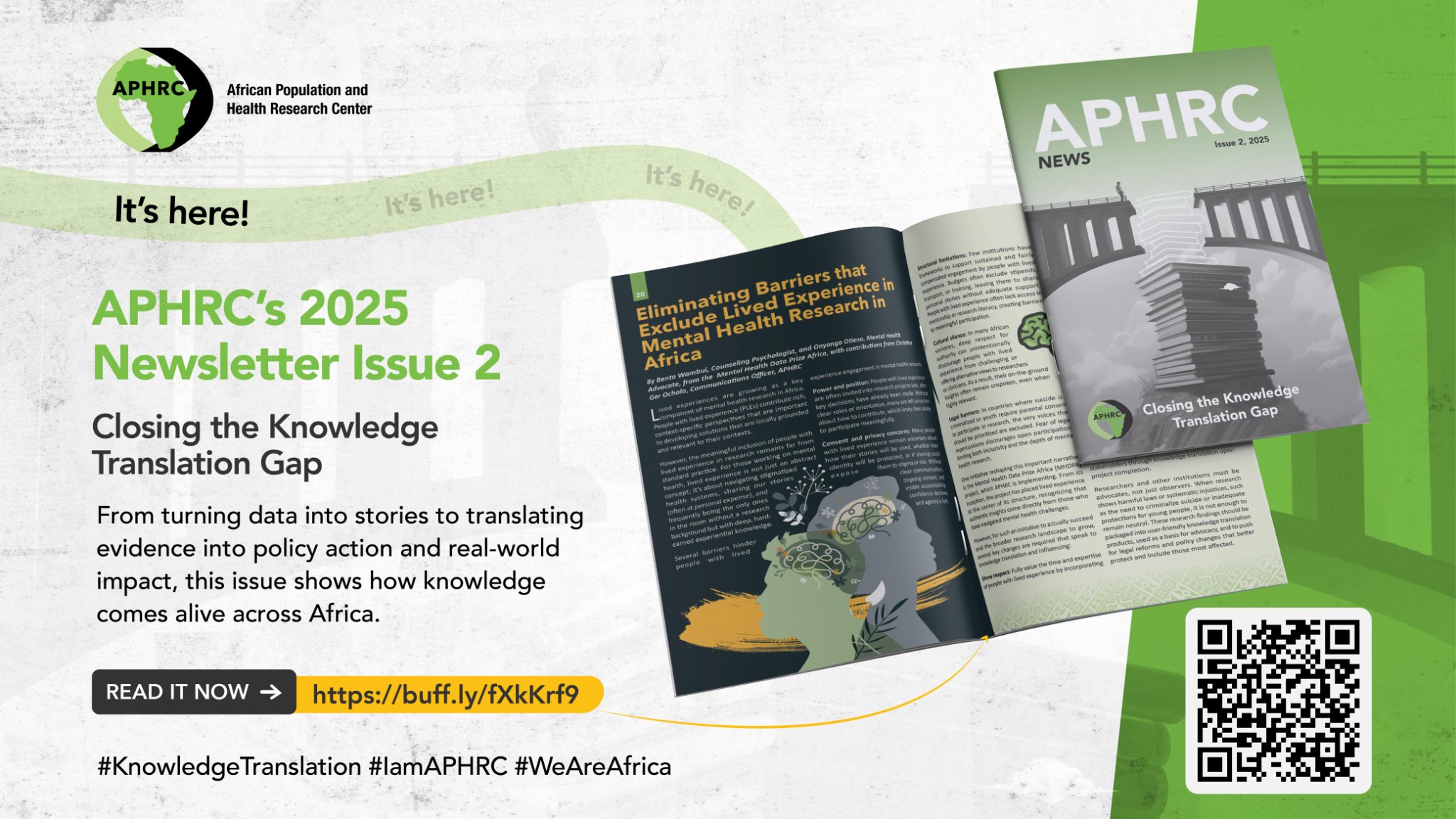
Newsletter: African Population and Health Research Center
Tuesday, October 28, 2025
Careif report: The Health Needs of the Indo-Caribbean Community in the United Kingdom
'The Indo-Caribbean community has played a key part in the life of the United Kingdom, but this has not often been recognised. Little is known about this populations’ physical and mental health needs and its experience of health and social services in the UK.

Includes:
"The absence of a unique category designating ‘Indo-Caribbean’ as a unique category in the UK Census was identified as a major barrier to obtaining vital epidemiological data on the UK’s Indo-Caribbean population."
n.b.
In my community mental health nursing career in Chorley, Preston, and West Lancashire as services were established, the diversity of the local populations was evident, but there was an assumption that many communities were essentially 'closed': one explanation for lack of referrals from specific racialised communities - was that some communities 'looked-after their own'.
Of course this can be racism (acute or subtle), an excuse for inaction, delayed response, lack of action - outreach and translation services. There were marked examples of intervention. I have seen first-hnad interpreting and translation services in action since full-time retirement and the services offered are amazing for the insights and care delivery they can facilitate. Is this why we also need mental health nurses and the team? To translate in challenging circumstances, even by being there, seeking avenues, giving time - especially in instances of psychoses and doing so safely (for all)?
In addition to the main body of Careif's report and its recommendations, it may be helpful to consider the report's key terms relating them to the domains of Hodges' model? I also note reference to the bio-medical model as an explanatory framework. A conference abstract has been submitted today for April 2026, highlighting the need for bio-psycho-socio-political model / framework (Hodges' model - of course?).
See also:
RCN North West Multicultural Group
Friday, September 12, 2025
Report: Hospital at Home for frailty ...
.... Current situation and future potential
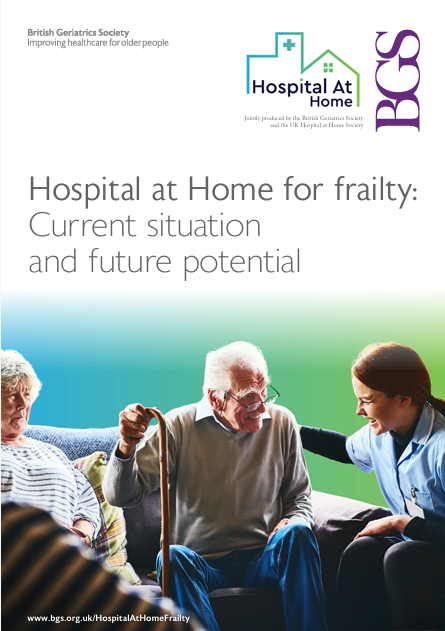 |
| Report: Hospital at Home for frailty |
Hospital at Home is a safe and effective alternative to acute hospital bedded care for people who are sick enough to be in hospital.
Hospital-level care provided at home means people living with frailty are not exposed to some of the risks arising from long stays in hospital, such as infections and deconditioning.
There is mounting evidence for the effectiveness of Hospital at Home services, which are greatly valued by those who use them. With 35,000 people a year benefiting from this alternative to hospital in England, further development of Hospital at Home should be encouraged as a key part of the Government’s ‘left shift’ from hospital to community.
Sunday, September 07, 2025
Editorial: Persistent Positive Change in Challenging Times - IJPCLHSC
'What then is the common theme for this issue? It is the persistence of these authors, practitioners and academics to be curious about what could be better and engage with scholarly enquiry to advance practice-based learning.'
The editorial introduces the content of -
International Journal of Practice-based Learning in Health and Social Care Vol. 13 No 1 August 2025
https://publications.coventry.ac.uk/index.php/pblh/issue/view/96
Howden, S. (2025). Editorial: Persistent Positive Change in Challenging Times. International Journal of Practice-based Learning in Health and Social Care, 13(1), ii-iii.
- which I have mapped to Hodges' model (with some additions):
Individual
|
INTERPERSONAL : SCIENCES
HUMANISTIC -------------------------------------- MECHANISTIC
SOCIOLOGY : POLITICAL
|
Group
restlessness (- in mind) (curiosity) patient's lived experiences* intra- inter-personal pastoral support engagement - enjoyment workshop, case study ... psycho- | restless legs syndrome remote, rural, urban community-based :: clinical settings (infra-) structures processes - procedures simulation, major incident forensic, podcasts |
-social factors interdisciplinary (integrated?) working social structures (This is how we 'do it' here) | 'Institutional? “positive restlessness"' *clinical subjective exposure (determinants of health) organisational (Inst.) structures |
<>
The final paper is on workshops and continuing professional development:
Kenny, B., Bourne, E., & Li, J. (2025). Knowledge Translation from Clinical Education Workshop to Workplace. International Journal of Practice-based Learning in Health and Social Care, 13(1), 56-76. https://doi.org/10.18552/ijpblhsc.v13i1.1084
The editorial notes:
'The authors integrate goal setting as part of a development session on supervision skills and follow up survey, to ask what happened next in relation to their goals and practice. When resources are scarce and CPD is so critical, these ideas about enhancing workshop effectiveness and feeding participants’ experiences back into sessions has never been more important.'
When presenting Hodges' model at events I will often tick for a workshop. This reflects former work experience with student nurses, OTs, social workers and other learners: when a workshop could cover the some 2 hours with a break in the middle. Hodges model is flexible, adaptable and in a workshop can be applied on an individual basis, or small group work - breakout sessions [this does not necessarily mean the participants are bored :-)]. A wide range of learning and teaching approaches can be considered.
Kenny, Bourne & Li utilise role play, case studies for example, their approach and paper framed by the KTA Framework:
'Workshop design was underpinned by the Knowledge to Action (KTA) Framework. KTA acknowledges the importance of social interaction in the adaptation of research evidence, taking account of local context and culture (Graham & Tetroe, 2011).' p.58. ...
'The KTA framework comprises two major components: knowledge creation and an action cycle. During the workshop, knowledge creation was supported by CEs identifying factors that contribute to challenging clinical education situations and reflecting upon the impact of these factors in their workplace contexts. During Part 1 of the workshop, attendees focussed on understanding challenging situations. Each group was assigned a case study that included a complex mix of student, educator and workplace factors thatinteracted to create a challenging learning situation.' p.58. ...
'A focus on active learning within the workshop prepared CEs for translation of their knowledge of supervisory practices when they returned to their workplaces. In Part 2 of the workshop, CEs worked through a structured process for managing placement challenges by engaging in peer learning role play activities. The process was adapted to address challenges that included mental health issues in workplace learning, developing professionalism, providing inclusive learning environments, and facilitating clinicalreasoning and reflection.' p.58.
clinical educators (CEs)
Reading KB&L: I wonder if Hodges' model provides a more 'accessible' map - as an output / summary, evidence of learning and teaching activity? 'Filtering' would be essential of course, as to what exactly is mapped. While I've no evidence (in theory), Hodges' model in being (imho) accessible, might also be primed for transferability (after all what does transferable mean?^); by being recognised more consistently across larger groups, and (as per the conclusion) other individuals, and broader educational contexts.
Currently, working with three co-authors on a draft paper revision (dental health and policy frameworks) for a journal, I noticed our leading author refers to 'translational'. In the paper below, (cited by KB&I):
Graham, Ian D. PhD1; Logan, Jo RN, PhD2; Harrison, Margaret B. RN, PhD3; Straus, Sharon E. MD, MSc4; Tetroe, Jacqueline MA5; Caswell, Wenda RN, MEd2; Robinson, Nicole6. Lost in knowledge translation: Time for a map?. Journal of Continuing Education in the Health Professions 26(1):p 13-24, Winter 2006. | DOI: 10.1002/chp.47
Graham et al's, Table 1 Definitions of Terms, is (still) really helpful.
See also on W2tQ: 'reflect' : 'holistic' : 'map' : 'situation'
^Translation; transfer - dual, two-way, inversion?
Subscribe to:


 orcid.org/0000-0002-0192-8965

