Hodges' Model: Welcome to the QUAD: Canada

Hodges' model is a conceptual framework to support reflection and critical thinking. Situated, the model can help integrate all disciplines (academic and professional). Amid news items, are posts that illustrate the scope and application of the model. A bibliography and A4 template are provided in the sidebar. Welcome to the QUAD ...

Showing posts with label Canada. Show all posts

Wednesday, September 09, 2026

Bonjour Bayeux: Tapestries Historical & Modern

individual
|
INTERPERSONAL
: SCIENCES             
humanistic ------------------------------- mechanistic
SOCIOLOGY : POLITICAL   
|
group

'I think my favourite story to work on has been the 434 dinosaurs that are in the tapestry.  So much has changed about what we know about dinosaurs and all because the study of fossils and dinosaurs has grown up alongside geological survey for mining and petroleum drilling. Studies say dinosaurs were much more colourful than originally imagined and many were feathered, and in fact birds are their distant relatives.  Only 50 years ago we were taught that oil was made from decomposed dinosaurs and plants. Today research suggests oil formed from aquatic algae, called diatoms.

Much more than half of all life on earth died in a mass extinction at the end of the Cretaceous period. The most agreed upon theory, based on research, suggests the cause was when an asteroid collided with the earth and triggered volcanic eruptions, that disrupted weather patterns, growing seasons and ecosystems.  This one-two punch killed off the majority of Earth’s flora and fauna, including the dinosaurs, all of which were unable to adapt to the changes in climate.'

Sandra Sawatzky -
https://www.theblackgoldtapestry.com/notes

Detail - Panel 1 - Beginnings

The Black Gold Tapestry


THE BRITISH MUSEUM

A historic loan from France

The Bayeux Tapestry

Experience / 10 September 2026 – 11 July 2027


My source: Sandra Sawatzky, Oil in a Material World, Resurgence & Ecologist, Nov/Dec 2022, Issue 335, pp.52-55.

See also: https://www.theblackgoldtapestry.com/

Previously: 'Canada' : 'environment' : 'activism'

Friday, March 06, 2026

The land speaks through Bears & Peoples: Together

Figure 2

ABSTRACT

Landscape genetic analyses of wildlife populations can exclude variation in a broad suite of potential spatiotemporal correlates, including consideration of how such variation might have similarly influenced people over time. Grizzly bear (Ursus arctos) populations in what is now known as coastal British Columbia, Canada, provide an opportunity to examine the possible effects of a complex set of landscape and human influences on genetic structure. In this collaboration among the Nuxalk, Haíɫzaqv, Kitasoo/Xai’xais, Gitga’at, and Wuikinuxv First Nations and conservation scientists, we characterized patterns of genetic differentiation in the grizzly bear, a species of high cultural value, by genotyping 22 microsatellite loci from noninvasively collected hair samples over a 23,500 km² area. We identified three well-differentiated groups. Resistance surfaces, which incorporated past and present human use, settlement, and landscape resistant features, could not explain this pattern of genetic variation. Notably, however, we detected spatial alignment between Indigenous language families and grizzly bear genetic groups. Grizzly bears sampled within an area represented by a given language family were significantly similar to those sampled within that language family (P = 0.001) and significantly divergent to those sampled outside the language family (P = 0.001). This spatial co-occurrence suggests that grizzly bear and human groups have been shaped by the landscape in similar ways, creating a convergence of grizzly bear genetic and human linguistic diversity. Additionally, grizzly bear management units designated by the provincial government currently divide an otherwise continuous group and exclude recently colonized island populations that are genetically continuous with adjacent mainland groups. This work provides not only insight into how ecological and geographic conditions can similarly shape the distribution of people and wildlife but also new genetic evidence to support renewed, locally led management of grizzly bears into the future.

INDIVIDUAL
|
    INTERPERSONAL    :     SCIENCES               
HUMANISTIC --------------------------------------  MECHANISTIC      
SOCIOLOGY  :   POLITICAL 
|
GROUP
'This work is dedicated to the late Nuaqawa (Evelyn Windsor), who taught us that people learned their language and way of life from the bears.'

Geographic distance

Spatial overlap

Grizzly bear (Ursus arctos)

Population genetic structure

Landscape genetics


Biocultural diversity

Indigenous language families

Human linguistic diversity

Awareness - Respect


 [What price the future? pj]


Henson, L. H., N. Balkenhol, R. Gustas, M. Adams, J. Walkus, W. G. Housty, A. V. Stronen, J. Moody, C. Service, D. Reece, B. M. vonHoldt, I. McKechnie, B. F. Koop, and C. T. Darimont. 2021. Convergent geographic patterns between grizzly bear population genetic structure and Indigenous language groups in coastal British Columbia, Canada. Ecology and Society 26(3):7.
https://doi.org/10.5751/ES-12443-260307

My source:
Roman Goergen. Grizzly spoken here! Resurgence & Ecologist, July/August2023: 339: pp.10-11.

See also: https://iaac-aeic.gc.ca/050/documents/p21799/85674E.pdf

Previously: 'landscape' : 'ecology'

Monday, August 04, 2025

Book: v 'Health and Health Care Inequities'

This final post for HHCI takes in -

Chapter 7: Searching for Socialism
Chapter 8: Mobilizing for Health Equity.

These themes are preceded at the close of chapter 6 with Arnel sharing some personal background, as an immigrant to Canada from a racialized background, who has worked in the health care industry (p.96). COVID also features again, its effects still resonate socio-politically.

It is an unfortunate conjunction - relationship as far as socialism, social justice, the green movement and social cohesion are concerned but Borras provides an invaluable service in linking the Capital-State alliance, which I have capitalised. It seems to be appropriate?

There is 'something' here (I think) in the 'identity' of governments, administrations - I will work through elsewhere.

Having added a note in post iv on expropriation, I see that 'precarity' is also included (p.98).

Chapter 7 gets to grips with 'Welfare Systems in Capitalism'. As before the details are Canadian, but with global reference to other welfare systems - liberal, conservative, and social democratic. If Marxism - Socialism was once feared for its seismic potential, I wondered if chapter 7 points to socialism being in a dormant state? Borras explains welfare state evolution and influences and employs metrics of trade union density, low-wage rates, poverty rates, and infant-mortality rates. On low-wages reference to the US as a capitalist powerhouse that does not provide a favourable environment for most workers, added to my thoughts about nursing globally and the US specifically: despite my parochial vantage point. Five tables aid international comparisons, with inconsistencies in data also highlighted. I couldn't help but feel the need to consider the impact of the wider-determinants of health. Now  undoubtedly, an emerging field. The discussion on infant mortality prompts thoughts of my daughter a mum-to-be amid health news in the UK. Plus, Labour's previous and renewed efforts in Sure Start; and the need stressed through Hodges' model to focus on ALL the literacies, including health.  

It sounds a contradiction but HHCI frequently had me thinking 'BIG picture' and detail. Reading 'US Empire' (p.110) made me wonder what descriptor might have been applied if written in June 2025? Social democracies are called to account. As a community nurse I am ready to support someone in making a change. But they must want and be the agent of that change. I can't support the individual in their drinking to excess - in the case of alcohol misuse/dependency. Social democracies and capitalism can operate as a conspiratorial dyad, limiting social and welfare progression. The lessons here are invaluable (pp.110-113). 

More could be made of the specific political impacts of technology. But clearly that would be another book. For example, no excuse, but BIG-TECH were clearly determined to start[-up] as they intended to go. They had a 'cleanroom' - clean-slate as far as unionisation was concerned. Governments permitted the same - paving the way, enabling and across continents. Ironic, the touchy-feely "We Care" with 'amazing offices', work cafés, dog areas, cycle paths, gardens, breakout spaces, and views. "Now, it is almost a religion: 'Give me a company until it is seven ...'. 

As socialism tries to overcome the past, and its associations; a political movement is needed. Somehow 'new socialism' sounds dated. There a call for openness in new ideas and ways to realise socialism. Over the past two decades work has changed, zero-hour contracts, part-time contracts, the rise of employment agencies and self-employed workers. It appears 'complex adaptive systems' can explain and help solve many problems, extending to human organisation and government. Yes. 'It is crucial to understand people's situations and value their experiences.' But how? And, how to 'encourage open conversations and learn from each other.' (p.114)? Neither 'citizen', or 'assemblies' are in the index, as with gambling and advertising. I may have missed one, or more in the text. You have a sense of a need for international organisation. Especially, with AI - artificial intelligence also in the wings.

The results of Erik Olin Wright's analysis of anti-capitalist movements does not sound convincing to me (pp.114-116), but then I'm a nurse. Perhaps economics itself needs to be looked at (again)? Is it an ongoing project - radical economics - that is? How does a new socio-political order 'account' for the existing distribution wealth? The paths toward health equity 1-6, make more sense. The political realism demonstrated, gives me reason to continue here. 

A brief section on electoral politics, brought me to short-termism. I have reached out to SIMPOL about this book and will share with the author.


[ Update 20/08/25: I've put the author Arnel in touch John Bunzl at SIMPOL. Short-termism remains an acute problems in our politics and policy. I've always worked clinically, so despite union and professional body membership, policy is something that has been done to my colleagues and I. There did seem some coherence with the National Service Frameworks. That may be illusory as they focussed on long-term conditions, but there was more:

Boardman J, Parsonage M. Government policy and the National Service Framework for Mental Health: modelling and costing services in England. Advances in Psychiatric Treatment. 2009;15(3):230-240. doi:10.1192/apt.bp.106.003095

They also had the attention of 'service user / carer specific organisations' -
https://mstrust.org.uk/a-z/national-service-frameworks-nsf

Last week, outside a large bookshop in Hay-on-Wye there were cabinets with books for sale at £1. With £5 worth under my arm, I was ready to go in to pay, and spotted 'Walk Don't Run' an absolute gem which I will post about soon. It links to the first post about Arnel's text and evidence. ].
Chapter 8: Mobilizing for Health Equity. Social justice: It seems the more it is spoken of (shouted even); the further it is to being delivered. We used to talk about minority and disenfranchised groups needing a 'voice'. Now social media amplifies the voice, that gets lost in the cacophony and chaos of information disorder. The 'essence of socialism' needs to quickly get to grips with capitalism as the need for 'labour' changes - is changing. We must listen to literature too: 'Some animals are more equal than others'. Class awareness and the role of unions is discussed. Education is critical. Perhaps we need more Philosophy in Pubs? People learn more effectively when they discover things, and arrive at conclusions for themselves. Use of guided discovery and Socratic dialogue have proved their worth repeatedly. This is why formative education is so important. Young people should be able to reflect and think critically. Within the education system the development of character and values too. That way: 'Workers must become political activists.' (p.126).

As a former health care worker there's a page (+) on engaging nurses in the fight for health equity. It is good to see I am probably right to assume the majority of nurses not 'politically active'. Hopefully, nurses and other formal carers reflect the local community and demographics. Although COVID revealed blatent structural realities. 

Individual
|
      INTERPERSONAL    :     SCIENCES               
HUMANISTIC  --------------------------------------  MECHANISTIC      
 SOCIOLOGY  :    POLITICAL 
|
Group

LIFE CHANCES
MY POTENTIAL
MENTAL HEALTH

PHYSICAL RESOURCES
PHYSICAL HEALTH

SOCIETY
SOCIAL RESOURCES
COMMUNITY

HEALTH ACTIVISM
ADVOCACY
POLICY CHANGE


On page 108 is '2SLGBTQIA+' below is a video that helps:


There are 'minimum demands' - Canada-centric of course. A look beyond policy change limitations and a short review of the need to establish a genuine socialist political party. This begs the question of how 'genuine' would be recognised. There may be a case study emerging in UK politics over the next four years? The bones are here in HHCI- no doubt about that.  More is needed, so it's encouraging there is no 'manifesto' in the index either.

Many thanks to Fernwood Publishing for my pb copy.

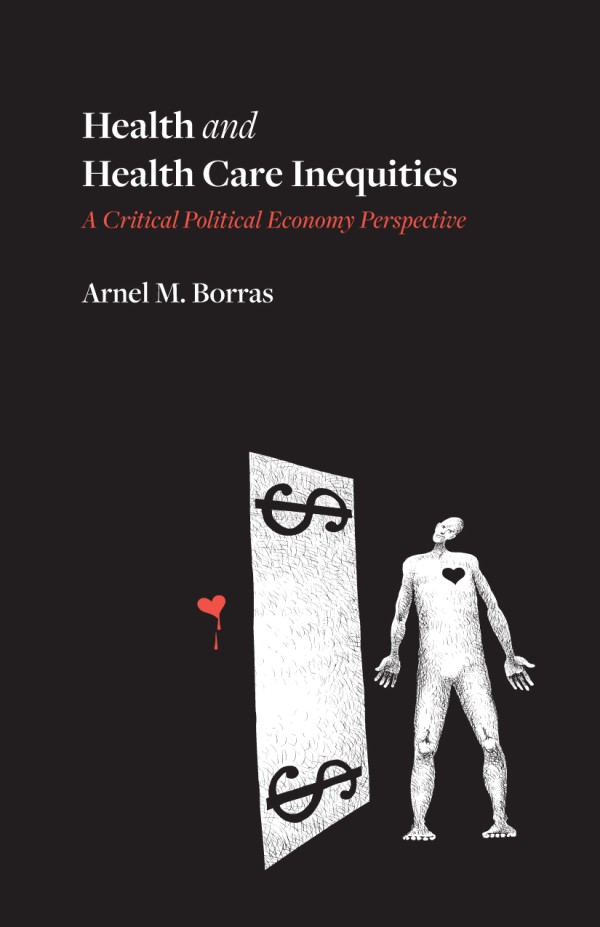
Arnel M. Borras. (2025) Health and Health Care Inequities - A Critical Political Economy Perspective. Fernwood Publishing.

See also - reference to Hodges' model:
Iris Lohja, Yves Demazeau, Christine Verdier. A multi-agent system approach to dynamic ridesharing for older people: State-of-the-art work and preliminary design. 18èmes Rencontres des Jeunes Chercheurs en Intelligence Artificielle, RJCIA’20, Jun 2020, Angers, France. pp.52-59. ⟨hal-02897446⟩

Wednesday, July 30, 2025

Book: 'Health and Health Care Inequities' iv

Fittingly, chapter 4 brings us to Political Power and Policy Advocacy. In Hodges' model you can both have your cake; and gratefully receive the cake you're given. This is the health in politics and the health in politics (as, for example, revealed in the health status of political leaders).


As a framework structure, the axes of Hodges' model initially give rise to four symmetric domains (spaces). There is an invitation to begin where you choose. Chapter four reveals some truths, as the 'nexus' - center of the model is mobile (unlike many citizens!) as the 2x2 rendition below suggests, if not illustrates. Borras takes us through health politics, political participation and representation, unequal power and politics, and policy change approaches with illustrative cases.

In an institution (like the NHS), bureaucracy, aka an organisation, the workforce are often acutely aware of policy and procedure. It is like the Force. It permeates everything - the meetings - and yet is remote. Borras seek to shed light on unequal resources and policy influence. Again Borras's literature informed discussion and argument, includes some historical gems, such as Lasswell (1958).

Individual
|
      INTERPERSONAL    :     SCIENCES               
HUMANISTIC  --------------------------------------  MECHANISTIC      
 SOCIOLOGY  :    POLITICAL 
|
Group


Political Power and
Policy Advocacy


In chapter 5 on evidence and ideas, discussion of Katherine Smith's 'under 'Six Travelling Ideas' is an excellent resource, with several references including:

Smith, Katherine E (2013) Institutional filters : the translation and re-circulation of ideas about health inequalities within policy. Policy and Politics, 41 (1). pp. 81-100. ISSN 0305-5736 (https://doi.org/10.1332/030557312X655413).

I love the image of ideas as and on a journey, some successful, others fractured, weak, re-contextualised, even non-journeys (falling - 'dead from the press' - I suppose?). At least the journey of Hodges' model is ongoing. A baton for our times. As I wrote in post i, chapter 5 tackles 'evidence' (there's a post or two). It does so in relation to information, ideology, and interests:

If you've read many posts on W2tQ, you may see: I've a chip on my shoulder. Evidence for the safety, benefits, theoretical underpinning ... of Hodges' model is still to be realised. To the satisfaction, that is: of course to the powers that be. Speaking of which: the axial (for me) subtitles arise again in chapter 6; capitalism-imperialism-colonialism-racism nexus (p.87).

To demonstrate the utility of Hodges' model, this is significant.

Please feel free to search for these terms - capitalism-imperialism-colonialism-racism in the search bar above.

I've been interested in drama since playing the part of Francis Nurse in Miller's The Crucible. It took some 50 years to go from armchair to treading the boards again. I played Ken, supported by his wife, trying to run a post office, amid a chaotic and injurious IT system. An 8-9 minute sketch which was part of a Living Newspaper. Interested in writing - as previous posts may reveal, I also keep trying get to the theatre. With the themes of chapter 6, Liberation was thought provoking.

Mind-Body, Private-Public, Socialist-Conservative, Borras adds the global health North-South schism. A prompt for suggesting a brief glossary is expropriation and exploitation^ (p.88). Four stages of capitalism too. This chapter - A critical political economy approach is essential reading for me (and you!?) - a path to a critical care economy (self-care to planetary health).

^There is a note #3 about these on page 99.

See also: Post i : Post ii : Post iii : Post v (to follow)

Merelman, R. M. (1981). Harold D. Lasswell’s Political World: Weak Tea for Hard Times. British Journal of Political Science, 11(4), 471–497. http://www.jstor.org/stable/193766

Arnel M. Borras. (2025) Health and Health Care Inequities - A Critical Political Economy Perspective. Fernwood Publishing.

Liberation image: The Agency
https://theagency.co.uk/news/cast-announced-for-ntombizodwa-nyonis-liberation-at-royal-exchange/

Tuesday, July 29, 2025

Book: iii 'Health and Health Care Inequities'


This book, or similar should be read by 3rd year student nurses and other healthcare learners. I wondered if, for students, a brief glossary might be useful. But key terms are explained and clearly, with typologies numbered and expanded when needed. There seems an aversion in nursing academia to avoid the acutely 'political'. Even though of course in psychiatry, the need for considersation of human rights, consent, capacity, law, personal and public safety, risk is inevitable. Should we only learn of the politics of our role on a post-registration/license course of learning? As mentioned in post i, Borras duly notes the asymmetric impact COVID. The disproportinate deaths of frontline healthcare workers from ethnic minority groups (UK). A sign of the impact, is reflected in COVID recurring through the text.

The device of using axes, e.g. Class-Gender-Health (p.11) rightly draws in commentary on nutrition, pay gaps - heterosexual white men, terms of employment, and design and occupational health for woman. Gender politics is also reflected in the text. The relational dimensions of this discussion also stands out. The Class-Race-Health axis (had me return to the question of parity, but beyond the mental - physical divide. 

These axes employed by Borras seemingly traverse a path and are extensible (across pages). Briefly, in Hodges' model the domains and axes act as stepping stones: 

We can ‘walk’ the model:

Humanistic INTERPERSONAL Individual SCIENCES Mechanistic: adding - Humanistic SOCIOLOGY Group POLITICAL Mechanistic 

A global perspective is matained, even though the focus is Canadian health, government, policy and policy. The press have often highlighted the global nature of the housing crisis. Canada is not immune; as discussed in chapter 2. For what is in many nations a 'housing disaster', Borras covers the history too. Reflecting on: 
'Around the world, neoliberal programs have resulted in over a billion people living in slums (Davis 2017, 23). In wealthier countries, there was rampant privatization of social housing units.' p.25. 
- you feel like a nodding dog toy. Where is the leadership, the strategy and integrity to provide housing for all? Arnel also stresses the link between mental health status and housing. The SDGs place emphasis on security (yes, at the level of what is happening in Ukraine, Gaza, South Sudan...), then housing follows. And with climate refugees to follow ...! I have seen gentrification, and listened to an account in 2007 as Manchester started to experience high-rise growth. I used to try to walk to community visits with students when possible. Observational skills come in many forms, safety still depends upon them. With no place to call home, safety and security is a stark issue for people. A foundation for health, wellbeing and ironically productivity. The rise of foodbanks is also damning. 

Gambling is not indexed, but there appears a denial in the UK government, with other nations 'folding' to the influence of lobbying and corporate influence reducing or removing restrictions in gambling and crucially: advertising. What's the denial you say? Yes, well governments seem to be in denial that there are vulnerable groups in their respective populations. It is laudable that they bestow upon the citizenry the freedom of choice, but that can spell trouble.

If Canada - Ontario has its housing scandal:
'Housing insecurity and homelessness occur because the state and its goencies support real estate and banking corporations that continuously increase housing prices. This setup is a huge problem because these enti- ties focus on generating profit and capital accumulation. The Greenbelt Scandal in Ontario revealed how the government made decisions that served the interests of big companies instead of the public (McGrath 2023; Office of the Auditor General of Ontario 2023). This scandal is an example of neoliberalism and a corrupt style of governance (Moscrop 2023). We need to stop using neoliberal strategies and focus on socialized housing.' p.27.

So does the UK: Grenfell Tower Inquiry No doubt, other nations have their tragic examples. It seems 'international Standards', quality, integrity can never be taken for quality. They too are precarious, vulnerable. Borras's work in chapter 2 on housing security, and differenciation of core housing need is laudable, informative and welcome. Re-reading Arnel's point: 'There is no doubt that housing insecurity affects health'. p.28. His book as a whole makes the point that of course more evidence will always be needed. In healthcare for decades the basics of public health have been identified, studied, established, placed in models and frameworks. Yet we find we are found wanting (UK - Awaab's Law) dragged back to the first steps; and despite the urgent issues we now face.

"Universal health care" is not exactly new:

The Canadian Association of Social Workers. (1961). The Social Worker, Volume 29, Numbers 1 to 2. 29(1to2), 1to78. The Canadian Association of Social Workers. The Social Worker - Le travailleur social. Canadian Association of Social Workers. https://jstor.org/stable/community.39672572.

Borras is correct to write of 'The Continuing Private War against Universal Health Care' (p.36). Looking at NGRAM it appears the private sector has been winning in recent decades. Working previously as a community mental health nurse for older adults, chapter 3 explores Canada's health care systems. Table 3.1 compares the ownership of long-term care homes in figures. The discussion deals with the quality of care and variation. Policy intentions, plans, research and what follows in practice is also debated. Is there any comfort  in learning that Canada is not alone in being skilled at kicking-can-down-the-road. To be fair many developed nations face the same demographic cliff (whichever way you it!), just one of the urgent issues noted above. The contribution of informal carers is also highlighted.

Here in the UK the commissioner - provider split and models of care at the finance level are a maze: amazing in their bureaucracy. Borras does a marvellous job, in providing enough detail without weighing the narrative flow, and losing the reader. The close of chapter 3 offers hope that Hodges' model will continue to be found:
'Therefore, shifting away from neoliberalism toward a new societal system where health care is seen as a fundamental human need and a universal right, not a profit-driven commodity, is crucial. This alternative system requires a new societal framework built on solidarity, fairness, and humanity, prioritizing health over financial and personal gain.' p.50.
See also: Post i : Post ii : Post iv : Post v (to follow)

Arnel M. Borras. (2025) Health and Health Care Inequities - A Critical Political Economy Perspective. Fernwood Publishing.

In addition:

Messing, K., & de Grosbois, S. (2001). Women Workers Confront One-Eyed Science: Building Alliances to Improve Women’s Occupational Health. Women & Health, 33(1–2), 125–141. https://doi.org/10.1300/J013v33n01_08  (Borras - pp.11-12).

https://nhsrho.org/news/tender-maternal-and-neonatal-image-library/

Monday, July 28, 2025

Book: ii 'Health and Health Care Inequities'

In the introduction to Health and Health Care Inequities - A Critical Political Economy Perspective, Borras concludes:

'This book aims to spark thoughutful conversation and collaboration by moving away from capitalism to improve society and health. Health is not just about nursing and medicine; it is integrally connected to economic, political, cultural, and institutional systems. Moreover, it encompasses philosophy and ethics. Capitalism's focus on individualism and competition harms people and the environment,making it all but impossible to achieve health equity. We must work together to envision and create a new world that ensures fairer and better health for all.' p.3.
This sets the tone for a short 163 page book, with a page of acknowledgements, (said) introduction pp.1-3, reference listing pp.136-153; 10 page index, and eight chapters:

Chapter 1: Social Determinants of Health Inequities
Chapter 2: Neoliberalism and Canada’s Housing Policies
Chapter 3: Neoliberalism and Canada’s Health Care System
Chapter 4: Political Power and Policy Advocacy
Chapter 5: The Role of Evidence and Ideas
Chapter 6: A Critical Political Economy Approach
Chapter 7: Searching for Socialism
Chapter 8: Mobilizing for Health Equity
Chapter 1 on 'Social Determinants' provides the first of many political points to underscore the effort with Hodges' model here. If income and poverty come second the preceding paragraphs on wages reveal the socialist stance stand of the author, and the acknowledged networks. Throughout the book the relational nature of determinants, inequality, inequity, protected characteristics, socio-economics and political struggle is raised. In the discussion on wages the importance of education is described in cross-cultural and gender-based terms. The book possibly turns on the sentence:
'To effectively address poverty, we need to unite those who are in poverty with individuals who have more economic stability but are still ulnerable within our capitalist system. These individuals are at risk of falling into poverty if they lose their jobs due to workplace closures or privatization. It is essential to acknowledge that certain groups experience higher poverty rates, but we should see them not as victims but as protagonists and capable workers facing unique but connected challenges.' p.7.
For the people who follow the news, the majority of 'us' are (even if only roughly) aware of the distribution of wealth across national and the global population: the injustice. The erosion and lack of union representation within many workforces, especially 'Big-tech'. The way utility enterprises have provided dividends for shareholders at the expense of ongoing investment in infrastructure, the quality of service provided to the public and even public safety. COVID (p.7), crystalised 'difference' for us all. I came to now substitute collective for 'group' in Hodges' model. Suddenly all those individuals, many working in health, were collectively vulnerable:

Individual
|
      INTERPERSONAL    :     SCIENCES               
HUMANISTIC  --------------------------------------  MECHANISTIC      
 SOCIOLOGY  :    POLITICAL 
|
Group
PSYCHOLOGICALLY
EXISTENTIALLY
BELIEFS
SCIENCE
PHYSICALLY
data, information, knowledge
SOCIALLY
CULTURALLY
SOCIAL MEDIA
wisdom, leadership, truth
LAW - POLICY
FREEDOM - CHOICE

Throughout the text, I like the concise coherence Borras demonstrates in the steps from wages, income and poverty to investigate the state of health inequities. Once again (from i) the context is Canada, but the lessons are for all - as globalisation should/must demand?  There is public health history too. As expected Canada's First Nation, Indigenous, and Nunavut populations are frequently referenced regards exclusion and disparity in health services access and provision. Under health inequities, after infant mortality and life expectancy there is a convention(?) adopted of several axes being identified. The first (p.9) is the class-health axis, then class-gender-health and others. No surprise I found the relational and organisational aspects of these 'constructs' very helpful. As I try to think of Hodges' model as a mathematical object I realise (through oft impromtu conversations^) that we don't have two 'axes' in Hodges' model. Still musing on this; and more to follow ...

Arnel M. Borras. (2025) Health and Health Care Inequities - A Critical Political Economy Perspective. Fernwood Publishing.

^A pure maths lecturer, Gower St Waterstones, London.

See also: Post i : Post iii : Post iv : Post v (to follow)

Wednesday, July 23, 2025

Book: 'Health and Health Care Inequities' i

I didn't attend online the book launch for Health and Health Care Inequities. It appeared to be in the early hours for the UK. Making good progress on a week's break last month, upon return, a presentation and some writing proved a distraction. I've picked it up again, a task that was smooth and straightforward such is the style and writing. H&HCI is - as expected - academic. The statistics, politics and government publications come thick and fast. But they literally do count here.

Borras and the Fernwood are based in Canada. The focus of Borras's thesis is then Canadian politics, economics, society, social and cultural challenges, poverty, exclusion, global standing, statistics and reporting (and more) are all relevant globally. Especially as COVID, climate change, and the current state (or stasis?) of global health provision attests. The book is unashamably Marxist, but not heavy with it. If that makes sense. I was drawn to the publisher too. Well: critical books for critical thinkers; how could I resist!
The influence of Marx and Marxism on the 20th century is profound and full of contradictions. There's the history, and its lessons of Marxism as a political ideology and the geopolitical exemplars that have given Marxism a 'bad' name. To the extent that 'socialism' is also tainted. What other term can be applied that captures 'Marxism', Marxist thought and its relevance today? And that is, relevance in terms of health, health care and social care inequities? 'Struggle' seems utterly inadequate amid current news?

Amidst the history of various revolutions, some arguably on-going, fizzled out, on life support ...? it is, it seems, capitalism that goes marching on. To keep time, the metronome is the tick of central processing unit, and now the graphics 'pu' and tensor; for we live in the 'information age'. I've been keeping notes, but will begin with some reading today, which is an excellent point to 'healthcare professionals', obsessed as we are, with evidence.
'I often go back to Carol Weiss. Years ago, she said three things that go into the decision making ... information, ideology, and interest. And then she went on to say, don't for one moment think that information can trump either ideology or interest. So if you look at the whole climate debate right now, it's actually an ideological debate, The right-wing, the Republicans, some Conservatives here, their rejection of the evidence has nothing to do with the evidence. It's really an ideology ... our group thinks this way, and we are aligned with the fossil fuel industry because they're rich and powerful. Our whole system is based on cheap energy. And so we have to keep going kind of thing. And bugger the evidence.

And that second one, which is actually very closely related to that, is interest. By interest, she meant power and wealth and stakeholders. So, who gets the policy they want? The people who have the money and power to influence it. So, the fossil fuel industry is very powerful ... And so, no matter what the evidence is, they have a financial interest in not having any controls upon them having the minimum of controls. And so, that will triumph usually. So, you put together ideology and interest, and it will almost always overcome evidence or information.' p.78.
More to follow and a return here is essential.

Weiss, C.H. (1983). Ideology, Interests, and Information. In: Callahan, D., Jennings, B. (eds) Ethics, The Social Sciences, and Policy Analysis. The Hastings Center Series in Ethics. Springer, Boston, MA. https://doi.org/10.1007/978-1-4684-7015-4_9

Arnel M. Borras. (2025) Health and Health Care Inequities - A Critical Political Economy Perspective. Fernwood Publishing.

See also: Post ii : Post iii : Post iv : Post v (to follow)

Saturday, March 09, 2024

10th Biennial Threshold Concepts Conference: July 2-4, 2025

Save the date!

As a scholar who is active in Threshold Concepts, you may be interested to know that the biennial conference on Threshold Concepts will be held at the University of British Columbia in Vancouver, BC, Canada on July 2-4, 2025. More information on the call for proposals and conference logistics will be available in the late spring. But for now, follow us on X (formerly Twitter) @ThresholdConcep and join our Linkedin group (Threshold Concepts Conference 2025) to get the most up to date information.

Conference Invitation

Dear Colleagues,

As you may know, the biennial conference on Threshold Concepts will be held at the University of British Columbia in Vancouver, BC, Canada on July 2-4, 2025. As a scholar who has been active with Threshold Concepts in the last few years, we hope that you will consider submitting a proposal and attending the conference. The call for proposals will be open October 15 – December 20, 2024. 

Please check out the conference information on our website (https://thresholdconcepts.home.blog/) and reach out if you have any questions.

All the best,

Julie
Email: julie.rattray AT durham.ac.uk
Prof. Julie Rattray
Professor of Higher Education and Director of EDI at School of Education
Chair of Durham Disabled Staff Network
Durham University
Confluence Building
Stockton Road
Durham
DH1 3LE


Friday, February 04, 2022

Paper: c/o Rabiah-Mohammed et al. - Syrian Refugees’ Experiences of Housing Stability during the COVID-19 Pandemic


 Self - Individual - Person
|

 INTERPERSONAL    :     SCIENCES               
HUMANISTIC ----------------------------------  MECHANISTIC
SOCIOLOGY  :   POLITICAL 
|
Community - Group -  GLOBAL REFUGEES 

COVID-19 impact
'Just'
mental health, stress, trauma, vulnerability
lived experience
stability
identity
PERSON-HOOD
PSYCHE- PSYCHIATRY
Spiritual - Beliefs - Hope - Sanctuary

QUALITATIVE

COVID-19 impact
housing stock: space/rooms/access
stability
'just' [ in time ] -
repeated displacement
place, space, time, events, control
systems
GEO
-
Online 'life' education
diet, food, cost
QUANTITATIVE
SUBJECTIVE
COVID-19 impact
family size
'Just'
(new) culture, language, customs
Critical Social Theory
social inequities, race, status, class...
shared realities, narratives, interpretative
discrimination, stigma, social isolation
social justice, stability
community, neighbourhoods
family support, safety
belonging

SOCIO-
OBJECTIVE
COVID-19 impact
'Just'
policy
housing markets
government-assisted refugees
power - [no] choice [beyond my control]
Syrian refugees - forced migration
housing instability
low-income, affordability
employment
STATE-HOOD
'Re-settlement' - across this model?
precarity
-ECONOMIC


Fawziah Rabiah-Mohammed et al. (2022) Syrian Refugees’ Experiences of the Pandemic in Canada: Barriers to Integration and Just Solutions. Studies in Social Justice, 16,1, pp.9-32.


My source:
https://twitter.com/westernuNursing/status/1487161839922331651

Sunday, August 23, 2020

Social Determinants of Health: The Canada Facts

SDoH: The Canadian Facts


Ten years ago we made available Social Determinants of Health: The Canada Facts to fill the vacuum created by Canadian governments and public health agencies on the social causes of illness and health.  In contrast these issues of health inequalities and their causes are front and centre in the European Union. 

Despite virtually no media coverage the document was downloaded over 1,200,000 times over the decade, 85% of which were by Canadians. It penetrated into just about every civil society and public health agency documents and gets 7560 hits in a google search.


https://www.google.com/search?q=%22social+determinants+of+Health:+the+canadian+facts%22&rlz=1C1CHBD_en-GBCA750CA750&ei=xos2X8ahJMSeytMP-Iab8As&start=0&sa=N&ved=2ahUKEwjGnLzy4JrrAhVEj3IEHXjDBr44ChDy0wN6BAgMECw&biw=1097&bih=541

We have now produced a second edition, available here https://thecanadianfacts.org/

Of special interest to you may be the Epilogue that places all of the disturbing information into a political economy perspective that examines the imbalance in power between the corporate and business sectors and the rest of us and how this skews public policymaking.

Best wishes,

Dennis

https://yfile.news.yorku.ca/2020/08/12/york-professor-continues-to-shift-conversation-on-factors-shaping-health-in-canada/


My source:

Politics of Health Group Mail List Messages

Visit the PoHG website for lots of interesting links and publications: http://www.pohg.org.uk/

Visit PoHG on Facebook: https://www.facebook.com/282761111845400

Follow us on Twitter: @pohguk

Friday, March 13, 2020

A free online-learning opportunity for those interested in Implementation Science

INSPIRING CHANGE

Open for enrollment March 9 to May 18, 2020

A FREE mini-course providing a high level overview on how to create impact with evidence-based implementation

This mini-course will help you:
  • Understand what evidence-based implementation is and how to proactively plan for change.
  • Discover how process models, theories, and frameworks can be the backbone of your change plan.
  • Be inspired to use behavior change theory.
  • Be more purposeful with your time, by addressing high-priority areas and anticipating resistance to change.
  • Learn simple tips and tricks that can set you up for success.
Cost: FREE

Time to complete: It takes about 1.5 hours to complete the videos and activities.

Available: Enrollment open twice a year (from March to May; and from September to October)


My source:
Julia E. Moore, Ph.D.
Senior Director
647-390-1929
thecenterforimplementation.com
https://www.linkedin.com/in/julia-e-moore/

Follow us on Twitter: @TCI_ca

We urgently need funding to continue our work in 2020. Support the HIFA Appeal: www.hifa.org/appeal

To send a message to HIFA simply send an email to: hifa AT hifaforums.org

HIFA: Healthcare Information For All: www.hifa.org

n.b. My revalidation is due and in (hopeful) preparation for a further three years 2020-2023 I will apply for this myself.

Saturday, February 15, 2020

c/o Assoc. Prof. Nazilla Khanlou: Connecting - Hodges' model & Women's Health

From: Nazilla Khanlou
To: peter jones
Sent: Tuesday, 28 January 2020, 23:18:15 GMT
Subject: Re: Connecting - Hodges' model & Women's Health

Hi Peter,

I hope all is well. Yesterday in the PhD level 2 Seminar course that I teach (for PhD in Nursing students) we discussed your publication and 2 by 2 template. Thank you for letting me know about your work!

FYI, these are the readings we discussed yesterday:

Epstein I, Khanlou N, Ermel RE, Sherk M, Simmonds KK, Balaquiao L,& Chang K-Y. (2019). Students who identify with a disability and instructors’ experiences in nursing practice: A scoping review. International Journal of Mental Health and Addiction , 1-28, Published online: https://doi.org/10.1007/s11469-019-00129-7

Hoeck, B., & Delmar, C. (2018). Theoretical development in the context of nursing—The hidden epistemology of nursing theory. Nursing Philosophy, 19(1), e12196. https://onlinelibrary.wiley.com/doi/abs/10.1111/nup.12196

Jones, P. (2014). Exploring the dimensions of recovery and user experience. International Journal of Person Centered Medicine, 3(4), 305-311.
https://www.researchgate.net/profile/Peter_Jones9/publication/288182688_Exploring_the_Dimensions_of_Recovery_and_User_Experience_Background_and_Conceptual_Development/links/567efd9908ae051f9ae66e93/Exploring-the-Dimensions-of-Recovery-and-User-Experience-Background-and-Conceptual-Development.pdf

Khanlou N, Mustafa N, Vazquez LM, Davidson, & Yoshida K. (2017). Mothering children with developmental disabilities: A critical perspective on health promotion. Health Care for Women International (38)6, 613-634. Available url: http://dx.doi.org/10.1080/07399332.2017.1296841

Thorne, S., Stephens, J., & Truant, T. (2016). Building qualitative study design using nursing's disciplinary epistemology. Journal of Advanced Nursing, 72(2), 451-460.

Two of the readings in the above are related to my publications (1st one I am a co-author on and the 4th one I am the first author on).

The students asked how I came to know about your work, and I indicated one of the advantages of Twitter is you connect with folks related to our field!

Thank you again,

Nazilla
---------
Nazilla Khanlou, RN, PhD
Women's Health Research Chair in Mental Health, Faculty of Health
Academic Lead, Lillian Meighen Wright Foundation Maternal Child Health Scholars Program
Associate Professor, School of Nursing
York University, HNES 3rd floor
4700 Keele Street
Toronto, ON, Canada, M3J 1P3

E-mail: nkhanlou AT yorku.ca
Twitter: https://twitter.com/YorkUOWHC

https://twitter.com/NazillaKhanlou
Website: http://nkhanlou.info.yorku.ca/

Sunday, September 01, 2019

as CLEAR as Hodges' model?

individual
|
INTERPERSONAL : SCIENCES
humanistic ----------------------------------------------- mechanistic
SOCIOLOGY : POLITICAL
|
group - population
ASK 
about underlying social problems

TREAT
 the immediate health problem
...

REFER
to local social support resources

ADVOCATE
for


McGill University - CLEAR Collaboration


My source:
Davidson, K.W., McGinn, T. (2019) Screening for Social Determinants of Health: The Known and Unknown. JAMA.Published online August 29, 2019.

Wednesday, October 15, 2014

Glen Campbell - I'm Not Gonna Miss You

individual
INTERPERSONAL : SCIENCES
humanistic ------------------------------------------- mechanistic
SOCIOLOGY : POLITICAL
group


Music video by Glen Campbell performing I'm Not Gonna Miss You. (C) 2014 Big Machine Records, LLC.

Glen Campbell and Jimmy Webb have produced some truly age-defining music. A memory I hope to cherish all my days of these tunes was September 17 1979 flying Wardair from Manchester to Calgary. We chased the sun all the way over Iceland, Greenland ... with Glen singing along. A magical experience and holiday.

Thanks Mr Campbell!

May the nursing care you now receive be as person-centered as your music is to me and countless other people; and may high quality care be available to all who need it.

Thanks to Randy Roberson for this news.

Sunday, April 20, 2014

Blog birthdays, a missing model and history

Eight years ago today this blog was born. Last month I came across a backup of some old emails and discovered one of my first related to Hodges' model. This was while attending Bolton College for the Post Graduate Certificate in Education in 1997. I had a project to complete and in researching nursing theory came across a resource by Judy Norris then at the University of Alberta in Edmonton. There was one a model of nursing missing. I'd also visited Alberta (ALTA) twice in 1979 and 1989: wonderful holidays.

19 ‎March ‎1997, ‏‎09:28:38

Hello there.

I'm fairly new to the net and E-mail, but fairly conversant with other aspects of I.T.. I would be very interested in being involved. My E-mail is read once a week, when attending college.

Both nursing informatics and nursing theory have been keen interests for some time. Over Easter I'll have more time to explore and learn.
There is one 'model', which I don't think you have listed, although it is debatable whether it qualifies as a model - the health career model.

Perhaps I could write something up with references, and key questions?
(And also consider the list of work for volunteers.)

Bye for now

Peter
P.S. I hope ALTA is still as beautiful as I remember it.
So, h2cm became the preoccupation and now there is a small research project to complete these next six weeks, Hodges' model within the residential care sector.

Nursing theory links: H2cm Links II (any updates?)

Acknowledgement: Judy Norris
Thanks Judy for your encouragement all those years ago and with this post.

Tuesday, January 01, 2013

Journal Special Issue on the Politics of Recovery and Resilience

Hi friends and colleagues: 
I'm sending forward the open link to a special issue of Studies in Social Justice on the Politics of Recovery and Resilience in Mental Health Care. Some of you helped Alison Howell ad I through the process of co-editing this special issue (thanks!), and for others this might be of use in you scholarship and teaching. The issue offers a variety of critiques on how the recovery model, participation, and resilience are being taken up in practice, as well as some modes of resistance.  My hope is that this issue will compliment the work that you are all already undertaking. Here's the link:
Please feel free to circulate to your networks, thanks for you ongoing work & support and -- 
Happy new year! 
Jijian Voronka
My source: MHHE list

Thursday, March 01, 2007

Interactive Domain Model - Best Practice: Guest Reflection!

I'm really grateful to Barbara Kahan in Canada who has helped publicise h2cm as resource of the month last May and by posting a guest reflection on Hodges model for March 2007.

The overlaps between the Interactive Domain Model -

Best practices in health promotion/public health are those sets of processes and activities that are consistent with health promotion/public health values, goals and ethics, theories and beliefs, evidence, and understanding of the environment, and that are most likely to achieve health promotion/public health goals in a given situation.

- and Hodges' model are clear to see.daffodils

Before the International Date Line beats me entirely, happy St. David's Day to you Barbara and everyone!