Hodges' Model: Welcome to the QUAD: politics

Hodges' model is a conceptual framework to support reflection and critical thinking. Situated, the model can help integrate all disciplines (academic and professional). Amid news items, are posts that illustrate the scope and application of the model. A bibliography and A4 template are provided in the sidebar. Welcome to the QUAD ...

Showing posts with label politics. Show all posts

Monday, September 21, 2026

Violence is a . . .

individual
|
INTERPERSONAL
: SCIENCES             
humanistic ------------------------------- mechanistic
SOCIOLOGY : POLITICAL   
|
group

violence
is a
STATE of mind:
and ...?


Photo: Nidal Eshtayeh


My source: Financial Times. 9 September, 2026, p.1.

Previously: 'violence' : 'law' : 'power'

Wednesday, September 09, 2026

Bonjour Bayeux: Tapestries Historical & Modern

individual
|
INTERPERSONAL
: SCIENCES             
humanistic ------------------------------- mechanistic
SOCIOLOGY : POLITICAL   
|
group

'I think my favourite story to work on has been the 434 dinosaurs that are in the tapestry.  So much has changed about what we know about dinosaurs and all because the study of fossils and dinosaurs has grown up alongside geological survey for mining and petroleum drilling. Studies say dinosaurs were much more colourful than originally imagined and many were feathered, and in fact birds are their distant relatives.  Only 50 years ago we were taught that oil was made from decomposed dinosaurs and plants. Today research suggests oil formed from aquatic algae, called diatoms.

Much more than half of all life on earth died in a mass extinction at the end of the Cretaceous period. The most agreed upon theory, based on research, suggests the cause was when an asteroid collided with the earth and triggered volcanic eruptions, that disrupted weather patterns, growing seasons and ecosystems.  This one-two punch killed off the majority of Earth’s flora and fauna, including the dinosaurs, all of which were unable to adapt to the changes in climate.'

Sandra Sawatzky -
https://www.theblackgoldtapestry.com/notes

Detail - Panel 1 - Beginnings

The Black Gold Tapestry


THE BRITISH MUSEUM

A historic loan from France

The Bayeux Tapestry

Experience / 10 September 2026 – 11 July 2027


My source: Sandra Sawatzky, Oil in a Material World, Resurgence & Ecologist, Nov/Dec 2022, Issue 335, pp.52-55.

See also: https://www.theblackgoldtapestry.com/

Previously: 'Canada' : 'environment' : 'activism'

Sunday, September 06, 2026

Socialism & Adult Education - Historical perspectives for a revived lifelong learning

Call for Papers

How important has socialism been to adult education? For most of history, adult education – structured learning, involving organised study and usually teaching – was restricted largely to social and religious elites. During the nineteenth century, however, as the industrial revolution tore apart the bonds of ‘traditional’ economies and societies, propelled migrants to towns and foreign lands, and demanded mastery of new skills, new popular democratic movements arose – most profoundly, the socialist movement.

In Britain, prior to the Elementary Education Act 1870, few working-class people had any formal education; even after that opportunities were limited. In response, a diverse range of non-statutory voluntary adult education organisations emerged. These included the Mutual Improvement Societies, the Young Adult Schools, the Education Settlements, the Mechanics’ Institutes, the Working Men’s College, University Extension, Co-operative Education, the Workers’ Educational Association (WEA), and Independent Working Class Education and the Labour College Movement. Some were deeply linked with socialism – others more tenuously, if at all – but together they made adult education in literacy, technical skills and knowledge, the liberals arts and politics accessible to many adults.

Through the twentieth century, at least until the neo-liberal era, the influence of socialist ideas and movements on adult education was deep. In the 21st century, however, the forces of global capitalism have systematically sought to marginalise socialist (and democratic) thought. As jobs, and much work that rewards the human spirit, are threatened by the advance of Artificial Intelligence, adult education is more and more expected to meet the objectives of “the economy” and the labour market. Wider educational purpose is ignored.

How have we come to this? The marginalisation of socialist perspectives is by no means confined to adult education. Yet so central was adult education to the emergence and growth of socialism – and the reverse is also true – as to pose essential and urgent questions. In what ways did adult education contribute to the development of socialism? Why did socialist perspectives play so central a role in the practice of adult education – and did they enrich or constrain it? What can we learn from examining the part that socialism, and socialists, played in adult education’s rich history?

We aim to revisit the topic of adult education and socialism in Britain in the 21st century through a special issue of the journal Socialist History. It seeks to revive the field of study, and to explore the idea to meet the diverse needs of a multi-cultural society more – rather than less – adult education is needed – and that the adult education needed should be broad rather than narrowly job-related. This is especially relevant to consider in connection with the new Lifelong Learning Entitlement which has the potential to transform how post-18 students fund and approach their studies throughout the course of their lifetimes.

What new research perspectives can academics – and scholar-practitioners and activists – from all disciplines bring to the history of adult education, and to the understanding of socialist approaches to improving economic, social and cultural welfare?

We invite submission of abstracts of approx. 300 words. They may explore any aspect of the interlinked history of adult education and socialism. We welcome contributions relating not only to Britain, but to Europe (western, central and eastern) and other locations around the world. Topics may include (but are not limited to):

  • The experience of tutors and students of different forms of adult education
  • The politics of adult education
  • Organisations that provided adult education
  • The impact of adult education on socialist ideology and movements
  • Key figures in the adult education movement – tutors, students and organisers
  • Gendered perspectives of adult education
  • The buildings and spaces of adult education
  • The organisation and delivery of adult education
  • The content and curriculum of different forms of adult education
  • Biographical and autobiographical accounts of adult education
  • Local and regional case studies of adult education
  • The consuming of adult education
  • The role of socialism in colonial adult education
  • The financing of adult education initiatives
  • State support for adult education
  • Local government and adult education provision

Please email abstracts with your affiliation, a short biography and contact information to:
john.holford AT nottingham.ac.uk and p.kumbhat AT staff.newman.ac.uk. 

The deadline for submission of abstracts is Friday 30th October 2026.

We hope to convene a symposium on this theme on Wednesday 7th April 2027 at Birmingham Newman University, where contributors can discuss their draft papers and ideas. The symposium will provide an opportunity to share work in progress, receive feedback, and develop papers to be considered for publication in the Socialist History special issue in autumn 2027. The April symposium will be an in-person event, although authors based outside the UK will have the option of presenting remotely via Microsoft Teams.

My source: Bob Foster, Admin: https://www.raymondwilliamsfoundation.org.uk/

Tuesday, September 01, 2026

Blueprints ...

individual
|
INTERPERSONAL
: SCIENCES             
humanistic ------------------------------- mechanistic
SOCIOLOGY : POLITICAL   
|
group


Du Sautoy, M. (2024). Blueprints: How mathematics shapes creativity. Glasgow: 4th Estate.
https://www.4thestate.co.uk/products/blueprints-how-mathematics-shapes-creativity-marcus-du-sautoy-9780008685034/

Burgis, B., Bhaskar Sunkara, B., and Beggs, M. (2026 - 26th Sept) The Blueprint: How Socialism Can Work in the Real World. London: Verso.
https://www.versobooks.com/en-gb/products/2843-the-blueprint/

Book covers c/o Waterstones (Du Sautoy) and Verso Books. 

My source https://www.liverpool.ac.uk/philosophy/philos-l/ (Beggs et al.) and various.

Previously: 'creativity' : 'socialism' : 'politics'

Saturday, August 08, 2026

Mathematical terms: domain, plane, 'field' ...

individual
|
INTERPERSONAL
: SCIENCES             
humanistic ------------------------------- mechanistic
SOCIOLOGY : POLITICAL   
|
group


Such is the innocence of youth, of all children, that should they be ensnared by the new-age 'scrolls' ...


... they will miss out on the life-affirming experience of the playing field.


This is a great shame, a tragedy no less, of missed opportunities to learn social and life-skills, to know joy, and make friends, who might just be lifelong ...

... as they prepare to make their way in the [un-] level playing field.


Thursday, July 30, 2026

Remembering Dr. Gilberto Cárdenas - Self Help Graphics

 Continued ...


My source:  Self Help Graphics & Art, 1300 East 1st Street, Los Angeles, CA, 90033, United States

Thursday, June 25, 2026

To which care/knowledge domain does this video belong?


P.S. There isn't a domain called 'bin' but there is plenty of waste.

There isn't one called denial, or ignorance either, but you will find them in abundance too.

Rest assured (if you still can!) that each domain carries its own truth. 

Monday, June 22, 2026

Maker-field: More than just a point* on a map

Ashton-in-Makerfield has been in the news of late. With Andy Burnham MP championing the communities of the north; local issues, socio-economic gaps, needs and everyday lived experience up North.

But Makerfield holds much more as a veritable rabbit-hole supporting lifelong learning, character development, reflective practice and critical thought:

 'maker' - 'field'

* - a political constituency.

Previously: 'map'

Monday, June 15, 2026

"Keep politics out of sport!"

individual
|
INTERPERSONAL
: SCIENCES             
humanistic ------------------------------- mechanistic
SOCIOLOGY : POLITICAL   
|
group
Lewis
 
Russell


Norris


Previously: 'sport'

See also: https://www.formula1.com/ 

Saturday, April 25, 2026

MAACAL: Statues Also Breathe

Catharsis Arts Foundation in collaboration with Obafemi-Awolowo University and 108 students, 2022

This exhibition presents a collaboration between Obafemi-Awolowo University, 108 students from all across Nigeria, and the families of the Chibok girls who were kidnapped by Boko Haram in 2014. 

Inspired by the iconic terracotta heads of Ife, it was initiated by artists Prune Nourry and Ade Bantu and seeks to raise awareness on the plight of the missing girls, and to highlight the diversity of Nigerian culture. . . .

On Thursday I visited MAACAL - Museum of African Contemporary Art Al Maaden, an art gallery  I first read about in FTWeekend Life&Arts, not long after first visiting Marrakech in 2023.

The main exhibit presents itself straight away after entering:

Statues Also Breathe, exhibition view, Art Twenty One, Lagos, Nigeria
 ©Dohdohndawa Photography/DDD Studios

A short but touching film in the gallery bears testimony to the fact many 'school girls' are still absent. Repetition is standard method in design. In today's manufactured world you might think what is so special about this? Until you are there physically, and walk through them. You see each one, a who: unique, an individual, a person taken away from where they belong.

As a white man from NW England, there was a moment when I realised: I was on the same continent where this had happened and is ongoing. Searching Youtube reveals other related videos concerning the exhibitions. It's strange watching them again as a check on their availability. A short video of an event to launch three new installations earlier this year is worth watching. Unfortunately, my phone failed until I got back to Marrakech, so I've no photos. I've three works in mind though.

I walked there, and back after trying to sort a taxi with a lovely couple from Germany and their son. Some taxis are limited to carry three persons. This is what arrived. The sun, even behind clouds that day, and flights taking off from the airport helped my sense of direction. The girls, seeking an education, did not have these means of navigation.

The garden at MAACAL was small but lovely. I hope to return one day, and well before then . . .

Sunday, March 08, 2026

Women Reading Deleuze c/o Edinburgh University Press

Celebrating Women in Philosophy

This International Women's Day, we're amplifying the work of women philosophers.


Our Women Reading Deleuze virtual issue pulls out articles from the Deleuze and Guattari Studies journal, chapters from the Deleuze Connections series and blog posts from our Deleuze Centenary celebrations, all written by women.


20 articles, chapters and blog essays by women

Browse the virtual issue


I have now read Bill Ross's 'Order and the Virtual - The Philosophy and Science of Deleuzian Cosmology'. A challenging and yet rewarding experience, further post to follow.

Thursday, February 26, 2026

New Journal Alert - Philosophy and Urban Affairs

Dear Philosophers,

I'm pleased to announce that Philosophy and Urban Affairs is now operational. Below is a description.

Philosophy and Urban Affairs is a peer-reviewed journal that explores the ethical, political, epistemological, metaphysical, and social dimensions of cities. Articles may be theoretical, applied, or both, provided they illustrate how philosophical investigation can elucidate, critique, or inform city living.
Unsolicited manuscripts are not accepted. Instead, the journal solicits submissions through public calls on emerging topics or through invitations to scholars working on specific themes. On occasion, a focus article will be published to prompt response papers and foster sustained scholarly dialogue.
Philosophy and Urban Affairs is fully open access and charges no fees of any kind.
Check out the first CFP, Philosophical Perspectives on Coastal and Island Cities. 

All the best - Shane

Associate Professor of Philosophy
Missouri University of Science and Technology

Shane Epting, in Creating Future Cities, insightfully analyzes complex normative challenges in urban planning and design—from organizing urban residents' political power to building for resilience—and passionately argues that citizens of cities must fight for their cities and their futures. - Ronald R. Sundstrom, University of San Francisco, USA

My source:

Philos-L "The Liverpool List" is run by the Department of Philosophy, University of Liverpool https://www.liverpool.ac.uk/philosophy/philos-l/ Messages to the list are archived at http://listserv.liv.ac.uk/archives/philos-l.html. Recent posts can also be read in a Facebook group: https://www.facebook.com/PhilosL/ Follow the list on Twitter @PhilosL. Follow the Department of Philosophy @LiverpoolPhilos 

Tuesday, February 24, 2026

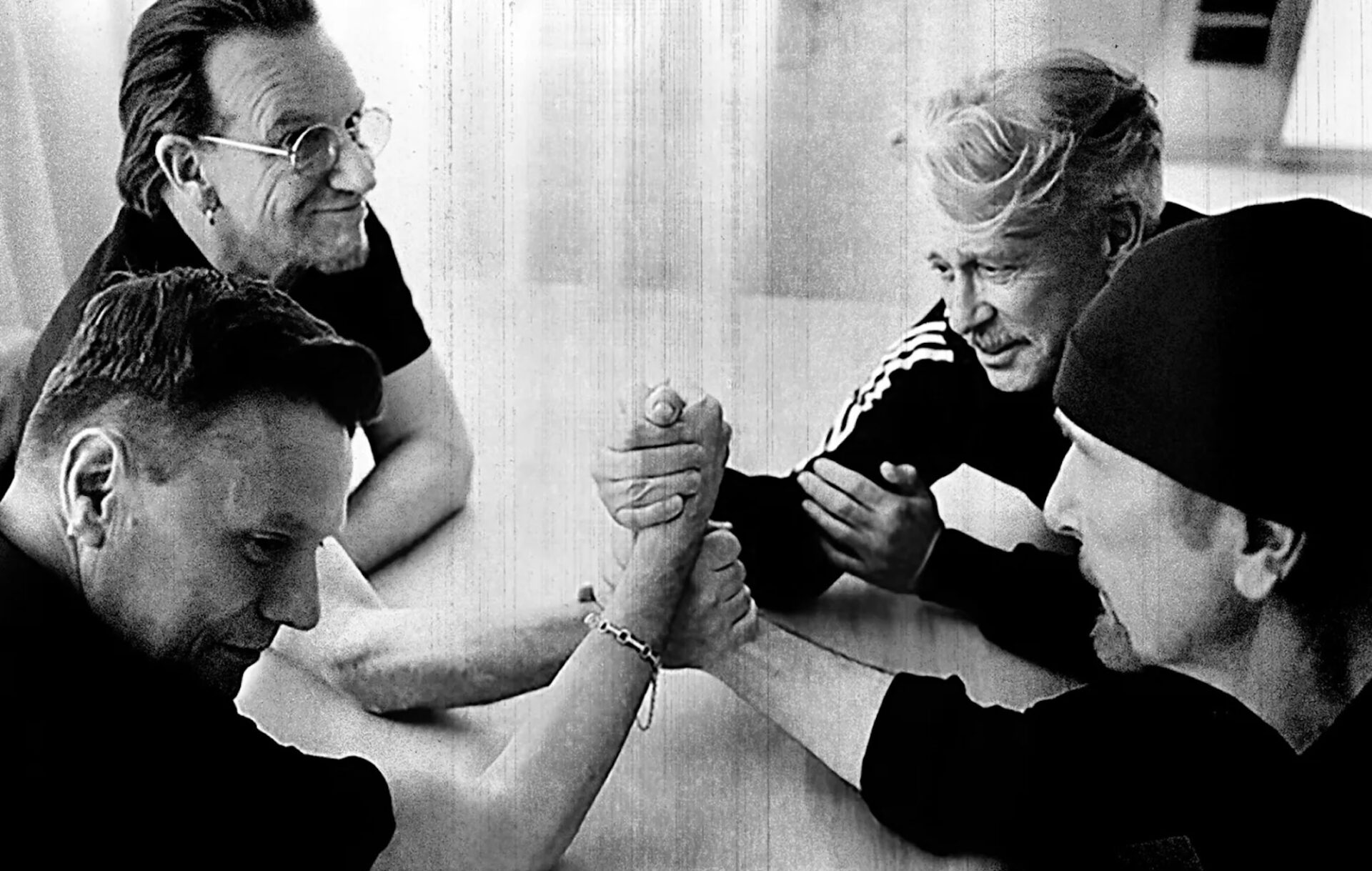
c/o RollingStone UK - "U2 surprise-drop politically charged ‘Days of Ash’ EP with six new songs"

The collection delves into ICE, Israel, the West Bank, Ukraine, Iran — and features a guest vocal by Ed Sheeran

U2 (RollingStone UK - Picture: Anton Corbijn) 

By Andy Greene

'U2 have emerged from a long hiatus with a surprise six-song EP, Days of Ash, available now, in which they address political flashpoints around the world, including ICE raids in the US, the Iranian uprisings, the war in Ukraine, and Israeli settlements in the West Bank.

The six songs — ‘American Obituary’, ‘The Tears of Things’, ‘Song of the Future’, ‘Wildpeace’, ‘One Life at a Time’ and ‘Yours Eternally’ (featuring Ed Sheeran and Taras Topolia) — are all on streaming platforms. They’ve also created lyric videos for each one.' 

Continued ...


Previously: conflict : war : hope : peace

Saturday, February 21, 2026

London: 'The Weight of Being: Vulnerability, Resilience and Mental Health in Art'

In London currently, 20th - 23rd I was on my way to Bankside Gallery and walking by Temple Place, #2 to be precise, on a board outside I read:

'The Weight of Being: Vulnerability, Resilience and Mental Health in Art'

Taking in the mental health and illness of artists, gender, domesticity, industrial and political struggle, COVID, and Gaza I spent and enjoyed a two hour detour. The building is also amazing. The exhibition is on until 19 April 2026, closed on Monday's and today 21st February. Before I share some text from their website, the interior of the building was a 'virtual' experience, but without the technology. Helpfully, the exhibition is spread across several rooms.

'Curated by Angela Thomas, this new exhibition explores artistic expression and mental health. Through depictions of deeply personal and collective experiences, it examines the powerful ways in which artists capture vulnerability, resilience, and their search for solace.

Including the work of a diverse range of twentieth century and contemporary artists and their varying perspectives, The Weight of Being showcases how artists have captured the psychological and emotional impact of societal pressures, resilience in the face of adversity, and existential uncertainty.

Alongside dozens of artworks drawn from galleries and collections across the UK, the portraits, landscapes, and figurative studies of the lesser-known artist John Wilson McCracken (1936–1982) are woven throughout. Denied the opportunity to return to the Slade School of Art following a period of hospitalisation for mental health reasons, McCracken spent much of his career in Hartlepool, producing work that reflects a profound sensitivity to the emotional and social pressures of his time. Shaped by personal and collective struggles, his art offers a deeply human perspective on the exhibition’s themes, revealing how external forces imprint themselves on the mind, body, and creative spirit.' Continued . . .

The building as a whole - Two Temple Place is owned and run by a registered charity, the Bulldog Trust. 

I will definitely (hopefully!) visit again, on the way or returning from the South Bank of the Thames. The video below presents key aspects of the building's amazing interior and history:

Friday, January 23, 2026

Optimism - Pessimism c/o Baggini & Macaro

INDIVIDUAL
|
 INTERPERSONAL    :     SCIENCES               
HUMANISTIC --------------------------------------  MECHANISTIC      
SOCIOLOGY  :   POLITICAL 
|
GROUP

Cognitive flaws,
or psychological adaptations?

'Van der Lugt: "reality confound"

... Optimists believe they have more control over what happens than they actually do.'
 
Dunning-Kruger Effect: 
people tend to overestimate their own expertise.

Baumeister: 
"The negativity effect"
 
Norem:
"defensive pessimism"

Optimism and Pessimism are independent scales.

'Age also makes a difference, for the simple reason that life and its potential future vary accordingly.'

'Designated Cassandra'^
Rotation of role.

'When your prospects are bleak, a gloomy outlook is realism, not pessimism.'
'... how optimistic we feel depends not just on us, but on our life circumstances. 

Think about how race, class and social inequality have real impacts on life chances.'

'In western culture, optimism is valorised more than pessimism.'

'To suggest that people struggling in an unequal system should simply adopt a more positive attitude is to turn social and economic problems into psychological ones.'


^With apologies.

Source: J. Baggini, A. Macaro. In defence of pessimism. Or. why optimism is not quite a prerequisite for achieving a valued goal. FT Weekend Magazine, 1131: June 28, 2025, pp.18-20.
https://www.julianbaggini.com/in-defence-of-pessimism/

Books noted in the above article:

Sharot, T. (2011). The optimism bias: A tour of the irrationally positive brain. Pantheon/Random House.

Tierney, J., & Baumeister, R.F. (2019). The power of bad: How the negativity effect rules us — and how we can rule it. New York: Penguin.

Van der Lugt, M. (2025). Hopeful Pessimism. Princeton University Press. https://doi.org/10.2307/jj.17707125

See also:

Baumeister, R. F., Bratslavsky, E., Finkenauer, C., & Vohs, K. D. (2001). Bad is stronger than good. Review of General Psychology, 5(4), 323–370. https://doi.org/10.1037/1089-2680.5.4.323

Friday, January 16, 2026

Progress? In the age of uncertainty

INDIVIDUAL
|
 INTERPERSONAL    :     SCIENCES               
HUMANISTIC --------------------------------------  MECHANISTIC      
SOCIOLOGY  :   POLITICAL 
|
GROUP


The Age of 


Uncertainty

'Over a relaxed weekend, a distinguished international gathering at John Kenneth Galbraith's Vermont farm offer their views on the themes outlined in the series and on other major anxieties facing the modern world.' 

BBC iPlayer
https://www.bbc.co.uk/iplayer/episode/m002l708/the-age-of-uncertainty-series-1-13-13-weekend-in-vermont

Saturday, January 03, 2026

Universal Basic [Income and Capital] c/o N. Berggruen

Individual
|
     INTERPERSONAL    :     SCIENCES               
HUMANISTIC  --------------------------------------  MECHANISTIC      
 SOCIOLOGY  :    POLITICAL 
|
Group
AI ..

Pope Leo XIV - 'Distributional justice'
Pope Leo XIII "Rerum Novarum" 1891?^
 
 *Ethics - see below.

Baby bond schemes -
Australia Superannuation programme
USA MAGA accounts
Proposed European Sovereignty Fund?
UK?

Globally? "We're in this together, remember"


UNIVERSAL BASIC INCOME
UNIVERSAL BASIC CAPITAL 
 
PREDISTRIBUTION not
REDISTRIBUTION

^History: Impact of the industrial revolution
 

.. ECONOMY

  Diminishing value of labour
 Global wealth inequality
 US: top 10% own 93% of all equities
Europe: .. nearly 60% of all wealth.
Bottom 50% owns just 5%
 

*The ecological and ethical impacts from the energy demands of AI still need to be addressed. Financial 'rewards' for the masses, must not become the 'cake' - the bribe for the public to enter into a conspiratorial dyad with technology. PJ

Source: N. Berggruen, Universal basic capital would create a fair AI economy, Opinion, FTWeekend, 1-2 November. 2025, p.13. https://berggruen.org/eu

https://www.ft.com/content/9b93e02a-c693-4070-9094-a2f532dfa929

See also: 'economics' : 'poverty' : 'AI' : 'inequality' : 'universal'

Tuesday, December 30, 2025

Beyond Empathy to System Change: Four Poems on Health by Bertolt Brecht

The canalization of a river 
The grafting of a fruit tree 
The education of a person 
The reconstruction of a state. 
These are all instances of a fruitful critique 
And they are also
 Instances of art. 
—Bertolt Brecht, “On the Critical Attitude”


Individual
|
      INTERPERSONAL    :     SCIENCES               
HUMANISTIC  --------------------------------------  MECHANISTIC      
 SOCIOLOGY  :    POLITICAL 
|
Group
'The education of a person'


'The canalization of a river
The grafting of a fruit tree'
 

'These are all instances of a fruitful critique
And they are also
Instances of art.'
—Bertolt Brecht,
“On the Critical Attitude”


'The reconstruction of a state.'


MacGregor, W., Horn, M. & Raphael, D. Beyond Empathy to System Change: Four Poems on Health by Bertolt Brecht. J Med Humanit 45, 53–77 (2024). https://doi.org/10.1007/s10912-023-09801-5

My source: 

Politics of Health Group Mail List Messages
Visit PoHG on Facebook: https://www.facebook.com/282761111845400
Follow us on Twitter: @pohguk
You can subscribe to / unsubscribe from the PoHG mail list here: http://www.jiscmail.ac.uk/POHG
And SDOH list - https://listserv.yorku.ca/cgi-bin/wa?SUBED1=sdoh&A=1

See also: 'drama' : 'empathy' : 'poetry' : 'change' : 'art'

Monday, December 22, 2025

Contexto Int. [Newsletter] - Special Issue 47.2 Where is the Sea in Int. Relations?

Dear Colleagues,

We hope this correspondence finds you well.

We are delighted to formally announce the publication of the latest special issue of Contexto Internacional, entitled "Where is the Sea in IR?," which I had the distinct honour of co-editing with Dr Flavia Guerra (Federal University of Rio de Janeiro).

The overarching objective of this Special Issue is to address a central scholarly lacuna within International Relations (IR) scholarship: the historical and theoretical marginalisation of the oceanic domain. In pursuing this fundamental inquiry—why and how does the ocean recede from scholarly and political attention?—the assembled contributions collectively prompt a sustained, rigorous examination of two key analytical challenges:

  1. The specific mechanisms through which IR has historically relegated the oceanic domain to the periphery of its dominant analytical frameworks.
  2. The subsequent broader political and theoretical implications that stem from this systematic exclusion.

The volume is structurally organised around three distinct, yet interconnected, thematic axes, each seeking to contribute to a deeper engagement with the marine sphere:

  1. The Marginalisation of the Ocean in IR: Conceptual and empirical explorations of how the sea is actively rendered absent or subordinate within core theoretical debates.
  2. Complex Entanglements between the Ocean and Ontological Security: Analyses focusing on the relationship between maritime spaces, existential anxieties, and state identity formation.
  3. Ocean Governance as Regulatory Mechanism and Platform for Political Discourse: Critical assessments of regulatory frameworks and their role in structuring political contestation over the maritime commons.

We sincerely hope that you find the contributions within this volume to be a compelling and theoretically relevant read that stimulates further research and critical reflection within the discipline.

Special Issue: Where is the Sea in IR?

Where is the Sea in International Relations?
  Francisco Eduardo Lemos de Matos; Flávia Guerra Cavalcanti

Abstract | Full text

Table of Contents: https://www.scielo.br/j/cint/i/2025.v47n2/

Includes - Addressing 'Maritime Aphasia' in International Relations
  Bruno Sowden-Carvalho; Marcelo M. Valença

Between Nuclear Tests and Rising Sea Levels
  Beatriz Rodrigues Bessa Mattos

Carl Schmitt on the Move: Spatial Politics and the (political) Sacrifice of the Sea
  Francisco Eduardo Lemos de Matos

Thinking Ontological (In)Security with Water: The Place of the Ocean in Boat Migration
  Flávia Guerra Cavalcanti

What is the Place of Mar de Timor in Timorese Geopolitics, Culture and Education?
  Silvia Garcia Nogueira; Betina Lopes; Ângelo Ferreira; Samuel de Souza Freitas

Fluid Boundaries: Reassessing Maritime Spaces and Nomadic Waves in International Relations Theory
  Henrique Campos de Oliveira

The Third Bank of the Sea: Maritime Traces of Constitutive Outside(r)s and International Ontopolitical Lines
  Roberto Vilchez Yamato; Gustavo Alvim de Góes

Ocean Governance, Maritime Security, and International Relations
  Daniele Dionisio da Silva; Gilberto Carvalho Oliveira

Sailing on Waves beyond National Sovereign Land Borders: On the Crossroads between International Ocean Relations and the Blue Economy
  Thauan Santos

Regards,
chico

Francisco Eduardo Lemos de Matos
Doutor em Relações Internacionais pelo IRI/PUC-RIO.
Pesquisador de Pós-Doutorado em Relações Internacionais no IRI/PUC-RIO pela FAPERJ.

Rede IPS Brasil - https://www.ipsbrasil.com/
Lattes: https://lattes.cnpq.br/9338374067089166
Orcid: https://orcid.org/0000-0003-4214-5382

My source: DOINGIPS list - https://www.doingips.org/

Wednesday, December 10, 2025

Problem solving, case formulation and policy formulation

On W2tQ this year, and possibly in a previous paper, or conference presentation, I've stated that the nursing process is basically a problem solving algorithm. Nothing profound there of course. 

'Problem solving' is a developmental threshold and an evolutionary skill obvious in humans, with learning passed on across generations. Evidence of problem solving in animals and nature is becoming increasingly apparent; with examples over recent decades of problems solved not witnessed before.

In healthcare, and psychotherapy more specifically, we shift to case formulation. Again a step-wise process to arise at a sufficiently complete rationale for therapy. Ideally, this extends beyond the individual. As an parent, grandparent, guardian, teacher, supervisor ... teaches a child so therapy is an opportunity for learning and, it must be added, unlearning.

Returning to (and passing on):

Hague, R., & Harrop, M. (2007). Comparative Government and Politics (7th ed.). New York, NY: Palgrave Macmillan.

Chapter 18 (pp.377-395) concerns 'Public Policy'. Clearly, here there is a shift from the individual to the collective, population and citizenry. The chapter's second page on 'Initiation and Formulation' quickly provides a flowchart 'Figure 18.1 Stages of the policy process'. Box 18.1 informs readers about 'Rational and incremental models and policy-making' (p.380):
'The key contrast between the two models is this. The rational model views policy formulation as emerging from a systematic search for the most efficient means of achieving defined goals. By contrast, the incremental model sees policy as emerging from a compromise between actors who have goals which are ill-defined or even contradictory. Where the rational model seeks the best policy in theory, an incremental framework seeks out a practical policy acceptable to all the interests involved.' p.380.
The book highlights Simon (1983) as a source for the rational or synoptic model:
 
Simon H.A. (1983) Reason in human affairs. Oxford: Basil Blackwell.

Plus, for the incremental model:

Lindblom, C.E. 1979. Still muddling, not yet through. Public Administration Review 39: 517–526.

If needed, online, you will find accounts and diagrams on problem solving, the nursing process, case formulation and policy formulation. That's quite a family is it not? 

While not referred to as explicitly today, the nursing process (now routinized) should address parity and integrate care across mental and physical health. The individual (person, patient) should be assessed and care planned with their social and community context taken into account. Collaboration in care should help assure that this is indeed the case. The nursing process in the sociological domain acknowledges the role of parents, guardians, and families as informal carers. The social care sector can also be represented and further the objectives of a more open and integrated care community as per the local situation. While not added to the sciences domain; case formulation should also factor in the physical and political. 

Politically, are all instances of problem solving, and formulation recognised for their importance and influence on outcomes and effectiveness, economy, efficiency (another 'box' p.357), plus efficacy? Are services politically afforded the resources, as defined across the domains of Hodges' model required to deliver, improve and change (achieve sustainability, educational, preventive)? 

The elephant here of course are the determinantS. Ultimately, all these forms of problem solving should be at 'home' in the political domain, but they are rarely there. It is not just the practitioner who can make the difference - be the difference.

Enough of l-implementation

Policy needs to be fit for 21st century purposes, and not hollowed-out but allowed out - beyond the legislative walls where it can make a real difference.

individual
|
INTERPERSONAL : SCIENCES
humanistic -------------------------------------------  mechanistic
SOCIOLOGY : POLITICAL
|
group-population

Nursing process

Case 
formulation

Nursing process

Nursing process

Case 
formulation


Policy
formulation