Hodges' Model: Welcome to the QUAD: regulation

Hodges' model is a conceptual framework to support reflection and critical thinking. Situated, the model can help integrate all disciplines (academic and professional). Amid news items, are posts that illustrate the scope and application of the model. A bibliography and A4 template are provided in the sidebar. Welcome to the QUAD ...

Showing posts with label regulation. Show all posts

Tuesday, July 21, 2026

Invitation to Register: AI for Health BCS London - 6 Nov 2026

Invitation to Register

AI for Health 2026
Friday 6 November 2026

British Computer Society London Office (near Moorgate Underground)

According to the World Health Organization (WHO) prioritising AI for health is crucial. The WHO also highlights that a healthy diet protects you against many chronic noncommunicable diseases, such as heart disease, diabetes and cancer. Quantum computing is gathering an enormous interest as a new paradigm of computing  (see Quantum for Good at https://quantumforgood.eu/), which is already making an impact across industries like health and life sciences (agriculture, food and health). Classical (or current) AI relies in classical computers based on binary bits (zeros and ones), while quantum AI relies in quantum computers based on quantum bits (qubits). Quantum AI could dramatically accelerate research that requires processing vast amounts of data, contributing to human health by accelerating drug discovery or enabling earlier diagnostics. Quantum AI could be also instrumental in identifying early signs of crop diseases or optimising water use.

AI for Health 2026 will have a morning session about AI for health, and an afternoon session about quantum technologies for health and food, including an introduction to quantum computing. Before lunch break, there will be a hands-on tutorial on low-code AI agents for health, farming, and food. Come along to AI for Health 2026 if you are interested in cutting-edge AI for Health, using latest technologies with a promise of high impact.

A full-day face-to-face event organised by the BCS SGAI with the following agenda:
09.30-10.00 Tea/coffee Welcome
10.00-10.45 Medical diagnosis after LLMs (keynote talk) by Prof Brendan Delaney (Imperial College London)
10.45-11.30 AI in Mental Healthcare by Mr Anirban Lahiri (Arndit Ltd. and Kainos Ltd., UK)
11.30-11.45 Tea/coffee Break
11.45-12.30 Demystifying AI regulation by Dr Marinos Ioannides (Medicines and Healthcare products Regulatory Agency, UK)
12.30-13.15 Hand-on tutorial: Low-Code AI Agents for Health, Farming, and Food
13.15-14.15 Lunch Break
14.15-15.00 Introduction to Quantum Computing and its Relevance for Biomedical Science by Dr Oliver Thomson Brown (University of Edinburgh)
15.00-15.45 Translating Quantum Food Futures by Dr Saihong Li (University of Stirling)
15.45-16.30 Emerging Opportunities for Quantum Technologies in Food and Health by Dr Aleksey Kozikov (Newcastle University)
16.30-16.45 Close
Further details at https://www.bcs-sgai.org/health2026/

There will be Certificates of Attendance for those who register and attend the event.

Registration on Eventbrite (includes refreshment and lunch!)
https://www.eventbrite.co.uk/e/ai-for-health-2026-tickets-1990787464898

My source: Dr. Mercedes Arguello Casteleiro (BCS SGAI)

Thursday, June 25, 2026

To which care/knowledge domain does this video belong?


P.S. There isn't a domain called 'bin' but there is plenty of waste.

There isn't one called denial, or ignorance either, but you will find them in abundance too.

Rest assured (if you still can!) that each domain carries its own truth. 

Saturday, June 13, 2026

Hodges' model: An antidote to "Cognitive Surrender"*

'The pope's counterpoint that humanity flourishes "not despite limitations but often through them" is one that many people are becoming more aware of in the case of "cognitive surrender": the realisation that making things easier through AI can diminish rather than enhance our abilities. It is in a similar vein that the FT commits to always keeping human judgement at the centre of our journalism.'

* - and burnout?

The FT View, The ethical dilemmas of artificial intelligence. FTWeekend, 6-7 June 2026, p.12.
https://www.ft.com/content/d2c90246-11d7-4169-ac35-988de7fdb2af?syn-25a6b1a6=1

See also: https://www.futureofbeinghuman.com/p/magnifica-humanitas-and-being-human

Previously: 'ai' : 'language'

Sunday, March 29, 2026

Children: FACE the past, future, your social media, Capitalism

INDIVIDUAL
|
    INTERPERSONAL    :     SCIENCES               
HUMANISTIC --------------------------------------  MECHANISTIC      
SOCIOLOGY  :   POLITICAL 
|
GROUP

MENTAL HEALTH and WELLBEING

LIFELONG LEARNING
 
KEY LITERACIES 

PSHE EDUCATION -
 Personal, Social, 
Health and Economic
The Face
'Apps such as TikTok and Instagram are filled with videos of young girls and teenagers advising their peers on elaborate skincare routines, especially through a popular line of content called "Get Ready with Me".

Parents have sounded the alarm over this trend, while recent medical literature has recognised the phenomenon of "cosmeticorexia", also called "dermorexia", defined as a culturally reinforced preoccupation or obsession with achieving "flawless" skin that can lead to "excessive, age-inappropriate or compulsive use of cosmetic products".'

'Italy is investigating a beauty retailer and make-up brand owned by French luxury group LVMH over claims their marketing has fuelled "cosmeticorexia", an unhealthy obsession with skincare among young girls.
The Italian Competition and Market Authority (AGCM) said yesterday it was probing Sephora and Benefit Cosmetics for suspected "unfair commercial practices" with the promotion of skincare products such as face masks, serums and anti-ageing creams to girls as young as 10 years old.
Those marketing campaigns were carried out mainly via social media, the  regulator said, leading young girls to "compulsively" buy such products.'


My sources: Amy Kazmin, LVMH's Sephora probed in Italy over fuelling young girls' skincare obsession, FTWeekend, 28-29 March 2026, p.1. FTWeekend and The Times. Reviews.

See also: Kazmin et al. Beauty industry scrutinised over age-inappropriate teen marketing. FTWeekend. 11-12 April, 2026, p.14. 

London visit February. Waterstones, Foyles, Hatchards & others.

Book image: https://www.amazon.ca/Face-Cultural-Fay-Bound-Alberti/dp/1538766531
 
Previously: 'health' : 'face' : 'child' : 'obsession' : 'social media'

Monday, December 08, 2025

Remember (if you can) in each care domain ...

... there is an elephant in the 'room'!


individual
|
INTERPERSONAL : SCIENCES
humanistic -------------------------------------------  mechanistic
SOCIOLOGY : POLITICAL
|
group-population
'If there is one product that symbolises the absurdities of the EU's single market in goods, it might be a cuddly elephant. The Djungelskog toy from Ikea may only be 12cm tall and cost less than €2, but it has a 20cm-long label protruding from its behind.

Environmental rules from France and EU textile legislation account for much of the length. But the elongated label reflects a strategic even a philosophical, problem for Europe as its companies battle to compete globally.

The single market in goods should be the EU's crowning achievement. Compared with free movement of people, services or capital, it is the area that has come furthest in more than 30 years since the common market was established.

Yet there remain small, often invisible barriers to trade that, taken together, amount to what the IMF estimates is a drag on Europe's economy equivalent to a tariff of 44 per cent.'


RICHARD MILNE - OSLO and SAM JOINER - LONDON, Elephant in the room hampers frictionless EU trade, FTWeekend, 6-7 December 2025, p.6.

Related?

Jones, P. (1996) Nursing Technology and Elephants - Part 1: Technology as a beast of burden. IT in Nursing. 8,1,4-6.

Jones, P. (1996) Nursing Technology and Elephants - Part 2: Technology as a serpent. IT in Nursing. 8,2,5-7.

Jones, P. (1996) Nursing Technology and Elephants - Part 3: Technology rope to save humanity and health care, IT in Nursing. 8,3,5-7.

Saturday, November 01, 2025

ii On Sociology & Becoming a Nurse

Two final observations re.

Maclean, Una. (1974) Nursing in contemporary society. London: Routledge & Kegan Paul.
https://wellcomecollection.org/works/qhqc24fv


Firstly, there is a question for new student nurses:
'In the case of nursing, the Royal College of Nursing laid down the course of training and the final tests whilst the General Nursing Council held the solemn register to which aspiring professionals were ultimately to be admitted, and  the aim of these two powerful proponents of the nurse's unique role was to limit he epithet 'nurse' to those who had successfully navigated the straight and narrow path to registration.' p.67.

Q. Above, Maclean refers to a solemn register. What do you believe may have shaped the author's writing at that time in 1974? Is the nurse register, towards which you now aspire still 'solemn'? 2000 words.

There has been much debate of late regards the title 'Nurse'. 'Doctor' also.

Secondly, Maclean was prescient in acknowledging the 'Patient's right to information'. pp.119-120.

Wednesday, October 22, 2025

Single, dual aspect in architecture. What of care?

'The challenge of overheating in Britain is our buildings are built to retain heat in our temperate climate. Energy efficiency regulations for new dwellings now require high insulation and few drafts to reduce the need for heating in winter, but broadly make it harder to cool homes in summer. Residents of cities are particularly vulnerable to overheating due to urban heat island effects.

There are two ways buildings can be cooled – mechanical methods (primarily air conditioning) and passive cooling methods that use the design of the building to limit heat gain and retain cooler air inside the dwelling.

Passive cooling is much easier in dual-aspect dwellings with windows on multiple external facades, which as shown in Figure 1, are contrasted to single-aspect flats that face out on to only one external facade. Dual aspect allows breezes to blow through dwellings and easily exchange stuffy indoors air for cooler air from the outdoors. Even if outside temperatures are high, cross-ventilation or overnight air exchange and limits to solar gain (daylight indoors) can keep indoor environments cooler than the outdoors.'

https://www.centreforcities.org/reader/breaking-the-bottlenecks/overheating-and-dual-aspect/


individual
|
INTERPERSONAL : SCIENCES
humanistic -------------------------------------------  mechanistic
SOCIOLOGY : POLITICAL
|
group-population
In Hodges' model at least, we seem to have dual aspect covered. 

That's why we say the model is situated.


Image source: https://www.centreforcities.org/reader/breaking-the-bottlenecks/overheating-and-dual-aspect/

My source:  Plimmer, G., Pickard, J., Steinberg, J., London planning rules face tweak in bid to build more homes. FTWeekend. 18/19 October 2025, p.2.

Previously on W2tQ: 'architecture' : 'situated' : 'housing'

Monday, May 12, 2025

'International Nurse's Day' 2025 - c/o The RCN


'Today is International Nurses’ Day – a day to highlight and celebrate the incredible skill, dedication and impact of nursing.


Nursing staff like you bring so much to those you care for each day. You are there for people during their best and worst moments. You change lives every day, despite our profession facing considerable challenges.


Nursing is highly skilled and rooted in excellence. That’s why patients place their trust in you when they’re at their most vulnerable.


We see the resilience and strength it takes to do this complex, safety-critical work. So today – and every day – we say thank you.'

Text c/o The RCN and video:


Also with RCN Congress starting today ...

Tuesday, May 06, 2025

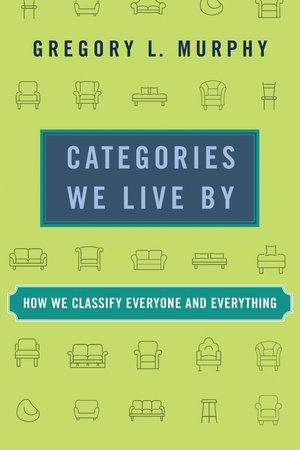
Book review iv: 'Categories we live by'

The introduction to part ii 'Case Studies' is quite prescient: 'Categories have consequences'. p.75.

Certainly timely in the UK as Prof. Murphy returns to gender and birth sex his first example at the book's start. 

Coincidental or not, categories do change. As we try to understand them it is vital we don't mess them up. Consequences follow for people who are subjected to the categorisation. People use them for stability, predictability, so change can be fraught for all. Personal and group identities can all be affected, and (recently) provisions in how 'spaces' are allocated and regulated - controlled.

At infant - junior school I remember the lack of awareness, understanding and empathy for peers affected by epilepsy, stigma was a thing then that wandered the classroom and playground. Through my career I've heard many clients recount experiences pointing to stigma and exclusion.

Of the case studies Murphy writes:
'Each chapter is a more-or-less self-contained case study (including other similar examples), except that chapter 7 is a more general meditation on how determining categories is used in the exercise of power. Some of the case studies get into the weeds, and if you find yourself not that interested in how species are defined, for example, you can skip ahead to the next chapter without losing much. Following part II will be a conclusion, which attempts to summarize some of the lessons learned from all these examples.' p.77.
Murphy's style is accessible, and the case studies are informative. The author is also accessible and responsive I must add. I prefer and need a physical copy of books to reduce screen time, but e-books have their uses. I'm sure I read a short sentence in the case studies that essentially contrasted the individual and collective in sociology. Can I find that word? No luck thus far. I may be mistaken but appreciate Prof. Murphy's reply and thoughts.

There's another 'news' coincidence on p.80 (Chapter 5 'Legal Categories'): are Santa Claus costumes 'clothing' and so subject to tariffs (also referenced)? Every person worldwide, has no doubt pondered on their marked grade in a test or exam - and 'where' this places them?
'In her review of a book about rules, Rivka Galchen (2022) admits to feeling a bit of despair in the end: "Rules that leave a ruler, Or a judge, in charge of interpreting them feel at once humanized and corruptible. Rules that allow no exception seem free of human frailty but alien, and unable to admit properly of complexity." It is very easy to point at what went wrong with an overly strict rule or with a judge who seems biased, but less easy to devise a system of categories that avoids every problem.' p.83.
I often frame the conjunction of the mechanistic axis and the group in Hodges' model in terms of what do need, or get when you have large groups of people? The political domain, including law and disorder is critical of course. Is 'utopia' the perfect system by definition? I like the way even prior to reference to Galchen, Murphy states how 'the precise borders between categories can be essentially arbitrary, and there is no way to avoid that arbitrariness if you insist on dividing things into categories.'. p.83. 

If this book was a BASIC computer program, the first command for Chapter 6 Psychodiagnostic Categories. might well be a 'GOTO' statement: Chapter 7 Categories and Power.

More to follow and nearly there - sadly.

Previously: identity : space : categories

Murphy, Gregory L. Categories we live by: how we classify everyone and everything. Cambridge, MA: The MIT Press, 2024.

Many thanks to MIT Press for the review copy - and the dose of serendipity:

Monday, April 21, 2025

Biblio - addition: Conceptual Mapping Exercise of DoLS in Residential & Community Care Using Hodges' Model and Threshold Concepts


After a great many years of on-off effort, radical revisions - from one to two papers - part 1 and part 2; and then finally two standalone papers, I received news this morning from ORCID and Wiley of online publication.

News of the second paper (part 1 - to me) is still to follow.

Many thanks to the individuals who read earlier drafts, the editor and team of JECP.

It is a real delight to add an item to the blog's bibliography in the sidebar.

Apologies in advance, the paper is not open access, I cannot personally cover the fees. Happy to assist with an earlier draft.


Once again, if you can add to the bibliography, or are interested in using Hodges' model please let me know. Or as several researchers have done: 'Just get on with it!'. Learning post-publication of a citation for Hodges' model, is a welcome surprise too.


Jones, P. (2025), A Conceptual Mapping Exercise of Deprivation of Liberty Safeguards in Residential & Community Care Using Hodges' Model and Threshold Concepts. Journal of Evaluation in Clinical Practice, 31: e70085. https://doi.org/10.1111/jep.70085

Saturday, April 05, 2025

Exhibition: Manchester (and online) “Our Lives, Our Privacy” c/o ICO

This a.m. I heard on BBC R4 Today 07.41.30... news (and interesting discussion) -

https://www.bbc.co.uk/sounds/play/m0029rg4

- of an exhibition in Manchester that may be of interest, if you're local, but it is also accessible online:

https://ico.org.uk/about-the-ico/media-centre/news-and-blogs/2025/04/come-and-visit-manchester-s-latest-exhibition-our-lives-our-privacy-to-celebrate-the-ico-s-40th-anniversary/

Our Lives, Our Privacy
'A digital exhibition featuring 40 items that tells the tale of how privacy has been at the centre of some of the biggest events and milestones we remember over the past four decades was launched last Autumn, but now a physical exhibition has come to Manchester. 
From 2 April to 30 June, we will be displaying the exhibition at Manchester Central Library in the first-floor exhibition space. Members of the public are welcome to pop in and see the items that have shaped our lives and our privacy.  
 
The ‘Our Lives, Our Privacy’ exhibition highlights poignant events in history including the launch of social media, the News of the World phone hacking scandal and the Covid 19 pandemic to name a few. It also looks at technological advancements like smart devices and raising questions about the future, including how accurate the episodes of ‘Black Mirror’ really are.'
==== Previously:

Jones, P. (1996) Humans, Information, and Science, Journal of Advanced Nursing, 24(3),591-598.
https://www.academia.edu/3555654/Humans_information_and_science

Jones, P. (1996) An overarching theory of health communication? Health Informatics Journal,2,1,28-34.

Jones, P. (2004) Viewpoint: Can informatics and holistic multidisciplinary care be harmonised? British Journal of Healthcare Computing & Information Management, 21, 6, 17-18.

Fryer, Jon. “Information Literacies – Learning, to Thrive in a Digital Age” IRMS Bulletin 230 (2022): 16-21.

As listed in the bibliography in this blog's sidebar.

I visited Manchester Central Library about two weeks ago, it is quite a building and full of public, cultural, and local information resources. Must do likewise in Liverpool.

Sunday, February 16, 2025

Book review: #4 - Handbook on the Ethics of AI

Chapter 7 is no doubt one of the engine rooms of this book. In AI Ethics and Machine Ethics, John-Stewart Gordon follows preceding authors citing Nyholm and others. This probably helps the overall coherence of the book, and underlines what is a dynamic and emerging field. Reading 'What is AI ethics?' (p.98), I made a note about our humanity's cognitive house-keeping (and other life-forms?) executed through sleep, the ability to unlearn, and forget. Efforts to mitigate machine bias are provided in a list 1-5 (p.100). As observed previously, this author is also thinking on their feet (and very well too) with 'Source: Author's own' in a figure for the systemic place of machine ethics and another (table) 7.1 'Four approaches to machine ethics'.

3.4 considers the challenges involved in developing ethical AI systems. As in healthcare, we see where the (problem of) 'many hands' emerges from:
'Developing ethical AI systems requires collaboration between computer scientists, ethicists, and other stakeholders, which can be challenging due to differences in expertise, terminology, and perspectives. Computer scientists bring technical expertise to the table, while ethicists provide insights on moral principles and values that should guide AI behavior. However, these experts often operate within their own domains and may lack a common language to effectively communicate and collaborate. 
Other stakeholders, such as policymakers, industry professionals, and end-users, also play vital roles in shaping the ethical development of AI systems. They bring diverse perspectives, needs and expectations that need to be considered and balanced during the design, implementation, and regulation of AI technologies. For instance, policymakers are responsible for creating guidelines and regulations that ensure the safe and responsible use of AI, while industry professionals must adhere to these standards and navigate the practical challenges of integrating ethical considerations into their AI-driven products and services.' p.104.
The solution includes having interdisciplinary and ethnically diverse teams, cross-disciplinary training, and a more holistic and comprehensive approach to AI development. Unintended consequences (a news item today (13th Feb 2025) are discussed, the dual-use nature of AI and technological 'delivery' surveillance acting for good and potentially ill (China's - Social Credit Point System).

AI ethics is also itself apparently a conceptual framework (p. 99,107).

What is permitted by law in a State clearly varies. Chapter 8 deals with From Ethics to Law: Why, When, and How to Regulate AI. Collingridge is another recurring citation, and presents a dilemma no-less (Section 3. p.116); one to follow up  (Coeckelbergh too, chap 9). I've always felt that some knowledge of social and economic history is a good foundation. History is reflected here in resort to 'masterly inactivity' (p.118) and regulatory approaches - as debated this past week at an AI Action Summit in France. 

I can still recall the sense of competition in having time in the sandpit at infants school.* Software developers will use sandboxes to develop and revise code in an isolated environment, before it goes live, or wild. With AI the book refers to mishaps, projects that have gone wrong. We need to take care regards the nature of the 'sandboxes' that are used. In a way this speaks to the utility of Hodges' model as a resource for lifelong learning, a learner being fully socialised into a profession and its evolving disciplines:

INDIVIDUAL
|
      INTERPERSONAL    :     SCIENCES               
HUMANISTIC  --------------------------------------  MECHANISTIC      
 SOCIOLOGY  :    POLITICAL 
|
GROUP
box
sand-
box
box

I had to look up the CREEPER (Curbing Realistic Exploitative Electronic Pedophilic Robots) ACT (p.121). We are accustomed to outsourcing, and its perverse effects facilitated through globalisation, with nations transferring their pollution - plastics, and e-wastes. There are efforts as Chesterman writes to limit outsourcing to AI in terms of the decisions (pp.122-123). I enjoyed the nods to Isaac Asimov too. 

Gellers in chapter 9 AI, Design, and More-than-Human Justice provides another cylinder to drive the text not just forward but acknowledges the future for all: organic and inorganic. Gellers is argues for attention to AI and justice, not merely the moral and legal status of AI. Reading of  'communities of justice' (p.128) the established notion of 'communities of practice' or the collective of users - socio-technically. Gellers highlights our being in the anthropocene and how the environment and nature is figuring in law. So, not just legal questions for humans but natural 'things' and entities also (posted previously: Person & Sense of Place: A River runs through it ...).


INDIVIDUAL
|
      INTERPERSONAL    :     SCIENCES               
HUMANISTIC  --------------------------------------  MECHANISTIC      
 SOCIOLOGY  :    POLITICAL 
|
GROUP
person-
[what >]
'Who'
-hood (p.129)

algorithmic
collective

communities of practice
justice

communities of justice

I don't think we are there yet? Even, accepting that built-in obsolescence is an established and legal thing. But AI could turn materialism on its head. Looking at the materials, metals, rare earth elements ... that goes in how long do they last and how are the materials recovered? AI, computing desperately needs the doughnut economy, must epitomize the doughnut. Looking for a place to live, you notice the way probably quite serviceable bathrooms and kitchens are ripped out. The suites on a skip. That is quite a scene on the rubbish tip in the film: 'A.I. Artificial Intelligence'. The amount of energy in total production and materials is still not wholly valued, even before other values are 'added'? The focus on design here is integral to such questions. It has brought me to care design, and care architecture. Socio-technical aspects are highlighted again by Gellers (for me, as noted on W2tQ, that hyphen matters). 

Unsurprisingly, Descartes also figures in this chapter, section -Technology in the anthropocene:

'First, for philosophers of technology, the Anthropocene obliterates the nature/culture divide intrinsic to Cartesian thinking (Conty, 2017) that altered the course of history by rebranding technical objects as artificial and thus divorced from nature (Hui, 2017).' p.131.
It is encouraging that there is now recognition that 'we are nature too'. While we can record thought - brain activity on an EEG, from the outset (school studies of biology, then human biology) I've always associated intelligence, mind, thought, emotion, hope, dreams and cognition .. with the intra- interpersonal domain. If you adopt a socio-technical approach (overview - mindset) then invariably the technosphere will straddle the HUMANISTIC <-> MECHANISTIC axis of Hodges' model:
'So far, I hope to have established that technology plays a prominent, if complicated, role in the Anthropocene. But how does this relate to justice? Technology's relationship to ecological systems holds important implications for determining who belongs to communities of justice. To begin, the Earth system consists of interrelated biological, physical, and mental "worlds" (Kotzé, 2020, p. 80). The mental world, also referred to as the "technosphere," is an autonomous amalgamation of energy, communication, transportation, and financial systems, along with cities, governments, factories, farms, and other built systems and their constituent parts (Haff, 2014, P. 127). Technological artifacts such as AI are therefore part of the technosphere.' p.132.

Hodges' model: axes and care domains

We read of robots-in-ecology and robots-for-ecology. I was reminded of the SF film 'Silent Running' here. The real merit and encouragement for me in Geller's contribution, is section 4 which compares how we can approach more-than-human justice. Total eclipses are supposed to be rare, irrespective of what they might portend, now AI, the climate and life on Earth keep eclipsing each other: thus far partially. 4.1 Multispecies justice - Peter Singer really is ahead of his time (chapter 11 - here!); following socio-ecological justice 4.2, we arrive at planetary justice. Note (in Hodges' model) the 'distance' of what is generally deemed social and where the ecological in reality - physically resides. In the margin I'd scribbled 'Less a case of "take me to your leader" and more a case of "show me all your cards!"'. The synthesis and closing section on the design of robots specifically for more-than-human-justice helps here by including relationality, intersectionality and and contexts. 'Design justice' is something the book prompts me to carry forward (p.137).

One final post on HEoAI to follow ...

Handbook on the Ethics of Artificial Intelligence. David J. Gunkel (ed.). Cheltenham, UK: Edward Elgar Publishing Ltd. ISBN: 978 1 80392 671 1245
https://www.e-elgar.com/shop/gbp/handbook-on-the-ethics-of-artificial-intelligence-9781803926711.html

Related previous posts: 'general + AI'

*That early streak of competitiveness was clearly educated out of me.

Wednesday, July 10, 2024

ERCIM News No. 138 Special theme: "Sustainable Cities"

Dear ERCIM News reader,

A new ERCIM News issue (Number 138) is online with a special theme on sustainable cities. This ERCIM News special theme reports on research addressing technologies, systems, applications, and services for sustainable smart cities, showcasing Europe's research ecosystem.
You can access the issue at https://ercim-news.ercim.eu/

This special theme was coordinated by our guest editors German Castignani (Luxembourg Institute of Science and Technology) and Georgios Mylonas (Industrial Systems Institute, Athena Research Center).

Thank you for reading ERCIM News!

Please share this issue with anyone who might find it interesting. You can also support us on Twitter (@ercim_news) and LinkedIn (https://www.linkedin.com/company/ercim). Let's keep the conversation going and share the latest updates together!

Next issue:
No. 139, October 2024
Special Theme: "Software Security". Submissions are welcome! See call for contributions.

Announcements in this issue:

  • Call for Proposals: Dagstuhl Seminars and Perspectives Workshops - Schloss Dagstuhl – Leibniz-Zentrum für Informatik is accepting proposals for scientific seminars/workshops in all areas of computer science.
  • ERCIM "Alain Bensoussan" Fellowship Programme - Postdoctoral fellowships available at leading European research institutions. Simple application procedure. Next application deadline: 30 September 2024.
  • Call for Participation: Forum Beyond Compliance 2024: Research Ethics in the Digital Age
  • Call for Participation: Edge AI Meets Swarm Intelligence - Dubrovnik, Croatia, 18 September 2024
  • SmartEdge & AIoTwin Summer School and Workshop, 16-20 September 2024, Dubrovnik, Croatia
  • Call for Participation: FMICS 2024 - 29th International Conference on Formal Methods for Industrial Critical Systems, co-located with Formal Methods (FM) 2024 in Milan, 9-11 September 2024

ERCIM News is published quarterly by ERCIM, the European Research Consortium for Informatics and Mathematics. With the printed and online edition, ERCIM News reaches more than 10000 readers.
All issues published to date are available online.


About ERCIM

ERCIM - the European Research Consortium for Informatics and Mathematics - aims to foster collaborative work within the European research community and to increase cooperation with European industry. Leading European research institutes are members of ERCIM. ERCIM is the European host of W3C.

Subscribe to the ERCIM News quarterly alert

Peter Kunz*                      	
ERCIM Office
2004, Route des Lucioles
BP93
F-06902 Sophia Antipolis Cedex

https://www.ercim.eu
https://ercim-news.ercim.eu 

*My source via email - many thanks.

n.b. A search did not find 'health', 'well-', 'care', or 'pollution' in this issue.
 
Contrast with (and other previous issues):

ERCIM News No. 98 Special theme: "Smart Cities"

Tuesday, July 09, 2024

The Nursing and Midwifery Council: Independent culture review - Reflection, accountability and action


Individual
|
      INTERPERSONAL    :     SCIENCES                   
HUMANISTIC  --------------------------------------  MECHANISTIC      
 SOCIOLOGY  :    POLITICAL 
|
Group

Title: 'Registered Nurse' ...

Professionalism

Reflection

Theory - Practice - Governance [gap*]

PROCESSES

ACTION

Community of Practice

Role models

Models of  Care -

Across all care contexts


c/o Twi/X

*always trying to bridge ...


Saturday, January 20, 2024

c/o Eliot Higgins: 'Moment of truth' or 'Movement to Critical Thinking'?

   moment

a : tendency or measure of tendency to produce motion especially about a point or axis

b : the product of quantity (such as a force) and the distance to a particular axis or point

https://www.merriam-webster.com/dictionary/moment


Here on W2tQ in posts applying Hodges' model I have tended to equate the subjective and the objective with the humanistic and mechanistic domains respectively. Of course, these mappings - conceptual placements are idealised. In reality there is a great deal of overlap. 

"Social media platforms such as X, once celebrated as democratising forces, are under even more scrutiny. The challenge isn't just rogue posts or unchecked algorithms. It reflects a deeper malaise, rooted in societal distrust, exacerbated by business models and perpetuated by reactive policies. The ramifications of disinformation spill on the streets with tangible, often devastating real-world consequences. 
These processes were already underway in 2014, when I founded the open-source investigative group Bellingcat." p.1. 
"The delicate balance between combating misinformation and ensuring digital freedoms remains elusive. ...

Addressing the root causes of disinformation requires a grassroots approach. Education stands at the forefront of this strategy. The idea is simple yet transformative: integrate open-source investigative and critical thinking into the curriculum. Equip the youth with the skills to navigate the labyrinthine digital realm, to question, analyse and verify before accepting or sharing information. ...

The potential of such a grassroots movement doesn't stop at school gates. Envision a world where universities become hubs of open source investigation, with national and international networks of students sharing methodologies, tools and insights. As these students move into their professional lives, they carry forward not just skills but a mindset - one that values critical thinking over blind acceptance." p.2.

Higgins, E. Moment of truth, Life&Arts, FT Weekend, 16-17 December 2023, pp.1-2.
 

 Individual
  |
    INTERPERSONAL    :     SCIENCES               
HUMANISTIC --------------------------------------  MECHANISTIC      
SOCIOLOGY  :   POLITICAL 
|
Group

mental well-being

critical thinking

education - learning

subjective
PSYCHO-

physical well-being

fact (checking)

digital media literacy

objective


social well-being

society

social impacts of info disorder


-POLITICAL
political well-being

policy - regulation

political impacts of info disorder


https://thestudentview.org/

https://citizenevidence.org/

Access to education to combat information disorder, through digital media literacy is essential. There are now many claimed forms of literacy, and informatics. Engaging students must not just rest with  universities and graduate level education; especially as the 'professions' are set to change and new ones arise.

Previous posts 'information disorder' , 'ignorance'.

Tuesday, December 12, 2023

'Pharma©opia’ (1992) by General Idea outside Museo Jumex © Moritz Bernoully c/o FTWeekend

 INDIVIDUAL
  |
     INTERPERSONAL    :     SCIENCES               
HUMANISTIC --------------------------------------  MECHANISTIC      
SOCIOLOGY  :   POLITICAL 
|
GROUP


Pharma©opia’ (1992) by General Idea
outside Museo Jumex © Moritz Bernoully


Cepeda, G., Mexican art's early champion. Collecting,  FTWeekend, 25-26 November 2023, p.5. 

Image source:
https://www.ft.com/content/96f76039-0703-455f-acbb-d1a74827ee73

With my inversion of the original image.

Thursday, September 14, 2023

NHS management accountability

INDIVIDUAL
|
     INTERPERSONAL    :     SCIENCES               
HUMANISTIC --------------------------------------  MECHANISTIC      
SOCIOLOGY  :   POLITICAL 
|
GROUP
NURSING
ACCOUNTABILITY

NURSING
ACCOUNTABILITY


NURSING
ACCOUNTABILITY^


Managers accountable?
It's about time!*


Nurses have been here for a long time.

You're still not
listening though ...


*Assuming NHS managers become subject to regulation and can also be held to account.

^Yes, spiritual too.

Many nurses may not want to acknowledge or contemplate the 'politics' of health. They respond quickly: It is not why they came into the profession. But, in practice and theory you / we cannot avoid it. In nurse-patient encounters, it is ever-present; it is the other / shadow encounter.

Wednesday, December 28, 2022

Paper - "The concept of legal space: A topological approach to addressing multiple legalities"

 INDIVIDUAL
|
 INTERPERSONAL    :     SCIENCES               
HUMANISTIC --------------------------------------  MECHANISTIC      
SOCIOLOGY  :   POLITICAL 
|
GROUP

"5 An early reference to topology in psychology has been developed by Kurt Lewin, Principles of Topological Psychology (McGraw-Hill, New York, 1936). Linking literature and topology, Angus Fletcher, The Topological Imagination: Spheres, Edges, and Islands (Harvard University Press, Cambridge, MA, 2016). For an overview of philosophical approaches related to topology, see Daniel Parrochia, Mathematics and Philosophy (Wiley, Chichester, 2018) Ch 11. Using a topological approach to law, Müller-Mall (n 4). This last contribution constructs a topological approach for assessing perspectives in law (such as reflected in judicial decisions on a certain legal question) and situating them within ‘reference frames’ (in particular 117 et seq)." p.520.

"Law is fragmented ‘along issue-specific rather than territorial lines’, as exemplified by regulatory regimes for environmental and health issues or the private regulation of the cyberspace and of transnational commercial activities.20 Some authors have described this as a ‘deterritorialization’ of law.21 One reason for such a deterritorialization is the increasing amount of regulatory objects that cannot, or can only with difficulty, be linked to any territory – particularly salient in the case of digitalized data and its fluid location." p.522.

"... the notion of legal space suggested here comprises various features that are guided by concepts from topology, a branch of mathematics that analyses the qualitative nature of spaces. This approach has been adopted in an interdisciplinary manner, including in various disciplines of social science."5(See above). pp.519-520.


Global Constitutionalism


Burchardt, D. (2022). The concept of legal space: A topological approach to addressing multiple legalities. Global Constitutionalism, 11(3), 518-547. doi:10.1017/S2045381722000041

Thursday, December 08, 2022

Perspectives on Paternalism and Public Health - Report

 INDIVIDUAL
|

 INTERPERSONAL    :     SCIENCES               
HUMANISTIC --------------------------------------  MECHANISTIC      
SOCIOLOGY  :   POLITICAL 
|
GROUP

public MENTAL health

'individual wellbeing'

PUBLIC HEALTH

'individual wellbeing'
PUBLIC HEALTH

'benefitting a group’

'Is there such
a thing as group wellbeing?'

'sub-population'
'population'

[ 'Benefits realisation'
in technology, and policy.
Social responsibility. ]
Perspectives on Paternalism
and Public Health

"The difficulties with assessing public health policies in terms of the standard model of paternalism are often under-recognised and under-explored. Given the lack of attention paid to these issues, perhaps we should not be overly pessimistic that progress is possible. When it comes to public health policy and practice, we should avoid trying to take a pre-made theory and simply applying it. Instead, we should carefully reflect on the case of public health to help us improve our theorising about the nature and ethical significance of paternalism in general." p.11.

Perspectives on Paternalism and Public Health - Report, Compiled by Jonathan Parry, Farhang Tahzib and Jessica Begon. UK Faculty of Public Health. November 2022. ISBN: 978-1-900273-89-3

My source:
https://twitter.com/LSEPhilosophy/status/1600505409575403520?s=20&t=JEL9DUvUTntSTyGtViZDtQ

Sunday, November 27, 2022

"No safety without emotional safety" by Veale, et al. (2022)

 INDIVIDUAL
|

 INTERPERSONAL    :     SCIENCES               
HUMANISTIC --------------------------------------  MECHANISTIC      
SOCIOLOGY  :   POLITICAL 
|
GROUP
psychological needs (risk)
inc. threat processing - treatment of interpersonal violence
'therapeutic
emotional safety (re-traumatisation)
control behaviour
severe panic with flashbacks, dissociation, and visual hallucinations
physical needs (RISK)
'low intensity touch'

environment' ... tepee - in room my safe space
physical safety (safe room)
to increase physical safety
privacy, lighting, doors, window

lived experience
family - relationship experience (touch)
'atmosphere'?
change in culture, positive risk-taking
person-centredness, family orientation in 'team'
Leadership
'therapeutic community'
Open Dialogue
CONTROL:
'take away' - autonomy, responsibility
policies - abuse risk, 'protect' patients and staff
regulatory reform
in-patient care, pets - policy
parity of esteem
Access (still) to therapies, CBT
Institutional risk
Alternative protocols


David Veale, Eleanor Robins, Alex B Thomson, Paul Gilbert, No safety without emotional safety, The Lancet Psychiatry, 2022, ISSN 2215-0366, https://doi.org/10.1016/S2215-0366(22)00373-X. (https://www.sciencedirect.com/science/article/pii/S221503662200373X)

My source:
https://twitter.com/tadhg50/status/1596901626765529091?s=20&t=FJe9qpYUrxHN2yxWEWLUdQ
The purposes of Hodges' model is to identify the concepts that have salience clinically, to the person, be they - patient, carer, student ... and then to integrate care, to draw the care domains together into a 'whole'.

Four original purposes of Hodges' model: 

1. Reflection, reflective practice, critical thinking
2. Person-centred care
3. Holistic - integrated care
4. Bridge the Theory - Practice gap