Violence is a . . .
INTERPERSONAL : SCIENCES
violence is a STATE of mind: and ...? | |||
|
My source: Financial Times. 9 September, 2026, p.1.
Hodges' model is a conceptual framework to support reflection and critical thinking. Situated, the model can help integrate all disciplines (academic and professional). Amid news items, are posts that illustrate the scope and application of the model. A bibliography and A4 template are provided in the sidebar. Welcome to the QUAD ...
violence is a STATE of mind: and ...? | |||
|
My source: Financial Times. 9 September, 2026, p.1.
A period-friendly world is a world in which menstruation is accepted as a normal fact of life and is no longer stigmatised. It is a world in which everyone is educated about menstruation from an early age. In a period-friendly world, everyone has access to quality and affordable period products of their choice. Everyone has access to period-friendly toilets. And in a period-friendly world, menstrual health services are available to everyone. It is a world where no one is held back just because they menstruate. (MH Day mission)
Global perspective of menstruation
MHH-related challenges
1 of 3 April 2026 Continued ... #PeriodFriendlyWorld
Posted by Peter Jones at 4:00 pm | PERMALINK
Labels: #PeriodFriendlyWorld , action , activism , awareness , boys , education , girls , health services , hygiene , media , menstruation , periods , public health , safety , toilets , understanding , WASH , well-being , women
With more to follow from RCN Congress, this morning I received the agenda for next month's conference 'Ecologies of Care'. I am speaking, first session on the Thursday, which is a good to know and see the broad range of presentations.
The focus on attention, is helpful for a possible further event in October. In the meantime, the Call for Papers began:
Chancellor’s Hall, Senate House London
June 4 & 5, 2026
Keynote lecture by Professor Yves Citton
How do increasing demands on our attention influence what we know, and how we act, in response to climate change? Despite a strong scientific consensus that climate change is ongoing and anthropogenic, political and legal action remains fragmented. Ecologies of Care asks to what extent the environmental crisis is a crisis of attention. Speaking to the dynamics of the attention economy, Yves Citton notes that “the new scarcity is no longer to be situated on the side of material goods to be produced, but on the attention necessary to consume them.” The word ‘attention’ is etymologically linked to the notion of care, or that which one attends to. This relationship (of subject and object) is fundamentally collective, insofar as collective attentional regimes influence what each one of us pays attention to on a daily basis, and how we navigate the barrage of informational flows from popular media.
Terms such as "the Anthropocene" and "planetary boundaries" function both as scientific descriptors and attempts to provoke action commensurate to the urgency that scientists believe their research demonstrates. The recent decision not to formalize the Anthropocene as an official geological unit, for example, highlights growing unease concerning intensifying media attention directed at scientific expertise. Under conditions of increasing disparity between what we know, and how we act, in response to climate change, the role of scientific expertise plays an increasingly normative, and not only informative, function. Scientific expertise attempts to direct what we attend to, and consequently, how (or if) we care. This is a collective practice of narrating and internalizing mythologies, whereby informational flows draw attention to some thing that needs to be cared for: Earth, the planetary, capital, or each other.
Continued ...
c/o Law and the Environmental Humanities Network
n.b. With little time, I'm not going to transfer the pdf text, but may add here.
Posted by Peter Jones at 12:20 pm | PERMALINK
Labels: anthropocene , attention , biosphere , care , climate change , collective , conference , decolonial , ecology , environment , expertise , law , media , myth , navigation , planetary health , political , science , socio-technical
The source for the post:
- reminds me that Hodges' model provides a potential 'World Model'. Not just one world, but (seriously and non-trivially) several, in the form of the ...
Hodges' model is applicable in assessment, planning, interventions, evaluation and review. The key of course, is as was as computers first arrived on wards and clinics: the human users of Hodges' model.
Of course, each comes with their own, hard won (see what I did there!) model, that needs extending by several intensive years of study.
Situated and person-centred, Hodges' model can assist all its users, to 'incorporate the learned dynamics of the environment', however it presents: medicine anyone? What about surgical, psychiatry, paediatrics, orthopaedics, or gynaecology? You get my drift?
Wenninghoff, N., Schwammberger, M. (2026). Interpretable World Model Imaginations as Deep Reinforcement Learning Explanation. In: Guidotti, R., Schmid, U., Longo, L. (eds) Explainable Artificial Intelligence. xAI 2025. Communications in Computer and Information Science, vol 2578. Springer, Cham. https://doi.org/10.1007/978-3-032-08327-2_7
*And not necessarily a student nurse, but possibly medical, social work, psychology, probation, ... ai!
Posted by Peter Jones at 9:35 pm | PERMALINK
Labels: algorithms , artificial intelligence , decision-making , design , evaluation , explanation , healthcare , Hodges' model , human-centred , imagination , innovation , learning , LLMs , media , models , systems , training , world models
ETHICS CONFIDENTIALITY CONFIDENCE 'COMMS' MENTAL HEALTH BEHAVIOURAL HEALTH & PERFOIRMANCE PRIVATE PSYCHOLOGICAL COMMUNICATION CIRCADIAN HEALTH PERSON-CENTRED HEALTH/DISABILITY |
LAUNCHES - RE-ENTRY WINDOWS TRAINING HEALTH - EMERGENCY DIAGNOSIS: INJURY, RADIATION, MUSCULOSKELETAL, NEUROLOGICAL, VISION, microGRAVITY |
CREWS WELFARE - PRIORITY SOCIAL - WELL-BEING | NASA POLICY - PREPAREDNESS MEDIA RELATIONS |
'NASA-STD-3001 Volume 1 covers the requirements needed to support astronaut health and provide medical care while Volume 2 covers human-related vehicle system design and operations requirements that will maintain astronaut safety and promote performance.'
During the 1990s I was a member of the
Space Nursing Society -
https://nss.org/space-nursing-society-chapter/
London Institute of Space Policy and Law -
https://www.space-institute.org
See also: 'NASA' : 'astronautics'
Posted by Peter Jones at 5:59 pm | PERMALINK
Labels: astronautics , astronauts , diagnostics , emergency , evacuation , health , life support , media , medicine , microgravity , NASA , nursing , orbit , priority , remote , safety , skills , space medicine , telemedicine , welfare
Posted by Peter Jones at 4:16 pm | PERMALINK
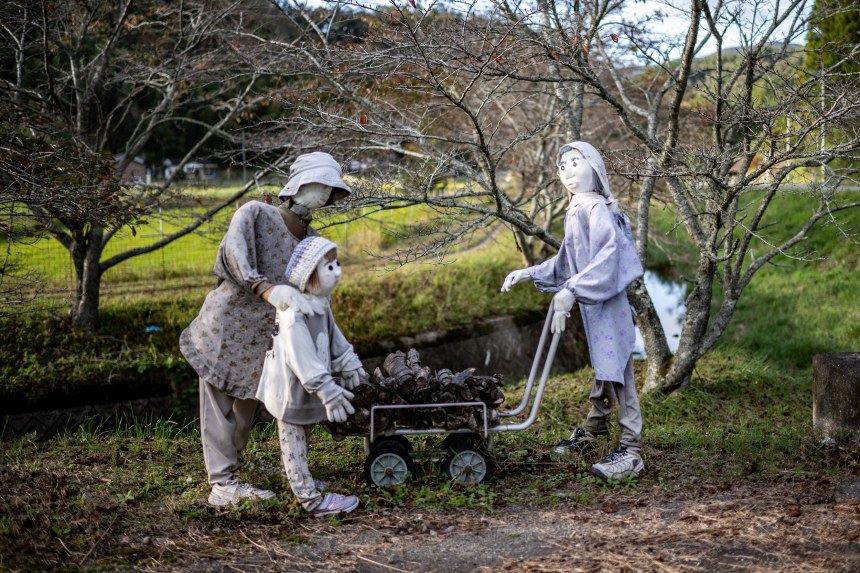
Labels: ageing , art , belonging , collective , community , demographics , depopulation , economics , immigration , Japan , loneliness , media , migration , older adults , policy , population , puppets , sculpture , villages , work
'The bomb was packed into a steel container, placed beneath my mother's car seat, and detonated remotely just down the road from our home in Bidnija. It contained around 300 grammes of military-grade explosive. I didn't know the weight until this trial. But I already knew what it destroyed.' | |
Caruana Galizia daughter sister wife mother grandmother friend neighbour colleague citizen ... | 'There was something else I didn't know before this trial. The two medics who conducted my mother's autopsy said they found her heart was, incredibly, "intact" - and that it weighed 300 grammes. The same weight used to kill her was the weight of what endured.' |
Posted by Peter Jones at 1:40 pm | PERMALINK
Labels: business , corruption , crime , Daphne , democracy , exposure , finance , government , journalism , justice , law , Malta , media , murder , news , persistence , politics , rule of law , secrets , truth
Will post on my blog tomorrow:
— Peter Jones (@h2cm) June 3, 2025
planetaryhttps://t.co/tYRmnqcquE
frameworkshttps://t.co/mRD4yKAfAl
commshttps://t.co/35g2Gnk9MK
aihttps://t.co/ziwnIsrcqR
landscapehttps://t.co/Jq6I0y1Xuv#AI #PlanetaryHealth #Ecology #Environment pic.twitter.com/uGhZMYpj2o
Posted by Peter Jones at 9:58 am | PERMALINK
Labels: activism , AI , awareness , communication , engagement , environment , evidence , information , landscape , meaning , media , planetary health , policy , politics , research , survey , understanding
Warm greetings from the Tanzania Health Summit (THS) Conference:
'Tanzania Health Summit is a non-profit health organization which was founded in May 2014. The aim was to promote healthcare to the underprivileged and vulnerable (70% of the population) who cannot easily access health services in the country. We focus on facilitating health information dissemination to the public taking into account that only 32.9% of the population has adequate literacy level in the country, mostly living in resource poor setting. In addition, we want to support youth (which comprise 32% of the population) to help build a more sustainable future and prevent them from high-risk behaviors and practices.'
'I am writing to explore the possibility of partnering with your esteemed platform to feature the upcoming Tanzania Health Summit 2025, scheduled for October in Dar es Salaam. As one of the largest independent health conferences in the region, THS brings together government leaders, healthcare professionals, researchers, NGOs, and development partners to discuss key priorities in health systems strengthening and innovation.
With an active and growing portfolio of over ,2,500 participants, including decision-makers and thought leaders across Africa and globally, the Summit offers a unique platform for knowledge exchange, collaboration, and visibility.
We are seeking media partners to help us amplify our call for abstracts, participation, and partnership opportunities. In return, we are happy to offer media partners: • Logo recognition on our website and Summit program materials • Complimentary access to the conference (virtual and/or in-person) • Acknowledgment in select promotional content • Opportunities to feature your platform during media briefings or side sessions
We believe that a partnership with HIFA.ORG would be mutually beneficial in advancing shared goals of health equity, research dissemination, and stakeholder engagement.
Please let us know if this proposal would be of interest, and we would be happy to provide further details or set up a brief call to discuss how we can collaborate effectively.
Thank you for your time and continued commitment to global health.
Regards, Dr. Omary Chillo President - Tanzania Health Summit Lecturer - Muhimbili University of Health and Allied Sciences Fellow Bernard Lown Scholars in Cardiovascular Health - Havard T. Chan School of Public Health, USA Fellow Scientist Walter Brendel Center for Experimental Medicine - Ludwig Maximilian University, Munich, German Member Steering Committee - InterAcademy Partnership, Young Physician Leaders Email: chillo AT ths.or.tz '
Posted by Peter Jones at 8:03 am | PERMALINK
Labels: access , Africa , conference , development , dissemination , engagement , equity , global health , health , health systems , healthcare , innovation , leadership , media , NGO , research , summit , Tanzania
'As the Founders saw it, the great driver of freedom was knowledge. Two decades before independence, the lawyer and essayist William Livingston insisted in a journal called The Independent Reflector that "knowledge among a people makes them free, enterprising and dauntless; but Ignorance enslaves, emasculates and depresses them". Are you an 'Independent Reflector'? MIND | 'In 1779, Thomas Jefferson (who would make sure that his role as "Father of the University of Virginia would be inscribed on his tombstone) championed a Bill for the More General Diffusion of Knowledge. Its purpose would be to "illuminate ... the minds of the people at large" - excluding of course, women and the enslaved - "and more especially to give them knowledge of those facts . .. [that] they may be enabled to know ambition under all its shapes." The 1780 Constitution of the Commonwealth of Massachusetts, primarily drafted by Adams, committed itself to "The Encouragement of Literature" so that "Harvard-College in Cambridge" would be the institution through which the diffusion of "wisdom and knowledge" would ensure health of the body politic.' BODY |
PUBLIC 'The informed citizenry' Public understanding of the sciences. | POLITIC 'As Richard D Brown's important history The Strength of a People: The Idea of an Informed Citizenry in America, 1650-1870 points out, all of America's first four presidents (including James Madison) assumed that the security of the republic depended on the "equation of virtue and knowledge". A century later, Calvin Coolidge might assert that "the chief business of the American people is business", but a rich stream of ideas flowing from the learned optimism of the Founders, through the creation of land-grant colleges and the "brain trust" administrations of Franklin Roosevelt, assumed that professors were not the "enemy" but a resource that was indispensable for the good of the nation. The true enemy of American democracy was not professors, but ignorance.' |
My maternal grandfather was a man of few words (WWI). He did recount tales of when as a lad, he and his friends would knock the policeman's (and it was a 'man' back then) helmet off and leg it. It was, another time in several senses. Given his war experiences, I now wonder how easy it was to end up working at a gas works? Passive, re-traumatisation? Or, just grateful to have a job in the 1920-30s?
Posted by Peter Jones at 7:37 pm | PERMALINK
Labels: arts , children , community , diversity , engagement , history , Hodges' model , justice , law , media , photos , police , relationships , society
This a.m. I heard on BBC R4 Today 07.41.30... news (and interesting discussion) -
https://www.bbc.co.uk/sounds/play/m0029rg4
- of an exhibition in Manchester that may be of interest, if you're local, but it is also accessible online:
https://ico.org.uk/about-the-ico/media-centre/news-and-blogs/2025/04/come-and-visit-manchester-s-latest-exhibition-our-lives-our-privacy-to-celebrate-the-ico-s-40th-anniversary/
'A digital exhibition featuring 40 items that tells the tale of how privacy has been at the centre of some of the biggest events and milestones we remember over the past four decades was launched last Autumn, but now a physical exhibition has come to Manchester.
Our Lives, Our Privacy
From 2 April to 30 June, we will be displaying the exhibition at Manchester Central Library in the first-floor exhibition space. Members of the public are welcome to pop in and see the items that have shaped our lives and our privacy.The ‘Our Lives, Our Privacy’ exhibition highlights poignant events in history including the launch of social media, the News of the World phone hacking scandal and the Covid 19 pandemic to name a few. It also looks at technological advancements like smart devices and raising questions about the future, including how accurate the episodes of ‘Black Mirror’ really are.'
Posted by Peter Jones at 5:09 pm | PERMALINK
Labels: access , confidentiality , data , data breach , EHR , health , history , information , law , Manchester , media , online , paper , policy , privacy , records , regulation , security , society , technology
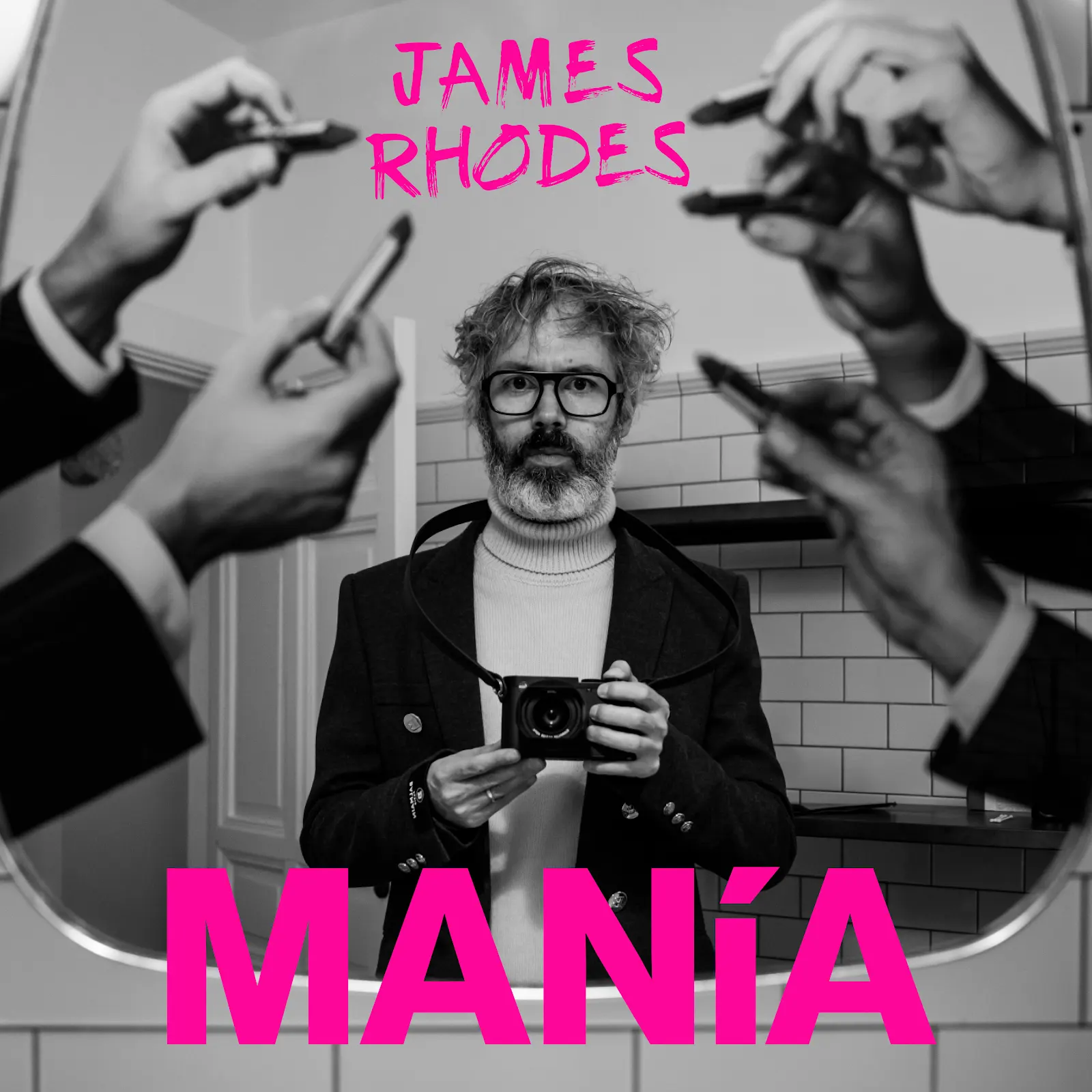
'By now we're all familiar with the idea of music as therapy. For James Rhodes, however, music can be equivalent - at times even preferable - to medication in the management of mental health. "Obviously, I am in favour of medication when it is necessary to save lives," says the 49-year-old British-Spanish classical pianist, when I meet him at Peregrine's, an upmarket piano shop in Clerkenwell, central London. "I was on medication and it genuinely saved my life. What I'm not in favour of is medication as a kind of easy option instead of doing other things that will also have the same effect. And there's no question that music [can]."Manía, Rhodes's new album, is driven by that philosophy. Traversing swaths of classical territory, from JS Bach to 20th-century Argentine composer Alberto Ginastera, it is an attempt to profile the therapeutic properties of music from all angles, "I've always loved this idea of prescribing pieces," says Rhodes. As someone who has struggled with his own mental health, he says he has selected works that "accompany me and my insomnia, my anxiety, my desperation and my fears in the middle of the night"'. p.13.
My source:
Nepilová, H. Music on prescription, Arts, Life&Arts, FTWeekend. 8-9 March 2025. p.13.
Posted by Peter Jones at 5:35 pm | PERMALINK
Labels: art , FT , individual , mania , media , medication , medicine , meditation , mental health , music , prescribing , psychiatry , reflection , relaxed , support , therapy , trauma , treatment
Last month on two occasions, I came across the Alliance for Responsible Citizenship (which is a registered company).
identity personality attitude aptitude character faith individual beliefs religious engagement courage hope threshold concepts my destiny well-being trust | future physical thresholds waste climate change circular economy AI truth - information disorder science technology PAST - work - FUTURE our future destiny - (what does the clock say?) future generations? |
grassroots social movement arts family community culture - diversity social - cultural identity society - support social change social capital social contract social values our shared destiny our children's children welfare - living wage employment - leisure quality of life | power political systems past policy UK: 'Troubled Families' economics organisations, institutions corporations political (manifest! - colonialism ) destiny policy systems political engagement health of leaders trust international law - justice control of fraud, corruption, crime human rights political thresholds |
Posted by Peter Jones at 4:30 pm | PERMALINK
Labels: alliance , citizenry , confidence , education , engagement , future , global , Hodges' model , hope , international , media , nation , policy , poverty , problem solving , responsibility , solutions , State , wealth , West
'I'm not sure many rational designers would set out to emulate, or even to echo the interiors in David Lynch's films. These are rooms that haunt us: the chevron carpets, the red velvet curtains, the peeling wallpaper suggesting that our environment is somehow theatrical, temporary, a dream - an expression of our subconscious. ..."I don't know where it came from, but I love curtains," Lynch - famously reluctant to explain his work - said in 2014. "There is something so incredibly cosmically magical about curtains opening and revealing a new world. It resonates on a deep level with people."'
IMAGINE a curtain: What colour is it? Imagine opening the curtain - | <<== CURTAIN [a room: LxDxH] - is the wallpaper peeling? ... |
Edwin Heathcote, Head spaces, Interiors, House&Home, FTWeekend, 1-2 February 2025. p.4.
.. whatever's around .. "WHEN A BOMB GOES OFF, .. gets weaponised" | |
donate.redcross.org.uk msf.org.uk ideals.org.uk map.org.uk uk-med.org |
Posted by Peter Jones at 3:35 pm | PERMALINK
Labels: children , conflict , emergency care , funding , Gaza , genocide , Hodges' model , injury , intervention , Lebanon , media , older adults , philanthropy , physical , policy , Sudan , surgery , trauma , treatment , war
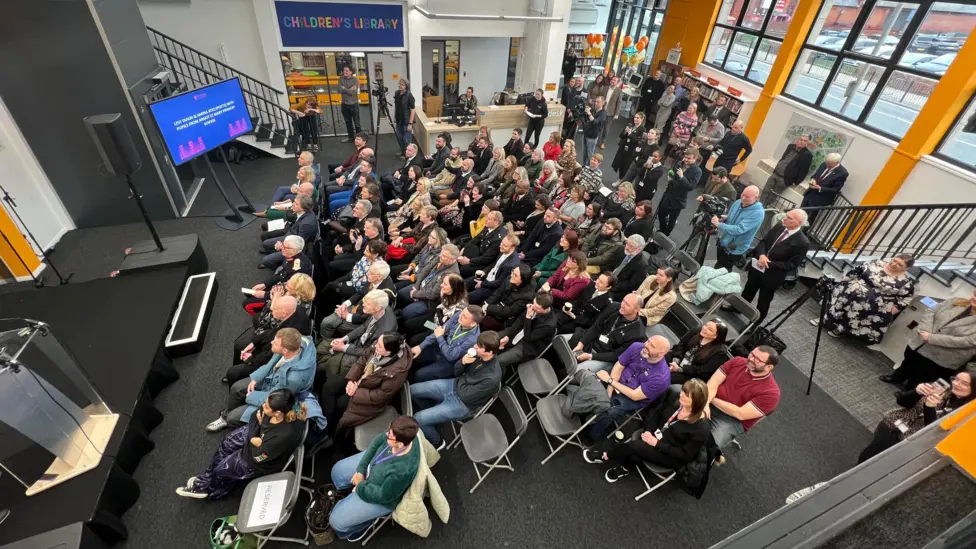
'Spellow Library, in Walton, Liverpool, was forced to close when it was set alight on 3 August amid unrest which swept across the country after the stabbings in Southport.
The city was determined to not let hatred win, with £250,000 raised and books being donated from the Queen and a host of celebrities.
An official ceremony marked the re-opening, including readings from Liverpool poet Levi Tafari while a letter from Queen Camilla was also read aloud.' ..
![]() |
| Claire Hamilton/BBC: An official ceremony marked the re-opening on Thursday morning |
My Learning My Literacies | 'The World(s) of Learning' |
Society - Community Social Justice | Justice Social/Public Services |
Posted by Peter Jones at 8:39 am | PERMALINK
Labels: accuracy , authenticity , disinformation , fake news , governance , history , ignorance , information disorder , journalism , media , misinformation , news , philately , political , politics , provenance , stamps , truth
'Physical Reality' | |
Social Reality | 'Political Reality'?! |
See also:
Mammary Mountain
Impulse
Faber, T. Lessons in empathy, Life&Arts, FT Weekend, October 5-6, 2024, p.13.
Posted by Peter Jones at 7:14 pm | PERMALINK
Labels: aphasia , arts , awareness , communication , empathy , experience , film , FT , health , intervention , language , media , medicine , mind , narrative , relationships , subjective , symbols , virtual reality
Artificial intelligence has burst into the cultural space with the speed of an explosion. As with any powerful explosion, its initial impact is a spectacular blinding flash, followed by a shock wave with real effects. Perhaps we are still at the very beginning, but often the intensity of the blinding flash is proportional to the real effect that follows, both in terms of sweeping away existing forms and as long-term cultural “radiation”.
According to Lotman, a cultural explosion is a period of transformation when rapid and large-scale changes occur in cultural systems, leading to a significant increase in the creation of new information. It is estimated that artificial intelligence produces as much cultural text in one year as humanity has produced throughout its millennia-long history until the advent of the digital age. More interestingly, this new textual production is entering its most productive phase with the invention of Transformer architecture, which is almost a literal algorithmic realization of Lotman's concept of translation — the main mechanism of semiotic metabolism in the Semiosphere.
Training Large Language Models (LLMs), which is the foundation of AI, suspiciously resembles the way Umberto Eco models culture in the structure of a rhizome, which computer scientists call a "neural network." His encyclopedic model is based precisely on what LLMs extract from huge arrays of existing text—the statistic constancy of sign usage. In a polemic with textual immanentists, Eco postulates as part of the reader's encyclopedic competence the ability to inferentially reproduce the possible contexts of sign usage that make up the text. For many, the “magic” of artificial intelligence in its current form lies in its understanding of our questions to it, achieved with the Attention Mechanism, which, as a principle of cooperation between author and reader, is quite literally described in "The Role of the Reader" (1994).
The hardest to find were a fruitful correspondences between generative semiotics and generative media like Chat GPT, as paradoxical as that may sound, but surely there are such correspondences, and they are likely to be discovered in the future. In any case, as a theory of meaning generation on the one hand and an endless machine for creating meaningful texts on the other, the cultural explosion of AI will not leave this breed of semioticians unemployed.
We welcome contributions on the following key topics, but not limited to them:
- Semiotic models of AI generated cultural content
- Semiotic analysis of AI texts generation
- Semiotic theory of generative media
- Socio-cultural consequences of AI's advent
- Transdisciplinary collaboration between semiotics and informatics
- AI in creative practices in the arts
- AI in creative practices in marketing and advertising
- AI in research and education
- Cultural-economic implications of AI
- AI in pop culture
- AI in videogames and XRSend here your proposal for papers (200-300 words): DigitASC AT nbu.bg
Deadline for the abstracts : 31 January 2025;
Deadline for full papers: 15 June 2025;
Deadline for the final revised papers: 31 August 2025;
Publication: December 2025
Digital Age in Semiotics & Communication, a journal from the Southeast European Center for Semiotic Studies at the New Bulgarian University and founded by Prof. Kristian Bankov, explores the new forms of knowledge, social and linguistic interaction, and cultural phenomena generated by the advent of the Internet and information technologies.
A topic is chosen for each issue by the editorial board, but the topics will be always related to the issues of the digital environment. The working language of the journal is English. It uses double-blind review, meaning that both the reviewer’s and the author’s identities are concealed from each other throughout the review process.
Link to the archive of the first six issues: https://ojs.nbu.bg/index.php/DASC/issue/archive
For more information and submission of papers: DigitASC AT nbu.bg
Posted by Peter Jones at 2:36 pm | PERMALINK
Labels: AI , analysis , arts , attention , call , communication , content , creativity , culture , digital humanities , interaction , journal , language , media , models , research , semiotics , society , theory , transdisciplinary
Born in Liverpool, NW England, UK.
Community Mental Health Nurse NHS, Part-time Lecturer,
Researcher Nursing & Technology Enhanced Learning
Registered Nurse - Mental Health & General
Community Psychiatric Nursing (Cert.) MMU
PG Cert. Ed.
BA(Joint Hons.) Computing and Philosophy - BIHE - Bolton
PG(Dip.) Collaboration on Psychosocial Education [COPE] Univ. Man.
MRES. e-Research and Technology Enhanced Learning, Lancaster Univ.
Live and work in NW England - seeking a global perspective.
The views expressed on W2tQ are entirely my own, unless stated otherwise.
Comments are disabled.
If you would like to get in touch please e-mail me at
h2cmng AT yahoo.co.uk
orcid.org/0000-0002-0192-8965-=<>=-