Hodges' Model: Welcome to the QUAD: stamps

Hodges' model is a conceptual framework to support reflection and critical thinking. Situated, the model can help integrate all disciplines (academic and professional). Amid news items, are posts that illustrate the scope and application of the model. A bibliography and A4 template are provided in the sidebar. Welcome to the QUAD ...

Showing posts with label stamps. Show all posts

Thursday, November 21, 2024

'Fake news' - nothing new under the Sun

INDIVIDUAL
|

 INTERPERSONAL    :     SCIENCES               
HUMANISTIC --------------------------------------  MECHANISTIC      
SOCIOLOGY  :   POLITICAL 
|
GROUP


PD Reporter with "fake news" from an 1894
illustration by Frederick Burr Opper


Kruck, D. A 'ROYAL' BIT OF FAKE NEWS. Gibbons Stamp Monthly, August 2021, pp.28-30.

Image source:
https://aleteia.org/2018/02/09/fake-news-post-truth-and-technology-in-the-19th-century/

Wednesday, May 24, 2023

A model insufficiency to realise Health for All - La santé pour tous


The Bio-Psycho-Social model is insufficient to realise -


Health for All - La santé pour tous

INDIVIDUAL
|
INTERPERSONAL    :     SCIENCES              
HUMANISTIC --------------------------------------  MECHANISTIC
SOCIOLOGY :   POLITICAL
|
GROUP

psycho-

bio-
social


In a time of physical, emotional, mental . . . pollution, the 'wrapper' is non-disposable:
the human SPIRIT that also sees and acts to achieve Planetary Health.


Previous posts: 'stamps'

Monday, April 25, 2022

Conveying the Message: Channel, Noise, Redundancy, Information ...

INDIVIDUAL
|
 INTERPERSONAL    :     SCIENCES               
HUMANISTIC --------------------------------------  MECHANISTIC      
SOCIOLOGY  :   POLITICAL 
|
GROUP


The day the world changed

Episode 1 of 8

"Ukrainian writer Andrey Kurkov reflects on the tumultuous events of the last few days and his family's flight from their home in Kyiv.

Written and read by Andrey Kurkov
Translated by Elizabeth Sharp
Produced by Emma Harding

Production co-ordinator Eleri McAuliffe
Technical producer Catherine Robinson

A BBC Cymru Wales production for BBC Radio 4"


Stamp image: https://www.ebay.co.uk/usr/vtgsellerua?_trksid=p2047675.m3561.l2559


Monday, May 11, 2020

Immersed in the Politics of Health: Nursing #IYNM2020

We tend to treat virtual reality as a creation of the late 20th century, one that is still waiting to find commercial maturity in the 21st. A dictionary, text book and most definitely a web-search will confirm the same.

Perhaps though every age has its VR? The horse, steam, telegraph, electricity have all challenged beliefs, convention, language, society and institutions. The vision of individuals demonstrating courage, invention, creativity and innovation to instill change, has and will always be 'political'.

The celebration of Florence Nightingale's life and achievements also invites acknowledgement of the many pioneers who founded and established nursing across the globe.

In this 21st Century there can be no doubt that Nursing is political. Florence Nightingale immersed herself in the political virtual reality of her day. Nightingale used data, statistics and visualisation to challenge and change health-related political reality. How ironic that so many cities and towns presently breathe the benefit of fresher air today.

Ready or not, we continue to witness the power of language, as nurses and carers who have lost their lives are described as 'heroes'.

Discussion, debate and argument will follow and resonate for months, if not years.

Nursing should and must continue to define, refine and press with all the professional force it can muster; to further the values and delivery of universal access to health information, health care and  improved health literacy and the welfare this can bring for all.

individual
|
INTERPERSONAL : SCIENCES
humanistic ----------------------------------------------- mechanistic
SOCIOLOGY : POLITICAL
|
group - population

Saturday, April 07, 2018

World Health Day 2018: Universal Health Coverage

individual
|
INTERPERSONAL : SCIENCES
humanistic ------------------------------------- mechanistic
SOCIOLOGY : POLITICAL
|
group

Stamp


World Health Day 2018 Stamps


Stamp


NY postmark


Description (UNSTAMPS)

"Today, at least half of the world’s people are unable to obtain essential health services. Many households are being pushed into poverty because they are forced to pay for health coverage out of their own pockets. This strain on the populace seriously undermines a country’s ability to develop socially and economically.
This is why Member States of the United Nations have pledged to provide universal health coverage for all people globally by 2030 as part of the Sustainable Development Goals (SDG 3.8). This means ensuring that all people have access to the health services they need. Countries have pledged to ensure that these services will be of sufficient quality to be effective and also that their people will not suffer financial hardship when paying for these services.
When this happens, people’s health will improve. Universal health coverage reduces poverty, creates jobs, drives economic growth for all, helps improve gender equality and can stop disease outbreaks turning into epidemics.
Each year, WHO offices, Member States, civil society and partners around the world observe the Organization’s signing of its Constitution and founding on 7 April, World Health Day. In 2018, WHO is dedicating World Health Day, its seventieth birthday, to universal health coverage: #HealthForAll.
The World Health Organization is delighted to be working with the United Nations Postal Administration to promote worldwide awareness and action to achieve health for everyone everywhere."

Saturday, January 21, 2017

Life - the (pen)ultimate choreographer...?

individual
|
INTERPERSONAL : SCIENCES
humanistic -------------------------------------------  mechanistic
SOCIOLOGY : POLITICAL
|
group-population
Tolerance: Belgium Stamp


Women

Children

Disabled

Unemployed

Healthcare for All
....

(Don't stamp here)


If the religious tolerance represented in the stamp above was the unequivocal reality across the whole of humanity that would be and will be an amazing step forward and a state of bliss.

One day. 
Progress is being made...

Looking at the stamp, we realise that to be inclusive, life - the choreographer - is far more demanding. 

The totality of equality and human rights requires the most complex of footwork and not just for the individual, but the many....


Link and image:
European Diversity Belgium follows the model of Al Andaluz announcing a three-religion stamp

Sunday, October 04, 2015

Stamping about the world and Hodges' model

I don't know if they say things about stamp collectors but there's one over here. In mitigation I'm of the dormant type, it's more about buying gifts for junior family members. Things to keep if the recipients are minded to. Over the years stamps have taught me a great deal: the rise plateau and fall of an empire; the changing face of Africa and the 'Rest of the World', the politics of the world and the truth and lies behind geographic projections. Like painting, drawing and other possibilities the stamps are there, imprinted on my brain as a possible thing to do.

As a mental health nurse I've come across many people (demographically predictably usually males) who have planned for retirement for quite a while and then when it happens the impact is a psychological sledgehammer. While it's also surprising to learn of the people who do not have any interests, you can also see how trite, inappropriate, insensitive ... the question of "Do you have any hobbies?" can seem.

That's because when you listen and hear:

the harried, hesitant, hopeless bound accounts of not knowing who is looking back in the mirror in a morning. Why am I standing there at all? Walking the dog, whatever the month, you see the crucial umbilicus is failing. The one that connects me simultaneously to myself, others, the world at large and joie de vivre:

then you know.

Then you listen and watch for the positive change working with colleagues. You look for the chinks of light that might show the darkness is perforating and the light shows through. Maybe then there is promise in hobbies and interests of all kinds. Keeping mind, spirit and body active, alive. 

Maybe though - it is just being able to be once again.

individual
|
INTERPERSONAL : SCIENCES
humanistic --------------------------------------- mechanistic
SOCIOLOGY : POLITICAL
|
group
Dr. Arieti, Italy, pinterest.ca
Einstein, stamp, ebay.com
Australia, Community, Stampgallery
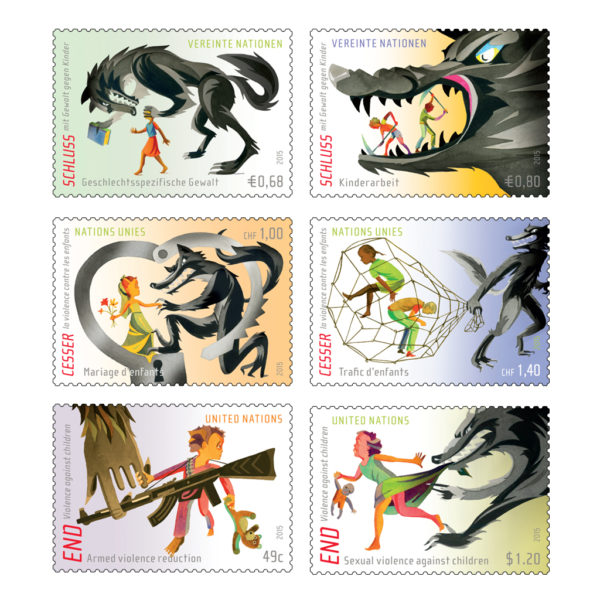
End Violence Against Children
UN Stamp:
End Violence Against Children
unstamps.org


Saturday, December 15, 2007

Bell jars and bell curves

To those who do not know Mathematics it is difficult to get across a real feeling as to the beauty,
the deepest beauty of nature. ... If you want to learn about nature, to appreciate nature,
it is necessary to understand the language that she speaks in.
Richard Feynman. 1918-1988. American physicist.

As those of us who can - work through school, college and those who are gifted (in both senses) take the university detour we identify, refine and utilise our intellectual strengths. This entails that we must also come to recognise our limitations. Looking heaven wards the day dawns that the "way of the astronaut" is a step too far, that's OK others can fly for me. ... At some point and usually much too early in academic careers specific aptitudes, intelligence and abilities crystallise into that form of diamond known as yea or nay. Statistics have it that there are many average scholars out there. Some people are average in maths AND English (languages), a smaller proportion excel in one or the other. So, how is your essay writing? Or should I ask how is your number theory?

The bell curve has its say, but having that bell jar placed over you is just the start of the story. Minds should be constantly enquiring. The result is coming across things you cannot fully comprehend and yet you have this real sense - you know - that "there is a tool here I could use - if only...."

At work we will naturally share many abilities with our peers - including befuddlement when it comes to maths. The nursing literature includes an ongoing parade of titles dedicated to explaining maths and stats to the numerically challenged.

In the mid 80s the dichotomy between the SCIENCES and HUMANITIES was illustrated for me in a working paper from the school of geography at University of Leeds. I still have it, saving it for a rainy day:
Galois stampMacgill, S.M. (1984). Structural Analysis of Social Data, A Guide to Ho's Galois Lattice Approach and A Partial Re-Specification of QAnalysis, Working Paper 416, School of Geography, University of Leeds.
Abstract 1985


I came across this like a moth to a flame (thankfully I found an egg-carton to hide under). I began to work through the paper and had a puncture before even leaving the lay-by. My '84 A5 copy is rather basic in terms of print quality. Showing it to a few people at the time they thought perhaps there were some printing errors. They may well be right although may be they were also being kind. It wasn't just a 'NO ENTRY' sign, it was a brick wall I had met before. Some teachers reinforced this wall; while there were many others who did their level best to help me find a way through, or around. The truth is my cognitive wiring just ain't up to it. Referencing a paper is one thing, plumbing its depths and applying it is another.

So the obvious conclusion from this mathematical close encounter (more like a distant approach really) is that I'm challenged when it comes to maths. I've worked my may through (IBM) SPSS descriptive stats and some 'real' stats; implemented BASIC search algorithms. But away from the lecture-IT room the knowledge quickly evaporates. I'm utterly fascinated looking at the world-universe within and around me, but I'm knee deep in a river and dying of thirst. There are millions of people haunted by the spectre of their ineptitude with numbers.

This is one of the main points of Macgill's text. The paper highlights an approach of great potential to social science researchers (including health and social care?) and yet the people most in need of such methods are frequently disadvantaged being unable to fully understand, grasp and apply these tools.

So tantalising, so frustrating - the glass is very frosted for this 'average student' (lifelong learner!).

Is it just about opportunities or opportunities to break the frosted glass?