International Women’s Day: Kalia Vandever - "Temper The Wound"
Temper the Wound | Wound |
Wound |
BBC Radio 3: J to Z International Women’s Day Special
Hodges' model is a conceptual framework to support reflection and critical thinking. Situated, the model can help integrate all disciplines (academic and professional). Amid news items, are posts that illustrate the scope and application of the model. A bibliography and A4 template are provided in the sidebar. Welcome to the QUAD ...
Temper the Wound | Wound |
Wound |
BBC Radio 3: J to Z International Women’s Day Special
Posted by Peter Jones at 7:14 pm | PERMALINK
Labels: activism , arts , BBC , composition , creativity , healing , instrument , international , jazz , mood , music , political , temper , themes , therapy , well-being , women , wound
Posted by Peter Jones at 5:34 pm | PERMALINK
Labels: Apollo , astronautics , belief , community , design , Drupal , Hodges' model , interface , knowledge and skills , modules , PHP , programming , project , project management , requirements engineering , software , themes
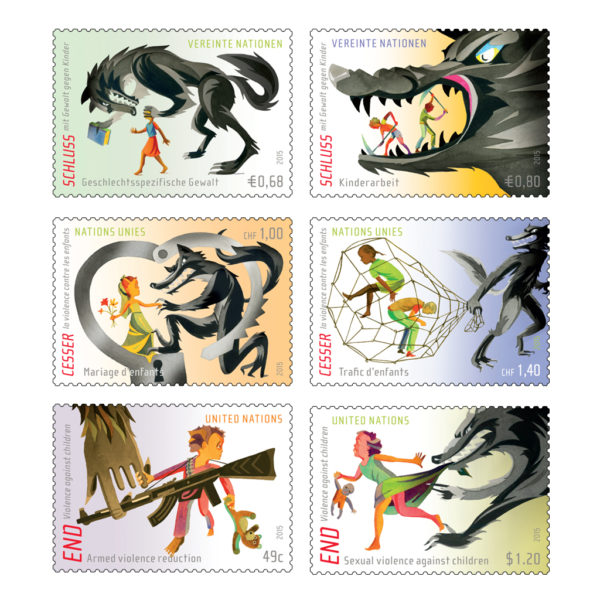
I don't know if they say things about stamp collectors but there's one over here. In mitigation I'm of the dormant type, it's more about buying gifts for junior family members. Things to keep if the recipients are minded to. Over the years stamps have taught me a great deal: the rise plateau and fall of an empire; the changing face of Africa and the 'Rest of the World', the politics of the world and the truth and lies behind geographic projections. Like painting, drawing and other possibilities the stamps are there, imprinted on my brain as a possible thing to do.
As a mental health nurse I've come across many people (demographically predictably usually males) who have planned for retirement for quite a while and then when it happens the impact is a psychological sledgehammer. While it's also surprising to learn of the people who do not have any interests, you can also see how trite, inappropriate, insensitive ... the question of "Do you have any hobbies?" can seem.
That's because when you listen and hear:
the harried, hesitant, hopeless bound accounts of not knowing who is looking back in the mirror in a morning. Why am I standing there at all? Walking the dog, whatever the month, you see the crucial umbilicus is failing. The one that connects me simultaneously to myself, others, the world at large and joie de vivre:
|
| ||||
|
|
Posted by Peter Jones at 10:00 pm | PERMALINK
Labels: abuse , activity , children , England , geography , global , history , hobbies , Hodges' model , human rights , learning , philately , prevention , psychiatry , sciences , stamps , themes , violence , vulnerability
I keep thinking of drawing a line in the sand as to when the new Drupal site will go live, but then a curious clucking sound takes over and my arms flap uselessly at my sides. The image below is a screenshot using the Salamander theme for Drupal 6.2. As you can see I have not altered the themes default logo, or the colour scheme; but I'm starting to find my way around the menus at last.
I've started to add other users and as you can see have created a forum with topics and posts. The rail ticket image is neither transparent, nor exactly territorial in disposition. It should be possible to set a default vertical and horizontal spacing for images in the archived content. There is another choice to be made in which drop capitals format to adopt. Having read through jQuery in Action, it is time to revisit the book and really experiment.

Assuming there is a community out there - a series of forums on Hodges' model must be at the heart of the new site, but this begs the question of what tools would a community of Hodges' model users need? Drupal's content types can be extended, but how much effort (if any) should go into such resources? Should they be ready-rolled, or should the community identify the need, specify the requirements and produce the goods? Can an MSWord.doc h2cm template provide a start, or is a more adventurous seed required?
So far several people have used the model for their studies or in specific clinical areas. It makes sense then to try to produce a content type that can be configured by the user for these purposes. It makes even better sense to invite registered users to post their contributions. While I continue to piece the new site together, I must investigate the available Drupal modules and Open-EHR. I had heard of 'Open-air' before in passing and last week at Harrogate learned of it in more detail. I wonder what form and scope the archetypes take? Open-EHR may be far too sophisticated for our purposes, but now is a good time to check.
Posted by Peter Jones at 11:24 pm | PERMALINK
Labels: content , content types , Drupal , forum , h2cm community , h2cm website , Hodges' model , modules , open source , openEHR , profiles , resources , themes , tools , users , web design
Of the themes I have downloaded that work with Drupal 6 Four Seasons and Bluebreeze look worth pursuing. Transferring over the style sheet used in Drupal 5 with Denver caused quite a few problems as expected. Commenting out some of the global styles one-by-one and noting the effects can't avoid the sense of work to be done. Here is D-6 Bluebreeze:

In the above image, the panel on the left is one of the modules downloaded and enabled. There are no more than two users at present, so I'll disable this for future use. The fixed-width version of Bluebreeze may be needed as off to the right there's yet another tab - 'Book'. I'm going to bring over the draft glossary page, it might prompt me to add some terms.
One of the tools that should prove itself has placed a tick box 'Themer info' in the lower left corner of the screen as illustrated below.
When activated you:
Click on any element to see information about the Drupal theme function or template that created it.
Posted by Peter Jones at 12:32 pm | PERMALINK
Labels: Drupal , h2cm website , informatics , themes , web design
I've been going through the Drupal themes again, this time with a fresh pair of eyes - having tinkered and read a little. The themes that stand out for the h2cm archive project include:
Posted by Peter Jones at 10:51 am | PERMALINK
Labels: CMS , Drupal , open source , themes
I'm continuing to explore Drupal amid some reading, blocks, menus, content.... Searching for content to practice upon, I checked one of the old (1997-8) introductory pages - Brian's course notes - and found my closing sentences were utter drivel! [Well it was a surprise to me.]
Although the prospect of a winter through spring clean is daunting, it will also prove an exciting completely about-time refresh.
Drupal is forcing me to do things I should have done ages ago:

Posted by Peter Jones at 11:01 pm | PERMALINK
Labels: #TEL , archive , content , Drupal , graphics , h2cm website , Hodges' model , HTML5 , informatics , learning , meetings , modules , PHP , themes
Born in Liverpool, NW England, UK.
Community Mental Health Nurse NHS, Part-time Lecturer,
Researcher Nursing & Technology Enhanced Learning
Registered Nurse - Mental Health & General
Community Psychiatric Nursing (Cert.) MMU
PG Cert. Ed.
BA(Joint Hons.) Computing and Philosophy - BIHE - Bolton
PG(Dip.) Collaboration on Psychosocial Education [COPE] Univ. Man.
MRES. e-Research and Technology Enhanced Learning, Lancaster Univ.
Live and work in NW England - seeking a global perspective.
The views expressed on W2tQ are entirely my own, unless stated otherwise.
Comments are disabled.
If you would like to get in touch please e-mail me at
h2cmng AT yahoo.co.uk
orcid.org/0000-0002-0192-8965-=<>=-