Hodges' Model: Welcome to the QUAD: self

Hodges' model is a conceptual framework to support reflection and critical thinking. Situated, the model can help integrate all disciplines (academic and professional). Amid news items, are posts that illustrate the scope and application of the model. A bibliography and A4 template are provided in the sidebar. Welcome to the QUAD ...

Showing posts with label self. Show all posts

Monday, August 24, 2026

Workshop: 'Under Pressure: Character, Certainty, Conspiracy'

How people change (or fail to) under pressure, false certainty and misinformation

Institute for Ethics & Society Workshop - Thursday 3 September 2026

10:00 am – 4:30 pm (AEST)
In an age of outrage, algorithms and information overload, how do we become people of resilient character, humble conviction and wise discernment? Drawing on several funded research projects in Europe and Australia, this workshop explores how pressure exposes the heart and yet shapes the self, how self-righteousness quietly corrupts our capacity for knowledge and understanding of self and others, and how conspiracy theories and AI-generated “slopaganda” shape the way we see the world.

The IES is pleased to host this event on the occasion of Laura Candiotto’s visit to Sydney. Laura is Associate Professor of Moral Philosophy (Universities of Cagliari and Pardubice). She currently leads two research projects, including ‘Vicious Epistemic Cultures’ on the ethics of knowledge with a specific focus on emotional friction in revision responsibility, funded by the Czech Science Foundation. Laura is currently working on a monograph, Emotional Friction, and a co-edited collection entitled Vice Epistemology and the Philosophy of Emotions (Routledge).
 
SPEAKERS
Laura Candiotto (Cagliari and Pardubice) ‘Character revision under duress’
 
John Lippitt (Notre Dame IES and Pardubice) ‘Failures of receptivity: self-righteousness as a stealthy vice’
 
Adam Piovarchy (Notre Dame IES) ‘Conspiracy theories are Infohazards’
 
Mark Alfano (Macquarie) ‘Slopaganda’
 
Location:
The University of Notre Dame Australia,
NDS23/102 (Wilcox Mofflin Building)
46-52 Mountain Street Ultimo, NSW, 2007
 
Or online via Teams
For enquiries, Teams link and to RSVP:
Professor John Lippitt (john.lippitt AT nd.edu.au)


My source: Philos-L "The Liverpool List" is run by the Department of Philosophy, University of Liverpool https://www.liverpool.ac.uk/philosophy/philos-l/ Messages to the list are archived at http://listserv.liv.ac.uk/archives/philos-l.html. Recent posts can also be read in a Facebook group: https://www.facebook.com/PhilosL/ Follow the list on Twitter @PhilosL. Follow the Department of Philosophy @LiverpoolPhilos

Saturday, August 15, 2026

Afghanistan: Help women and girls in Afghanistan today

Five years after the Taliban takeover in Afghanistan, the de facto authorities have issued more than 100 decrees affecting Afghan women and girls and stripping them of their rights, freedoms, and dignity.

No other country has dismantled the rights of half its population through law, policy, and practice to the same extent.

At the beginning of this year, the Taliban issued a decree effectively
 legalising domestic violence by allowing husbands to punish their wives.

And in May, another decree removed minimum age protections for marriage and made it harder for women to leave a spouse. This has increased the risk of forced and child marriage.

This is not just a loss of rights. It is the systematic 
erasure of women and girls from public life. 
Five years on from the Taliban takeover and the 
exclusion of women and girls is being normalised.

This unparalleled crisis of women’s and girls’ rights is at risk 
of being forgotten by the world.

individual
|
INTERPERSONAL
: SCIENCES             
humanistic ------------------------------- mechanistic
SOCIOLOGY : POLITICAL   
|
group


Self - esteem/wellbeing
Self-expression
Personhood
Mental health
Education - Thought
Life goals
Religion Meaning
Life - aspiration
Self-determination
Spiritual affirmation


Visibility
My VOICE
Daily routine -
Quotidian life
Life [this] One -
'Live it'
'Self-actualisation'
Life chances
Lived experience
Liminality - 
this is my journey ...


Gender apartheid
Relationships
Abuse - Domestic violence
Cultural beliefs
Quality of Life
Social
Religious beneficience
Ethics
'You see me'
'I see you.'
... our journey together.
We sisters are recognised 
by our brothers.

State sanctioned abuse
Scapegoating
Power - 
Absolutism
Denial of Human Rights
Crimes against Humanity
Law, Work
 Literal reading /
interpretation
'My State sees me?'
I am cherished by the society in which live. I can contribute. I can Be and give of myself [here].


Previously: 'Afghanistan' : 'women' : 'girls'

See also 8th Sept. The Last Free Women: A Daring Escape from Afghanistan and Coming of Age in America. Blumenstein & Kapp. Hardcover, 368 pages. Grand Central Publishing. ISBN: 9781538779002

Thursday, August 13, 2026

Call for Papers: Bioethics and Philosophical Health - JECP

Submission Deadline: Thursday, 31 December 2026

Contemporary bioethics has developed sophisticated tools for ethical decision-making. Yet it often operates within assumptions that reduce life to physiological viability. Ethical questions are frequently treated as matters of procedure and consent. Meanwhile, patients and clinicians face questions that exceed these frameworks. What makes a life worth living? How does illness disrupt or reveal meaning? What forms of care support not just survival but existential coherence? These questions call for a deeper engagement between bioethics and the philosophy of existence.

Despite growing interest in person-centred care, conceptual tools for clinical evaluation remain limited. Frameworks for assessing philosophical sense-making and existential orientation are underdeveloped. The Philosophical Health perspective addresses this gap by going beyond physical and psychological health. It asks how we cultivate meaningful lives through bodily experience, self-understanding, relational belonging, engagement with possibility, purposeful action, and philosophical reflection. The concept draws on the ancient tradition of bios philosophikos. It proposes that healthcare should attend not only to pathology but to the philosophical dimensions of human existence.

This special issue creates space for exploring how philosophical health can deepen bioethical inquiry as an embodied ethics of the good life. It challenges reductive assumptions and fosters practices that support purpose and meaning in lives, even when disrupted by health challenges. We welcome transdisciplinary contributions from philosophers, bioethicists, clinicians, medical humanists, and social scientists. Topics include how philosophical frameworks enrich clinical practice, how healthcare shapes existential experience, how the 4E cognitive approach may inform bioethical theory, and how dialogical methodologies can be integrated into institutional contexts. The issue aims to rediscover bioethics as a genuinely philosophical and existential enterprise, that is as bios ethikos.

Topics of interest for this call for papers include but are not restricted to:

  • Philosophical frameworks for enriching or transforming bioethical practice and clinical evaluation;
  • Philosophical dimensions of clinical encounters: embodiment, selfhood, temporality, and meaning-making;
  • Critiques of the reduction of ethical deliberation to procedure, regulation, or risk management;
  • How healthcare practices shape or constrain the philosophical dimensions of human existence;
  • The 4E cognitive approach (embodied, extended, enactive, embedded) applied to bioethical theory and practice;
  • Integration of philosophical inquiry and dialogical methods into clinical or institutional contexts;
  • Empirical and conceptual engagement with the Philosophical Health methodology, including SMILE_PH;
  • Cross-cultural and planetary perspectives on philosophical health and the good life;
  • Methodological innovations in clinical philosophy, philosophical counselling, and reflective practice.
More details here: https://onlinelibrary.wiley.com/page/journal/13652753/call-for-papers/si-2026-000772


_______

Dr Luis de Miranda
Associate Professor (Docent) in Bioethics, Uppsala University
Marie Skłodowska-Curie Fellow, Turku Institute for Advanced Studies
Associated Researcher, Centre for Research Ethics and Bioethics,
Department of Public Health and Caring Sciences, Uppsala University
https://www.luisdemiranda.com/

My source: Philos-L "The Liverpool List" is run by the Department of Philosophy, University of Liverpool https://www.liverpool.ac.uk/philosophy/philos-l/ Messages to the list are archived at http://listserv.liv.ac.uk/archives/philos-l.html. Follow the list on Twitter @PhilosL. Follow the Department of Philosophy @LiverpoolPhilos

Thursday, July 30, 2026

Remembering Dr. Gilberto Cárdenas - Self Help Graphics

 Continued ...


My source:  Self Help Graphics & Art, 1300 East 1st Street, Los Angeles, CA, 90033, United States

Saturday, July 18, 2026

Hodges' conceptual framework: A model for Narrative Medicine ...

Abstract

The effective practice of medicine requires narrative competence, that is, the ability to acknowledge, absorb, interpret, and act on the stories and plights of others. Medicine practiced with narrative competence, called narrative medicine, is proposed as a model for humane and effective medical practice. Adopting methods such as close reading of literature and reflective writing allows narrative medicine to examine and illuminate 4 of medicine's central narrative situations: physician and patient, physician and self, physician and colleagues, and physicians and society. With narrative competence, physicians can reach and join their patients in illness, recognize their own personal journeys through medicine, acknowledge kinship with and duties toward other health care professionals, and inaugurate consequential discourse with the public about health care. By bridging the divides that separate physicians from patients, themselves, colleagues, and society, narrative medicine offers fresh opportunities for respectful, empathic, and nourishing medical care. ...


Charon R. Narrative Medicine: A Model for Empathy, Reflection, Profession, and Trust. JAMA. 2001;286(15):1897–1902. doi:10.1001/jama.286.15.1897 

With my emphasis.

#Identity #Group #Individual #Collective #Mind #Body #TheOdysseyHasBegun

Tuesday, April 07, 2026

Theatres of War and Healing

INDIVIDUAL
|
     INTERPERSONAL    :     SCIENCES               
HUMANISTIC --------------------------------------  MECHANISTIC      
SOCIOLOGY  :   POLITICAL 
|
GROUP


Theater of War Productions presents community-specific, theater-based projects that address pressing public health and social issues.


c/o Reuters

Previously: 'theatre' : 'war' : 'public (mental) health' 

Saturday, March 28, 2026

Jürgen Habermas RIP: 'Synthetic abilities - Synthetic thinking'

'Jürgen Habermas is recognized for his immense
synthetic ability, integrating diverse cognitive domains—philosophy, sociology, linguistics, and psychology—to develop a cohesive theory of communicative action and social critique. His synthetic thinking aims to bridge modern rationalism with normative concerns, creating an interdisciplinary framework that addresses the complexities of modern society.
Google AI Overview: https://share.google/aimode/Tev1Ip96TMCMcEgdF 

'It is true that the sciences are increasingly interconnected with the development of productivity by way of technical progress; however, technical progress is not the only branch of science in the line of instrumental rationality defenders from Descartes and Bacon's scientific method. This is what distinguishes the Newtonian science from the second group of considerations: Darwinian science and contemporary systems theory (as Habermas, 1984 puts it). The latter do invite us to see the science as “an organism, population, or system [that] maintains itself through demarcation from and adaptation to a changeable, hypercomplex environment” (Habermas, 1984, p. 388). Also, the classical philosophical tradition, insofar that it suggests the possibility of a worldview, has become questionable:

Philosophy can no longer refer to the whole of the world, of nature, of history, of society, in the sense of a totalizing knowledge. Theoretical surrogates for worldviews have been devalued, not only by the factual advance of empirical science but even more by the reflective consciousness accompanying it. (Habermas, 1984, p. 1)'

Mejía Fernández, R. & Romero, J. (2022) Social Evolution in Jürgen Habermas: Towards a Weak Anthropological Naturalism between Kant and Darwin. Theoria, 88(3), 607–628. Available from: https://doi.org/10.1111/theo.12383

'According to Habermas, the self of the ethical life stage embodies a basis for a postmetaphysical grounding of the good life:

'Rather, all his attention is on the structure of the ability to be oneself, that is, on the form of an ethical self-reflection and self-choice that is determined by the infinite interest in the success of one’s own life-project. With a view toward future possibilities of action, the individual self-critically appropriates the past of her factually given, concretely re-presented life history. Only then does she make herself into a person who speaks for herself, an irreplaceable individual.'30 

Viertbauer, Jürgen HKlaus (2019) Habermas on the Way to a Postmetaphysical Reading of Kierkegaard.
European Journal for Philosophy of Religion 11 (4): 137-162. (p.145).

My source: Nick Pearce, Philosopher who fought the slide towards illiberalism, Jürgen Habermas Obituary. FTWeekend, 21-22 March 2026. p.9.

Tuesday, March 03, 2026

Thoughts ii re. 2026 Lancaster Philosophy of Psychiatry Work in Progress Workshop

For me, applying Hodges' model I tend to place philosophy and psychiatry (mind, thought, belief, truth, intention ...) within the humanistic part of the model. So, Ewa Grzeszczak and - Philosophy of psychiatry and the methodology of social ontology - stood out. This is helpful as Homeostatic Property Clusters (HPC) are a useful structure, spanning bio-mathematics. As suggested previously with 'equality', we can place the philosophical non-trivial question of kinds at the centre of Hodges' model and proceed (if possible?) from there.

The requirement for a holistic, integrative and pluralistic framework is there in literature. A statement supported by Alessandra Civani's talk: 'What kind of concept is ‘incongruence’? I located a paper:

Enactive psychiatry - A pragmatic and pluralistic approach to mental health and disease

- (and now have a copy c/o and thanks to Alessandra) and am grateful to being pointed to de Haan:

An Enactive Approach to Psychiatry

 I will (must) return to these papers. Earlier on Hodges' model, I'd opined (as on 'X') how the -

  • medical
  • biomedical
  • bio-psycho-social models - are insufficient in the 21st century.

There was a thematic feel to the presentations with Anna Golova - Self-illness ambiguity without a self-illness distinction - following nicely. The styling on the slides was an added bonus. I located an informative (co-authored) paper by Golova:

‘Is it me or my illness?’: self-illness ambiguity as a useful conceptual lens for psychiatry'

Part of the power of Hodges' model derives not so much from its duality; as its dual axes. The two axes can encompass and handle the relatedness between/within reductionism, holist perspectives, the self and otherness, illness and health (well-being).

An hours break brought us to an event which was very well attended, clearly open to the public:

6-7pm Prof Miriam Solomon – Royal Institute of Philosophy talk ‘Stigma as an actant in the history of psychiatry’

In setting out the talk's structure I liked Prof. Solomon's reference to the common, implicit "grime" theory of the dynamic of stigma, and "punching down" as a strategy for managing stigma. 'Grime' made me think of sense of smell, the grime in my father's work van, a diesel. Now so many memories are evoked with the merest whiff. More positively, the patina of physical and mental life also came to mind. You would - might think stigma has been dealt with by now, but of course we are socio-politically far from it.

There is a related podcast from 2025, which also covers Prof. Solomon's early studies. A previous paper was also noted in the slides:

Solomon, M. (2025). The Elusiveness of Hermeneutic Injustice in Psychiatric Categorizations. Social Epistemology, 39(2), 166–177. https://doi.org/10.1080/02691728.2024.2400068
 
Discussion of the DSM inevitably followed (and in the above podcast). In questions the 'reality' of severe mental illness, and suggestion of the acute challenge of managing the negative symptoms of psychoses.
 
Prof. Solomon's conclusion was well worth waiting for, including:
Stigma as an "actant" (cf. Bruno Latour's concept of an agent: causal role without intention)... DSM - ICD...
 
If stigma disappeared tomorrow, the DSM would not have the same categories. 
 
Stigma (more specifically, its management) is shaping the conceptual space, with both scientific and moral consequences.

[Added 4th March...] On Friday - Sam Fellowes, took on, or has taken on - the non-trivial issue of - Modelling psychiatric diagnoses when self-diagnosing - how does this work? Complexity was acknowledged on the first slide, with self-diagnosis, and modelling, set against the Duhem-Quine thesis. 

This technical aspect is welcome and no doubt essential given the socio-technical nature of diagnosis, touching as it does the public (society), primary care, psychiatry, service user groups, policymakers, informatics, and HM Treasury, amongst several 'stakeholders'. With the impact of the internet and social media, much (if not all?) of the vocabulary of mental health professionals has been co-opted and re-framed(?) by patient / service-user groups? It does not, for example, appear that the agency behind the DSM will be able to claim it back. Autism and ADHD were also discussed and debated. I located a previous chapter by Sam (pay-wall):

Fellowes S. Self-Diagnosis in Psychiatry and the Distribution of Social Resources. Royal Institute of Philosophy Supplement. 2023;94:55-76. doi:10.1017/S1358246123000218
 
This really is a thicket of thorns, it spreads as and wherever you go.
 
The welfare bill is such that there should have been government Ministers in attendance. I have responded on behalf of clients to PIP assessments. Agencies have invited me to interview for 'Disability Assessor' roles. Not only is this a complex web, but several logics obtain: a perverse temporal logic operates, binary logic and a fixed mindset can develop so that some (vulnerable!?) individuals can get stuck. Perhaps, a social imperative steps in and disrupts, life chances: their being a NEET ('a young person who is no longer in the education system and who is not working or being trained for work'. Ecosia) is better for someone else? 
 
To unpick, make sense of this, you need a foundational universal model.
 
There is a (co-authored) paper from Giulia Russo, who presented - Epistemic and political role of experience: https://philpapers.org/rec/RUSTPO-112 from which:
'As it is widely known, epistemic injustice was introduced by Fricker (2007) to unveil power relations that have negative consequences on people as epistemic agents. She distinguished in particular two different kinds of epistemic injustice: testimonial and hermeneutical. The first kind occurs when a person (usually in a disadvantaged and oppressed role within the epistemic relation) is damaged as a knower because, as the name suggests, their testimony is overlooked, dismissed or invalidated. The second kind of epistemic injustice occurs when a person is deprived of the epistemic resources to even explain or articulate their experience of distress, or of systemic oppression. In connection to this, the concepts of neurodivergence and neurodiversity come from the political and social arena, and are born explicitly to contrast dominant pathologizing narratives in psychiatry.'
In seeking some 'test' cases to try to model relationally, Hodges' model suggests at least four - without letting the care / knowledge domains wag-the-dog. Giulia's talk was very helpful, ranging across forms of epistemic injustice (addressed by others too), identity, neurodivergence, lived experience, self-, counter- and collective narratives with references. A great resource.
 
Frank Denning, reminded me of an important phenomena, in Using Stebbing’s Directional Analysis to Evaluate ‘Mentalizing’. Talking therapies, or more properly referral to talking therapies often presents several criteria that would-be subjects must 'pass'. An ability to mentalize, can represent one. This is understanable, for effectiveness, efficiency, efficacy ... it is to be found in the manual. But, in terms of power relations, gate keeping in various forms is a literal (virtual) key to service access. Hodges' model is no different (sigh!). At what age can people start to use Hodges' model? What mentalization is involved to cognitively engage in use of Hodges' model? 
 
I struggled to obtain a copy of Stebbing's original work from 1930, but see how closely tied the work is to physics. An Internet Archive copy is poor quality. The search will continue, as I suspect there are links to Bill Ross's text on Deleuzian cosmology. It is marvellous that work from 1930 resonates today. There is: 

Janssen-Lauret, F. (Accepted/In press). Directional Analysis in Susan Stebbing’s Philosophy of Physics. In S. Chapman (Ed.), Susan Stebbing on Logic and Analysis Springer Nature. 
https://pure.manchester.ac.uk/ws/portalfiles/portal/338653274/Directional_Analysis_in_Susan_Stebbing_s_Philosophy_of_Physics_Final_.pdf

Gloria Ayob - Flourishing as mental health - was encouraging. 'TASK 1:EQUATION' a slide was titled, including emotional disorder is meta-evaluative; there are negative and positive poles, plus isomorphism between unpleasantness-pleasantness and disorder-health. I think my stomach was protesting I should have paid more attention. There is a blog post by Gloria: https://blog.oup.com/2024/12/the-concept-of-emotional-disorder/

After lunch Richard Hassall - Hermeneutical Injustice and Damaged Intellectual Self-Trust in Psychiatric Service Users, a reminder of the time and effort that needs to be put into public and patient involvement and engagement in mental health service (when this is desired). References included J.L. Austin and J.S. Bruner. A paper:

Hassall R. Sense-making and hermeneutical injustice following a psychiatric diagnosis. J Eval Clin Pract. 2024 Aug;30(5):848-854. doi: 10.1111/jep.13971. Epub 2024 Feb 20. PMID: 38375925.
https://onlinelibrary.wiley.com/doi/10.1111/jep.13971 

Scoping reviews are more common it seems: Lara Calabrese - Exploring epistemic injustice in dementia care: a scoping review and a qualitative study, plus paper [with QR code on the slide]:

Calabrese L, Brigiano M, Quartarone M, Chirico I, Trolese S, Lambiase F, Forte L, Annini A, Bortolotti L, Chattat R. I'm still here and my opinion matters: a scoping review on the experience of epistemic injustice among people living with dementia. Curr Psychol. 2025 Dec 17;45(1):s12144-025-08519-y. doi: 10.1007/s12144-025-08519-y. PMID: 41445984; PMCID: PMC7618523.
 
The paper's title here brought to mind the radio programme "Does He Take Sugar?" Questions followed regards the studies methods. Since leaving I wondered if there has been an evaluation of Dementia Friendly Communities? Are there dots to usefully joined there?
 
The final talk was delivered (with gusto - pepped me up anyway) by Jacob Barlow - Epistemic borders: experts, communities, communication. Jacob's interest in pragmatism was apparent. I look forward to reading future work, and note Liverpool 2025: ‘Problems with Pragmatism in the Philosophy of Psychiatry’.

All in all, a stimulating and enjoyable event.

Thursday, February 19, 2026

2026 Lancaster Philosophy of Psychiatry Work in Progress Workshop

I am looking forward to, and preparing for this event next week:

====================================================

Thursday 26 February 2026, 11:00am to Friday 27 February 2026, 3:30pm

Venue: Storey Lecture Theatre, Lancaster , LA1 1TH
Open to: Postgraduates, Staff

Event Details:
 
Sponsored by the British Society for the Philosophy of Science.
This workshop provides an informal forum where PhD students, and more experienced researchers, can present and discuss short works in progress. All paper slots are taken for 2026. 
Please email r.v.cooper AT lancaster.ac.uk if you'd like to attend.
THURSDAY 26th  FEB

10.45-11 Welcome
11-11.30 Hane Maung - Philosophy in Healthcare Practice: A Case Study.
11.30-12 Peter Jones - Hodges' model: A work-ALWAYS-in-progress and this is why...
12-12.30 Matthew Williams - The failure of the harm-minimisation argument for BID Surgery and the necessity of therapeutic justification
12.30-1 Clive Duddy – Autonomy in mental health care
1-2 LUNCH
2-2.30 George Turner - Difference denied.
2.30-3 Dieneke Hubbeling - Different ways of medical knowing in Walzer's different spheres of justice?
3-3.30 Ali Walker - Forget Fictionalism: Psychiatric Disorders are Quasi-Real
3.30-4 Ewa Grzeszczak - Philosophy of psychiatry and the methodology of social ontology.
4-4.30 Break
4.30-5 Alessandra Civani - What kind of concept is ‘incongruence’?
5-5.30 Anna Golova - Self-illness ambiguity without a self-illness distinction.
5.30-6 Break
6-7 Prof Miriam Solomon – Royal Institute of Philosophy talk ‘Stigma as an actant in the history of psychiatry’

FRIDAY 27th Feb
11-11.30 Sam Fellowes - Modelling psychiatric diagnoses when self-diagnosing - how does this work?
11.30-12 Giulia Russo - Epistemic and political role of experience
12-12.30 Frank Denning - Using Stebbing’s Directional Analysis to Evaluate ‘Mentalizing’.
12.30-1 Gloria Ayob - Flourishing as mental health
1-2 LUNCH
2-2.30 Richard Hassall - Hermeneutical Injustice and Damaged Intellectual Self-Trust in Psychiatric Service Users.
2.30-3 Lara Calabrese - Exploring epistemic injustice in dementia care: a scoping review and a qualitative study
3-3.30 Jacob Barlow - Epistemic borders: experts, communities, communication

<>

Thursday, January 08, 2026

Hodges' model: An algebra for care - seeking axioms?

Although Oliver had been brought up by philosophers, he was not theoretically acquainted with the beautiful axiom that self-preservation is the first law of nature.
                                                                                    
- Charles Dickens, Oliver Twist

Coady, C. A. J. (1990). Hobbes and “The Beautiful Axiom.” Philosophy, 65(251), 5–17. 
http://www.jstor.org/stable/3751240

"It is an axiom in therapeutics that the more remedies there are proposed for a disease the less likely is any of them to be effective."

[- William Osler]

Mountin, J. W. (1943). Nursing: A Critical Analysis. The American Journal of Nursing, 43(1), 29–34. https://doi.org/10.2307/3416264

Individual
|
     INTERPERSONAL    :     SCIENCES               
HUMANISTIC  --------------------------------------  MECHANISTIC      
 SOCIOLOGY  :    POLITICAL 
|
Group
 
'One of the core tenets of pragmatism, despite its various formulations by William James, Jane Addams, John Dewey, and neo-pragmatists like Rorty, Habermas, and Putnam, is an epistemological axiom first formulated in 1868 by Charles Sanders Peirce. This maxim, often dubbed the pragmatic maxim, states that the meaning of our ideas is best expounded when we can spell out the implications or the effects of these ideas in real-world experience and practice (Peirce 1878).' pp.105-106.
(Racine, 2024).

physical - SELF - My body[?]


'The lack of consideration of downside risks applies to all COVID-19 countermeasures, including mass-masking (e.g. the social and psychological consequences of mask-wearing for all kinds of social interaction, most notably in educational and childcare settings) and to the accelerated approval of vaccines. The latter is particularly noteworthy because the need for rigorous testing of new medications to guard against the risk of side effects is a standard axiom of contemporary ethical medical practice. Given that the vaccines in question employed novel mechanisms, not testing them sufficiently to assure their longer term safety was stratospherically risky: it meant that the possibility that this vaccination programme would do more harm than good could not be excluded. Yet, the medical establishment stood foursquare behind it, insisting on the safety and efficacy of the vaccines and pillorying any, including those within it, who demurred.' p.55. (Kelly, 2023).


'“Never have we been so free. Never have we felt so powerless”: this, according to Bauman, is the paradox of our time. Verhaeghe writes with a variant: “Never before have we in the West had it so good, and never have we felt so bad.”33 Because neoliberal axioms determine the standards of what is healthy and normal, society sees those who do not want to participate as sick or abnormal.' pp.97-98. (Vanheste, 2023).
 

My emphasis

Racine, E. (2024). What Participatory Research and Methods Bring To Ethics: Insights From Pragmatism, Social Science, and Psychology. Kennedy Institute of Ethics Journal 34(1), 99-134. 
 https://dx.doi.org/10.1353/ken.2024.a943431.

Kelly, M.G.E. (2023). Securing the Pandemic: Biopolitics, Capital, and COVID-19. Foucault Studies 35, 46-69. https://muse.jhu.edu/article/940834.

Vanheste, J. (2023). Half a Century of Exhaustion and Madness: The Fiftieth Anniversary of Pink Floyd's The Dark Side of the Moon. Soundings: An Interdisciplinary Journal 106(1), 87-109. 
https://muse.jhu.edu/article/950363.

See also: 'axiom' : 'algebra' : 'pragmatism'

Person-centred care = care axiomatics at a collective and individual level?

The first rule (axiom?) of first aid is...?

Saturday, November 15, 2025

Subjective-Objective: Thinking of Holistic Cake and Eating it

'Our natural awareness of our own activities is holistic. We experience ourselves as embodied beings, complete organisms, directly perceiving physical objects, making choices, engaging in conversation with other people. The attempt to split the human being into a combination of immaterial self and physical body makes a coherent account of these processes impossible. As Heidegger says, “The ‘scandal of philosophy’ is not that this proof has yet to be given, but that such proofs are expected and attempted again and again.”35 Given the Cartesian conception of the “real world”, organisms are “really” mechanisms, while “choices” and “actions” have no place in a world where there are only events, subject to the laws of mechanistic cause and effect. The whole person becomes a metaphysical oddity, straddling two incompatible metaphysical realms.

A theoretical framework that renders the previously straightforward inherently problematic is by no means an unequivocal advance. Materialist authors have attempted to “solve” this problem by denying the reality of the subjective side of the Cartesian picture, replacing his dualism with radical metaphysical reductionism.36 Such authors insist that the “objective” world (still understood as something devoid of phenomenal properties, containing only causes and effects as understood in reductionist science) is all there really is. On this view, we do not have to bridge the gap generated by Descartes, between the subjective and the objective features of human life, because the objective features are the only ones that exist.' p.20.

individual
|
INTERPERSONAL : SCIENCES
humanistic -------------------------------------------  mechanistic
SOCIOLOGY : POLITICAL
|
group-population

My Mind
Subjective

My Body
Objective


Mitchell, D., Loughlin, M. (2023) The philosophy of person-centred healthcare, Cambridge: Cambridge Scholars Publishing. https://cambridgescholars.com/product/978-1-5275-9058-8/


Previously: 'Descartes' : 'mind' : 'body'

Sunday, October 19, 2025

Space, Leadership, Choice, Politics II - Do Ho Soh

individual
|
INTERPERSONAL : SCIENCES
humanistic -------------------------------------------  mechanistic
SOCIOLOGY : POLITICAL
|
group-population


Who do we put on a pedestal?


Do Ho Suh's Public Figures features an empty pedestal held up by many small figures. Donny Bajohr


Do Ho Suh - Lehmann Maupin

Image: Smithsonian - Take a Closer Look at a Surprising New Sculpture That Rethinks Who We Put on a Pedestal

My source: Andy St. Louis, Sculptural approach to far-fetched ideas, Arts, Life&Arts, FTWeekend, 31 August/1 September 2024, p.12.


"There is another!" Karma (2003) by Do Ho Suh

Monday, October 13, 2025

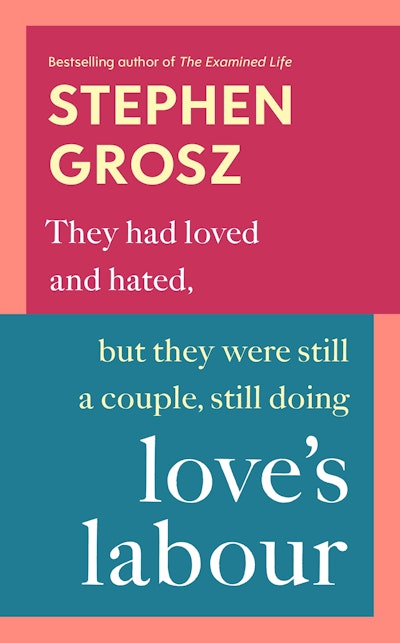
Book: Love's Labour by Stephen Grosz

They had loved and hated,
but they were still a couple, 
still doing love's labour ...

Luminous and necessary stories from the psychoanalyst's consulting room; on desire, heartbreak and learning how to love.

When it comes to love why do we find things so difficult? Drawing on over forty years of candid and surprising conversations with his patients, Stephen Grosz asks, what gets in the way of our falling in love? And what must we do to stay there? Penguin UK.
<>
'Ravi, a maths lecturer, is tormented by his wife Sonal's supposed infidelity, but won't look at the CCTV - even though that might reveal her to be innocent. This chapter has a sting in its tail when 19 years later Grosz is contacted by Sonal. She is dying of cancer and Ravi is cruelly neglecting her. Grosz feels that he missed a vital clue all those years ago, concerning Ravi's ingratitude and envy.

This moment of "failure" on Grosz's part forms an aspect of this small book's power. It shows that the psychoanalyst is not a machine, and the process is fallible. But it is also a testament to human complexity. When he hasn't understood the patient sufficiently, Grosz brings the case to his supervisor, and we, the reader, are witness to their exchange.' Life&Arts, FTWeekend.
Individual
|
      INTERPERSONAL    :     SCIENCES               
HUMANISTIC =========================  MECHANISTIC      
 SOCIOLOGY  :    POLITICAL 
|
My source: Kathy O'Shaughnessy. The hard work of seeing ourselves. Books, Life&Arts, FTWeekend, 27-28 September 2025, p.11.


Iamge: https://cdn2.penguin.com.au/covers/400/9780701188979.jpg

Tuesday, September 30, 2025

Rachel Jones: Gated Canyons

As mentioned, with three co-authors, we're writing a paper on dental health, and policy frameworks viewed through the (quadratic?) lens of Hodges' model. The exhibition - 'Rachel Jones: Gated Canyons' ends on October 19 (with my next London visit 6-8 November*), so I won't be able to visit now. It's not as if there are key ideas to be found there that will now be missed, but it does sound and look interesting: and - who knows?

Individual
|
      INTERPERSONAL    :     SCIENCES               
HUMANISTIC  --------------------------------------  MECHANISTIC      
 SOCIOLOGY  :    POLITICAL 
|
Group


On the paper, we are now revising so fingers x'd. This exhibition has toured, so I will of course 'watch the spaces'.

My source: Durrant, N. first night. A tasty body of work. The Times. August 1 2025. p.10.

Tuesday, June 03, 2025

Self, ego, life and death

The INDIVIDUAL - GROUP axis continues to fascinate:


individual
|
INTERPERSONAL : SCIENCES
humanistic ------------------------------- mechanistic
SOCIOLOGY : POLITICAL
|
group

SELF - IDENTITY - PERSONHOOD

ego superego id

mood - depression - mania

psychoactive substances

ego death - reset, reconstitition, re-birth?

NATURE

 personhood -
rivers, mountains, trees, land

medicine(s)

psychedelics

cultural identity, knowledge

social history, practices

corporate personhood

law 'person'


See also:

Pahnke, Walter N. “The Psychedelic Mystical Experience in the Human Encounter with Death.” The Harvard Theological Review 62, no. 1 (1969): 1–21. http://www.jstor.org/stable/1509131.

Adler, Nathan. “Ethics, Ethos, and Actualization: The Paradigm of the Antinomian Therapies.” Issues in Criminology 5, no. 1 (1970): 85–99. http://www.jstor.org/stable/42912546.

Blainey, Marc G. “Forbidden Therapies: Santo Daime, Ayahuasca, and the Prohibition of Entheogens in Western Society.” Journal of Religion and Health 54, no. 1 (2015): 287–302. http://www.jstor.org/stable/24485257.

Nail, Thomas. “How to Read the Nature of Things.” In Contemporary Encounters with Ancient Practice, edited by Abraham Jacob Greenstine, Ryan J. Johnson, and Dave Mesing, 1st ed., 299–321. Edinburgh University Press, 2025. http://www.jstor.org/stable/10.3366/jj.17381661.21.

Corporate personhood
https://en.wikipedia.org/wiki/Corporate_personhood

Thursday, February 27, 2025

(In-person) Seminar: Healthism, Neurodiversity, and Respectability Politics

Accustomed to posting news of many seminars and events that I cannot attend, this one does produce some frustration in that it is of marked interest but in-person. I am reaching out, seeking slides, and papers, and will follow-up, as for me, Professor Kukla's seminar really 'speaks' to Hodges' model. The relation conjoins the individual and collective, as it did originally for Brian Hodges in creating the eponymous model:


Hodges' model is invariably potentiated, as are all conceptual (idealised) models to encompass self-care, individual health care through to family, public and population health. As posted previously, the family(!) of -isms can be represented too:

https://hodges-model.blogspot.com/search?q=ism

Seminar Series in Analytic Philosophy 2024-25: Session 15

Healthism, Neurodiversity, and Respectability Politics

Quill Kukla (Georgetown University)

28 February 2025, 16:00 (Lisbon Time – WET)

Faculdade de Letras de Lisboa, Sala Mattos Romão [C201.J] (Departamento de Filosofia)


Abstract: “Healthism” is the pervasive ideology according to which each of us is responsible for valuing and protecting our own health and prioritizing health over other values, while society has the right to enforce, surveil, and reward healthy living. Neurodiversity and other forms of cognitive difference are generally understood through the lens of health: they are taken as diagnosable pathological conditions that should be treated or mitigated via medical interventions. Putting these two ideas together, neurodivergent people are supposed to try to be “healthy,” through pharmaceuticals, behavioral therapy, and the like, and society has an investment in making them be “healthy.” But neurodivergence is not a morbidity in a typical sense, so it is unclear what “health” means in this context. In practice, our societal standards for health for neurodivergent people are defined in terms of what avoids disrupting neurotypical expectations and systems or making neurotypical people uncomfortable. “Health,” for neurodivergent people, is in effect respectability—it is not defined in terms of their own needs or flourishing but in relation to the norms and needs of others. This can be seen from a close reading of diagnostic definitions and official medical “treatment” methods and goals. Trying to “treat” neurodivergent people by making them respectable citizens who are palatable within neurotypical productivity culture is usually likely to backfire; typically bad for their own well-being, and a social loss.


See also: 'recovery'

Jones P. (2014) Using a conceptual framework to explore the dimensions of recovery and their relationship to service user choice and self-determination. International Journal of Person Centered Medicine. Vol 3, No 4, (2013) pp.305-311.

Wednesday, February 19, 2025

Frayn's - shared 'Home Address'

Frequently I've made the point that 'person-centred' means placing the individual, patient, carer ... whatever the context, at the centre of Hodges' model. At the same time this is of course an idealisation:

individual
|
INTERPERSONAL : SCIENCES
humanistic ------------------------------- mechanistic
SOCIOLOGY : POLITICAL
|
group

What is your
'home' address?


'Science, it turns out, is in this respect simply an extension of all the other means we have found of representing the world. As with pictures and narratives, the world is unimaginable without the focus of a viewpoint. To understand the world in any way whatsoever scientifically, historically, artistically, anecdotally, imaginatively we find ourselves compelled to assume a potential point of convergence from which everything is  viewed, measured, and recounted. About the entity that defines this point we know only that it is by definition invisible to us. And since the instruments of science, of logic and mathematics, and of art, are all products of this invisible entity, they will not serve to represent or explain it to us. Anything in the world, or out of it, can be perceived or thought about, or both, and represented in our various codes. The only thing that systematically eludes us, whichever way we turn, is the something upon which everything else depends. The conscious subject that gives meaning to the objective universe cannot give meaning to itself. Without it nothing can be understood; about it nothing can be said. 
'The point of convergence . . .' And already we've gone wrong. The self isn't a point, in any remotely geometrical sense, but a complex organisation; and the consciousness that it generates, and by which it is animated, is a complex phenomenon.' pp.401-402. (my emphasis)


Frayn, Michael (2006). The human touch: our part in the creation of a universe. 'Home Address', Chapter 5. London: Faber & Faber. 

A final post from my paperback copy, next - off to a good secondhand home. Previously: 'Frayn'.

Friday, February 14, 2025

Curtains ...

'I'm not sure many rational designers would set out to emulate, or even to echo the interiors in David Lynch's films. These are rooms that haunt us: the chevron carpets, the red velvet curtains, the peeling wallpaper suggesting that our environment is somehow theatrical, temporary, a dream - an expression of our subconscious. ...

"I don't know where it came from, but I love curtains," Lynch - famously reluctant to explain his work - said in 2014. "There is something so incredibly cosmically magical about curtains opening and revealing a new world. It resonates on a deep level with people."'


INDIVIDUAL
|
      INTERPERSONAL    :     SCIENCES               
HUMANISTIC  --------------------------------------  MECHANISTIC      
 SOCIOLOGY  :    POLITICAL 
|
GROUP

IMAGINE a curtain:
What colour is it?
Imagine opening the curtain -

<<== CURTAIN
                      [a room: LxDxH]
- is the wallpaper peeling? ...


Edwin Heathcote, Head spaces, Interiors, House&Home, FTWeekend, 1-2 February 2025. p.4.

Previously:

Wednesday, January 08, 2025

Hodges' model: A person - Everyone else [x2!]

INDIVIDUAL
|
   INTERPERSONAL : SCIENCES              
humanistic ------------------------------- mechanistic
 SOCIOLOGY : POLITICAL   
|
GROUP


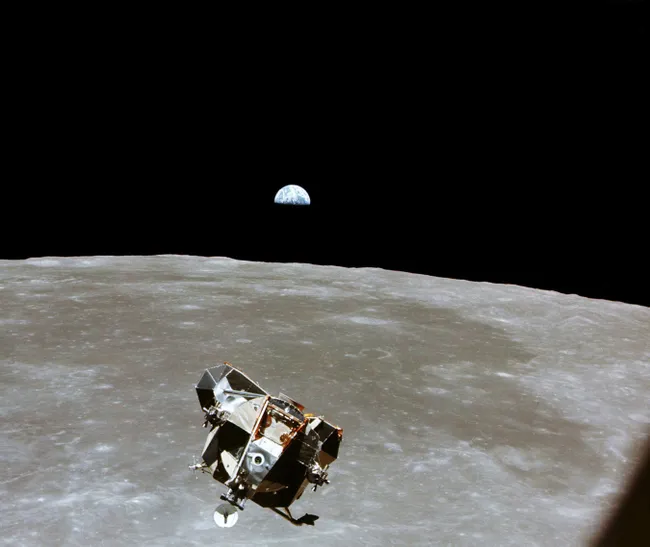
'Michael Collins, the astronaut who took this photo in 1969, is the only human, dead or alive, that isn't in the frame of this picture.' 

 (Image credit: NASA/Getty Images) 


“If the universe is meaningless, so is the statement that it is so… The meaning and purpose of dancing is the dance.”

'Alan Watts on our search for meaning and the antidote to our existential loneliness'


Image: https://www.digitalcameraworld.com/news/spaceman-who-photographed-every-living-being-but-himself-rip-michael-collins

Text: https://x.com/themarginalian/status/1876298178326069285

https://www.themarginalian.org/2016/11/01/alan-watts-wisdom-of-insecurity-3/

So good I'm repeating myself ... https://hodges-model.blogspot.com/2019/07/2-everyone-else-1-thank-you-michael.html

'dance' :: 'meaning'