Hodges' Model: Welcome to the QUAD: global health framework

Hodges' model is a conceptual framework to support reflection and critical thinking. Situated, the model can help integrate all disciplines (academic and professional). Amid news items, are posts that illustrate the scope and application of the model. A bibliography and A4 template are provided in the sidebar. Welcome to the QUAD ...

Showing posts with label global health framework. Show all posts

Wednesday, January 08, 2025

Hodges' model: A person - Everyone else [x2!]

INDIVIDUAL
|
   INTERPERSONAL : SCIENCES              
humanistic ------------------------------- mechanistic
 SOCIOLOGY : POLITICAL   
|
GROUP


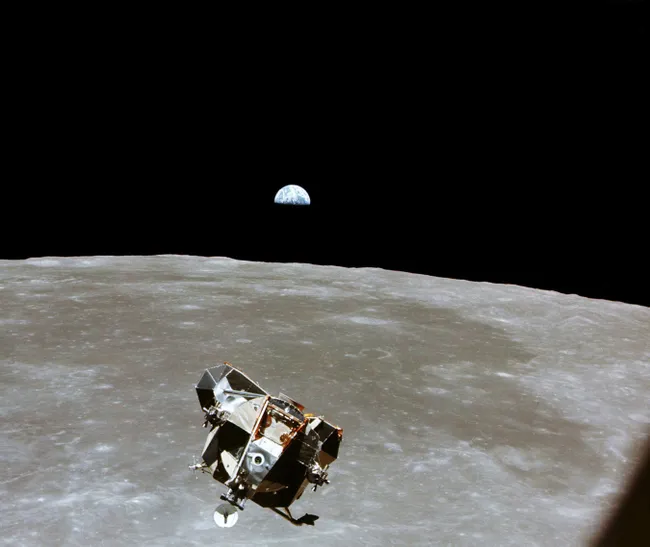
'Michael Collins, the astronaut who took this photo in 1969, is the only human, dead or alive, that isn't in the frame of this picture.' 

 (Image credit: NASA/Getty Images) 


“If the universe is meaningless, so is the statement that it is so… The meaning and purpose of dancing is the dance.”

'Alan Watts on our search for meaning and the antidote to our existential loneliness'


Image: https://www.digitalcameraworld.com/news/spaceman-who-photographed-every-living-being-but-himself-rip-michael-collins

Text: https://x.com/themarginalian/status/1876298178326069285

https://www.themarginalian.org/2016/11/01/alan-watts-wisdom-of-insecurity-3/

So good I'm repeating myself ... https://hodges-model.blogspot.com/2019/07/2-everyone-else-1-thank-you-michael.html

'dance' :: 'meaning'

Tuesday, November 29, 2022

From: The Communication Initiative (The CI)

With many thanks to Kier and 'The CI' Community ...
 
Dear Peter Jones,

Warm greetings from The Communication Initiative (The CI) - https://www.comminit.com

Thanks so much for contacting us on November 25th to submit/share your work. I am writing to let you know that we have added a summary of "Hodges' Model: The Sustainable Development Goals and Public Health - Universal Health Coverage Demands a Universal Framework" to The CI website. Please do me the favour of reviewing the summary here - https://www.comminit.com/global/content/hodges-model-sustainable-development-goals-and-public-health-universal-health-coverage-d - and sending along any feedback you may have. I will be glad to make the necessary changes promptly.

For more information on our editorial objectives and the principles that guide our posting of information, please see: https://www.comminit.com/global/content/editorial-policy-ci-global

In the future, this summary may be featured in our e-newsletters, including The Drum Beat and Drum Beat Clicks. If you wish to subscribe to these mailings so you can see when your work is featured and read about other relevant programmes and resources, simply log into your registration page: https://www.comminit.com/global/content/peter-jones-hodges-model

We plan to spread the word about this summary via social media and would appreciate it if you might do the same.

Kind regards,
Kier

Kier Olsen DeVries, MA
Senior Editor, The Communication Initiative
Editor, The Drum Beat
kdevries AT comminit.com
https://www.comminit.com
Facebook: The Communication Initiative Network
https://www.facebook.com/The-Communication-Initiative-Network-344005148956579/
https://twitter.com/warrencomminit

PJ - The paper in question (is listed in the bibliography - please see the blog's sidebar):

Jones P, Wirnitzer K. Hodges’ model: the Sustainable Development Goals and public health – universal health coverage demands a universal framework. BMJ Nutrition, Prevention & Health 2022;0:e000254. doi:10.1136/bmjnph-2021-000254

Friday, August 26, 2022

Memo: Understanding the difference between 'self-care' and 'SELF-CARE'

As we learn in infancy, run into physical structures and it hurts. The presence of structure in this case clearly has impact - not just literally - but globally.

While for me, the model is a constant, I'm constantly surprised by the 'work' that its structure, the two axes - can do from the initial - blank - template (empty set):


 INDIVIDUAL
|
 INTERPERSONAL    :     SCIENCES               
HUMANISTIC --------------------------------------  MECHANISTIC      
SOCIOLOGY  :   POLITICAL 
|
GROUP

self-care

'understanding'

self-care

(emphasis [again] on task-oriented care?)

SELF-CARE


Social Care

SELF-CARE

Code of Practice for International Recruitment
'Red List'

NHS Workforce Planning, Recruitment and Retention, Pay, Terms and Conditions

Local, National, Global 'jobs' market

'Memorandum of understanding ...'

'Selflessness' [here?]


WHO Global Code of Practice on the International Recruitment of Health Personnel: Fourth round of reporting:
https://www.who.int/news/item/02-06-2022-who-global-code-of-practice-on-the-international-recruitment-of-health-personnel--fourth-round-of-reporting

Code of practice for the international recruitment of health and social care personnel in England
Updated 22 August 2022:

https://www.gov.uk/government/publications/code-of-practice-for-the-international-recruitment-of-health-and-social-care-personnel/code-of-practice-for-the-international-recruitment-of-health-and-social-care-personnel-in-england

Memorandum of understanding between the UK and Nepal on the recruitment of healthcare workers:
https://www.gov.uk/government/publications/memorandum-of-understanding-between-the-uk-and-nepal-on-the-recruitment-of-healthcare-workers

Ten-fold increase in nurse recruitment from "red list" countries, RCN:
https://www.rcn.org.uk/news-and-events/Press-Releases/ten-fold-increase-in-nurse-recruitment-from-red-list-countries

c/o HSJ @ShaunLintern

Thursday, March 18, 2021

Universal Health Coverage: Every Day - All Year - All Weathers [ #COP26 ]

individual
|
INTERPERSONAL : SCIENCES
humanistic ----------------------------------------------- mechanistic
SOCIOLOGY : POLITICAL
|
group


Related posts on W2tQ:

Global Health

Universal Health Coverage

My source:

Sunday, February 25, 2018

2nd Planetary Health Annual Meeting in Edinburgh

Since learning about the 2nd Planetary Health Annual Meeting in Edinburgh late last year, I realise I didn't post the news, which is a gift in terms of the purposes of Hodges' model. So, this post celebrates what is a vital subject and call for action and an invite to present a poster. Unfortunately regards the poster, in my haste I did not check the registration terms and the applicable early bird fee of £250 is too much for me personally. If you are a student, or resident citizen of a low and middle income countries opportunity knocks with a welcome reduced early bird registration fee until 9 March.

The planet and planetary health have featured here on W2tQ, on the now defunct website 1998-2015 and in papers, notably:

Jones, P. (2008) Exploring Serres’ Atlas, Hodges’ Knowledge Domains and the Fusion of Informatics and Cultural Horizons, IN Kidd, T., Chen, I. (Eds.) Social Information Technology Connecting Society and Cultural Issues, Idea Group Publishing, Inc. Chap. 7, pp. 96-109.

 Jones, P. (2012). Exploring several dimensions of local, global and glocal using the generic conceptual framework Hodges's model. The Journal Of Community Informatics. 8(3). Retrieved from http://ci-journal.net/index.php/ciej/article/view/876/

Jones P. Exploring the relationship of threshold concepts and Hodges’ model of care from the individual to populations and global health. Rev Cuid. 2017; 8(3): 1697-720. http://dx.doi.org/10.15649/cuidarte.v8i3.464

Another short paper is under review on Hodges' model and the Sustainable Development Goals.

Amid the embarrassment of having to turn the offer down I will follow developments with keen interest and hope that another opportunity may arise.

Tuesday, May 09, 2017

"Global Mechanism - Your analysis and ideas?" c/o COMMINIT.com

I have posted some items c/o The Communication Initiative Network previously, but that was quite a while ago. Having just contributed to an ongoing discussion I thought it might help me and readers new to COMMINIT to post some background and add to my comment over coming weeks. The topic begins on COMMINIT:

UNICEF, with Rafael Obregon (Chief, Communication for Development, UNICEF New York) leading and The Communication Initiative, through Warren Feek (Executive Director) are holding a series of consultations, to gather views, opinions and ideas on what kind of global mechanism could be helpful for supporting advancements in the scale, sustainability, relevance and influence of programmes, strategies and organisations that develop and implement initiatives rooted in communication and media development, social and behaviour change. 
Background
The global development tapestry has seen the growth of a series of such mechanisms seeking to advance particular fields of work. For example, WASH for All; the Global Partnership for Education and, the Global Partnership on Violence Against Children, amongst others.
As we have reviewed these mechanisms it is clear that there are a range of differing goals and roles including:
  • Raising technical standards;
  • Advocating value and impact;
  • Engaging in policy debates and dialogue;
  • Coordinating action;
  • Accrediting data;
  • Expanding funding levels; and,
  • Acting as a legitimate global point of contact for policymakers, funders and other major global players in development.
What kind of mechanism - priority, strategy, structure?
The major question for the social and behaviour change, communication and media for development field of work is what kind of mechanism – focus and structure - could help to advance our field of work. Consequently, there will be 3 major themes to the consultation that we will be holding. From your perspective and experience:
  1. What priority goals and themes would you propose as the focus of such a possible mechanism?
  2. What strategic approach should such a possible mechanism take to work towards those goals?
  3. How would you recommend that such a mechanism be structured and organised?
continued... 


There was a meeting last year in London but I could not attend. I was prompted to write following a brief comment by Lorenzo Vargas...

Communication... also as a right (and more in Hodges' model)

I have copied and will further develop my ramblings as follows...

Dear Lorenzo and All,
'Communication' needs to be considered as not just a com-plex concept (process, social, practice, research, purpose, policy, reality...) but a com-pound phenomena too.
I have raised the potential of Hodges' model previously and in your few lines Lorenzo you also highlight how this (open) model might help integrate and provide a generic foundation for the whole health care agenda, locally, globally and glocally - through technology and culture.
First I quite agree to 'communication' being a Right: definitely and even when claims of rights has been described as a 'rights-fest'. In some contexts communication is a privilege, when cultural and historical structures accord a speaker - the 'stage'. Communication as much an innate ability. So the work of Paul Watzlawick needs to taken into account. The primacy of communication is made explicit in the first of Watzlawick's axioms of communication: "One cannot not communicate." Stepping over several axioms, number five brings us to the health context: "Inter-human communication procedures are either symmetric or complementary." This communication dynamic is the pivotal point of entry for communication as a right. The politics of axiom 5 is why we focus so closely on advocacy, engagement, safeguarding, guardianship, best interests, translation services and other measures that might include others acting as a proxy. If these are legal so much the better, if recourse to law if needed is accessible and affordable for example. In health, gender and development contexts a mix (compound) of qualities, characteristics and outcomes must be taken into account:
  • being heard (physically, linguistically, politically, educationally - literacy, culturally ...)
  • and being able to hear (physically, politically, language, environment, educationally - literacy ...)
We must also include choosing not to communicate (verbally, non-verbally, vote) and such acts ?
I'm sure we can all add our own experiential, personal, and professional emphases on the above.
The link below (should... ) outline Hodges' model - a generic conceptual framework.
What is 'spiritual' encompasses the whole model.
As a 'right' like human rights we can place this conceptually in the POLITICAL domain. The scope of 'communication' and its dimensions can then be reflected upon and made more explicit. 
There are a number of 'gifts' in your comment beyond the obvious one in C4D :-)
We are aware of the skills needed in the sciences and many clinical treatments in handling instruments. The history of science is full of them through to the fact of robots deftly and with mm accuracy (and less) assisting in surgery.
For communication to be a right, this should necessitate a series, or at least one 'policy instrument'. 
In Hodges' model the SCIENCES and POLITICAL domains are associated with what is usually considered MECHANISTIC (physical).
This is not merely word association, but a tool that imho can help this and related communities.
With communication as a right, Hodges' model can help stress the need for the many identified and debated literacies to be made a reality. Or if they are not realised, then those who control axiom 5 (and other key factors - social media?) can be held to account?
Just to close I am presenting Hodges' model in London on the 18 May - there is a link on the blog's sidebar.
Thank you for your comment Lorenzo.
I hope this helps your deliberations?
Kind regards,
Peter Jones
Jones, P. (1996). Do we need an overarching theory of health communication? Health Informatics Journal, 2,1,28-34.

Monday, October 10, 2016

World Mental Health Day - Weeks, Months, Years (and Tears: or trying to find them)

Prompted by World Mental Health Day posted below are some thoughts related to each of the domains of Hodges' model in respect of mental health and health and social care in general.

individual
|
INTERPERSONAL : SCIENCES
humanistic -------------------------------  mechanistic
SOCIOLOGY : POLITICAL
|
group-population

Reflection is an important human ability. It can be variously described as - reasoning, problem solving, introspection ... but an ability of self-reflect and critique our circumstances in a balanced, mature, objective way is an important skill that should ideally be shaped like so many others in childhood. Education and health literacy matters.

Evidence for reflection and reflective practice for nurses and other health professionals remains rather sparse and contested. There can be ethical challenges and assessment and measurement of reflection and reflective practice is problematic.

Hodges' model can support individual reflection providing a framework to facilitate person centred, integrated and holistic care. Globally there is no generic conceptual framework. Here is a candidate!

The parity of esteem debate that is so often heard in the political domain, becomes a stark fact of life to the individual in their physical and mental health. The two must be integrated.

Policy makers look to the SCIENCES domain to find the technical and analytical tools to study demographic trends and produce national statistics. 

Health providers are increasingly having to deliver services for individuals and programmes for population health. Data and Big Data all contribute through national governments to regional centers and the WHO.


Far from the binary logic of maths and the technical wonders it gives rise to, here in the SOCIOLOGICAL domain the YES or NO to having next of kin, partner, family and friends is pivotal from a mental health perspective. 

There is an irony that the size and stability of someone's social network is an indicator of their staying well; while social media can act as a force for good, or a negative force aimed at those vulnerable to bullying and abuse.

Effective communication is situated and ultimately determined by context: personal, local, glocal and global.


In this domain, whichever corner you turn to, it is politicised: be it funding for services; the word 'recovery'; the very existence and acknowledgement of mental health allied to human rights and service provision; employment and welfare; policy for access, diversity, equity, gender, equality.... mental health is manifest with political dimensions.

How are the needs of specific groups met, children, youths, women, men...?

Mental health law is crucial for personal and public safety. How this is conducted and governed is a measure of a modern state and please note the distance from the INTRA- INTERPERSONAL domain at upper left.


Thanks to @MHChat and community for reminder #WorldMentalHealthDay #WMHD16


Tuesday, November 10, 2015

Security of Tools for Community Care and Elsewhere: Take this 'one' with you...?

individual
|
INTERPERSONAL : SCIENCES
humanistic --------------------------------------- mechanistic
SOCIOLOGY : POLITICAL
|
group


Image sources:

http://picphotos.net
http://www.ebay.co.uk
https://www.signkits.co.uk
https://i.pinimg.com

My source: Following some van, some where...

Friday, May 08, 2015

'How to Build a New Global Health Framework': Gostin & Friedman in The Lancet

http://us5.campaign-archive1.com/?u=5556647df8c0be7cf0da07db2&id=2fa83f37fc&e=2b5ede61fe

http://www.law.georgetown.edu

May 7, 2015 - Can a true, robust global health framework be created to help prevent tragedies like Ebola while at the same time allow countries to meet everyday health needs?

Georgetown University global health and law experts say it can be done, and in a special issue of “The Lancet” focusing on global health security, they propose specific priorities to transform a fragmented health system into a “purposeful, organized” framework with national health systems at its foundation and an empowered World Health Organization at its apex.

“The Ebola epidemic in west Africa raised the critical question of who is in charge,” says Lawrence O. Gostin, JD (http://www.law.georgetown.edu/oneillinstitute/faculty/Lawrence-Gostin.cfm) , faculty director of the O’Neill Institute for National and Global Health Law (...) at Georgetown University Law Center (http://www.law.georgetown.edu/) . He and his O’Neill Institute colleague, Eric A. Friedman, JD (...) , published an analysis of global health security today in The Lancet (“A retrospective and prospective analysis of the west African Ebola virus disease epidemic: robust national health systems at the foundation and an empowered WHO at the apex.” (https://www.thelancet.com/journals/lancet/article/PIIS0140-6736(15)60644-4/fulltext) )

“The world is ill-prepared for the next epidemic,” Gostin says. “The need for advance funding, planning and coordination from the national health system up to WHO is at the heart of preparedness, not only for epidemic disease, but also naturally occurring disasters such as the crisis precipitated by the Nepal earthquake.”

In their review, Gostin and Friedman offer a retrospective analysis of the recent Ebola outbreak and the “profound harms posed by fragile national health systems.”

In creating a new framework, the authors say, “The scope of the reforms should address failures in the Ebola response, and entrenched weaknesses that enabled the epidemic to reach its heights.”

They propose a new global health framework that has national health systems as its foundation and an empowered WHO as the “global health leader envisaged at its creation.”

To reach the goal of having an empowered WHO to lead a global health framework, Gostin and Friedman outline priorities for reform:

  • Funding: commensurate with global mandate under WHO Director-General’s control,
  • Technical excellence: diverse staff with multisectoral capabilities,
  • Operational capacities: rapid deployment of economic and human resources,
  • Normative standards: setting priorities and ensuring compliance,
  • Regional offices: regional knowledge and consistency with headquarters, and
  • Engaging non-state parties: harnessing the potential of civil society.
Gostin and Friedman say another critical component to a global health framework are key stakeholders such as the United Nations, The World Bank and NGOs. “In a well functioning global health system, all parties would perform functions suited to their mandate, working cooperatively, and supporting national ownership.”

In addition, the authors point out the need for a strong legal framework to enforce international health regulations: “International law and national implementing legislation can be powerful means for a more effective global health system,” Gostin and Friedman write.

Another key component to a global health framework is to shore up the national health capacities in preparation for a crisis that would better ensure health security, regionally and globally.

“Planning for rapid mobilization should be combined with strengthening health systems to build country capacity,” they say and propose reforms including a global health workforce reserve, and emergency contingency fund, a pandemic emergency facility (like that suggested by The World Bank) and an international health system fund.

“Action now on WHO and other reforms to the global health system is crucial, before the political moment passes,” Gostin and Friedman conclude.  “These reforms would not only keep populations secure against pandemic threats, but would also ensure health and safety for all needs through rights-based universal health coverage.  This is a global health framework that is achievable in the aftermath of a tragic epidemic that needlessly took 10,000 lives in one of the world’s poorest regions.”

About the O’Neill Institute for National & Global Health Law

The generous philanthropy of Linda and Timothy O’Neill established the O’Neill Institute in 2007 to respond to the need for innovative new solutions to the most pressing national and international health concerns. Housed at Georgetown University Law Center in Washington D.C., the O’Neill Institute reflects the importance of public and private law in health policy analysis. The O’Neill Institute draws upon the University’s considerable intellectual resources, including the School of Nursing & Health Studies, the School of Medicine, the McCourt School of Public Policy, and the Kennedy Institute of Ethics.

http://www.oneillinstituteblog.org/ 

http://www.twitter.com/oneillinstitute 
====
Copyright © 2015 The O’Neill Institute for National and Global Health Law at Georgetown University. All rights reserved.


My source: O’Neill Institute for National and Global Health Law via HIFA2015

Below I have related the above to Hodges' model:

individual
INTERPERSONAL : SCIENCES
humanistic ------------------------------------------- mechanistic
SOCIOLOGY : POLITICAL
group
Concepts - Understanding
Global Health Conceptual Framework,
Beliefs, Belief systems,
Education,
Individual Action
Critical Thinking
Access to Health Information
Impact of disease/disaster on survivors
Psychological health needs
Pre-vent
Ebola..., Epidemic - Pandemic,
Natural disasters
Emergency response,
Critical Action
Timeliness - Surveillance, Readiness,
(National-) capacity,
Physical health needs,
Health systems, (Infra)Structures,
Technical, Operational, Processes,
Coordination, Mobilisation
Scales: Local, Regional, National, Global
Social Empowerment, Engagement
Poverty
Communities
Critical Communications
Concordance
Local Leadership, Cooperation
Behaviour of groups amid Fear / Uncertainty
Socio-Technical
Community-Social-Urban... Informatics
Pre-empt
UN, World Bank, WHO, NGOs,
Reform, Policy, Standards
Rights-Based Universal Health
Global Health Framework
Funding, Law, Legislation
Priorities, Compliance, 'HQ'
Critical Governance & Assurance
Civil Society, Citizenry

Thursday, December 27, 2012

The Enormous Theorem meets The Enormous Conceptual Framework

with Best Wishes for the Season and 2013...

Hodges' Health Career - Care Domains - Model is not a theory of health and social care.

It can however encompass the conceptual space that comprises not only health and social care, but the lived experience of individuals, and the existence of corporate and political entities (notably policy).

So while mathematicians have The Enormous Theorem, in Hodges' model we can at least reflect on what might be the enormous conceptual framework.


Prize awarded for largest mathematical proof. New Scientist, Sept 10 2011, 211, 2829. p.5.

Friday, May 11, 2012

International Nurses Day - Closing the gap: My Project for a Global Conceptual Framework for Nursing


As International Nurses Day is celebrated tomorrow on the 12th May the emphasis and work here at W2tQ lies with Hodges' model. The project is to publicise h2cm's international potential in providing an avenue to help unify nursing theory, practice and assure future research.

Fawcett wrote of the metaparadigm of nursing - namely the inclusion of the concepts of person; environment; health; and nursing.

These concepts are incorporated into Fawcett's criteria on model validation which are listed in bold-italic below.

I have also ventured some reflections on the current status of h2cm when compared against these criteria.

Assumptions underlying the conceptual model are made explicit.

It is not sufficient, but the structure of Hodges' model renders the assumptions within the model explicit. The structure identifies eight initial key concepts:

INDIVIDUAL, GROUP (population); HUMANISTIC, MECHANISTIC; SCIENCES, POLITICS, SOCIOLOGY, INTERPERSONAL

A complete description of all four concepts of nursing's metaparadigm are presented.

Reflection soon reveals that several environments are suggested:

PHYSICAL, ORGANISATION, COMMUNITY, HOME, RESIDENCES, DWELLINGS, COGNITIVE (conceptual), SYMBOLIC, ABSTRACT, VIRTUAL, FORUMS, COLLEGES

Propositions of the conceptual model completely link the four meta-paradigm concepts. 

This is feasible, reasoning from the foundation of the model's structure.

The internal structure of the conceptual model is logically congruent.

This does need to be demonstrated. Initial recognition of logical congruence might be found through the conjoining of disciplines, that is frequently taken for granted: PSYCHO-SOCIAL; SOCIO-TECHNICAL; SOCIO-ECONOMIC.

The conceptual model is socially congruent, socially significant, and socially useful.

I have claimed on numerous occasions that the model is agnostic, universal, accessible, and has educational potential. These and other qualities need to be critically examined.

Empirical evidence in support of the model has accumulated from many derived theories.

The two final criteria are the most challenging. Empirical evidence supporting Hodges' model is available, but again must be tested through research. If someone has time - could you please compare the frequency of a set of political concepts in the nursing literature since 1985?* The emergence of health literacy and self-efficacy, threshold concepts, conceptual spaces, the rise of the semantic web and developments in software can all potentially support h2cm. Producing a roll-call of some of the latest trends in contemporary education, research and culture is not good enough, specific studies are needed.

The total contribution of the conceptual model to nursing knowledge. 

There is a long, long way to go, but the contribution has begun ... every journey ...

Of course, it is almost 20 years since publication of Fawcett's criteria. Has the concept of congruence changed in that time? What is socially significant and useful now? What should the social and political weighting of evaluative criteria be in 2012...? There is a body of critique upon Fawcett's and other evaluative tools within nurse education.

Perhaps a new set of criteria could be defined using h2cm itself? For a model of nursing (health and social care) to be fit for purpose, acceptable and viable across the globe, there are new concepts to be represented. While that would certainly close a gap, it does not seem a rigorous or valid way to proceed. I will seek out other more recent criteria and present them here at some point.

Fawcett J. Analysis and Evaluation of Conceptual Models of Nursing, 3rd ed. Philadelphia, Pa: FA Davis; 1995.

*Many thanks - if someone should pick this up, which ever axes, concept or issue.
Monday, December 01, 2008

Holistic Skills Assessment and Assurance

Just lately - by virtue of mailing list subscriptions - I've received several calls for research proposals and notice of workshops providing advice on how to proceed. In response let me just say this is 'frustrating' - as I'm not in a position to:

  • (OK, on your marks! Get set! GO!) - formulate the real question;
  • seek partners;
  • put in a bid;
  • and put conceptual frameworks for (global) health and social care on the map.
They deserve to be there. For me the really interesting note to take home here is that these potential research projects could be grounded in several disciplines:
  • nursing;
  • health economics;
  • informatics;
  • public health;
  • public and civic engagement. ...
While universal in scope they (e.g. Hodges' model) are not the universal solution.

They can and must complement other tools and resources as the care agenda shifts to quality and the measure of quality.

More than ever the holistic reach of not only 1st-line but 2nd-line ... staff is going to be crucial to how well policy-bearing organisations carry their load.

As the (quickly formulated, rapidly fixed) physical and emotional bandages are renewed and re-assurances given, we realise that (ill-) health is not just a condition specific conundrum. Health is a melange of choices, multiple diagnoses, beliefs, attitudes, educational opportunities, concentrated resources and much more that are difficult to focus. Strange thing this notion of inclusion. At the end of the day it comes down to:

The art of focusing without focusing ... ?

Holistic bandwidth means that that the holistic skills demonstrated at any time will be dynamic and vary according to the viewer, the context (and there will be several), the care domain and of course the measure(s). ...

Additional links:Measuring of health and health-related quality of life with the EuroQol-5D

Image c/o - Wordle - and based on this blog.

Tuesday, August 05, 2008

Big pictures: Hodges’ model and Future Studies

I came across a 1996 paper by Richard Slaughter - The Knowledge Base Of Futures Studies As An Evolving Process. The paper highlighted a problem faced by future studies which was (and still may be?) grappling with its knowledge base:

Why, then, is it necessary to have a knowledge base of futures studies (KBFS)? There are several reasons. First, as Norwegian futurist Kjell Dahle pointed out at the World Futures Studies Federation conference in Barcelona in September 1991, the lack of a common knowledge base greatly complicated the work of those preparing courses, planning research, teaching and developing FS projects. The field is well known for its breadth, geographical scope and range of disciplinary paradigms. Where, in all this diversity, should newcomers, particularly intending students, begin? …
As also cited on the h2cm website Slaughter notes the significance of Wilber’s quadrants as a key resource and approach -

I have referred to this work at some length because over several years Wilber’s developing account has reframed my own thinking about present and future options, both personal and collective. Such a framework integrates insights from a wide field and provides FS with powerful new understandings and tools which go beyond one-dimensional thinking (e.g. rationality, technique, forecasting) and a single privileged culture (Western culture). Here, then, is an emerging basis for big-picture thinking and action into the new millennium and beyond. Here too is where some of the most substantial developments in the KBFS are likely to occur.
[My emphasis.]
Health and social care is not only focused on the future -

It is concerned about the PAST, NOW and FUTURE

- BUT it is always future oriented.

So future studies community look over here – now (please!)

Source: Slaughter, Richard A. (1996). The Knowledge Base Of Futures Studies As An Evolving Process, Futures, 28, 9, 799-812.

Thursday, September 20, 2007

Global Conceptual Frameworks & GANM I

Hodges' model was created in the NW of England
by Brian E. Hodges in the 1980s:

In order to make a difference
it needs to multiply across the globe

Imagine then
the cascade of change
the emotional chain reaction
the flash of light
that will follow

Imagine when
more than 6 billion butterflies

flap their wings

- even if only for one day.
