Hodges' Model: Welcome to the QUAD: human ecology

Hodges' model is a conceptual framework to support reflection and critical thinking. Situated, the model can help integrate all disciplines (academic and professional). Amid news items, are posts that illustrate the scope and application of the model. A bibliography and A4 template are provided in the sidebar. Welcome to the QUAD ...

Showing posts with label human ecology. Show all posts

Monday, October 03, 2022

@LJMU @UniofGreenwich @UniNorthants et al. *

Re. new Climate Change degrees ...

What do your students and faculty need to know
to nurture that green knowledge domain,
and turn the other domains green?

INDIVIDUAL
|
 INTERPERSONAL    :     SCIENCES               
HUMANISTIC --------------------------------------  MECHANISTIC      
SOCIOLOGY  :   POLITICAL 
|
GROUP
MENTAL HEALTH
CONNECTION
ATTITUDE
BELIEFS - SPIRITUAL
ADVERTISING (mental pollution)?
[meta-] ETHICS
ECOCIDE
ACTIVISM
EDUCATION - LIFELONG LEARNING
LITERACY - INFORMATICS SKILLS
...

BIOSPHERE
POLLUTION
EXPOSURE - EXPOSOME
THERMAL REGULATION
WATER CYCLE ... AGRICULTURE
GEOPHYSICS, GEOGRAPHY
MEGA-ENGINEERING
PHYSICAL HEALTH
URBAN - RURAL
METRICS, MONITORING
...

SOCIAL HISTORY
SOCIAL MEMORY, ARTS
QUALITY OF LIFE
WAYS OF LIFE - Communities (Nations!)
SOCIAL DETERMINANTS OF HEALTH
SOCIAL JUSTICE
'home-land' -
DISPLACEMENT - RESETTLEMENT
SOCIAL COHERENCE
SUSTAINABLE DEVELOPMENT GOALS
...
POLICY, LAW
PROTECT FUTURE PEOPLES
COP X, UN, UNESCO ...
REGULATION
TRANSFORMATION OF ECONOMICS
- CIRCULAR ECONOMICS
SUSTAINABILITY
COMMERCIAL DETERMINANTS OF HEALTH
FORCED MIGRATION
POLITICAL CHANGE (LONG-TERM)
...

What do they need to believe,
envision and be able to do,
to help transform the World?

My source: Nicola Woolcock, Universities offer first climate change degrees, The Times, March 23, 2021,p.16.

*Hope it is going well, and while we really need it to - this is, of course, a responsibility for us all.

Friday, April 15, 2022

May 10th Lecture: "Planetary Law for the Anthropocene"

Dear followers of H-net Environment,

Planetar denken
the Panel on Planetary Thinking of the Justus Liebig University Giessen, Germany, cordially invites you to join our kick-off event of our Planetary Lecture Series which may be of interest to many of you:

On May 10th, at 6:15 CET, Prof. Dr. Dr. Louis Kotzé (North-West University, South-Africa), will be giving a lecture on "Planetary Law for the Anthropocene" . Prof. Kotzé currently holds a fellowship at the Institute for Advanced Sustainability Studies in Potsdam, Germany, and is a Senior Professorial Fellow in Earth System Law at the University of Lincoln, UK. Prof. Dr. Thilo Marauhn (Chair of Public and International Law, JLU) will open the discussion with a response. The lecture will take place in a hybrid format, allowing you both digital and analog participation.

Feel free to spread the word to interested colleagues and friends. You can register at panel AT planet.uni-giessen.de or join us spontaneously in our BigBlueButton Conference Room.

Warm regards,

Liza Bauer

(on behalf of the Panel on Planetary Thinking).


Wednesday, March 10, 2021

Count Down: What on Earth are We Doing?

individual
|
INTERPERSONAL : SCIENCES
humanistic ----------------------------------------------- mechanistic
SOCIOLOGY : POLITICAL
|
group


COUNT DOWN

See also:

https://www.healthandenvironment.org/webinars/96557

My source:

Capurro, D. 2021, Falling sperm counts 'as big a threat to humans as climate change', The Daily Telegraph, 27 February, p.15.


Thursday, December 13, 2018

Care Haiku


care this race for you
and I on this planet all
domain by domain


individual
|
INTERPERSONAL : SCIENCES
humanistic ----------------------------|--------------------------- mechanistic
SOCIOLOGY : POLITICAL
|
group


intra- interpersonal


sciences


sociology

political


Monday, May 15, 2017

SUPPORT: Global Health - Health Support - Support Change

INDIVIDUAL
|
INTERPERSONAL : SCIENCES
humanistic ----------------------------------------- mechanistic
SOCIOLOGY : POLITICAL
|
POPULATION
SELF - SUPPORT


SOCIAL - SUPPORT

POLITICAL - SUPPORT


My source: Halcyon Gallery

Artist: Lorenzo Quinn

https://twitter.com/artistlorenzo/status/863282451212374017

Monday, March 20, 2017

Great Barriers [i]

individual
|
INTERPERSONAL : SCIENCES
humanistic -------------------------------------------  mechanistic
SOCIOLOGY : POLITICAL
|
group-population


Great Barrier Reef 
c/o ARC Centre


'climate'

Great Barriers to Belief

'change'


See also:
Australia must share the blame for coral bleaching, FT View, 17 March 2007.

Map image: ARC Centre

Tuesday, April 12, 2016

Planetary Health (i) (and the need for a global conceptual framework)

(with thanks to Global Health Now)

In a pointed challenge, Lancet editor-in-chief Richard Horton warned Consortium of Universities for Global Health conference attendees Saturday that an exclusive focus on improving health will fail.

Horton argued instead for planetary health.

“We have to cross outside of health and think about the relationship between health and other dimensions being defined as sustainability,”
Horton said, in a keynote address at the annual CUGH conference, which opened Saturday in San Francisco and attracted more than 1,800 attendees from around the world.

Citing the work of a Lancet Commission that published a 2014 manifesto, Horton argued that the global health community and others need to embrace planetary health. “Our vision is for a planet that nourishes and sustains the diversity of life with which we coexist and on which we depend,” Horton and others wrote in the manifesto.

Brian W. Simpson, Global Health NOW

Full text:

http://www.globalhealthnow.org/news/horton-to-cugh-planetary-health-is-the-solution
[ See below: PJ ]

Best wishes, Neil

Let's build a future where people are no longer dying for lack of healthcare knowledge - Join HIFA: www.hifa2015.org


https://www.globalhealthnow.org/2016-04/horton-cugh-planetary-health-solution

Previously on W2tQ:

One mind, many minds - ONE PLANET. One need, many needs - ONE PLANET: what price stability?

Exoplanets, exobiology, exocortex, exocare ...?

Notes (ii) from Paipa Conference: Q & A

Blog Action Day: h2cm around the water whole

TED: Nic Marks - The Happy Planet Index

Saturday, April 09, 2016

tear Here - Build There: c/o Brandt (Denver & Taylor)

individual
|
INTERPERSONAL : SCIENCES
humanistic ---------------------------------------  mechanistic
SOCIOLOGY : POLITICAL
|
group
He was born in the summer 
of his 27th year...


Nick Brandt: Inherit the Dust


...coming home to a 
place he'd never been 
before. He left 
yesterday behind him, 
you might say he was 
born again, you might
say he found a 
key for every door...

... Now his life is full of wonder,
but his heart still knows some fear,
of a simple thing he can not comprehend.
Why they try to tear the mountains down
to bring in a couple more,
more people, more scars upon the land... 
(Denver)


Quality of Life = Quality of All Life?

Photograph:
Nick Brandt: INHERIT THE DUST

Words: Denver, J. Rocky Mountain High (video)

My source:
Kenya's Lost Eden, The Sunday Times Magazine, April 3 2016, pp.26-29.

Wednesday, March 16, 2016

Tolerance: The Beacon of the Enlightenment

individual
|
INTERPERSONAL : SCIENCES
humanistic ---------------------------------------  mechanistic
SOCIOLOGY : POLITICAL
|
group

Tolerance: The Beacon of the Enlightenment

My source: tpm, #72 p.7

Saturday, December 12, 2015

(Reprise) Noah - Thanks Frank and Happy Birthday!

individual
|
INTERPERSONAL : SCIENCES
humanistic --------------------------------------- mechanistic
SOCIOLOGY : POLITICAL
|
group

Trying to stay 'Young at Heart' here too.

Let's hope we can reach maturity - ecologically speaking - this weekend.

Thursday, October 29, 2015

Books: Context, Subjectivity, Individuals and Axes (of Learning?)

individual
|
INTERPERSONAL : SCIENCES
humanistic --------------------------------------- mechanistic
SOCIOLOGY : POLITICAL
|
group

The learner's intentionality is the axis from which the context can be interpreted as unified lived experience, making sense of the multiple interactions between people, and activities and resources. A context is always "local to a learner", since it consists of an individual's subjective experience of the world, that is always ...

spatially and...

historically situated (Lukin 2010, p.18). p.335.


References

Above from:
Esposito, A., Sangrà, A. and Maina, M. (2015) Emerging Learning Ecologies As A New Challenge and Essence For E-learning, Chap. 24 In Badrul H. Khan, Mohamed Ally (Eds) International Handbook of E-Learning. Volume 1, Oxford: Routledge. pp. 331-341. (p.335).

Lukin, R. (2010) Re-Designing Learning Contexts - Technology-Rich, Learner-Centred Ecologies, Oxford: Routledge.

Learning ecologies is an approach to educational theory, practice and technology enhanced learning that I can relate to through Hodges' model and a general interest that extends to green matters and blue...

This is a fascinating chapter by Esposito, et al. (2015) that includes keystone species who have the architectural function of a keystone (p.333) to: (my rendering follows)


provide critical resources

modify the environment

act as mutualists

control potential dominants


In the discussion the role of keystone species is attributed to librarians. To modify the learning environment and community the keystone species would need access to the necessary processes, procedures, time and place. So to the right of Hodges' model we find what is mechanistic: rules, authentication, privileges, sanctions, passwords, accounts...

On the above left as an example, communities of practice rely on mutualism for their sustained existence. It is the individual (student) as the (usual) unit of analysis who is making use of the resources.


Wednesday, June 17, 2015

Hodges' model as a Leitbild framework


individual
|
INTERPERSONAL : SCIENCES
humanistic --------------------------------------- mechanistic
SOCIOLOGY : POLITICAL
|
group

(to ensure, process, distribute,
use, maintain, use,
and preserve human service demands)
= PURPOSE


H
U
M
TECHNOLOGY

ECOLOGY (as Nature)

related activities*

distribute   'hard systems'  use

PROCESS

A
N
S

Sociology

'soft systems'

*behaviours
Politics

economy

STANDARDS

ensure (assure)

Image and reference:
Klug, H., 2012. An integrated holistic transdisciplinary landscape planning concept after the Leitbild approach. Ecological Indicators 23, 616–626. doi:10.1016/j.ecolind.2012.05.019

“A Leitbild (pl. Leitbilder) is a summary statement describing a desired and releasable future state for a specific issue or spatial unit, which takes account of the primary objectives and drivers in a holistic and integrated way. All present knowledge is used to balance future constraints and demands from social, economic, cultural, political and environmental perspectives. Therefore, a commonly accepted Leitbild projects a specified trajectory for the future spatial structure, distribution, utilisation, condition and development of the socio-natural system. It provides a set of guidelines that shape actions, and a framework within which the impact of particular developments can be judged and socially negotiated.” p.617.

Sunday, April 19, 2015

Context, Rooms, Faces and Shots


"... The most revealing shot is always the wide shot. 

The room where the person is tells more about him than his face." Roy Andersson


Leigh, D. (2015) Funny ha-ha, and strange, Arts - Cinema, FT Weekend FT, 18-19 April, p.12.

A Pigeon Sat on a Bench Reflecting on Existence, Roy Andersson

Saturday, April 04, 2015

For people of a certain age 5 4 3 2 1 ...: Big Data and Little Data (please)

People of a certain age may be tied to the TV at 5pm today, in the UK at least as a CGI animated reboot of Thunderbirds hits our screens. Since the original series I've experienced the joys of Tracey Island as a toy and the increasing influence of 'nostalgia'.

While not spoken of with the same frequency in healthcare, there is still the need for a philosophy of care. Apparently this new series is trying to remain true to the values and messages of Gerry Anderson's original. Together with Star Trek, series like this can (surely) also contribute to children's having critical, empathic skills, an open attitude and a global perspective.

Since the 1960s and the data transmissions that John in Thunderbird 5 was listening for (yes, I know...), we are now in the realm of Big Data, the internet no less! I wonder if they will reference space junk and how this is reflected in the World's oceans? A great opportunity, but then this is a children's show.

As Thunderbird 5 monitors World communications for humanitarian reasons, I'm still seeking Little Data. If you are a nurse lecturer, UK or from the global nursing community I'd really appreciate your help:

...


Many thanks (especially for completed surveys thus far) and if you watch the new series - enjoy.

See also:
Thanks Gerry for pulling some strings


Wednesday, September 03, 2014

Five Domains - Five Gyres

There are five domains in Hodges' model that can help us assess, plan and formulate health and social care, support reflection upon interventions and evaluate progress over time. An aide-memoire indeed!

individual
INTERPERSONAL : SCIENCES
humanistic ------------------------------------------- mechanistic
SOCIOLOGY : POLITICAL
group


Brain Plasticity


Plastic Brain

With five domains to support short and longer-term memory do we really need to force the oceans to remember when we fail to care...?

Saturday, November 30, 2013

The Resurgence of - Soul Soil Society - in h2cm

On my travels into Manchester for Drupal NW and other monthly meetings I sometimes have time to call at the Cornerhouse (now HOME. It's an independent cinema and visual arts venue. The shop is open until about 7pm and amongst many interesting publications I discovered Resurgence which is now Resurgence & ECOLOGIST. It is a great read - as per its banner - on the environment, activism, social justice, arts and ethical living. The great read lies not just in the content, but the fact that it challenges your way of life.

The welcome in the latest issue Nov/Dec 2013 by Satish Kumar the editor-in-chief includes mention of two books, one by Satish Kumar himself: Soul Soil Society.

As technology races ahead and governments chase economic growth through capitalist-based socio-economic systems what stands out is the failure of political systems to keep up.

The question is not how soil is created through a natural process that takes time and is itself a vital variable in a complex ecosystem. The question is how hard can we push soil?

What are the global effects of giant excavators that can move mountains, cut swathes of tarmac through rain forests? What is the natural value of soil, of land for individual farmers against synthetic fertilisers, genetically modified seed, land grabs ...? Why do we call the rainforests - rainforests#? The impacts are local, global and glocal as this issue of Resurgence and others highlights.

Below I've transposed the book's title on to Hodges' model:

INTERPERSONAL : SCIENCES
SOCIOLOGY : POLITICAL

individual
Soul


Soil

Society


What is missing?
group - population

# See also: PHYSICS & THE RAINFOREST, Peter Bunyard, pp.12-14.

Additional book:
Jonathon Porritt, The World We Made

Friday, October 04, 2013

two books two islands two doctors II

Book cover: The Story of San Michele


Here are some additional images and text from Villa San Michele (sorry about the accessibility issue):


Description of the Dining Room Villa San Michele
Skeleton mosaic carrying water and wine


Monday, July 08, 2013

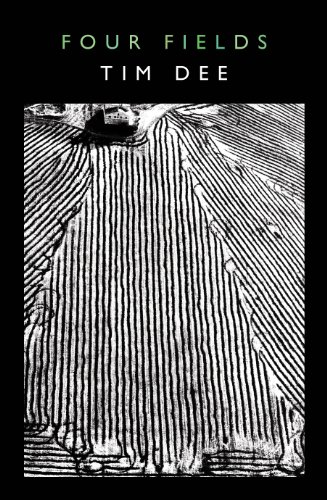
Four Fields

On my wish list:

In his first book since the acclaimed The Running Sky Tim Dee tells the story of four green fields. Four fields spread around the world: their grasses, their hedges, their birds, their skies, and their natural and human histories. Four real fields - walkable, mappable, man-made, mowable and knowable, but also secretive, mysterious, wild, contested and changing. Four fields - the oldest and simplest and truest measure of what a man needs in life - looked at, thought about, worked in, lived with, written.

Dee's four fields, which he has known for more than twenty years, are the fen field at the bottom of his Cambridgeshire garden, a field in southern Zambia, a prairie field in Little Bighorn, Montana, USA, and a grass meadow in the exclusion zone at Chernobyl, Ukraine. Meditating on these four fields, Dee makes us look anew at where we live and how. He argues that we must attend to what we have made of the wild, to look at and think about the way we have messed things up but also to notice how we have kept going alongside nature, to listen to the conversation we have had with grass and fields.

Four Fields is a profound, lyrical book by one of Britain's very best writers about nature.

Source image and text: Amazon

Tuesday, May 28, 2013

Countries, places and maps (Lahiri)

“The place to which you feel the strongest attachment
 isn’t necessarily the country you’re tied to by blood or birth:
 it’s the place that allows you to become yourself. 
This place may not lie on any map.”

– Jhumpa Lahiri


My source: Fred Dervin via cosmobilities.net