Hodges' Model: Welcome to the QUAD: awareness

Hodges' model is a conceptual framework to support reflection and critical thinking. Situated, the model can help integrate all disciplines (academic and professional). Amid news items, are posts that illustrate the scope and application of the model. A bibliography and A4 template are provided in the sidebar. Welcome to the QUAD ...

Showing posts with label awareness. Show all posts

Tuesday, September 29, 2026

THE PERIODICAL

The results of Menstrual Hygiene Day (MH Day) 2026 are in! 

They show what is possible when thousands of organisations and individuals join forces. Advocates, NGOs, media, governments, communities, and corporates came together to drive awareness and action on menstrual health and hygiene (MHH). All with one goal: creating a #PeriodFriendlyWorld for everyone. 

In 2026, we crossed the mark of 1,500 official partner organisations.
The MH Day movement continues to grow. 💪 

And so does our impact.
This year, the team tracked more than 3,000 MH Day events, 28,300 pieces of media coverage, and 299,000 social media contributions! 

Together, these efforts resulted in a new milestone: during the campaign period from 29 April to 10 June 2026: 

MH Day collectively reached 1.135 billion people worldwide. 

Isn’t that incredible? 

That’s nearly one in seven people on the planet, and the biggest reach in the history of MH Day! 

It shows that while MHH was a niche issue a few years ago, it is becoming more and more relevant for the mainstream of society. 

  Read more about the 
numbers,  trends,  and stories 
behind MH Day 2026
  

Thank you for being part of this growing movement! Together for a #PeriodFriendlyWorld!

Warmly,
Ina, Aya and the team at the International Secretariat of MH Day / WASH United


c/o - WASH United gGmbH Fürbringerstrasse 7 Berlin 10961 Germany

Wednesday, September 09, 2026

Bonjour Bayeux: Tapestries Historical & Modern

individual
|
INTERPERSONAL
: SCIENCES             
humanistic ------------------------------- mechanistic
SOCIOLOGY : POLITICAL   
|
group

'I think my favourite story to work on has been the 434 dinosaurs that are in the tapestry.  So much has changed about what we know about dinosaurs and all because the study of fossils and dinosaurs has grown up alongside geological survey for mining and petroleum drilling. Studies say dinosaurs were much more colourful than originally imagined and many were feathered, and in fact birds are their distant relatives.  Only 50 years ago we were taught that oil was made from decomposed dinosaurs and plants. Today research suggests oil formed from aquatic algae, called diatoms.

Much more than half of all life on earth died in a mass extinction at the end of the Cretaceous period. The most agreed upon theory, based on research, suggests the cause was when an asteroid collided with the earth and triggered volcanic eruptions, that disrupted weather patterns, growing seasons and ecosystems.  This one-two punch killed off the majority of Earth’s flora and fauna, including the dinosaurs, all of which were unable to adapt to the changes in climate.'

Sandra Sawatzky -
https://www.theblackgoldtapestry.com/notes

Detail - Panel 1 - Beginnings

The Black Gold Tapestry


THE BRITISH MUSEUM

A historic loan from France

The Bayeux Tapestry

Experience / 10 September 2026 – 11 July 2027


My source: Sandra Sawatzky, Oil in a Material World, Resurgence & Ecologist, Nov/Dec 2022, Issue 335, pp.52-55.

See also: https://www.theblackgoldtapestry.com/

Previously: 'Canada' : 'environment' : 'activism'

Thursday, July 23, 2026

Call for submissions for good practices c/o HIFA

Share your good practice and help strengthen the health system

The Health Systems Trust (HST) invites submissions of good practices for inclusion in the Good Practices Repository. Healthcare workers, programme managers, districts, facilities, academic institutions, non-governmental organisations (NGOs), private-sector partners, industry partners and community organisations are implementing effective solutions to address health system challenges and improve health outcomes. Many of these valuable experiences remain undocumented and are therefore not widely shared or adapted by others facing similar challenges. The Good Practices Repository has been established to identify, document, and share effective practices that can support learning, adaptation, and health system improvement across the country. Most importantly, the real value of sharing good practices lies in its potential to create an exponential effect across the health system. When successful approaches are documented and shared, they can be adapted and implemented in multiple settings thereby extending their impact far beyond the original site. In this way a single innovation or improvement can catalyse widespread change which can accelerate learning and drive improvements in the health space across the country.

What is a Good Practice?

A good practice describes an intervention, programme, service, innovation, policy or approach that has demonstrated effectiveness in addressing health challenges and improving outcomes. Good practices are typically evidence-informed, make use of available resources and has the potential to be adapted, scaled or replicated in other settings.

Submissions may relate to one or more of the following areas:

  • Health priorities
  • Maternal, newborn, child and adolescent health
  • HIV, TB and sexually transmitted infections
  • Non-communicable diseases
  • Mental health
  • Environmental health and climate change
  • One Health
  • Antimicrobial Resistance
  • Health system strengthening
  • Leadership and governance
  • Health financing
  • Digital health and health information systems
  • Human resources for health
  • Service delivery and quality improvement
  • Emergency and disaster preparedness
  • Environmental health and climate change
  • Antimicrobial resistance
  • Medicines, technologies and supply chain management
  • Community and implementation approaches
  • Community engagement and participation
  • Health promotion and disease prevention
  • Multisectoral collaboration and partnerships
  • Knowledge translation and evidence use
  • Equity-focused and people-centred approaches
  • Other Areas
  • Other initiatives that contribute to improved health system performance, health outcomes, or population wellbeing.

Who can submit?

Submissions are welcome from organisations, institutions, programmes, and partnerships involved in the planning, delivery, management, evaluation, or support of health services, including:

  • National, sub-national, regional, district, and local health authorities
  • Public sector programmes and units
  • Non-governmental, civil society and community-based organisations
  • Academic and research institutions
  • Professional bodies and associations
  • Private-sector organisations and industry partners contributing to health system strengthening, service delivery, innovation, or public health programmes
  • Multi-sectoral partnerships and collaborative initiatives
  • Development partners, multilateral agencies, and international organisations

Assessment criteria

  • Submissions will be assessed against an adapted World Health Organization (WHO) Good Practice criteria, including:Demonstrated effectiveness
  • Efficient use of resources
  • Relevance to a priority health system challenge
  • Sustainability
  • Ethical soundness
  • Potential for adaptation or replication
  • Innovation (optional but desirable)

Why submit?

  • Selected practices will:Be featured in the Good Practices Repository
  • Contribute to shared learning
  • Receive national visibility and recognition
  • Support evidence-informed policy and programme development
  • Provide opportunities for replication and scale-up
  • Showcase the achievements of health system implementers and partners
  • Contribute to sustained efforts at improving various tiers of the health system

Submission requirements

Complete submission template including the following information:

  • Executive summary
  • Background: Description of the challenge addressed
  • Intervention: Description of the intervention or practice
  • Approach: Implementation process
  • Key achievements: Results and outcomes achieved (describe outcome measures and metrics for success of the programme/intervention/tool)
  • Lessons learnt: Description of lessons learnt which can inform replication in other contexts
  • Sustainability considerations
  • Supporting materials, where available
  • Only complete submissions containing sufficient information for assessment will be reviewed.

Submissions are accepted on a rolling basis. Feel free to submit throughout the year.

How to submit: Submissions can be completed online through the Good Practices Repository submission portal:

https://www.goodpractices.hst.org.za/for-authors

[n.b. PJ - The link supplied does not appear to work, there is a submit option through the above page.]

For further information, please contact: GoodPractices AT hst.org.za

HIFA profile: Maryam Rumaney currently works as a freelance scientific and English language editor. In addition, she offers consulting services to the laboratory industry. mbrumaney AT gmail.com

HIFA - Healthcare Information For All

View this contribution on the web site

Monday, July 06, 2026

Ebola and Mental Health, CDC Response to Ebola in West Africa in 2014-2015: Weds 15 July

Dear Peter, we are thrilled to invite you to our upcoming Webinar: 

Ebola and Mental Health, CDC Response to Ebola in West Africa in 2014-2015 on Wednesday, 15 July at 13:00-14:00 (CEST) 

Register here 

What can the Ebola response in West Africa teach us about mental health, trust, and outbreak preparedness today? We warmly invite you to our upcoming webinar “Ebola and Mental Health: Lessons from the CDC Response in West Africa, 2014–2015” on July 15, 13:00–14:00 CEST. 

Drawing on the 2014–2015 Ebola outbreak in West Africa and its rapid escalation, this webinar will explore why mental health and psychosocial support must be considered an essential part of outbreak response. The session will connect past lessons to current challenges, including the ongoing Ebola outbreak caused by Bundibugyo virus in the Democratic Republic of the Congo and Uganda. We are delighted to welcome Dr. Anna Grigoryan as our keynote speaker. Based on her personal experience and deployment to Sierra Leone in 2015 as part of the CDC Ebola Response Mission, Dr. Grigoryan will share reflections on key response activities, communication challenges, and the intersection of Ebola response and mental health. The webinar will highlight why coordinated, international, and rapidly scaled-up responses are essential to reduce illness, deaths, fear, and psychosocial distress during outbreaks. 

Agenda 
13:00–13:30 Keynote by Dr. Anna Grigoryan 
13:30–13:50 Q&A session 
13:50–14:00 Wrap-up 

About the speaker 

Dr. Anna Grigoryan is a physician–scientist with over 20 years of international experience leading complex public health projects, fostering innovation, and building strategic partnerships. She spearheaded the WHO–CDC Collaborating Center for Global Public Health Informatics, serving as its first Program Manager. During her tenure at the U.S. Centers for Disease Control and Prevention (CDC), she contributed directly to emergency responses to major crises, including the Haiti and China earthquakes, the avian influenza outbreak, and the Fukushima nuclear accident.

In 2015, Dr. Grigoryan supported the Sierra Leone Ministry of Health during the Ebola epidemic as part of the CDC Ebola Response Mission. In her more recent role at the UN/IAEA, she managed a portfolio of projects focused on laboratory strengthening, cancer control, and emergency preparedness, supporting Member States across Africa. She has also mentored emerging leaders and promoted cultures of accountability and inclusion during periods of organizational transition.This webinar is intended for public health and mental health professionals, as well as everyone interested in Ebola response, outbreak control, pandemic preparedness, and mental health and psychosocial support.

Please note: 
The webinar will be recorded. If you do not wish to appear in the recording, you are welcome to keep your camera turned off.

We look forward to your participation and to an engaging discussion on the role of mental health in outbreak response.

Please register even if you cannot attend and we will let you know when the video of the webinar is available. 

For any questions, feel free to contact the Hub Management Team at info AT globalhealthhub.de. 

Warm regards,
Katrin 
------
Katrin Würfel, Global Health Hub Germany

Previously: 'ebola' : 'Africa' : 'epidemic'

Thursday, May 28, 2026

International Menstrual Hygiene Day 2026

Facts & figures about MH Day and menstrual health & hygiene

About Menstrual Hygiene Day (MH Day)

  • MH Day is celebrated annually on 28 May to symbolize the average length of the menstrual cycle (28) and duration of menstruation (5).
  • It was initiated by WASH United and was first celebrated in 2014. WASH United is an award-winning non-profit based in Berlin/Germany, founded in 2011, with a focus on menstrual health and hygiene (MHH). WASH United focuses on strengthening the global MHH ecosystem by offering free, easy-to-use solutions for awareness, advocacy, and education, and engages in strategic advocacy throughout the year.
  • The mission of the MH Day movement is to create a period-friendly world.

A period-friendly world is a world in which menstruation is accepted as a normal fact of life and is no longer stigmatised. It is a world in which everyone is educated about menstruation from an early age. In a period-friendly world, everyone has access to quality and affordable period products of their choice. Everyone has access to period-friendly toilets. And in a period-friendly world, menstrual health services are available to everyone. It is a world where no one is held back just because they menstruate. (MH Day mission)

  • The impact of MH Day 2025: reach of 971 million people, 25,026 pieces of media coverage, 198,132 social media contributions, more than 2,000 events, and 1,350 partner organizations.
 
About Menstrual Health and Hygiene (MHH)

Global perspective of menstruation

MHH-related challenges


1 of 3  April 2026                                         Continued ...                                       #PeriodFriendlyWorld 

Saturday, March 21, 2026

'Health - Illness': Status - presence - absence - Being

A pre-charity shop revisit: 

'So long as we are healthy, we do not notice that we are healthy. Health is one of those phenomena that we do not perceive as anything special because they are a part of everyday life. We discover them by their absence. Only illness enables us to see health as health. That I am healthy, and in what way I am healthy, is something I experience when, and to the extent that, I am or was not healthy, or when I perceive (but this it is difficult to do) that, and to what extent, someone else is or was not healthy. Being healthy is not the only 'being' that escapes our gaze precisely by being, and that appears to us by its absence. One could say the same of being as such.' p.257.

von Weizsäcker, Carl Friedrich (1971 [1980 trans.]). Einheit der Natur [The Unity of Nature] New York: Farrar Straus Giroux.

If we are to demonstrate ('prove') that Hodges' model can be applied, is relevant in:

  • illness, disease, trauma (physical and mental);
  • health and well-being; 
  • human development, ageing, pregnancy;
  • social care; 
  • preventive medicine, health promotion, health education;
  • life sciences, bioengineering; 
  • public (community and mental) health;
  • self care;
  • spiritual health;
  • and global - planetary (political) health ...

Then these observations by Friedrich, allied with definitions of health, as per the WHO's Constitution:

'Health is a state of complete physical, mental and social well-being and not merely the absence of disease or infirmity.'
https://www.who.int/about/governance/constitution

The oft cited (when I was a student nurse) definition of nursing by Virginia Henderson:

“Assisting the individual, sick or well, in the performance of those activities contributing to health or its recovery (or to peaceful death) that an individual would perform unaided if he had the necessary strength, will or knowledge”.
https://libguides.twu.edu/c.php?g=270174&p=1803121

We need to 'see' beyond these sources, to take in the global situation. But, being situated this is something Hodges' model is ideally equipped to achieve.

Friday, February 27, 2026

Rare Disease Day 2026 Official Video

28 February is 
Rare Disease Day


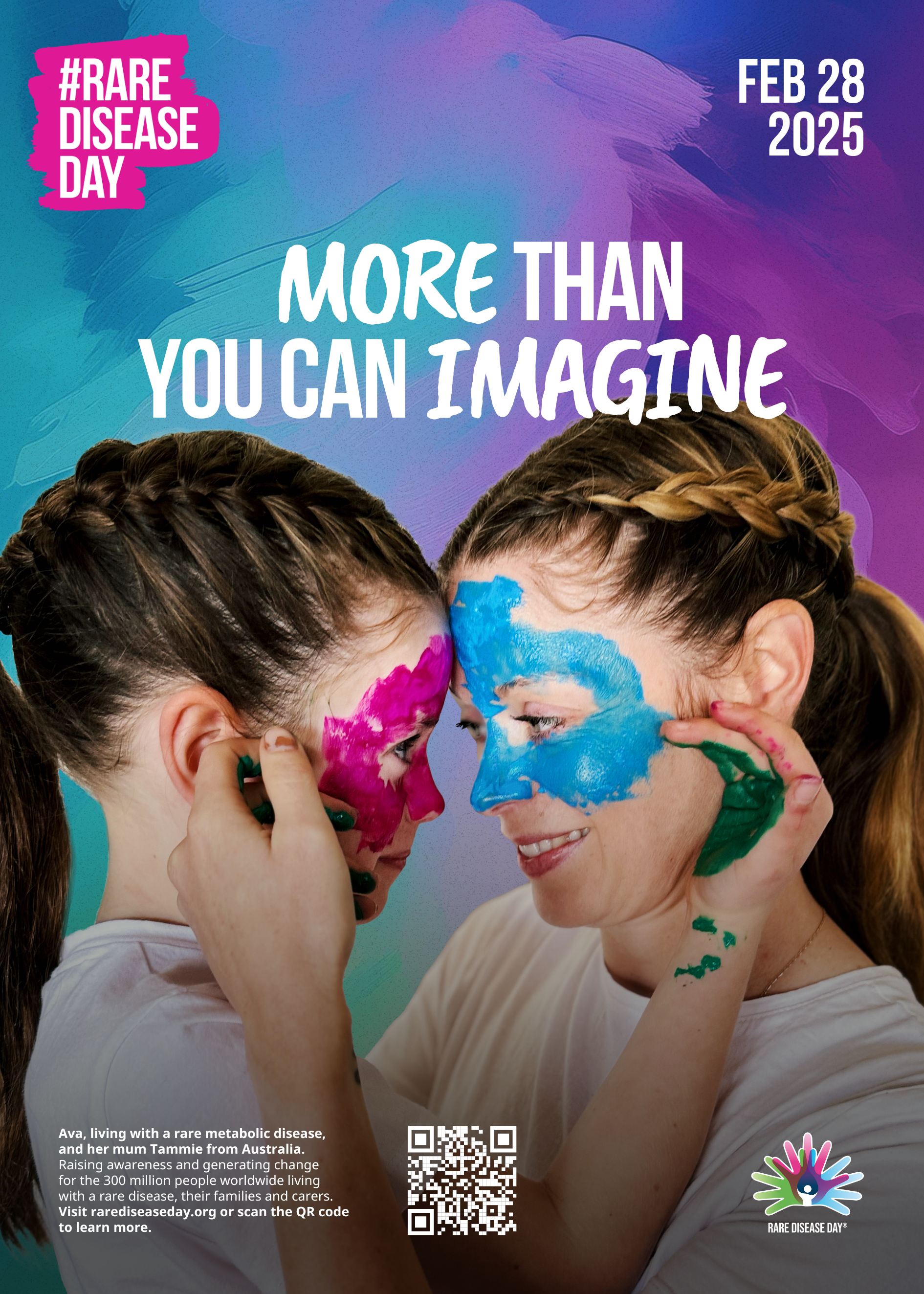
'Raising awareness and generating change for the 300 million people worldwide living with a rare disease, their families and carers.'

Manchester, UK https://www.rarediseaseday.org/event/light-up-for-rare-2/

Continued ... https://www.rarediseaseday.org/

Saturday, January 31, 2026

International Conference: the Concept of Attention - IEF

Filosofia na Agenda

international conference
the concept of attention

Theme and Objectives

Attention constitutes one of the most fundamental yet under-theorized dimensions of human experience. Despite its centrality to perception, cognition, action, and intersubjectivity, the philosophical investigation of attention as a concept in its own right remains surprisingly underdeveloped. This international conference represents the first major initiative of a four-year research program (2025-2029) dedicated to establishing the philosophy of attention as a major field of contemporary philosophical inquiry.

The philosophical engagement with attention has deep historical roots. Already in ancient Greek thought, we find attention implicitly at stake in the Socratic contrast between an 'examined' and an 'unexamined' life and in the dialectical reform of ordinary reason pursued throughout Plato's dialogues. Medieval philosophy anticipates later developments through its emphasis on representation and intentionality (intentio), particularly in the works of Augustin, Aquinas and Duns Scotus. Yet it is only with Descartes's Meditations that attention receives explicit philosophical treatment, emerging as the crucial mediating link between radical doubt and epistemic certainty. This Cartesian innovation opens a rich trajectory of reflection, pursued by thinkers as diverse as Malebranche, Berkeley, Locke, and Wolff.

The scope of philosophical inquiry into attention expands dramatically from the late 18th century onwards. No longer confined to epistemological questions, attention becomes central to investigating the fundamental structures of subjectivity itself. French spiritualism, phenomenology, and philosophies of existence explore how attention relates to apperception, sensation, emotion, and volition—a trajectory that runs from Maine de Biran and Bergson through the phenomenological movement, encompassing figures from Paul Ricoeur to Michel Henry. Meanwhile, William James's psychological and philosophical investigations, along with later thinkers like Merleau-Ponty, Simone Weil, and Iris Murdoch, demonstrate attention's significance across multiple philosophical domains.

Indeed, contemporary philosophy recognizes attention as fundamental to a remarkable range of inquiries. In ethics, attention emerges as an essential vehicle for exercising personal and collective virtues. Aesthetics invokes attention in debates about the nature of beauty and our engagement with works of art—their creation, appreciation, and critique. Social and political philosophy identifies attention as a central component of the modern media landscape, where it functions as a valuable and increasingly contested economic resource. Environmental philosophy calls upon attention to help conceptualize our evolving and often precarious relationship with the natural world. Across these diverse contexts, attention appears as a fundamental human capacity whose nature and quality largely determine the kinds of bonds we can establish with each other and our surrounding world.

This conference seeks to bring these rich historical engagements into systematic dialogue with contemporary philosophy. We welcome contributions from all philosophical traditions and approaches, including but not limited to: the reflexive tradition, hermeneutics, phenomenology, empiricist and analytic philosophy, philosophy of mind, cognitive science, pragmatism, and non-Western philosophical traditions. We aim to explore how different philosophical frameworks have conceptualized attention's structure, dynamics, and normative dimensions, and how these varied perspectives can illuminate both historical debates and current research.

Full details: international conference: the concept of attention

Image: https://www.wikiart.org/en/theo-van-doesburg/heroic-movement-1916

Saturday, January 24, 2026

Affordances


Affordance

An affordance is a perceptual pattern with survival significance. Affordances are relational, rather than objective or subjective properties. As Gibson, who coined the term, observes, 'An important fact about the affordances of the environment is that they are in a sense objective, real, and physical, unlike values and meanings, which are often supposed to be subjective, phenomenal and mental. But, actually, an affordance is neither an objective property nor a subjective property; or it is both if you like. An affordance cuts across the dichotomy of subjective-objective and helps us to understand its inadequacy' (Gibson 1979, 129). 
[Proust, Glossary, p.309.]


INDIVIDUAL
|
 INTERPERSONAL    :     SCIENCES               
HUMANISTIC --------------------------------------  MECHANISTIC      
SOCIOLOGY  :   POLITICAL 
|
GROUP

subjective

objective


Re. 'Survival significance' ...

Does this make affordances relevant in clinical education, and education more generally?

What of assisted dying in theory, policy, law and practice?

Are there any implications for the models employed by artificial intelligence - LLMs, neurosymbolic reasoning / AI (wave x)?

Source: Joëlle Proust (2013). The Philosophy of Metacognition: Mental Agency and Self-Awareness.  Oxford: Oxford University Press, Oxford. ISBN: 978-0-19-960216-2

Précis of The Philosophy of Metacognition:
https://joelleproust.org/wp-content/uploads/2012/09/pdf15.pdf 


See also: 'subject' : 'object' : 'affordance' : 'interface'

Friday, November 28, 2025

The Silent Pandemic? The Global Rise of Early-Onset Colorectal Cancer - via HIFA

Last year, a team at The Christie NHS Foundation Trust in Manchester, UK published a real-world analysis of 203 patients with early-onset colorectal cancer (eoCRC). The study showed a dramatic surge in cases over a short period, with over half of patients presenting with metastatic disease, predominantly left-sided tumours, and a median symptom duration of just 3 months before diagnosis. The authors warned that eoCRC could represent an "evolving pandemic." 


See - http://doi.org/10.1093/oncolo/oyae239

Since then, incidence continues to rise across all continents, with similar patterns emerging in multiple national and international datasets.

Why This Matters for the HIFA community
  • eoCRC is rising rapidly among people in their 20s, 30s, and early 40s.
  • Most cases are sporadic, suggesting major gaps in understanding modifiable and early-life risk factors.
  • Awareness among young adults and clinicians remains limited, contributing to delayed presentation.
  • Meanwhile, short-form social media (e.g. TikTok reels) and AI-driven content are now the dominant information sources for young people - creating both opportunities and risks for public health.
Introducing Our Upcoming Initiative

We, the Special Interest Group in Digital Health & AI at WHO/Europe Youth4Health network, are launching a global project to develop evidence-based communication guidance for raising eoCRC prevention and awareness among young adults. The project will:
  • Convene clinical specialists, youth advocates, communication scientists, social-media creators, and digital-health experts.
  • Identify which prevention and awareness messages should be prioritised for youth.
  • Define how these messages can be adapted effectively for short-form platforms such as TikTok and Instagram Reels.
  • Examine how generative AI can support safe, accurate, and engaging content creation.
  • Co-design prototype posts to illustrate how the consensus messages can be translated into youth-appropriate communication
  • Our aim is to bridge the gap between emerging science, behavioural insights, and contemporary digital communication channels.
Why We're Sharing This Here

As we shape this work, we're keen to learn from the HIFA community:
  • What approaches have you seen succeed in raising awareness of cancer symptoms among younger populations?
  • Are there youth-driven or co-designed campaigns that we should look to as models?
  • What are the risks you foresee when using short-form social media or AI tools for public-health communication?
  • What considerations are especially important in LMIC contexts?
  • How can we strike the right balance between urgency and fear-avoidance when communicating about cancer to young adults?
eoCRC incidence is increasing rapidly and globally. Communication strategies - particularly those targeting young people - have not kept pace with this trend. We would greatly value your insight and experience as we develop this work.

HIFA profile: Kathleen Guan is a multidisciplinary researcher passionate about all things digital behavioral health and (global) community engagement. Her PhD research focuses on involving young people in the co-design of personalized AI and emerging technologies, including adaptive mobile apps, LLMs, neurotechnology, and social media reels. By developing novel participatory approaches with a focus on preventative and precision health, Kathleen aims to inform how digital tools can meaningfully enhance everyday life and help reduce mental health challenges alongside chronic disease risks. To achieve this, she prioritizes community-based implementation by working closely with stakeholders across healthcare, engineering, policy, industry, education, and the arts.

Kathleen previously studied human rights and developmental neuroscience (BSFS, Georgetown; MRes, UCL) and has experience in public health and digital innovation (with WHO, Johns Hopkins, Yale, Qatar Computing Research Institute, various early-stage digital health start-ups) as a research collaborator and advisor. She chairs the Special Interest Group in Digital Health & AI within WHO Europe's Youth4Health Network. Kathleen has resided in 7 countries and worked in diverse settings across Asia, North America, and Europe, fostering her deep commitment to global health equity. She is always open to collaboration for social impact and can be found at https://www.linkedin.com/in/kathleenwguan/.

Wednesday, November 26, 2025

NW England: NIHR Health & Care Professional (HCP) Internship Programme 2026


Dear CHAIN member,

We would like to draw your attention to the following opportunity. Please pass on as appropriate. Thank you.

NIHR Health & Care Professional (HCP) Internship Programme 2026

Are you a Nurse, Midwife, Allied Health Professional, Pharmacist, Healthcare Scientist or working in Social Care, Social Work, looking to embark on a practitioner research career and make a difference through undertaking high quality research?


Do you have the drive and ambition to be a future research leader?

NHS R&D North West is pleased to announce that alongside its regional partners from NHS Trusts, Professional Networks and HEIs it will be delivering the NIHR Health and Care Professional Internship Programme across the North West Region of England in 2026.

There are 23 places available on this highly prestigious 12-month programme providing predoctoral tailored and bespoke learning and development to the full range of health and care professions (not including doctors and dentists) across the full range of research related career aspirations i.e. from a desire to increase research awareness within clinical practice up to and including providing individuals with a strong foundation on which to build a research related career.

The internship provides a funded opportunity for early career health and care researchers with dedicated time away from their substantive role to engage in research-based activities.

Closing date for online applications, 5pm 19th December 2025.

For more details please see:
https://research.northwest.nhs.uk/our-work/nihr-health-care-professional-hcp-internship-programme/

Regards,

Irina Johnston

CHAIN Administrative Assistant

If you wish to publicise information on the CHAIN Network please email your request to: 
enquiries AT chain-network.org.uk

CHAIN - Contact, Help, Advice and Information Network – is an online international network for people working in health and social care. For more information on CHAIN and joining the network please visit website: www.chain-network.org.uk

Follow CHAIN on X: @CHAIN_Network ; Connect with CHAIN on LinkedIn

Saturday, November 15, 2025

Subjective-Objective: Thinking of Holistic Cake and Eating it

'Our natural awareness of our own activities is holistic. We experience ourselves as embodied beings, complete organisms, directly perceiving physical objects, making choices, engaging in conversation with other people. The attempt to split the human being into a combination of immaterial self and physical body makes a coherent account of these processes impossible. As Heidegger says, “The ‘scandal of philosophy’ is not that this proof has yet to be given, but that such proofs are expected and attempted again and again.”35 Given the Cartesian conception of the “real world”, organisms are “really” mechanisms, while “choices” and “actions” have no place in a world where there are only events, subject to the laws of mechanistic cause and effect. The whole person becomes a metaphysical oddity, straddling two incompatible metaphysical realms.

A theoretical framework that renders the previously straightforward inherently problematic is by no means an unequivocal advance. Materialist authors have attempted to “solve” this problem by denying the reality of the subjective side of the Cartesian picture, replacing his dualism with radical metaphysical reductionism.36 Such authors insist that the “objective” world (still understood as something devoid of phenomenal properties, containing only causes and effects as understood in reductionist science) is all there really is. On this view, we do not have to bridge the gap generated by Descartes, between the subjective and the objective features of human life, because the objective features are the only ones that exist.' p.20.

individual
|
INTERPERSONAL : SCIENCES
humanistic -------------------------------------------  mechanistic
SOCIOLOGY : POLITICAL
|
group-population

My Mind
Subjective

My Body
Objective


Mitchell, D., Loughlin, M. (2023) The philosophy of person-centred healthcare, Cambridge: Cambridge Scholars Publishing. https://cambridgescholars.com/product/978-1-5275-9058-8/


Previously: 'Descartes' : 'mind' : 'body'

Thursday, September 11, 2025

New cit.? "Toward a Roadmap for Addressing Today's Health Dilemma - The 101-Statement Consensus Report"

News - this morning brought provisional acceptance of a paper, and hence a potential new citation. I greatly appreciate being involved with this project. So, fingers-crossed even at this late stage ...

Title: Toward a Roadmap for Addressing Today's Health Dilemma -The 101-Statement Consensus Report 
Submitted By: Katharina C. Wirnitzer
Authors: Katharina C. Wirnitzer, Mohamad Motevalli, Derrick Tanous, Clemens Drenowatz, Maximilian Moser, Holger Cramer, Thomas Rosemann, Karl-Heinz Wagner, Andreas Michalsen, Beat Knechtle, Zlatko Fras, Merel Ritskes-Hoitinga, Adilson Marques, Nataša Fidler Mis, Fatima Cody Stanford, Christian Schubert, Nandu Goswami, Claus - Leitzmann, Per Morten Fredriksen, Gerhard Ruedl, Doris Wilflingseder, Rodrigo Antunes Lima, Christian S. Kessler, Michael Jeitler, Naim Akhtar Khan, Hassan Joulaei, Maryam Fatemi, Andrew Knight, Karl W. Kratky, Kara K Palmer, Bernd Haditsch, Bostjan Jakse, Walter Kofler, Tomas Pfeiffer, Kathya Lorena Cordova-Pozo, Patrizia Tortella, Simon Straub, Heidi Lynch, Manuel Schätzer, Anupama Krishnan, Shahnaz Fathima, Lukas Gatterer, Fabian Kriwan, Mittal Abhishek, Hemant Nandgaonkar, Shalaka Nandgaonkar, Abiola O. Adedara, Josep Maria Haro, Corina Gericke, Gaby Neumann, Aysha Akhtar, Amir Rashidlamir, Madan Thangavelu, Ngoumou Gonza, Éva Perpék, Michael Klaper, Bhaswati Bhattacharya, Werner Kirschner, Kathelijne Bessems, Peter Jones, Gregory E Peoples, Raul Bescos, Christina Duftner and Georg Johannes Seifert

Journal: Frontiers in Nutrition, section Food Policy and Economics

Research Topic: Sustainable Approaches to Public Health Via Food Policy Actions

Accepted on: 10 Sept 2025
I will (hopefully) be able to add more details (abstract - - formatted ...) as they become available. 

Thursday, August 07, 2025

'Finding the Signal through the Noise' - WHO EARS

It is deprived communities who desperately want to do their best for family, but struggle to have access to and make sense of many sources of information. News and information not just through 'traditional' channels, but social media. Trying to be objective, non-judgemental it can still be surprising how TVs and smartphones are the key personal and furniture items.

Outside of London, Liverpool has a low uptake of immunisation against measles:

Liverpool, now has cases and a child's death from measles:

https://liverpool.gov.uk/council/public-health-liverpool/measles-on-the-increase/

https://www.liverpoolecho.co.uk/news/liverpool-news/alder-heys-plea-after-child-32050189

Located in-between, I often visit Manchester and Liverpool. I wonder now if I should visit Liverpool less. My daughter and her partner expecting their second child have a decision to make next year.

I noticed on X a reference to 'social listening'. This was missed while drafting a paper on COVID, technology, social media and information disorder. More positively, work on 'infodemic' was captured and posted. 

Blowing the dust of another draft, I will reassess this stream of work and seek specific literature, especially contributions to improved outcomes - public (mental) health.


McGowan B. S. (2022). World Health Organization's Early AI-supported Response with Social Listening Platform. Journal of the Medical Library Association : JMLA, 110(2), 273–275. https://doi.org/10.5195/jmla.2022.1398

See also:

Fryer, Jon. “Information Literacies – Learning, to Thrive in a Digital Age” IRMS Bulletin 230 (2022): 16-21.

Jones, P. (1996) Humans, Information, and Science, Journal of Advanced Nursing, 24(3),591-598.

Tuesday, July 01, 2025

Exhibition: V&A Design and Disability - to 15th Feb 2026

There is a lot of informative, creative and surprising insights through this V&A exhibition website, and related (well executed web designs), by Conor Foran for example. 


Individual
|
      INTERPERSONAL    :     SCIENCES               
HUMANISTIC  --------------------------------------  MECHANISTIC      
 SOCIOLOGY  :    POLITICAL 
|

I will look to post again at the year's end and try to visit the V&A in September, or November.

Image: https://www.vam.ac.uk/exhibitions/design-and-disability

Ack. and thanks to Conor Foran & V&A.

See also: 'clinical' in -

My source:
Emily Cronin. 'You have to be your own inspiration', Life&Arts, FTWeekend, 7-8 June 2025, p.4.

Tuesday, May 27, 2025

‘Nursing Narratives: Racism and the Pandemic’

This film was made as part of ‘Nursing Narratives: Racism and the Pandemic’. A research project funded by the Arts and Humanities Research Council under the UKRI Covid-19 Urgent Response Call.


'Exposed is a groundbreaking documentary that combines the stories of 19 Black, brown and migrant nurses and midwives to speak about their powerful experiences of racism before, during and after the pandemic. If you want to organise a screening of the film please send us the details of date, time and location so we can let people know about opportunities for people to watch, share and discuss the issues that have come out of the film, as well as what action can be taken.'  
https://www.shu.ac.uk/centre-culture-media-society/projects/nursing-narratives

RCN North West Region - North West Multicultural Group


What does 'exposed' mean . . ?

individual
|
INTERPERSONAL : SCIENCES
humanistic ------------------------------- mechanistic
SOCIOLOGY : POLITICAL
|
group
exposed

exposed

Exposed

EXPOSED

Saturday, March 29, 2025

Disability and the rise of 'mental health', or something else?


individual
|
INTERPERSONAL : SCIENCES
humanistic ------------------------------- mechanistic
SOCIOLOGY : POLITICAL
|
group
mental DISABILITY

physical DISABILITY

social DISABILITY
The Times 28 March 2025, p.1.

POLITICAL disability^


Chris Smyth, One in four Britons claim they have a disability, The Times, 28 March 2025, p.1.

https://www.thetimes.com/profile/chris-smyth

See also - (not reliable however):

Google Ngrams: mental illness, mental health, well being, mindfulness, 1800-2022

https://books.google.com/ngrams/graph?content=mental+illness,+mental+health,+well+being,+mindfulness&year_start=1800&year_end=2022&corpus=en&smoothing=3

^The Government are deploying AI to figure out:

  • how to raise an army, air force, navy, space and cyber force?
  • how to fight a war?
  • how to sustain a workforce, to support an ageing population.
An improbable response:

Robots, drones, tech-enhanced machines with AI.

Friday, February 28, 2025

RARE DISEASE DAY FEB 28 2025

Ava and Tammie

Individual
|
      INTERPERSONAL    :     SCIENCES               
HUMANISTIC  --------------------------------------  MECHANISTIC      
 SOCIOLOGY  :    POLITICAL 
|
Group

IMAGINATION
IDENTITY
EXPERIENCE
EXPERTISE


ACTION
RESEARCH -
qualitative - quantitative
ACCESSIBILITY


SUPPORT
AWARENESS
COMPANIONSHIP
SOCIAL NETWORKS
FAMILIES


FUNDING
ACTIVISM
COOPERATION
COLLABORATION
COORDINATION


Previously: 'Rare'