Hodges' Model: Welcome to the QUAD: fear

Hodges' model is a conceptual framework to support reflection and critical thinking. Situated, the model can help integrate all disciplines (academic and professional). Amid news items, are posts that illustrate the scope and application of the model. A bibliography and A4 template are provided in the sidebar. Welcome to the QUAD ...

Showing posts with label fear. Show all posts

Monday, July 06, 2026

Ebola and Mental Health, CDC Response to Ebola in West Africa in 2014-2015: Weds 15 July

Dear Peter, we are thrilled to invite you to our upcoming Webinar: 

Ebola and Mental Health, CDC Response to Ebola in West Africa in 2014-2015 on Wednesday, 15 July at 13:00-14:00 (CEST) 

Register here 

What can the Ebola response in West Africa teach us about mental health, trust, and outbreak preparedness today? We warmly invite you to our upcoming webinar “Ebola and Mental Health: Lessons from the CDC Response in West Africa, 2014–2015” on July 15, 13:00–14:00 CEST. 

Drawing on the 2014–2015 Ebola outbreak in West Africa and its rapid escalation, this webinar will explore why mental health and psychosocial support must be considered an essential part of outbreak response. The session will connect past lessons to current challenges, including the ongoing Ebola outbreak caused by Bundibugyo virus in the Democratic Republic of the Congo and Uganda. We are delighted to welcome Dr. Anna Grigoryan as our keynote speaker. Based on her personal experience and deployment to Sierra Leone in 2015 as part of the CDC Ebola Response Mission, Dr. Grigoryan will share reflections on key response activities, communication challenges, and the intersection of Ebola response and mental health. The webinar will highlight why coordinated, international, and rapidly scaled-up responses are essential to reduce illness, deaths, fear, and psychosocial distress during outbreaks. 

Agenda 
13:00–13:30 Keynote by Dr. Anna Grigoryan 
13:30–13:50 Q&A session 
13:50–14:00 Wrap-up 

About the speaker 

Dr. Anna Grigoryan is a physician–scientist with over 20 years of international experience leading complex public health projects, fostering innovation, and building strategic partnerships. She spearheaded the WHO–CDC Collaborating Center for Global Public Health Informatics, serving as its first Program Manager. During her tenure at the U.S. Centers for Disease Control and Prevention (CDC), she contributed directly to emergency responses to major crises, including the Haiti and China earthquakes, the avian influenza outbreak, and the Fukushima nuclear accident.

In 2015, Dr. Grigoryan supported the Sierra Leone Ministry of Health during the Ebola epidemic as part of the CDC Ebola Response Mission. In her more recent role at the UN/IAEA, she managed a portfolio of projects focused on laboratory strengthening, cancer control, and emergency preparedness, supporting Member States across Africa. She has also mentored emerging leaders and promoted cultures of accountability and inclusion during periods of organizational transition.This webinar is intended for public health and mental health professionals, as well as everyone interested in Ebola response, outbreak control, pandemic preparedness, and mental health and psychosocial support.

Please note: 
The webinar will be recorded. If you do not wish to appear in the recording, you are welcome to keep your camera turned off.

We look forward to your participation and to an engaging discussion on the role of mental health in outbreak response.

Please register even if you cannot attend and we will let you know when the video of the webinar is available. 

For any questions, feel free to contact the Hub Management Team at info AT globalhealthhub.de. 

Warm regards,
Katrin 
------
Katrin Würfel, Global Health Hub Germany
Previously: 'ebola' : 'Africa' : 'epidemic'

Sunday, February 08, 2026

Intelligence - mechanistically speaking^

INDIVIDUAL
|
    INTERPERSONAL    :     SCIENCES               
HUMANISTIC --------------------------------------  MECHANISTIC      
SOCIOLOGY  :   POLITICAL 
|
GROUP
Mental
Intelligence


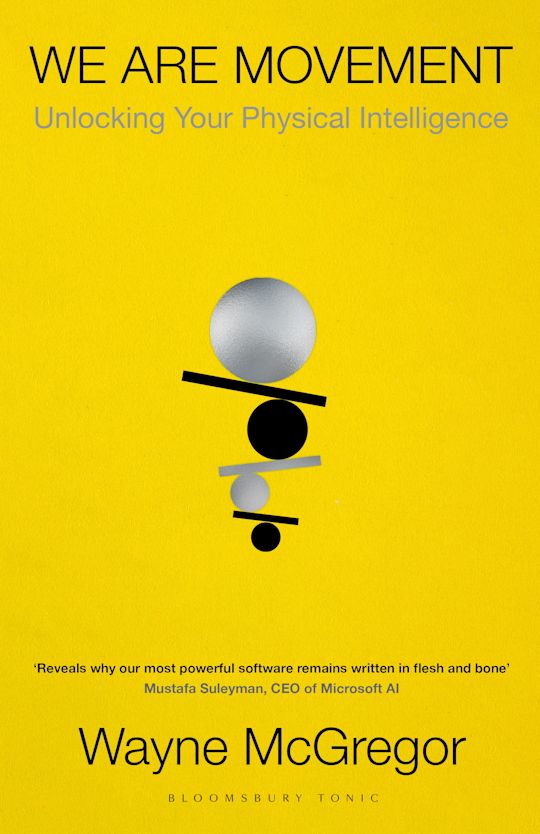
We Are Movement - Unlocking Your
Physical Intelligence

... ever increasing

'artificial' intelligence
 
here . . .?

"We?

 Yes... We! 

   We are  
a                       MOVEMENT!"


Wayne McGregor (2026) We are Movement: Unlocking Your Physical Intelligence. London: Bloomsbury. (Book cover) https://www.bloomsbury.com/uk/we-are-movement-9781526629531/

My source: Nadia Beard, Our bodies, ourselves. Life&Arts, FTWeekend, 17-18 January, 2026. p.9. 

Previously: 'movement' : 'dance' : 'intelligence' : 'art' : 'body' : 'AI'

^. . . help me find (a) the notation? 

Wednesday, September 04, 2024

Laughter and Medicine Conference

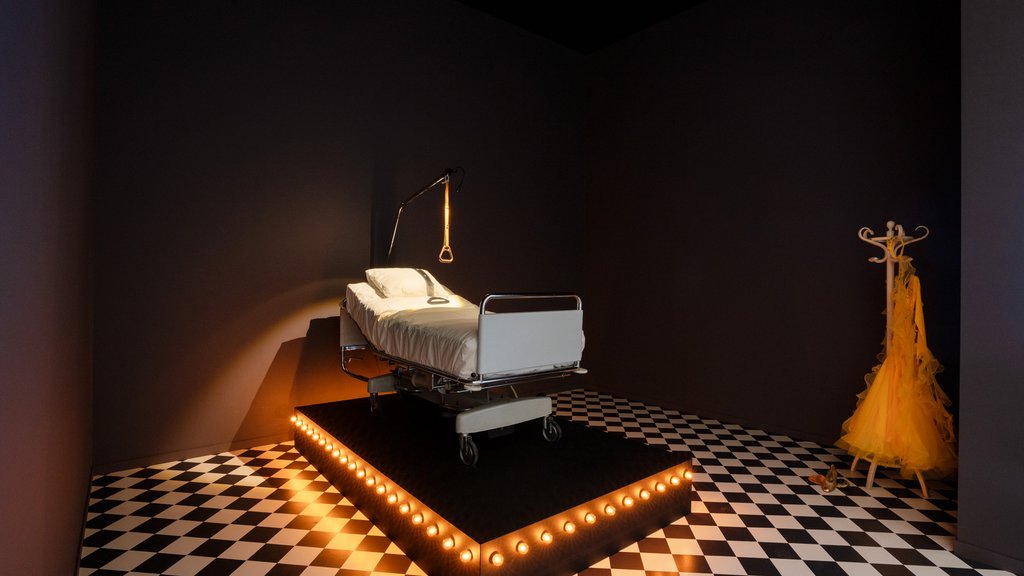
Manon, Laughing Gas, 2019, installation, Kunsthaus Zürich
photographer: Franca Candrian, 2022.

British Academy/Wellcome Trust Conferences bring together scholars and specialists from around the world to explore themes related to health and wellbeing.

'Connecting knowledge across the disciplines, this conference will put practicing doctors in direct dialogue with researchers in the humanities – especially scholars of literature, cinema and cultural history. Together, they will seek to understand the social, diagnostic, therapeutic and physiological implications of laughter, inside and outside the clinic. Laughter is not always the 'best medicine', nor is it linked only to comedy and enjoyment. 'Healing laughter' differs markedly from pathological laughter, hysterical laughter, forced or bitter laughter, laughter aimed at mitigating awkwardness in unsuccessful communication, laughter intended to deceive, or laughter signifying fear, discomfort or aggression. Irony and other double-coded signifiers that abound in comic and parodic representations of medical practitioners and their patients often reveal medicine’s paradoxical place in various cultural imaginaries and in individual and collective experience.

This conference will study the diverse forms of laughter occurring around medicine in particular eras and cultural environments alongside comparative analysis of patterns and problematics over the long history of Western medicine and its representations.'

         https://www.thebritishacademy.ac.uk/events/british-academy-conferences/laughter-and-medicine/

individual
|
INTERPERSONAL : SCIENCES
humanistic ------------------------------- mechanistic
SOCIOLOGY : POLITICAL
|
group

I don't find this funny!


 I laughed so much it hurt! 


"All the world's a stage"

Politics is a running joke - that's never funny.

The human epic of triumph and tragedy.

Previously (with overlap):

arts :: drama :: poetry :: literature :: narrative

Tuesday, December 06, 2022

BBC Reith Lectures 2022 - The Four Freedoms


 INDIVIDUAL
|

 INTERPERSONAL    :     SCIENCES               
HUMANISTIC --------------------------------------  MECHANISTIC      
SOCIOLOGY  :   POLITICAL 
|
GROUP

FEAR

WANT

WORSHIP


SPEECH


Are fear and worship interchangeable? 

Can I follow my faith / beliefs?

Many communities and groups live in fear.

Do the freedoms begin (and end!) with speech?

The ability to meet basic needs 'wants' - relies upon socioeconomic means; but basic needs are material in the first instance, through shelter, water, and food. All these depend upon security (locally, nationally, globally) as reflected in the Sustainable Development Goals (SDGs):

BBC Radio 4 The Reith Lectures


See also:
Jones P, Wirnitzer K. Hodges’ model: the Sustainable Development Goals and public health – universal health coverage demands a universal framework. BMJ Nutrition, Prevention & Health 2022;0:e000254. doi:10.1136/bmjnph-2021-000254

Monday, June 28, 2021

A State of Fear - Dangerous Minds

Books ...

individual
|
INTERPERSONAL : SCIENCES
humanistic ----------------------------------------------- mechanistic
SOCIOLOGY : POLITICAL
|

My source:

Ditum, S. (2021) An eye-opening journey into dangerous minds, Saturday Review, The Times, June 12, p.14.

Aaronovitch, DF. (2021) A covidiot's guide to paranoia, Saturday Review, The Times, June 12, p.15.

Images:

https://www.waterstones.com/book/dangerous-minds/dr-taj-nathan//9781529392913

https://blackwells.co.uk/bookshop/product/A-State-of-Fear-by-Laura-Dodsworth-author/9781780667201


Friday, March 05, 2021

gameChange VR therapy

individual
|
INTERPERSONAL : SCIENCES
humanistic ----------------------------------------------- mechanistic
SOCIOLOGY : POLITICAL
|
group


"The issue is an urgent one: all too often, individuals with psychosis find day-to-day life so anxiety-provoking that they simply withdraw. Everyday tasks — getting on a bus, doing the shopping, speaking to other people — become very challenging. Work and home life suffer. And mental and physical health deteriorate.

Psychological therapy can be very beneficial here. But it needs to be the right kind of therapy. What works best is active coaching in the situations that trouble people, helping patients move beyond their fears. However, this is difficult without a skilled therapist who has the time to get out and about with patients. And patients often find the idea frightening. The result is that a potentially powerful treatment is seldom actually delivered."


VIRTUAL REALITY


Source: Flyer from Salford - Early Intervention Team, Sept-Dec 2020 (Great team too!).

VR on archived site 1998-2015:

https://web.archive.org/web/20110903071731/http://www.p-jones.demon.co.uk/linksTwo.htm 

https://web.archive.org/web/20110727043926/http://www.p-jones.demon.co.uk/Introvrn.htm

Tuesday, January 15, 2019

"Four Colours Make a Forest" c/o Donna Ong

individual
|
INTERPERSONAL : SCIENCES
humanistic ----------------------------------------------- mechanistic
SOCIOLOGY : POLITICAL
|
group


http://thailandbiennale.org/en_US/donna-ong/
Donna Ong “Four Colours Make a Forest” UV Printed on Aluminium Plates, Wires, Concrete


http://thailandbiennale.org/en_US/donna-ong/


"Singaporean artist Donna Ong sources tropical imagery from 18th-century lithographs for her work, Four Colours Make a Forest, which looks at interpretations of the tropics as alluring paradise or places of threat. She will present two perceptions of jungle on a billboard: on one side a collaged layout of tropical landscape prints (a colonial view), on the other a digital camouflage pattern (a militarized view).".p.24.

My source: Kiggell, R. Hot Printing, Preview, Printmaking Today, Winter 2018, 27,4, p.24.

Tuesday, December 18, 2018

c/o BBC Radio 4: Inherited Fear

individual
|
INTERPERSONAL : SCIENCES
humanistic ----------------------------------------------- mechanistic
SOCIOLOGY : POLITICAL
|
group

 
Inherited Fear

"Scared - but not named."


 The ghost of a ghost or
the memory of a

Biology
Germ cells
Neuro-epigenetics
PAG or periaqueductal gray -
the primary control centre for pain modulation

Know your surroundings
Facial recognition

shadow


Transmission of trauma across generations

Who is Who


All around the World
War, Perpetual Conflict
Ethnic cleansing
Refugees
Climate migrants ...

The Past
The Present
The Future


My source: BBC Radio 4: Inherited Fear

Friday, December 14, 2018

Study: Measuring Different Types of Relationship Styles in Psychosis

Division of Psychology and Mental Health
2nd Floor, Zochonis Building
The University of Manchester
Brunswick Street
Manchester
M13 9PL

Participant Information Sheet

Measuring Different Types of Relationship Styles in Psychosis

You are being invited to take part in a research study developing a questionnaire to measure different types of relationship styles in psychosis. Before you decide whether or not you would like to take part in the study, please read the following information carefully so that you can understand what taking part would involve for you. Then click the button at the bottom of the page to continue. If you have any questions or queries about taking part in the study, please contact the principal investigator, Catherine Pollard (catherine.pollard AT postgrad.manchester.ac.uk). You do not have to make a decision straight away, so if you have any doubts or feel unsure please take some time to think it over.

What is the study about?

Our early relationships have been linked to the development of psychosis, a mental health problem that means people interpret things differently from those around them. Psychosis involves experiences such as hallucinations, where a person hears, sees and in some cases feels, smells or tastes things that are not there; or delusions, where a person has strong beliefs that are not shared by others.

When people are young, they develop a sense of how they relate to themselves, others and the world. This includes how others relate to them. Some people grow up seeing their parent/guardian as fearful. Research suggests that when these young people grow up they are more likely to report hearing voices and feel paranoid. However, it is not clear how this happens.

At the moment, it is difficult to understand why these people are more likely to hear voices and feel paranoid. Therefore, more research needs to be done. We aim to develop a questionnaire that measures whether people have grown up feeling scared of their parent/guardian so that we can use this in research to help us understand the link between feeling fearful in early relationships and the development of psychosis.

This study will not directly offer you any benefit, but the study addresses a gap in psychosis research. Our work will help to understand the development of unusual experiences and help us develop more treatments for distressing experiences.

Please CONTINUE READING...


individual
|
INTERPERSONAL : SCIENCES
humanistic ----------------------------------------------- mechanistic
SOCIOLOGY : POLITICAL
|
group
SELF
beliefs
early relationships 
lived experiences
sensory experiences -
hear, see, feel, smell, taste ...
hallucinations, delusions
psychosis, distress, trauma

Confident with


WORLD
Involved in major accident
antipsychotic medication
Diagnosis 
Evidence-base
Measures

English language

OTHERS
social environment
parent(s), guardian, significant others
fear, traumatic loss of other
 Therapeutic input: CBT, Psychologist


WORLD

Treatment in a Mental Health
Unit / Hospital
Input from Community Mental Health Team or Early Intervention Service

subjective ------------------------------------------------------------------------------------- OBJECTIVE
qualitative -------------------------------------------------------------- QUANTITATIVE


My source:
@HearingVoicesUK & @RSInPsychosis
https://twitter.com/HearingVoicesUK/status/1073647206685663232

Sunday, July 23, 2017

"Get in that corner! Now!"

"Which one?"

"Don't you be so hard-faced with me.
Go!"

individual
|
INTERPERSONAL : SCIENCES
humanistic --------------------------------------- mechanistic
SOCIOLOGY : POLITICAL
|
group
anxiety                                fear

guilt                                  hate
here - out of sight    out of reach - over here

this corner: out of earshot         that corner
shame                              ridicule

embarassment                     alienation
bullying - abuse                     punishment

injustice                           deportation

Thursday, June 22, 2017

There's finding home and then there's Finding Home...

individual
|
INTERPERSONAL : SCIENCES
humanistic ----------------------------------------- mechanistic
SOCIOLOGY : POLITICAL
|
group - population

Home
is
where
the
heart
is

Finding home

HOME


powerless power powerful


My source: Bloomberg

Saturday, June 17, 2017

The Compartmentalisation of Grief and Tragedy: RIP

INDIVIDUAL
|
INTERPERSONAL : SCIENCES
humanistic ----------------------------------------- mechanistic
SOCIOLOGY : POLITICAL
|
POPULATION


a person

A LOVED ONE

(timeframe: grief)

(timeframe: Why)

(timeframe: answers)
to questions that should not need be asked 
(again and again....)

'problem'

Fear

uncertainty

advice

flight OR fight

values

ethics

morality

PSYCHO-

a house
a house
.
.
.
a house
a house
Fire a house fighting
.
.
Fire a house fighting
||||||||||||||||||

strength of towers
cladding - facade

material science

introducing: dead space

"probably"
'problem'

property: transparency vs opaque

(time-frame: risk, evidence)

-PHYSICAL
SOCIO-

a HOME

a group of people

family friends

social housing

a community

the most terrible of good-byes

Towers of Strength

SPIRITUAL

(timeframe: social justice)

D.ANGER

'problem'

introducing: a 'new' home

-POLITICAL

property

material evidence

facade - cladding

cost
££ value $$

Health & Safety Law

Building regulations

(timeframe: Public Inquiry)
(timeframe: ACTION)

GOV.UK

'problem'

'political correctness'?

local-regional-national

introducing: another Public Inquiry


Some reflections on the tragic event at Grenfell Tower, London, UK.

Personal note: In posting this, of course, I do not wish to trivialise the enormity of what has happened, the point is that even in disasters - across the world, tools are needed to reflect, think critically, to support learning in order to ultimately assure a safer future for all...


Friday, April 14, 2017

Saturday, January 14, 2017

Framing a Life Animated


individual
|
INTERPERSONAL : SCIENCES
humanistic -------------------------------------------  mechanistic
SOCIOLOGY : POLITICAL
|
group-population
(mental) Life
Animated


communication  meaning

singing  dialogue

family friends relationships


documentary

activism

awareness


My source: Whitworth, D. (2016)  The autistic boy whose life was unlocked by Disney, Arts, The Times, 13 December. p.8-9.

Friday, June 10, 2016

FROM: Worry TO: Funding & Policy (What lies in-between?)

individual
|
INTERPERSONAL : SCIENCES
humanistic ---------------------------------------  mechanistic
SOCIOLOGY : POLITICAL
|
group
real WORRY
BBC Inside Science
Fighting Antimicrobial Resistance


BBC In Our Time
Penicillin

POLICY - FUNDING

Acknowledgement:
BBC Radio 4