Hodges' Model: Welcome to the QUAD: medication

Hodges' model is a conceptual framework to support reflection and critical thinking. Situated, the model can help integrate all disciplines (academic and professional). Amid news items, are posts that illustrate the scope and application of the model. A bibliography and A4 template are provided in the sidebar. Welcome to the QUAD ...

Showing posts with label medication. Show all posts

Sunday, August 17, 2025

TDS - 'Tariff Derangement Syndrome' ...

... is that all you have to worry about?


Individual
|
      INTERPERSONAL    :     SCIENCES               
HUMANISTIC  --------------------------------------  MECHANISTIC      
 SOCIOLOGY  :    POLITICAL 
|


Vasan S, Padhy RK. Tardive Dyskinesia. [Updated 2023 Apr 24]. In: StatPearls [Internet]. Treasure Island (FL): StatPearls Publishing; 2025 Jan-. Available from: https://www.ncbi.nlm.nih.gov/books/NBK448207/

Morrison PD, Jauhar S, Young AH. The mechanism of action of clozapine. Journal of Psychopharmacology. 2025;39(4):297-300. doi:10.1177/02698811251319458

Taylor D, Watanabe K. Tardive dyskinesia: understanding current challenges in diagnosis and treatment. Therapeutic Advances in Psychopharmacology. 2023;13. doi:10.1177/20451253221144347

'syndrome'?

Jablonski S,  Syndrome--a changing concept. Bulletin of the Medical Library Association. 1992;80(4), 323–327.

Calvo F, Karras BT, Phillips R, Kimball AM, Wolf F. Diagnoses, syndromes, and diseases: a knowledge representation problem. AMIA Annu Symp Proc. 2003;2003:802. PMID: 14728307; PMCID: PMC1480257.

Previously: 'psychosis' : 'mental illness'

My prompt: Claire Jones. Trump picks Powell critic and rates ally for Fed board. FTWeekend. 9-10 August 2025, p.6.

Monday, August 11, 2025

'The Trip' - learning about Kay Parley RIP

Five prompts drew me to BBC Radio's 'The Trip':

  1. the ongoing tenor of 'discussion' on twitter;
  2. the ongoing history and future development and evolution of psychoactive, psychedelic medicines as treatments, running concurrently, or not with psychotherapy and psychosocial interventions (PSI);
  3. being mindful of keeping up-to-date;
  4. what is the temperature within critical psychiatry / mental heath / mental illness / well-being?
  5. and how does all this 'sit' within Hodges' model?

As a student registered mental heath nurse, we learned about the historical introduction of chlorpromazine and other drugs, the difference they made to 'care' and the side-effects.

Pharmacology is dynamic. Atypical antipsychotics are now available. But this series, as the title confirms is about psychedelics and history from 08:30.

The episode highlights the importance of how sessions are delivered. Key points, given the additional pressures (UK) upon intakes for student nurse places for learning disability and mental health, plus questions about the status of these courses within university-based nurse education. If not already aware, the episode concludes with the role of a mental health nurse who died in May. Have a listen about Kay Parley.

THE TRIP - BBC Radio

It would have been marvellous to meet, speak to Nurse Parley. The episode has it's objectives of course, but there are values here. We are all test pilots, researchers.

"The American Journal of Nursing February 1964:

No role, is so welcomed on our psychiatric unit, as that of sitting with a patient during LSD therapy. This indicates that the treatment has value." ...

"Kate Parley passed away in May, so our last words will be hers. Words she would say to her patients at Weyburn, all those years ago.

'You are off on a trip with no baggage, no destination and no compass. That's why I'm here. I can't go with you, but I can be your anchor.

Wherever you go, you'll always be able to see me. I'll be the nurse who sits beside your bed. Taking notes and playing your records.

You'll never lose touch with me. Seeing me, you'll know, you are really in hospital and that you'll be back to Earth about 4 o'clock. I will send you signals too, to encourage your explorations.

I will remind you of places you longed to revisit and events you hope to scan.'"

PARLEY, KAY. Supporting the Patient. AJN, American Journal of Nursing 64(2):p 80-82, February 1964. 

https://www.openurses.org/_files/ugd/52de8b_870deaa149e842d286e76131b1321285.pdf

https://andrewpenn.substack.com/p/in-memoriam-kay-parley-rpn-registered

Todd, Betsy MPH, RN. Supporting the Patient on LSD Day. AJN, American Journal of Nursing 121(6):p 42-44, June 2021. | DOI: 10.1097/01.NAJ.0000753656.16844.a9 

Tuesday, March 25, 2025

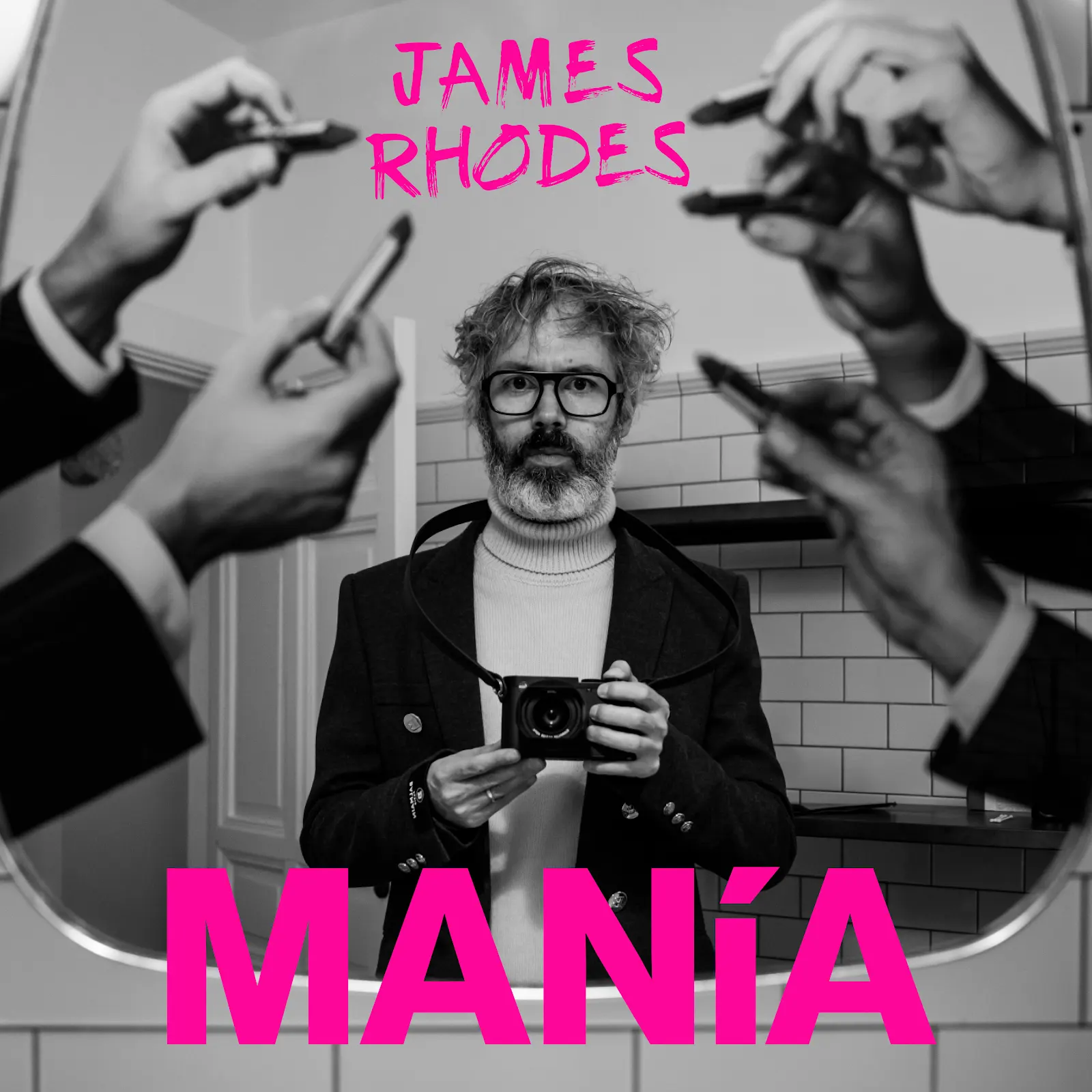
Trauma - MUSIC PRESCRIPTION - James Rhodes

 'By now we're all familiar with the idea of music as therapy. For James Rhodes, however, music can be equivalent - at times even preferable - to  medication in the management of mental health. "Obviously, I am in favour of medication when it is necessary to save lives," says the 49-year-old British-Spanish classical pianist, when I meet him at Peregrine's, an upmarket piano shop in Clerkenwell, central London. "I was on medication and it genuinely saved my life. What I'm not in favour of is medication as a kind of easy option instead of doing other things that will also have the same effect. And there's no question that music [can]." 
 Manía, Rhodes's new album, is driven by that philosophy. Traversing swaths of classical territory, from JS Bach to 20th-century Argentine composer Alberto Ginastera, it is an attempt to profile the therapeutic properties of music from all angles, "I've always loved this idea of prescribing pieces," says Rhodes. As someone who has struggled with his own mental health, he says he has selected works that "accompany me and my insomnia, my anxiety, my desperation and my fears in the middle of the night"'. p.13.


My source:
Nepilová, H. Music on prescription, Arts, Life&Arts, FTWeekend. 8-9 March 2025. p.13.


INDIVIDUAL
|
      INTERPERSONAL    :     SCIENCES               
HUMANISTIC  --------------------------------------  MECHANISTIC      
 SOCIOLOGY  :    POLITICAL 
|
GROUP
MANiA

DRUG
PRESCRIPTION

ARTS
PRESCRIPTION

...


SOCIAL
PRESCRIBING


Tuesday, January 21, 2025

A Voyage in Cosmic Health ... loneliness

Individual
|
     INTERPERSONAL    :     SCIENCES               
HUMANISTIC --------------------------------------  MECHANISTIC      
SOCIOLOGY  :   POLITICAL 
|
Group
[2] 'Most pressingly, Voyager 1 has severe memory loss It stopped speaking clearly on November 14. All they received at JPL was a carrier signal. This was described to me in many ways: flatlining, an interstellar dial tone, useless ones and zeros, gibberish, no data. Imagine your friend is on a long journey and sends you a detailed letter every day, then, one day, empty envelopes start arriving. What happened to your friend? How do you help?' p.21.
[1] 'VOYAGER 1 SUFFERS MANY AILMENTS OF AGE. It has arthritis. During its planetary encounters, the team excitedly swung the camera and other instruments this way and that; this squeezed the lubricant out of the bearings of its articulated platform. Only painstakingly slow movements could loosen its joints. It also has heart disease, as Todd Barber, its propulsion engineer, explained. The arteries that deliver its propellant, which keeps it perfectly pointed at Earth, are partially clogged. Barber calls himself a space plumber and wore a shirt with flying saucers on it as we spoke in the Voyager office. He had considered all the usual cardiological remedies. 
Diet: unfortunately, Voyager eats only the propellant hydrazine, total junk food. 
Exercise: they haven't thought of a way to fire the thrusters to clear the blockage. 
Medication: so they've relaxed its alignment a bit and fire its thrusters less often; in other words, Voyager is on beta blockers.' p.21.

The Sounds of Earth Record Cover - GPN-2000-001978


My source - with thanks - brilliant writing! 

Roeder O. TERMINATION SHOCK. Last Days of a Lonely Interstellar Spacecraft. FT Magazine, August 3/4 2024. pp.18-27. https://www.ft.com/content/0f2dce04-ec78-4aeb-808c-cff5b5135699

https://www.ft.com/content/90b6aaaa-b192-48d9-bd43-e6f41978ad1c

Tuesday, November 05, 2024

'What Kingdom' by Fine Gråbøl

client - person - individual - self - patient
|
INTERPERSONAL : SCIENCES
humanistic ------------------------------- mechanistic
SOCIOLOGY : POLITICAL
|
group
What Kingdom

'Gråbøl was lucky. Eventually she started seeing a new psychiatrist, who looked at that record "and was like, "Wow, you receive So much more medicine than all the other people who live there. Why is that?'" She didn't know. Gradually, though, she was able to come off the drugs; and two doctors decided that
she didn't, in fact, have borderline personality and bipolar disorders, removing the diagnoses that had shaped her sense of her self. In time, she left the unit and rebuilt her life.

She's no longer on medication today, but the ghosts of her past diagnoses haunt her. She wonders whether the conditions are merely in hibernation and she'll wake up one day and enter another depressive episode. She doesn't wish she'd never been diagnosed, but does feel that her doctors underestimated the effect those labels would have on her development.

At 17, she points out - the age she was diagnosed as bipolar - most teenagers don't yet know who they are. "You want to find a box or language to define yourself, so that you can close yourself in. And one way of getting that sense is getting into the psychiatric system." Since returning to "normal" life, she has also struggled with survivor's guilt: the feeling that while she made it out of the system, others did not.


'Above all, she wishes that the emphasis would shift away from the suffering individual and onto their broader context. We need to become better, as a society, at making room for people who aren't fully functional citizens. Gråbøl's narrator phrases it as a question: "Could we not imagine treatments that are instead externally directed involving the outside world gearing itself towards a wider and more comprehensive emotional spectrum?" Gråbøl's answer, though, is the same as my own: "I don't know."'

the system

citizens?


My source:
Leaf Arbuthnot, Interview. We need to make room for the mentally ill. Review, The Daily Telegraph, 21 September 2024, pp.8-9.

Image:
https://images3.penguinrandomhouse.com/cover/9781953861849

Thursday, November 24, 2022

H.B.

 H.B.

When HB levels are too low
And one's height is 6ft 2,
It only rises 4ft 6
Which makes me feel quite blue.

It's difficult to walk around,
To love and live and laugh.
One's capacity for life in fact
Is really cut in half.

The trouble is one has to wait
Until it's really low,
Until one's feeling really ill.
It's how it is you know.

I tend to need a lot, you see,
Transfusion's what I mean.
The problem is the iron
That's building up in me.

All my fellow patients
They have iron once a week,
But I have stuff called Desferol
Which keeps my iron weak.

But soon I'll have a transplant
Of H6 I'll have enough.
I won't be sitting here no more
And feeling quite so rough.

by Timothy Ward, 1953-1987
A COLLECTION OF VERSE,
OR DIALYSIS DITTIES


 INDIVIDUAL
|

INTERPERSONAL
   :     SCIENCES             

HUMANISTIC --------------------------------------  MECHANISTIC     

SOCIOLOGY
  :   POLITICAL
|
GROUP


Timothy 'Timbo'
& Elizabeth


kidney - nephrotic syndrome
organ failure
transplant [3], operations [27]
h.b.


Ward

'live-related'

history ...

Universal Access to Health
Least Developed Nations
British Kidney Patient Association
Kidney Care UK


My source: 
 
Tim's book as above, no publisher, or copyright listed, but the foreword, signed by Elizabeth Ward, November 2001, includes:
"Timbo was diagnosed with nephrotic syndrome at the age of 13 and three years later had to turn his back on much of the joy and excitement of youth to become dependent for his life on thrice weekly dialysis. Despite endless visits to hospital clinics and a number of admissions for necessary if unpleasant procedures, we hung a "business as usual" notice around his neck and on reaching adulthood he decided to keep it there.

He very much resented being ill and lived each day as if [it] were to be his last. His career as a dialysis/transplant patient spanned 17 years receiving treatment which consisted of three transplants, two cadaveric and one live-related, 27 operations requiring a general anaesthetic and eight and a half years on dialysis. ...

His legacy was in the form of the British Kidney Patient Association since without him it might never have existed. ..."

Remembering THJ & MJ  too: thanks for Tim's book of poems.

Wednesday, March 30, 2022

Re-Inventing Schizophrenia: Updating the Construct

INDIVIDUAL
|
 INTERPERSONAL    :     SCIENCES               
HUMANISTIC --------------------------------------  MECHANISTIC      
SOCIOLOGY  :   POLITICAL 
|


Re-Inventing Schizophrenia: Updating the Construct. Edited by Rajiv Tandon, Matcheri Keshavan, Henry Nasrallah. Schizophrenia Research. Volume 242, Pages 1-150 (April 2022).

My source:
https://twitter.com/JeroticStefan/status/1508898715473530888?s=20&t=X61DSrPzEyLvX-FhzY5r-A

Need for bio-psycho-socio-POLITICAL perspectives - spiritual too.

Previously on W2tQ: DSM


Wednesday, December 30, 2020

The poly-pill approach to health care ...

"A "polypill" packed with four different medications to treat high blood pressure and cholesterol can cut the risk of heart attacks and strokes by up to 40 per cent when taken with aspirin, a study has suggested." 

individual
|
INTERPERSONAL : SCIENCES
humanistic ----------------------------------------------- mechanistic
SOCIOLOGY : POLITICAL
|
group

  1. aspirin (75 mg), for thinning the blood
  2. lisinopril (10 mg), for reducing blood pressure
  3. hydrochlorothiazide (12.5 mg), also for reducing blood pressure
  4. simvastatin (20 mg), for reducing “bad” LDL cholesterol


Does it follow then (triage aside) that in our health and social care interventions we should not restrict ourselves to a single care domain?


My source: 

News: 'Polypill' with aspirin offers hope of fewer heart attacks, The Times, 14 November, 2020, p.28.


See also:

https://blogs.bmj.com/bmj/2020/11/16/richard-smith-a-new-important-study-supports-wider-use-of-the-polypill/


Wednesday, November 18, 2020

Covid-19 survey: our selfcare and its effects

 Tell us about your experience during the Covid-19 pandemic!

Twelve universities in countries across the globe have come together to find out what works – and what doesn’t work – to prevent and treat Covid-19. This research is funded by the National Institute of Health Research in the UK and Antenna Foundation in Switzerland. We have no funding or links with private companies.

We need to learn from your experience!

We are interested in replies from people from all ages, whether you are at low risk or high risk from Covid-19, and whether or not you have had symptoms of Covid-19. Whatever age you are, whether or not you have any long-standing health problem, please complete the questionnaire.

What have you done to prevent yourself from catching Covid-19? Has it worked?

If you became ill, what did you do? Did it work? Whether you have used conventional medication, alternative medicines, herbs, vitamins, special diet, sports activity or no treatment, we are interested in your experience.

For more details and to take part ... 


See also (from the survey website link above):

United Kingdom

University of Southampton webpage about the survey.

Switzerland (French-speaking)

Écouter l'interview de Dr. Bertrand Graz au sujet de l'enquête dans l'émission Drôle d'été (RTS, 9 juillet 2020).

Lire l'article publié dans la Revue Médical Suisse.

La fédération des consommateurs de Suisse romande a relayé l'enquête.

L'émission 36.9 a relayé l'enquête sur Facebook (RTS, 13 septembre 2020).


Wednesday, May 06, 2020

Call for Book Reviewers: LGBTQ Titles c/o [spiritof1848]

Would you please share this information with your networks? Thanks! We have some new LGBTQ books. Reviewers get to keep the free copy of the book they review! We welcome reviews of books not listed. We support student reviewers through the publication process.

Call for Book Reviewers: World Medical & Health Policy.

World Medical & Health Policy is dedicated to the intersection of policy, politics, medicine, and public health. The Journal's objective is to help improve global health by broadly considering policy context, processes, outcomes, and influences.

World Medical & Health Policy is seeking book reviewers.

If you are interested in reviewing a book, please send me an email at the address below. This call for book reviewers is open to graduate students, health professionals, professional academics of all levels, and independent scholars. We welcome your ideas for books to review and we will gladly also help you find a book that matches your area of expertise. We are especially interested in book reviews associated with health equity and open to a wide range of topics.

Thank you for your time and consideration,

Cynthia Golembeski, MPH
World Medical & Health Policy Book Review Editor
cag348 AT rutgers.edu

LGBTQ Titles. Complete list of other books at bottom.

Broqua, Christophe. Action = Vie: A History of AIDS Activism and Gay Politics in France. Temple University Press, 2020.
http://tupress.temple.edu/book/0562

Cheng, Jih-Fei et al. AIDS and the Distribution of Crises. Duke University Press, 2020.
https://www.dukeupress.edu/aids-and-the-distribution-of-crises

Guadalupe-Diaz, Xavier. Transgressed: Intimate Partner Violence in Transgender Lives. NYU Press, 2019.
https://nyupress.org/9781479827855/transgressed/

Haldeman, Douglas. Sexual Orientation and Gender Identity Change Efforts: Evidence, Effects, and Ethics. Columbia University Press, 2020.
https://cup.columbia.edu/book/sexual-orientation-and-gender-identity-change-efforts/9781939594365

Lakkimsetti, Chaitanya. Legalizing Sex: Sexual Minorities, AIDS, and Citizenship in India. NYU Press, 2020.
https://nyupress.org/9781479826360/legalizing-sex/

Liu, Hui et al. Marriage and Health: The Well-Being of Same-Sex Couples. Rutgers University Press, 2020. https://www.rutgersuniversitypress.org/marriage-and-health/9781978803480

Shanker, Adrian. Bodies and Barriers: Queer Activists on Health. PM Press, 2020.
https://www.pmpress.org/index.php?l=product_detail&p=1079

Stall, Ron et al. LGBT Health Research: Theory, Methods, Practice. Johns Hopkins University Press, 2020.
https://jhupbooks.press.jhu.edu/title/lgbtq-health-research

Varghese, Ricky. Raw: PrEP, Pedagogy, and the Politics of Barebacking. NYU Press, 2019.
https://nyupress.org/9780889776838/raw/

Additional books for review:
https://drive.google.com/file/d/1rc9_nGmAINFJ769Uj1byqVkg7pFPV3Ok/view?usp=sharing


Thank you!

New article: COVID-19 Amidst Carceral Contexts: The Overton Window of Political Possibility and Policy Change

Cynthia A Golembeski
Robert Wood Johnson Foundation Health Policy Research Scholar
NJ Scholarship & Transformative Education in Prisons Faculty
JD/PhD Student | Rutgers University School of Public Affairs
orcid.org/0000-0002-0749-5566
cag348 AT rutgers.edu

Posted from the Spiritof1848 Listserv WWW.SPIRITOF1848.ORG


Friday, February 15, 2019

c/o BMJ Open: Mapping of modifiable barriers and facilitators of medication adherence in bipolar disorder to the Theoretical Domains Framework

Finding this item on twitter c/o @Stuart__Maddock its interest and relevance to me is explicit in the title, but also as a protocol, with more to follow. The range and application of the domains listed and the four themes also have significance here. The abstract includes:

"This systematic review aims to identify modifiable barriers and facilitators (determinants) of medication adherence in bipolar disorder. We also plan to report determinants of medication adherence from perspectives of patients, carers, healthcare professionals and other third parties. A unique feature of this systematic review in the context of mental health is the use of the Theoretical Domains Framework (TDF) to organise the literature identified determinants of medication adherence."
Of course there are many potential overlaps. For example, knowledge; the decision processes - to what extent are they collaborative - studies with patient involvement, also concerned with concordance not just adherence? Are they supported through the use of digital technology? Goals can be multiple as in person - patient centred, to support carers, policy development or an assessment instrument. That 'emotion' is all too readily experienced by families too in the event of relapse.

individual
|
INTERPERSONAL : SCIENCES
humanistic ----------------------------------------------- mechanistic
SOCIOLOGY : POLITICAL
|
group
(1) Knowledge

(4) Memory, Attention and ...
(7) Beliefs about Capabilities,
(8) Belief about Consequences
(9) Optimism, (10) Intentions
(11) Goals, (12) Emotion


... Decision Processes (4)


(13) [Physical] Environmental Context and Resources


(2) Skills
(3) Social Influences

(5) Behavioural Regulation
(6) Professional/Social Role and Identity
(13) [Social] Environmental Context and Resources
(14) [Social] Reinforcement


(13) [Political] Environmental Context and Resources

(14) [Political] Reinforcement. 


"Within Nvivo V.12, we will create four themes in line with the aim of this study" ...

I have mapped these themes to Hodges' model as follows:

individual
|
INTERPERSONAL : SCIENCES
humanistic ----------------------------------------------- mechanistic
SOCIOLOGY : POLITICAL
|
group

Patient Perspective


HealthCare Professional Perspective


Carers Perspective


Others Perspectives


These themes reflect to some degree the original website (1998-2015) introductory pages for potential users (four audiences) of Hodges' model per each care domain, as follows:

INTRA- INTERPERSONAL: Patients, Service users, Clients
SCIENCES: Students, Lecturers, Health care professionals, Researchers, Social workers ...
SOCIOLOGY: Carers, the Public, Communities
POLITICAL: Managers, Policy makers, Law makers ..


See also: Elizabeth Mamo
https://twitter.com/ehmamo/status/1095322471224537092


Friday, December 14, 2018

Study: Measuring Different Types of Relationship Styles in Psychosis

Division of Psychology and Mental Health
2nd Floor, Zochonis Building
The University of Manchester
Brunswick Street
Manchester
M13 9PL

Participant Information Sheet

Measuring Different Types of Relationship Styles in Psychosis

You are being invited to take part in a research study developing a questionnaire to measure different types of relationship styles in psychosis. Before you decide whether or not you would like to take part in the study, please read the following information carefully so that you can understand what taking part would involve for you. Then click the button at the bottom of the page to continue. If you have any questions or queries about taking part in the study, please contact the principal investigator, Catherine Pollard (catherine.pollard AT postgrad.manchester.ac.uk). You do not have to make a decision straight away, so if you have any doubts or feel unsure please take some time to think it over.

What is the study about?

Our early relationships have been linked to the development of psychosis, a mental health problem that means people interpret things differently from those around them. Psychosis involves experiences such as hallucinations, where a person hears, sees and in some cases feels, smells or tastes things that are not there; or delusions, where a person has strong beliefs that are not shared by others.

When people are young, they develop a sense of how they relate to themselves, others and the world. This includes how others relate to them. Some people grow up seeing their parent/guardian as fearful. Research suggests that when these young people grow up they are more likely to report hearing voices and feel paranoid. However, it is not clear how this happens.

At the moment, it is difficult to understand why these people are more likely to hear voices and feel paranoid. Therefore, more research needs to be done. We aim to develop a questionnaire that measures whether people have grown up feeling scared of their parent/guardian so that we can use this in research to help us understand the link between feeling fearful in early relationships and the development of psychosis.

This study will not directly offer you any benefit, but the study addresses a gap in psychosis research. Our work will help to understand the development of unusual experiences and help us develop more treatments for distressing experiences.

Please CONTINUE READING...


individual
|
INTERPERSONAL : SCIENCES
humanistic ----------------------------------------------- mechanistic
SOCIOLOGY : POLITICAL
|
group
SELF
beliefs
early relationships 
lived experiences
sensory experiences -
hear, see, feel, smell, taste ...
hallucinations, delusions
psychosis, distress, trauma

Confident with


WORLD
Involved in major accident
antipsychotic medication
Diagnosis 
Evidence-base
Measures

English language

OTHERS
social environment
parent(s), guardian, significant others
fear, traumatic loss of other
 Therapeutic input: CBT, Psychologist


WORLD

Treatment in a Mental Health
Unit / Hospital
Input from Community Mental Health Team or Early Intervention Service

subjective ------------------------------------------------------------------------------------- OBJECTIVE
qualitative -------------------------------------------------------------- QUANTITATIVE


My source:
@HearingVoicesUK & @RSInPsychosis
https://twitter.com/HearingVoicesUK/status/1073647206685663232

Sunday, December 10, 2017

EHR Individual - Group: Aggregator

People probably look at Hodges' model and see something that is simplistic. There is a great power, however, in the scenarios that the structure of Hodges' model can readily encompass. Not just in the hospital, but across all care contexts.

"Where is the great value promised by the transition to EHR [Electronic Health Record]? Where is the huge surplus from all those lives saved? Without an actor who can find it, and deploy it to shift the doctors into surplus, nothing will happen. 
If the ecosystem* includes just the five traditional players, EHR will remain an academic dream. The answer, then, requires introducing a new player - an aggregator. Because the odds of mistakes are so low, the benefits of EHR are invisible to the individual patient. They become material only when we aggregate outcomes over a large enough number of patients. We need to find an actor whose surplus is affected by patients not as individuals but as a group, and who is able to both capture and distribute this benefit; insurers, health-care systems, and governments all fit the bill. And the larger the group, the larger the surplus." p.130.

*The ecosystem illustrated by Adner is simplified and includes:
Payer/ Insurer, IT Provider, Hospital Administration, Hospital Department, Doctor, Nurse, Patient
(I have added Nurse)

Adner, R. (2012). The Wide Lens: A New Strategy for Innovation. London: Portfolio/Penguin.

Monday, September 04, 2017

Ethical concerns: Four principles approach (in Hodges' model)

individual
|
INTERPERSONAL : SCIENCES
humanistic --------------------------------------- mechanistic
SOCIOLOGY : POLITICAL
|
group
autonomy
non-maleficence
beneficence
justice


Noordraven, E.L., Maartje H. N. Schermer, M.H.N., Blanken, P., Mulder, C.L. & Wierdsma, A.I. (2017). Ethical acceptability of offering financial incentives for taking antipsychotic depot medication: patients’ and clinicians’ perspectives after a 12-month randomized controlled trial. BMC Psychiatry, 17: 313. https://doi.org/10.1186/s12888-017-1485-x

Priebe, S., Bremner, S.A., Lauber, C., Henderson, C. & Burns, T. (2016). Financial incentives to improve adherence to antipsychotic maintenance medicationin non-adherent patients: a cluster randomised controlled trial. Health Technology Assessment, 20 (70). pp. 1-122. ISSN 1366-5278 DOI: 10.3310/hta20700

My source:

Gillon (below) highlights a debate that is ongoing and even more acute given the ethical challenges of today. Interesting also that in 1994 attention to scope could provide a level of assurance(?):

Gillon, R. Medical ethics: four principles plus attention to scope. BMJ. 1994;309(6948):184–8.


Friday, November 20, 2009

The WWW, spam, personality - mood and idealism

According to Technology Guardian 19.11.2009 Cisco estimated late last year that there are around 200bn junk e-mails a day. The (newspaper) article Mixed Messages states that although filters intercept a vast amount of spam, it remains the route for malware and viruses now disguised as 'friend' invites. What is the impact of that ever growing volume of junk? Yesterday being World Philosophy Day reading this I was instantly reminded of:

  • ideal worlds;
  • the web;
  • and a lady who finally ventured out to the shops.
The cogs turned as I wondered about what the web would be like without that spam. What would the internet be like if even for a day the spammers - and criminals - lay down their keyboards, phones, servers, botnets ... and we could see what the web might really be like? Or is it that spam just represents noise, the noise that is inevitably part of any system?

Then thinking about yesterday and setting intelligence aside for a moment - what would the world be like if everyone exercised true common sense? Imagine there being no totally illogical, knee-jerk, prejudiced, greed, hatred, violence, purely emotionally driven decisions and actions in our homes, communities, boardrooms, town halls and seats of governance. And then finally that lady, who having been on tranquillisers for decades finally kicked them into touch. In the same way we don't know the real internet, this lady did not know herself, neither did her rather limited social network.

It's a case of will the real internet and Mrs Goggins please stand up!

Original image source: Digital stores

Additional link:
The Honeynet Project