Hodges' Model: Welcome to the QUAD: relationships

Hodges' model is a conceptual framework to support reflection and critical thinking. Situated, the model can help integrate all disciplines (academic and professional). Amid news items, are posts that illustrate the scope and application of the model. A bibliography and A4 template are provided in the sidebar. Welcome to the QUAD ...

Showing posts with label relationships. Show all posts

Sunday, October 04, 2026

Living and Loving Dangerously

individual
|
INTERPERSONAL
: SCIENCES             
humanistic ------------------------------- mechanistic
SOCIOLOGY : POLITICAL   
|
group

identity - choices
 
Memory - Cognition
DEMENTIA - Early onset

Inability to consent
 
inhibition-disinhibition 

mental capacity


My liberty, my choices

"What! I'm married to you? Oh!"

Treatment - medication 

'Secure (safe)' environment

'Holistic assessment'?


Marital/Initimate Relationships
Social (our) identity

Existing relational behaviours

Interrelational needs
Interpersonal grief

Social identity/expectations

Yes, but we're married ... had 40 years together ...

Family bias, prejudices..
A 'new' step-parent ...

Access to support: 
relational - mutual vulnerability


Informed consent
Assumed consent

Rape, Sexual abuse, crime

Capacity to give consent

Consistency in decisions

Lasting power of attorney -
finance; health

External safeguards

Human rights

Access to supervision -
clinical & management


Prompts:

Previously post: Living and Caring Dangerously

Danny Leigh. Critic's choice - Films on release: Queen at Sea. Life&Arts, FTWeekend, 19/20 September, 2026, p.18.

https://depijp.rialtofilm.nl/en/films/queen-at-sea

So many difficult conversations. All on their own unique continuum in terms of sense-making for all concerned. 

A 'new' diagnosis at age 60; versus one at 44. Families seeking to control disclosure of the diagnosis from the patient. Clinical and family debate about this.

Finding a person locked-in the house, while their partner 'nips' to the shops. A person having their freedom to go out, on their regular walk  -despite acknowledged risks. (When they are known by people on their route - community care in action. Receiving a call from a neighbour; or the neighbour who knows where you park and can intercept you, on arrival or departure to express concerns. Or, even as you venture out for a walk with their neighbour of many a year. Categorise them as you will: [nosey, caring, concerned, public spirited, neighbourly, or (healthily) curious]?

Other discussions of grief at the loss of a person they have loved - in every way. A grief that presents new dark dimensions to what has gone before. Complicated by a state of early onset of memory loss. An ongoing disintegration of personhood and identity. An inability to consistently express thoughts, wishes, and choices. An inability to give informed consent. A loss taunted by retained physical desirability. What does love, sex, compassion mean now? What is the sum now, of love expressed over 'x' years? Hearts hollowed out, of what can be so important to a couple. Not vital to all. But for others, a source of conjoined affirmation, joy, warmth, companionship, a celebration of life and being human.

How to share that grief even amid close friends and family, who cannot cope themselves and withdraw? What of the preparedness of professions to manage such situations? What structures are in-place for team meetings, clinical supervision and inclusion in training, especially safeguarding?

From the bibliography (lower sidebar):

Hodges, B.E. (1989) The Health Career Model, IN, Hinchcliffe, S.M. (et al.) 1989 Nursing Practice and Health Care, 1st Edition only, London, Edward Arnold.

Adams, T. (1987) Dementia is a family affair. Community Outlook, Feb, 7-8.

Merritt MK, Procter N. Conceptualising the functional role of mental health consultation-liaison nurse in multi-morbidity, using Peplau's nursing theory. Contemp Nurse. 2010 Feb-Mar;34(2):158-66. doi: 10.5172/conu.2010.34.2.158. PMID: 20509800.

Murphy, K., Welford C. (2012) Agenda for the future: enhancing autonomy for older people in residential care.International Journal of Older People Nursing. 7, 75–80.

Kernohan, W. G., & Jones, P. (2023). Hodges’ Health Care Model as a Framework for Quality. Paper presented at Interprofessional work: developing oral care and the health workforce for the future, Brescia, Italy.
https://pure.ulster.ac.uk/en/publications/hodges-health-care-model-as-a-framework-for-quality

Jones, P. (2025). A Conceptual Mapping Exercise of Deprivation of Liberty Safeguards in Residential & Community Care Using Hodges' Model and Threshold Concepts. Journal of Evaluation in Clinical Practice, 31: e70085. https://doi.org/10.1111/jep.70085

Jones, P. (2025), A Generic Model and Conceptual Framework to Prime Curiosity Across Health and Social Care Disciplines to Facilitate Lifelong Learning. Journal of Evaluation in Clinical Practice, 31: e70252. https://doi.org/10.1111/jep.70252

Previously: 'capacity' : 'consent' : 'law' : 'safeguarding'


Friday, August 28, 2026

Disciplines in Disarray - Scope of Practice, Disciplinary boundaries

To be in a state of disarray, is to be disarmed, without access to resources, or at least having an impaired ability to organise strategically for reasons of defence, disputation or argument. Constructive debate will be hard to achieve and so the confusion continues.

Prior to 2013 ideas for a paper with a would-be co-author began. Early that year there were 5000 words. There's probably mention of (another!) project on these pages – somewhere/when? The focus was using Hodges' model to explore 'scope of practice' in nursing. As the conceptual gift that keeps giving, Hodges' model can encompass all health disciplines, curricula, and professions, informal caring and social care too.

This post is prompt-ed (human ‘intelligence’ needs a nudge too) by ‘discussion’ on what was twitter, and currently on ‘X’. So in turn I can reflect on how relevant this paper would be today.

I still have that draft of over 5000 words. It is now woefully out-of-date. Out-of-date? Well the available job postings across the health and care sectors, have always changed. If you scan the paper copies of  Nursing Times, Nursing Standard, Nursing Mirror (anyone?) and the BMJ, The Lancet, Health Service Journal over three-four decades the evidence is clear. Then try the e-media, (and with it AI!)?

Now, for several years the impacts of  policy and change in advanced nursing practice, plus associate roles, that have also been applied in medical training and education are coming home to roost. Depending on your corner, and position in the debate there's a position called 'Noctor' (Vaughan and Kar, 2026).

I find it regrettable that consultants and 'senior' nurses have taken corners, as policy results in grossly negative examples with potentially safety consequences. There has always been a 'distance' to be bridged between health disciplines. In the past any sense of competition was usually, and so constructively patient-centred - grounded in the delivery and quality of care. The contest was tempered through mutual respect and dignity, and recognition of respective roles, knowledge, abilities and contribution to what is (and remains?) the multidisciplinary team?

Now with technology and AI in the mix, maintaining goodwill, common-sense and keeping the patient, public and future generations in sight will need a degree of diplomacy as yet not called-upon.

This made me think of the unions in the 1970s and more recent examples of work-to-rule. 

As health professionals argue between themselves, what is the cost of distraction?

Yes, that paper using Hodges' model on 'scope of practice (and theory!)' would be timely now.
In fact, it is urgently needed.

Vaughan L, Kar P. Vexatious complaints are being weaponised to discourage debate BMJ 2026; 394 :e100697 doi:10.1136/bmj-2026-100697 

Previously: 'scope' : 'publications'

Thursday, May 07, 2026

Interviews, playwriting, and clinical encounters: pause for breath - Roger Lewin

It can be surprising how you know something. Something that should be obvious to you. It's your 'Bread and Butter' as the saying goes. And yet for a variety of reasons, you persist in not seeing it, or you frame it in a way that ultimately reveals a bias, influence, and may even mask several aspects of truth. It might be the influence of work over four decades plus. Sitting down, or frequently finally getting out for a walk after several weeks of nudging, in a one-to-one therapeutic context. Or, ever since secondary school, that distant performed encounter with the Crucible. And, more recently as 'Ken', a Post Office subpostmaster and his wife (a brief 10-12 mins), and over the years a desire to write dialogue.

Reviews of Roger Lewin's Complexity, vary in their conclusions about the book's quality. No surprise there, but reading the book it was a revelation to see the method: a series of interviews and the resulting dialogues. 

'In this revision of his book originally published in 1992, Roger Lewin explains what the science of complexity is all about through interviews with some of its most important practitioners (and critics) organized around some of the central ideas. As such this is both a fine introduction to the subject and an interesting read. Lewin includes 16 pages of photos of the scientists he interviewed captioned with a significant quote from each. He has added an afterword on the application of complexity science to business, and an appendix about John Holland, whom he dubs, "Mr. Emergence."

"Everything works toward an ecology" is an old dictum of mine. I have the sense that I came up with that myself, but I probably read it somewhere years ago. At any rate, what is being said here is that complex systems work toward a state of equilibrium near a transition phase, near "the edge of chaos." This equilibrium can be an ecology (Darwin's "tangled web"); indeed it can be the entire planet, as in the concept of Gaia in which "the Earth's biological and physical systems are tightly coupled in a giant homeostatic system" (quoting Stuart Kauffman on page 109).'

Source: https://www.goodreads.com/en/book/show/384547.Complexity

There's nothing profound in this post, and yet this melange of interviews, playwriting, and clinical encounters gives me pause for breath.

Previously: 'Our broken sticks' c/o Roger Lewin "Complexity: life at the edge of chaos"

Thursday, March 19, 2026

'Loud' noises and silences - Martin Luther King

INDIVIDUAL
|
    INTERPERSONAL    :     SCIENCES               
HUMANISTIC --------------------------------------  MECHANISTIC      
SOCIOLOGY  :   POLITICAL 
|
GROUP


... We are confronted with the fierce urgency of now. In this unfolding conundrum of life and history, there is such a thing as being too late. Procrastination is still the thief of time. Life often leaves us standing bare, naked, and dejected with a lost opportunity. ... We may cry out desperately for time to pause in her passage, but time is adamant to every plea and rushes on. Over the bleached bones and jumbled residues of numerous civilizations are written the words, "Too late." There is an invisible book of life that faithfully records our vigilance or our neglect. Omar Khayyam is right: "The moving finger writes, and having writ moves on."
    -DR. MARTIN LUTHER KING, J.,
    Beyond Vietnam - A Time to Break Silence


Friday, March 06, 2026

The land speaks through Bears & Peoples: Together

Figure 2

ABSTRACT

Landscape genetic analyses of wildlife populations can exclude variation in a broad suite of potential spatiotemporal correlates, including consideration of how such variation might have similarly influenced people over time. Grizzly bear (Ursus arctos) populations in what is now known as coastal British Columbia, Canada, provide an opportunity to examine the possible effects of a complex set of landscape and human influences on genetic structure. In this collaboration among the Nuxalk, Haíɫzaqv, Kitasoo/Xai’xais, Gitga’at, and Wuikinuxv First Nations and conservation scientists, we characterized patterns of genetic differentiation in the grizzly bear, a species of high cultural value, by genotyping 22 microsatellite loci from noninvasively collected hair samples over a 23,500 km² area. We identified three well-differentiated groups. Resistance surfaces, which incorporated past and present human use, settlement, and landscape resistant features, could not explain this pattern of genetic variation. Notably, however, we detected spatial alignment between Indigenous language families and grizzly bear genetic groups. Grizzly bears sampled within an area represented by a given language family were significantly similar to those sampled within that language family (P = 0.001) and significantly divergent to those sampled outside the language family (P = 0.001). This spatial co-occurrence suggests that grizzly bear and human groups have been shaped by the landscape in similar ways, creating a convergence of grizzly bear genetic and human linguistic diversity. Additionally, grizzly bear management units designated by the provincial government currently divide an otherwise continuous group and exclude recently colonized island populations that are genetically continuous with adjacent mainland groups. This work provides not only insight into how ecological and geographic conditions can similarly shape the distribution of people and wildlife but also new genetic evidence to support renewed, locally led management of grizzly bears into the future.

INDIVIDUAL
|
    INTERPERSONAL    :     SCIENCES               
HUMANISTIC --------------------------------------  MECHANISTIC      
SOCIOLOGY  :   POLITICAL 
|
GROUP
'This work is dedicated to the late Nuaqawa (Evelyn Windsor), who taught us that people learned their language and way of life from the bears.'

Geographic distance

Spatial overlap

Grizzly bear (Ursus arctos)

Population genetic structure

Landscape genetics


Biocultural diversity

Indigenous language families

Human linguistic diversity

Awareness - Respect


 [What price the future? pj]


Henson, L. H., N. Balkenhol, R. Gustas, M. Adams, J. Walkus, W. G. Housty, A. V. Stronen, J. Moody, C. Service, D. Reece, B. M. vonHoldt, I. McKechnie, B. F. Koop, and C. T. Darimont. 2021. Convergent geographic patterns between grizzly bear population genetic structure and Indigenous language groups in coastal British Columbia, Canada. Ecology and Society 26(3):7.
https://doi.org/10.5751/ES-12443-260307

My source:
Roman Goergen. Grizzly spoken here! Resurgence & Ecologist, July/August2023: 339: pp.10-11.

See also: https://iaac-aeic.gc.ca/050/documents/p21799/85674E.pdf

Previously: 'landscape' : 'ecology'

Sunday, March 01, 2026

Definition: Individual and Group Counselling

INDIVIDUAL
|
    INTERPERSONAL    :     SCIENCES               
HUMANISTIC --------------------------------------  MECHANISTIC      
SOCIOLOGY  :   POLITICAL 
|
GROUP
"Counsellor"


"Counsellor of state"


My source: Robert Wright, Starmer eyes succession law change for Andrew, FTWeekend, 21-22 February, 2026, p.2.

Previously: 'counselling' : 'therapy'

Thursday, January 29, 2026

Paper: 'Intra-Personal Compromises'

ARGUMENTA

Issue 21

November 2025

https://www.argumenta.org/issue/issue-21/

Intra-Personal Compromises  

Juha Räikkä

University of Turku 

Abstract

The most usual philosophical questions about compromises have been those related to inter-personal compromises, in which parties are compromising with each other, rather than intra-personal compromises, which are often psychologically demanding. This paper aims to fill the gap in the discussion and briefly analyze the nature of intra-personal compromises. The starting point here is the assumption that inter-personal compromises cannot be made without intra-personal compromises, although intra-personal compromises are common even when they are not linked to inter-personal compromises. The main question addressed in the paper is whether the intra-personal compromises that we accept in all kinds of contexts are similar to those intra-personal compromises that we make when we compromise with others. I argue that they are more or less similar, although there are also some distinctive features in intra-personal compromises that are involved in inter-personal compromises. When a person makes an intra-personal compromise in the context of an inter-personal compromise she is forced to act under uncertainty, as she cannot know beforehand what options are really available. The price of the compromise is known only after the negotiation process. This is a special feature, or so I will claim. 

Keywords: Inter-personal compromise, Intra-personal compromise, Bargaining, Uncertainty. 

Räikkä, R. 2025, “Intra-Personal Compromises”, Argumenta 11, 1, 149–162.
https://www.argumenta.org/wp-content/uploads/2026/01/Argumenta-11-1-Juha-Raikka-Intra-Personal-Compromises.pdf
 

For a long time I have viewed the INTERPERSONAL domain of Hodges' model as being concurrent, interchangable, working as the INTRAPERSONAL domain. This paper is a helpful discovery, c/o Philos-L "The Liverpool List" which is run by the Department of Philosophy, University of Liverpool https://www.liverpool.ac.uk/philosophy/philos-l/

There are several examples/cases discussed. While brief, a HOSPITAL CEO example is relevant to studies for Hodges' model, as with, a CRITICAL CITIZEN:

'The above examples are rather similar but have small differences. In the ‘Judge’ example, the overriding principle is based on the importance of institutional rules. In the ‘Hospital CEO’ example, the main concern and the strongest value is pragmatic. In the ‘Critical Citizen’ example, the question is about omission rather than action.' p.157. 

The observation about the CEO speaks volumes, across public and private health sectors (and social care?). There is no discussion of reflection, reflexivity, or critical thinking explicitly. But individual, and collective distinctions, and impacts are explored, especially responsibility and mutuality. Three arguments precede concluding remarks. Further progress might be made exploring and relating these to the concepts of bargaining, uncertainty and compromise through Hodges' model and identity: both person-al and organisational?

Wednesday, January 14, 2026

Webinar “From Global to Local: Enhancing the UK Healthcare System with Lessons from CEI in LMICs” 10 February, 3–4PM (GMT)

The NIHR Patient and Public Involvement and Engagement (PPIE) team are pleased to invite you to our fourth webinar in the PPIE/CEI Bidirectional Learning Series “From Global to Local: Enhancing the UK Healthcare System with Lessons from CEI in LMICs”.

Date: 10th February 2026

Time: 3.00–4.00 PM GMT, London UK (Online via zoom)

Join us to explore how Community Engagement and Involvement (CEI) approaches developed in Low and Middle-Income Countries (LMICs) are actively shaping health research and service delivery in the UK. This session will demonstrate how global CEI principles —collaboration, equity, and shared learning - can be translated into local action to build trust and create more responsive healthcare systems.

What you will hear about:

- Global to local CEI strategies: Insights into how CEI strategies from LMICs can be used to strengthen community relationships and healthcare practice in the UK. 
- Driving Innovation through Reciprocity: Discover how a "virtuous circle of learning" between global and local systems enriches inclusion and equity. 
- Translate Insight into Action: Practical examples and expert perspectives on turning global health CEI approaches into practical, equitable healthcare solutions within the NHS.
Speakers include: - Farrah Lunat (Research Operations Manager at Lancashire & South Cumbria NHS Foundation Trust and Joint Lead Author of the NIHR ROSHNI-2 study) - Professor Nusrat Husain (Professor of Psychiatry and Director of Global Health at the University of Manchester and NIHR Senior Investigator) - Dr. Matthew Harris (Clinical Senior Lecturer in Public Health at Imperial College London and Honorary Consultant in Public Health Medicine)

Submit your questions & register via Eventbrite: 

https://www.eventbrite.com/e/from-global-to-local-cei-lessons-from-lmics-enhancing-the-uk-healthsystem-tickets-1976864265233?aff=oddtdtcreator

Sarah Betts

*Programme Manager (PPIE)* | NIHR Coordinating Centre

My source: HIFA

Wednesday, November 12, 2025

The INDIVIDUAL ↔ GROUP axis

Looking at the axes of Hodges' model, specifically the INDIVIDUAL ↔ GROUP axis, I realise (as ever) there's more than meets the eye. 

The labels for the axes are placeholders. To a certain degree they are open, flexible. In the template (link and figure in the sidebar), the what should now be familiar labels are provided for guidance, and convenience.

The care, knowledge domains can be viewed as giant - compound placeholders, even as an opportunity to abstract away a lot of detail. In care delivery, as we concentrate on patient care, , clinical interactions, procedures ... we tend to do this in political terms. Until that is, we are jolted to the wider situation and the true realities of policy, law, and practice.

While the HUMANISTIC ↔ MECHANISTIC labels are fixed, I've often shown how the I ↔ G is itself situated, so you could variously have (titles & names to follow...):

person, self, I, individual, client, patient,
carer, student, nurse x, dr y, allied health z ..

|

nurse .., husband, wife, partner, kin, couple, guardian, friend, family, team, group, community, region, nation, populations, Planet

Usually, what we have is a ONE-TO-MANY relationship, that is 1:N.

In Hodges' model can we also say that the team is the 'individual' and the organisation the group?

Another thought regarding self-care. ... Some times this state might be concurrent with being a patient.

Part of the journey in a patient's recovery. But at some point the person does not need a professional and is indepedently self-caring. Care episodes are not what they used to be. Although when 'true' self-care is achieved, it might appear One-to-None, but this is not correct. Not correct, that is, if we can credit society acting as a safety net. Usually, it would be One-to-Family; if there is no family, then the One-to-Community should (must) be the placeholder of choice.

On self-care, and the vertical axis of Hodges' model, is this also a way to define sustainable health and social care?

See also: https://hodges-model.blogspot.com/2025/10/l-shaped-model.html

Wednesday, October 29, 2025

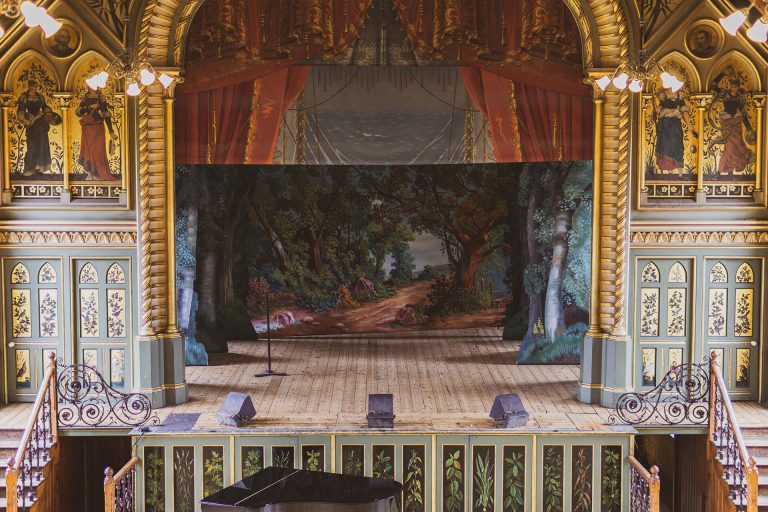
Normansfield Theatre in Teddington

Normansfield Theatre in Teddington

'My favourite building is the amazing Normansfield Theatre in Teddington that John Langdon Down (1828-1896) built to provide positive and stimulating education for learning disabled people (Down syndrome is named after him). At a time when most disabled people would have been shut away in horrific asylums, Down adapted his own house as a residential home, and built a beautiful theatre for creative rehabilitation. It's one of the few surviving private theatres from the period, with original painted scenery and other ornate fixtures, recently remodelled. For me, it's also a reminder of how the wealthy often used their money for good causes, which feels less common now. Jos Boys, guest curator and co-director of The DisOrdinary Architecture Project'


My source: The pick of London Open House. House&Home, FTWeekend. 6/7 September 2025. p.8.

Image: Langdon Down Centre

Previously: 'learning disability' : 'theatre' : 'architecture'

Monday, October 20, 2025

'Common Knowledge' c/o Steven Pinker

Steven Pinker's latest book When Everyone Knows That Everyone Knows...: 

is subtitled: Common Knowledge and the Mysteries of Money, Power, and Everyday Life.

It is 'common knowledge' that caught my attention. In health care we seek common knowledge on several levels:

person (patient, client) 🠜🠞 healthcare practitioner (whatever their training)
carer - guardian  🠜🠞  healthcare practitioner
person / carer  🠜🠞 team

If we think about the referral processes, interfaces, gateways that people have to negotiate on their way to the above, you see how hard-won common knowledge is.

Critically, the knowledge may be 'common' but how accurate is it?

For the team common knowledge is essential to ensure safety, understanding and continually assessing risk.

In healthcare (and education) for person-centredness we take note of what data is available, but simultaneously begin with a blank sheet. ...

Individual
|
      INTERPERSONAL    :     SCIENCES               
HUMANISTIC =========================  MECHANISTIC      
 SOCIOLOGY  :    POLITICAL 
|
Group


When Everyone Knows That Everyone Knows:
'Sometimes, though, private knowledge can no longer be contained even if it is desirable; sometimes something is so evident that it does not even need words to express it. The presidential debate brings to mind a joke Pinker tells about a man in the Soviet Union arrested by the KGB for handing out leaflets, which turn out to be blank sheets of paper. "What is the meaning of this?" they demand. The man replies, "What is there to write? It's so obvious!"' Kelly, p.9.


Pinker, S. (2025). When Everyone Knows That Everyone Knows...: Common Knowledge and the Mysteries of Money, Power, and Everyday Life. New York, NY: Scribner.

My source: Jemima Kelly, Life&Arts, FTWeekend, 20/21 September 2025. p.9; and BBC Radio 4 Start the Week - https://www.bbc.co.uk/programmes/m002k37y

Image source: https://stevenpinker.com/

Monday, October 06, 2025

On the 'front' - or behind the line(s)?

In many sources on socio-economics, politics, health policy ... I still note the challenge to represent the INDIVIDUAL and COLLECTIVE within a figure. Of course the author's subject, purpose, the context all influence the final depiction and the message to be conveyed. 

I wonder if Hodges' model can provide a starting point to explore relationships, oppositions, arguments and synergies?

Hodges' model provides an 
expansive and potentially powerful 'front' 
through its horizontal axis 
[ HUMANISTIC ↔ MECHANISTIC ].

This axis - drawn across and through the model vertically, may make it easier(?) to analyse and synthesize the relations at work and produce a diagram?

Individual
|
      INTERPERSONAL    :     SCIENCES               
HUMANISTIC =========================  MECHANISTIC      
 SOCIOLOGY  :    POLITICAL 
|
Group
INDIVIDUAL

INDIVIDUAL

GROUP - POPULATION

GROUP - POPULATION


Monday, September 22, 2025

A paper of special note: 'The Relational Care Framework ...'

Doing a search on 'person-centered care' the following paper was listed. It is useful too in contrasting personhood, and selfhood in relation to dementia, through 'The Relational Care Framework'

Abstract

We argue that contemporary conceptualizations of “persons” have failed to achieve the moral goals of “person-centred care” (PCC, a model of dementia care developed by Tom Kitwood) and that they are detrimental to those receiving care, their families, and practitioners of care. We draw a distinction between personhood and selfhood, pointing out that continuity or maintenance of the latter is what is really at stake in dementia care. We then demonstrate how our conceptualization, which is one that privileges the lived experiences of people with dementia, and understands selfhood as formed relationally in connection with carers and the care environment, best captures Kitwood’s original idea. This conceptualization is also flexible enough to be applicable to the practice of caring for people at different stages of their dementia. Application of this conceptualization into PCC will best promote the well-being of people with dementia, while also encouraging respect and dignity in the care environment.


Matthew Tieu, Steve Matthews, The Relational Care Framework: Promoting Continuity or Maintenance of Selfhood in Person-Centered Care, The Journal of Medicine and Philosophy: A Forum for Bioethics and Philosophy of Medicine, Volume 49, Issue 1, February 2024, 85–101, https://doi.org/10.1093/jmp/jhad044


The authors may find Hodges' model of relevance.

See also: 'subject' : 'object' : 'relational' : 'objective' : 'subjective' : 'personhood' : 'self' : 'identity'

Sunday, September 14, 2025

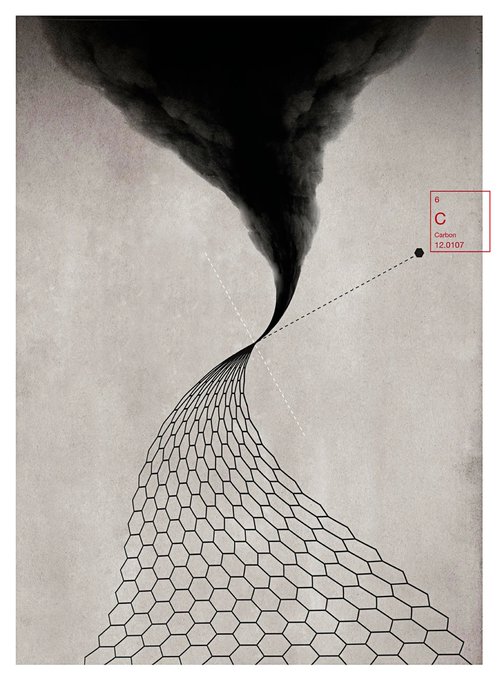
Graphene just broke a fundamental law of physics

Graphene just broke a fundamental law of physics.

Its electrons just did something physicists thought was impossible. For nearly 200 years, metals have obeyed the Wiedemann-Franz law – the rule that electrical conductivity and thermal conductivity always rise and fall together. 

But in ultra-clean graphene, researchers at the Indian Institute of Science found the opposite. As electrical conductivity increased, thermal conductivity dropped, shattering a principle taught in every physics textbook. 

The key lies at the “Dirac point,” a strange electronic tipping point where graphene is neither a metal nor an insulator. Here, electrons stop behaving like individual particles. Instead, they flow collectively as a nearly perfect fluid – a state called a “Dirac fluid.” 

This discovery doesn’t just rewrite the rules for graphene. It provides a tabletop window into extreme physics usually reserved for black holes and high-energy colliders. Scientists say this behavior could help probe mysteries of quantum entanglement, black hole thermodynamics, and the very fabric of matter itself.

 ["Universality in quantum critical flow of charge and heat in ultraclean graphene." Nature Physics, 2025] ...
Individual
|
      INTERPERSONAL    :     SCIENCES               
HUMANISTIC  --------------------------------------  MECHANISTIC      
 SOCIOLOGY  :    POLITICAL 
|
Group
While I can't fully understand this paper (even the abstract!), I realise that it is taking what seems a long time^ for industry and business to understand and realise the potential of graphene in industrial and technological applications. 


Hopefully, applications will emerge, that are beneficial to all. Reducing energy use, improving efficiency, removing pollutants even more effectively, imcreasing the durability and hence lifetime of materials and products, and more.

Also, marvellous to see global collaboration at work, as science continues to asks questions.

^I could have written exploitation there, but could we put the collective and planetary first?


Majumdar, Aniket and Chadha, Nisarg and Pal, Pritam and Gugnani, Akash and Ghawri, Bhaskar and Watanabe, Kenji and Taniguchi, Takashi and Mukerjee, Subroto and Ghosh, Arindam. (2025) Universality in quantum critical flow of charge and heat in ultraclean graphene, Nature Physics. http://dx.doi.org/10.1038/s41567-025-02972-z

My source: https://x.com/Rainmaker1973/status/1966896966316474505

Which includes a video 5m 'Quantum Critical Flow in Graphene: Charge & Heat Dynamics'

https://www.youtube.com/watch?v=LrImy9PAHGk

See also on W2tQ: 'physics : 'women'

Friday, August 29, 2025

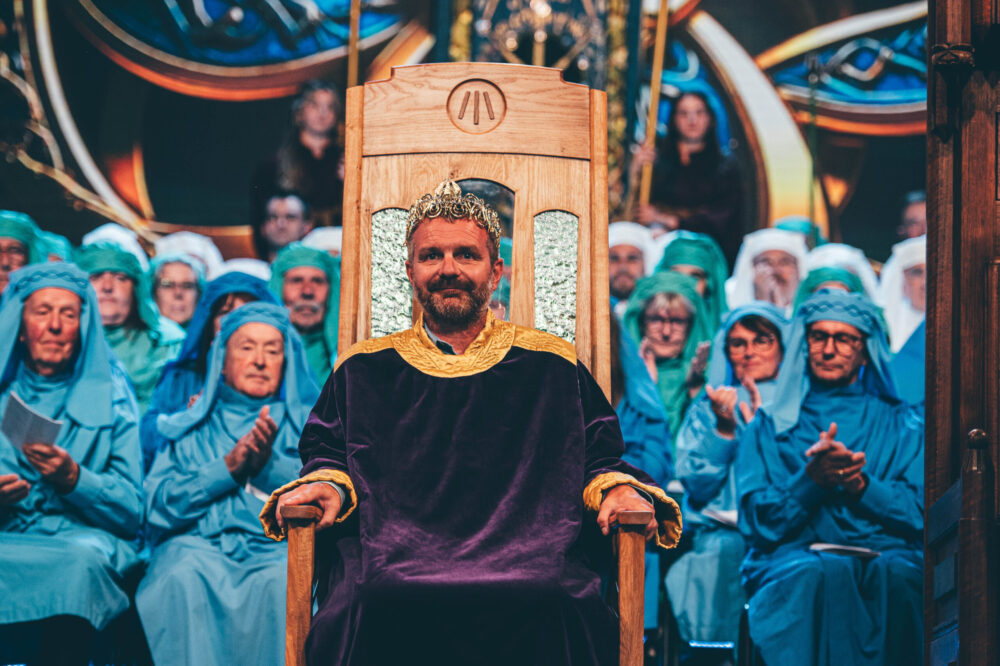
Winner of Wrecsam National Eisteddfod crown - 4th Aug.

Crown winner Owain Rhys
Image: 
https://nation.cymru/culture/winner-of-wrecsam-national-eisteddfod-crown-announced/

Owain Rhys is the winner of the Wrecsam National Eisteddfod crown for his poems about living with a loved one who is suffering with dementia.

The crown – sponsored by Elin Haf Davies – and a cash prize of £750 was presented to Owain in north Wales on Monday (August 4) by Prydwen Elfed Owens.

The prize was awarded for a “pryddest” or collection of poems not in the traditional Welsh style cynghanedd, of no more than 250 lines, on the theme of “Adfeilion” or ruins.

The adjudicators were Ifor ap Glyn, Gwyneth Lewis and Siôn Aled.

The crown was designed and produced by Neil Rayment and Elan Rowlands.

The pair previously created the impressive crown for the Rhondda Cynon Taf Eisteddfod in 2024 – won by Gwynfor Dafydd for his series of poems on “Atgof” – or remembrance.

Head judge Ifor ap Glyn said: “Llif 2 opens with the simple couplet ‘When you forget / every day as you wake’ – and it discusses living with someone suffering from dementia, namely the poet’s mother.

“It’s a quiet and sensitive treatment of what must be done to help the mother continue to live with dignity as her memory deteriorates.

“The collection presents a tender picture of a difficult situation faced by so many families today, and we sense the depth of the poet’s feelings toward his mother and her former strength.”

Text: https://nation.cymru/culture/winner-of-wrecsam-national-eisteddfod-crown-announced/

See also: https://eisteddfod.wales

My Source: BBC Four Episode 1 - 15mins
https://www.bbc.co.uk/iplayer/episode/m002gwyq/eisteddfod-eisteddfod-2025-with-huw-stephens-episode-1

Friday, July 25, 2025

Good luck Suns & Daughters . . .

Individual
|
      INTERPERSONAL    :     SCIENCES               
HUMANISTIC  --------------------------------------  MECHANISTIC      
 SOCIOLOGY  :    POLITICAL 
|
Group

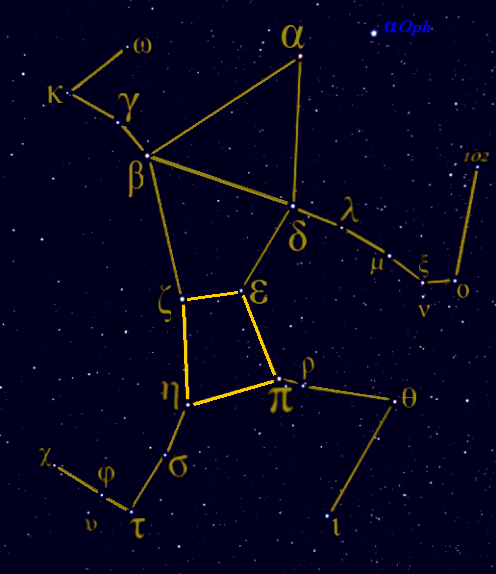
'The sun may be on its lonesome now - its closest neighbour is 4.2 light years away - but that wasn't always the case. Once upon a time it had close family. After their birth in the same cloud of dust and gas that formed our solar system, these solar siblings scattered hundreds of light years apart in the MilkyWay. In May, astronomers reported the first one: a star called HD 162826.

"It looks like the sun, but a little-bit bluer," says Ivan Ramirez at the University of Texas at Austin, who led the study. It's also warmer than the sun and 15 per cent more massive. The star is about 110 light years away, and you can see it with the aid of a pair of binoculars in the left arm of the constellation Hercules.'

Hercules Historical View

'To find its family ties, Ramirez's team combed through galactic archaeology studies, which model the motions of the Milky Way. These predictions laid out where sibling stars would be now if they had formed in the same place as the sun. Though they spread out in different directions, their positions still give away their birthplace, Ramirez says.

He narrowed down the search area to 30 stars, and then looked at them closely to find a family resemblance. Only HD 162826 had a similar chemical make-up to the sun. A separate team led by Eric Mamajek at the University of Rochester in New York also studied the star and found it is the same age
as the sun, as would be expected for two stars born together. Even more tantalising, HD 162826 is already in a catalogue of stars that might harbour planets.'

Science
funding


Rebecca Boyle. Strangest star. New Scientist. 20 September 2014: 223, 2987, pp.38-41.

Image: Sadalsuud, CC BY-SA 3.0, via Wikimedia Commons.

Monday, June 09, 2025

🗣️Solving or Resolving Palestinian Human Rights Issues: Relationship "Normalization" | Mohamed ‘Arafa


🗣️ Solving or Resolving Palestinian Human Rights Issues: Relationship "Normalization" | Mohamed ‘Arafa

This session will be the first in the series of conferences “Jurisprudential Dialogues on Human Rights”, which is designed to promote exchanges on topical issues involving human rights and the role of the courts of justice.


The aim of this session is to reflect on the violations of the human rights of the Palestinian people — an enduring state of affairs that transcends political or religious lines of judgement. Over the decades, the Israeli-Palestinian conflict has been marking the international landscape, sparking divisions, human misery, and far-reaching geopolitical consequences.


This session will be led by Professor Mohamed ‘Arafa, Professor of Law at the University of Alexandria and Adjunct Professor of Law & the Clarke Initiative Visiting Scholar at Cornell Law School. Joining in will be Professor Rita Ribeiro, from the Institute of Social Sciences at the University of Minho, and Zaina Awartani, PhD researcher at the School of Law of the University of Minho and the School of Researchers of the Research Centre for Justice and Governance (JusGov). The event will be chaired by Sergio Ruiz Díaz Arce, Doctoral Integrated Researcher at JusGov.


📍June 13th, 2025 | 4.00 p.m. Online


Scientific Commission

Sergio Ruiz Díaz Arce

Joaquim Freitas da Rocha

Robert Junqueira


Organisation

JusGov (JusLab – DH)

School of Law of the University of Minho


Support

FCT - Foundation for Science and Technology


Yours respectfully,

Robert Junqueira

Executive Coordinator | Research and Scientific Careers Bureau


Research Centre for Justice and Governance

School of Law of the University of Minho

Gualtar Campus
4710-057 Braga - Portugal


T: (+351) 253 60 18 75

E: martinsjunqueira AT direito.uminho.pt

Thursday, June 05, 2025

World Happiness Report 2025

WORLD HAPPINESS REPORT 2025


. . . and looking ahead to WHR 2026 . . .


Prof Lord Richard Layard

Editor, World Happiness Report

In World Happiness Report 2024, we presented evidence of a concerning decline in the wellbeing of young people in Western industrialised countries.

Obviously, a child’s wellbeing matters for the same reason that any individual’s wellbeing matters. But wellbeing among children and adolescents is also critical since it is the best predictor of how happy said child will be in their subsequent life – with a higher predictive power than the qualifications which they might obtain.


There has been much debate about the reasons for such a downward trend, with many competing theories and policy recommendations. However, one explanation has captured public and political attention more than any other: social media.


Also in 2024, Jonathan Haidt, a social psychologist at New York University’s Stern School of Business, published The Anxious Generation, arguing that the decline in youth wellbeing is driven by a transition from a play-based childhood to a phone-based childhood. The book has been a best-seller and sparked heated debate, both in academia and the wider world.


As editors of the World Happiness Report, we have followed this debate closely, concerned that rigorous science was being overshadowed by shallow media narratives.


In World Happiness Report 2026, we see an opportunity to bring all sides of the debate together to establish the facts, clarify disagreements, and provide decision-makers with a balanced assessment of what we know, what we don’t know, and what should be done.


We’re encouraging researchers from across the world to submit chapter proposals focusing on the relationship between social media and subjective wellbeing before the deadline of Sunday 15 June. Full details are available on the World Happiness Report website.


My source: Email from info AT worldhappiness.report

Previously: 'happiness'