Hodges' Model: Welcome to the QUAD: birth

Hodges' model is a conceptual framework to support reflection and critical thinking. Situated, the model can help integrate all disciplines (academic and professional). Amid news items, are posts that illustrate the scope and application of the model. A bibliography and A4 template are provided in the sidebar. Welcome to the QUAD ...

Showing posts with label birth. Show all posts

Sunday, March 01, 2026

Definition: Individual and Group Counselling

INDIVIDUAL
|
    INTERPERSONAL    :     SCIENCES               
HUMANISTIC --------------------------------------  MECHANISTIC      
SOCIOLOGY  :   POLITICAL 
|
GROUP
"Counsellor"


"Counsellor of state"


My source: Robert Wright, Starmer eyes succession law change for Andrew, FTWeekend, 21-22 February, 2026, p.2.

Previously: 'counselling' : 'therapy'

Saturday, July 19, 2025

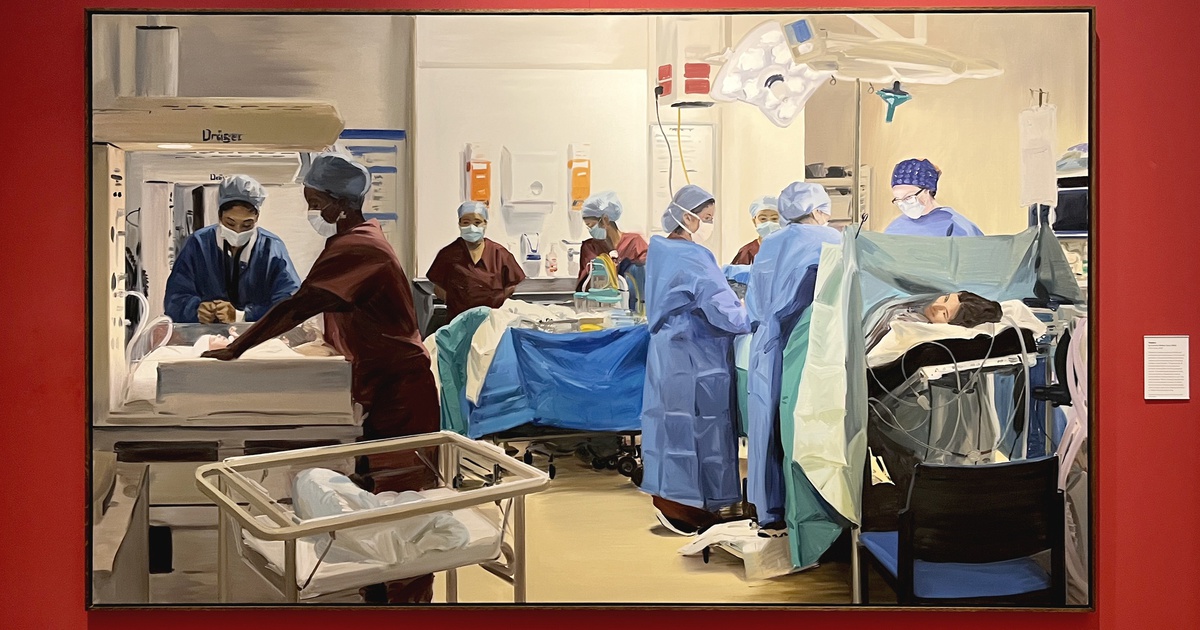
'Theatre' by Caroline Walker

Individual
|
      INTERPERSONAL    :     SCIENCES               
HUMANISTIC  --------------------------------------  MECHANISTIC      
 SOCIOLOGY  :    POLITICAL 
|


Image source: 
https://www.inglebygallery.com/news/7465-caroline-walker-the-scottish-national-portrait-gallery-theatre/

line of sight (seeing is believing) : 'care' : 'community' : 'theatre'

My source:
Harriet Baker, PAINT, FEED & PLAY, FT Weekend, Magazine. July 12 2025.  #1,133, pp.46-52.
https://www.ft.com/content/6e50181b-689e-4cd5-b084-37b311446e94

Great read too. The exhibition moves to Pallant House Gallery, Chichester from November 22nd.

Friday, June 03, 2022

Book: "The Things That Really Matter"

Philosophical conversations on the cornerstones of life

[ open access ]

INDIVIDUAL

|
 INTERPERSONAL    :     SCIENCES               
HUMANISTIC --------------------------------------  MECHANISTIC      
SOCIOLOGY  :   POLITICAL 
|


Source: Literature search - inc. Dewey, reflect.

More corners - and yes - all can be 'found' here.

https://twitter.com/imathematicians/status/1530724466073952261?s=20&t=eF1XRD9HbkSJ2XWWbIk2qQ

Monday, May 02, 2022

Review ii - "Brainscapes: The Warped, Wondrous Maps Written in Your Brain―And How They Guide You"

Brainscapes

Now I know how Umami (p.87) an "example food magazine website to demonstrate some of the features of Drupal core" - got its name. I'm sure this was explained at a Drupal Meetup. Savoury indeed!

There had to be two! The brain has two strategies: brain maps and distributed codes.

"Representing information with a distributed code is entirely different from representing it with brain maps. In a brain map, neighboring neurons represent neighboring regions in space, frequency, time, and so forth. And brain maps essentially represent information using location, or where in the brain area the neurons are most active. In contrast, there is no consistent relationship between neighboring neurons in brain areas that use distributed codes. These areas represent information through the distributed pattern of activity across that entire region of the brain, rather than through the location of activity within it. This pattern of activity is a kind of code." pp.93-94.

This distinction is significant for Hodges' model, as the distributed codes act to deal with novelty, what is new - ongoing (lifelong) learning (p.95). Hodges' model can help distinguish between subjective and objective concerns. Schwarzlose unifies the two - via a catfish (also a goal here - but not necessarily with such an assistant).

"The map in the olfactory bulb is organised into odor zones based on molecular structure, an objective property of these compounds in the physical world. But the second map is organized into zones based on the significance of the odors to the animal." p.100.

Chapter 6 'On the Move: Brain Maps for Action' would have been useful as a student nurse at Winwick Hospital, the history in the book brings back many reminders - late 1970s. Epilepsy, then was less well understood, and managed. In describing the M1 brain map and movement I wondered about consent, but can see that is a distraction. Chapters -

6. On the Move: Brain Maps for Action | 107
7. Maps in the Making: How Brain Maps Develop and Adapt | 131
8. Knowing Again: Brain Maps for Recognition | 151
- offer much to relate to clinical encounters: movement, reaching, infant versus the brain in adults, the senses and catastrophic events such as cerebrovascular accident - stroke. Morphologically there is much still to learn (brain maps are 'primed' before birth), which perhaps is why we recognise the remarkable nature of gestation and birth. 'Maps in the Making' provides wondrous insights, including the need in hospitals to rethink the sensory environment and experience for premature infants.

While reading - I was struck at the experience of the newborn and mothers in Ukraine. The 'health career' model concerns life chances - from birth to later life...

As a community mental health nurse I have found subtle and less-subtle impacts on a person affected by semantic dementia (p.204) and their family. Given the ongoing invasion and war, I also thought about people living with dementia and having to flee their homes. The multiple contexts that pertain in such a crisis situation when considering 'maps' and sense-making. Especially, when the need for action is preemptive - preventive and so must be explained and justified, not once but perhaps repeatedly?

We are all innate mathematicians even if we feel we have no ability. 

https://www.google.com/search?client=firefox-b-d&q=mathematics+in+catching+a+ball

I take some succor in this (p.127).

There's a hodgepodge in here too (p.161 hb). The myriad of objects we encounter and their recognition calls for the combination of brain maps and distributed codes. Chapter 8 is more psychological, touching :-) how we categorise objects, dimensions and scales, size and animacy. Galton's contribution is discussed, his ideas on eugenics also acknowledged. Visual perception, mental imagery and visual learning style remain subjects of note for researchers. I'm not sure why figure 32 stood out ( :-) - please pardon the quality of the photo. Paul Kim's illustrations are an excellent support for the prose.):

FIGURE 32 A comparison of visual perception and mental imagery in
the V1 visual map. Paul Kim

Somewhere I've saved an article on mental imagery from New Scientist I think, about this ability - the mind's eye and how it is missing for some 'brilliant' people (p.182) and posted previously:

In my mind's eye I can picture care: Frame by Frame

I might read Chapter 9 again, attention, action and perception in combination. 

Chapter 10 had me thinking again about 'Conceptual Spaces' (quality dimensions) and threshold concepts (not in the book - but this is a positive!):

"Many of the concepts that rule our financial, social, and emotional well-being have no shape, no color, no odor or weight. How do we grasp these intangible concepts? As it turns out, we often do so by aligning abstract concepts with physical dimensions and then putting our brain maps to work." p.191.

There is a 'mental number line', vertical too, and culture is a factor in how we learn and the brain associates space and quantities, in which L-R, low-high are also brought into play. The question remains here: Is Hodges' model culturally neutral? 

Still with h2cm - mind reading, writing and 'drawing' perhaps? p.236. In "Fortune-Telling with the Brain" we read about how fMRI is allowing us to learn how the brain maps employ teamwork. There is an architecture whose stability can inform predictions of future abilities - reading is described. Reading this you see ethical implications (as Schwarzlose warns p.238), but it may help to target personalised learning, as an adjunct to personalised medicine? I double checked (index) and the connectome is not mentioned, but the benefits of this research is still to be realised. In 'prison health' here in the UK (and globally?) it is long overdue but it is encouraging to hear about the focus on investigation for previous brain injury within the prison population. Remember - lead in fuel and the socio-economic impacts of pollution (ongoing - air and plastic pollution)?

Corporations have literally only 'scratched the surface' of the future potential to 'read' us individually. Through Hodges' model I can qualify and justify the model's increasing relevance. Technology and science not only call for SOCIO-technical approaches. The brain-computer interface and AI (p.239) demands we also consider the several forms of literacy and informatics that are needed in the 21st century: bio-informatics, bio-political, psycho-political and more.

This is very informative and timely read - the diagrams too. This is a book for all. For student nurses specifically, it will enable them to maximize learning in their practical placements and throughout their course of study.

Writing this review I can also see the important messages in chapter 12 - recognition of infancy and the opportunities this affords.

Many thanks to Rebecca Schwarzlose and Profile Books for my review copy.

Schwarzlose, R. (2021) Brainscapes: The Warped, Wondrous Maps Written in Your Brain―And How They Guide You". London: Profile Books.
Wednesday, March 24, 2021

Hodges' model: Not just rectilinear, but bubbles too ...

individual
|
INTERPERSONAL : SCIENCES
humanistic ----------------------------------------------- mechanistic
SOCIOLOGY : POLITICAL
|
group

"To the holistic absorption by the One – upon which the success of so many religions and philosophies was premised for centuries – Sloterdijk opposes the proposition of a dyadic theory of intimacy. This is a distinction between an acute appearance of unity, experienced from a cosmic position of being fully contained inside a whole, and an ontological insistence that this position is itself contingent on a constitutive relationality. It is not possible to attain an overview, an outside bird’s-eye view of spheres (Neither Sun Nor Death, p263). By contrast, ... 


"Sloterdijk’s anthropological theory of shared, auto-poetic space, carries ontogenetic force. This is, by example, expressed in the discussion of the relationship between birth and thought, or between the birth of a child and that of a world.35 Sloterdijk dedicates the bulk of Bubbles to birth, providing a detailed discussion of intrauterine dwelling, including the sensory presence of liquids, soft bodies, the early experience of spatial boundaries, fluidal communion in the medium of blood, the constitution of an intimate acoustic bipolar sphere and, above all, cohabitation with the placenta, conceived as primal, anonymous companion. Intrauterine space is approached as the most vivid illustration of the spherological principle according to which coexistence precedes essence. At once enclosed and porous, poetic and connected, intrauterine space is the production of a dense and connected ‘two’: ‘What we call ‘mother and child’ in the abbreviated terms of subject-object language are, in their mode of being, only ever poles of a dynamic in-between’ (Bubbles, p320)." p.47.


By contrast, ... the relational ontology of spheres aims to rehabilitate the relation at the expense of the essential, and the situation at the expense of components (p151). Against any form of substantialism, a relational ontology emphasises the centrality of being-with [Mitsein] in relationships of mother and child, mesmerist and subject, therapist and patient, foetus and placenta, and so forth." p.47.


https://muse.jhu.edu/issue/39847

My source:

Duclos, V. (2019) Falling into Things: 
Peter Sloterdijk, Ontological Anthropology in the Monstrous. 
New Formations, 95, Spaces and Stories, pp. 37-53.

Saturday, June 27, 2020

Arithmetic, Population and Energy by Dr Albert Bartlett

individual
|
INTERPERSONAL : SCIENCES
humanistic ----------------------------------------------- mechanistic
SOCIOLOGY : POLITICAL
|
group - population


- a presentation by:

Dr. Albert A. Bartlett
Professor Emeritus
Department of Physics
University of Colorado, Boulder

My source:
Price, T. (2016) A monster called growth, MoneyWeek, 23 September, p.28.

Tuesday, January 28, 2020

c/o RCN: Nursing Emotions, Art and History

individual
|
INTERPERSONAL : SCIENCES
humanistic ----------------------------------------------- mechanistic
SOCIOLOGY : POLITICAL
|
group - population

https://www.rcn.org.uk/news-and-events/news/uk-history-of-emotions-in-nursing-new-exhibition-launch-220120

https://www.rcn.org.uk/news-and-events/news/uk-history-of-emotions-in-nursing-new-exhibition-launch-220120
https://www.rcn.org.uk/news-and-events/news/uk-history-of-emotions-in-nursing-new-exhibition-launch-220120https://www.rcn.org.uk/news-and-events/news/uk-history-of-emotions-in-nursing-new-exhibition-launch-220120

My source: RCN as per main link.

Image original (please do see the original - which I have quartered here):
https://www.rcn.org.uk/news-and-events/blogs/emotions-and-the-art-of-nursing-stained-glass

I remember an article in an issue of 'Computer Arts' many years ago on creating stained glass images, the example included fish I think?

Thursday, October 24, 2019

Birth and Bubbles - Holistic Spaces

individual
|
INTERPERSONAL : SCIENCES
HUMANISTIC ----------------------------------------------- MECHANISTIC
SOCIOLOGY : POLITICAL
|
group
health services - organisations


... "To the holistic absorption by the One – upon which the success of so many religions and philosophies was premised for centuries – Sloterdijk opposes the proposition of a dyadic theory of intimacy. This is a distinction between an acute appearance of unity, experienced from a cosmic position of being fully contained inside a whole, and an ontological insistence that this position is itself contingent on a constitutive relationality".


"Sloterdijk dedicates the bulk of Bubbles to birth, providing a detailed discussion of intrauterine dwelling, including the sensory presence of liquids, soft bodies, the early experience of spatial boundaries, fluidal communion in the medium of blood, the constitution of an intimate acoustic bipolar sphere and, above all, cohabitation with the placenta, conceived as primal, anonymous companion. Intrauterine space is approached as the most vivid illustration of the spherological principle according to which coexistence precedes essence. At once enclosed and porous, poetic and connected, intrauterine space is the production of a dense and connected ‘two’: ‘What we call ‘mother and child’ in the abbreviated terms of subject-object language are, in their mode of being, only ever poles of a dynamic in-between’ (Bubbles, p320)". ... p.47.


Duclos, V. (2019). Falling into things: Peter Sloterdijk, ontological anthropology in the monstrous. new formations: a journal of culture/theory/politics 95, 37-53. https://www.muse.jhu.edu/article/715818.

Saturday, November 10, 2018

South Sudan Medical Journal - November 2018

 http://www.southsudanmedicaljournal.com/

Dear SSMJ Reader,

The November 2018 issue of the South Sudan Medical Journal is now on online and includes articles on Ebola, Caesarean Section and Obstetric fistula. You can download the complete issue as a pdf here or the individual articles listed below.

Please share this notice with your colleagues.

EDITORIAL
Keeping an eye on Ebola Virus Disease Edward Eremugo Kenyi
Between June and November 1976, the medical world was baffled by an outbreak of a ferocious haemorrhagic disease in Nzara, South Sudan (then part of Sudan). This became known as Ebola Virus Disease (EVD). The West African outbreak in Guinea, Liberia and Sierra Leone in 2014 was devastating.  A new outbreak in DR Congo in 2018 is a warning to South Sudan to be on high alert.

ORIGINAL RESEARCH
Knowledge of type 2 diabetes mellitus and adherence to management guidelines: a cross-sectional study in Juba, South Sudan Alexandre Ali M. Bili and Longying Zha
Inadequate education and the lack of efficient diabetes care centres compounded by high costs are common barriers for diabetes care. This study assesses the level of knowledge and adherence to guidelines for management of type 2 diabetes in South Sudan.

Knowledge, attitude and willingness to accept Caesarean Section among women in Ogbomoso, southwest Nigeria Olumuyiwa A Ogunlaja, Idowu P Ogunlaja, Samuel E Akinola, Olufemi O Aworinde
Caesarean Section (CS) is a common procedure in obstetrics and has contributed immensely to improving maternal and foetal outcome. The study which seeks to assess the level of knowledge, attitude and acceptance of women about CS in Ogbomoso, Nigeria, concludes that mothers should be educated on the process involved in Caesarean delivery.

Obstetric fistulae, birth outcomes, and surgical repair outcomes: a retrospective analysis of hospital-based data in Dodoma, Tanzania Athanase Lilungulua, Balthazar Gumodokab, Mzee Nassoroc, Patrice Sokac and Kibusi Stephen
Obstetric Fistula (OF) among pregnant women remains a widespread condition with devastating consequences and poses a significant challenge in a community as well as globally. The study concludes that timely fistula repair by experienced fistula surgeons will improve outcomes and limit the clinical insult and distress that OF invariably causes.

CLINICAL GUIDANCE
How to repair a vesico-vaginal fistula Brian Hancock
Most fistulae are caused by ischaemic necrosis of the genital tract and adjacent organs through prolonged obstructed labour. This article provides a brief overview and refers the reader to resources that cover the practical aspects of the surgery and holistic care of the patient.

MAIN ARTICLES
Ebola Virus Disease: epidemiology, management, prevention and control Gasim Abd-Elfarag
Ebola Virus Disease (EVD) is part of the group of illnesses known as viral haemorrhagic fevers, and was previously known as Ebola haemorrhagic fever. Infection with EVD is acute, severe and often fatal in humans. The paper provides an outline of what is known about EVD.

Ebola on our doorstep: Ebola Virus Disease preparedness in South Sudan Richard Lako and Otim Patrick Cossy Ramadan
South Sudan has previously experienced three EVD outbreaks in 1976, 1979 and 2004. With recent outbreaks in DR Congo, it is possible that a sporadic outbreak can happen in South Sudan, and so the country is always at risk. Preparedness is key.

COMMENTARIES
Internship training in South Sudan: the challenges and way forward Jessry Pasquali Oboya
The House Officer is the professional whom the patient meets most often when entering hospital and will remember for a long time. The extraordinary commitment and work load of the House Officers at Juba Teaching Hospital has received little recognition by the authorities despite the challenges they face in the course of their training.

The current crisis of human resource for health in Africa Brian Madison
Brain drain has been a source of despair for developing countries, and the healthcare sector arguably bears the biggest brunt imposed by this growing problem. The author argues that if Africa is to counter the healthcare human resources crisis, member states may need to adopt radical reforms in the healthcare sector.

SHORT ITEMS
Caesarean Section acceptability and rate in South Sudan
Call for submissions
Obituaries

BACK COVER
Neonatal resuscitation chart
This chart is designed with the ‘Helping Babies Breath’ training in mind. However, it incorporates external cardiac massage, which can be effective in some cases.

All previous issues of the journal are in the Archive section, and you can ‘search’ for particular articles.

Please support the journal by submitting items for future issues. We are interested in articles on your research, case reports, and clinical guidance, as well as news of projects, and relevant photographs. We can help you prepare these for publication (see our ‘Authors’ Guidelines’). We welcome letters to the editor and questions. Send your contributions to the Editor-in-Chief, Dr Edward Luka admin@southernsudanmedicaljournal.com. 

If you are not already a member, join our Facebook Group and share your news and experiences and ideas.

You can follow us on twitter: @SSMedJournal. Other people can be added to our mailing list by clicking here.

SSMJ is a member of African Journals Online – see who is downloading SSMJ abstracts and articles here. We are listed in the Directory of Open Access Journals (DOAJ), you can find and search DOAJ for SSMJ articles here.

Kind regards
The SSMJ team

Friday, January 01, 2016

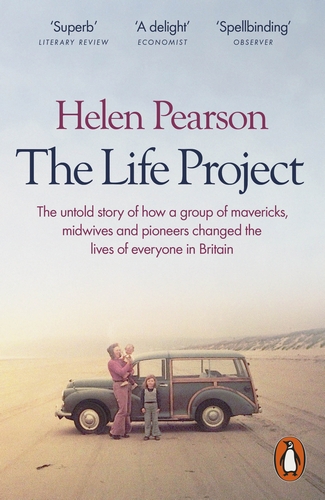
Book: "The Life Project"

The Life Project Helen Pearson


"The remarkable story of a unique series of studies that have touched the lives of almost everyone in Britain today.

On 5th March 1946 a survey began that is, today, the longest-running study of human development in the world, and has grown to encompass six generations of children and over 70,000 people. They have become some of the best-studied people on the planet. The simple act of observing human life has changed the way we are born, schooled, parent and die, and irrevocably altered our understanding of inequality and health. This is the tale of these studies, the scientists who created and sustain them, the discoveries that have come from them. The envy of scientists around the world, they are one of Britain's best-kept secrets."

[Published: 3 March 2016]

(The Life Project? "What's yours?")

Thursday, August 13, 2015

The Quantified Self that needs to be Qualified* (by definition)


H
E
A
L
T

C

A
R
E
E
R

Health-Life-Death Legacies
Death
End of Life Care
Long-Term Chronic (Mental) Health Problems
Support Groups 3rd Sector
Acute Health Problems - Hospital
[ Primary Care Consultations
iterations
Accidents - Emergency Dept ]
Family/Self-Treated Complaints / Illnesses
'cuts and scrapes'
Birth
Conception
...
Epigenetics


L
I
F
E

C
H
A
N
C
E
S

Public (Mental) Health

Where is the quantified self?
Where is health & well-being?
Aggregated data vs Aggregated experiences?
Public (mental) health: why so ungainly?
This rendering: service-centered vs person-centered.

Life chances and Health career are central to Hodges' model


*assuming health care services are available.
and : or
*assuming health literacy / education is enabled.

Friday, October 11, 2013

Recent Advances in Research on Housing Transitions and the Life Course - a one-day symposium

Meeting of the Royal Statistical Society Social Statistics section.
DATE: Tuesday 10 December 2013
TIME: 10am-5pm (followed by a drinks reception)
LOCATION: Royal Statistical Society, 12 Errol Street, London EC1Y 8LX

We are pleased to announce a one-day symposium on recent developments in research on housing transitions through the life course.  The event will feature presentations from leading international demographers, geographers and economists on different aspects of housing careers. Topics include:

  • the interrelationship between housing and fertility: childbearing patterns by housing conditions and housing changes after the birth of a child
  • wage, employment and house-price effects on migration
  • intergenerational transmission of home ownership and neighbourhood poverty
  • residential mobility, neighbourhood poverty dynamics and neighbourhood choice among families
The symposium is sponsored by the ESRC-funded project “Interrelationships between housing transitions and fertility” (see http://www.bristol.ac.uk/cmm/research/housing for further details). 

SPEAKERS:
William A.V. Clark (University of California, Los Angeles) Clara Mulder (University of Groningen), Heather Joshi (Institute of Education) Hill Kulu (University of Liverpool) David Manley (University of Bristol) Birgitta Rabe (University of Essex) Elizabeth Washbrook (University of Bristol)

A programme and abstracts are at http://www.bristol.ac.uk/cmm/research/housing/symposium/index.html

REGISTRATION AND QUERIES: All are welcome and attendance is free.  Refreshments will be provided, including lunch and a drinks reception.  However, advance registration is essential.  Please complete the online registration form at ... to reserve your place.


[ I mentioned to the organisers about the ongoing transitions I have posted about before; that of older adults moving house (home) often in response to a bereavement to be nearer other family members. This is not the symposium's focus, but remains a question in terms of the potential impact on the individuals concerned and health and social services. pj ]

Thursday, July 08, 2010

Born HIV Free campaign announces 11 million views for "Baby in the Sky" creative film

Dear Writer and Blogger,

In our series of news related to the 6-month Born HIV Free campaign, we are delighted to send you a press release focussing on the specially created film "Baby in the Sky" created by Les Bonzoms for this campaign.

The film has attracted a great deal of attention through YouTube and other broadcasts, helping to make people aware about the campaign.

Thanks as ever for your support,

Brendan
Ogilvy Public Relations Worldwide France, Paris


“Baby in the sky”: a stunning new film made by Les Bonzoms specially for the Born HIV Free campaign attracts more than 11 million viewers on dedicated YouTube channel

Geneva, 6 July 2010 – The YouTube channel dedicated to The Global Fund’s Born HIV Free campaign which was launched seven weeks ago, has already been seen by more than 11 million viewers. The channel features an exceptional animation film called “Baby in the Sky”, created by the design team Les Bonzoms and with music of Amy Winehouse. Euronews, the international news channel, joins the campaign by also featuring the video until October.

“The purpose of the Born HIV Free campaign is to encourage millions of people to support The Global Fund so we can finally put an end to the tragedy of 430,000 babies being born HIV-positive every year, when we have the means and the expertise to prevent this.” says Carla Bruni-Sarkozy, Global Ambassador for the protection of mothers and children against AIDS. “Hopefully this beautiful film will reach a wide audience because of its creative ingenuity, and inspire millions of people to support The Global Fund so we can finally put an end to this terrible injustice.”

“Baby in the Sky” is a highly creative and imaginative animated film that conveys the beauty of life ahead for an unborn child. The film artistically portrays an imaginary journey in a world full of adventurous landscapes and fantastic creatures. It ends with a call from Carla Bruni-Sarkozy for an HIV-free generation in which she says “Life is a beautiful journey. Don’t let AIDS kill it.”
The film owes its powerful soundtrack to multi-award winning and singer/songwriter artist Amy Winehouse, who offered the pro-bono use of her “Back to Black” song for the film.
“It was a question of finding a true resonance with the images in the film created by Bonzoms”, says musician / producer Julien Civange, who conceived the Born HIV Free campaign, about the use of Winehouse’s music. “We wanted to find a piece that was modern but also well known, something that carried the same sensibility as the film. The magic came with the soundtrack by Amy Winehouse, an artist that Carla considers one of the greatest and most talented of her generation and who was generous enough to participate in the campaign.”
The animation can be viewed on the Born HIV Free YouTube channel and will also be distributed through various social and mass media platforms during the course of the campaign.

Since June 20, Euronews, the international news channel, has been broadcasting “Baby in the Sky” on its network in 155 countries. The film is shown in 90-second slots an average of three times a day for the first month and then once a day thereafter. Broadcasting of the film will continue until 5 October 2010.

"All of us at Euronews are very proud to be associated with this initiative, which is supported by an incredible positive animated film" said Philippe Cayla, Chairman of the Executive Board of Euronews. "We are glad to open Euronews' influential and far-reaching network to such professionals and experts fighting to eradicate HIV transmission during pregnancy. We are mobilized to make a success of this campaign and we strongly believe that Euronews' viewers will be deeply moved and will want to participate in the Born HIV Free campaign," Mr Cayla added.
CNBC has also been broadcasting the video on its network in Europe, Middle East and Africa since the launch of the campaign.

Speaking about the distinctive nature of the “Baby in the Sky” project, Jack-Antoine Charlot, a designer from Les Bonzoms said: “It was necessary to stop playing with the notion of guilt as an incentive for people to act and instead to reinforce a sense of wanting to share and take part in something. In the case of mother-to-child HIV transmission, the medications already exist to stop it. The problem is one of mobilization.”

After the film, viewers are invited to show their support by signing their name on the campaign’s “virtual wall of support”, on the www.bornhivfree.org website. The campaign asks people - by the simple act of clicking a button - to register their support for the work of The Global Fund and for the elimination of mother to child transmission of HIV by 2015.
Watch the videos on: www.youtube.com/bornhivfree

Monday, October 06, 2008

Death in Birth By Vivienne Walt/Freetown Thursday, Sep. 18, 2008

An excerpt from an article in TIME magazine is posted below by Patti Abbott, Co-Director of the PAHO/WHO Collaborating Center for Nursing Knowledge, Information Management and Sharing (KIMS), Johns Hopkins University School of Nursing.

The entire article can be found at: http://content.time.com/time/magazine/article/0,9171,1842278,00.html

“In a hospital ward in Freetown, the capital of Sierra Leone, Fatmata Conteh, 26, lay on a bed, having just given birth to her second child. She had started bleeding from a tear in her cervix, the blood forming a pool on the floor below. Two doctors ran in and stitched her up, relatives found blood supplies, and nurses struggled to connect a generator to the oxygen tank. One nurse jammed an intravenous needle into Conteh's arm, while another hooked a bag of blood to a rusted stand, and a third slapped an oxygen mask over her face. In the corner of the room, a tiny baby--3 hours old--lay on a bed, wailing, swaddled in bright-colored African fabric. "Listen! You must feel happy to hear your baby cry," said a nurse, pleading with Conteh to find strength. Three visiting members of a neighborhood church began chanting over Conteh: "Jesus, put blood into this woman! Thank you, Lord!" But as their chants grew louder, the nurses stepped back from the bed. Conteh was dead.
Some version of that scene is repeated around the world about once a minute. Death in childbirth is not just something you find in a Victorian novel. Every year, about 536,000 women die giving birth. In some poor nations, dying in childbirth is so common that almost everyone has known a victim. Take Sierra Leone, a West African nation with just 6.3 million people: women there have a 1 in 8 chance of dying in childbirth during their lifetime. The same miserable odds apply in Afghanistan. In the U.S., by contrast, the lifetime chance that a woman will die in childbirth is about 1 in 4,800; in Britain, 1 in 8,200; and in Sweden, 1 in 17,400. Deaths are heavily weighted to the poorest and most isolated in each country, which means that many politicians remain largely ignorant of the scale of the tragedy. "Often the people in the cities do not know what is happening in their own rural areas," says Sarah Brown, wife of British Prime Minister Gordon Brown and patron of the White Ribbon Alliance, a global advocacy organization that works with governments to lower maternal mortality rates. Brown--who lost a baby 10 days after giving birth in 2001--says that when she tells heads of state and their spouses how many women die in childbirth, "they are aghast."

The Gains Not Made
They have reason to be. For here is the truly ghastly reality of maternal mortality: in 20 years--two decades that have seen spectacular medical breakthroughs--the ratio of maternal deaths to babies born has barely budged in poor countries. To be sure, maternal health has seen advances, with new drugs to treat deadly postpartum bleeding and pregnancy-related anemia. But in many places, such gains are dwarfed by a multitude of problems: scattershot care, low pay for health workers and a scarcity of midwives and doctors. In Mozambique, where women have a 1 in 45 lifetime chance of dying in childbirth, there are just 3 doctors per 100,000 people; in all of Sierra Leone, there are 64 government doctors, only five of whom are gynecologists. Millions of families have never seen a doctor or nurse and give birth at home with traditional birthing helpers, while those who make it to a clinic--some being carried on bicycles or in hammocks--often find patchy electricity, dirty water and few drugs or nurses. Explaining the task of reducing maternal deaths, Sierra Leone's Minister of Health, Saccoh Alex Kabia, who returned home last year after decades of working as a surgeon in Atlanta, says, "The whole health sector is in a shambles."

The article goes on to say:
“When world leaders gather in New York City this month to take stock of the MDGS, their speeches are likely to tout the many achievements since 2000: millions more African children now attend school and sleep under mosquito nets; thousands of new water wells have been dug. Yet though maternal health care underpins many other development goals (healthy mothers are more likely to ensure that their children are well fed and educated), the total number of women dying in childbirth has remained virtually unchanged in eight years. Why? Health officials are clear in their answers. Aside from lack of money and political will, they also face entrenched traditions and fatalistic attitudes to maternal mortality, especially in very poor communities. "People think that dying in childbirth is not preventable," says Nadira Hayat, Afghanistan's Deputy Minister of Health. "They say it is up to God."
~~~~~~~~~~~~~~~~~~~~~~~~~~~~~~~~~~

I think they need knowledge, a nurse, a midwife.

Patti
Patricia A. Abbott, PhD, RN, FAAN
Co-Director of the PAHO/WHO Collaborating Center for Nursing Knowledge, Information Management and Sharing (KIMS), Johns Hopkins University School of Nursing
___________________
Visit web site:
http://my.ibpinitiative.org/GANM/NMmakingpregnancysafer/

My source: posted by Jody Lori: [Nursing and Midwifery for Making Pregnancy Safer: Discussion] link to article in Time Magazine.

Additional links:

http://www.unicef.org/infobycountry/sierraleone.html

http://www.unicef.org/infobycountry/sierraleone_statistics.html