Hodges' Model: Welcome to the QUAD: ideas

Hodges' model is a conceptual framework to support reflection and critical thinking. Situated, the model can help integrate all disciplines (academic and professional). Amid news items, are posts that illustrate the scope and application of the model. A bibliography and A4 template are provided in the sidebar. Welcome to the QUAD ...

Showing posts with label ideas. Show all posts

Wednesday, October 07, 2026

Hodges' model: Is it a virus: or a universal vaccine?

The arrival of 'imposter syndrome' well-over a decade ago(?), from the speaker's podium was an interesting surprise. A case of lived experience, as I'd felt this in trying (and failing) to grapple with the ever-growing, morphing development stack of a software program. Long gone are the days of Sinclair and BBC BASIC. The mountain and learning cliff, was CMS content management system: Drupal. 

What contributed to that feeling back then? Well there was the people I was sat by and sharing time at various European DrupalCons. It was I who was the 'con'. A hobbyist, from pre-PC days. Seeing and hearing what they were creating and the great community. Fascinating also, to see web design fashions come-and-go.

I've written before about Hodges' model being an over-valued idea to me. As a mind-mapping meme it infected me decades ago. Is it a virus? If it is I clearly had no resistance, no immunity. I've always tried to acknowledge, reminded myself that the model is not the be-all-and-end-all.

While the specific mathematical is complex, it is worth trying to grasp some of the intent and meaning (even at the risk of exacerbating imposter reactions). Hestenes provides a paper (and several others):

'ABSTRACT. The discovery of Mathematical Viruses is announced here for the first
time. Such viruses are a serious threat to the general mental health of the mathematical
community. Several viruses inimical to the unity of mathematics are identified, and their
deleterious characteristics are described. A strong dose of geometric algebra and calculus
is the best medicine for both prevention and cure.'

Hestenes, D. (1992). Mathematical Viruses. In: Micali, A., Boudet, R., Helmstetter, J. (eds) Clifford Algebras and their Applications in Mathematical Physics. Fundamental Theories of Physics, vol 47. Springer, Dordrecht. https://doi.org/10.1007/978-94-015-8090-8_1

'The computer virus (CV) owes its name and perhaps its genesis to the biological virus
(BV). Like a BV, a CV cannot function by itself, but when attached to a host it replicates
repeatedly until it impairs the functioning of the host, sometimes to the point of disabling
the host altogether. ...

My purpose here is to call your attention to another kind of virus - one which can
infect the mind - the mind of anyone doing mathematics, from young student to professional
mathematician. As I believe this is the first published paper to explicitly identify
such viruses, I take the liberty of naming and describing them as follows: A mathematical
virus (MV) is a preconception about the structure, function or method of mathematics
which impairs one's ability to do mathematics. Just as a CV is program which impairs the
operating system of a computer, an MV is an idea which impairs the conceptualization of
mathematics in the mind. Indeed, as one definition of "virus," Webster gives "something that
corrupts the mind or soul." Since the identification and classification of MVs has only
just begun, it would be premature to attempt a more precise definition. The better course
is to examine some specific viruses to form a form empirical base for further study.
My first example is an easily recognized MV which is extremely virulent and as common
as the common cold. I call it the coordinate virus, designating it by MV/C to denote genesis
and type, and characterizing it as follows:' pp.1-2. (online copy)

Hestenes' biohistory is an interesting conceptual and interdisciplinary bridge. Another construct to add to our  collection. Is there a virus in the models deployed within medicine and healthcare to date? You know, the bed-round of the medical, biomedical, bio-psycho-social? The round were you don't need to count the number of beds, except in the event of a pandemic. Is the omission of the political, even as the socio-economic reality is now a constant point of reference a symptom of a centuries-long infection? 

For a long time now* the legacies that successive cohorts of students, and newly qualified professionals encounter have stood out. Another question is, just how far back in time do we need to travel to find can the origin of this situation? Was there an initial crisis involving the overt expression of 'power'? Can this be found the as the Hippocratic oath butted up - literally - against triage on the battlefield?

Now: Time won't tell (or will it?). Now that - is some virus.

Saturday, October 03, 2026

World Health Congress 2027 Prague - 20-22 August

Dear Friends,

The World Health Congress 2027 Prague is a global professional gathering focused on traditional, complementary, and integrative medicine (TCIM/CAM) and evidence-based medicine (EBM).

Under the motto “Health Knows No Boundaries – Let Us Seek a Common Path,” the congress provides a platform for professionals to come together, share knowledge and experience, engage in professional dialogue, and foster international cooperation in healthcare.

The previous congress attracted more than 1,000 participants from 50 countries worldwide and brought together prominent experts and organizations.

If you are considering actively participating in the 5th World Health Congress 2027 Prague, to be held from 20–22 August 2027, and are planning to submit an abstract for your presentation, please give some thought to the following four questions. They reflect the direction envisioned for the upcoming Congress. This direction will also be embodied in the Congress’s concluding document, the Prague Declaration.

  1. How can we build bridges between TCIM and EBM in healthcare?
  2. How does your contribution help advance TCIM?
  3. If you have participated in one of our previous congresses, what new perspectives does your presentation offer compared with your previous presentation?
  4. What is the future of TCIM, and what strategies would you propose for the way forward?

Abstract submissions are now open. You can submit your abstract here:

ABSTRACTS

Warm greetings from Prague,

Tomas Pfeiffer
President of the 5th World Health Congress 2027 Prague
Soukenicka 21, 110 00 Prague 1
Czech Republic
www.whc2027prague.com 

Director
Institute for TCIM/CAM 

e-mail: info AT itcim.org
www.itcim.org

n.b. I have had some problems accessing the site - 'new domain'.

Tuesday, September 22, 2026

Beware of the Concept

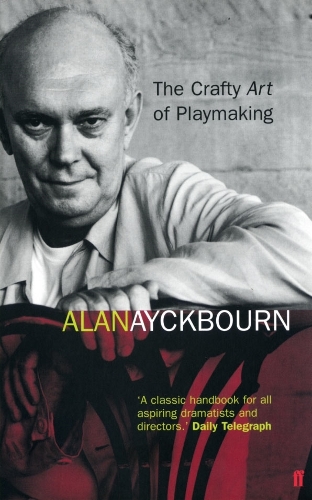
Yesterday Alan Ayckbourn's gold-nugget-laden book -

The Crafty Art of Playmaking by Alan Ayckbourn. Faber, 2004, softcover, ISBN 0571215106.
https://www.concordtheatricals.co.uk/s/45898/the-crafty-art-of-playmaking
 

- found a new owner. Beforehand, I turned up the following helpful advice (or, 'obvious rules'): 

ix Introduction

'The following is an attempt to describe, as far as I can, this double process [writing and directing, PJ]. Some of it is quite probably unique to me and contains procedures and practices that it would be highly unwise for others to try and copy. The rest is really just plain common sense. But if I've learnt anything it is that it never hurts to point out the obvious occasionally, certainly in the theatre - to actors, directors or writers and sometimes even to designers, stage managers and technicians. Often we quite wrongly suspect simplicity. We go digging around in the creative sand trying to make.our art more meaningful, somehow 'deeper'. Generally all we do is end up with our heads entirely buried, presenting the audience with our rear ends.'
Obvious Rule No. 3
If you don't have the initial inspiration, put down the pen,put the pencil back in the jar, switch off the computer and go and dig the garden instead.

.. 
'At its most successful, theatre views things from a human standpoint. It is after all the most human in scale of all the performance media. My feeling is that that's also a good place for a dramatist to start, at the human level. As a playwright it may be your intention to build a vehicle to take us to the stars. But do make sure you have people aboard.

Initial inspiration - that essential starting point - comes in all shapes and sizes.' p..9.
Obvious Rule No. 49
Beware of the Concept.

DIRECTING

'Don't be talked into anything you feel instinctively you'll regret later. If you must have a concept (God save us from that word) then let the concept be something that's worked out between you. Let it spring from the play and not from the fact that the production manager has 5oo square metres of black lino left over from their last production. I once heard the fateful words, 'I think it's about time we did something with mirrors.' If at all possible, try and persuade the producer, whoever it is, to let you make as many scenic decisions as late on as possible. There will always be an intense pressure to decide everything before you start. This can be fatal.' pp.118-19.

In pencil I noted: 'Hodges' model is different. So, don't panic.' Is it? Really?

I've saved this for the last: 

'Then there is the new old playwright. Far more difficult to deal with. They have probably nursed this script for twenty-five years and they're damned if you're going to mess it up for them when they've waited so long. Especially someone your age who wasn't even born when their harrowing play about World War Two was still raging, dammit.' p.110.

It's not that I believe I'm a (potential) playwright, it's the learning.

See also: 'Ayckbourn' : 'drama'

Friday, August 14, 2026

Sometimes it can take an old model ...


'Sometimes it can take an old model, 
to build a new one, 
that makes the existing model obsolete.'

To borrow from Buckminster Fuller.                         

 
Resurgence & Ecologist, Sept/Oct 2020, Issue 322, p.33.

Tuesday, July 14, 2026

Health Literacy UK (HLUK) Conference 4 March 2027 in Manchester

Communicating and delivering health
and care that people can understand and use

Manchester 2027 – Where Health Literacy Takes Centre Stage

Join Health Literacy UK on 4 March 2027 for an exciting national conference bringing together passionate voices from across healthcare, public health, academia, local government and the voluntary sector. Expect inspiring keynote speakers, practical learning, fresh ideas and powerful conversations focused on making health information and services accessible to all. Whether you’re new to health literacy or leading change in your organisation, this is an event you won’t want to miss.

Please see HLUK where additional details are provided and will follow:

https://healthliteracy.org.uk/hluk-conference-4th-march-2027/

n.b. I hope to see you there!

Saturday, July 04, 2026

Tricotyledons, systems and social problems: TAKE ii iii iv

Act I, Scene 3 
'Thomasina What a faint-heart! We must work outward from the middle of the maze. We will start with something simple. (She picks up the apple leaf) I will plot this leaf and deduce its equation. You will be famous for being my tutor when Lord Byron is dead and forgotten.' p.31.

It appears that polycotyledon seed growth beyond tri-form is rare:

https://en.wikipedia.org/w/index.php?title=Cotyledon&oldid=1356872880

We must hope that the four-leaf clover is recognised and not just trampled underfoot.

One of the benefits of a four-leaf conceptual framework is that should you have the germ of an idea, you can reflect in (relative?) safety, exploring the conceptual ecosystem, its cognitive environs and nurture it to realisation.

n.b. In care making a difference, does not mean you have to be exceptional. ...

See post i: Tricotyledons, systems and social problems

https://hodges-model.blogspot.com/2026/07/tricotyledons-systems-humanities.html

Thursday, June 04, 2026

Individual and shared mental models c/o Proctor, & Vu, (2023).

The first day of the conference on 'Ecologies of Care' 4th-5th June is complete. It was helpful to contribute early and then focus on the programme. The questions and acknowledgement have made the (personal) effort worthwhile. Tomorrow also looks promising. There was an emphasis on attention which I tried to reflect and featured in a fascinating keynote by Professor Yves Citton. I will check the sources highlighted; and tomorrow, inquire about a point made re. use of socio in contrast to social.

Regards ongoing reading, perhaps, the evidence to support Hodges' model in practice is already out there? There might be a caveat, that the literature may suggest (if does not yet confirm) that if taught cross-curricula and professional groups then Hodges' model can function as a meta-model? 

What do you think of the following from a chapter on 'Social attention and team performance' (with my emphasis)? :

'... Other two-person team examples include doubles tennis partners and pairings of an airline pilot and copilot. Larger teams can be found in the numerous team sports surgical teams, busineses, and research teams of many scientific laboratories. For teams, coordinated performance is crucial, which becomes more difficult when teams extend to three or more people. As such, teams need to have shared mental models representing the team knowledge (Gardner et al., 2017), which support team situation awareness (Demir et al. 2017).
 
The concept of individual mental model refers to understanding a particular event on the basis of the activation of relevant schemas from long-term memory and, sometimes, simulation of possible scenarios (see also Chapter 10). Bower and Morrow (1990) pointed out that a crucial role in mental models is to shift and focus attention. ...
 
Shared mental models refer to collective understanding among team members of the task to be performed and how it can be accomplished. This understanding includes the responsibilities of the individual team members and dependencies between teammates on other members progress. The term team mental models is sometimes used when the context is teamwork that needs to be coordinated and executed (Jonker et al., 2010). The idea is that teams will perform better if they share mental models. ...
 
The surgery intern study illustrates that shared mental models are learned, leading to the question of how this learning can be facilitated.' p.368. ...
 
'Team leadership can be effective at getting members to be engaged in activities that will promote shared mental models. Boies and Fiset (2018) found evidence that leaders can facilitate the development of shared mental models by involving team members in the consideration of the to-be-accomplished task and their roles in its accomplishment. This involvement, again, likely directs members' attention to information relevant for achieving team goals and enables more domain-specific group discussion, which then furthers the emergence of a shared mental model. ...
 
Situation awareness is a broader concept than mental models, focusing on an explicit understanding of events and contexts. Shared situation awareness differs from individual situation awareness discussed in Chapter 9, in the information required for operators to have effective coordination (Chiappe et al., 2016). For example, paramedics delivering a patient to an emergency room need to coordinate with the hospital and its staff members to ensure that the hospital has the capacity and that the doctors receiving the patient have the vital information they need to treat the patient. Once the patient is in the emergency room, nurses, doctors and technicians need to coordinate with each other to make sure that the patient is being properly cared for.' p.369. 

Proctor, R. W., & Vu, K.-P. L. (2023). Social attention and team performance. In R. W. Proctor & K.-P. L. Vu, Attention: Selection and control in human information processing (pp. 343–374). American Psychological Association. https://doi.org/10.1037/0000317-012

Thursday, May 07, 2026

Interviews, playwriting, and clinical encounters: pause for breath - Roger Lewin

It can be surprising how you know something. Something that should be obvious to you. It's your 'Bread and Butter' as the saying goes. And yet for a variety of reasons, you persist in not seeing it, or you frame it in a way that ultimately reveals a bias, influence, and may even mask several aspects of truth. It might be the influence of work over four decades plus. Sitting down, or frequently finally getting out for a walk after several weeks of nudging, in a one-to-one therapeutic context. Or, ever since secondary school, that distant performed encounter with the Crucible. And, more recently as 'Ken', a Post Office subpostmaster and his wife (a brief 10-12 mins), and over the years a desire to write dialogue.

Reviews of Roger Lewin's Complexity, vary in their conclusions about the book's quality. No surprise there, but reading the book it was a revelation to see the method: a series of interviews and the resulting dialogues. 

'In this revision of his book originally published in 1992, Roger Lewin explains what the science of complexity is all about through interviews with some of its most important practitioners (and critics) organized around some of the central ideas. As such this is both a fine introduction to the subject and an interesting read. Lewin includes 16 pages of photos of the scientists he interviewed captioned with a significant quote from each. He has added an afterword on the application of complexity science to business, and an appendix about John Holland, whom he dubs, "Mr. Emergence."

"Everything works toward an ecology" is an old dictum of mine. I have the sense that I came up with that myself, but I probably read it somewhere years ago. At any rate, what is being said here is that complex systems work toward a state of equilibrium near a transition phase, near "the edge of chaos." This equilibrium can be an ecology (Darwin's "tangled web"); indeed it can be the entire planet, as in the concept of Gaia in which "the Earth's biological and physical systems are tightly coupled in a giant homeostatic system" (quoting Stuart Kauffman on page 109).'

Source: https://www.goodreads.com/en/book/show/384547.Complexity

There's nothing profound in this post, and yet this melange of interviews, playwriting, and clinical encounters gives me pause for breath.

Previously: 'Our broken sticks' c/o Roger Lewin "Complexity: life at the edge of chaos"

Wednesday, April 01, 2026

Information Design and Sense-Making c/o Dervin

'Information Design: Something New, Something Old

... I want in this chapter to challenge the central idea that information design is a new idea. Reducing the issues briefly to a polarity, it is useful to start by considering two ways to conceptualize information. One way, implicit in the above assumptions, is that information is something that describes an ordered reality and has some knowable, or at least idealized, isomorphic relationship to that reality (i.e., it represents in an identical way the form and content of reality). In short, information instructs us, this assumption says, about the nature of the world we live in: its history, its future, its functioning, our place in it, our possible
actions, and the potential consequences of those actions.' p.35.

[My emphasis.]

Brenda Dervin. Chaos, Order, and Sense-Making: A Proposed Theory for Information Design (chapter 3) In R. Jacobson (Ed.), Information Design (pp. 35-57). Cambridge, MA: The MIT Press

Previously: Information design: Tufte & Raskin 

Monday, March 30, 2026

Lavoisier: Math - Chemistry; Quantity, Quality, Principle ...

The philosophy of science, can not avoid being viewed historically, which leads us to learn how mathematics literally took hold, from physics, to chemistry and biology. The application of mathematics to chemistry provides many and ongoing insights:

'Curiously enough, Kant’s own student, Jeremias Benjamin Richter (1762-1807), would only a few years later disprove his professor with his PhD dissertation On the use of the mathematical method in chemistry (Richter 1789). It laid the groundwork for stoichiometry as an algebraic approach to chemistry, including what was later called the ‘law of constant proportion’ that John Dalton used for his atomism on chemical grounds (Richter 1792-3, Dalton 1808). Moreover, at the time of Kant’s writing, experimental philosophy was taking over most of the centers of European research to become the mainstream methodology of modern science, which would later denounce the ideal of a priori knowledge in science as ‘mere’ metaphysics. Although some philosophers of mathematical physics still adhere to that ideal today, Kant was a late partisan in the struggle for the methodological priority of mathematics in the study of nature as it was exemplified by the old field of ‘rational mechanics’. Yet, his view on science became marginalized as much as his verdict on chemistry, that it would be alien to mathematics, was refuted.'

The pitfalls presented and Schummer's 2.4 A methodological suggestion for defining mathematical chemistry are helpful.

Joachim Schummer. Why Mathematical Chemistry Cannot Copy Mathematical Physics and How to Avoid the Imminent Epistemological Pitfalls. HYLE--International Journal for Philosophy of Chemistry, Vol. 18, No.1 (2012). pp. 71-89. https://www.hyle.org/journal/issues/18-1/schummer.htm

Maths is filled with tragedy, but the personal manifestation in my lack of ability, pales to insignificance to the many scientific and human tragedies history reveals. Consider Galois, and Lavoisier:

‘Only a moment to cut off that head and a hundred years may not give us another like it,’ lamented the 18th-century French mathematician Joseph Louis Lagrange. The head in question had belonged to the French aristocrat and chemist Antoine Laurent Lavoisier, who was executed at the hands of French revolutionaries on 8 May 1794. Lavoisier’s ideas changed the face of chemistry. He is best remembered for overthrowing the phlogiston theory, but perhaps his greater and more lasting achievement was to impose order on the language and symbolism that have shaped the thoughts of chemists.'

Paul Board, The Aristocrat who revolutionised chemistry, New Scientist. May 7, 1994 (Volume 142, Issue 1924). https://www.newscientist.com/article/mg14219243-300/

In an essay in the Charles Coulston Gillispie's essay in the history of scientific ideas, Chapter VI. The Rationalization of Matter, describes how Lavoisier sought to develop an algebraic approach:

'But what is most interesting is Lavoisier's mode of representing these results, so correct in quantity, so wrong in principle. In order to sec what he was about, one has to follow him into some detail. It is obvious, he writes, that acidification of a metal involves many variables-heat, concentration, chemical affinities, etc. each of which is a force acting with characteristic energy. Therefrom results a problem complex and difficult of solution: [my emphasis]

"Better to exhibit the state of the question in this respect, and in order to show at a glance the result of what happens in metallic solutions, I have constructed formulas of a sort, which could at first be taken for algebraic formulas, but which have not the same object, and do not derive from the same principles . . ."'

Gillispie, Charles Coulston. The Edge of Objectivity: An Essay in the History of Scientific Ideas. Princeton, N.J.: Princeton University Press, 1960.

Gillispie quotes at length to demonstrate Lavoisier's approach*. There is a more accessible (for me, here) source in -

Stefano Zambelli (2012). Chemical Kinetics, an Historical Introduction, Chemical Kinetics, Dr Vivek Patel (Ed.), ISBN: 978-953-51-0132-1, InTech, Available from: 
http://www.intechopen.com/books/chemicalkinetics/chemical-kinetics-an-historical-introduction

Please see page 6: 3. Chemical equilibrium conception: The law of mass action.

To close, there is reading and advice to be carried forward in:

Guillermo Restrepo & José L. Villaveces, "Mathematical Thinking in Chemistry". Special Issue: Chemistry and Mathematics, Part 1. HYLE--International Journal for Philosophy of Chemistry, Vol. 18, No.1 (2012). pp. 3-22. https://www.hyle.org/journal/issues/18-1/restrepo-villaveces.htm

Gillispie concludes his illustrated exploration of Lavoisier:

'Is this not the most tantalizing memoir in the history of chemistry, and in Lavoisier's the most appealing? Here alone, one gets a sense of modesty. He never claims for these expressions the dignity of algebra. "We are still very far from being able to introduce mathematical precision into chemistry, and I beg, therefore, that no one consider these formulas . . . as more than simple annotations, of which the object is to ease the labors of the mind." (But compare this disclaimer with what he says of algebra itself in the Method of Chemical Nomenclature: "Algebra is the analytical method par excellence: it was invented to facilitate the labors of the mind, to compress into a few lines what would take pages to discuss, and to lead, finally, in a more convenient prompt and certain manner to the solution of very complicated questions.")' p.245.

*in - Lavoisier, A.L. (1782). Considerations sur la dissolution des metaux dans les acides, Mémoires de l’Académie des sciences 1782, pp. 492-527, Available from http://www.lavoisier.cnrs.fr/ice/ice_book_detail-fr-text-lavosier-Lavoisier-49- 5.htm

Saturday, March 28, 2026

Jürgen Habermas RIP: 'Synthetic abilities - Synthetic thinking'

'Jürgen Habermas is recognized for his immense
synthetic ability, integrating diverse cognitive domains—philosophy, sociology, linguistics, and psychology—to develop a cohesive theory of communicative action and social critique. His synthetic thinking aims to bridge modern rationalism with normative concerns, creating an interdisciplinary framework that addresses the complexities of modern society.
Google AI Overview: https://share.google/aimode/Tev1Ip96TMCMcEgdF 

'It is true that the sciences are increasingly interconnected with the development of productivity by way of technical progress; however, technical progress is not the only branch of science in the line of instrumental rationality defenders from Descartes and Bacon's scientific method. This is what distinguishes the Newtonian science from the second group of considerations: Darwinian science and contemporary systems theory (as Habermas, 1984 puts it). The latter do invite us to see the science as “an organism, population, or system [that] maintains itself through demarcation from and adaptation to a changeable, hypercomplex environment” (Habermas, 1984, p. 388). Also, the classical philosophical tradition, insofar that it suggests the possibility of a worldview, has become questionable:

Philosophy can no longer refer to the whole of the world, of nature, of history, of society, in the sense of a totalizing knowledge. Theoretical surrogates for worldviews have been devalued, not only by the factual advance of empirical science but even more by the reflective consciousness accompanying it. (Habermas, 1984, p. 1)'

Mejía Fernández, R. & Romero, J. (2022) Social Evolution in Jürgen Habermas: Towards a Weak Anthropological Naturalism between Kant and Darwin. Theoria, 88(3), 607–628. Available from: https://doi.org/10.1111/theo.12383

'According to Habermas, the self of the ethical life stage embodies a basis for a postmetaphysical grounding of the good life:

'Rather, all his attention is on the structure of the ability to be oneself, that is, on the form of an ethical self-reflection and self-choice that is determined by the infinite interest in the success of one’s own life-project. With a view toward future possibilities of action, the individual self-critically appropriates the past of her factually given, concretely re-presented life history. Only then does she make herself into a person who speaks for herself, an irreplaceable individual.'30 

Viertbauer, Jürgen HKlaus (2019) Habermas on the Way to a Postmetaphysical Reading of Kierkegaard.
European Journal for Philosophy of Religion 11 (4): 137-162. (p.145).

My source: Nick Pearce, Philosopher who fought the slide towards illiberalism, Jürgen Habermas Obituary. FTWeekend, 21-22 March 2026. p.9.

Wednesday, January 21, 2026

v Book: Bill Ross - 'Order and the Virtual'

'The Philosophy and Science of Deleuzian Cosmology'

Systemists will find much here: 'principle of least action', 'principle of least resistance', equilibrium, open / closed systems, and entropy. A useful question is posed: 'Is complexity increasing? Is that average complexity across the universe; or the complexity of the most complex object? Deleuzes's Difference and Repetition is quoted:

'The values of implication are centres of envelopment. These centres  are not the intensive individuating factors themselves, but they are their representatives within a complex whole in the process of explication. ...' (p.255-6)'

Reading this I immediately thought of Bohm, who followed shortly after (still in Chapter 1!). In chapter 1, 'Chaos' could be read as Cosmos, hence the term rolling them together - chaosmos. This is the tract from which existence and becoming arise (re-reading). Deleuze's awareness of physics and quantum theory and its influence on his work is discussed, with chapter 2 providing continuity reaching to Leibniz (and 'The Calculating God'), also contributing is 'the complete concept', 'principle of sufficient reason', 'intensive individuating factors' and 'principle of identity of indiscernibles', for example. Even while the context is metaphysics (and it is not!), (for me) this seemingly presages a comprehensive health assessment:

'The necessity in question is the necessary inclusion of all predicates pertaining to an individual in the complete concept of that individual.' p.24.

A reason to look up Lautman's philosophy is that it - 

'... entails a dialectic; a dialectic comprised of the movement of Ideas. While a given theory may achieve the desired tractability of the paradoxical element in question, this can only be the provisional resolution of the problem. This does not imply that the paradoxical element is in itself resolved; it retains its disruptive powers, its `remainder` within the explanatory framework, which will itself once again redistribute, redeploy, in an inevitable encounter with the next explanatory framework. In this sense (a sense which Deleuze embellishes), the 'problem' and the 'solution' are profoundly different in kind to question and answer. Whereas an answer might be understood to put a question to rest, the solution cannot resolve the problem finally.'


Plato's perpetual questioning wins the day and night (that is 24 hour care). This is why, for me Hodges' model is powerful - "Nursing: Be the difference"^ - and more relevant than ever:

INDIVIDUAL
|
 INTERPERSONAL    :     SCIENCES               
HUMANISTIC --------------------------------------  MECHANISTIC      
SOCIOLOGY  :   POLITICAL 
|
GROUP

Self-Knowledge/Care
Literacies
Reasoning*

KNOWLEDGE - FACTS ...
Self-Knowledge for
Self-care
Dialectic*
Guided discovery
Perpetual questioning

Education
Government provision
Access for all
Voice(s): being heard*


Ross explains that Deleuze is not limited to the realm of mathematics: 

and: 'By Ideas, we do not mean models whose mathematical entities would only be copies, but in the true Platonic Idea sense of the term, the structural schemas acccording to which effective theories are organised.'

Is the 'paradoxical agent' at work here, now a digitalized homonculus ready to preside acting as a superior dialectic that runs over the stream of conciousness? Hodges' model is a conceptual framework and ever-ready (we hope) aide-mémoire:

'Problems are always dialectical; the dialectic has no other sense, nor do problems have any other sense. What is mathematical (or physical, biological, psychical or sociological) are the solutions' (DR, 179).' (p.43).

In Hodges' model, the solutions are fixed in time, for what is (usually) an ongoing situation and context. Certain results in mathematics may be fixed, appear as a standing wave, but the flux, dyanamic remains. And, with it noise that is incessant and increasingly political.

This is a challenging, but rewarding read. 

^Have constant regard for representation, creation, being, becoming and how this affects and impacts (the) becoming.

Many thanks to Edinburgh University Press for my review copy.

More to follow here ...

Bill Ross (2024) Order and the Virtual: The Philosophy and Science of Deleuzian Cosmology. Edinburgh: Edinburgh University Press.
https://edinburghuniversitypress.com/book-order-and-the-virtual.html

Sunday, January 04, 2026

Biology, axioms, teleology and knowledge c/o Cox & Forshaw (2012)

'Teleological ideas generally have a rather bad reputation in science, and it's easy to see why. In biology, a teleological explanation for the emergence of complex creatures would be tantamount to an argument for the existence of a designer, whereas Darwin's theory of evolution by natural selection provides a simpler explanation that fits the available data beautifully. There is no teleological component to Darwin's theory - random mutations produce variations in organisms, and external pressures from the environment and other living thing determine which of these variations are passed on to the next generation. This process alone can account for the complexity we see in life on Earth today. In other words, there is no need for a grand plan and no gradual ascent of life towards some sort of perfection. Instead, the evolution of life is a random walk, generated by the imperfect copying of genes in a constantly shifting external environment. The Nobel-Prize-winning French biologist Jacques Monod went so far as to define a cornerstone of modern biology as "the systematic or axiomatic denial that scientific knowledge can be obtained on the basis of theories that involve, explicitly or not, a teleological principle".
As far as physics is concerned, there is no debate as to whether or not the least action principle actually works, for it allows calculations to be performed that correctly describe Nature and it is a cornerstone of physics. It can be argued that the least action principle is not teleological at all, but the debate is in any case neutralized once we have a grasp of Feynman's approach to quantum mechanics. The ball flying through the air 'knows' which path to choose because it actually, secretly, explores every possible path.' pp.52-53.


Cox, Brian, and Jeff Forshaw. (2012) Quantum Universe, the: Everything That Can Happen Does Happen. London: Penguin Books Ltd.

See also: 

Jacques Monod - https://www.informationphilosopher.com/solutions/scientists/monod/

Harrison, Peter. 2022. 'The History of Science and Theology', St Andrews Encyclopaedia of Theology. Edited by Brendan N. Wolfe et al. https://www.saet.ac.uk/Christianity/TheHistoryofScienceandTheology

Greslehner GP. "Molecular Biology"- Pleonasm or Denotation for a Discipline of Its Own? Reflections on the Origins of Molecular Biology and Its Situation Today. Biomolecules. 2023 Oct 12;13(10):1511. doi: 10.3390/biom13101511. PMID: 37892193; PMCID: PMC10605324.

Previously: 'axiom' : 'biology' : 'corner'

Sunday, December 21, 2025

Disciplinary bridges ... how's your sense of direction?

As an advocate for Hodges' model, I've acquired an affinity for inter- multi- transdisciplinary bridges, especially medical sociology, those leading towards the mathematical, and human geography. An old but significant influence is:

Chapman, K. (1979). People, pattern, and process: an introduction to human geography. London: Edward Arnold.

Chapman begins with the concept of distance, speed of movement and the consequence of the shrinking world. Our ability to move faster has radically altered the total travel time: from what was a 50 mile walking-day. In chapter 2, 'A Conceptual Framework' refers to:

  • Decision making - the basic mechanism
    • The Spatial Context
    • The Content of Space
  • Dimensions of Space
  • Spatial Process - Causality in Time and Space

Overall, the book also takes me back to a paper I cited in 2007: Bell jars and bell curves

I'm sure the 'School of Geography' at Leeds is unrecognisable today from that of the 1980s. But the referenced paper in the 'Bell jars..' post:

Macgill, S.M. (1984). Structural Analysis of Social Data, A Guide to Ho's Galois Lattice Approach and A Partial Re-Specification of QAnalysis, Working Paper 416, School of Geography, University of Leeds. Abstract 1985

- still gives me an itch I can't scratch. 

 I could not fully understand, or follow, the print quality doesn't help, but it captured my imagination (perhaps that is enough?).

Chapter 9 stands out with 'Spatial Pattern' pp.203-234, 9.1.1 Topologic Structures, pp.205-209. Here, Chapman explains and has examples of connectivity matrices, with three indices to calculate the connectivity in a graph. All grist for the mill.

Happy Solstice too!

Thursday, October 09, 2025

The creation of Hodges' model: "All aboard!" 200 years

28th May 1997
When I interviewed (Mr.) Brian Hodges in Manchester on 28th May 1997, I learned he had created the model in 1983, mainly while commuting to Manchester Polytechnical College by train from (Totley) Sheffield, and back. 

I wish I could have been sat by him, to strike up a conversation. Although (among other points) I'm not sure how much he relied upon, or was chasing down the visual side of the model, with some skethces and drawings. So would I have noticed him thinking, drawing, crossing-out, and labelling? This I would have noticed, not that I have a habit of 'spying' and being nosey. Although nowadays, with the repeated announcements on the trains: ‘See it. Say it. Sorted’; perhaps I should?

In 1983 I was a general student nurse (SRN), and still over a decade away from becoming a community psychiatric nurse in 1985, and being (well) taught by Brian and colleagues in 1987.

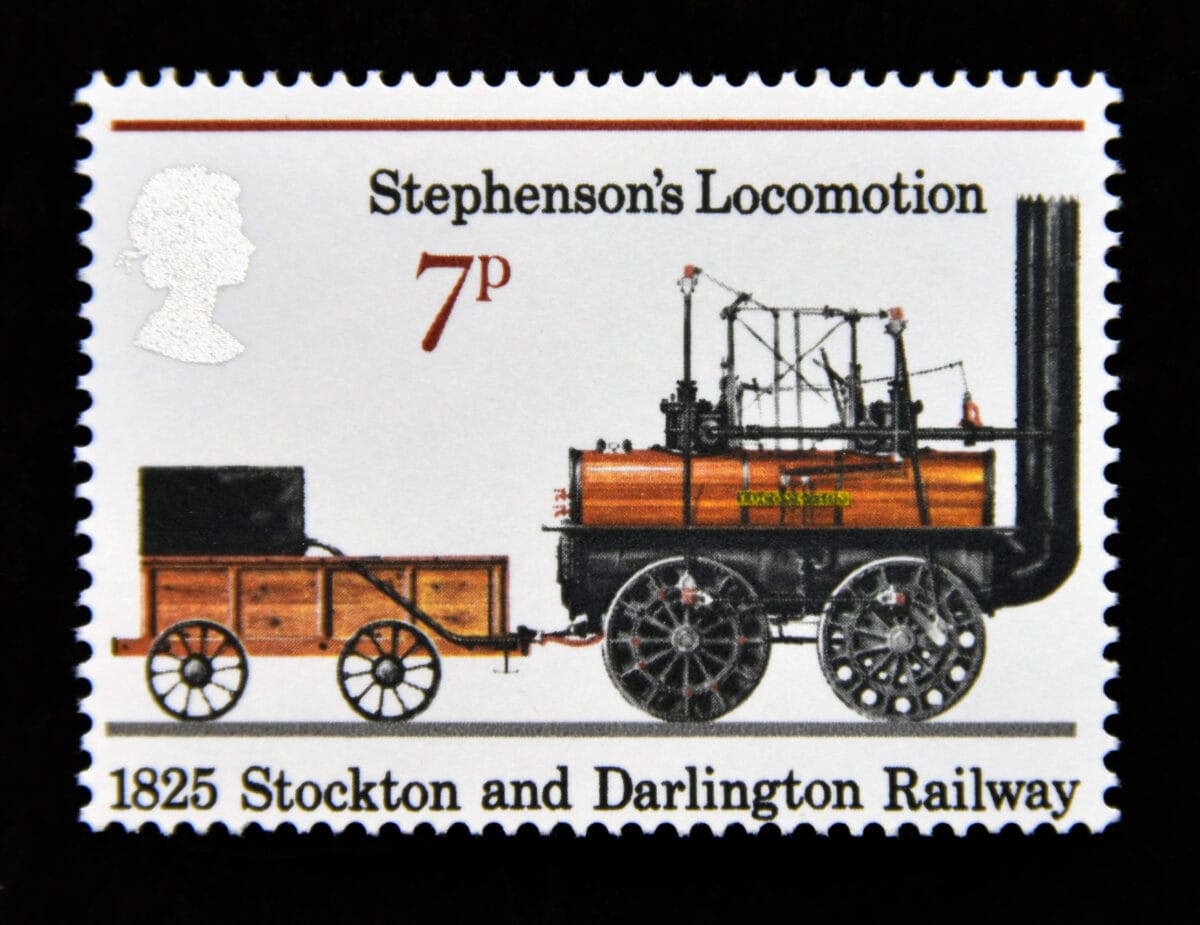
I also enjoy a (reliable!) train journey, and used to read a lot travelling from the NW England through the London underground (Euston-Waterloo) to Plymoth, and later to Portsmouth in the 1970s. Happy days, then and today; with the railways reasserting their relevance. A quality shared with a certain little-big model I know.

Individual
|
      INTERPERSONAL    :     SCIENCES               
HUMANISTIC =========================  MECHANISTIC      
 SOCIOLOGY  :    POLITICAL 
|
Group

Rail 200

Nationalised - Private
Private - Nationalised
Charity - CIC


Monday, October 06, 2025

On the 'front' - or behind the line(s)?

In many sources on socio-economics, politics, health policy ... I still note the challenge to represent the INDIVIDUAL and COLLECTIVE within a figure. Of course the author's subject, purpose, the context all influence the final depiction and the message to be conveyed. 

I wonder if Hodges' model can provide a starting point to explore relationships, oppositions, arguments and synergies?

Hodges' model provides an 
expansive and potentially powerful 'front' 
through its horizontal axis 
[ HUMANISTIC ↔ MECHANISTIC ].

This axis - drawn across and through the model vertically, may make it easier(?) to analyse and synthesize the relations at work and produce a diagram?

Individual
|
      INTERPERSONAL    :     SCIENCES               
HUMANISTIC =========================  MECHANISTIC      
 SOCIOLOGY  :    POLITICAL 
|
Group
INDIVIDUAL

INDIVIDUAL

GROUP - POPULATION

GROUP - POPULATION


Monday, September 22, 2025

A paper of special note: 'The Relational Care Framework ...'

Doing a search on 'person-centered care' the following paper was listed. It is useful too in contrasting personhood, and selfhood in relation to dementia, through 'The Relational Care Framework'

Abstract

We argue that contemporary conceptualizations of “persons” have failed to achieve the moral goals of “person-centred care” (PCC, a model of dementia care developed by Tom Kitwood) and that they are detrimental to those receiving care, their families, and practitioners of care. We draw a distinction between personhood and selfhood, pointing out that continuity or maintenance of the latter is what is really at stake in dementia care. We then demonstrate how our conceptualization, which is one that privileges the lived experiences of people with dementia, and understands selfhood as formed relationally in connection with carers and the care environment, best captures Kitwood’s original idea. This conceptualization is also flexible enough to be applicable to the practice of caring for people at different stages of their dementia. Application of this conceptualization into PCC will best promote the well-being of people with dementia, while also encouraging respect and dignity in the care environment.


Matthew Tieu, Steve Matthews, The Relational Care Framework: Promoting Continuity or Maintenance of Selfhood in Person-Centered Care, The Journal of Medicine and Philosophy: A Forum for Bioethics and Philosophy of Medicine, Volume 49, Issue 1, February 2024, 85–101, https://doi.org/10.1093/jmp/jhad044


The authors may find Hodges' model of relevance.

See also: 'subject' : 'object' : 'relational' : 'objective' : 'subjective' : 'personhood' : 'self' : 'identity'

Monday, August 18, 2025

28th Annual International Hybrid Nursing Philosophy Conference, July 22-24, 2026


Join the UC Irvine Sue & Bill Gross School of Nursing Center for Nursing Philosophy in association with the International Philosophy of Nursing Society (IPONS) for the 28th International Nursing Philosophy Conference.

The HYBRID conference will take place physically at the University of California, Irvine in sunny, coastal Southern California, USA, as well as virtually via Zoom.

This hybrid, multidisciplinary conference aims to generate conversations between philosophy and nursing through a series of invited panel conversations and events. Cutting-edge peer-reviewed abstract panels on current scholarship and ideas in nursing philosophy will also be featured.

Contacts and site ...

Friday, June 20, 2025

Theatre in TI:ME

The Crafty Art of Playmaking
In health we're dealing with time in all its forms: cardinal; birth and death and all that happens in-between. Aka, 'life', illness, and palliative care. And, even if not recognised, chronological and pathological time, which policymakers should pay more attention to. The art of theatre, has its time (p.20): stage time, and real (theatre foyer) time. 

'At its most successful, theatre views things from a human standabout.' (p.9). 

I'd second that, especially allied with the notions (ideas!) of health career, and life chances. 

Since the publication of TCAoP in 2004 people seem to quite ready to dispense, disregard, downplay, demote the humanistic with the rise of AI and assisted dying for the terminally ill (of course).

Time recurs - as a frame. (p.25) with a touch of elective surgery. 'Think of your story as a piece of thread. Where you cut in is the point at which the lights come on in Act One. Where you cut out will be your final curtain. (There may be a knot or two in the middle to denote the intervals, too.)' p.25.

In the first post re. TCAoP I stressed the complexity, plethora of ideas that Hodges' model can create. Sir Alan provides a potential 'get of jail free card' (or as near as?) in his original rule no. 9. 

'If a play can be too simple, it can also be too complicated. If one element is particularly complicated, keep the rest of it simple.' (p.25).

Very useful advice! But achieving it when having and applying an idea is another matter.

What's this though? Step back to original rule no. 6:

'There is no hard and fast rule as to which constructional element comes first.' (p.20).

Butrint National Park Albania   

In the guided discovery exercise in students (audiences..) creating the model, there are two constructional elements, that also contribute to the one big idea.

It gets better! Original rule no. 14:

At least fifty per cent of your play is going to be visual. (p.33).

I must make sure I don't confuse concept/ual with visual/imagery.

More to follow.

The Crafty Art of Playmaking by Alan Ayckbourn. Faber, 2004, softcover, ISBN 0571215106.

https://www.concordtheatricals.co.uk/s/45898/the-crafty-art-of-playmaking

Tuesday, June 17, 2025

Theatre - which one?

Summer reading includes Ayckbourne's The Crafty Art of Playmaking published in 2004. Already half way through, writing has been covered, directing follows.

Looking at what I can learn in contrasting health and theatre, there is more than both laying claim to having a 'theatre'. Perhaps health got there first in a very primitive, existential, and fundamental sense. The 'theatre of war' covering battle, and the fight for food and survival. Even as civilisation emerged, on the battle field, triage was practised in a more deliberate way with skills that were built on emerging knowledge handed down orally - to become art.

So, no doubt there was a concurrency going on. Heroics in so many guises, shared around the fire. Plus, our individual dreams and nightmares that are framed collectively.

Ayckbourn offer pithy lessons learned over his career that began in 1959. There's an acting maxim:

'When playing a miser, stress his generosity.'

So can we restate the acting maxim as:

'When playing a patient, stress their strengths'?

Or. 'When playing a patient, stress their personhood'? . . .

If that is a challenge to the healthcare sector (even if unintended), then it is one that is actually long-standing. There are the three R's: rehabilitation, reablement and recovery.

Ayckbourn explains how the darker the subject the more a writer needs to find the light. And vice-versa. This suits me fine, and medicine is recognised as a great source of humour across several cultures.

The book lists a series of  'Obvious Rules' all numbered. 

Of No. 1: Born in Liverpool, I never would look down on comedy; and never as a poor cousin of drama.

After reading his obvious Rule No. 2, 'Never start a play without an idea'; I put my pants back on.

Do I have an idea? Oh my! Well Brian's at least.

In a way it's the other way around. The shout goes up - "Eratosthenes! Please pass me a sieve."

On having an idea, Ayckbourn writes: 'They assume, I think, that if they start the journey, maybe an idea will occur on the way. Perhaps a map of where they're going will blow in through the car window. In my experience this never happens.' p.6.

This is good advice, with the additional complication of having many maps, and yes, none: c/o Hodges' model. I need a theme, a situation and a thread. I'm writing a few ideas down. And helpfully Sir Alan advises not to throw ideas away. He describes, from experience how disparate things can come together.

Today (19th), I finished TCAoP here in Corfu. A great help for me, that is, the writing section pp.3-96; as I will try to explain in further posts. Sooner than expcted, I've started a book that will be a 'review'. 

A visit to Albania tomorrow - early start pick-up 0710.

The Crafty Art of Playmaking by Alan Ayckbourn. Faber, 2004, softcover, ISBN 0571215106.
https://www.concordtheatricals.co.uk/s/45898/the-crafty-art-of-playmaking