Hodges' Model: Welcome to the QUAD: lines

Hodges' model is a conceptual framework to support reflection and critical thinking. Situated, the model can help integrate all disciplines (academic and professional). Amid news items, are posts that illustrate the scope and application of the model. A bibliography and A4 template are provided in the sidebar. Welcome to the QUAD ...

Showing posts with label lines. Show all posts

Monday, August 03, 2026

The Sciences: Points, lines, angles and perspectives on Domains

In Hodges' model the axes are presented - by convention - as perpendicular. From this it follows that the resulting four domains, or quadrants appear as equivalent in terms of the space they each occupy. There are many posts on the blog that present a 2x2 table. When in template form Hodges' model is also a potential corpus, empty apart from its structure, then there must surely be a gross asymmetry in the SCIENCES domain compared with the others, including the SPIRITUAL. Discuss?

#simplicity #complexity #folktheory #humanities #arts #humanistic #emotion #balance

See also: https://hodges-model.blogspot.com/2026/06/h2cm-domains-symmetry.html

Sunday, July 26, 2026

The Line(s)

Foresight, hindsight, sight itself and that illusory association with the line of time is a fascination for us all. No doubt, as a result of the hardwired analogue found in the lifeline and our ultimate fate. Hodges' model acknowledges all these lines; concrete and abstract. The work and health careers, an individual's education career (where accessible / permitted) now lifelong learning.

Abstract things seem tenuous, indistinct, maybe lost somewhere in theory. Concrete on the other hand, is physical, tangible. 

Hodges' model can cover paper with lines, two of them ideally. The model can then be applied in practice.

There is then an interplay between abstract and concrete; between which data, information and knowledge flows, uncertainty reduced. Scope and scale become clearer once assessment, planning, intervention and evaluation are concurrent.

This applies to all lines, if they are not destined to be covered in sand.

My source:  
End of The Line: how Saudi Arabia’s Neom dream unravelled, FTWeekend: 
https://ig.ft.com/saudi-neom-line/
 
See also: 'design' : 'architecture' : 'line'

Monday, June 29, 2026

Where is the Centeredness of Care?

In trying to see Hodges' model anew, which is quite a challenge after four decades; what of the model's structure?

It is easy to get carried away with mathematical terminology:

One line, add another, and they intersect, at a 90 degree right angle. So is centeredness to be found at the intersection point? 

If I'm tying myself up in knots well there's another possibility! 😉 

As a whole it appears the axes of the model are a manifold and not - in the center?

What do you think?


See also: 'What Is a Manifold?'

https://www.quantamagazine.org/what-is-a-manifold-20251103/

Saturday, June 20, 2026

ii Thoughts re. Ecosia's AI Chat 'answer'

The previous post has been updated, to the prompt is added:

 'Please provide sources and references.

[If you are new here, and too Hodges' model please see the bibliography in the sidebar.] 

A 'human' reading (still) makes me wonder if the 'answer' is what I want to hear (as a user)? Is it worrying that the first provides a 'Conclusion' the latest does not. The table is helpful as I believe that Hodges' model has a role across research (and political!) -isms through methodologies and methods. The model can also encompass ('eat'!) aspects of scale, or level.

The reply still gives me quadraphonic joy (if read out-loud). Not only are the domains recognised, but the LLM/agent ai takes the intrapersonal / interpersonal in its stride (from the blog?). Subjects related to each of the domains are given in brackets. 

There is of course a bias (several) in the prompt, as the care domains were never intended to be comparable. It is positive that each domain is seen as having its own specific scope and function. Over twenty years notes were started on a paper on Hodges' model and its role/function in helping to define 'scope of practice'. Significantly, in the UK the rise of associate positions across disciplines has provoked much debate, vitriol (on X and union and lobbying) and soul searching in certain professional groups. Given the increasing importance of the global health and social care workforce this trend is reflected globally. A situation set to be extended with uncertainties and tensions exacerbated by artificial intelligence in practice.

Before 'explaining' the asymmetries (in points 1-4) it seems the domains are complementary (for all their differences), and provide a holistic underpinning for the model as a whole (my reading).

1. Scope and Focus 

Interesting, how the science and sociology domains are described as broad. Perhaps I am underestimating the depth/density of sociology, after all folk theory is found there? Unfortunately, we can also add a myriad of conspiracy theories? Sociology can also lay claim to quite a few constructions of its own. Including aesthetics as a bridge to architecture and design(?).

On 'X', Hodges' model has been described negatively as inviting / fostering generalism. So, this is a bad thing? Is it not strange then that your Advanced Nurse Practitioner, Consultant doctors (all specialities) and students cross-curricula can all use Hodges' model? The fact that my own responses were never engaged has helped train my thought. Here the relevance of the model to students and continued professional development is made through generalizable knowledge.

The response to the political domain is supportive, acknowledging resource allocation and the distinction between individual and collective (see for example):

S. Bettiol, P. Jones, H. A. Onyedikachi, and W. G. Kernohan, (2026) Bridging Gaps in Oral Health Frameworks: Mapping With Hodges' Health Career - Care Domains - Model, Journal of Public Health Dentistry. 1–14, https://doi.org/10.1111/jphd.70034.  

I've seen tweets today regards IQ reductions in younger people. This is one reason for support of the top-left mental domain being designated as 'Intrapersonal – Interpersonal'. Our interpersonal skills and awareness are surely dependent upon our achieving a given level of inner mental life? Encouraging to see how subjectivity and objectivity is assigned too. Although, I think I'm in an echo chamber!

2. Epistemological Differences

In arguing for a model of health and social care that goes beyond:

  • medical model;
  • bio-medical model;
  • bio-psycho-social model.

Reading 1-2 from the perspective of the Intrapersonal – Interpersonal domain you see how limiting this is, if an individual in a mental health/illness/mental capacity context can only point to sciences and sociological domains. Indeed, they may be relying guardians and advocates as they are unable to does this and raise the political matter of their rights. Without the POLITICAL domain (or as a result of it - neglect, structural racism) there is no law enshrining independent advocacy...

3. Practical Application in Care

To care is to act. Think about triage and emergency response.

Now in the 21st century 'care' must include self-care, health and social care, and (delayed or not you decide?) planetary care.

This necessitates a change of mindset at an individual and collective level. Consider the literacies that (again) young people must master to be effective, productive and happy citizens tomorrow?

So the following is a gift (in my eyes): 

"This means the intrapersonal-interpersonal domain is not just another 'content area' but a lens through which all other domains are experienced and integrated."

4. Hierarchy of Integration

'While the domains are conceptually equal in Hodges’ model' ..

This is interesting in itself.

[There does seem a emphasis upon the Intrapersonal – Interpersonal domain in this answer?]

This is quite a step, as the idea of a nexus and integration are picked up; and pointing to what are the determinants of health:

'For example:

  • A scientific understanding of depression (e.g., serotonin levels) must be interpreted through the intrapersonal experience of the individual.
  • A sociological analysis of healthcare disparities must be understood through the political structures that enable or inhibit change.
  • A political decision about resource allocation must be filtered through intrapersonal values and priorities.'

I'm pleased I did this, as long as I'm not being trapped in an epistemological cocoon: otherwise known as a circle. Apart from a few occasions, I have not used AI/LLMs, perhaps it is time to explore more? I'd like to preserve my naivety, especially were maths is concerned. I'm not sure of what baggage I may pick up and lack the knowledge to interpret?

Previous post:  https://hodges-model.blogspot.com/2026/06/h2cm-domains-symmetry.html

Friday, June 19, 2026

[Updated] AI Chat: Are the domains of Hodges' model comparable?

In drafting a future post: 'The Sciences: points, lines, angles and perspectives on domains', I thought I would ask Ecosia's AI Chat a related question, here is the (quick) prompt and reply:

PROMPT: 
In Hodges' model there are four care, or knowledge domains. The four domains are the sciences, sociology, political, and intrapersonal – interpersonal domain. In terms of potential content are these domains comparable, or is there an essential asymmetry? Please provide sources and references.

(I have saved the prompt for future reference and refinement.)

RESPONSE: [updated 21st June 2026]


Hodges’ model (also known as the Health Career Model or h2cm) is a conceptual framework that organizes knowledge and care into four quadrants, each representing a distinct domain of human experience and knowledge. These domains are:

  1. Sciences (empirical, biological, and physical sciences)
  2. Sociology (social structures, relationships, and community)
  3. Political (power, policy, governance, and resource allocation)
  4. Intrapersonal – Interpersonal (psychological, emotional, and relational aspects of the self and others)

Are the Four Domains Comparable or Asymmetrical?

The four domains in Hodges’ model are not strictly symmetrical in terms of their content, scope, or application. While they are presented as equal in structure (each occupying one quadrant of the model), their potential content, theoretical foundations, and practical implications can vary significantly. Here’s why:

1. Differences in Scope and Focus

  • Sciences (Quadrant 1):
    This quadrant focuses on empirical, measurable, and biological aspects of health and care, such as anatomy, physiology, and pathophysiology. Its content is often highly specialized, technical, and evidence-based, rooted in natural sciences like biology and chemistry.

    • Example: The role of hormones in stress response or the pathophysiology of diabetes.
  • Sociology (Quadrant 2):
    This quadrant addresses social structures, culture, and community dynamics. Its content is broader and more interpretive, drawing from sociology, anthropology, and social psychology.

    • Example: The impact of socioeconomic status on health outcomes or the role of family support in recovery.
  • Political (Quadrant 3):
    This quadrant examines power, policy, governance, and resource distribution. Its content is highly contextual and often contested, influenced by political science, economics, and public policy.

    • Example: The effect of healthcare policies on access to services or the role of advocacy in shaping health priorities.
  • Intrapersonal – Interpersonal (Quadrant 4):
    This quadrant focuses on individual psychology, emotions, and relationships. Its content is highly subjective and variable, drawing from psychology, psychotherapy, and ethics.

    • Example: A patient’s personal beliefs about illness or the dynamics of a therapeutic relationship.

2. Differences in Methodology

  • Sciences and Political domains often rely on quantitative methods (e.g., experiments, statistical analysis, policy evaluations).
  • Sociology and Intrapersonal domains frequently use qualitative methods (e.g., interviews, case studies, ethnography).
  • This methodological diversity can create asymmetry in how knowledge is generated, validated, and applied.

3. Differences in Practical Application

  • Sciences and Political domains  are often system-level and influence macro-level decisions (e.g., clinical guidelines, healthcare policies).
  • Sociology and Intrapersonal domains are more individual- or community-level, focusing on personalized care, cultural competence, and therapeutic relationships.
  • This can lead to asymmetry in impact, where some domains (e.g., Political) shape broad systems, while others (e.g., Intrapersonal) focus on direct human experience.

4. Theoretical Foundations

  • The Sciences and Political domains are grounded in positivist and structuralist theories, emphasizing objectivity and external reality.
  • The Sociology and Intrapersonal domains are influenced by interpretivist and constructivist theories, emphasizing subjectivity and lived experience.
  • This theoretical diversity can create asymmetry in how knowledge is perceived and valued in different contexts.

Is There an Essential Asymmetry?

Yes, there is an essential asymmetry in the potential content of the four domains. While the model presents them as equal in structure, their content, methods, applications, and theoretical foundations are not interchangeable. The domains complement each other but serve different purposes in understanding and delivering care.

Sources and References

  1. Conceptual Overview of Hodges’ Model:

  2. Theoretical Foundations:

  3. Discussions on Asymmetry and Complementarity:

Summary Table: Asymmetry in Hodges’ Model Domains

DomainContent FocusMethodologyTheoretical FoundationLevel of Application
SciencesBiological, empirical dataQuantitativePositivistMacro (systems, clinical)
SociologySocial structures, communityQualitative/QuantitativeInterpretivist, StructuralistMeso (groups, communities)
PoliticalPower, policy, governanceQuantitative/QualitativeStructuralist, Critical TheoryMacro (systems, policy)
Intrapersonal-InterpersonalPsychology, emotions, relationshipsQualitativeConstructivist, HumanisticMicro (individual, relational)

PROMPT: 
In Hodges' model there are four care, or knowledge domains. The four domains are the sciences, sociology, political, and intrapersonal – interpersonal domain. In terms of potential content are these domains comparable, or is there an essential asymmetry?


In Hodges’ model, the four care (or knowledge) domains are:

  1. Sciences (biological, physiological)
  2. Sociology (social, cultural, environmental)
  3. Political (legal, policy, organizational)
  4. Intrapersonal – Interpersonal (psychological, emotional, relational)

These domains are not strictly comparable in terms of content, scope, or function. Instead, they represent complementary perspectives that together form a holistic framework for understanding human health, well-being, and care. Here’s why there is an essential asymmetry between them:

1. Scope and Focus

  • Sciences and Sociology are broad, well-established academic disciplines with extensive theoretical and empirical foundations. They provide generalizable knowledge about biological processes and social systems.
  • Political is more narrowly focused on power structures, governance, and resource allocation. While critical for systemic change, it is less about individual experience and more about collective frameworks.
  • Intrapersonal – Interpersonal is deeply personal and subjective, focusing on individual psychology, emotions, and relationships. It is less about universal laws and more about unique, context-dependent experiences.

This makes the intrapersonal-interpersonal domain inherently asymmetrical compared to the others, as it deals with subjectivity and variability rather than objective or structural phenomena.

2. Epistemological Differences

  • Sciences, Sociology, and Political domains rely on external observation, measurement, and analysis. They are rooted in positivist or structuralist traditions, where knowledge is often generalized.
  • Intrapersonal – Interpersonal is rooted in interpretivist and phenomenological traditions, where knowledge is co-created through subjective experience and dialogue. It resists universal generalization.

This creates a fundamental asymmetry in how knowledge is produced and validated across the domains.

3. Practical Application in Care

  • The Sciences, Sociology, and Political domains provide frameworks for action (e.g., medical treatments, social policies, legal rights). They are instrumental in shaping systems and interventions.
  • The Intrapersonal – Interpersonal domain is transformative—it shapes how individuals perceive, interpret, and respond to care. It is the domain where meaning is made and agency is exercised.

This means the intrapersonal-interpersonal domain is not just another “content area” but a lens through which all other domains are experienced and integrated.

4. Hierarchy of Integration

While the domains are conceptually equal in Hodges’ model, in practice, the intrapersonal-interpersonal domain often acts as the nexus where the other domains intersect. For example:

  • A scientific understanding of depression (e.g., serotonin levels) must be interpreted through the intrapersonal experience of the individual.
  • A sociological analysis of healthcare disparities must be understood through the political structures that enable or inhibit change.
  • A political decision about resource allocation must be filtered through intrapersonal values and priorities.

This integrative role makes the intrapersonal-interpersonal domain asymmetrical in function, even if not in formal status.

Conclusion: Essential Asymmetry

The four domains are not comparable in content or function. Instead:

  • The Sciences, Sociology, and Political domains provide structural and systemic knowledge.
  • The Intrapersonal – Interpersonal domain provides subjective and relational knowledge, which is essential for meaning-making and agency.

The asymmetry arises from the epistemological and practical differences between objective/systemic knowledge and subjective/experiential knowledge. Hodges’ model emphasizes that all domains are necessary, but they operate in fundamentally different ways.

Friday, April 10, 2026

'Healing grid' - the penultimate?

Healing grid by Ryota Kanai

Hodges' model is surely a clear winner 'healing grid'? Acting not only in healing, but in recovery, rehabilitation, reablement, palliative, illness and well-being too.

Quite a grid all-in-all (which also fascinate grandchildren).

My source: 

Previously: 'grids' : 'perception' : 'vision' : 'lines' : 'geometry'

#ArtemisSafeReturn #PrecisionGridManoeuvres

Wednesday, January 28, 2026

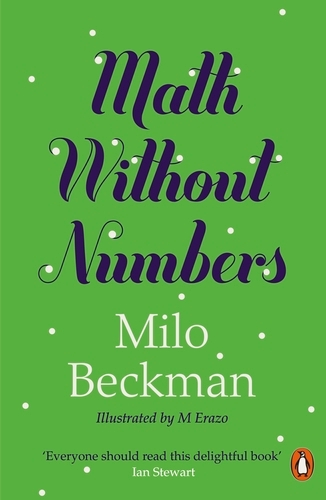
ii Math Without Numbers - final notes & obs

In Math Without Numbers the chapters and topics flow and slot in really well, even for novices. There is no index, the inclusion of which is a first-check usually. The book's appeal was its non-technical title and invitation reading the sleeve notes. The title throws up words and visuals, the latter, to repeat, are ably and simply furnished by M Erazo. Remaining notes to highlight (record here) include (and capture overthinking!):

Math Without Numbers

Reference to 'ideology space', 'conceptual space' and the role of visual analogies, idioms, and how 'the list of spaces to choose from is always the same.' ... pp.28 & 29. On page 30, 'When you say that gender is a spectrum rather than a binary, that's a topological claim: You're  saying gender space is one-dimensional (a line) rather than zero-dimensional (two separate points). 'Questions about which conceptual paradigm to use sometimes boil down to questions of dimensionality.' Discussion of an infinite continuum had me making an axis of Hodges' model warp, this way and that: concave-convex (p.59). Maps and correspondence is already well established, as per a new paper (abstract and thanks to follow 1st Feb):

S. Bettiol, P. Jones, H. A. Onyedikachi, and W. G. Kernohan, “Bridging Gaps in Oral Health Frameworks: Mapping With Hodges' Health Career - Care Domains - Model”, Journal of Public Health Dentistry (2026): 1–14, https://doi.org/10.1111/jphd.70034 

Interesting to read of general map facts, flowing substances inside a rigid container, and vector maps. A pencilled note to share:

'Because when you look at things in the abstract like this, dusting off the specifics of a situation to focus on underlying dynamics, you start to realize there are only so many different patterns and structures out there. These patterns and structures are called mathematical objects, and thinking about them is called math.' p.79

The chapter on (generalised) Algebra, forced me to reconsider the Socratic, guided discovery and arrival at the structure of Hodges' model. (lines & points : nodes & edges). For page 88, I noted 'generic' invites abstraction. Isomorphism is discussed. Again I tested this against Hodges' model. I've always found it helps to immerse oneself in a new vocabulary: so welcome (anew) - structures, fields, rings, groups, loops, graphs, lattices, orderings, semigroups, groupoids, monoids, magmas, modules . . . algebras, p.101. Some are named only, but on graphs raises questions ... p.103.

'How densely interconnected is it? How segregated into different cliques? Does it cut clean into two subgraphs, with no connections between them? Can it be drawn without any lines crossing? Are there any lone dots without any connections?' 

There's the matter of 'friend of a friend' who have broken out of the sociological domain. Other notes to self: Significance of concepts - patient-centred, service-centred? The distance between between (vertical, horizontal, diametric)? There are weighted graphs (p. 104) and acknowledgement of category theory (p.115). A chapter on modelling pp.161-175, and models p.164 & p.169 are just a selection of highlights on a marvellous tour.

A hidden puzzle in the book remains a mystery for me.

Milo Beckman (2021) Math Without Numbers. London, Penguin Books. Illustrated by M. Erazo.

Previously: 'math' : 'diagrams' 
Plus, now archived Science domain links: 
https://web.archive.org/web/20150414125339/http://www.p-jones.demon.co.uk/linksTwo.htm

Believe it or not, this 'diversion' does help my reading of Order and the Virtual. 

Sunday, January 25, 2026

'Maths Without Numbers' by Milo Beckman

'Before you go tell your loved ones that you read a book about math and learned that a square is a circle, keep in mind: Context matters. A square is a circle, in topology. A square is most certainly not a circle in art or architecture, or in everyday conversation, or even in geometry, and if you try to ride a bike with square tires you won't get far.' pp.7-8.

'Like a line:

(Illustration - pen drawing of a line, a 'C' and an almost closed circle.)

A line can be bent almost into a circle, but to finish the job we'd need to click the ends together--not allowed. No matter how you manipulate a line, you'll always have those two special points on either end, where the shape just stops. You can't get rid of end-points. You can move them around and stretch them apart, but the two end-points are an unchanging feature of the shape.

For a similar reason, a figure-eight is a different shape too. There aren't any end-points, but there's still a special point in the middle where the lines cross, where there are four arms reaching out instead of the usual two at any other point. Stretch and squeeze all you want, you can't get rid of a crossing-point either. p.9.

Math Without Numbers
'The circle (aka S-one) and the infinite line (named R-one) are the only manifolds in the first dimension. To avoid end-points, you either have to loop back around or just go on and on forever. And don't forget: Because all the shapes in topology are stretchy, this also covers any closed-loop shape and any goes-on-forever shape. It doesn't have to be literally a circle or a straight line.' p.16.

The third dimension, dough-type manifolds, is pretty well understood at this point, though it took a hundred years and a million-dollar prize to get there, and we still don't have a totally neat and clean classification like the lower dimension. In dimensions five and up, topologists use a set of techniques called "surgery theory" to operate on manifolds and construct new ones.

That just leaves dimension four.

I wish I could tell you what's going on in dimension four. I'm not sure there's anyone who really knows. It's a weird boundary case: too many dimensions to do visually, but not enough to use sophisticated surgery tools. There are entire textbooks dedicated to what little we know about four-manifolds, and I couldn't make sense of anything past the opening pages. A professional topologist once told me she'd wanted to work on four-manifolds as an undergraduate but was advised to steer clear.' pp.23-24.

"Like a line" ... Yes. Take two that cross. Then the universes open up. 

Milo Beckman (2021) Math Without Numbers. London, Penguin Books. Illustrated by M. Erazo.

Previously: 'surgery'

Sunday, December 21, 2025

Disciplinary bridges ... how's your sense of direction?

As an advocate for Hodges' model, I've acquired an affinity for inter- multi- transdisciplinary bridges, especially medical sociology, those leading towards the mathematical, and human geography. An old but significant influence is:

Chapman, K. (1979). People, pattern, and process: an introduction to human geography. London: Edward Arnold.

Chapman begins with the concept of distance, speed of movement and the consequence of the shrinking world. Our ability to move faster has radically altered the total travel time: from what was a 50 mile walking-day. In chapter 2, 'A Conceptual Framework' refers to:

  • Decision making - the basic mechanism
    • The Spatial Context
    • The Content of Space
  • Dimensions of Space
  • Spatial Process - Causality in Time and Space

Overall, the book also takes me back to a paper I cited in 2007: Bell jars and bell curves

I'm sure the 'School of Geography' at Leeds is unrecognisable today from that of the 1980s. But the referenced paper in the 'Bell jars..' post:

Macgill, S.M. (1984). Structural Analysis of Social Data, A Guide to Ho's Galois Lattice Approach and A Partial Re-Specification of QAnalysis, Working Paper 416, School of Geography, University of Leeds. Abstract 1985

- still gives me an itch I can't scratch. 

 I could not fully understand, or follow, the print quality doesn't help, but it captured my imagination (perhaps that is enough?).

Chapter 9 stands out with 'Spatial Pattern' pp.203-234, 9.1.1 Topologic Structures, pp.205-209. Here, Chapman explains and has examples of connectivity matrices, with three indices to calculate the connectivity in a graph. All grist for the mill.

Happy Solstice too!

Thursday, December 18, 2025

Learn your lines and the hyperplane will follow i

Take an empty [rectangular] space (A4 paper in landscape)

Blank! Isn't it?

Take a line. Yes, call it that.

Divide the space vertically, and equally, in two. 

Do this again but horizontally.

You can call these lines, partitions if you wish?

Or, as per adopted convention here, axes.

Now, there are four empty spaces.

These spaces can be called quadrants, planes, or domains. The latter term usually adopted here.

Labels can be decided, and assigned to the axes and the resulting domains.

Given a purpose, in practice (initially) the 'empty' spaces have the ability to assign significance to what may be placed within them.

Such decisions are non-trivial, in the sense that context and situation determine what follows, influenced by objective and subjective considerations.

The domains can contain concepts, or keywords with decisions driven by categorical reasoning.

The content of the domains can also be viewed as classes and sub-classes.

ii to follow (with revision here?)

Sunday, November 30, 2025

Interesting ... 'Incidence structure(s)'

Unsurprising, in studying 'Hodges' model, I've been aware of Wilfrid Hodges and model theory for many years.


Now, trying to look at (Brian) Hodges' model using maths, I've wondered about possible connections with Wilfred Hodges' work.

Dr W. Hodges was listed in searches on lines, axes, and structure:
'Algebraists and geometers like to classify structures by the laws which they obey. A typical law for incidence structures reads:

"For any two different lines L and M, there is exactly one point which lies on both L and M."'
My imagination may be getting the better of me, but there seems something profound in the intersection of the model's two axes and the care - knowledge domains that are created (proposed - adopted..)?

So, is Hodges' model a form of 'incidence structure', or does it contain several incidence structures? 

Hodges, W. (1985). Truth in a Structure. Proceedings of the Aristotelian Society, 86, 135–151. http://www.jstor.org/stable/4545041

Friday, November 07, 2025

Half-turns ... to orbit

individual
|
INTERPERSONAL : SCIENCES
humanistic -------------------------------------------  mechanistic
SOCIOLOGY : POLITICAL
|
group-population


 "If you can get your ship into orbit, you're halfway to anywhere."


See: Where did Heinlein say "Once you get to Earth orbit, you're halfway to anywhere in the Solar System"?

Monday, October 06, 2025

On models, gaps, deficits, neglect

This a.m. I responded to an email from -

the SDOH Listserv at https://listserv.yorku.ca/cgi-bin/wa?SUBED1=SDOH&A=1

- about a forthcoming book (news to follow). 

I replied, with thoughts (edited) that link to the post earlier today:

On the 'front' - or behind the line(s)?

As a community mental health nurse, I've always recognised (as best I can) the critical, power relation of psychiatry.

This is why I study - champion Hodges' model, because the -
  • medical model
  • bio-medical
  • bio-psycho-social models 
- are all inadequate (in the 21st C. and supposedly post-Institutional care?).*

Inclusion of the 'Political' domain in Hodges' model, is critical in the negotiation between the person and collective.

This is what opens up the wide, expansive 'front' in Hodges' model, where relations can be explored in abstract and concrete terms.

A point I'm currently working through (post - paper?): is it ironic that that education and health have acknowledged and try to mitigate(?) the 'deficit model', but in the very conceptual frameworks / models that these disciplines & professions deploy (esp. medicine?), there is a deficit* - manifest in were we are and how we Care today and tomorrow. This is further aggrevated as capitalism clearly has its way (counter-lobbying the health and care professions)?

*tantamount to neglect?

Despite the pioneering efforts and work of several leaders e.g. Virchow, and fields of medical sociology and public (mental) health.

See also - Joe Wicks: Licensed to Kill Channel 4 UK. 2000hrs 6th October 2025.

'Cereal'

Monday, September 29, 2025

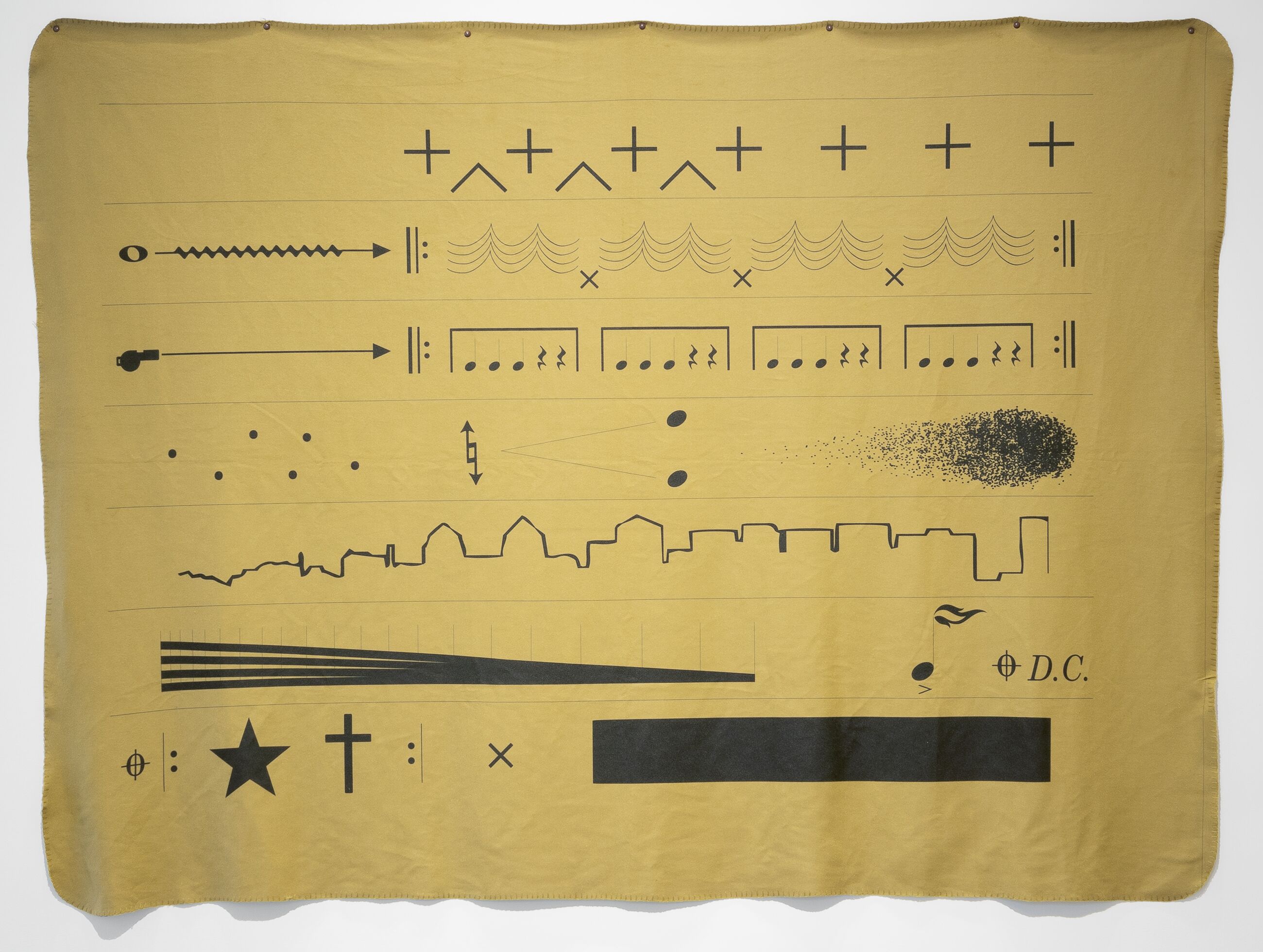
Raven Chacon - graphical musical scores

Individual
|
      INTERPERSONAL    :     SCIENCES               
HUMANISTIC  --------------------------------------  MECHANISTIC      
 SOCIOLOGY  :    POLITICAL 
|
Group
'The artist and composer Raven Chacon, 46, who grew up in Albuquerque and now divides his time between the city and upstate New York, used to explore these lava fields as a youngster, ingesting psychoactive plants such as jimson weed and searching for petroglyphs on the sides of rocks. Some - spirals, zigzags and dotted lines, for example - have found their way into the graphic musical scores for which he is now known. When I visited him in Albuquerque, he drove me out to see them.'
Raven Chacon, American Ledger No. 1 (Army Blanket), 2020. Graphic score


My source: Griffin, J. Sound of a different music. Life&Arts. FT Weekend. 24/25 February 2024. p.17.

Image: ECHOES OF A PLACE - Raven Chacon on transforming land, memory and political resistance into sound: https://www.hauserwirth.com/ursula/echoes-of-a-place-raven-chacon/

See also: RAVEN CHACON - https://spiderwebsinthesky.com/

https://en.wikipedia.org/wiki/Raven_Chacon

Previously: 'music'

Saturday, September 06, 2025

Scholarship in Arnold Wesker's 'The Friends'

... n'just t'lethee know that's, scholrship up int North ...

'MANFRED. Our trouble, Crispin, us lot, the once-upon-a-time bright lads from up north, is that we've no scholarship. Bits and pieces of information, a charming earthiness intelligence and cheek, but-not scholarship. Look at these books here. (He picks up a pile and throws them round him.) Renan, Taine, Kirkegaarde, Wittgenstein, Spengler, Plato, Jung, Homer, Vico, Adorno, Lukacs, Heine, Bloch-you've not heard of half of them, have you? And half of them, two-thirds, I'll never read. Do you know, new knowledge disrupts me. Because there's no solid rock of learning in this thin, undernourished brain of mine, so each fresh discovery of a fact or an idea doesn't replace, it undermines the last; it's got no measurement by which to judge itself, no perspective by which to evaluate its truth or its worth; it can take no proper place in that lovely long view of history scalloped out by bloody scholarship, because each new concern renders the last one unimportant. No bloody scholarship, us. And when I sometimes get a feeling that two people in love or one man afraid of death might be a supreme consideration, along comes this man with his 'we are moving into phases of creative disorder' and his 'everywhere the lines are blurred' and I've no defence. He sounds so right, I think, and besides-he's got scholarship. What's 'silly loving' and 'banal dying' in all that? Evil? You want me to confess to the knowledge of evil? I confess it. I say it-evil! So? And what  shall I do with that bit of knowledge?' p.18.

 WESKER, Arnold. The Friends. London: Jonathan Cape, (1970). Hardcover. First edition.

Sunday, August 24, 2025

Nothing new under the Sun . . .

"The quadrangle is the token of a new humanity. The square is to us what the cross was to the early Christians". 

Theo van Doesburg

Tate Liverpool visit 13th June 2008.

Wednesday, April 09, 2025

All Day All Night - c/o Christine Sun Kim

Source: https://whitney.org/media/61514


individual
|
INTERPERSONAL : SCIENCES
humanistic ------------------------------- mechanistic
SOCIOLOGY : POLITICAL
|
group
'synaesthetic sphere'

DEAFNESS


SOCIETY

parents signing
friends signing?

ghosting

SOCIO-


ghosting

accessibility
inclusion


-POLITICAL

Ack. Christine Sun Kim - https://christinesunkim.com/

Liverpoool Biennial 2025 - Christine Sun Kim (Look forward to this - may post again.)

My source: Budick, A. The sound of Deaf rage, Life&Arts, FT Weekend. 1-2 March 2025, p.16.

Wednesday, August 02, 2023

"Rational Concepts" 1977 by Norman Dilworth

"Rational Concepts" 1977 by Norman Dilworth. Tate
© Norman Dilworth

Hodges' model: seeking rational* concepts to deliver person-centred, integrated care and make sense of subjective and objective realities.

ARTIST Norman Dilworth 1931 – 2023 [Born in Orrell, Wigan]
MEDIUM Screenprint on paper
DIMENSIONS Image: 600 × 600 mm
COLLECTION Tate
ACQUISITION Purchased 1981
REFERENCE P07424

[NOT ON DISPLAY]

Tate: https://www.tate.org.uk/art/artworks/dilworth-rational-concepts-p07424

*Irrational too.

I sketched Dilworth's image on 5th March at Tate Liverpool, the exhibition: "Keywords. Art, Society and Culture in 1980s Britain" from 28 Feb 2014 to 11 May 2014.

Monday, May 08, 2023

Safety first: Hard hats must be worn^


- this is a construction site.


INDIVIDUAL
|

 INTERPERSONAL    :     SCIENCES               
HUMANISTIC --------------------------------------  MECHANISTIC      
SOCIOLOGY  :   POLITICAL 
|
GROUP
This may be another distraction?

Before I examine and explain Hodges' model as a generic conceptual framework, model of care, (implicit theory?) . . .
I need to explain, provide an account for the model's construction.


Image: 

https://www.safetysign.com/products/5467/danger-hard-hats-must-be-worn-sign

^Safety boots, high viz vests ...

Tuesday, May 24, 2022

A Panopoly of Panopticons

INDIVIDUAL
|
 INTERPERSONAL    :     SCIENCES               
HUMANISTIC --------------------------------------  MECHANISTIC      
SOCIOLOGY  :   POLITICAL 
|
GROUP


Cognitive (Care) Panopticon:

You're looking at the whole thing now

'a' mind ...


PANOPTICON:
Architectural design
Lines of in-sight

Digital Currency Electronic Payments
[DCEP]


The primary Panopticon:

The community ...

"Jeremy Bentham, an 18th century philosopher and social theorist, envisaged a building designed to allow all prisoners of an institution to be observed by a single security guard. It was called a Panopticon; and in today's world the equivalent will be digital - the emergent property of a swathe of various technologies welded together by a regime intent on total control of billions of minds."

 Panopticoin  [DCEP]


My source:

"China's new 'panopticoin', What Investment, Dec. 2019. p.50.