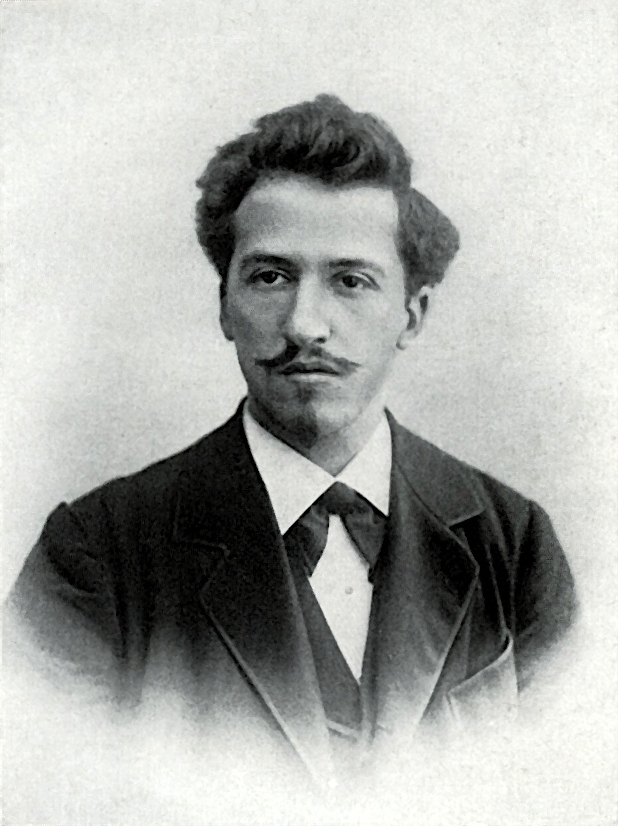
Nothing new under the Sun . . .
"The quadrangle is the token of a new humanity. The square is to us what the cross was to the early Christians".
Tate Liverpool visit 13th June 2008.
Hodges' model is a conceptual framework to support reflection and critical thinking. Situated, the model can help integrate all disciplines (academic and professional). Amid news items, are posts that illustrate the scope and application of the model. A bibliography and A4 template are provided in the sidebar. Welcome to the QUAD ...
"The quadrangle is the token of a new humanity. The square is to us what the cross was to the early Christians".
Tate Liverpool visit 13th June 2008.
"The paper card used to create this collage by the artist Vera Spencer may look unassuming, but the idea behind them is monumental. Around 1800, the French merchant and weaver Joseph Marie Jacquard first developed the automated loom, a machine which used perforated cards to store advanced weaving patterns. These perforations - a series of holes or not-holes - created the world's first large-scale system of binary data storage. Jacquard's loom went on to inspire British mathematician Charles Babbage to design the Analytical Engine, the first punch-card calculator and a precursor to the modern computer - the potential of which was grasped by the mathematician Ada Lovelace, regarded as the first computer programmer. . . .
Tate Etc. By modifying punched cards, Vera Spencer started up a material fight with the very tissue of automation. The same automation that today, with the invention of self-learning image and text-creating algorithms like Dall-E and ChatGPT, has reached the practices of artists and writers, challenging our very concept of creativity and ultimately threatening their work." p.99.
| creativity | automation material size-scale: loom <> punched card computer tissue | ||
|
Smith, A., on Vera Spencer Artist versus Machine c.1954, Summer 2023, Tate Etc., Issue 58, p.99.
Previous posts on W2tQ:
Ada Lovelace
Posted by Peter Jones at 4:15 pm | PERMALINK
Labels: abstraction , activism , art , artificial intelligence , artist , collage , creativity , data , future , history , machine , magazine , mechanistic , process , programming , scale , Tate , technology , writing
"Stephen Willats aimed to explore the realities of living in a British tower block. The work centres on Mrs Moran, an elderly woman who lived at Skeffington Court in Hayes, West London. Willats photographed and interviewed Mrs Moran over the course of six months. The text in the work is based on these interviews. In his composition, Willats highlights the physical, social and economic constraints that she faced. Each panel also features a question. These invite the viewer to participate directly in Mrs Moran’s lived experiences."
Gallery label, September 2023
Tower blocks are an integral, defining structure in urban and city life. Governance, effective policy, accountability, high standards, public safety and duty of care must not be an after-thought.
|
| ||||
| Grenfell Tower Inquiry Housing policy Housing provision Housing market 'Mobility' Ownership Private, rented Housing Assoc. ... Tower Blocks Life chances - 'Health career' |
Posted by Peter Jones at 4:57 pm | PERMALINK
Labels: accessibility , artist , arts , choices , community , company , friends , Hodges' model , housing , loneliness , mobility , museum , older adults , photos , policy , quality of life , social care , Tate , Tower blocks , transports
 |
| "Rational Concepts" 1977 by Norman Dilworth. Tate © Norman Dilworth |
Hodges' model: seeking rational* concepts to deliver person-centred, integrated care and make sense of subjective and objective realities.
ARTIST Norman Dilworth 1931 – 2023 [Born in Orrell, Wigan]
MEDIUM Screenprint on paper
DIMENSIONS Image: 600 × 600 mm
COLLECTION Tate
ACQUISITION Purchased 1981
REFERENCE P07424
[NOT ON DISPLAY]
Tate: https://www.tate.org.uk/art/artworks/dilworth-rational-concepts-p07424
*Irrational too.
I sketched Dilworth's image on 5th March at Tate Liverpool, the exhibition: "Keywords. Art, Society and Culture in 1980s Britain" from 28 Feb 2014 to 11 May 2014.
Posted by Peter Jones at 3:22 pm | PERMALINK
Labels: art , axes , concepts , domains , drawing , equilibrium , exhibition , Hodges' model , images , lines , museums , object , part , print , rationality , sense making , sketch , subject , Tate , whole
"From where you stand, what is your own position?
How do you look at something?
What is the story that comes out of what you've seen?"
Otobong Nkanga.
| |||
Posted by Peter Jones at 4:14 pm | PERMALINK
Labels: activism , art , arts , awareness , colonial , elements , environment , exhibition , finance , history , industry , land , machine , mechanistic , mining , people , scars , sculpture , sustainability , Tate
|
| ||||
? | ? |
Posted by Peter Jones at 6:22 pm | PERMALINK
Labels: architecture , art , artist , belief , creativity , exhibition , faith , history , Hodges' model , individual , measures , painting , print , public understanding , religion , representation , sciences , Tate , understanding
|
| ||||
|
|
Posted by Peter Jones at 10:01 pm | PERMALINK
Labels: abstract , artist , arts , colour , domains , exhibition , form , Hodges' model , images , individual , lines , Liverpool , meaning , observation , personhood , representation , space , subjective , Tate , UK


 |
| Brian E. Hodges - c/o Brian's family. |
Born in Liverpool, UK.
Community Mental Health Nurse NHS, Part-time Lecturer,
Researcher Nursing & Technology Enhanced Learning
Registered Nurse - Mental Health & General
Community Psychiatric Nursing (Cert.) MMU
PG Cert. Ed.
BA(Joint Hons.) Computing and Philosophy - BIHE - Bolton
PG(Dip.) Collaboration on Psychosocial Education [COPE] Univ. Man.
MRES. e-Research and Technology Enhanced Learning, Lancaster Univ.
Live and work in NW England - seeking a global perspective.
The views expressed on W2tQ are entirely my own, unless stated otherwise.
Comments are disabled.
If you would like to get in touch please e-mail me at h2cmng AT yahoo.co.uk
 orcid.org/0000-0002-0192-8965
-=<>=-