Hodges' Model: Welcome to the QUAD: palliative care

Hodges' model is a conceptual framework to support reflection and critical thinking. Situated, the model can help integrate all disciplines (academic and professional). Amid news items, are posts that illustrate the scope and application of the model. A bibliography and A4 template are provided in the sidebar. Welcome to the QUAD ...

Showing posts with label palliative care. Show all posts

Friday, February 20, 2026

Presentation: 'An example of open research sharing Hodges’ Health Career Model'

From: Ulster University Open Research Conference 2026 

Simms, V., Jacobs, N., Magee, J., De Ornellas, K., Mollik, E., Kernohan, W. G., Leacock, J., Akter, J., Sempey, C., Beech, S. E., Naz Asif, R., Yap, L. K., & Miller, K. (2026, Jan 16). Ulster University Open Research Conference 2026: Conference Speaker Abstracts. Ulster University. Advance online publication. https://doi.org/10.21251/0d7780ce-ce97-468f-b5d5-69201ca90b20

Speaker: Professor George Kernohan 

School or Department: School of Nursing and Paramedic Science Ulster University 

Email: wg.kernohan AT ulster.ac.uk 

The area(s) of open research talk relates to: 
  Practice as research; Open data/ Open code 

Talk Title: An example of open research sharing Hodges’ Health Career Model 

Abstract: 

This paper examines a blog post [see below, pj], “Thinking about a comprehensive framework for dementia,” as a case study illustrating the integration of open research practices within dementia palliative care research. The post introduces the Hodges’ Health Career Model— a four-domain conceptual framework encompassing biomedical, psychological, social, and policy perspectives— to articulate the multidimensional nature of dementia and inform care planning. As an openly accessible research communication, the blog contributes to transparent and inclusive knowledge exchange beyond traditional academic channels. 

The blog exemplifies practice-as-research, translating conceptual development from theory into a form of scholarly exposition that invites engagement from practitioners, policymakers, carers, and people living with dementia. It forms part of a wider programme of work in which the research team openly documents methods, emerging findings, and reflections across scoping reviews, surveys, and service case studies hosted on the same platform. These materials complement peer-reviewed open access outputs, including open publications. 

The project demonstrates alignment with open research principles through prospective protocol registration: the scoping review protocol is publicly available on PROSPERO. The team’s prior work on blogging as a mechanism for knowledge mobilisation strengthens the methodological coherence of using this medium to disseminate conceptual frameworks and preliminary insights.

Although the blog does not itself provide underlying datasets or analytic code, it outlines methodological approaches that could facilitate future open data practices, particularly in qualitative and mixed-methods research. Overall, the case illustrates a pragmatic and pluralistic adoption of open research methods across dissemination, protocol transparency, and public engagement, offering a model for enhancing accessibility and reproducibility in dementia palliative care research.

.

Title: “Thinking about a comprehensive framework for dementia”

Author: Professor George Kernohan

Date: 7 November 2019

Link: https://pallcare4dementia.com/thinking-about-a-comprehensive-framework-for-dementia/

Monday, June 30, 2025

Assisted Dying Bill - UK

Individual
|
      INTERPERSONAL    :     SCIENCES               
HUMANISTIC  --------------------------------------  MECHANISTIC      
 SOCIOLOGY  :    POLITICAL 
|
Group


Choice by dying person of how they die

Anticipation of role of AI

Where does mental illness 'lie'?

Decision needs approval by two doctors

Change in relationship between:
INDIVIDUAL -
Prognosis of < 6 months

Terminal diagnosis

Anticipation of role of AI

Seek assistance to end their life

Decision needs approval by two doctors

What of patients who are comatose?^
Profound Societal Change

Quality of Life

Quality of Death

Impact of 'poor' death on others - friends and family

Vulnerabiity of certain groups

Lest we forget what happened to the nursing and care home sector during COVID*

and the STATE

UK - House of Lords

Oversight Panel: 
Legal figure e.g., King's Counsel; and a Psychiatrist

Doctors and care workers not compelled to take part in assisted dying

What about the psycho-POLITICS of anorexia, severe depression?


^Brian M. Rosenthal. They woke as doctors prepared to remove their organs. The New York Times International Edition, 11 June 2025, p.6. 
https://www.nytimes.com/2025/06/06/us/kentucky-organ-donations.html

Saturday, February 18, 2023

"163 Days"

 INDIVIDUAL
|
 INTERPERSONAL    :     SCIENCES               
HUMANISTIC --------------------------------------  MECHANISTIC   
SOCIOLOGY  :   POLITICAL 
|
GROUP

163 Days - Hannah Hodgson
Poetry in [not in] motion


“Hannah Hodgson takes us to the paradoxical heart of poetry itself: to be held inside a pain both intensified and soothed by the sheer brilliant presence of the poet’s mind.” – Caroline Bird

Hannah Hodgon is an award-winning poet and a palliative care patient. In her compelling debut collection 163 Days, she uses a panoply of medical, legal, and personal vocabularies to explore what illness, death and dying does to a person as both patient and witness.  

163 Days is the length of Hannah’s longest period of hospitalisation to date. In this long poem, she probes various truths, personal and medical; truths which clash like a tray of dropped instruments in a silent operating theatre.

The speaker is a teenager on the cusp of adulthood. Doctors struggle to diagnose her complex conditions. Through daily, diary-like poems we see the children’s ward through Hannah’s eyes. It is decked out in primary colours. Volunteer clowns visit. At seventeen she is ‘too old’ to be here, ‘too young’ to move to the adult ward.

The mundanity of hospital life is marbled by a changing landscape of mood, hope and loss. Her symptoms are painful. She has numerous tests and procedures to keep her alive long enough to figure out what’s wrong. A gap yawns between the person she is, and the person in her medical notes.

In ‘Aftercare’, Hannah navigates the worlds of both nightclubs and hospice care as she embarks on a new version of her life as a disabled adult. 163 Days is an important collection, in which Hodgson’s true voice takes poetry into difficult places.

Listen to the BBC radio play adaptation of 163 Days on the New Creatives website here.

163 Days by Hannah Hodgson, Seren Books ISBN-13: 9781781726471
Publication Date: Monday, March 28, 2022

My source:
Hannah's book in Kirkby Lonsdale, The Book Lounge 17th February 2023.

Thursday, October 20, 2022

... Feathers ... Light ... Corners

INDIVIDUAL
 | 

INTERPERSONAL
   :     SCIENCES             

HUMANISTIC --------------------------------------  MECHANISTIC   

SOCIOLOGY
  :   POLITICAL

 |

GROUP


I love you mum


You named me 'Peter' ...

Grief, is indeed -

Yesterday,
I saw a kestrel
and a sparrow hawk
.       
                  .
- a thing with feathers

... but it was always you,
you are still - the rock -
my rock -
the reason I'm a nurse ...


family
community

humanity


... and why I will
continue to explore
and follow ...


"Using Hodges’ model to prove light can travel around all the methods corners" ...


I cannot see you but I know you are there Crux.

Thursday, March 25, 2021

Anticipatory Prescribing as part of Anticipatory Care

This post is derived from a selection of the main concepts found within three papers (references listed below) on 'anticipatory prescribing'. Some explanation may assist. I have duplicated 1. What is current practice? across the domains to suggest that the question needs to be answered for each of the care (knowledge) domains. The same principle applies to the repetition of the attitudinal questions at the individual and group (sociological) level. Person-centredness demands that the patient's views are paramount plus the aggregated responses of the group as a whole.

Perhaps there is a 'drug TIME' too, which operates across all the domains once more, and each variously weighted objectively and subjectively? The concept of control and assessment of control is also critical.

I've placed GP decision-making across both 'individual' domains described as it is as a 'process' and for the patient as 'bedside manner', as also reflected in the GP and healthcare professional's communication with the family.

Clinical effectiveness and observations are likewise span the interpersonal and sciences domains. This is to denote the need to achieve and sustain parity of esteem and integrate physical and mental health care - pastoral and spiritual also.

'Cost' is anchored in the political domain, but clearly there are much wider economic ramifications, both in quality of life, quality of death and the way 'cost' is determined, measured, analysed, evaluated and reported.

For me nursing, medicine, healthcare are most effective when they are anticipatory. Observation, reflection and critical thinking are key. In a way for an individual to be health literate is a preparation for self-care. Although clearly in a general sense of health and well-being; not necessarily being literate with respect to a long-term medical condition.

Hodges' model is an idealisation and the detail is obviously described in the papers listed. The intention below is for readers to gain an appreciation of anticipatory prescribing and the application and scope of Hodges' model.

 Taking a larger perspective anticipatory prescribing is part of anticipatory care.

@GeriSoc https://twitter.com/GeriSoc/status/1374716732120645632?s=20


individual
|
INTERPERSONAL : SCIENCES
humanistic ----------------------------------------------- mechanistic
SOCIOLOGY : POLITICAL
|
group

Anticipatory Prescribing

Reassurance for patient, family &  friends
clinical effectiveness
subjective TIME
observation
agitation, distress (mood, anxiety, orientation, communication, identity - self, fear, understanding, mental capacity...)

The patient's spiritual well-being needs are met*.

1. What is current practice?

2. What are the attitudes of patients?
3. What are the attitudes of family carers?
4. What are the attitudes of community healthcare professionals?
[as individuals]


GPs’ discussion with patients

(Advanced care planning - choices)

5. What is its impact on patient comfort and symptom control?

Anticipatory Prescribing

Physical access to medication and treatment is assured.
clinical effectiveness
objective TIME
observation
remote anticipatory prescribing increased 24 hours availability
(out-of-hours)


The intervention seeks to improve [my] symptom control

pain, nausea and vomiting, agitation, and respiratory secretions.

The Covid-19 pandemic has accelerated the practice of Anticipatory Prescribing; more terminally ill patients are having end-of-life care at home and in care homes.

1. What is current practice?

New routes of administration

injection, oral, sublingual, or rectal

5. What is its impact on patient comfort and symptom control?
GPs’ decision-making processes
Research:
Systematic review and narrative synthesis
Semi-structured interviews
Web-based survey
An important intervention in supporting patients and families who wish to have last days of life care at home.

1. What is current practice?

2. What are the attitudes of patients?
3. What are the attitudes of family carers?
4. What are the attitudes of community healthcare professionals?
[collectively]

5. What is its impact on patient comfort and symptom control?
Patient and families’ well-being throughout the end-of-life journey

*There is concord and respect regards patient's spiritual well-being needs.

GPs’ discussion with family

family caregiver administration

The Independent Review of the Liverpool Care Pathway found that the use of Anticipatory Prescribing without adequate explanation or justification led to families being concerned about over-sedation and the medication hastening death.

1. What is current practice?

5. What is its impact on patient comfort and symptom control?

6. Is it cost-effective?

Revise pharmaceutical regulations to permit repurposing of anticipatory prescribing medications in care homes, wider community drug access, and recycling unused medications returned to pharmacies.
Address stock shortages.


Bowers B, Ryan R, Kuhn I, Barclay S (2019) Anticipatory prescribing of injectable medications for adults at the end of life in the community: A systematic literature review and narrative synthesis. Palliative Medicine 33(2): 160-177 https://doi.org/10.1177/0269216318815796

Antunes B, Bowers B, Winterburn I, Kelly MP, Brodrick R, Pollock K, Majumder M, Spathis A, Lawrie I, George R, Ryan R, Barclay S. (2020) Anticipatory prescribing in community end-of-life care in the UK and Ireland during the COVID-19 pandemic: online survey. BMJ Supportive & Palliative Care; http://dx.doi.org/10.1136/bmjspcare-2020-002394

Bowers B, Barclay SS, Pollock K, Barclay S (2020) General Practitioners’ decisions about prescribing end-of-life anticipatory medications: a qualitative study. British Journal of General Practice; 70(699) e731-739 https://doi.org/10.3399/bjgp20X712625 


Wednesday, November 06, 2019

So, Hodges' model is all about Vision ...?

... It depends how you define 'vision'
and even then,
Hodges' model is about so much more ...

Inclusion, Holistic bandwidth, Holistic care ...

This is what we should all aspire to
especially as children -
to realise our person-al potential.


INDIVIDUAL
|
INTRA- INTER-PERSONAL : SCIENCES
HUMANISTIC -------------------------------------------------- MECHANISTIC
SOCIOLOGY : POLITICAL
|
GROUP

Dreams
Empathy
Rapport
Attending
Listening
INSIGHT
Knowledge / Learning
Communication / Liaison
Palliative Medicine
Holistic Care
DeafBlind

Alexandra Elaine
Senses
Sight- VISION
0% - 5%
Touch
Negotiation / Navigation Physical
Physical examination
Vital signs
Observation
Surgery
 Patient assessment
Total:  DeafBlind?

Adams

Negotiation - Acceptance
"A DeafBlind Doctor?"
 Patient Reactions
Colleagues - Reactions

‘A doctor said,
what are you doing with
a patient’s cane?’

DeafBlind

Negotiation
Human Rights Law
Employment Law
Equality, Equity
Governance
Political Accessibility
'Tick Boxes'
Activism: TEDMED
DeafBlind


Sources:
BBC and Andrew Gregory, Healing touch of the deaf and blind doctor-to-be, The Sunday Times, September 29, 2019, p.3.


This post is a reminder for me about the accessibility of this blog...

Monday, July 01, 2019

Developing a Palliative Care Model for People with Dementia in the Community c/o @PallC4Dementia

http://www.professionalpalliativehub.com/research/palliative-care-research-projects/dementia-model/dementia-community

Challenge

People are living longer, which means that more of us will get age-related illnesses such as dementia. Dementia is caused by different diseases of the brain. These diseases affect the parts of the brain which are normally used for learning, memory and language. Although Dementia usually affects people as they get older, it’s not a normal part of ageing. Many people don’t realise that Dementia is a terminal illness. People may die from dementia, not just die with dementia. Palliative Care aims to improve the quality of life of people and their families who are facing an incurable, life-limiting illness, such as dementia. Palliative care involves actively looking for symptoms of any kind- physical, social, spiritual, or psychological - and providing excellent care to lessen these symptoms. People with dementia need palliative care just as much as people with cancer, but they often don’t get it.

Research Project (currently ongoing)

This project aims to improve the palliative care of people with dementia, and their families, by developing a “model”. This model aims to support people with dementia to live well at home in the community for as long as possible. The model will map out what services, assessments and treatments the person might need and where, so the health system can better organise their care. To develop a model that will work in Ireland, we must first learn what is already known about “good” palliative care for people with dementia. This mixed methods study will be carried out in several phases:
  • We will conduct a review of the literature, to find all available research in this area. This will allow us to see what existing models and services are supported by research evidence.
  • We will conduct a survey of healthcare workers and researchers to ask them two things. Firstly, what do they think an ideal model of dementia palliative care would look like? And secondly, what existing services providing dementia palliative care are there?
...

Phase 1: The research team designed a survey to i) identify existing models for dementia palliative care in Ireland and the UK, and ii) to identify key components of effective models. The survey is currently live on this website. The research team has also developed a protocol for a scoping review to guide their search of the literature for relevant research. The protocol is registered with PROSPERO ID: CRD42018091158, and the search is currently underway.
...


Follow us on Twitter

@PallC4Dementia | #PallCare4Dementia

For further information contact

Email: s.fox AT ucc.ie
Email: info AT aiihpc.org 

Sunday, July 16, 2017

How Do I Give Bad News? c/o HospiceFoundation.ie

individual
|
INTERPERSONAL : SCIENCES
humanistic -------------------------------------------  mechanistic
SOCIOLOGY : POLITICAL
|
group-population

Level of knowledge and understanding

empathy and rapport
self-care
Losses ... many forms ...
shattered hopes, dreams, aspirations

patient's reaction -
anger, anxiety, blame, shock,
helplessness, misinterpretation

Acknowledge reaction
diffusing anger...
Respect denial of bad news

awareness - understanding

vulnerability

It is good to use non-verbal cues to
 convey warmth, sympathy, 
encouragement or reassurance 
to the patient. p.10.

Bad news = information that
affects the individual's
identity - very existence - 
Correct patient and family

Plans to give - convey bad news -
Multidisciplinary Team informed
Records
Telephone

Bad news = information that affects the individual's future

When to inform?
As soon as information is known.

Ensure environment - time protected, no interruptions, mobile phones ...
At bedside, curtains closed, eye-level, volume of voice, deafness?

Proceed at person's pace
Give information in chunks

Be prepared to 'fire warning shot' -
'telegraph' what may follow

Diagnosis FUTURE prognosis
Time and 'space' often need to be
created and then protected (respected)
or that of a loved one.

shock of others -
family and risk of being overheard
awareness - understanding

social support strengths

Shared resilience with acceptance

A standard to use:
If the person was my relative would I
 have been happy with how the
 news was given? p.6.

How Do I Give Bad News?

CULTURE & LANGUAGE
INTERPRETER SERVICES


Sick child? p.16.

Sudden death? p.20.

Age of consent - 16 years old - 18?

Right to:
  • accurate and true information
  • receive or not receive information
  • decide how much information
  • decide who should be present at consultations
  • decide who should be informed about their diagnosis and what information they should receive
Under no circumstances should you hand over personal belongings in a plastic bag. p.23.


Source:
http://hospicefoundation.ie
http://hospicefoundation.ie/wp-content/uploads/2013/04/How-Do-I-Break-Bad-News.pdf


Saturday, March 07, 2015

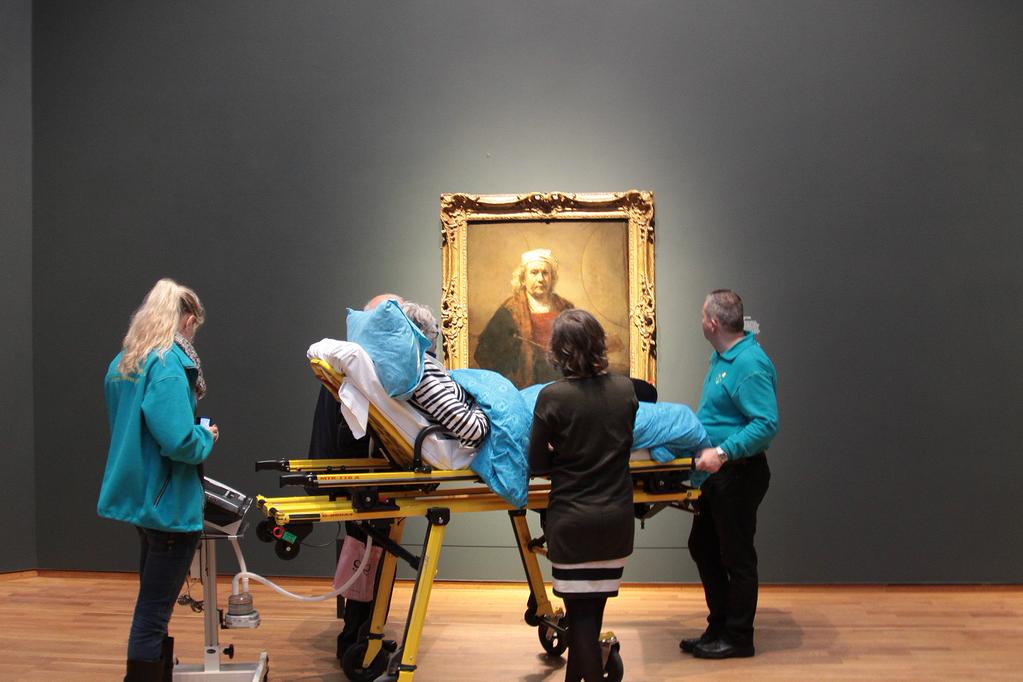
When does art prompt 'total internal reflection' ?

individual
INTERPERSONAL : SCIENCES
humanistic ------------------------------------------- mechanistic
SOCIOLOGY : POLITICAL
group


Stichting Ambulance Wens


Related posts:
Woman says goodbye to beloved horse from hospital bed hours before she dies

Rijksmuseum Amsterdam - health in art : art in health

My source:
The Times, 7 March 2015, 71450: pp.38-39.

Photo source:
http://www.openculture.com/2015/03/terminally-ill-patients-visit-rembrandt-paintings.html

Sunday, November 16, 2014

Woman says goodbye to beloved horse from hospital bed hours before she dies

individual
INTERPERSONAL : SCIENCES
humanistic ------------------------------------------- mechanistic
SOCIOLOGY : POLITICAL
group

Sheila Marsh is reunited with her horse Bronwen one last time.
Photograph: Andrew Foster/Twitter


The Guardian:
Woman says goodbye to beloved horse from hospital bed hours before she dies:
http://www.theguardian.com/uk-news/2014/nov/07/sheila-marsh-horse-reunion-goodbye-hours-before-she-dies

Image source:
http://www.theguardian.com/uk-news/2014/nov/07/sheila-marsh-horse-reunion-goodbye-hours-before-she-dies

Friday, October 26, 2012

End of Life Care (Pathways), Nursing and Thresholds

There is a controversy (was in Telegraph) that has been growing for some time, concerning the Liverpool Care Pathway for end of life care. This is a very demanding and yet rewarding aspect of nursing. I have experience of end of life nursing care in a non-specialist capacity, having worked on wards for older adults and being involved with people who have mental health and life-threatening physical health problems.

It pains me greatly not just as a scouser that something with 'Liverpool' in it should become a cause of distress, a center for debate and review. Is the pathway green and shady? Is it comprised of stepping stones, with room for two, and with time granted for your next step? Or is there a danger in some instances the path can become tarmac clad, without the succor of a services stop for basic sustenance? Can a pathway become a motorway? What does that sign say? "DON'T HOG THE MIDDLE LANE!"

What pains me seriously is that what can be a invaluable, evidenced based palliative care resource can be undermined due to the complexity of the generic and palliative care situation.

If we truly practice person-centered care then there are no care pathways.

Or, to put it another way: there are as many care pathways as there are patients and carers.

Whether you believe in social medicine, or private; whether you are laissez-faire, or leave such matters to a higher power there is no escaping the need for organisation - for order.

The mix and concentration of people, knowledge, resources and time dictates that tasks, roles and processes be delineated and assigned. We need to assure a given level of quality, and to predict things, not everything is as difficult as the weather: or death. Pathways can assist in specific contexts.

Is there scope for personalisation on a pathway? ...

Steps and pace can vary and to the left and right of center. There are many pathways though: some valid - evidenced, award winning; while others might be broad, narrow, twisted - to become a disorientating ethical loop...

Being placed on a pathway denotes a decision point, a threshold. We need to remember in all fields of health and social care practice that there are multiple thresholds to be taken into account, communicated effectively and revisited:

INTERPERSONAL : SCIENCES
SOCIOLOGY : POLITICAL

'me' - existence, resilience, assets,
personhood, ethics, personal values, mood,
personalised care, understanding of treatment,
communication skills, self-expression,
loss, orientation, observation, distress, psychological assessment, sedation,
beliefs, choices, :theology
PURPOSE
'me' - existence,
feeding, nutrition, fluids, 
evidence base, Liverpool care pathway,
quality of life measures, referral thresholds, prediction, resilience, reductive - holistic assessment, medication, distance, where: home-hospital-hospice?
pain management, decision locale,
specialism, basic nursing care, resilience
PROCESS

memories, good-byes,
love, compassion,
carer under stress, reassurance, counselling skills, meetings with family,
empathy and rapport, patient and relative engagement, life history,
relative's recognition that loved one is dying,
care strategies,  patient experts,
patient - carer experience,
communities of PRACTICE

consent, advocacy, mental capacity, 
integrated working, effectiveness, independent autonomy, service access, bed availability,
health & nursing in the media, scope of nursing, scope of medicine, law, medicolegal issues, whistleblowing, complaints, formal review, appeals, organisation, argumentation,
professionalism, ageism,
POLICY (re-PURPOSED)

The relative position of concepts above does not indicate priority.

"The LCP is not the answer to all our needs for care of the dying but is a step in the right direction."
Marie Curie Palliative Care Institute
Liverpool Care Pathway for the Dying Patient (LCP)

Thursday, June 10, 2010

Carer's support evidence / measures and end of life care

The following e-mail was received this week from (Prof.) George Kernohan and includes correspondence with Mary A. Waldron, Research Assistant, University of Ulster (thanks to Mary for confirming the reference).

My responses to George's points are right justified, italicised.

<->
Peter,

I am beginning to find examples of Hodges’ model every day now.

Once you adopt the model as a framework George it does tend to frame everything,
so I am not surprised at your finding. Maybe there is a paper there too...

Today we had a second research meeting to consider a (more) rigorous attempt to evaluate the provision of ‘support’ to carers of people undergoing palliative or End-of-Life Care (EOLC). An area of care with a dearth of evidence. So we looked at one review from Grande et al. (2009). They say that:

There has already been considerable research identifying carers’ needs in EOLC. These include psychological support, information, help with personal, nursing and medical care of the patient, out of hours and night support, respite, domestic and financial help.9,10,16–21 There is also a large body of research into adverse effects of care-giving, such as anxiety, depression, stress, strain, fatigue and mortality.22–24
Given this strong evidence base, any further investigation into the prevalence of needs and adverse effects should mainly focus on under-researched groups to ensure that future interventions are sensitive to their specific concerns. This includes carers of patients with conditions other than cancer, including neurodegenerative disorders,25 respiratory26 and cardiovascular diseases,27 to help us understand how differences in disease trajectories, awareness of the terminal nature of the disease and available support28 translate into different carer experiences. Although carers of patients with dementia have been extensively researched, little is known about their needs during patients’ final phase of life.9 p.340.
(The numbers refer to references by Grande et al., I have extended the quote used here).

Thanks for this paper George (and Mary) which I will read in full.
I extended your quote to encompass some additional interesting ideas.

To move toward a plan for a more rigorous evaluation, I would like to use a simple framework: here we go!

I think I will be suggesting Hodges’ Health Career as a possible model.

:-) ! If I can support you in this George I am pleased to help.

This could provide a framework for all carer-focused interventions in a broad way. As always, it would imply that carers need to have their needs addressed in terms of science, sociology, politics and interpersonal needs. As I see it, the first step would be to ‘map’ the carers’ needs onto that framework (from publications, if necessary from carers themselves). The basic idea (I think) is that care should address the four quadrants:
  • Science: (carer’s physical needs, information, instruction)
  • Political: (policy that enables care for carer, finance, allowance)
  • Sociology: (recognising that people need people, networks and “sharing” groups, story telling/hearing)
  • Interpersonal: (psychological support, prevention of anxiety & depression)
Have you any thoughts or guidance on this “mapping exercise”?

Goodness, that's quite a question!

Plenty of thoughts George but not sure how meaningful ....
Basically, since a community mental health project in 1990s
I have always considered (as per standard approach of course) that a toolkit of measures are needed. Even when we start from that most basic of distinctions between demand and supply.

As per your approach if h2cm is considered as a circle, a spectrum -
(sometimes we must circle the square)
then (if holstic) the adopted measures should cover all the domains:

Political: (outcomes, carer, patient satisfaction, financial assessment (means testing), respite care frequencies, reviews)
Interpersonal: (mood, coping ability, anxiety, depression, sleep, HoNOS)
Sciences: (pain, general health scales, care complexity (measures?))
Sociology: (dedicated carer assessment tools, sociability - social network size, psychosocial measures... there are many out there)

George, I realise the above is a ragbag collection but - like yours - these are dimensions which can (must) be reduced. Now there is also emphasis on this area post Darzi and the 'new' quality agenda.

This will serve (and is serving) to emphasize the distinctions between measures:

Objective - Subjective
Quantity - Quality
Staff administered - Self (Patient, Carer) administered
Global/general - condition specific
Service centered: Primary care - Secondary care

While it is easy to spin dichotomies,
the NHS must (constantly) focus on this area whatever the policy emphasis:

NHS Information Centre: Measuring for Quality Improvement

NHS Information Center: What is happening on indicators for...?

NHS Inst. for Innovation and Improvement: Quality and Service Improvement Tools

Earlier this year I contacted the NHS-IC [enquiries at ic.nhs.uk] regards additional measures of quality suggesting that the health career model bears due consideration (research).

Mental health services (and others?) have recognised how the measures they use can be a chaotic, personally selected, preferred, legacy-mix of assessment tools. Dictated by Senior Nurses, Consultants, Senior Management and not the evidence base. Now these are assured (are they?) with purposed selection (a task worthy of an 'away day') and then supported with regular in-house training.

Last month Anne-Marie Osbourne-Fitzgerald, Clinical Development Nurse, with (her) Clinical Manager, Denise Banks (Cygnet Hospitals), met Michael Doyle (Univ. of Manchester & Edenfield Unit, Prestwich Hospital) and I one evening at the Trafford Center in Manchester. Our two hour+ discussion covered the health career model, documentation, approaches to formal assessment and future plans (aspirations!). In the time available we obviously only scratched the surface, but Mike and Anne-Marie brought along examples of their paperwork.

Mike demonstrated how the health career model can be used implicitly or explicitly. At the Edenfield Unit the domains are being used individually to make up what is a standard A4 portrait form. The model informs their existing documentation; rather than the explicit form of the h2cm with the 2 x 2 matrix.
(I have a MS Word version of the latter and must update this to other formats).
Legally, as we know if it is not written down, recorded then it did not happen.
Educationally however, the objective is also to get students - practitioners - to think - before they do.

Anne Marie's documentation example at Cygnet Hospital included The Recovery Star:

http://www.mhpf.org.uk/recoveryStarApproach.asp

As you consider the star's points against the domains of the health career model - where in the model are you?

Can this provide another means to define 'care pathway'? A way that is not masked, hiding behind political, policy rhetoric (and really service-centered)? There are without question some excellent tools available, so care needs to be taken not to re-invent the wheel - hence your literature search. In some tools the effort and engagement of patients, carers and the public is exemplary. It seems what is needed is a hybrid solution. There is no single measure.

It may not sound scientific, but the complexities of care mean that academics, clinicians and managers must resort to a pick'n'mix approach. There is a battery of evidenced tools each with their history, application context and issues log (Why not? Lack of the latter might denote that such tools are no longer in development / review). As a clinician also involved in training, managers need to listen and make some tough operational decisions. The comms 'traffic' between clinicians, their managers, and senior managers needs to improve even more. Since, just using the above as an example, the STAR approach may find us on a ramble in the humanistic domains, the constraints of the mechanistic domain prompts the clinician's to ask:

"If you want me to use this assessment tool, what other thing do you want me to put down?"

As we are all aware: There is only so much time in a day, week, month, quarter. ...

In follow up emails I directed Anne-Marie to -

http://www.p-jones.demon.co.uk/contexts.htm

If you scroll down there is some discussion and graphics I did quite a while ago. This deserves revision as per the rest of the website, but the ideas are there I believe which can inform your project George?

Back then - and here on W2tQ I have been trying to demonstrate the wide range of contexts to which the health career model can be applied. In our meeting that evening the well established Tidal Model was also noted. This has of course benefitted from specific development, as per research that has produced audit and evaluation tools (Stevenson, et al. 2002).

It might make a useful reflective article – or at least a conference presentation. Ideally it would lead us to a measurement or observation approach ...

I would relish the prospect of a paper George, or a conference presentation. Not just contributing as a co-author/presenter, but supporting and enthusing new authors. The 21st century belongs to our students. Hodges' model can act as 'stellar' nursery not just here in the UK and EU, but globally. And not just in our respective disciplines (mental health, palliative - end of life care, forensic nursing care), but in informatics - conjoining and championing the need for socio-technical perspectives.

In addition to the above and thinking before they do, all health and social care practitioners must be able to reflect after.

As one of the original purposes for the model in my initial interviews with Brian Hodges (1997-98), research work addressing these are much needed.

This conceptual framework can offer much in case formulation, evaluation, clinical supervision, patient, carer and public (health) engagement.

[In short -] Can we measure Hodges' model?

George K. (Prof.)

You started with a big question George and similarly here at the end.
We have to be able to do this. In the first instance taking apart your question - there are clearly several questions here:

PRACTICE:

Above you noted that:

This could provide a framework for all carer-focused interventions in a broad way. As always, it would imply that carers need to have their needs addressed in terms of science, sociology, politics and interpersonal needs. As I see it, the first step would be to ‘map’ the carers’ needs onto that framework (from publications, if necessary from carers themselves).

It would be interesting to consider the formal process and practice of dementia care mapping against Hodges' model. Perhaps the approach you seek is something similar? If carer's make use of self-assessments these e-documents might act as an input for text analysis tools? If appropriate you could also weight certain items according to the priorities of carers? This would build on other carer research adding validity to your 'final' objectives.

Carers and clients (patients, service users) can with due explanation, appreciate the health career model. The model has a role to play in health education. I can well imagine a proforma similar to the Recovery Star example above, but purposed for carers and underpinned with the health career model. We also need to remember the spiritual domain, which is collective.

Ultimately George, your question concerns our ability to measure holistic, integrated, person-centred, multidisciplinary care and to state the obvious: there is no single measure to do this. Several tools and approaches gathered within a conceptual framework might however provide an environment favourable for a hybrid measure to emerge - literally a cycle?

THEORY:

In the paper you referred to George - Grande. et al. (2009) state:

In parallel with the lack of empirical evidence, there has been a lack of theoretical and conceptual models for when and how support provision in EOLC should improve carer outcomes. To guide further research, palliative care may here benefit from drawing on models within other fields, such as gerontology, sociology or psychology. p.341.

I am biased, but reading the paper the potential of the health career model as a high level tool is convincing just from a 'disciplinary cross-match'. Intra-, interdisciplinary, metadisciplinary and transdisciplinary perspectives could be a focus. This in addition to the specific knowledge and practical domains of sociology and psychology and as the authors note models therein. I forget the reference at the moment (and will check), but I recall carers / family units being framed in terms of strengths and weaknesses. That is, events, characteristics and relationships impact on a family with either additive, subtractive or neutral effects. This would seem applicable here?

While Grande et al. (2009) note that the (informal) carer's role is hidden (and is routinely described in this way) I wonder if in palliative care there are other dimensions that accentuate this 'hidden, covert' role?

The politics of potential death and actual dying may be another factor the health career model can help illuminate in a constructive, enabling way? Health care, patiency, sick roles, caring are always mediated by 'politics'. Hence the need for a political domain in any conceptual framework that Grande, et al. may consider. On a negative front, the model might also illustrate alienation and related concepts?

In conclusion!

Thank you so much George and Mary for my being able to share your initial thoughts here and respond with some of my own. I hope this helps you take your work further? There may be a few points to follow, which I will add and as you have noted above there is much that could be done to take this further.
Peter J.

From: Waldron Mary [mailto:MA.Waldron at ulster.ac.uk]
Sent: 06 June 2010 17:49
To: wg.kernohan at ulster.ac.uk
Subject: Carers Support Evidence

George,

Jury's still out on the effectiveness of support interventions and programmes which support carers in palliative care. Not enough research. Lack of evaluation, lack of rigour, no conclusive research, but lots of policy advocacy of carers support and addressing of needs. Sample of lit attached.

Mary A Waldron,
Research Assistant,
School of Nursing,
University of Ulster.

Many thanks George and Mary for your ongoing interest, and to Anne-Marie, Denise and Mike.

Reference:

Grande, G. et al. (2009) Supporting lay carers in end of life care: current gaps and future priorities
, Palliative Medicine, 23: pp. 339-344. DOI: 10.1177/0269216309104875

Stevenson C, Barker P and Fletcher E (2002) Judgement days: developing an evaluation for an innovative nursing model. J Psychiatric and Mental Health Nursing, 9(3), 271-276.

Stellar nursery image
My source: http://media-2.web.britannica.com/eb-media/60/21260-004-3C62CA58.jpg