Hodges' Model: Welcome to the QUAD: home care

Hodges' model is a conceptual framework to support reflection and critical thinking. Situated, the model can help integrate all disciplines (academic and professional). Amid news items, are posts that illustrate the scope and application of the model. A bibliography and A4 template are provided in the sidebar. Welcome to the QUAD ...

Showing posts with label home care. Show all posts

Wednesday, April 15, 2026

Book: 'Logic on the Track of Social Change'

When I walked into Lancaster Univ. library in February, I had no idea I was being followed.

From the maths shelves, the lights switching on as you progress, I decided to walk across to the more familiar realm of sociology. Looking for something, it was nice to see the parity in lighting, even as my struggle for mathematical enlightenment continues.

Logic on the Track of Social Change    

I do use the e-library, and other e-resources, but sometimes real shelves and varying levels of mustiness (remember the 'new acquisitions' - fewer these days?) invite a bit of serendipity. Suddenly, over my shoulders, the stranger,  pointed (with four arms of course). Was it my shadow? Or, was it my unconscious that 'read': LOGIC and TRACK and SOCIAL CHANGE, on the spine of -

David Braybrooke, Bryson Brown & Peter K. Schotch (eds.), Logic on the Track of Social Change, Oxford University Press. 1995?

In the early decades of health informatics, there was much talk - and still is(?) - of  'languages for health', even languages for nursing. Coding and classification systems were constantly developing, as posted here, but while physical diagnoses were the driver, the psychosocial dimensions of person - patienthood proved more nebulous. DSM is still subject much debate.

 Chapter 8 in Braybrook et al. is brilliant: A Rules-Analysis, Following Foucault, of the Birth of Clinical Medicine.

I've been in situations when surgery is suggested for an older person, and family, friends wonder is this really necessary? This chapter literally brings the history home, and not only that, but the emergence of the hospital system, versus care at home, in the community. The social determinants of health have been ever-present. This is essential reading for students, with the history of ICD, and the history of medicine. There are insights too into public attitudes and expectations to health services and provision here in the UK and in France.

For me, and Hodges' model, the significance of Braybrook, Brown, Schotch and Byrne is that it precedes:

Sallach, D.L. Categorical Social Science: Theory, Methodology and Design. September 2012
Conference: Fourth World Congress on Social Simulation. Taipei, Taiwan.
https://www2.econ.iastate.edu/tesfatsi/Sallach2012CategoricalSoSci4.WCSS-SS.pdf

And so, I do need my own secondhand copy of  Logic on the Track of Social Change. More to follow (indeed)! ... and help still welcome and needed.
 

Monday, February 16, 2026

The UK Dementia Awards 2026

Dear CHAIN member,

We would like to draw your attention to the following opportunity. Please pass on as appropriate. Thank you.

Dementia Community

The UK Dementia Awards 2026

The awards are judged by a panel of dementia experts, including people with lived experience, ensuring that every nomination is seen, valued, and understood.

Whether nominating a colleague, a team, a service, or someone whose quiet dedication deserves the spotlight, this is the chance to say: you matter, and your work matters too.

Friday 27 February 2026, 5pm: Nominations Close.

For more details please see: https://journalofdementiacare.co.uk/awards/listings
Regards,

Irina Johnston

CHAIN Administrative Assistant


If you wish to publicise information on the CHAIN Network please email your request to: enquiries AT chain-network.org.uk


CHAIN - Contact, Help, Advice and Information Network – is an online international network for people working in health and social care. For more information on CHAIN and joining the network please visit website: www.chain-network.org.uk


Follow CHAIN on X: @CHAIN_Network ; Connect with CHAIN on LinkedIn

Previously: 'dementia' : 'carer'

Friday, June 27, 2025

Politicians! Please leave it to the Public ...

Individual
|
      INTERPERSONAL    :     SCIENCES               
HUMANISTIC  --------------------------------------  MECHANISTIC      
 SOCIOLOGY  :    POLITICAL 
|
Group


'Kick' - a verb, more often it seems, a noun.


Health
and
Social Care?
Gent kicking a can
Wall poster/photo Corfu Town
... to kick
the can
down the road!

Sunday, January 05, 2025

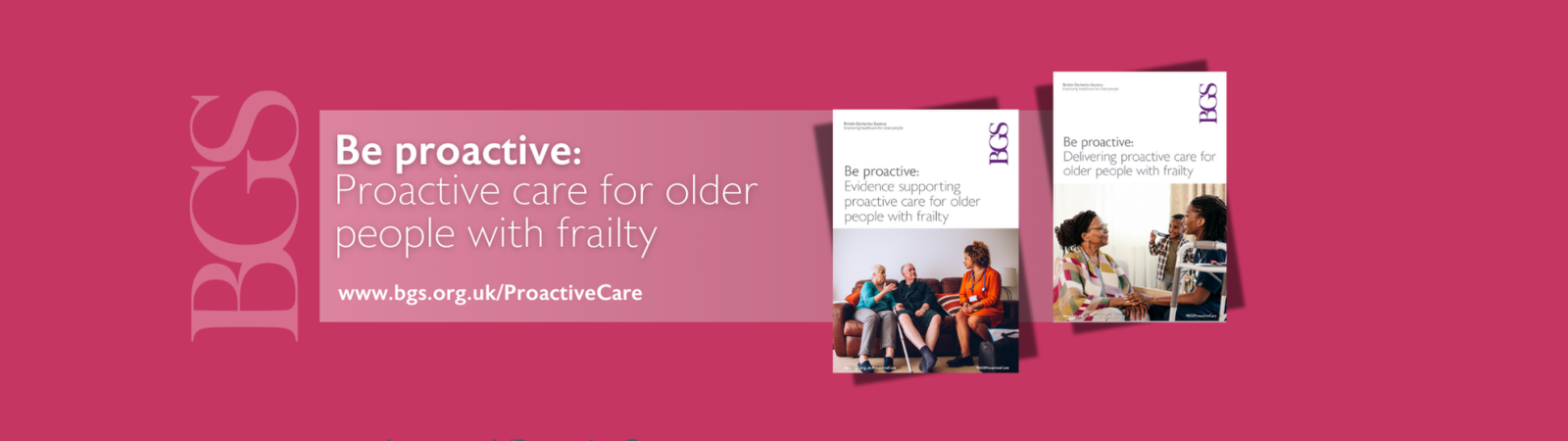
Be proactive: Evidence supporting proactive care for older people with frailty


'These BGS publications outline evidence and delivery recommendations for proactive care and support for older adults with moderate to severe frailty. 

We set out how to deliver proactive care against core components and key enablers, with recommendations for success of a proactive care service. Building on NHS England's proactive care guidance, Proactive care: providing care and support for people living at home with moderate or severe frailty, we also outline key recommendations for the successful implementation of proactive care services across the UK. 

We hope that users will be able to use all three documents when designing proactive care services, with the NHS England guidance document acting as key framework and starting point, BGS’s Be proactive: Evidence supporting proactive care for older people with frailty as a business case, and Be proactive: Delivering proactive care for older people with frailty  as a roadmap for implementing the NHS England framework and delivering services. ...'

https://www.bgs.org.uk/ProactiveCare


[All best Charlie (on your Christening Day), Casper and Jamie]. #hope #love #future #action #HealthCareer #LifeChances

Saturday, September 03, 2022

"NHS to pilot smart goggles to free up time for community nurses"

c/o Digital Health:


"The NHS is to trial the use of smart goggles that will be worn by community nurses on home visits in order to free up time with patients.

Providing that the patient consents, the virtual reality style headset can transcribe the appointment directly to electronic records, reducing time-consuming admin for nurses.

Staff will have the ability to share live footage directly with hospital colleagues to get a second opinion, avoiding the need for further appointments or hospital admission."

Read more at Digital Health ...


My source:

Eleanor Hayward, Smart goggles give nurses advice during home visits, The Times, 20th August 2022, p.16.

Thursday, March 25, 2021

Anticipatory Prescribing as part of Anticipatory Care

This post is derived from a selection of the main concepts found within three papers (references listed below) on 'anticipatory prescribing'. Some explanation may assist. I have duplicated 1. What is current practice? across the domains to suggest that the question needs to be answered for each of the care (knowledge) domains. The same principle applies to the repetition of the attitudinal questions at the individual and group (sociological) level. Person-centredness demands that the patient's views are paramount plus the aggregated responses of the group as a whole.

Perhaps there is a 'drug TIME' too, which operates across all the domains once more, and each variously weighted objectively and subjectively? The concept of control and assessment of control is also critical.

I've placed GP decision-making across both 'individual' domains described as it is as a 'process' and for the patient as 'bedside manner', as also reflected in the GP and healthcare professional's communication with the family.

Clinical effectiveness and observations are likewise span the interpersonal and sciences domains. This is to denote the need to achieve and sustain parity of esteem and integrate physical and mental health care - pastoral and spiritual also.

'Cost' is anchored in the political domain, but clearly there are much wider economic ramifications, both in quality of life, quality of death and the way 'cost' is determined, measured, analysed, evaluated and reported.

For me nursing, medicine, healthcare are most effective when they are anticipatory. Observation, reflection and critical thinking are key. In a way for an individual to be health literate is a preparation for self-care. Although clearly in a general sense of health and well-being; not necessarily being literate with respect to a long-term medical condition.

Hodges' model is an idealisation and the detail is obviously described in the papers listed. The intention below is for readers to gain an appreciation of anticipatory prescribing and the application and scope of Hodges' model.

 Taking a larger perspective anticipatory prescribing is part of anticipatory care.

@GeriSoc https://twitter.com/GeriSoc/status/1374716732120645632?s=20


individual
|
INTERPERSONAL : SCIENCES
humanistic ----------------------------------------------- mechanistic
SOCIOLOGY : POLITICAL
|
group

Anticipatory Prescribing

Reassurance for patient, family &  friends
clinical effectiveness
subjective TIME
observation
agitation, distress (mood, anxiety, orientation, communication, identity - self, fear, understanding, mental capacity...)

The patient's spiritual well-being needs are met*.

1. What is current practice?

2. What are the attitudes of patients?
3. What are the attitudes of family carers?
4. What are the attitudes of community healthcare professionals?
[as individuals]


GPs’ discussion with patients

(Advanced care planning - choices)

5. What is its impact on patient comfort and symptom control?

Anticipatory Prescribing

Physical access to medication and treatment is assured.
clinical effectiveness
objective TIME
observation
remote anticipatory prescribing increased 24 hours availability
(out-of-hours)


The intervention seeks to improve [my] symptom control

pain, nausea and vomiting, agitation, and respiratory secretions.

The Covid-19 pandemic has accelerated the practice of Anticipatory Prescribing; more terminally ill patients are having end-of-life care at home and in care homes.

1. What is current practice?

New routes of administration

injection, oral, sublingual, or rectal

5. What is its impact on patient comfort and symptom control?
GPs’ decision-making processes
Research:
Systematic review and narrative synthesis
Semi-structured interviews
Web-based survey
An important intervention in supporting patients and families who wish to have last days of life care at home.

1. What is current practice?

2. What are the attitudes of patients?
3. What are the attitudes of family carers?
4. What are the attitudes of community healthcare professionals?
[collectively]

5. What is its impact on patient comfort and symptom control?
Patient and families’ well-being throughout the end-of-life journey

*There is concord and respect regards patient's spiritual well-being needs.

GPs’ discussion with family

family caregiver administration

The Independent Review of the Liverpool Care Pathway found that the use of Anticipatory Prescribing without adequate explanation or justification led to families being concerned about over-sedation and the medication hastening death.

1. What is current practice?

5. What is its impact on patient comfort and symptom control?

6. Is it cost-effective?

Revise pharmaceutical regulations to permit repurposing of anticipatory prescribing medications in care homes, wider community drug access, and recycling unused medications returned to pharmacies.
Address stock shortages.


Bowers B, Ryan R, Kuhn I, Barclay S (2019) Anticipatory prescribing of injectable medications for adults at the end of life in the community: A systematic literature review and narrative synthesis. Palliative Medicine 33(2): 160-177 https://doi.org/10.1177/0269216318815796

Antunes B, Bowers B, Winterburn I, Kelly MP, Brodrick R, Pollock K, Majumder M, Spathis A, Lawrie I, George R, Ryan R, Barclay S. (2020) Anticipatory prescribing in community end-of-life care in the UK and Ireland during the COVID-19 pandemic: online survey. BMJ Supportive & Palliative Care; http://dx.doi.org/10.1136/bmjspcare-2020-002394

Bowers B, Barclay SS, Pollock K, Barclay S (2020) General Practitioners’ decisions about prescribing end-of-life anticipatory medications: a qualitative study. British Journal of General Practice; 70(699) e731-739 https://doi.org/10.3399/bjgp20X712625 


Sunday, August 05, 2018

Distant Constellation: @HOME

individual
|
INTERPERSONAL : SCIENCES
humanistic ----------------------------------------------- mechanistic
SOCIOLOGY : POLITICAL
|
group

"Distant


CONSTELLATION"

https://homemcr.org/film/distant-constellation/
@ HOME 
(preferably!)

https://grasshopperfilm.com/film/distant-constellation/

Friday, November 11, 2016

Dementia & Sleep: What the Papers Say

individual
|
INTERPERSONAL : SCIENCES
humanistic -------------------------------------------  mechanistic
SOCIOLOGY : POLITICAL
|
group-population

Sleep disturbance


Sleep disturbance 2


Just recently I came across a gentleman who in living with dementia and supported by his wife at home has been struggling with his sleep. Waking in the early hours 0330, 0400 in the summer is not too bad accompanied by the dawn chorus, but if it happens most days? And then in Winter: that is another matter.

Also fairly recently there are increasing instances of this man not being sure that the lady-  who is in their / his house and is taking him shopping - is his wife. She looks like my wife...? She knows what to buy and then she pays for the shopping.

individual
|
INTERPERSONAL : SCIENCES
humanistic -------------------------------------------  mechanistic
SOCIOLOGY : POLITICAL
|
group-population

Who are you?

Have the doctor consider
 prescribing a sleeping tablet

"Oh OK! Hello Sandra."

Arrange a medical review

This gent is up early anyway as there is a newspaper to collect which involves a walk. The problem is he leaves too early and is then outside waiting. His wife was struggling with all this so we discussed the need for a care review by the community mental health team. A sleep diary was provided to obtain some data upon which to base decisions. While I was in the garden with Mr. my student (thanks Katie) suggested to Mrs Y that this 'imposter' be passed as a friend. This has since proved very effective at reducing anxiety, social tension and distress.

Whilst we constantly strive for truth, honesty and respecting autonomy and dignity, sometimes sadly, 'truth' is compromised. It becomes less clear when it is being cognitively undermined.

We also want to maximise independence and support what are the usual daily activities of living: collecting the newspaper included. Risks were becoming evident however. So, Mrs Y came up with a strategic decision which has seen this gentleman adjust very quickly. Sleeping in until 8 o'clock is quite a surprise for the rest of the family to hear. And for us too. It is as if the (subscription) token for the newspaper was not only sitting waiting in a pocket or wallet. It also had slot in memory, where it had to be kept on constant refresh, whirring away; of such importance that it was proving quite disruptive introducing new risks, disturbing sleep. There are still many other activities and walks to be enjoyed. Nice call Mrs Y:

individual
|
INTERPERSONAL : SCIENCES
humanistic -------------------------------------------  mechanistic
SOCIOLOGY : POLITICAL
|
group-population


Cancel the newspaper

Wednesday, July 03, 2013

Living in the Memory Room: BBC Radio 4

Some people have no choice - they must become time travellers ....

There are 800,000 dementia sufferers in the UK. Kim Normanton presents a personal programme about memory and dementia, inspired by her mother's illness. She explores a new approach to treatment - recreating the past.

As her mother's memory of recent events was destroyed ... more

Tuesday, March 12, 2013

Community Informatics and Improving Health: New Special Issue

Colleagues:
The Journal of Community Informatics has just published its latest issue at
 http://www.ci-journal.net/index.php/ciej. We invite you to review the Table of Contents here and then visit our web site to review articles and items of interest.
Thanks for the continuing interest in our work,
Michael Gurstein, Ph.D.
Editor in Chief: Journal of Community Informatics, Vancouver CANADA Phone 604-602-0624 gurstein at gmail.com
The Journal of Community Informatics
Special Issue: Community Informatics for Improving Health Table of Contents
...
Editorial
--------
Overview of ICTs and Health
                Lareen Ann Newman
Editorial: Community Informatics for Improving Health
                Michael Gurstein
Articles
--------
Developing decentralised health information systems in developing countries –cases from Sierra Leone and Kenya
                Edem Kwame Kossi,       Johan Ivar Sæbø,             Jørn Braa,            Mohamed Mumeneeh
Jalloh,   Ayub Manya
Improving community health equity: the potential role for mHealth in Papua New Guinea
                Belinda Jane Loring
Capturing Qualitative Spatial Data to Understand Social Epidemiology in Public Health
                William R Buckingham
Narrating Aboriginality On-Line: Digital Storytelling, Identity and Healing
                Naomi Adelson,                Michelle Olding
Decreasing Health Disparities through Technology: Building a Community Health Website
                Olga Idriss Davis,              Kristen Bean,     Dominica McBride
Bridging the Digital Divide: A Bilingual Interactive Health Kiosk for Communities Affected by Health Disparities
                Kristen Bean,     Olga Davis,          Hector Valdez
‘MYBus’: Young People's Mobile Health, Wellbeing and Digital Inclusion
                Bjorn Nansen,   Kabita Chakraborty,        Lisa Gibbs,           Colin MacDougall,           Frank Vetere
Concussion Information on the Move: The Role of Mobile Technology in Concussion Management
                Osman Hassan Ahmed, Andy J Pulman
With a little help from my friends: experiences of building a virtual community for children with cancer
                Paula Hicks,        Jane B. Grimson,              Owen P. Smith
Impact of Internet on delivery of critical cardiac health care  :
                Sudeepa - Banerjee
A review on mHealth research in developing countries
                Wallace Chigona,              Mphatso Nyemba,          Andile Metfula
Reports
--------
Socio-technical approach to community health: designing and developing a mobile care data application for home-based healthcare, in South Africa
                Retha de la Harpe,           Hugo Lotriet,      Dalenca Pottas, Mikko Korpela
Perceived Benefits Of Remote Data Capturing In Community Home-Based Care:
The Caregivers’ Perspective
                Nobubele Angel Shozi,  Dalenca Pottas, Nicky Mostert-Phipps
Health Impact Assessment of a UK Digital Health Service
                Sue Heather Wright,       Irfan Ghani,        John Kemm,       Jayne Parry
Points of View
--------
W(h)ither Community: Locating participatory approaches to ICT-enabled health and development
                Ian Pringle
________________________________________________________________________
The Journal of Community Informatics http://www.ci-journal.net
 

Tuesday, October 16, 2012

Self-care: The Long Answer (Ack. HSJ)

Here is another item from the HSJ:

"There is often a Berlin Wall between formal and informal caring environments both in the NHS and in social care," he says [Alex Fox, Shared Lives Plus]. He argues that patient care needs to be de-institutionalised.
"If we are going to get anything from all the effort and heartache that has gone in to the NHS reforms, CCGs need to take a holistic view of a person, like good GPs do, and understand that a range of factors go in to someone's health and wellbeing and it is finding models that fit personalised and self-care."
Helen Mooney, (2012). The Long Answer, Health Service Journal supplement (Long term conditions). 28 June. p.1.


Staying with the vertical axis of Hodges' model there is something beyond the delineation of INDIVIDUAL and GROUP (POPULATION) that this axis performs. It bisects the horizon of external reality that is frequently differentiated into what is HUMANISTIC and what is often described as MECHANISTIC. If not these terms then the humanities and the sciences.

From a mental health perspective and taking the above reference to 'institution' literally we can reflect upon how the Victorians sought to standardise provision of care for the mentally ill with the asylums. This was a scientific and political solution to an interpersonal and social problem. Institutions continue to be disempowering, in physical and psychological care. In a way this Victorian solution is still ongoing. On the journey from institution, to community, to home, to self... there is still a long way to go.

The system created to the mechanistic right within the model was custodial. As far as society was concerned the people there were forgotten. A community within a community was re-created. The person, the individual was lost and we are still trying to find them. Progress has been made and can be mapped across Hodges' model. As one example how has the student nurse's learning experience changed over the decades?

That INDIVIDUAL-GROUP axis, the red line in the figure is the Berlin Wall that we are still trying to tear down.

There is another view on this which I'll save for the future.

Monday, July 09, 2012

1st Int. Workshop on Designing for Self-Care: Acknowledging the home-clinic difference

Hi,
We invite position papers and works-in-progress papers for the first international workshop on "Designing for self-care: Acknowledging the home-clinic difference" to be held alongside NordiCHI on 14th October, at the IT-University of Copenhagen.

Kindly consider submitting your work, and / or share with your network.

Regards,
Naveen Bagalkot

 ----------------------------- Call For Papers -----------------------------

Image source: The CfP website
Workshop theme: Supporting the movement of care across boundaries

Increasingly successful healthcare involves moving the care activities across the clinic-home boundaries. The field of HCI has increasingly explored ways to design digital technological tools to support this movement of care beyond the boundaries of a clinic.
However, the clinic and the home offer different settings, shaping the care activities in different ways. Acknowledging this difference of settings, opens up the space for various positions that designers can take for the design for self-care. We identify three key positions:
  • Home as a place for caring: A focus on supporting the citizens to perform self-care activities at home that may (or may not) involve a larger network of family, friends, home care nurses, volunteers and home care workers.
  • Clinic as a place for caring: A focus on supporting the care-givers at the clinic to prescribe home-based care activities to the citizens, and monitor how these are being complied with.
  • Moving across the boundaries: A focus on supporting the citizens to move across the clinic-home boundaries, bringing with them materials from the clinic to home, and sharing the self-care activities from home with their care-givers at the clinic.
We offer these three positions as a starting point to invite researchers and practitioners working in this space of designing digital technological tools for self-care to become part of the workshop discourse. In particular we invite them to submit their positions in a 4-page ACM SIGCHI extended abstract format, based on their own empirical experiences and / or theoretical deliberations.
  
Workshop goals
  • To bring together researchers from HCI and interaction design, and professional caregivers, to discuss and outline the challenges and promises posed by the different individual settings for care, and moving across these settings.
  • To share insights from a range of cases about the challenges and successful strategies in designing digital technology for self-care.
  • To explore promising design strategies and approaches for dealing with the challenges and promises posed by the different settings of care.
Workshop Outcomes
All accepted papers should bring a poster representing their paper to the workshop. This will be used during the workshop and its discussions. While shorter presentation of each paper will take place, the focus will be on more interactive sessions where the participants will interview each other, group work and plenum discussions. The workshop aims to share current work, methods, challenges and insights when working with, or designing for, home-based care.
  
Proceedings
The workshop will produce its proceedings in the form of an online database, which will be open to access by all interested researchers, practitioners and students. We are also looking into options to publish the proceedings with an ISBN number so that it is publicly available, and the possibility to make a journal special issue after the workshop. The proceedings will include:
  • The call for position papers, which highlights the motivations and the theme of the workshop.
  • The accepted position papers, and the respective posters.
  • The minutes of the plenary discussions and the summary of the group work.
Submission format
Maximum four pages in ACM SIGCHI extended abstract format.
  
Contact details
Email the position papers to: ...
More details can be found on: ...