Hodges' Model: Welcome to the QUAD: recommendations

Hodges' model is a conceptual framework to support reflection and critical thinking. Situated, the model can help integrate all disciplines (academic and professional). Amid news items, are posts that illustrate the scope and application of the model. A bibliography and A4 template are provided in the sidebar. Welcome to the QUAD ...

Showing posts with label recommendations. Show all posts

Sunday, April 05, 2026

Complexity science as a frame; or, a frame for complexity science?

In reading for WCCS later this month, I wonder if Braithwaite et al. (open access) may have found Hodges' model useful in addressing both the learning objectives and questions they raise in their chapter; and as a response to the recommendations?

Braithwaite J, Ellis LA, Churruca K, et al. Complexity Science as a Frame for Understanding the Management and Delivery of High Quality and Safer Care. 2020 Dec 15. In: Donaldson L, Ricciardi W, Sheridan S, et al., editors. Textbook of Patient Safety and Clinical Risk Management [Internet]. Cham (CH): Springer; 2021. Chapter 27. Available from: https://www.ncbi.nlm.nih.gov/books/NBK585611/ doi: 10.1007/978-3-030-59403-9_27

' Learning Objectives and Questions Covered in the Chapter

  • How does a linear view of improvement contrast with a complexity science approach? 
  • The complexity frame makes it harder to manage and deliver high quality and safer care — does it therefore need to be rejected in favour of simpler improvement models?
  • What examples can be brought to bear to show how studies in the complexity frame can lead to good outcomes and positive change?'

'In addition, in homing in on any part of a CAS, we can discern elements of both selfsimilarity and local nuances. Self-similarity can manifest fractally, at different scales (e.g., features of the culture of the organisation at the team level approximate to that of the culture of the department, and then division, and then the whole organisation) or laterally (e.g., one department looks comparable structurally to another). It might seem paradoxical, but healthcare levels or departments, despite being self-similar in some respects, also each operate as unique entities. There are always localised contextual, cultural and structural distinctions. Such local nuances occur as the result of the particular configurations of agents (e.g., nurses, doctors, quality managers, patients) following their internalised rules and shared mental models (e.g., put the patients first, project a good reputation to the outside world, prioritise safety) in that unique setting.' pp.378-379.

'Bringing clinicians from different departments together with the patient as the focus, provided a deeper understanding of other’s roles and barriers, helped create a shared mental model, and fostered a whole-of-system approach to the care for patients with this condition.' p.382.

[CAS - Complex Adaptive System]
 

'Recommendations

1. Sensitise those with responsibility for leading, managing, improving or researching care settings to a systems view. 
2. Train sufficient staff in the tools of complexity: FRAM, network analyses, system dynamics modelling, process mapping, and the like. 
3. Approach quality and safety and risk management activities with a knowledge of complexity science, sense-making, and non-linearity rather than as a set of linear problems amenable to simplistic causal change logic. 
4. Consider how our studies, borrowing from complexity theory, have resisted simplifying the challenges, but have nevertheless made progress in understanding care systems and their improvement.' p.389.

 [FRAM - Functional Resonance Analysis Method]

 I will include this in my presentation, duly cited:

 'Complexity science as a frame: or, frame for complexity science?'
Sunday, January 05, 2025

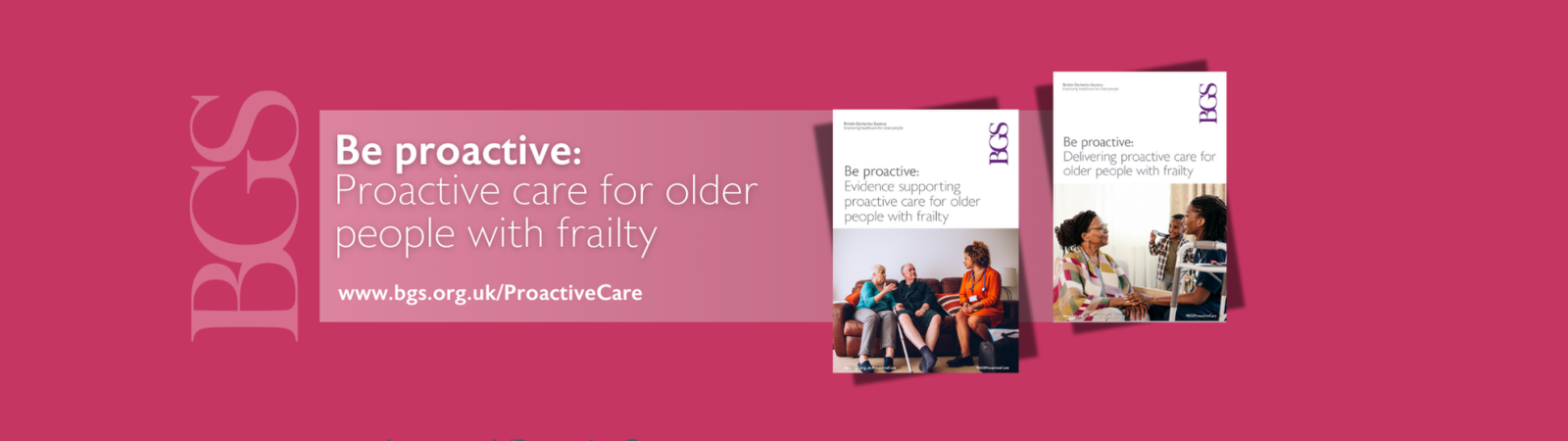
Be proactive: Evidence supporting proactive care for older people with frailty


'These BGS publications outline evidence and delivery recommendations for proactive care and support for older adults with moderate to severe frailty. 

We set out how to deliver proactive care against core components and key enablers, with recommendations for success of a proactive care service. Building on NHS England's proactive care guidance, Proactive care: providing care and support for people living at home with moderate or severe frailty, we also outline key recommendations for the successful implementation of proactive care services across the UK. 

We hope that users will be able to use all three documents when designing proactive care services, with the NHS England guidance document acting as key framework and starting point, BGS’s Be proactive: Evidence supporting proactive care for older people with frailty as a business case, and Be proactive: Delivering proactive care for older people with frailty  as a roadmap for implementing the NHS England framework and delivering services. ...'

https://www.bgs.org.uk/ProactiveCare


[All best Charlie (on your Christening Day), Casper and Jamie]. #hope #love #future #action #HealthCareer #LifeChances

Monday, October 17, 2016

Global Health report “Triple Impact- how developing nursing will improve health, promote gender equality and support economic growth"

Dear Colleagues

Many thanks to all of you who contributed to the compilation of the All Party Parliamentary Group for Global Health report “ Triple Impact- how developing nursing will improve health, promote gender equality and support economic growth.’

A review group of APPG members has undertaken a major review of the development of nursing globally over the last few months, holding a number of witness sessions, collecting evidence and debating our findings with the RCN, ICN and others. The report “Triple Impact – how developing nursing will improve health, promote gender equality and support economic growth” launched on the 17th October 2016 sets out a radical agenda and argues that the UK should play a major role in developing nursing globally.
Many thanks again for your time and support.

Best Wishes

Emily
Emily McMullen
Coordinator & Researcher to Lord Crisp | All Party Parliamentary Group on Global Health
Office of Lord Crisp | Fielden House | 13 Little College St | London, SW1P 3SH
Email: info AT appg-globalhealth.org.uk
Website: http://www.appg-globalhealth.org.uk


[Ms McMullen's original email edited adding text from report source]

Tuesday, February 16, 2016

Mental Health [TaskForce Strategy]: an ongoing tale of quarters

individual
|
INTERPERSONAL : SCIENCES
humanistic ---------------------------------------  mechanistic
SOCIOLOGY : POLITICAL
|
group

Mental health


1 in 4
people experience problems each year


15-20 years 
shorter life expectancy 
for those with severe problems


75% receive no help


£105bn cost to economy 

£9.2bn spent by NHS a year


Mental Health


esteem


'Task' - 'Force'

Strategy

parity


Statistics source:
NHS England: Mental Health Taskforce

Report: THE FIVE YEAR FORWARD VIEW FOR MENTAL HEALTH

BBC #inthemind

Sunday, February 07, 2016

Hodges' model - Integrating the five vignettes?

Some reading while working on my research proposal:


Vignette methodologies for studying clinicians’ decision-making: Validity, utility, and application in ICD-11 field studies

Abstract

Vignette-based methodologies are frequently used to examine judgments and decision-making processes, including clinical judgments made by health professionals. Concerns are sometimes raised that vignettes do not accurately reflect “real world” phenomena, and that this affects the validity of results and conclusions of these studies. This article provides an overview of the defining features, design variations, strengths, and weaknesses of vignette studies as a way of examining how health professionals form clinical judgments (e.g., assigning diagnoses, selecting treatments). As a “hybrid” of traditional survey and experimental methods, vignette studies can offer aspects of both the high internal validity of experiments and the high external validity of survey research in order to disentangle multiple predictors of clinician behavior. When vignette studies are well designed to test specific questions about judgments and decision-making, they can be highly generalizable to “real life” behavior, while overcoming the ethical, practical, and scientific limitations associated with alternative methods (e.g., observation, self-report, standardized patients, archival analysis). We conclude with methodological recommendations and a description of how vignette methodologies are being used to investigate clinicians’ diagnostic decisions in case-controlled field studies for the ICD-11 classification of mental and behavioural disorders, and how these studies illustrate the preceding concepts and recommendations.


Evans, Roberts, Keeley, Blossom, Amaro, Garcia, . . . Reed. (2015). Vignette methodologies for studying clinicians’ decision-making: Validity, utility, and application in ICD-11 field studies. International Journal of Clinical and Health Psychology, 15(2), 160-170. DOI: 10.1016/j.ijchp.2014.12.001 

Abstract

Vignette studies use short descriptions of situations or persons (vignettes) that are usually shown to respondents within surveys in order to elicit their judgments about these scenarios. By systematically varying the levels of theoretically important vignette characteristics a large population of different vignettes is typically available – too large to be presented to each respondent. Therefore, each respondent gets only a subset of vignettes. These subsets may either be randomly selected in following the tradition of the factorial survey or systematically selected according to an experimental design. We show that these strategies in selecting vignette sets have strong implications for the analysis and interpretation of vignette data. Random selection strategies result in a random confounding of effects and heavily rely on the assumption of no interaction effects. In contrast, experimental strategies systematically confound interaction effects with main or set effects, thereby preserving a meaningful interpretation of main and important interaction effects. Using a pilot study on attitudes toward immigrants we demonstrate the implementation and analysis of a confounded factorial design.

Atzmüller, C., & Steiner, P. (2010). Experimental Vignette Studies in Survey Research. Methodology: European Journal of Research Methods for the Behavioral and Social Sciences, 6(3), 128-138. DOI: 10.1027/1614-2241/a000014 

Saturday, June 06, 2015

P( l ) AY: Spot the difference?

individual
|
INTERPERSONAL : SCIENCES
humanistic --------------------------------------- mechanistic
SOCIOLOGY : POLITICAL
|
group


Nurses get 1% pay rise

MPs should get 10% pay rise, says regulator


NHS Pay Review Body (NHSPRB)

Independent Parliamentary Standards Authority (IPSA)


BBC Radio 4: World At One 5 June 2015 clip Mark Field: "Many of my constituents wonder how it is that any MP could live on £70,000 a year"

Yahoo Finance: Sky News - UK Wage Growth Jumps To 2.7%

Definitions of: 'independent', 'upwards', 'downward', 'vocation'.

Source: link - The Guardian, and various media.
