Hodges' Model: Welcome to the QUAD: guidance

Hodges' model is a conceptual framework to support reflection and critical thinking. Situated, the model can help integrate all disciplines (academic and professional). Amid news items, are posts that illustrate the scope and application of the model. A bibliography and A4 template are provided in the sidebar. Welcome to the QUAD ...

Showing posts with label guidance. Show all posts

Sunday, April 19, 2026

c/o HIFA "Help Shape Global Guidance for Rural & Remote Health"

Guidance on Evidence-Based Healthcare Strategies 
to Serve Rural & Remote Communities

Rural and remote communities are not peripheral — they are central to the fabric of our societies.

Through the Communities of Practice for Remote and Rural Health, in collaboration with Rural Wonca, The National Center for Rural Health Professions, Rural Coordination Centre of British Columbia, and Rural Doctors Network, we have developed a draft Guidance on Evidence-Based Healthcare Strategies to Serve Rural and Remote Communities.

Now, we are inviting the wider TUFH Network to help strengthen it.

This draft Guidance: 

  • Brings a rural lens to global health systems 
  • Focuses on access as the defining challenge in rural health 
  • Addresses funding, workforce, infrastructure, culture, and equity 
  • Recognizes socioeconomic overlays and preventable disease burdens 
  • Highlights vulnerable groups, including Indigenous communities, women, the elderly, and people with Disabilities
  • Draws on global case studies from Canada, Australia, South Africa, Thailand, Ethiopia, and beyond
  • Proposes actionable, adaptable strategies grounded in evidence and expert consensus

Importantly, the paper intentionally shifts away from a deficit narrative toward one that recognizes rural strengths, resilience, and community-driven solutions.

We Need Your Input

We are seeking feedback that helps us ensure this Guidance is: 

  • Globally relevant across diverse rural contexts 
  • Practical and implementable 
  • Inclusive of LMIC realities 
  • Clear in its recommendations 
  • Strengthened by lived experience and frontline practice

Through the consultation survey, we are specifically inviting your reflections on: 

  • Clarity of definitions (e.g., rurality, generalist workforce, access)
  • Gaps in evidence or missing priority issues 
  • Feasibility of implementation strategies 
  • Cultural responsiveness and community engagement 
  • Additional case studies or models to include 
  • Areas needing further research or clarification

Your expertise — whether as a policymaker, academic, practitioner, community leader, or advocate — is essential.

We request your input in any of the following forms by April 30th.

Specific Feedback Forms (Deadline for Feedback is April 30th)

Access Draft Paper 📑<https://thenetworktufh.us9.list-manage.com/track/click?u=742357d7350b0bf9f9591c8ab&id=2d170bf5cf&e=95c553a647>

1. If you have any suggestions on specific content, additional references to cite existing or new information, or other updates, please fill out this form:

Guidance Document - Content Body – Fill out form 📝<https://thenetworktufh.us9.list-manage.com/track/click?u=742357d7350b0bf9f9591c8ab&id=ff3084197e&e=95c553a647>

2. If you have any specific information that can be used to include solutions and successes that could better reflect rural realities for each of the document sections, please fill out this form:

Guidance on evidence-based healthcare strategies to serve rural and remote communities. – Fill out form 📝<https://thenetworktufh.us9.list-manage.com/track/click?u=742357d7350b0bf9f9591c8ab&id=392220cca9&e=95c553a647>

3. If you have specific lessons from regions that can be included in the Guidance Document, please fill out this form:

Guidance Document - Lessons Learned from Different Regions – Fill out form 📝
<https://thenetworktufh.us9.list-manage.com/track/click?u=742357d7350b0bf9f9591c8ab&id=de2ab21951&e=95c553a647>

4. If you have specific evidence that can be used to describe the relative contribution of patient factors and access factors in rural disease, please fill out this form:

Evidence-based relative contribution of patient and access factors for rural disease – Fill out form 📝<https://thenetworktufh.us9.list-manage.com/track/click?u=742357d7350b0bf9f9591c8ab&id=3d8527953c&e=95c553a647> 

Communities of Practice

Why This Matters

Health disparities in rural and remote communities are rarely about incidence alone. They are about access, equity, and systems design.

This Guidance aims to support: 

  • Policymakers designing rural-responsive systems 
  • Health workforce planners 
  • Universities and training institutions 
  • Community health leaders 
  • Global partners advancing Universal Health Coverage

Join us at TUFH 2026 in Manila, Philippines
https://tufh2026.com/

We look forward to welcoming you for TUFH 2026! 

If you need assistance with registration or have any other questions, please contact -
secretariat AT thenetworktufh.org

Join The Network: Towards Unity For Health (TUFH): https://thenetworktufh.org/

You are receiving this e-mail from the Office of the Secretariat from The Network: Towards Unity For Health

Our mailing address is: The Network: Toward Unity for Health (TUFH) 970 Sproul Road Bryn Mawr, PA 19010

My source:  David Cawthorpe via HIFA -
HIFA profile: David Cawthorpe is Adjunct Assistant Professor at the University of Calgary, Canada. His professional interests include: Human Development, Developmental Psychopathology, and Delivery of low bandwidth medical education curriculum. cawthord AT ucalgary.ca
Sunday, January 05, 2025

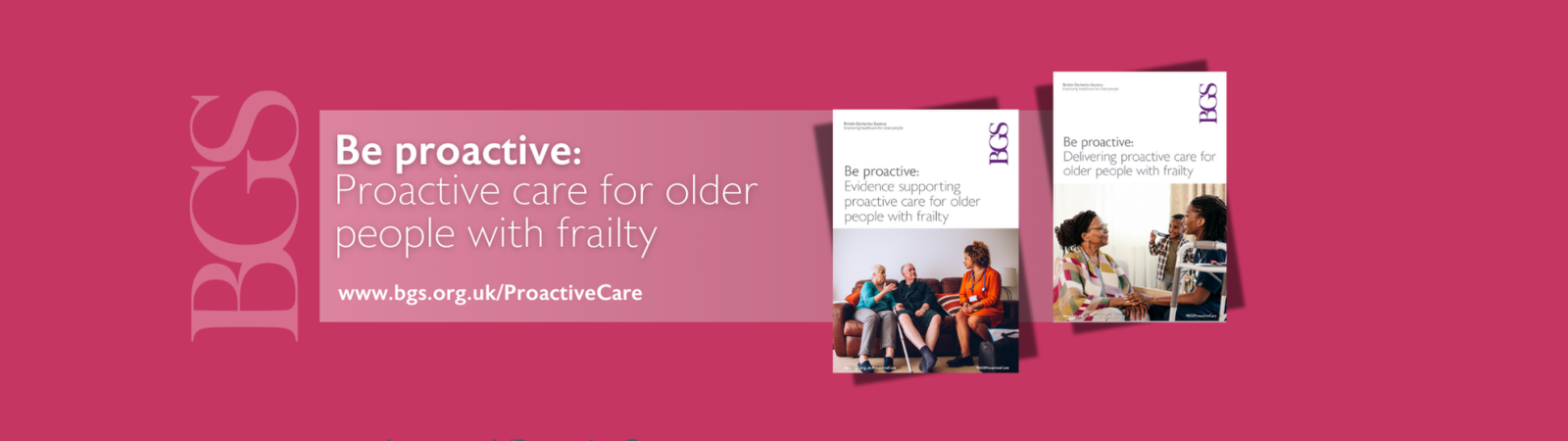
Be proactive: Evidence supporting proactive care for older people with frailty


'These BGS publications outline evidence and delivery recommendations for proactive care and support for older adults with moderate to severe frailty. 

We set out how to deliver proactive care against core components and key enablers, with recommendations for success of a proactive care service. Building on NHS England's proactive care guidance, Proactive care: providing care and support for people living at home with moderate or severe frailty, we also outline key recommendations for the successful implementation of proactive care services across the UK. 

We hope that users will be able to use all three documents when designing proactive care services, with the NHS England guidance document acting as key framework and starting point, BGS’s Be proactive: Evidence supporting proactive care for older people with frailty as a business case, and Be proactive: Delivering proactive care for older people with frailty  as a roadmap for implementing the NHS England framework and delivering services. ...'

https://www.bgs.org.uk/ProactiveCare


[All best Charlie (on your Christening Day), Casper and Jamie]. #hope #love #future #action #HealthCareer #LifeChances

Monday, October 21, 2024

Call for focus group participants: the records of adopted and care-experienced people -

– additional retention guidance for
record-keepers and care professionals

Could you help update retention guidance for record-keepers and care professionals by joining a focus group in November?

Care-experienced and adopted people, archivists & records managers and social workers are invited to participate in an online focus group to shape updated and detailed improvements in retaining care-experienced and adopted people’s records in England and Wales. This has been identified as a critical need by many recent reports including IICSA.

We recently published Guidance on the Records of Adopted and Care-Experienced People (Feb 2024) which sets out best practice, to improve consistency across England and Wales. We are a participative and inclusionary project led by members of the Chief Archivists in Local Government Group (CALGG), independent consultants and academics and professionals working in the records management, data protection and access to records fields, in the charitable and local government sectors. Some of our project members are adopted or care-experienced people.

Focus groups will take place on

Weds 13 Nov 11am-12.30

Mon 18 Nov 2-3.30pm

Thurs 28 Nov 2-3.30pm.

We will meet on Zoom: you will be able to join in your web browser, no zoom account or desktop app/licence is required.

Further information

The Guidance is aimed at people responsible for creating, managing, and providing access to care and adoption records. It includes the viewpoints of care-experienced people and adopted people to give practitioners a greater understanding of their experiences, needs and the challenges they face. The Guidance highlights that all organisations should have an up-to-date policy covering all records relating to children, young people and their families, together with procedures and plans to implement the policy including up-to-date retention schedules. Retention schedules recommend how long to keep different types of records. Each record type should have a retention period based on best practice, legislation, business need or a combination of these. Schedules also include how and when the retention period is triggered, and what should happen at the end of the period: typically either confidential destruction, or being kept permanently.

A retention period of [at] least 125 years from date of birth for case files and preferably 150 years as exemplary practice is recommended in the Guidance. However it also recommends the permanent preservation of these records with an option for people to opt out in the case of their own records.

These recommendations are made because many care-experienced or adopted people reconstruct their personal histories by turning to the records created about them by social workers and care providers. Thousands of requests to view records for this purpose are made each year in England and Wales. The records – a “paper self” - have significant impacts on a care-experienced person throughout their life. However, accessing records is often difficult, both practically and emotionally, and can be traumatic and dehumanizing. Records have been kept inconsistently across the public, private, and voluntary care sectors, affecting outcomes for individuals. Across England and Wales the records of adopted and care-experienced people who are formally classified as ‘looked-after people’ should be kept for 100 and 75 years respectively, but there are no permanent preservation protections for records in law. Moreover, some care-experienced people are omitted from the requirement for records to be retained. In addition, there are now many records sitting in digital systems which do not have a proper data migration/preservation strategy.

My Source: To view the list archives go to: https://www.jiscmail.ac.uk/cgi-bin/webadmin?A0=RECORDS-MANAGEMENT-UK 

Thursday, October 26, 2023

Developing NIHR guiding principles for Community Engagement and Involvement - have your say!

Dear HIFA colleagues,

Today we launch a public consultation on our guiding principles for community engagement and involvement in health research (CEI). We are aiming to build consensus by seeking feedback on the principles, their descriptions and how they could be implemented in diverse local contexts.

Here's the link to the survey: - now closed.

It should take around 15 - 20 minutes to complete, and it closes on 1 December.

The survey is open to everyone with an interest in CEI, and all HIFA members are welcome to participate. Please do share widely with colleagues, networks, and friends. If you have any questions, email ceiglobalhealth AT nihr.ac.uk.


** Rationale and more detail:

The NIHR expects Community Engagement and Involvement (CEI) to be integrated in the full spectrum of the research it supports. NIHR has both a vision and goals for CEI. However, we wanted to bring together wider work on the foundations of good CEI in research and present these key attributes in an accessible way. These new guiding principles aim to help clarify the expectations of CEI by: - providing stronger guidance for the global health research community in developing CEI plans that are robust, appropriate, and effective for both the local context and for the study design. - being useful to research funding committee members, providing them with a framework and criteria to carry out more robust assessments of research proposals.

The principles are not a set of rules but more conceptual and will be realised in practice in many ways, reflecting the huge contextual variation in global health research.

To date, we have carried out a rapid scoping review of literature, which, along with previous development work, aimed to identify CEI principles related to how researchers and communities interact within the global health research context. Earlier feedback on the emerging principles was sought from a group of CEI Leads across NIHR awards and from an independent group of CEI experts formed to advise on the work.

**

Best regards, Patrick Patrick Wilson Head of Global Health Communications & Stakeholder Engagement National Institute for Health and Care Research (NIHR)  📨 patrick.wilson AT nihr.ac.uk🌐 www.nihr.ac.uk/globalhealth Subscribe to our NIHR Global Health Research monthly newsletter 📝 https://www.nihr.ac.uk/about-us/stay-up-to-date.htm#six

HIFA profile: Patrick Wilson is Head of Global Health Communications & Stakeholder Engagement at the National Institute for Health and Care Research (NIHR), UK . Professional interest: Global health research. @NIHRglobal 

My source: HIFA

Tuesday, December 27, 2022

Editorial: "The Meaning of Concept Analysis" i

Nursing Science Quarterly (NSQ)


This editorial, "The Meaning of Concept Analysis" is open access and concerns an academic activity that is 'bread and butter' in nursing theory. It is well worth reading, for students too.

"The purpose of this editorial is to clarify the meanings of the term concept and analysis and to offer some guidelines that show what is appropriate for publication of concept analyses."
 
The editorial is helpful in encouraging the effort here, even as it suggests I would be wasting my time, the editor's and referees (although quarterly has a certain appeal).
 
 
The journal's role and purpose is clearly described:
"Nursing Science Quarterly is unique in that it is the only journal devoted exclusively to the enhancement of nursing knowledge. Only Nursing Science Quarterly publishes original manuscripts focusing on nursing theory development, nursing theory-based practice and quantitative and qualitative research related to existing nursing frameworks, contributed by the leading theorists, researchers and nurse executives. including nurse theory development."
I've enjoyed the freedom here, on the periphery of academia. Afraid at the same time that this 'h2cm' obsession has, will ... impact my objectivity, subjectivity - by way of attitudes, openness and view within and without of nursing, in theory, practice and management. Added to being able to carry the weight that is nursing (responsibility). The load is made-up of history, the legacies, the global academic balance (or not), the current global state of the profession, the fight for professional recognition and more. All rolled-up, and rolled-out when the challenges of the 21st century warrant it. Yes, the future is always - out there.

Concepts are key in Hodges' model, as a conceptual framework, as a series of conceptual spaces, as domains for threshold concepts and much more. I think I'm struggling now, as I always have in giving 'a' concept my critical attention, and its being in uniform. Concepts are always 'seen' as a gestalt. This may explain why I'm not an academic and definitely not a professional philosopher. The editorial notes:
"Examples of some analyses of concrete concepts that would not contribute to discipline-specific nursing knowledge and therefore are not worthy of publication include nursing overtime, nursing shortage, cultural competencies, medical diagnoses, precision health, big data, sensor technology, health economics, omics, and symptom science, among others."
I have mapped these concepts to Hodges' model below (underlined), and added in italics some associated concepts:
 
 
 INDIVIDUAL
|
 INTERPERSONAL    :     SCIENCES               
HUMANISTIC --------------------------------------  MECHANISTIC      
SOCIOLOGY  :   POLITICAL 
|
GROUP
psychiatric diagnosis
data ethics [person-al]
symptom science [here]


person-centered care / health
emotional/spiritual intelligence

medical diagnoses, precision health,
big data
sensor technology,
omics, and symptom science


procedure x,y,z - cost $$$

cultural competencies

social prescribing

health literacy
public understanding of sciences


nursing overtime
nursing shortage

nursing crisis?
data ethics [COP15]
outcomes - patient safety
information governance
health economics


As an exercise you may like to consider the following, as relates to the care - knowledge domains of Hodges' model?
"For the discipline of nursing (which includes the extant theories and frameworks) appropriate analyses of abstract concepts that contribute to the advancement of discipline-specific knowledge include self-care, wellness, well-being, self-esteem, courage, trust, burden, comfort, resilience, betrayal, shame, and authentic presence, among others."
Along with the concern about my preoccupation with Hodges' model, every time I type reflection, reflective practice - it hurts. It feels like another form of navel gazing, and yet the need for reflection, and reflective practitioners, producing critical thinkers and reflective practitioners is recognised world-wide.

I can't help but get a sense that concept analysis is nurse's navel gazing. If I sound critical, it would be a greater problem if this was the view of others outside nursing? Maybe, this point itself, validates the production of discipline-specific knowledge for nursing? I can't escape though, the feeling that there is something limiting, narrowing, even apolitical here: (Is there a global nursing crisis)? There has been much needed conceptual work on race, justice, gender, equality [google 'concept analysis, ...']. I realise my expansive approach can - and does - fall dead from the press. If I can blame the Atlantic, then I hope that pluralism still has a role to play?
 
Parse concludes:
"Nurse researchers and emerging scholars should answer four questions before launching a concept analysis that could be worthy of publications.

1. Is the concept an abstract expression to illuminate the essences that can contribute to nursing knowledge development?
2. Is the conception critical to the advancement of discipline-specific knowledge?
3. Which extant concept analysis model is appropriate for this concept?
4. Will this concept analysis be worthy of publication in light of its level of abstraction and possible contribution to nursing science?"

In the 21st Century concept analysis will have its place, being key in philosophy, linguistics, ethics, law, artificial intelligence ... and yes, nursing too. But increasingly I think the true power of concepts (in theory, practice, management, policy) is found when they are related and conjoined.* 

More to follow ... then silence ... for a time ...

Parse RR. The Meaning of Concept Analysis. Nursing Science Quarterly. 2023;36(1):5-5. doi:10.1177/08943184221131957

*To state the obvious.

Thursday, May 07, 2020

Antimicrobial Resistance - an AMR TOOLBOX

Dear All,

AMR (antimicrobial resistance) is an increasing threat to global public health worldwide that requires cross-sectional and cross-disciplinary action. It is present in every country and is spurred by several human made factors including over- and/or inadequate use of antibiotics, poor hygiene and infection prevention control, excessive usage of antibiotics outside the health care sector e.g. in life stock production. And there are reasonable assumptions that the current COVID-19 pandemic might fuel AMR in the hospital.

The AMR TOOLBOX (www.amrbox.org) is a comprehensive knowledge repository designed to provide its users with practical, up-to-date information on antimicrobial resistance. It collates documents, guidelines, posters, training tools as well as information sources for various disciplines and backgrounds including among others health care sector, veterinary and agriculture sector, but also the general public. Thereby, it contributes to the fight against AMR by providing high quality information for all stakeholders involved.

The AMR TOOLBOX is part of MEDBOX http://www.medbox.org and was jointly created by Apotheker Helfen e.V. and the MEDBOX team.

We hope you find this new toolbox useful! If you have any feedback regarding the content, please feel free to contact us under info AT medbox.org.

Best regards,

the MEDBOX team & Andreas Wiegand Apotheker helfen e.V.


Sieglinde Mauder
Project Manager MEDBOX
Karin Geffert
Project Assistant MEDBOX
www.medbox.org


HIFA profile: Sieglinde Mauder is Librarian at the Medical Mission Institute, Würzburg, Germany. She collects and distributes resources on HIV/AIDS, tropical diseases, humanitarian aid, health service management, e-learning for partners in developing countries.

sieglinde.mauder AT medmissio.de


My source: HIFA

Thursday, May 21, 2015

NMC Code and Guidance on using social media responsibly

http://www.nmc.org.uk/standards/guidance/social-networking-guidance/
NMC: Guidance on using social media

In March the Nursing & Midwifery Council published a new Code for nurses and midwives.

There is also guidance on the use of social media for this group of health professionals.


https://www.nmc.org.uk/standards/guidance/social-media-guidance/

Friday, September 27, 2013

Budgeting for Public Involvement in Research

Dear Colleagues,

INVOLVE and the Mental Health Research Network teamed up to produce a new resource to help with budgeting for the costs of public involvement in research. It can be used for everything from putting together an involvement budget for an entire study to working out how much it will cost to run a one-off consultation event.

The first part of the resource is a guide which:

  • provides practical advice on what costs are associated with involvement in research
  • includes a step-by-step process for identifying the associated costs and planning the budget
  • presents examples of research projects with well-developed budgets for involvement work
  • contains tips, links to useful websites, and references.
The second part of the resource is an online ‘involvement cost calculator' to work out the costs for your research study.

Please forward this information to your colleagues and networks.

If you have any questions or queries about Budgeting for involvement please contact:

Thomas Kabir
MHRN Service Users in Research Coordinator ...
To find out about INVOLVE visit www.invo.org.uk

...

My source: Laura Gardner: Research Design Service North West’s e-mail list.

Monday, April 25, 2011

Antipsychotics: person centered care vs roots and branches

When I visit one of the nursing homes in my area, I invariably have specific appointments in mind. Mr Smith or Mrs Brown have been referred, or are already known to community mental health services. Working in an advisory / consultancy / educational capacity other individuals are brought to my attention and this continues the person centered focus - at least at this level.

Keeping things person centered beyond that in assessment, care planing and intervention - is the real challenge. Actually there is another: even where staff are 'trained' and you observe staff -:- resident interactions you often see that (as for us all) there remain key things to learn.

I've visited a few homes to try to jump start an audit of antipsychotics and other drugs that can be so damaging to older adults - potentially fatal in fact as per evidence based findings and reporting in the media:

About 145,000 people with dementia are wrongly being prescribed powerful anti-psychotic medication which causes around 1,800 deaths a year ... The Times
The problem is recognized now as per the Department of Health's (2009) report:


The risks, care management and quality of life issues that arise have prompted some homes / organisations to pursue this internally. My manager Christine and I are working to put a 'pack' together and make connections with colleagues working in residential care / nursing home liaison.

It is essential to check that there is consistency, compliance and that reviews are comprehensive. What blood tests have been completed and exactly when? Have next-of-kin been made aware of the potential side-effects? How skilled are staff in dealing with these acute care challenges? Is there a need to 'fix' the care environment? Is this placement - despite being the individual's home - still appropriate? What specific staff awareness is needed to support any shared care protocol that is put in place?

The point here is that it can be surprising the drugs that do come to our attention. People move in from out of area; some individuals are self-funding so they may by-pass formal services; others are seen by locum doctors / out of hours services and subsequent follow-up may be missed. ...

So here it's not about Mr Smith or Mrs Brown in the first instance, even though that's the expectation when I first arrive. Clearly, this is going to take a dedicated approach away from the personal care problem solving - solution finding (fire-fighting!).

The summary care record could be a great help here and I wonder about searches conducted within primary care GP systems. IT systems aside, it's about turning up and engaging with the homes around a root and branches review of their Medication Administration Records Sheets (MARS).

Task driven - person centered care!
