Hodges' Model: Welcome to the QUAD: digital

Hodges' model is a conceptual framework to support reflection and critical thinking. Situated, the model can help integrate all disciplines (academic and professional). Amid news items, are posts that illustrate the scope and application of the model. A bibliography and A4 template are provided in the sidebar. Welcome to the QUAD ...

Showing posts with label digital. Show all posts

Thursday, October 08, 2026

DSA & Q-Lab: 'In an Age of Answers, Questions Matter More Than Ever'

This afternoon I joined an online webinar organised by THE DIGITAL STATECRAFT ACADEMY:

'Gaining understanding by structuring inquiry: 
probing data with one right question after another is almost here'

The art, science, and practice of governing well in the algorithmic age

The Digital Statecraft Academy (DSA) is a global hub for cultivating visionary public leaders ready to navigate the complexities of data, AI, and digital governance. Backed by world-leading academic and policy institutions, DSA equips today’s leaders with the tools, knowledge, connections, and foresight to govern ethically, strategically, and resiliently in a rapidly evolving digital world.
 
 
Also highlighted was Q-Lab 


About Q-Lab

Questions shape what becomes visible, what is investigated, what is funded, and ultimately what societies come to know. They are fundamental not only to scientific inquiry but to a wide range of sectors and practices—from education and journalism to policymaking, medicine, law, and business, among others.

Despite this foundational role, questions are seldom treated as objects of systematic study. Established fields examine intelligence, knowledge production, and decision-making, yet few, if any, take questions themselves as their subject.

How should we define a good question? Which questions are most likely to serve as stepping stones toward breakthrough insights? Who determines which questions matter most? In short, what do we actually know about questions?

Questions Lab (Q-Lab) is the first multidisciplinary initiative dedicated to establishing questions as a field of study and practice, understanding how questions emerge, how they evolve, which questions make the greatest impact, and how they shape the trajectory of knowledge across disciplines and generations, in order to help individuals and institutions navigate complexity, deliberate more thoughtfully, and set better priorities.


I look forward to more events in future.
 
Previously: Questions in eclipse : 'question'

Monday, October 05, 2026

The Lancet Series on the digital determinants of health: (What only three papers?)

Published: October 4, 2026

Executive summary

Digital technologies have become embedded within the systems and environments that shape health and wellbeing. They influence how people access information, communicate, learn, work, access health care, participate in society, and make decisions about their lives. Understanding and governing these determinants has therefore become a critical public health priority. This three-paper Series proposes a new approach for conceptualising and responding to the digital determinants of health, and sets a bold agenda for future research, practice, and governance.

https://www.thelancet.com/series-do/digital-determinants-of-health

My source: 'Unnecessary Services in Clinical Medicine & Public Health' group. 

Whether it is a journal, a clinic, community disciplinary team, a government committee, or an APPG - all-party parliamentary group, a university course (outside 'general studies') ... we are dealing with knowledge silos. Even more so, in the case of a journal series, special issue, or most conferences. 

There is always a case for expertise, in-depth perspectives and evidence-based understanding. Finding cures for cancer, diseases, the future of AI as relates to humanity's continuity are prime examples. When we speak of integrated care, if that care begins with education and self-care, then we need to consider all the determinants. Not only that, we need to conduct this investigative task concurrently with all the literacies. Otherwise, theory, practice, management, policy and ongoing research may struggle to cohere. Integration is essential, to facilitate sustainability, measurement and subsequent reporting. Hodges' model can assist.

Monday, July 20, 2026

CfA Fully Funded Research Sabbaticals - via BCS-SGAI

Time, focus and community for your research on the societal impact of digital transformation


A fellowship at the Center for Advanced Internet Studies (CAIS) provides the freedom to dedicate yourself to your research and the opportunity to join a vibrant interdisciplinary community. Step away from daily work routines to gain new perspectives and build lasting connections.


As a fellow, you can spend either six or three months in Bochum, Germany. During this time, we will cover your sabbatical leave from work through financial compensation (e.g. for a teaching substitute) or provide grants of up to 2.000 € per month. In addition, we will provide a fully furnished apartment free of charge. You can invite guests for collaboration and receive financial support for research expenses. Private offices and meeting rooms with modern facilities offer optimal working conditions.


The funding program is open to excellent scholars and practitioners, to all career stages, disciplines and areas of investigation, as well as to pure research and to projects that are more applied in orientation.


You can apply for our regular open call, or for our special call “Futures of Work”.


The next deadline for applications is 31 August 2026. The earliest possible starting date for new fellowships is October 2027. Please use the application form on our website.


Find out more: https://cais-research.de/en/cais-college/fellowships/


Further questions? Please contact esther.laufer AT cais-research.de


My source: https://www.jiscmail.ac.uk/cgi-bin/wa-jisc.exe?A0=AI-SGES

Sunday, June 28, 2026

1st Workshop on the Internet of Mirrors (IoM): Connected Intelligence for Healthcare, Beauty, and Immersive Digital Experiences

Dear Colleagues,

I would like to invite your technical papers submissions to our 1st Workshop on the Internet of Mirrors (IoM): Connected Intelligence for Healthcare, Beauty, and Immersive Digital Experiences, which will be held in IEEE WF-IoT 2026 in Abu Dhabi, UAE.

Workshop Focus


The Internet of Mirrors (IoM) is an emerging IoT ecosystem built around interconnected smart mirrors that can sense, process, communicate, and deliver personalised services across healthcare, beauty, wellness, assisted living, fitness, and immersive digital experiences.
Although the workshop is centred on the Internet of Mirrors, the realisation of this vision requires multi-domain expertise. As such, we are very keen to receive contributions not only from researchers directly working on IoM, but also from those developing the architectures, algorithms, communication technologies, computing frameworks, and application domains that will underpin future intelligent IoT ecosystems.

Topics of Interest
  • Relevant topics include, but are not limited to:Edge, fog, and cloud computing for IoT systems
  • Distributed intelligence and multi-agent AI
  • AI-enabled IoT applications and personalised services
  • Multimodal sensing, data fusion, and contextual awareness
  • Intelligent task orchestration and adaptive resource allocation
  • Wireless connectivity, 5G/6G, and network optimisation
  • Privacy-preserving AI, security, interoperability, and trustworthy AI
  • Human-computer interaction, accessibility, and inclusive smart interfaces
  • Digital twins, immersive technologies, and metaverse-enabled experiences
  • Internet of Sounds, Internet of Medical Things, and broader Internet of Everything ecosystems
  • Smart healthcare, assisted living, wellness, fitness, beauty, and immersive digital lifestyle applications
  • Proof-of-concept implementations, benchmarking, testbeds, and real-world IoT deployments
Important Dates 
  • Paper submission deadline: 12 July 2026
  • Notification of acceptance: 15 August 2026
  • Camera-ready deadline: 30 August 2026

Workshop Chairs

  • Lina Mohjazi, University of Glasgow, UK
  • Luca Truchet, University of Trento, ITALY
  • Ahmad Taha, University of Glasgow, UK
  • Rabeb Mizouni, Khalifa University, UAE
  • Muhammad Ali Imran, University of Glasgow, UK
  • Haneen Fatima, University of Glasgow, UK

Information

Workshop website: https://sites.google.com/view/wfiot2026-workshop-iom
Submission link: https://edas.info/newPaper.php?c=34901&track=138858

Contact Emails:
l.mohjazi AT ieee.org
ahmad.taha AT glasgow.ac.uk

It would be wonderful if you could consider submitting relevant work, or share the call with colleagues and students who may be interested!
--
Kind regards,
Dr Kubra Duran
Postdoctoral Fellow
Edinburgh Napier University, UK

My source: SOCIOTECH list - JISC

Wednesday, March 25, 2026

Call for Submissions: Reimagining the Frontline - The Evolving Roles of Community Health Workers (CHWs) in a Changing World

Dear HIFA Colleagues,

Are you a researcher operating in the community health space?

Sage Health Service Insight Journal, a JCR-ranked, peer-reviewed, fully Open Access journal with an Impact Factor of 2.5. launched a Special Collection focused titled:

Reimagining the Frontline:

The Evolving Roles of Community Health Workers (CHWs) in a Changing World
 https://journals.sagepub.com/topic/collections-his/002164/hisa

Your perspective would be invaluable to this collection, especially at a time when CHWs are at a pivotal crossroad. From navigating funding pressures and the health impacts of climate change to harnessing AI and digital tools, their roles are evolving faster than ever. This collection seeks to capture that transformation through rigorous, forward-looking research.

We welcome research articles and review articles on these topics: 
  • Sustainable financing and economic models in a constrained landscape 
  • Digital transformation: AI, mHealth, and data equity
  • Adapting to emerging health threats and new health conditions 
  • CHW resilience and wellbeing
Submission deadline: 13 July 2026

Additionally, authors may be eligible for APC discount through: Please note that only the highest applicable discount would apply to the standard publication fee, as authors would be unable to stack the discounts.

We deeply appreciate your consideration and would be delighted to feature your work in this Special Collection. Please feel free to reach out if you have any further questions.

Should you have any questions about the Special Collection, please do not hesitate to reach out to the Guest Editors directly: Abimbola.Olaniran AT outlook.com and Roosa.Sofia.Tikkanen AT fhi.no. For journal-related queries, please contact: Katalin.Orosz AT sagepub.co.uk

Thank you so much for considering this invitation. I truly look forward to the possibility of featuring your work.

Best regards,

Drs Abimbola Olaniran & Roosa Sofia Tikkanen Guest Editors, Health Services Insights Special Collection

HIFA profile: Abimbola A. Olaniran (MB;BS, PhD, EMBA) is a physician, researcher, and digital health entrepreneur with over twenty years of experience at the intersection of clinical care, health systems research, and policy in Africa. He continues to collaborate with local and international partners as well as national governments across Africa on health policy, workforce planning, and implementation research. His mission is to ensure that the AI revolution serves the most underserved, building from the continent, for the continent. Abimbola.Olaniran AT outlook.com
 
🔷 

Just to add: In addition, if I can support any CHW's and team colleagues and managers in a contribution using Hodges' model, I would be pleased to do so.

My source: HIFA list

Friday, January 30, 2026

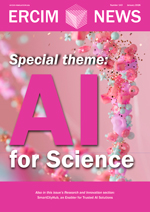
ERCIM News No. 143 Special theme: "AI for Science"

 
Dear ERCIM News reader,

ERCIM News 143 is now online! The articles in this special theme show that AI is no longer a peripheral tool in science, but a central part of research practice across disciplines. AI for Science is reshaping how research is organised, understood, and conducted, while also raising important questions about trust, transparency, energy use, and the evolving role of human expertise.

Read the January 2026 Issue


This issue in PDF


This special theme was coordinated by our guest editors Edina Nemeth (SZTAKI) and Alexandre Termier (University of Rennes – Inria/IRISA).


My source:
Peter Kunz ERCIM https://www.ercim.eu https://ercim-news.ercim.eu

Monday, September 08, 2025

Online: Artificial Intelligence (AI) in Healthcare - Weds 17th Sept 2025 BCS Coventry Branch

Online event organised by British Computer Society (BCS)

Full details: 
https://www.bcs.org/events-calendar/2025/september/webinar-ai-in-healthcare-neural-ai-v-symbolic-ai-why-we-need-neuro-symbolic-ai/

*** Agenda (UK time) *** 

18:30 - Meeting opens
Welcome and Introductions
18:40 - Hand-over to speaker
19:30 - Questions
20:30 - End

Scope of workshop

This is to support you in putting together your application for the FEDIP application and the workshop will focus on:

  • What level you should apply for
  • How to work with the Standard
  • How to map your evidence
  • Putting together context
  • Preparing your evidence in the best way 
  • What the assessors will look for
Free-of-charge registration to obtain the Zoom link

https://www.eventbrite.co.uk/e/ai-in-healthcare-neural-ai-v-symbolic-ai-why-we-need-neuro-symbolic-ai-registration-1383661000299?aff=oddtdtcreator
___________________________

My source: Dr Mercedes Arguello Casteleiro.

FEDIP: https://www.fedip.org/

Friday, August 15, 2025

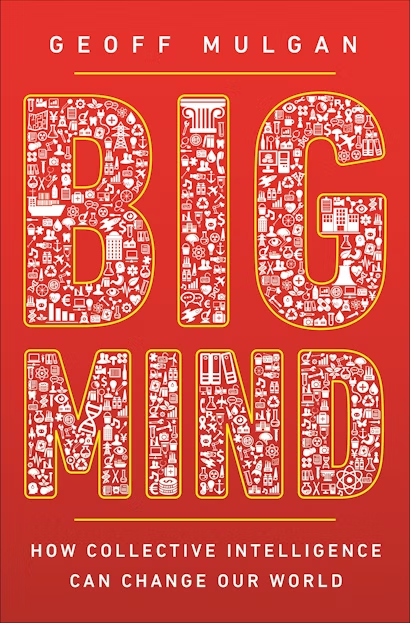
Big Mind: How Collective Intelligence Can Change Our World


It was COVID-19 that brought home to me the true significance of the 'collective' in the synonyms for group, population, polis, citizenry et al.. An integral part of Hodges' model, an individual, a person is clearly not an island.

Speech, gesture, behaviors, drawing, writing and other media all  provide a way of recording and representing information, and knowledge. Digital technologies are the latest tools to extend our memories, and ability to analyse, synthesise and abstract from and to our experiences.

How we see the individual and collective (society) is a subject of much debate across many disciplinary fields, spanning the sciences and humanities; economics, healthcare, sociology, ethics, and philosophy. Mulgan considers as infrastructure, the measures that have emerged to support collective intelligence:


'They have evolved from physical objects (such as steel production) through aggregate concepts (like GDP and GNP) to intangibles (such as innovation indexes or measures of the value of creative industries). They have evolved from single measures of things like population to indexes (like the UN Human Development Index), and from activities to outputs and then outcomes (such as QALYs - quality adjustied life years - and DALYs - disability adjusted life years in relation to health). In all these ways, both states and societies watch themselves and recognize well-calibrated observation as the precondition for thought.' (p.52)
Using Hodges' model the focus is primarily upon individuals and teams application. Mulgan's chapter 12 (pp.145-160) on 'Problem Solving' is subtitled 'How Cities and Governments Think'. An excellent question, that was asked of me in February. How can a national government be informed of Hodges' model and its potential utility? Cities have repeatedly had to solve problems created by changes in transport, work, housing, population density, the movement of people, goods, materials, and links to rural and agricultural centers. The logistics of access to routes, ports, airports, and where to place industries efficiently (and safely)? 'City planning' is a key example of our cities thinking?

Perhaps, we need to think of mobility in a cognitive sense, and not just AI-mediated. So as we walk, run, seek access - we should take care we don't get stuck!

Individual
|
      INTERPERSONAL    :     SCIENCES               
HUMANISTIC  --------------------------------------  MECHANISTIC      
 SOCIOLOGY  :    POLITICAL 
|
Group
subjectivity

models we use can be a trap (p.120)

emotional intelligence
quality
objectivity

SYSTEMS energy, food, transport..

physical media & 'memory'
quantity

'Society Thinking as a System?' Chap. 16.

Group - Collective

collective intelligence

Patient Reported Outcome Measures (PROMs)?

See also: 'literacy' : 'prevention' : 'service' : 'severe' : 'change'

Geoff Mulgan (2017) Big Mind: How Collective Intelligence Can Change Our World, Princeton University Press.

Image: Princeton University Press.

Monday, March 17, 2025

1st Seminar Series: "Violence, Memory, Networks" - Interdisciplinary Connections

Dear colleagues,

The first session of the seminar "Violence, Memory, Networks" will take place on 19th March, 2025, at 2.30 pm (GMT), exclusively online.

In this session, Caroline Elkins (Harvard University, USA) will speak about "Legalized Lawlessness: Violence and the End of the British Empire" and Max Silverman (University of Leeds, UK) will bring us a communication on "Concentrationary violence and the everyday: the Zone of Interest (Jonathan Glazer, 2023)".

Registration is free but mandatory: https://forms.gle/brgNcR6hk6dxf7gu7

Event website: https://www.uc.pt/fluc/seminarvmn/

We would be very grateful if you could publicise the event through your channels.

Looking forward to see you soon,

The organising committee.

My source: https://www.uc.pt/fluc/ief/

Monday, January 13, 2025

NPR: What is your wish to improve life on earth in 2025?

Dola Sun for NPR


With thanks to NPR, 'an independent, nonprofit media organization that was founded on a mission to create a more informed public'. NPR asked 11 global health professionals to share their wishes for 2025.

Read in full here:
https://www.npr.org/sections/goats-and-soda/2025/01/06/g-s1-40820/2025-world-wishes-haiti-bird-flu

We asked global thinkers how to improve life on earth in 2025. Here are their wishes

My wish: Honor the legacy of Jimmy Carter Dr. Ifeanyi M. Nsofor, project director, VaxSocial HPV Vaccination Initiative, Nigeria

My wish: World, awaken to the medical emergency in Haiti Dr. Ousmane Abdoulaye, Port-au-Prince in Haiti, medical coordinator, Haiti Mission, ALIMA — The Alliance for International Medical Action

My wish: Nothing too grand. Just a small wish that things for us go back as they were three years ago — when women could go to parks or markets but most of all go to school. Maryam S., Afghanistan, former Master's student of Pashto literature. She asked to be identified by her first name only out of fear that her criticism of Taliban policies would put her and her family in danger.

My wish: Make monumental strides in using advanced technology to detect emerging pathogens Dr. Abraar Karan, physician and researcher, Division of Infectious Diseases & Geographic Medicine, Stanford University

My wish: Let us recognize that violence has never been the true solution to conflict KR Raja, Madurai, India, lawyer advocating for criminal justice reform and the founder of the Indian charity Global Network for Equality, which supports children orphaned by crime

My wish: I dream of a future where there are safe and healthy conditions for workers, where they are free of discrimination and can earn a fair wage. Ashila Dandeniya, Colombo, Sri Lanka, founder and director of the Stand Up Movement, a women-led organization that advocates for workers' rights.

My wish: Make progress in developing treatments to reduce deaths and complications from dengue André Siqueira, head of the Dengue Global Programme at Drugs for Neglected Diseases Initiative and public health researcher at the Oswaldo Cruz Foundation's National Infectious Diseases Institute in Brazil

My wish: For trekkers and travelers to help clean up the waste they leave behind — and to help protect our natural treasures Raj Kumar Shrestha, trekking guide, Kathmandu, Nepal, and founder of Let's Clean Up Nepal, an environmental conservation organization

My wish: Use digital innovation to enable health workers to deliver their care, especially in places where resources are constrained Dr. Junaid Nabi, public health researcher specializing in health-care reform and innovation, and a senior fellow at the Aspen Institute and a Millennium Fellow at the Atlantic Council

My wish: May the year bring peace to the world Dr. Atsbha Merhawit, Ayder Hospital, specialty in endocrinology and diabetes, Mekelle, Ethiopia

My wish: Follow the rules of war regarding the welfare of children Joe English, New York, N.Y., emergency communication specialist for UNICEF ==

What is your wish for 2025?

Best wishes, Neil

HIFA profile: Neil Pakenham-Walsh is coordinator of HIFA (Healthcare Information For All), a global health community that brings all stakeholders together around the shared goal of universal access to reliable healthcare information. HIFA has 20,000 members in 180 countries, interacting in four languages and representing all parts of the global evidence ecosystem. HIFA is administered by Global Healthcare Information Network, a UK-based nonprofit in official relations with the World Health Organization. Email: neil AT hifa.org

n.b. My wish: That "Hodges' Health Career - Care Domains - Model" continues to emerge as a generic conceptual framework shared and understood by all learners for lifelong learning.

Thanks Neil. I will post this with HIFA link.

Sunday, January 05, 2025

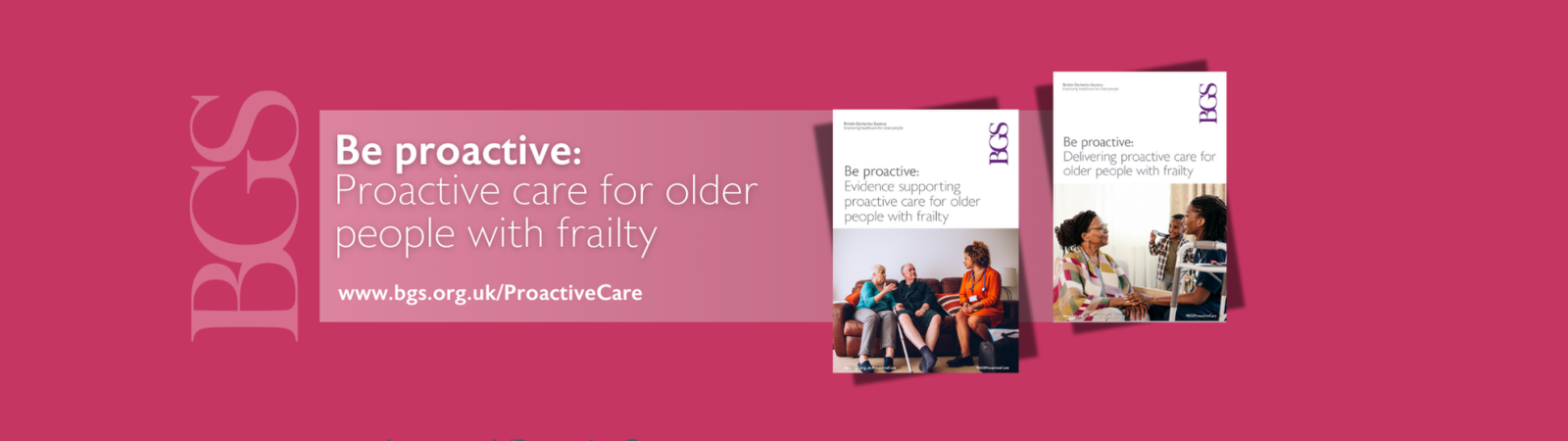
Be proactive: Evidence supporting proactive care for older people with frailty


'These BGS publications outline evidence and delivery recommendations for proactive care and support for older adults with moderate to severe frailty. 

We set out how to deliver proactive care against core components and key enablers, with recommendations for success of a proactive care service. Building on NHS England's proactive care guidance, Proactive care: providing care and support for people living at home with moderate or severe frailty, we also outline key recommendations for the successful implementation of proactive care services across the UK. 

We hope that users will be able to use all three documents when designing proactive care services, with the NHS England guidance document acting as key framework and starting point, BGS’s Be proactive: Evidence supporting proactive care for older people with frailty as a business case, and Be proactive: Delivering proactive care for older people with frailty  as a roadmap for implementing the NHS England framework and delivering services. ...'

https://www.bgs.org.uk/ProactiveCare


[All best Charlie (on your Christening Day), Casper and Jamie]. #hope #love #future #action #HealthCareer #LifeChances

Friday, December 06, 2024

Int. Conference on Improving University Teaching 2025


Redefining Education:

Navigating Sustainability and Innovation in a VUCA World

In a world increasingly subject to volatility, uncertainty, complexity, and ambiguity (VUCA) the goal of sustainability is aspirational, yet elusive.  A UN report published in 2024 notes that “intensifying, interconnected challenges continue to endanger the realization” of the seventeen sustainable development goals identified by the UN Sustainability Conference twelve years ago in Rio de Janeiro.  This is especially true in education, which the report correctly terms “the bedrock of sustainable development.”   It notes the negative effects of the COVID epidemic, regional conflicts, climate shock, and economic turmoil and paints a picture of a planet struggling to make progress towards them. While the big picture may be less than perfect, there is still much cause for hope, as we strive towards a better future.

Against this backdrop, the International Conference on Improving University Teaching seeks to address the challenge of sustainability, equity, and innovation as they affect higher education. In particular, we are exploring how to prepare students for a “VUCA world” in which they will have to contend with multiple challenges, while at the same time ensuring their wellbeing—and that of all academic staff—in the present. By definition, a future subject to uncertainty and ambiguity will require flexibility and adaptability on the part of students. ..

Continued ...

Previously: IUT, VUCA

Wednesday, October 16, 2024

2025 6th edition of "Seed Projects for Interdisciplinary Research"

Para quem possa ter interesse. / To whom it may concern.

Caros/as Coordenadores/as das Unidades I&D da UC,  

Caros/as Gestores/as de Ciência, 


A pedido do Vice-reitor para a Investigação e Diretor do Instituto de Investigação Interdisciplinar (IIIUC), Professor João Ramalho-Santos, i
nformamos que estão abertas as candidaturas para a 6ª Edição de financiamento dos "Projetos Semente de Investigação Interdisciplinar", com o apoio da Fundação Santander, promovido pelo Núcleo das Áreas Estratégicas da UC (NAE), em colaboração com o Instituto de Investigação Interdisciplinar (IIIUC). 


Com este concurso, a UC pretende continuar a apoiar o desenvolvimento inicial de projetos de investigação originais e interdisciplinares com um financiamento semente que permita aos investigadores e às investigadoras da UC tornarem as suas propostas científicas mais robustas, de forma a assegurar financiamento competitivo no futuro e o desenvolvimento de novas linhas de investigação que cruzam áreas do saber na Universidade de Coimbra.


Irão ser financiados até cinco projetos de investigação interdisciplinar, uma em cada Área Estratégica da Universidade de Coimbra:  Saúde; Clima, Energia e Mobilidade; Recursos Naturais, Agroalimentar e Ambiente; Digital, Indústria e Espaço; Património, Cultura e Sociedade Inclusiva.


Poderão concorrer a este financiamento investigadores/as integrados/as nas Unidades I&D (ou noutras estruturas da Universidade de Coimbra) que desenvolvam investigação na UC e que obtiveram o doutoramento após 1 outubro de 2014. A equipa do projeto deve incluir de três a seis Investigadores/as da UC, de pelo menos duas Unidades I&D de
domínios científicos distintos. 


As candidaturas podem ser submetidas até 6 de dezembro de 2024, às 17h na página web do concurso:
 

https://www.uc.pt/iii/iiiuc-apoia/seedprojects-uc/edicao-2025/  


Estão disponíveis nesta página as normas do concurso, modelo para submissão de candidatura e a lista de júri nomeado para esta edição.


Atenciosamente,
 

O Núcleo das Áreas Estratégicas 


Isabel Neves 
 

Maria João Neves   

Natacha Leite   

Shiva Saadatian   


*******************

On behalf of the Vice-rector for Research and Director of the Institute for Interdisciplinary Research (IIIUC), Professor João Ramalho-Santos, we would like to inform you that applications are now open for the 6th edition of "Seed Projects for Interdisciplinary Research", with the support of Santander Foundation, promoted by the UC Strategic Areas Unit (NAE), in collaboration with the Institute for Interdisciplinary Research (IIIUC).  


Through this call, the UC intends to provide support for the initial development of original and interdisciplinary research projects with seed funding that will allow UC researchers to make their scientific proposals more robust, ensuring competitive funding in the future and the development of new research lines that cross areas of knowledge at the University of Coimbra. 


There will be funding for up to five interdisciplinary research projects, one in each of the UC Strategic Areas: Health; Climate, Energy and Mobility; Natural Resources, Agri-food and Environment; Digital, Industry and Space; Heritage, Culture and Inclusive Society. 


Researchers of the R&D Units (or other structures of the University of Coimbra), who carry out research at the UC and who obtained their doctorate after 1 October 2014 are eligible to apply for this funding. The project team must include three to six researchers from the UC, from at least two R&D Units in
different scientific fields.  


The applications can be submitted until 6 December 2024 at 5pm on the call website: 
 

https://www.uc.pt/en/iii/iiiuc-supports/seedprojects-uc/2025-edition/  


The call guidelines, proposal template and the list of juries appointed for this edition are available on this page. 


Yours sincerely,  

Strategic Areas Unit 


Isabel Neves   

Maria João Neves    

Natacha Leite    

Shiva Saadatian 

Universidade de Coimbra • Reitoria • Administração | University of Coimbra • Rectory • Administration

Serviço de Promoção e Gestão da Investigação | Research Management Service

Núcleo das Áreas Estratégicas | Strategic Areas Unit

Polo I | Rua Larga • Edifício da FMUC (1º piso) • 3004-504 COIMBRA • PORTUGAL

Polo II | Casa Costa Alemão • Rua Dom Francisco de Lemos • 3030-789 COIMBRA • PORTUGAL

https://www.uc.pt/spgi/nae/ 
Thursday, August 29, 2024

Records Management Journal - Editor Opportunity

 All

After nine years in post, I am stepping away as a Co-Editor of the Records Management Journal. My colleague Sarah Demb has also recently completed her term. A double issue on recordkeeping and the law is about to land and we have a strong series of articles for next year. We are therefore advertising the opportunity for someone to take forward this important Journal which contributes in research and practice, and does publish content globally. The role of Editor provides a first hand opportunity to lead and network in this field, positioning special themed issues and ground breaking research. The work is supported by its strong Editorial Board.

The full advertisement is at:

I am very happy to answer any further enquiries.

Kind regards

Elizabeth
Dr Elizabeth Lomas, FRSA, FIRMS, FHEA, FRHisS
Associate Professor in Information Governance
G43, Foster Court
Department of Information Studies
University College London
Gower Street
London WC1E 6BT U.K.

Email: e.lomas AT ucl.ac.uk

My source: RECORDS-MANAGEMENT-UK list.