Hodges' Model: Welcome to the QUAD: writing

Hodges' model is a conceptual framework to support reflection and critical thinking. Situated, the model can help integrate all disciplines (academic and professional). Amid news items, are posts that illustrate the scope and application of the model. A bibliography and A4 template are provided in the sidebar. Welcome to the QUAD ...

Showing posts with label writing. Show all posts

Friday, October 09, 2026

POISONING THE WELL AND SILENCING IN ARGUMENTATION: ONLINE WORKSHOP - Student Commentators Needed!

WE ARE LOOKING FOR STUDENT COMMENTATORS FOR THE ONLINE WORKSHOP ON POISONING THE WELL AND SILENCING IN ARGUMENTATION.

The expressions of interest from student commentators deadline is November 15th (the submission deadline for the associated 
Topoi issue is 15th February) PLEASE SEE BELOW FOR DETAILS!


What is this about?

Among the fallacies traditionally regarded as particularly dangerous, poisoning the well stands out. The literature describes poisoning the well as an argumentative move that consists in providing information about an interlocutor to diminish the credibility of what they have already said, or will say, thereby “poisoning” their ability to contribute - silencing them. Despite the fallacy’s importance, work on it and on silencing in argumentation is limited. 


The Poisoning the Well and Silencing in Argumentation Online Workshop (and the associated call for papers at Topoi) will contribute to filling this gap.


Student Commentators Needed!

We are now looking for student commentators! Student commentators will receive the paper they comment on two weeks before the workshop. Commentaries will be ten minutes long.


Look here (scroll down a little) to find the papers that will be presented at the workshop: 
Critical Thinking and Civic Engagement Lab
.


If you are interested in commenting, please contact Amalia Haro Marchal/Katharina Stevens under 
ahmarchal AT fcsh.unl.pt and katharina.stevens AT uleth.ca by November 15th!


Make sure to state your first, second and third choice for papers to comment on with a short explanation, we will assign based on interest and compatibility!


My source (and via KS): Philos-L "The Liverpool List" is run by the Department of Philosophy, University of Liverpool https://www.liverpool.ac.uk/philosophy/philos-l/ Messages to the list are archived at http://listserv.liv.ac.uk/archives/philos-l.html.

Tuesday, September 22, 2026

Beware of the Concept

Yesterday Alan Ayckbourn's gold-nugget-laden book -

The Crafty Art of Playmaking by Alan Ayckbourn. Faber, 2004, softcover, ISBN 0571215106.
https://www.concordtheatricals.co.uk/s/45898/the-crafty-art-of-playmaking
 

- found a new owner. Beforehand, I turned up the following helpful advice (or, 'obvious rules'): 

ix Introduction

'The following is an attempt to describe, as far as I can, this double process [writing and directing, PJ]. Some of it is quite probably unique to me and contains procedures and practices that it would be highly unwise for others to try and copy. The rest is really just plain common sense. But if I've learnt anything it is that it never hurts to point out the obvious occasionally, certainly in the theatre - to actors, directors or writers and sometimes even to designers, stage managers and technicians. Often we quite wrongly suspect simplicity. We go digging around in the creative sand trying to make.our art more meaningful, somehow 'deeper'. Generally all we do is end up with our heads entirely buried, presenting the audience with our rear ends.'
Obvious Rule No. 3
If you don't have the initial inspiration, put down the pen,put the pencil back in the jar, switch off the computer and go and dig the garden instead.

.. 
'At its most successful, theatre views things from a human standpoint. It is after all the most human in scale of all the performance media. My feeling is that that's also a good place for a dramatist to start, at the human level. As a playwright it may be your intention to build a vehicle to take us to the stars. But do make sure you have people aboard.

Initial inspiration - that essential starting point - comes in all shapes and sizes.' p..9.
Obvious Rule No. 49
Beware of the Concept.

DIRECTING

'Don't be talked into anything you feel instinctively you'll regret later. If you must have a concept (God save us from that word) then let the concept be something that's worked out between you. Let it spring from the play and not from the fact that the production manager has 5oo square metres of black lino left over from their last production. I once heard the fateful words, 'I think it's about time we did something with mirrors.' If at all possible, try and persuade the producer, whoever it is, to let you make as many scenic decisions as late on as possible. There will always be an intense pressure to decide everything before you start. This can be fatal.' pp.118-19.

In pencil I noted: 'Hodges' model is different. So, don't panic.' Is it? Really?

I've saved this for the last: 

'Then there is the new old playwright. Far more difficult to deal with. They have probably nursed this script for twenty-five years and they're damned if you're going to mess it up for them when they've waited so long. Especially someone your age who wasn't even born when their harrowing play about World War Two was still raging, dammit.' p.110.

It's not that I believe I'm a (potential) playwright, it's the learning.

See also: 'Ayckbourn' : 'drama'

Sunday, September 20, 2026

'Shattered' by Hanif Kureishi

Cathleen Schine, Ungovernable, Capricious Life, The New York Review of Books, April 10, 2025, Volume LXXII, Number 6, pp.15-16.

Shattered by Hanif Kureishi. Ecco, 328 pp., $28.00

'Shattered' c/o Penguin  

'Hanif Kureishi, the English playwright, screenwriter, and novelist, posted these words on his Substack in January 2023: 

  On Boxing Day, in Rome, after taking a comfortable walk to the Piazza del Popolo, followed by a stroll through the Villa Borghese, and then back to the apartment, I had a fall.

I had been following Kureishi's Substack for a while out of admiration, curiosity, and loyalty-though Id met him only once, briefly. His dispatches were warm and entertaining, often about the writer's life. But this one was shocking: 

   I cannot move my arms and legs. I cannot scratch my nose, make a phone call or feed myself. As you can imagine, this is both humiliating, degrading and a burden for others. 

According to his hospital report, his fall resulted in neck hyperextension and immediate tetraplegia. An MRI scan showed a severe stenosis of the vertebral canal with signs of spinal cord injury from c3 to C5. It was unclear, he said, whether he would be able to walk again "or whether I'll ever be able to hold a pen." He was speaking these words through Isabella, who was slowly typing them into her iPad.' p.15.

individual
|
INTERPERSONAL
: SCIENCES             
humanistic ------------------------------- mechanistic
SOCIOLOGY : POLITICAL   
|
group
shattered

SHATTERED

SHATTERED

shattered


'A hospital is the place from which modesty and dignity disappear, desert you, seemingly forever, as soon as you cross the threshold. Kureishi, a reliably sexy, unrestricted writer, presents the physical deterioration and indignities he undergoes with his usual wit. The sense of vulnerability is crushing, but it is also one of the characteristics Kureishi reveals about himself that makes him so likable here, and the writing so intimate. The tone is remarkable: even the self-pity has no self-pity. One way he achieves this is by sprinkling punch lines throughout:

I woke up and started to cry. When you cry you must wipe away your tears, which is something I'm unable to do. So my eyes filled with bitter salty water and I got into a panic and thought I might lose my eyesight along with everything else. Finally, a kind nurse came into my room and downed me with a good dose of Lorazepam, then she touched me on my cheek and said, "It's not so bad, at least you're not in a coma."' pp.15-16.

Friday, September 18, 2026

Euclidean or Projective Care?

How many dimensions does a written - narrative record have?

Sketching out some ideas, I asked the question on Google and as usual an AI Overview response followed - snippet:
AI Overview

A physical written record has two primary spatial dimensions (length and breadth/width) as a flat document, or three dimensions (including thickness or depth/height) when considering its physical form or binding. [1, 2]

In archival and Records Continuum theory, a written record exists dynamically across four conceptual dimensions: [1, 2].

I put the question to the Records Management list with the above snippet and received several useful suggestions and sources. Perhaps I can share that at a future point? 

Acutely aware of not pursuing maths and category theory for its own sake, the query was driven by an attempt to look at Hodges' model in mathematical terms. Starting, rather obviously with the models structure and axes. When the model is assembled, as per many posts, the vertical axis:

INDIVIDUAL
|
GROUP

- shouts out the issue of parity and the distinction between mind and body. It does this at the individual and collective level. If we were to draw a silo, a cylinder springs to mind, and there are specific reasons for silos adopting this shape. Descartes gives us the perfect excuse, in the ongoing legacy. 

     Mathematical Visions

The question above came up from Joan L. Richards book 'Mathematical Visions' (c/o Lancaster Univ. library). Euclidean and the emergence of projective geometry is described. There is an interplay between 2D and 3D representation, that made me think about the health record and its dimensions. Not in a dataset sense (multi-dimensional), more generally and concretely(?). A patient's record on paper has physical dimensions (A4), there is a flow. An EHR has its virtual dimensions (discuss!). Abstractly the content is a time machine. At some point in a health encounter it is a literal 'history', the level of detail in accord with the context. The record might present the problem, premorbid situation, diagnosis, current state, observations and prognosis and much more.

I can revisit this, Richards provides a series of figures. We progress from two distinct circles (my silos) through to examples with a discussion of continuity and projection that sees the circles touching, then intersecting. This is a radical axis.

Richards, Joan L. (1988), Mathematical Visions: The Pursuit of Geometry in Victorian England, Boston: Academic Press, ISBN0-12-587445

Book cover: Amazon.

Thursday, September 10, 2026

Is the Individual-Group axis health's proscenium arch?

Speech: “All the world’s a stage”

By William Shakespeare
(from As You Like It, spoken by Jaques)
          
     All the world’s a stage, 
And all the men and women merely players; 
They have their exits and their entrances; 
And one man in his time plays many parts, 
His acts being seven ages. At first the infant,
Mewling and puking in the nurse’s arms; 
And then the whining school-boy, with his satchel
And shining morning face, creeping like snail
Unwillingly to school. And then the lover,
Sighing like furnace, with a woeful ballad 
Made to his mistress’ eyebrow. Then a soldier,
Full of strange oaths, and bearded like the pard,
Jealous in honour, sudden and quick in quarrel,
Seeking the bubble reputation
Even in the cannon’s mouth. And then the justice,
In fair round belly with good capon lin’d,
With eyes severe and beard of formal cut,
Full of wise saws and modern instances;
And so he plays his part. The sixth age shifts
Into the lean and slipper’d pantaloon,
With spectacles on nose and pouch on side;
His youthful hose, well sav’d, a world too wide
For his shrunk shank; and his big manly voice,
Turning again toward childish treble, pipes
And whistles in his sound. Last scene of all,
That ends this strange eventful history,
Is second childishness and mere oblivion;
Sans teeth, sans eyes, sans taste, sans everything.

Source: https://www.poetryfoundation.org/poems/56966/speech-all-the-worlds-a-stage


TIME FRAMES

'As Shakespeare and his contemporaries wrote for the epic scale, the imaginative commitment and the 360-degree embrace of the Globe so, three hundred years later, generations of playwrights wrote for the velvety darkness, the enclosed acoustic and the picture framing of the proscenium arch.

For a century, the story of the changing world was told inside proscenium theatres, by a series of remarkable playwrights. In over sixty irreverent, illuminating pen portraits – of both famous giants and lesser-known talents – Dominic Dromgoole takes us on a journey from 1865 to 1965, revealing how these writers used the framed stage to reflect the social upheavals of their times.' 

This post began with: 'All the world's a stage', but I realised I'm no Shakespeare. Hodges' model is a frame; and users of the model can put it to work, readily. Be that in the sciences, arts, and across curricula. The 'arch' in Hodges' model appears to be inverted, working from within, rather than out. Similarly to the proscenium arch, however, the model provides a structure, for whatever performance, situated, will surely follow.

Hodges' model: Axes and Domains

Of course, the question posed here might be re-framed as: 

Are the axes of Hodges' model, life and death's proscenium arch?


Dominic Dromgoole (2026) Time Frames: A century of proscenium playwrights. London: Faber. 
https://www.faber.co.uk/product/9780571374113-time-frames/ [Text source].

Previously: 'drama' : 'stage' : 'frame'

Friday, September 04, 2026

Call for Submissions: Fall-Winter 2026 Intima Journal of Narrative Medicine


OUR CALL FOR SUBMISSIONS  FOR OUR FALL-WINTER 2026
JOURNAL IS OPEN. SUBMIT YOUR WORK TODAY.


Intima: A Journal of Narrative Medicine
is a literary journal dedicated to promoting the theory and practice of narrative medicine, an interdisciplinary field that enhances healthcare through the effective communication, empathy and understanding between clinicians, caregivers and patients. Our name Intima has a specific resonance in the field: For us, narrative involves the intimate interface between people, who yield and gain from the experience of stories involving the clinical encounter.

 The word itself has an anatomical reality: intima is  the thin layer lining a blood vessel, speeding blood to the heart and brain, an apt analogy for the kind of narratives we publish that speak to the emotions and the intellect, the feelings and facts that engage the senses in stories with meaning and impact..


individual
|
INTERPERSONAL
: SCIENCES             
humanistic ------------------------------- mechanistic
SOCIOLOGY : POLITICAL   
|
group


©The Art of Anatomy by Khalil Harbie.
Intima, Fall 2013


Art - https://www.theintima.org/missionandvison also reminded of Escher and Byte Magazine.

My source: Intima list

Previously: 'creativity' : 'crossroads' : 'narrative'

Sunday, August 30, 2026

Dear Editorial Office,

Dear Dr. Jones,

My name is Editorial Office, and I am writing on behalf of the selected journal. I came across your article, "A Conceptual Mapping Exercise of Deprivation of Liberty Safeguards in Residential & Community Care Using Hodges' Model and Threshold Concepts". Its focus on deprivation of liberty safeguards, Hodges' model, older adults caught our attention. I would like to invite you to consider a new and unpublished contribution to the selected journal.

For this invited contribution, we are pleased to offer a Full APC Waiver. Invited manuscripts receive priority editorial handling, and we aim to provide an initial editorial decision within one week. This invitation does not imply acceptance, and editorial standards remain unchanged.

If you are interested, a working title or short abstract is enough for an initial discussion. If your current work is not closely aligned with this journal, you are also welcome to share your present research topic and we can check whether another journal in our portfolio may be more suitable.

I would be glad to answer any questions and look forward to hearing from you.

Best regards,
Editorial Office
the selected journal


Dear Editorial Office,

Re. 'the selected journal: Invited Contribution – Full APC Waiver'

Thank you for your communication and recognition of my recent paper.

Unfortunately you have not specified the 'selected journal'. Without this detail it is difficult to proceed at all, or ascertain what benefit is provided by the 'full APC waiver'. 

I am more troubled, however by your name. Is it really 'Editorial Office'?

Again the specific journal matters here. If it is materials science, chemistry, or quantum physics or related this is (slightly?) less of a problem. Otherwise, I do worry that with Hodges' model being person-centred your being de-personalised does not sit very well with the purposes and values of Hodges' model.

It is however reassuring to learn that I should not take your invitation to suggest acceptance, and that accordingly your editorial standards remain intact - especially in these times.

Again, even if I were interested, I am at a loss to provide either a working title, or abstract.

I do hope you understand my difficulty? 

Although perhaps I ask too much.

Can it be - this IS in fact the journal?

'The Selected Journal'?

Yours Faithfully,

Mr^ P Jones

^'Conceptual Surgeon' 4th class

(and not sent.) 

Thursday, August 20, 2026

"Hey Jonesy: Where's the book?"

This prompt from yesterday is far from new. There are outlines for papers on W2tQ.

Seriously though, what would a book outline look like - now?

The introduction is probably already written, it just needs to be pulled-together. But, in truth it (desperately) needs a new perspective. The question of how to update the explanation - short of running a workshop? The model's original purposes 1-4 are a statement of fact. The intro figures that invariably show how the axes 'create' the model's care, or knowledge domains? What if...? Could we also present the inverse? That would be a new slant. Does the model still 'work'? 

Details aside, here is a quick outline:

Part 1

Introduction and Background 

1.1 Brian E. Hodges and Post-Registration Nurse Education

1.2 Peter Jones - Primed to mind-map

1.3 Web presence: Initial website 1998-2015 - Blog 'Welcome to the QUAD' 2006 ...

1.4 Brian's original lecture notes

1.5 Looking back and forward: Models of care for the 21st Century

1.6 Confessions: So, where is the new site / platform? 

Part 2

 The Four (Five) Care Domains 

2.1 Science

2.2 Interpersonal (& Intrapersonal)

2.3 Sociology

2.4 Political

2.5 Spiritual

Part 3

Hodges' model in Practice - Applications

3.1 Self care

3.2 Clinical

3.3 Social Care - Community 

3.4 Management

3.5 Informatics

3.6 Policy 

3.7 Education

3.8 Workforce: Local - Global 

Part 4

The Legacies (still) in Our Midst

4.1 Person-centredness

4.2 Integrated Care

4.3 Holistic Care

4.4 Parity of Esteem

4.5 The Theory-Practice Gap

4.6 Change - Transformation: When? Disease to Prevention

Part 5

It's Tomorrow Now

5.1 Health Promotion

5.2 Public (Mental) Health & Protection

5.3 Citizenship

5.4 Global Health

5.5 Planetary Health

Part 6

Research

6.1 Hodges' model as a Research Tool

6.2 Climate change

6.3 Planetary Health

6.4 Beyond the Bio-Psycho-Social Model: The Political Domain

6.5 The Literacies 

6.6 InterDisciplinary, Multi- and Transdisciplinary

6.7 Hodges' model as a Mathematical Object?

Part 7

Philosophy
 
7.1 Revisiting the Original Purposes
 
7.2 AI - The Elephant in Mind
 
7.3 Value & Values  

...?

Much to add, revise ... 'Education as Part X'. Political and Literacy too - a specific part - and with AI (in every part!)?

STOP!!

OK. It's a minefield. Even a proposal is a 'non-trivial' task.

Who's writing this? Not me! Not all of it, and for me; not AI either.

It would be marvellous to be one of several editors: one day? 

Clearly, a great project for students and early career researchers and current practitioners. 

An inoculation to help new cohorts deal with the realities, ravages and rewards of 'care' in its entirety*. 

P.S. With the start of a title right there? PJ

Thursday, August 06, 2026

Writing - next project - parts 1 & 2 in search of titles

Currently, I'm pulling together what have become two drafts, that consider Hodges' model as a mathematical object. Part 1, put-down in the new year, and picked-up now; a good start as there is more than I thought. There's a cost of that, of course? Part 2 is a gathering of tatters. Well, it is an effort.

As I don't work in academia where connections may more readily follow, can I claim that Hodges' model also does work? That the model can help in finding potential collaborators and co-authors? Once the fundamentals are understood, and again - it's not rocket science - for some people thankfully, something clicks. It clicks absolutely where it is should.

The model can be quite addictive in a positive way, as one of many among the vast array of assessment, evaluation and other tools. It is complementary.

So, with much needed support to follow, including from previous publication (please see the bibliography in the sidebar), plus April's WCCS26 conference, I'm working away to share them in 12 days or so. Then the work really begins as I benefit from collegial input, new perspectives, views, critique and the reward of constructive debate, experience and knowledge of others. I hope the drafts reward the curiosity that's been displayed. It is still quite exciting. Hoping too that students and early career researchers might pick this up ...

Wednesday, July 29, 2026

Arriving at Hodges' model via guided discovery ...

Following Brian Hodges’ lead in his notes, I have engaged a great many learners with a guided discussion through the following questions:

Questions

Answers

Outcome/Significance

Who do we care for?

The person, individual, patient, client, carer.The group, family, community, national/global population. The 'duty of care'. The Planet.

It is the individual (guardian) who consents to care. The subject at the top of the vertical axis of Hodges’ model is first identified. It is the person who consents to care (or their guardian); then the group occupies the bottom of the vertical axis.

What do we do to help deliver care?

We attempt - complete tasks and interact in ways that are both mechanistic and humanistic. We use procedures, equipment, devices, technologies, physical interventions; and the self – empathy, rapport listening, being present. Team work with effective communication, coordination and collaboration are also essential.

To care is to act. The horizontal axis is added, with humanistic to the reader’s left; and mechanistic to the right.

The axes are then complete, revealing the model’s ‘fixed’ structure. Interdisciplinary can be identified and further discussed.

What skills and knowledge do we need to care for the individual, family and populations?

Here we are concerned with the content of the given situation. This can encompass the whole curriculum and acknowledges experiential learning.

The epistemological and ontological scope and scale of health is revealed from self to planet. The importance of context and situation can be stressed. Including first-aid and its rules and risk assessment. Discussion visits and demonstrates the significance of each of the domains of Hodges’ model and the spiritual to participants. The relevance of Hodges' model to the 21st century, as a bio-psycho-socio-POLITICAL model is emphasised.

Previously: 'Hodges' model'.

Tuesday, April 07, 2026

This blog "Welcome to the QUAD" is 20 years old

Yesterday, this blog celebrated its 20th birthday. That first post seems an age away now -

Welcome to the Hodges Health Career - Care Domains Blog

https://hodges-model.blogspot.com/2006/04/

Back then, I was full-time and on a secondment with the NHS's National Programme for Information Technology:

Independent report: Making IT work: harnessing the power of health information technology to improve care in England. Published 7 September 2016

House of Commons Committee of Public Accounts - The National Programme for IT in the NHS: an update on the delivery of detailed care records systems - Forty-fifth Report of Session 2010–12

In that first post, several links take you to the former website which is now archived, as per the note in the sidebar. Similar links have been updated to the web.archive.org site, but some may have been missed. Other links may be plain broke.

The blog began as an acknowledgement of the former site's limitations, hence all the posts on Drupal the content management system.* The intention was to create a stop-gap. So much for that! I still have the 'new' site in my head.

Personally, there's been much change: as ever in life, a mix of sadness and great joy. Regards the former, a manager from 1985 into the 90s, colleague and friend David McKendrick died in 2009. And coinciding with personal bereavements, Brian Hodges in 2022. I do miss chats with both of them.

With periodic backups of the blog's content (and old website 1998-2015), there been one effort at a spring clean. Posts that are poor (what was I thinking?), or items that are clearly time-limited - event announcements have been deleted. Many more no doubt remain with images - banners - that will be removed at some point. With 3381 (inc.) posts published, it is quite an onerous, yet rewarding task.

During the two decades I would like to thank researchers who have discovered Hodges' model, recognised (either) its value, utility, relevance and cited the model in their studies/projects.

Thanks too to several co-authors whose patience and understanding in working with me, their recognition of the model and value in their work, and assistance to assure open access is invaluable to bring Hodges' model and this project to the attention of a global audience and community.

If I can help you with Hodges' model - acknowledgement not a requirement(!): please let me know.

The online presence has been about the model, not business, or commerce, so there's a lack of analytics. There's a project for someone, as I notice 'Blog Analysis' as an online research method. 

People occasionally email and provide encouragement regards the content.  In a way the blog is my thesis*. 

Amid the time-dependent content, there may be much here that can demonstrate:

  • the holistic bandwidth of Hodges' model
  • the scope of application of Hodges' model
    • the transdisciplinary potential of Hodges' model 
  • how to apply the model, or at least this practitioner's use
  • the visual appreciative dimension through the model's presentation to reveal the relational nature of the situation / context at hand
  • many remaining questions are also to be found.

Thank you for your visiting! Here's to another 20 years ;-) !?

*I still live in hope: it's called dreaming.

Sunday, March 08, 2026

Women Reading Deleuze c/o Edinburgh University Press

Celebrating Women in Philosophy

This International Women's Day, we're amplifying the work of women philosophers.


Our Women Reading Deleuze virtual issue pulls out articles from the Deleuze and Guattari Studies journal, chapters from the Deleuze Connections series and blog posts from our Deleuze Centenary celebrations, all written by women.


20 articles, chapters and blog essays by women

Browse the virtual issue


I have now read Bill Ross's 'Order and the Virtual - The Philosophy and Science of Deleuzian Cosmology'. A challenging and yet rewarding experience, further post to follow.

Sunday, December 28, 2025

Feedback on Hodges' model in 'mathematical' terms

Through HIFA, I noticed an introduction by a new subscriber - Mr James Twahirwa; and noted a maths-oriented skillset:

'HIFA profile: James Twahirwa works on Research and data analysis in Rwanda. He is deeply interested in contributing to the global effort to improve health equity through reliable, accessible information. His background in statistics, data analysis, and research methods equips him to support evidence-based decision-making and strengthen health systems.

By email, I got in touch seeking an independent reading of the draft h2cm-maths paper (part 1).

Prior to this, Mr Twahirwa kindly made the following observations on Hodges' model which he is happy for me to post here:

==============

Dear Peter Jones 

I find your work interesting and really well-positioned.

Overall impression

Your work is intellectually ambitious and unusually well-positioned. You are attempting something that many disciplines struggle with: creating a unifying conceptual framework that can bridge practice, theory, and abstraction without collapsing into reductionism. The fact that Hodges’ model originates in nursing and has sustained relevance across decades already gives it credibility as a practice-informed epistemic structure, not just a diagram.

Your effort to reinterpret it through mathematics and category theory is especially interesting, because health economics often suffers from exactly the fragmentation your work seeks to address: disconnected models of behavior, outcomes, ethics, and systems.

1. The 2x2 structure aligns naturally with health systems thinking

Health economics constantly balances dualities such as:

  • Individual vs population
  • Clinical outcomes vs social value
  • Quantitative evidence vs lived experience
  • Efficiency vs equity

A 2x2 framework provides a powerful way to hold these tensions without collapsing them into a single metric. This is one reason cost-effectiveness frameworks often feel incomplete. Hodges’ model appears capable of holding multiple dimensions of value simultaneously.

2. Conceptual clarity over mathematical dominance

Health economics has increasingly recognized that mathematical rigor alone does not guarantee insight. Your attempt to treat Hodges’ model as a conceptual object rather than a predictive algorithm is aligned with modern critiques of over-formalization in economics and health policy.

Where your work could be strengthened

1. Clarify the “mathematical” claim carefully

From a health economist’s perspective, the risk is not that the model lacks mathematics, but that readers may misunderstand what kind of mathematics is being invoked.

You may want to explicitly distinguish between:

  • Mathematics as computation or formal proof
  • Mathematics as structural reasoning (relations, mappings, constraints)

Making this distinction early will help avoid criticism that the model is “not really mathematical,” while still defending its rigor.

2. Connect to applied decision-making

To attract health economists and policy researchers, it may help to show how Hodges’ model could:

  • Frame health technology assessment decisions
  • Structure evaluations of complex interventions
  • Support mixed-methods research designs

Even one concrete example (e.g., health service redesign, chronic disease management, or resource allocation) would strengthen its practical relevance.

3. Position the work in relation to existing frameworks

Your work resonates with, but is distinct from:

  • Systems thinking in health
  • Capability approach (Sen, Nussbaum)
  • Complex adaptive systems
  • Multi-criteria decision analysis

Explicitly stating how Hodges’ model complements or improves upon these will help readers locate it intellectually.

I hope this feedback may be of help

Happy festive season.

=================

Thank you Mr James Twahirwa. These comments are very helpful. You have identified the many strengths of Hodges' model and its uses. On the mathematics, you make many points for me to address and balance in terms of the overall intent and content of this 'project'.

Mr Twahirwa is now in possession of the draft paper. Any further thoughts are always welcome. While rather remote from clinical practice (a debate in itself) health economics is ultimately grounded in health services and health systems development. So this perspective provides a critical counterbalance to my clinical (business) as usual approach.

Point #1 is a primary motivating factor for this 'project'. I'm sure I can use structure as an anchor, while acknowledging that Hodges' model is a conceptual model, an idealisation. Additional feedback regards reasoning, decision making and Bayes also apply here:
[ ii Learn your lines and the hyperplanes will follow ].

In Point #2 I may be able to leverage research, drawing from #1:

'Mathematics as structural reasoning (relations, mappings, constraints)'.

Point #3 will be considered in-part through April's complexity conference; and revisiting former work on systems.

Both points #2 and #3 may find their home in a second paper (part 2), but this is fine, as it may support a step-wise workflow, and something akin to a logical progression(?).

As posted before any assistance greatly appreciated.

Friday, December 26, 2025

Share your voice: IRMS New Professionals Award

- entries close 31 January 2026

Dear students, apprentices and new professionals,

What are you up to between now and 31 January 2026? How about sharing your thoughts on anything to do with Information, Data or Records?

If you’ve not come across it, the Alison North New Professionals Award was set up by Alison back in 2010 to support emerging talent in our profession. 2025 marked its 15th year and the award continues to recognise and champion new voices.

Over the last fifteen years, entrants have offered everything from light‑hearted reflections to deeper insights into how we do what we do. Every applicant adds value, winner or not, helping the profession see familiar challenges in new ways.

What’s new for 2026:

We’re making submissions more flexible. Previously, you had to write an 1,000 word article.

This year you can still submit a written piece or you can record one instead (audio or video). As long as your entry covers 1,000 words’ worth of content it’ll be accepted and shared with the panel for consideration.

Why bother?

We know you’re busy studying or finding your feet in new roles. But for a little time and creativity, successful entrants will receive:

  • A funded place at the IRMS Conference 2026—a brilliant opportunity for content, networking and professional contacts. (IRMS 2026 is scheduled for 17–19 May at the Celtic Manor Resort, Wales.)
  • Publication of your winning entry to our 1,000+ members, and sharing across our partner networks and the wider profession.
  • Plus additional support to help you settle into—and thrive in—our fabulous profession.
So, ignore the inner imposter that says you’ve nothing to say. Set aside some time over Christmas and the New Year, and share your ideas.

For inspiration, our Patron, Scott Sammons, even interviewed recent winners on his podcast to explore why they applied—and why you should too.

(See https://theiglighthouse.podbean.com/e/special-episode-irms-new-professionals-award-carys-hardy/?token=dd9fdcd3d516c13f4874d8baca1c7b64 )

How to apply:

Deadline: 31 January 2026
Format: Written (1,000 words) or recorded (audio/video) equivalent
Details & submissions: https://irms.org.uk/professional-development/awards/new-professionals-award/

What’s stopping you?

Not a new professional yourself? Please share the application page with people who’d be a great fit and encourage them to apply—every little helps.

Best wishes,

Carys Hardy (She/Her)
Communications & Marketing Officer
Information and Records Management Society Ltd (IRMS)
Email: info AT irms.org.uk 

My source and list archives at: 
https://www.jiscmail.ac.uk/cgi-bin/webadmin?A0=RECORDS-MANAGEMENT-UK

Monday, November 24, 2025

Working title: 'Can Hodges’ model provide a foundation for a mathematically informed ...

... epistemology and relational ontology? Part 1'

Abstract

Aims: To begin a process of examining a ‘model of care’ and conceptual framework known as Hodges’ model as a mathematical object. This paper examines the structural elements of this model, its axes and domains through a formal, logical and mathematical lens. To establish the extent to which a combined relational understanding and mathematical approaches can provide avenues for further research.

Design: This study adopts the design of a two-part exploratory and descriptive paper, using an inquiry-based approach throughout.

Methods: The method is interdisciplinary, descriptive, and involves conceptual analysis. Rather than Hodges’ Model acting as a model of, and for care, here the model is used to investigate how health and social care can be better conceptualised. The question is: What is the result when Hodges’ Model is treated as a mathematical object? Here, Hodges’ model is used as an inquiry-based model with reflection and critique.

Results: Readers will see the development of ideas, driven by the structure of a model of care, existing taxonomy defined by nursing theory, associated with foundational mathematical concepts.

Conclusion: The questions introduced and deliberated here will identify avenues for further study. And highlight Hodges’ model to other researchers; less familiar with Hodges’ model, and yet more skilled – adept mathematically.

What does this paper contribute to the wider global clinical community?

Re-assert the importance of theory development in nursing and health disciplines.

Draw attention to the relational (and reflexive) potential of Hodges’ model and in healthcare to abstract the collective dimensions of healthcare, especially those that are political.

Given the problems faced in the century to follow, e
ncourage researchers within and without healthcare to further develop these ideas.

Impact:

Extend the relevance and scope of mathematical abstraction, in healthcare disciplines and the humanities, beyond statistical analysis.

This paper confirms: the conceptual utility of Hodges’ model; the challenge of requisite mathematical skills; the need for interdisciplinary cooperation.

Theorists in health and social care, policy makers and researchers seeking to apply mathematical techniques, especially category theory in the social science may find this work helpful and encouraging.

Reporting Method: N/A

Patient or Public Involvement: This study did not include patient or public involvement in its design, conduct, or reporting.

Keywords: nursing, theory, relational ontology, health, Hodges’ model, 
mathematics

Friday, November 21, 2025

Hodges' model - Locus of Care & Control?

Draft notes:

There are obvious geometric features (Stewart, 1981) in Hodges’ model. Application of the model is a holistic affair. The centre of the model is its centre (as a template), but in application it is not fixed. There are several degrees of freedom, determined by the context of application. Consider figures 4a, 4b and 4c. Perhaps it can be argued there is what amounts to a care locus? As Persons (2025) notes:
‘Primary care is considered the first line of defense in health care, and it is the locus of the maintenance of both individual and population health.‘ p. 15.

 Emphasis can be placed on selected domains, as the situation dictates:


Stewart, I. (1981) Concepts of Modern Mathematics, Harmondsworth: Penguin Books.

Persons, G. A. (2025). Health Care Safety Nets: Vital Participant Roles and Varying Policy Contexts. Phylon (1960-), 62(1), 5–30. https://www.jstor.org/stable/27396595

Friday, November 07, 2025

Half-turns ... to orbit

individual
|
INTERPERSONAL : SCIENCES
humanistic -------------------------------------------  mechanistic
SOCIOLOGY : POLITICAL
|
group-population


 "If you can get your ship into orbit, you're halfway to anywhere."


See: Where did Heinlein say "Once you get to Earth orbit, you're halfway to anywhere in the Solar System"?

Tuesday, September 30, 2025

Rachel Jones: Gated Canyons

As mentioned, with three co-authors, we're writing a paper on dental health, and policy frameworks viewed through the (quadratic?) lens of Hodges' model. The exhibition - 'Rachel Jones: Gated Canyons' ends on October 19 (with my next London visit 6-8 November*), so I won't be able to visit now. It's not as if there are key ideas to be found there that will now be missed, but it does sound and look interesting: and - who knows?

Individual
|
      INTERPERSONAL    :     SCIENCES               
HUMANISTIC  --------------------------------------  MECHANISTIC      
 SOCIOLOGY  :    POLITICAL 
|
Group


On the paper, we are now revising so fingers x'd. This exhibition has toured, so I will of course 'watch the spaces'.

My source: Durrant, N. first night. A tasty body of work. The Times. August 1 2025. p.10.

Monday, September 29, 2025

Raven Chacon - graphical musical scores

Individual
|
      INTERPERSONAL    :     SCIENCES               
HUMANISTIC  --------------------------------------  MECHANISTIC      
 SOCIOLOGY  :    POLITICAL 
|
Group
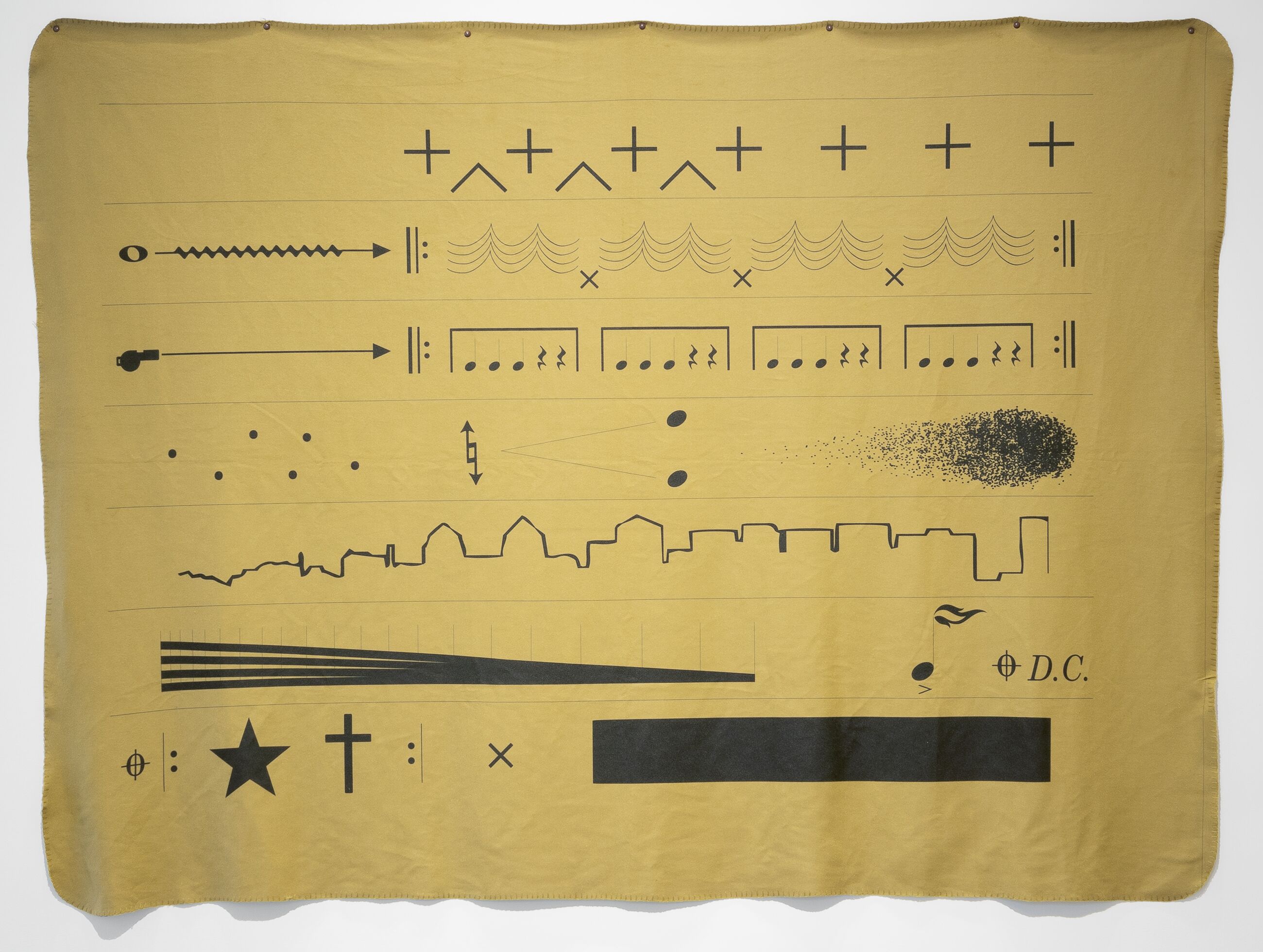
'The artist and composer Raven Chacon, 46, who grew up in Albuquerque and now divides his time between the city and upstate New York, used to explore these lava fields as a youngster, ingesting psychoactive plants such as jimson weed and searching for petroglyphs on the sides of rocks. Some - spirals, zigzags and dotted lines, for example - have found their way into the graphic musical scores for which he is now known. When I visited him in Albuquerque, he drove me out to see them.'
Raven Chacon, American Ledger No. 1 (Army Blanket), 2020. Graphic score


My source: Griffin, J. Sound of a different music. Life&Arts. FT Weekend. 24/25 February 2024. p.17.

Image: ECHOES OF A PLACE - Raven Chacon on transforming land, memory and political resistance into sound: https://www.hauserwirth.com/ursula/echoes-of-a-place-raven-chacon/

See also: RAVEN CHACON - https://spiderwebsinthesky.com/

https://en.wikipedia.org/wiki/Raven_Chacon

Previously: 'music'

Saturday, September 06, 2025

Scholarship in Arnold Wesker's 'The Friends'

... n'just t'lethee know that's, scholrship up int North ...

'MANFRED. Our trouble, Crispin, us lot, the once-upon-a-time bright lads from up north, is that we've no scholarship. Bits and pieces of information, a charming earthiness intelligence and cheek, but-not scholarship. Look at these books here. (He picks up a pile and throws them round him.) Renan, Taine, Kirkegaarde, Wittgenstein, Spengler, Plato, Jung, Homer, Vico, Adorno, Lukacs, Heine, Bloch-you've not heard of half of them, have you? And half of them, two-thirds, I'll never read. Do you know, new knowledge disrupts me. Because there's no solid rock of learning in this thin, undernourished brain of mine, so each fresh discovery of a fact or an idea doesn't replace, it undermines the last; it's got no measurement by which to judge itself, no perspective by which to evaluate its truth or its worth; it can take no proper place in that lovely long view of history scalloped out by bloody scholarship, because each new concern renders the last one unimportant. No bloody scholarship, us. And when I sometimes get a feeling that two people in love or one man afraid of death might be a supreme consideration, along comes this man with his 'we are moving into phases of creative disorder' and his 'everywhere the lines are blurred' and I've no defence. He sounds so right, I think, and besides-he's got scholarship. What's 'silly loving' and 'banal dying' in all that? Evil? You want me to confess to the knowledge of evil? I confess it. I say it-evil! So? And what  shall I do with that bit of knowledge?' p.18.

 WESKER, Arnold. The Friends. London: Jonathan Cape, (1970). Hardcover. First edition.