Hodges' Model: Welcome to the QUAD: truth

Hodges' model is a conceptual framework to support reflection and critical thinking. Situated, the model can help integrate all disciplines (academic and professional). Amid news items, are posts that illustrate the scope and application of the model. A bibliography and A4 template are provided in the sidebar. Welcome to the QUAD ...

Showing posts with label truth. Show all posts

Monday, October 12, 2026

Report - Health Misinformation: Public Perceptions of Threat to the UK

A London School of Hygiene & Tropical Medicine report

Published: 28 September 2026

Authors: Pete Wilton & Dr Ben Kasstan-Dabush

Foreword

The London School of Hygiene & Tropical Medicine (LSHTM) has a long track-record of developing innovative approaches to countering false or misleading health information (health misinformation). While health misinformation has always been with us, in the last few years changes to the technological and political landscape have enabled it to spread further and faster around the world, threatening to undermine trust in health experts and institutions.

That was why in January 2025 LSHTM launched a new initiative focusing on fighting dangerous health misinformation in the UK through interventions in the media, online, and on social media. While misinformation is global the response often has to be national or even local and what we quickly realised is that there is still a lot we don’t know about the prevalence and impact of health misinformation in the UK.

How equipped are Britons to identify false or misleading health claims? What do they do to factcheck if these claims are true? Are our fears about the harms of health misinformation on the UK population justified? And, if they are, who is being harmed and how can we help them to protect themselves? These were just some of the questions we had.

Of course one survey was never going to give us all the answers, but we believe the findings detailed in this report are an important first step towards gathering some of the ‘missing evidence’ on health misinformation in the UK. We hope that this report will help to motivate and inform all those working to make ours a healthier, stronger society.

Professor Liam Smeeth
Director, London School of Hygiene & Tropical Medicine

Continued . . .


My source: BBC Radio 4 Woman's Hour - 36mins 
https://www.bbc.co.uk/sounds/play/m0032qn8

'How can medical misinformation harm women, and how do we combat dangerous myths? Nuala McGovern is joined by former consultant breast surgeon and cancer survivor Liz O'Riordan and Dr Rachael Kent, whose academic research focuses on the impact of digital technology on mental and physical health.' 

Tuesday, September 01, 2026

Blueprints ...

individual
|
INTERPERSONAL
: SCIENCES             
humanistic ------------------------------- mechanistic
SOCIOLOGY : POLITICAL   
|
group


Du Sautoy, M. (2024). Blueprints: How mathematics shapes creativity. Glasgow: 4th Estate.
https://www.4thestate.co.uk/products/blueprints-how-mathematics-shapes-creativity-marcus-du-sautoy-9780008685034/

Burgis, B., Bhaskar Sunkara, B., and Beggs, M. (2026 - 26th Sept) The Blueprint: How Socialism Can Work in the Real World. London: Verso.
https://www.versobooks.com/en-gb/products/2843-the-blueprint/

Book covers c/o Waterstones (Du Sautoy) and Verso Books. 

My source https://www.liverpool.ac.uk/philosophy/philos-l/ (Beggs et al.) and various.

Previously: 'creativity' : 'socialism' : 'politics'

Thursday, June 25, 2026

To which care/knowledge domain does this video belong?


P.S. There isn't a domain called 'bin' but there is plenty of waste.

There isn't one called denial, or ignorance either, but you will find them in abundance too.

Rest assured (if you still can!) that each domain carries its own truth. 

Monday, May 18, 2026

CfP: Nonsense in Language and Thought

CFP: Nonsense in Language and Thought

Guest editor: 
Krystian Bogucki (Polish Academy of Sciences)

Deadline for submissions: 
the 31st of July 2026 

Description:

Studia Semiotyczne (Semiotic Studies) invites submissions for a special issue of the journal. Papers should be written in English and prepared for blind review. 

An interest in nonsense was a hallmark of the early analytic philosophy. Bertrand Russell (1908) thought that a theory of nonsense could help us avoid some daunting paradoxes in logic. Ludwig Wittgenstein (1922, 1953) and Rudolf Carnap (1931) recognised nonsense as a fundamental concept for philosophical criticism. They claimed that much of philosophical discourse is defective in the most fundamental way: it is neither true nor false, it does not consist of thoughts and propositions ? it is nonsense. According to the early Wittgenstein, philosophers want to describe the nature of the world, thought, language and ethics, but they unwittingly fall into nonsense. The Tractatus was supposed to free us from this troublesome position by presenting a perspicuous notation. On the other hand, the later Wittgenstein claimed that we should compare deceptive philosophical images with our ordinary ways of thinking and speaking in order to avoid nonsense. Philosophical problems arise when language goes on holiday, so we must always remember the everyday use of concepts. For Carnap, propositions should be reducible to sense data and constructed according to the rules of logical syntax in order to be meaningful. 

Later, the topic of nonsense was discussed by Alfred Ayer, Gilbert Ryle, Willard V. O. Quine, Arthur Prior, Richard Routley and Georg H. von Wright, among others. Since the late 1970s, however, the interest in nonsense has faded. Only recently, some important works have been published. The first important stimulus came from foundational works on theories of nonsense (Cappelen 2012, 2013; Camp 2004; Glock 2015; Magidor 2009, 2013). The second source of the revival of interest in nonsense was Wittgenstein scholarship on the austere and substantial conceptions of nonsense (Conant 2001; Diamond 1995, 2005; Glock 2004; Hacker 2003; Moore 2003; Sullivan 2003). Some works also examined the relation of nonsense to other phenomena (Gotham 2017, Keller and Keller 2021, Shaw 2015, Sorensen 2003). 

The important questions to be addressed in the forthcoming volume are (to name but a few):

  • What are the sources of nonsense? 
  • Are some parts of philosophical and non-philosophical discourse nonsense?
  • What is the relation between nonsense and figurative speech?
  • Is it at all possible to be wrong whether our own thoughts are meaningful? 

We hope that the special issue of Studia Semiotyczne will further strengthen and deepen the scholarly interest in nonsense. 

Possible topics include, but are not limited to:

Theories of nonsense
Nonsense and logical syntax
Nonsense and category mistakes
Nonsense and figurative speech (e.g. metaphor, metonymy)

Nonsense and fiction
History of the concept of nonsense (in particular Wittgenstein's and the Vienna Circle's views on nonsense)
Nonsense and understanding
Nonsense and illusions of sense
Nonsense and quantification
Nonsense and linguistics
Nonsense and ineffability
Nonsense, knowledge-how and knowledge-that
Logics of nonsense

Nonsense and semantic paradoxes
How to diagnose philosophical nonsense?
Metaphilosophical and methodological issues concerning nonsense
In order to submit the paper one is kindly asked to submit the manuscript by sending it to:
krystian.bogucki AT ifispan.edu.pl and studiasemiotyczne AT pts.edu.pl 

All submitted papers will be double-blind peer-reviewed.

My source (and emphasis):
Philos-L "The Liverpool List" is run by the Department of Philosophy, University of Liverpool 
https://www.liverpool.ac.uk/philosophy/philos-l/

Tuesday, April 28, 2026

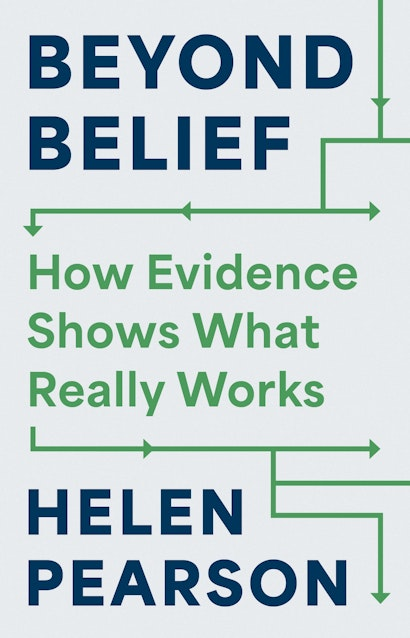
Book: "Beyond Belief - How Evidence Shows What Really Works"

Beyond Belief: How Evidence Shows What Really Works – out April 2026
Beyond Belief

INDIVIDUAL
|
     INTERPERSONAL    :     SCIENCES               
HUMANISTIC --------------------------------------  MECHANISTIC      
SOCIOLOGY  :   POLITICAL 
|
GROUP
BEYOND BELIEF

How Evidence Shows
What Really Works


Beyond Belief: How Evidence Shows What Really Works is a book by science journalist Helen Pearson, published by Princeton University Press.
 
My source: 
Pearson, H. Trials that quietly changed our lives, Life&Arts, FTWeekend, 18-19 April, 2026. p.2 

Previously: 'belief' : 'evidence' : 'information disorder' 

Sunday, December 14, 2025

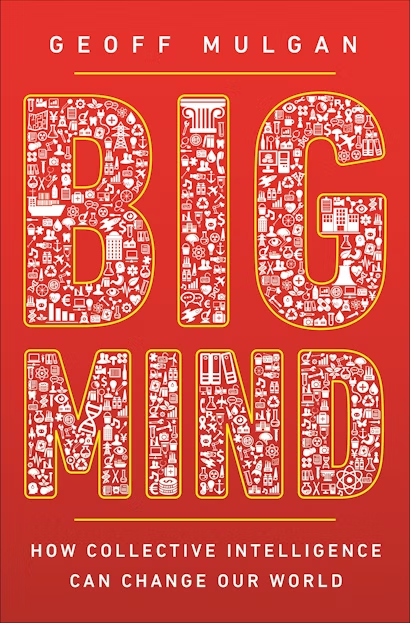
ii Big Mind: How Collective Intelligence Can Change Our World

'Everything we know is knowledge from the past, which may not apply in the future - the problem repeatedly stumbled on by models, algorithms, economic theories, and geopolitical dispositions, which made sense in one era, but then become dysfunctional in another. As social science has repeatedly discovered, the more you use a model, the less likely you are to question it. What starts as a pragmatic tool to answer a question becomes a truth in itself.

And so the models we use to think can also become traps. A model is held on to because it provides meaning and reassurance. Police forces notoriously cling to evidence they collect early in a case in the face of powerful contrary evidence that emerges later, and thus extraordinary miscarriages of justice result. The middle-aged cling to the theories they learned as undergraduates. Organizations become attached to models that become comfortable through use. I remember once meeting the planning team of a government that admitted that their forecasts had been no better than random guesses, but argued that the detailed forecasts were still needed to help with planning. The model became a comfort, even though it had no real use. 

Familiarity also breeds blindness. ...

Expertise can equally entrap. ...
 
The implication, as the Buddha pointed out, is that intelligence has to be at war with and suspicious of itself to be truly intelligent.' pp.120-121.

FIVE FUNDAMENTAL PRINCIPLES FOR EFFECTIVE COLLECTIVE INTELLIGENCE

'The first is the extent of what I call (1) autonomous commons of the intelligence in the system. By this I mean how much the elements of intelligence are allowed free rein, and not subordinated too easily to ego, hierachy, assumption, or ownership.' p.66. Chap. 5. Organizing Principles.
2. Balanced use of the capabilities of intelligence
3. Focus and the right granularity
4. Reflexivity and learning
5. Integration for action
 
'So a group is a we, but it is not just a scaling up of an I. How, then, should we think about the character of this we?' p.102. Chap. 9. The Collective.
 
Individual
|
      INTERPERSONAL    :     SCIENCES               
HUMANISTIC  --------------------------------------  MECHANISTIC      
 SOCIOLOGY  :    POLITICAL 
|
Group
 
EGO
 

 HIERARCHY


ASSUMPTION
 

OWNERSHIP


n.b. With my emphasis.

 
Geoff Mulgan (2017) Big Mind: How Collective Intelligence Can Change Our World, Princeton University Press.

Image: Princeton University Press.

See also: 'AI' : 'group' : 'axes' : 'individual'

 Previously:
Big Mind: How Collective Intelligence Can Change Our World


Wednesday, December 03, 2025

Anti-Science countermeasures ...

'We are pleased to announce the winners for the 2025 Nature Awards for Standing Up For Science - The John Maddox Prize.

We are proud to announce that our Maddox Prize winner is Virginia Burkett, United States Geological Survey. Judges were impressed by her persistence, as a government adviser and an expert in coastal systems, in the face of opposition.' ...

https://www.nature.com/immersive/maddoxprize/winners/index.html


Virginia Burkett's five 'tips for resisting the anti-science lurch'

individual
|
INTERPERSONAL : SCIENCES
humanistic -------------------------------------------  mechanistic
SOCIOLOGY : POLITICAL
|
group-population

2. KEEP RECEIPTS (your memory)
know your institution's
scientific integrity policy

2. Never compromise
on scientific integrity
3. Find allies
5. Be prepared for setbacks,
e.g. relying on family and religious faith.

keep receipts (your defence)
4. KNOW YOUR INSTITUTION'S 
SCIENTIFIC INTEGRITY POLICY


My source:

Anjana Ahuja, Tips for resisting the anti-science lurch, Opinion, Research. Financial Times, Wednesday 5 November, 2025, p.20.

Sunday, November 30, 2025

Interesting ... 'Incidence structure(s)'

Unsurprising, in studying 'Hodges' model, I've been aware of Wilfrid Hodges and model theory for many years.


Now, trying to look at (Brian) Hodges' model using maths, I've wondered about possible connections with Wilfred Hodges' work.

Dr W. Hodges was listed in searches on lines, axes, and structure:
'Algebraists and geometers like to classify structures by the laws which they obey. A typical law for incidence structures reads:

"For any two different lines L and M, there is exactly one point which lies on both L and M."'
My imagination may be getting the better of me, but there seems something profound in the intersection of the model's two axes and the care - knowledge domains that are created (proposed - adopted..)?

So, is Hodges' model a form of 'incidence structure', or does it contain several incidence structures? 

Hodges, W. (1985). Truth in a Structure. Proceedings of the Aristotelian Society, 86, 135–151. http://www.jstor.org/stable/4545041

Friday, September 19, 2025

'Recall Me Maybe' | FT Drama

Stephen Fry and Gemma Whelan star in a new FT drama written by David Baddiel, exploring AI, memory and truth. Fry plays a grandfather with dementia who uses AI to fill in gaps in his memory. While reviewing the archive of his life his family makes a shocking discovery. Which memories are really true? And how AI is defining who we are?

See also: FT Standpoint unveils David Baddiel digital-first drama about AI and dementia -https://www.dropmedia.co.uk/ft-standpoint-unveils-david-baddiel-digital-first-drama-about-ai-and-dementia/

My source: Times Radio. Dom Joly in for Ayesha Hazarika. 1300-1600 BST From 1405-21.
https://www.thetimes.com/radio/show/20250919-32052/2025-09-19

I still need to catch up with last weekend's FT.
https://www.ft.com/video/a4d2ba19-051e-47c5-98ae-c27c59f1b3f0

Saturday, September 06, 2025

Scholarship in Arnold Wesker's 'The Friends'

... n'just t'lethee know that's, scholrship up int North ...

'MANFRED. Our trouble, Crispin, us lot, the once-upon-a-time bright lads from up north, is that we've no scholarship. Bits and pieces of information, a charming earthiness intelligence and cheek, but-not scholarship. Look at these books here. (He picks up a pile and throws them round him.) Renan, Taine, Kirkegaarde, Wittgenstein, Spengler, Plato, Jung, Homer, Vico, Adorno, Lukacs, Heine, Bloch-you've not heard of half of them, have you? And half of them, two-thirds, I'll never read. Do you know, new knowledge disrupts me. Because there's no solid rock of learning in this thin, undernourished brain of mine, so each fresh discovery of a fact or an idea doesn't replace, it undermines the last; it's got no measurement by which to judge itself, no perspective by which to evaluate its truth or its worth; it can take no proper place in that lovely long view of history scalloped out by bloody scholarship, because each new concern renders the last one unimportant. No bloody scholarship, us. And when I sometimes get a feeling that two people in love or one man afraid of death might be a supreme consideration, along comes this man with his 'we are moving into phases of creative disorder' and his 'everywhere the lines are blurred' and I've no defence. He sounds so right, I think, and besides-he's got scholarship. What's 'silly loving' and 'banal dying' in all that? Evil? You want me to confess to the knowledge of evil? I confess it. I say it-evil! So? And what  shall I do with that bit of knowledge?' p.18.

 WESKER, Arnold. The Friends. London: Jonathan Cape, (1970). Hardcover. First edition.

Sunday, August 10, 2025

"Readers! Where exactly does this go?"


Individual
|
      INTERPERSONAL    :     SCIENCES               
HUMANISTIC  --------------------------------------  MECHANISTIC      
 SOCIOLOGY  :    POLITICAL 
|
Group
?

?

?
?


Frankfurt, H. G. (2025). On bullshit. Anniversary Edition. Princeton University Press. https://press.princeton.edu/books/hardcover/9780691276786/on-bullshit

Friday, August 08, 2025

'White Coats Vs The White House' c/o BBC World Service

Individual
|
     INTERPERSONAL    :     SCIENCES               
HUMANISTIC  --------------------------------------  MECHANISTIC      
 SOCIOLOGY  :    POLITICAL 
|
Group


WHITE COATS


WHITE HOUSE


White Coats Vs The White House
The Documentary - 21 August 2025

'What is going on with US science? Science Journalist Roland Pease asks whether the rounds of cuts, reorganisations and political strong-arming can be weathered, and how they will likely affect us all.

80 years after Vannevar Bush proposed what became the pact between government and universities that led to decades of global scientific dominance, is the edifice being toppled?

Bush’s report “Science, The Endless Frontier” led to the unwritten pact between university scientists and government funding that underpinned US leadership until now. “Trust us with the money, we’ll give you the global scientific advantage”.'

continued: 

https://www.bbc.co.uk/programmes/w3ct81nr

Sunday, July 13, 2025

Global cost of silencing science BMJ ...

Editorials

Global cost of silencing science

BMJ 2025; 390 doi: https://doi.org/10.1136/bmj.r1370 (Published 10 July 2025)Cite this as: BMJ 2025;390:r1370

'Public trust in scientific integrity is eroded by the politicisation of institutions under Donald Trump’s US presidency. The implications extend far beyond American borders, striking at the core of how scientific knowledge is produced, disseminated, and trusted worldwide.

Recent directives seek to eliminate diversity, equity, and inclusion (DEI) initiatives, cut federal funding to critical health research agencies, and restrict references to gender, race, and climate science in official documentation. Scientific staff at federal agencies face mounting pressure to comply with politically motivated communication policies. Such institutional interference not only distorts scientific findings—it undermines the principles of transparency and editorial independence outlined in the International Committee of Medical Journal Editors (ICMJE) recommendations.1 As members of ICMJE we feel compelled to speak out.

The ICMJE underscores that “editors should preserve the integrity of the scientific record by critically evaluating manuscripts free from undue influence and without compromising scholarly values.”1 Yet, under the current administration, several US federal science agencies require pre-approval for external publications—a direct contravention of these editorial standards.2 This climate of control stifles open inquiry and discourages evidence based discourse, particularly when scientific conclusions diverge from political narratives.'
...

'Independent scientific communication is equally under threat. Increasing pressure on government researchers to avoid controversial topics or reframe findings to suit political narratives creates an institutional chilling effect. Self-censorship born of fear may be more damaging than overt censorship. Researchers, particularly early career scientists and those from under-represented backgrounds, may choose to abandon public communication or controversial areas of inquiry altogether. This trend further narrows the scope of scientific innovation, limits the range of perspectives reflected in research agendas, and ultimately harms health.'
...

'This is a call for science grounded in ethical principles and dedicated to the service of humanity. Scientific research, especially in medicine and public health, is inherently intertwined with social justice. Silencing DEI initiatives, censoring climate science, and delegitimising minority researchers is not neutrality—it is complicity in perpetuating harm.'
...

Footnotes

This article is being jointly published by The BMJ, Deutsches Ärtzeblatt, Journal of Korean Medical Science, Lancet, La Tunisie Médicale, Medwave, and New Zealand Medical Journal.

References

  1. ↵
  2. ↵

https://doi.org/10.1136/bmj.r1370

My source: https://x.com/bmj_latest/status/1944478436489134350

Sunday, June 29, 2025

Truth & Democracy: '300 grammes' - The Daphne Foundation

I remember seeing a documentary, hearing on the radio and reading in the FT about the murder of Daphne Caruana Galizia, who was a journalist in Malta. I was shocked that this could happen in Malta. The British, naval - colonial connections, its being in Europe and the EU. The lesson being of course, that we must take nothing for granted and exercise constant vigilence to protect law and justice. 

'Courage' is often described as a personal and professional quality for nurses.

For journalists as the news  reveals each and every day - it is the first.

Individual
|
      INTERPERSONAL    :     SCIENCES               
HUMANISTIC  --------------------------------------  MECHANISTIC      
 SOCIOLOGY  :    POLITICAL 
|
Group

'The bomb was packed into a steel container, placed beneath my mother's car seat, and detonated remotely just down the road from our home in Bidnija. It contained around 300 grammes of military-grade explosive. I didn't know the weight until this trial. But I already knew what it destroyed.'

Caruana Galizia

daughter

sister
wife
mother
grandmother
friend
neighbour
colleague
citizen ...
'There was something else I didn't know before this trial. The two medics who conducted my mother's autopsy said they found her heart was, incredibly, "intact" - and that it weighed 300 grammes. The same weight used to kill her was the weight of what endured.'


Paul Caruana Galizia. Opinion: Corruption - What Malta owes my murdered mother, FTWeekend. 14-15 June 2025, p.10.

https://www.ft.com/content/3f5012a6-a358-48a9-a72f-9d2ae530878b


Acknowledgement and thanks to Paul Caruna Galizia.

Friday, June 13, 2025

IP? No! Not 'intellectual property' the other one . . .

'Interested Persons'

- also vested in data, information, knowledge, 
who knew how, what, why, when, where ...

individual
|
INTERPERSONAL : SCIENCES
humanistic ------------------------------- mechanistic
SOCIOLOGY : POLITICAL
|
group
identity - witness - involvement
recall - memory

Knowledge - Answers

The (sudden) power of situation, circumstances,
 time and place.

Events

Society
Team - Teamwork

Social Justice

Interested Persons

Coroner's Court


My source:

Marriage, M. In Search Of Lost Time, FT Magazine. FT Weekend, 22 February 2025, pp.21-27.

Wednesday, April 16, 2025

AI, Beliefs, Helplessness, Misinformation ...

Viewing this debate and SDGs both as information spaces, and mental health/illness can provide some insights.

'Learned helplessness' is an established phenomenon in psychological studies and history.

Adam Grant in Life&Arts, FTWeekend 29-30 March 2025, p.2. 

( https://adamgrant.net/book/think-again/ )
writes in 'HOW TO UNLEARN HELPLESSNESS'
'Many people believe that in a world of echo chambers and misinformation, it's not possible to talk anyone out of their convictions. They`re wrong. Even a bot can do it.

In recent experiments psychologists recruited thousands of Americans who believed in unfounded conspiracy theories ranging from the moon landing being faked to 9/11 being an inside job. After the participants described their views, the psychologists randomly assigned some of them to discuss these views with an AI chatbot that was prompted to refute them.

After less than 10 minutes of conversation with a ChatGPT-based LLM, more than a quarter of participants felt uncertain about their views - and those doubts persisted two months later. Short exchanges were even enough to move the opinions of strong believers.

Why? It's not just that ChatGPT has access to infinite knowledge. It turns out that AI chatbots are better listeners than the average human. The researchers found that chatbots were persuasive because they presented information that directly challenged the reasons behind people's beliefs.'
Also helpful, as per discussion to consider AI as a new / emerging 'information space' as a literal frontier, a new territory with unknowns that businesses wish to conquer and the public must learn to trust - even as users. What knowledge - understanding is needed of what is happening in the 'box'?

Once again (within Hodges' model) we can potentially draw in (ask questions of - all) the literacies:

3Rs, information, IT, media, culture, spiritual, financial, health, sciences, civic - national, international...

This also means to what extent are existing imbalances in parity of esteem - between the mind and body dichotomy perpetuated, even increased?

It is not surprising that there is an imbalance, in the distribution of datasets - LLMs on huggingface:

https://huggingface.co/docs/hub/en/datasets

e.g. INTRA- INTERPERSONAL [MIND]

BioBert 1.1
UCI ML Drug Review dataset - Subset 
LOST arXiv:2306.05596 [cs.CL]
Mindwell https://doi.org/10.1007/978-981-97-3601-0_34

SCIENCES [BODY]

eScience kidney factomics (PubMed titles)
BioBert 1.1
SAVSNET sample (VetCN) - Important in terms of Zoonotic diseases and planetary health*.

Image datasets: 
Lung Cancer IQ-OTH/NCCD 
Surface Crack Detection 
Oxford-IIIT Pet 
BreastMNIST 
DermaMNIST 
PneumoniaMNIST 
BloodMNIST 
RetinaMNIST

There is overlap also.

Ack. *As mentioned late 2024, the datasets were discussed at: https://www.bcs-sgai.org/health2024/

'ChatGPT (40) Differentiating reliable information from misinformation (12)'

Monday, March 31, 2025

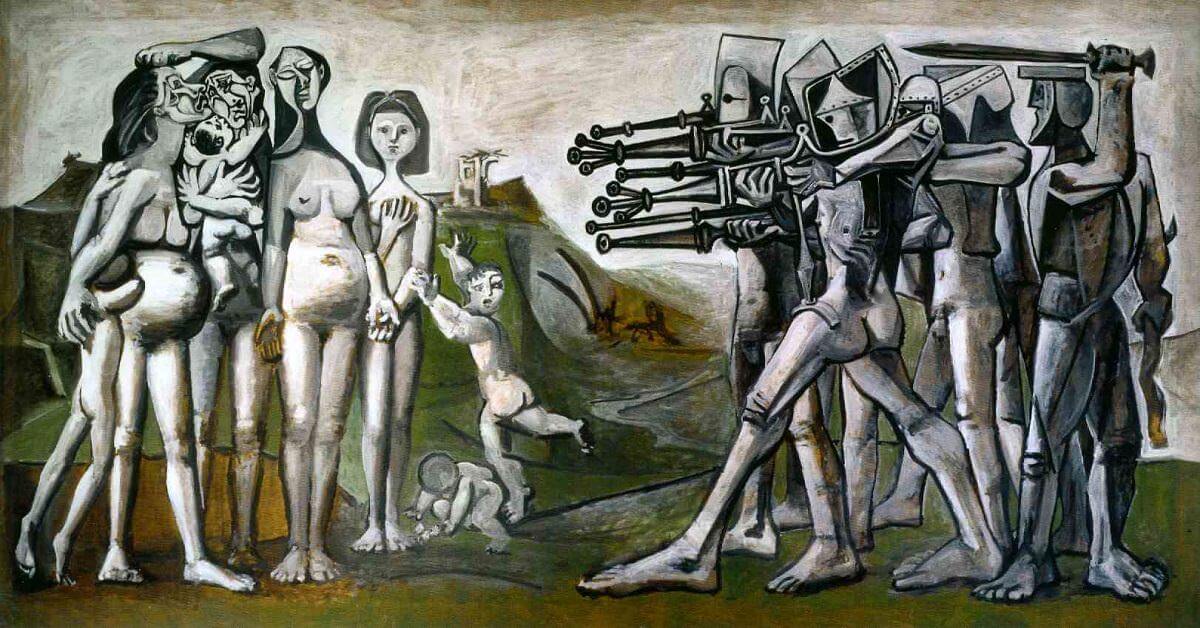
c/o Picasso - 'Massacre in Korea' (1951)

Art is a lie that makes us realize the truth.

                                 - Pablo Picasso

individual
|
INTERPERSONAL : SCIENCES
humanistic ------------------------------- mechanistic
SOCIOLOGY : POLITICAL
|
group


HUMANISTIC - mind


body - MECHANISTIC

"The 'beat' goes on"!?
'Massacre in Korea' (1951)

My source:
Vivienne Chow, How Picasso became a prize for Asia's new collectors, Collecting, FTWeekend. 22-23 March 2025, p.3.

See also: 
https://www.mplus.org.hk/en/exhibitions/ (15 March - 13 July 2025)

https://www.pablopicasso.org/massacre-in-korea.jsp

Friday, January 24, 2025

ERCIM News No. 140 Special theme: "Large-Scale Data Analytics"

Dear ERCIM News reader,

ERCIM NEWS #140
The January 2025 issue of ERCIM News (Number 140) is online with a special theme on Large-Scale Data Analytics. This issue features a Special Theme that highlights the diverse applications of large-scale data analytics across Europe. The advancements are achieved through close collaboration with European data spaces and open science platforms.

You can access the issue at https://ercim-news.ercim.eu/

This special theme was coordinated by our guest editors Andras Benczur (HUN-REN SZTAKI) and Dominik Ślęzak (University of Warsaw).

===
Note PJ: Includes: 
Breaking the Silence: Brain-to-Speech Innovations. p.36
Data Visualisation for Big Data: Digital Epidemiology. p.39.

CWI Research Semester Programme. Truth is in the Eyes of the Machines Amsterdam, 8-9 May 2025.
https://kwz.me/hF1
===

Thank you for reading ERCIM News! Please share this issue with anyone who might find it interesting. You can also support us on LinkedIn. Let's keep the conversation going and share the latest updates together!

Next issue: No. 141, April 2025
Special Theme: "Cultural AI". Submissions are welcome! See preliminary call for contributions.


ERCIM News is published quarterly by ERCIM, the European Research Consortium for Informatics and Mathematics. With the printed and online edition, ERCIM News reaches more than 10000 readers.
All issues published to date are available online.


About ERCIM

ERCIM - the European Research Consortium for Informatics and Mathematics - aims to foster collaborative work within the European research community and to increase cooperation with European industry. Leading European research institutes are members of ERCIM. ERCIM is the European host of W3C.

https://x.com/ercim_news
ERCIM LinkedIn Group
ERCIM LinkedIn Page

Peter Kunz                      	
ERCIM Office
2004, Route des Lucioles
BP93
F-06902 Sophia Antipolis Cedex

Thursday, November 21, 2024

'Fake news' - nothing new under the Sun

INDIVIDUAL
|

 INTERPERSONAL    :     SCIENCES               
HUMANISTIC --------------------------------------  MECHANISTIC      
SOCIOLOGY  :   POLITICAL 
|
GROUP


PD Reporter with "fake news" from an 1894
illustration by Frederick Burr Opper


Kruck, D. A 'ROYAL' BIT OF FAKE NEWS. Gibbons Stamp Monthly, August 2021, pp.28-30.

Image source:
https://aleteia.org/2018/02/09/fake-news-post-truth-and-technology-in-the-19th-century/

Monday, May 06, 2024

Book: "The Unaccountability Machine: Why Big Systems Make Terrible Decisions - and How The World Lost its Mind"

Individual
|
      INTERPERSONAL    :     SCIENCES               
HUMANISTIC  --------------------------------------  MECHANISTIC      
 SOCIOLOGY  :    POLITICAL 
|
Group
mind . . .

- and there was I ...

I always thought heat rises?

'heat sinks'

minima - maxima

'accountability ...
... 
...
...
... sinks'


Felix Martin (2024) Computer says no, Life&Arts, FTWeekend, 6-7 April 2024, p.9.