Hodges' Model: Welcome to the QUAD: social

Hodges' model is a conceptual framework to support reflection and critical thinking. Situated, the model can help integrate all disciplines (academic and professional). Amid news items, are posts that illustrate the scope and application of the model. A bibliography and A4 template are provided in the sidebar. Welcome to the QUAD ...

Showing posts with label social. Show all posts

Thursday, March 26, 2026

Is there such a thing as the holistic bandwidth of 'resilience'?

In preparing my presentation for World Conference on Complex Systems 2026 (WCCS26) next month^, I am reading:

Bridging the Macro and the Micro by Considering the Meso: Reflections on the Fractal Nature of Resilience

ABSTRACT. We pursued the following three interconnected points: (1) there are unexplored opportunities for resilience scholars from different disciplines to cross-inspire and inform, (2) a systems perspective may enhance understanding of human resilience in health and social settings, and (3) resilience is often considered to be fractal, i.e., a phenomenon with recognizable or recurring features at a variety of scales. Following a consideration of resilience from a systems perspective, we explain how resilience can, for analytic purposes, be constructed at four scales: micro, meso, macro, and cross-scale. Adding to the cross-scale perspective of the social-ecological field, we have suggested an analytical framework for resilience studies of the health field, which incorporates holism and complexity by embracing an ecological model of cognition, something supported by empirical studies of organizations in crisis situations at various spatial as well as temporal scales.  

Key Words: human resilience; organizational resilience; resilience; resilience engineering; societal resilience 

Since the turn of the millennium, it appears 'resilience' has exploded across the media, and literature. As a result, it has also been viewed negatively by mental health service advocates, and activists as they decry the run-down state of formal services. The 'recovery model', undoubtedly closely associated with personal resilience is not the only answer.

This paper is helpful, in several respects but specifically to illustrate the idea of how Hodges' model can frame holistic bandwidth, across its care / knowledge domains.

INDIVIDUAL
|
    INTERPERSONAL    :     SCIENCES               
HUMANISTIC --------------------------------------  MECHANISTIC      
SOCIOLOGY  :   POLITICAL 
|
GROUP

individual - emotional - mental
resilience


resilience engineering

human & societal resilience

organizational resilience


I think the answer is yes. 

But, what do you think (h2cmng AT yahoo.co.uk)?

Bergström, J., & Dekker, S. W. A. (2014). Bridging the Macro and the Micro by Considering the Meso: Reflections on the Fractal Nature of Resilience. Ecology and Society, 19(4), art22.
https://doi.org/10.5751/ES-06956-190422
 
See also:
Jones P. (2014) Using a conceptual framework to explore the dimensions of recovery and their relationship to service user choice and self-determination. International Journal of Person Centered Medicine. Vol 3, No 4, (2013) pp.305-311.  
 
Previously: 'complexity' : 'resilience' : 'holistic bandwidth' : 'fractal'

^Fingers x'd!

Thursday, February 12, 2026

Just saying i

INDIVIDUAL
|
    INTERPERSONAL    :     SCIENCES               
HUMANISTIC --------------------------------------  MECHANISTIC      
SOCIOLOGY  :   POLITICAL 
|
GROUP

Imaginary

numbers


Social

care?


Monday, December 01, 2025

Abstract accepted: 6th World Conference on Complex Systems - WCCS 2026

April, 20-22, 2026

Mohammed VI Polytechnic University, Ben Guerir-Marrakech, Morocco

About Us

Building on the success of previous editions, we are delighted to announce WCCS26, organized by the Chair of Complexities ∞ Humanities - UM6P and the Moroccan Society of Interdisciplinary Studies, with technical sponsorship from IEEE. This conference remains a premier international platform where researchers and Ph.D. students come together to share cutting-edge research, address emerging challenges, and explore new frontiers in complex systems and interdisciplinary science.

WCCS26 fosters collaboration and debate on the most advanced methodologies and approaches for understanding, modeling, simulating, predicting, and mastering societal, ecological, biological, and engineered complex systems. By bringing together experts from diverse disciplines, the conference bridges theory and real-world applications, driving scientific progress and innovation.

Join us for a stimulating exchange of ideas at WCCS26!

WCCS26 Theme :

Navigating Contemporary Complexity:
Transdisciplinary Approaches to Economic, Social,
Political, and Environmental Challenges

Conference Topics (But not limited to...) :

  • Foundations and Approaches to Complex Systems
  • Social and Economic Complexity
  • Complexity in the Anthropocene
  • Biological Complexity: From Cells to Societies
  • Complexity in Health and Medicine
  • Philosophical Dimensions of Complexity
  • Complex Systems With Artificial Intelligence
  • Complexity in Emerging Technologies
  • Grand Challenges in Complexity Science

Continued at: https://wccs-conference.org/wccs26/#call

See also: 'complexity'

n.b. I am attending (unsponsored) as an independent scholar and researcher; and by abstract alone.

Saturday, November 29, 2025

If "mechanism-based approach to theorizing offers an encompassing way ...

... to think about social and ecological phenomena":

What if there was a model that could encompass 
mechanism-based and humanistic-based theorising?

'A core challenge of studying ecosystems and societies as one system is integrating social and ecological theorizing. Although the social and the ecological intertwine in multiple ways, much traditional theory focuses on one or the other (Schlüter et al. 2022). Despite good intentions, attempts for integration are often only partially successful. One reason for this is the apparent incommensurability of methodological and theoretical approaches. However, the mechanism-based approach to theorizing offers an encompassing way to think about social and ecological phenomena by framing them in terms of entities and their interactions. Mechanism-based theorizing has been gaining popularity in science philosophy (Machamer et al. 2000, Craver 2007, Glennan and Illari 2017), including social sciences philosophy (Elster 1989, Hedström and Swedberg 1998, Hedström and Ylikoski 2010) and philosophy of ecology (Pâslaru 2017, González del Solar et al. 2019). It has helped to resolve many traditional problems related to scientific explanation and it is consistent with the way in which social and natural scientists talk about theorizing, causation, and explanation.'


Fig. 1. The social-ecological expansion of Coleman’s diagram.


Martínez-Peña, R., & Ylikoski, P. (2024). Coupling social and ecological mechanisms with the Coleman boat. Ecology and Society, 29(4). https://doi.org/10.5751/ES-15209-290406

See also: 'micro' : 'macro' : 'Bunge'

Wednesday, October 15, 2025

'New Thoughts on Conceptual Engineering' - Introduction to special issue

 Abstract

Conceptual engineering has emerged in recent times as a significant topic in current philosophical literature. The now vast list of references includes works on more general or conceptual issues, such as describing the nature of conceptual engineering, how we may respond to the different objections to it, how it is related to philosophical analysis or empirical philosophy, or toward which target conceptual engineering should be directed, among others. But research on the topic also includes applications of conceptual engineering to many different areas. This Introduction opens with a short overview of the state of the art on conceptual engineering, aiming to clarify the most important features associated with it. The Introduction moves on to introduce and discuss the eight articles collected here, whose topics range from the nature and the functionality of conceptual engineering to reconstructing the entire conceptual engineering practice. Taken as a whole, this special issue is meant to provide enlightening, informative, and thought-provoking views on the topic, its functions, targets, and challenges.

de Donato-Rodríguez, Xavier. 2025. “ Introduction to the Special Issue New Thoughts on Conceptual Engineering.” Metaphilosophy 56(3-4): 283–293. https://doi.org/10.1111/meta.70007

Monday, August 25, 2025

c/o SDOH list "Liberal/Individualized Versus Materialist/Structuralist Approaches"

Abstract

Background: While consensus exists that the sources of health inequalities are social inequalities brought on by the experience of qualitatively different living and working conditions, means of addressing these conditions continue to be the subject of dispute. Whether to emphasis education or income as a social determinant of health is one such example of differing views on the sources of these inequalities and the means of addressing them. These different emphases are often justified through the narrow examination of the magnitude of statistical relationships between educational attainment and income with health outcomes.
Purpose: We offer a broader view, seeing these differing emphases as indicative of contrasting views of the nature of society and means of responding to these inequalities with emphasis on education representing a liberal reformist view of the issue while an emphasis on income representing a materialist structuralist view.
Research design and study sample: We examine, the validity of this hypothesis through an analysis of content of five representative publications that consider educational attainment as a social determinant of health and five that do so for income.
Analysis and results: We find that the emphasis on education as a social determinant of health focuses on the attributes of the individual and is generally accepting of the structures and processes of the existing economic and political order. In contrast, an emphasis on income – when placed within a materialist analysis – views existing systems as inequitably distributing income and other resources thereby requiring their reform or transformation.
Conclusion: Considering evidence of deteriorating living and working conditions for many in Canada and elsewhere, we see the latter emphasis as more useful for understanding and addressing these disturbing developments.

Ervin A, Raphael D. Liberal/Individualized Versus Materialist/Structuralist Approaches to Addressing Social and Health Inequalities: Education and Income as Social Determinants of Health. Community Health Equity Research & Policy. 2025;0(0). doi:10.1177/2752535X251316086

At present differentiating and conceptualising the individual and the collective (society) is ongoing. Ervin and Raphael's paper is helpful then:

'Grabb’s definition of social inequality leaves room for the importance of individuals’ attributes such as educational attainment and income – while Crossman’s definition directs explicit attention to the structures and processes of society9,10:'

Individual
|
      INTERPERSONAL    :     SCIENCES               
HUMANISTIC  --------------------------------------  MECHANISTIC      
 SOCIOLOGY  :    POLITICAL 
|
Group

'Social inequality can refer to any of the differences between people (or the socially defined positions they occupy) that are consequential for the lives they lead, most particularly for the rights or opportunities they exercise and the rewards or privileges they enjoy.9, p.1'

Physical processes

Physical structures

Infrastructures

'Social inequality is characterized by the existence of unequal opportunities and rewards for different social positions or statuses within a group or society. It contains structured and recurrent patterns of unequal distributions of goods, wealth, opportunities, rewards, and punishments.10'

Political processes 
(bureaucracy)

Political structures
(inc. Institutional)

Power

In Ervin and Rapahael (2025) there are also two tables:

Table 1. Four Primary Aspects of How Educational Attainment Comes to be a Social Determinant of Health.

Table 2. Five Primary Means of Conceptualizing How Income Comes to be a Social Determinant of Health.

- the main headings of which I have mapped to Hodges' model below.


Individual
|
      INTERPERSONAL    :     SCIENCES               
HUMANISTIC  --------------------------------------  MECHANISTIC      
 SOCIOLOGY  :    POLITICAL 
|
Group

Personal cognitive and
decision-making skills

(Cognitive) Access - Literacies


(Physical) Access to healthcare


Behavioural risk factors


SOCIO-

Life Chances - Health Career

-ECONOMIC status

Friday, July 04, 2025

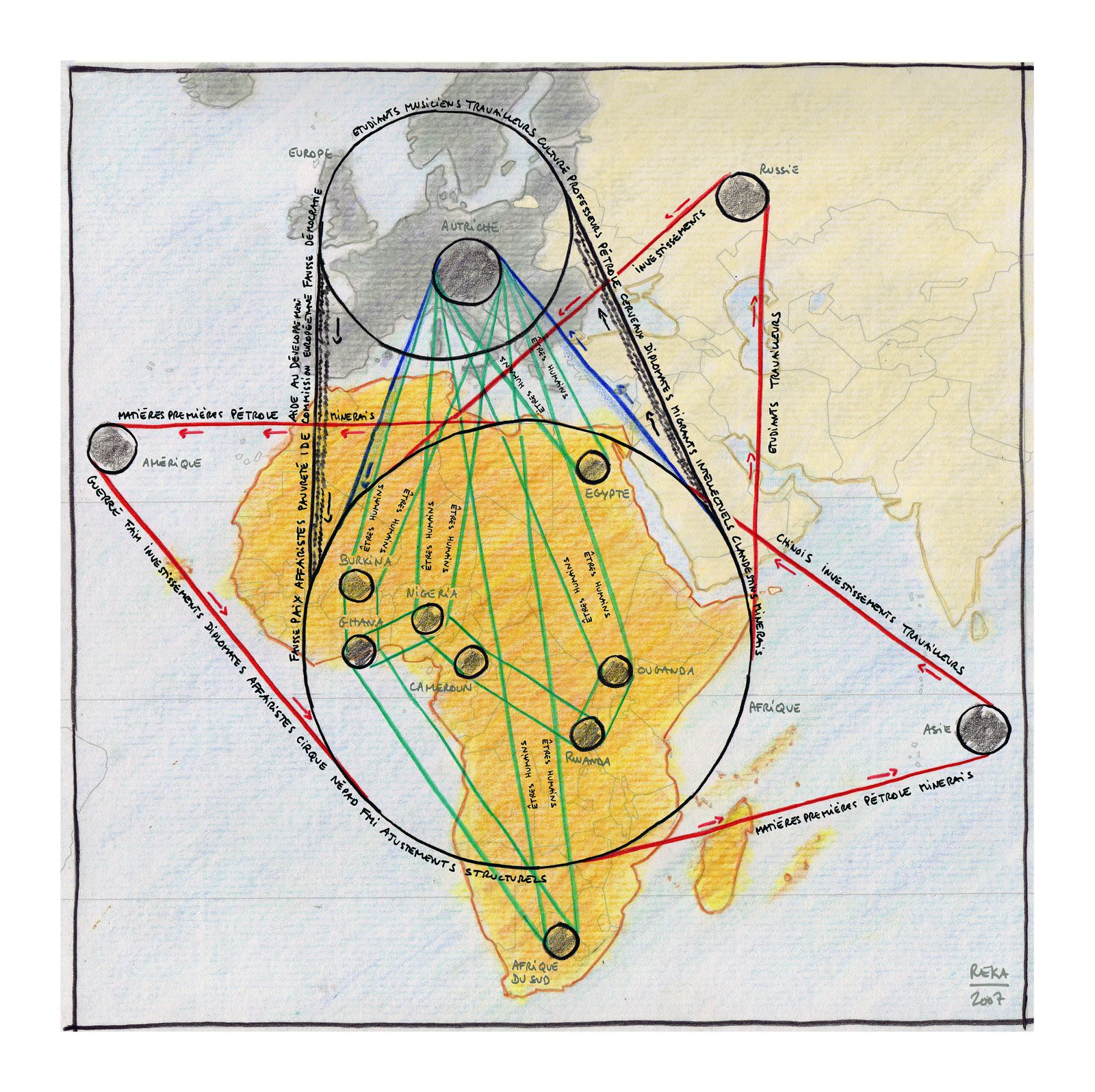
Diagrams - AMO/OMA at Prada Foundation Venice

"There is no such thing as an innocent map, observes Philippe Rekacewicz in his catalogue essay that accompanies Diagrams, a new exhibition at the Prada Foundation in Venice.

A renowned cartographer, the Paris-born Rekacewicz is well aware of his medium's capacity to transform narratives for good and ill. His own work includes maps that illustrate the deaths of migrants as they bid for new lives in Europe. "A map," Rekacewicz continues, "is above all a social and political act - and therefore inherently subjective."' p.5.

Individual
|
      INTERPERSONAL    :     SCIENCES               
HUMANISTIC  --------------------------------------  MECHANISTIC      
 SOCIOLOGY  :    POLITICAL 
|
Group
Am I Free?

My history ...
Philippe Rekacewicz / The African big wheel, 2007
The wheel symbolizes permanence and continuity in the context of a profoundly unequal exchange, drawing, color pencil and ink, exhibition copy.
Courtesy Philippe Rekacewicz
(Image credit: Philippe Rekacewicz)

SOCIETY

... is our history ...

Freedom

National & International Law

Justice


'Other pictures are equally revealing for what they conceal. Consider the diagram entitled "Universal commercial history", a visual analysis drawn up by the Scottish engineer William Playfair in 1805 which traces the rise and fall of global wealth since 1500 BC against what he terms "Remarkable Events Relative to Commerce". Playfair, who is said to have invented the pie chart, includes moments such as "Rome founded" "Mahomet's Flight" and "America discovered". He never mentions slavery.

With such a broad-brush approach, lacunae are inevitable. It is a shame that the work of Viennese social scientist Otto Neurath - who, along with his wife Marie and colleague Gerd Arntz, invented the Isotype (International System of Typographic Picture Education) - is not on show. Based on pictograms, Neurath's Isotypes are an lmportant forerunner to the digital vernacular (from emojis to icons) so familiar to us today. Nor does the exhibition include maps of the devastation of Gaza since October 2023, such as those made by investigative research agency Forensic Architecture, which are proving among the most critical diagrams of our time.' p.5.

Philippe Rekacewicz - https://www.grida.no/resources/10988

My source:
Rachel Spence. Hidden truths in the best laid plans. Diagrams | What charts, maps and graphics can - and can't - tell us. Collecting, FTWeekend. 26-27 April 2025. p.5. 
With many thanks acknowledging length of quotation.

Image source:
https://www.wallpaper.com/architecture/oma-amo-diagrams-prada-foundation-venice

See also: 'icon' : 'symbols' : 'diagram' : 'map' : 'Forensic Architecture'

Archived listing Links II Sciences - inc. 'Diagrams' & 'Visualization I' and 'II': 

Monday, April 14, 2025

Relational Equality and Intergenerational Justice

ABSTRACT

Intergenerational justice has in recent decades become an increasingly important subfield of political philosophy. However, due to the absence of coexistence and other aspects of the intergenerational context, it is often unclear whether and how many ideals of justice apply. As such, relational egalitarianism – the view that justice requires equal social relationships – may appear particularly implausible in this domain. In this introduction, we explain this issue, motivating its further examination. Finally, we briefly summarize how the papers in this volume take up this challenge and offer insightful developments on both fronts, advancing our understanding of intergenerational justice and relational egalitarianism.


individual
|
INTERPERSONAL : SCIENCES
humanistic ------------------------------- mechanistic
SOCIOLOGY : POLITICAL
|
group
I - self - identity
ancestor - descendant

space - resources
past - now - future


INTERGENERATIONAL -  


- JUSTICE


Wednesday, April 09, 2025

All Day All Night - c/o Christine Sun Kim

Source: https://whitney.org/media/61514


individual
|
INTERPERSONAL : SCIENCES
humanistic ------------------------------- mechanistic
SOCIOLOGY : POLITICAL
|
group
'synaesthetic sphere'

DEAFNESS


SOCIETY

parents signing
friends signing?

ghosting

SOCIO-


ghosting

accessibility
inclusion


-POLITICAL

Ack. Christine Sun Kim - https://christinesunkim.com/

Liverpoool Biennial 2025 - Christine Sun Kim (Look forward to this - may post again.)

My source: Budick, A. The sound of Deaf rage, Life&Arts, FT Weekend. 1-2 March 2025, p.16.

Monday, March 31, 2025

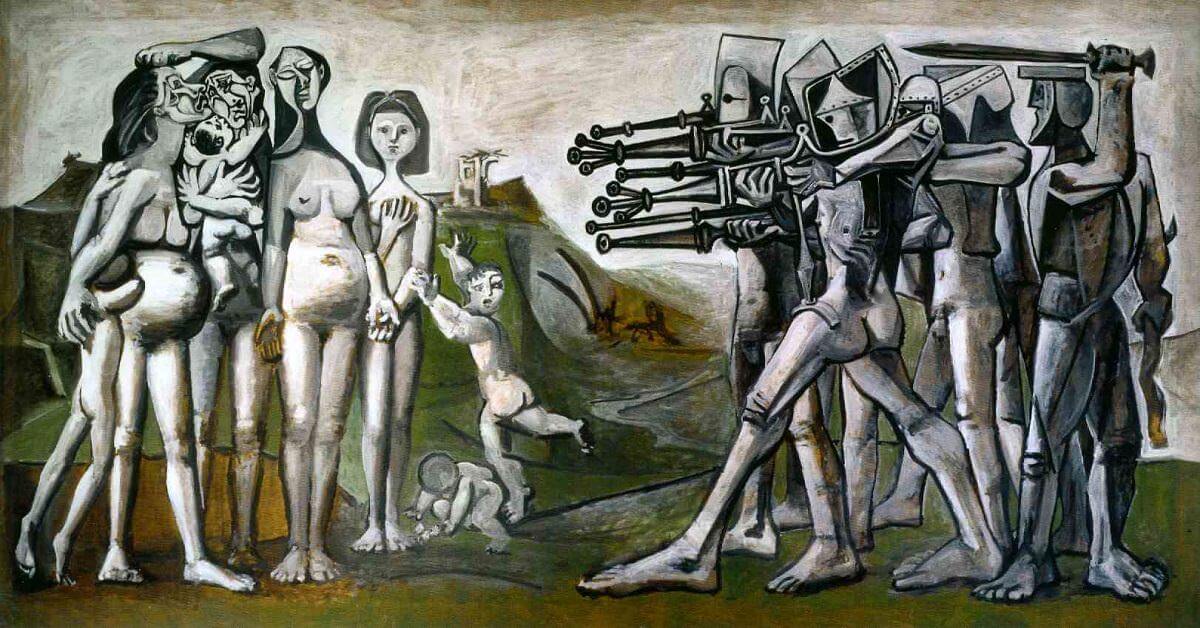
c/o Picasso - 'Massacre in Korea' (1951)

Art is a lie that makes us realize the truth.

                                 - Pablo Picasso

individual
|
INTERPERSONAL : SCIENCES
humanistic ------------------------------- mechanistic
SOCIOLOGY : POLITICAL
|
group


HUMANISTIC - mind


body - MECHANISTIC

"The 'beat' goes on"!?
'Massacre in Korea' (1951)

My source:
Vivienne Chow, How Picasso became a prize for Asia's new collectors, Collecting, FTWeekend. 22-23 March 2025, p.3.

See also: 
https://www.mplus.org.hk/en/exhibitions/ (15 March - 13 July 2025)

https://www.pablopicasso.org/massacre-in-korea.jsp

Thursday, March 27, 2025

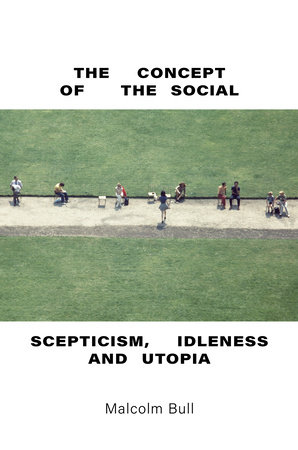
Vectors of the Biopolitical - (Chap. 2) c/o Bull

The Concept of the Social
'From one sentence in Aristotle derive two arresting theoret- ical discourses of the twenty-first century: Michel Foucault's biopolitics, provocatively reformulated by Giorgio Agamben in terms of the relationship between sovereignty and the body, and the capabilities approach developed by Amartya Sen and Martha Nussbaum as a means of evaluating and promoting development, justice and freedom. Both are characterized by deep reflection on the sources of Western political thought, and by urgent engagement with contemporary social and legal problems. Both are in some sense biopolitical in that they are shaped by the interplay of the same Aristotelian categories the human and the animal, politics and nature. But they are on opposite sides of the divide that has opened up in the human sciences since the 1960s, and there currently seems no optic through which they might simultaneously be viewed, no way of integrating or comparing their insights.
 
In part, this reflects a situation in which political debate appears to have fragmented into a multiplicity of single issues. The ancient 'Who will rule?' and the modern 'Who shall have what?' have been supplemented by an array of questions that deal with matters once exclusively cultural, personal or natural. For previous eras, the relative integrity and unmalleability of cultures, bodies and environments rendered such questions redundant. Now they frequently appear unanswerable from within established political traditions, and incommensurable in relation to each other. Within this expanded field, biopolitics and the capabilities approach have unusual salience and potential, for both bundle together issues otherwise assumed to be distinct. If they, in turn, could be coordinated, perhaps we could begin to map the new territory.' p.68.

individual
|
INTERPERSONAL : SCIENCES
humanistic ------------------------------- mechanistic
SOCIOLOGY : POLITICAL
|
group
'Who shall have what?'

nature

human - animal

bio-
culturepolitical

'Who will rule?'


Bull, M. (2021) The Concept of the Social, London: Verso.

Wednesday, January 08, 2025

Hodges' model: A person - Everyone else [x2!]

INDIVIDUAL
|
   INTERPERSONAL : SCIENCES              
humanistic ------------------------------- mechanistic
 SOCIOLOGY : POLITICAL   
|
GROUP


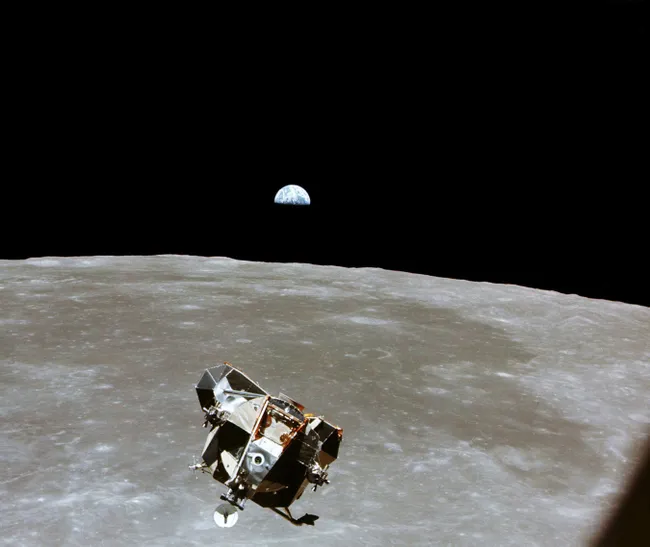
'Michael Collins, the astronaut who took this photo in 1969, is the only human, dead or alive, that isn't in the frame of this picture.' 

 (Image credit: NASA/Getty Images) 


“If the universe is meaningless, so is the statement that it is so… The meaning and purpose of dancing is the dance.”

'Alan Watts on our search for meaning and the antidote to our existential loneliness'


Image: https://www.digitalcameraworld.com/news/spaceman-who-photographed-every-living-being-but-himself-rip-michael-collins

Text: https://x.com/themarginalian/status/1876298178326069285

https://www.themarginalian.org/2016/11/01/alan-watts-wisdom-of-insecurity-3/

So good I'm repeating myself ... https://hodges-model.blogspot.com/2019/07/2-everyone-else-1-thank-you-michael.html

'dance' :: 'meaning'

Thursday, December 19, 2024

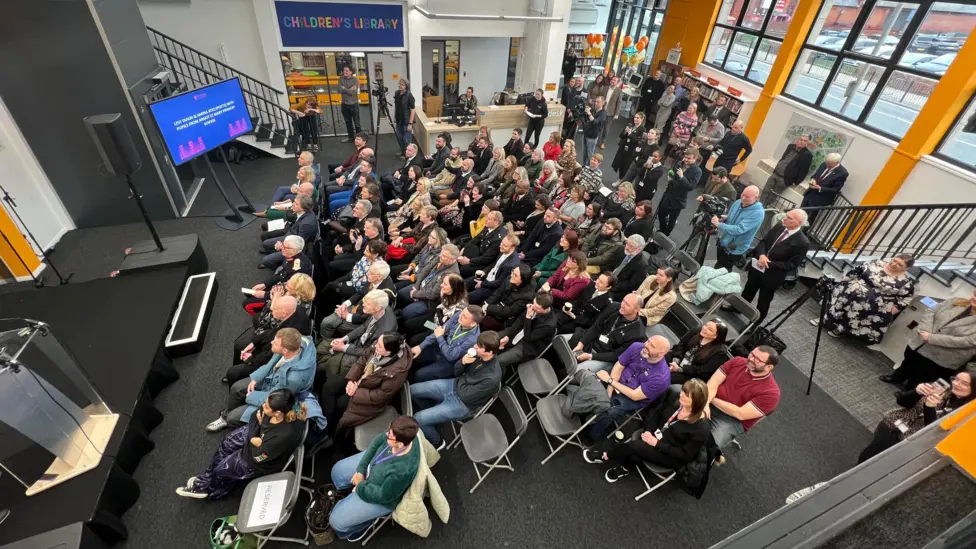
Just one library ... A world of difference

Born in Walton.

 'good prose is like a windowpane'

George Orwell, WHY I WRITE

<>

Walton, Liverpool, UK 12th December 2024
'Spellow Library, in Walton, Liverpool, was forced to close when it was set alight on 3 August amid unrest which swept across the country after the stabbings in Southport.

The city was determined to not let hatred win, with £250,000 raised and books being donated from the Queen and a host of celebrities.

An official ceremony marked the re-opening, including readings from Liverpool poet Levi Tafari while a letter from Queen Camilla was also read aloud.' ..


Claire Hamilton/BBC: An official ceremony marked the re-opening on Thursday morning


Break the Windows on Learning and
New Ones Will be Found to Look Out on the World.


INDIVIDUAL
|
INTERPERSONAL : SCIENCES              
humanistic ------------------------------- mechanistic
SOCIOLOGY : POLITICAL   
|
GROUP

My Learning
My Literacies


'The World(s) of Learning'

Society - Community
Social Justice

Justice
Social/Public Services


Previously:

Related post: 'forms of Hygiene'

literature : window

Tuesday, October 08, 2024

Capital -ism in Hodges' model

The New Nature of Business
'In The New Nature of Business, Luc's son André, now vice-chair of Roche, and co-author Peter Vanham lay out how to bring these parallel tracks together. "The business of business isn't just m of business," they write. "The business of business is to at least preserve and where possible expand the world's human, social, environmental and financial capital." 

 The book makes the familiar case that maximising short-term profit leads to long-term destruction of value. But it also suggests that a "narrow focus on [reducing] carbon emissions" could have dangerous unintended consequences. Those four "capitals" depend on one another, write Hoffmann and Vanham. They call for nothing less than a systemic change to a "sustainable, inclusive form of capitalism, with new principles, and new practices".

The most interesting parts of the book describe Hoffmann's path to the realisation in the early 2000s that the profit- making power of business should be harnessed in the quest for sustainability.' (My emphasis with some re-formatting.)

Hill, A. (2024) The sweeter pill, FTWeekend, Life&Arts, 28-29 September. p.11. 


individual
|
INTERPERSONAL : SCIENCES
humanistic ------------------------------- mechanistic
SOCIOLOGY : POLITICAL
|
group
HUMAN

ENVIRONMENTAL

the new nature
SOCIALof business

FINANCIAL


Andre Hoffmann, Peter Vanham (2024) The New Nature of Business: The Path to Prosperity and Sustainability. London: Wiley. ISBN: 978-1-394-25754-6

Previously: 'capital' e.g. 'Capital Patient' :: 'Patient capital'.

Saturday, August 31, 2024

Books... Bakhtin's centripetal and centrifugal forces in relationships

individual
|
INTERPERSONAL : SCIENCES
humanistic ------------------------------- mechanistic
SOCIOLOGY : POLITICAL
|
group


"Bakhtin's dialogism is theory of the contradicting process as realized in the ongoing tension between centripetal (i.e. unifying) and centrifugal (i.e., differentiating) dialectical poles. Each pole of the centripetal-centrifugal contradiction is constituted in the particulars of the situation at a given point in time. The centripetal pole consists of whatever phenomenon or quality occupies the dominant or normative position, whereas the centrifugal pole consists of whatever phenomena are subordinate, peripheral, or secondary. Substantial fluidity characterizes centripetal and centrifugal poles, in that a phenomenon that is dominant at one point in time can be subordinate or secondary at another point in time, and vice versa.

Because dialogism is a general theory of sociality, rather than a context-specific theory, Bakhtin did not pursue the particular  phenomena that constitute centripetal and centrifugal forces for any specific context, including the context of personal relationships. Thus a first step in extending dialogism to personal relationships is to particularize Bakhtin's abstract centripetal contradiction." p.141.


Duck, S. (Editor) Social Context and Relationships. London: SAGE Publications, 1993.

Saturday, March 23, 2024

Identity: Self and Social

Hodges' model

Forms of Identity - The search for the self

"Beckett's first play, Eleutheria (written in French shortly after the war, but so far unpublished and unperformed), is also concerned with a young man's efforts to cut himself loose from his family and social obligations. Eleutheria is in three acts. The stage is divided in the middle. ..."
Individual
|
      INTERPERSONAL    :     SCIENCES               
HUMANISTIC  --------------------------------------  MECHANISTIC      
 SOCIOLOGY  :    POLITICAL 
|
Group


"On the right the hero lies in his bed, apathetic and passive."


"On the left his family and friends discuss his case without ever directly addressing him."


"Gradually the action shifts from left to right, and eventually the hero summons up the energy to free himself from his chackles and cut himself loose from society." p.35.

Esslin, Martin. Chapter 1 Samuel Beckett, The search for the self. The Theatre of the Absurd. London: Pelican, 1982. (3rd Ed.). p.35.

Note: "Does he take sugar?"
https://www.theguardian.com/society/2012/mar/19/berit-stueland-obituary

Tuesday, January 16, 2024

Architectural Epidemiology: Rethinking architecture for community and planetary health

Dear colleagues,

I am pleased to invite you to the first Policy Dialogues session of 2024, from the JHU-UPF Public Policy Center:

Architectural Epidemiology: Rethinking architecture for community and planetary health
Thursday 25th January at 6pm CET
Location: Online :: Language: English


Buildings account for nearly 40% of global greenhouse gas emissions (GHGs) and up to 1/5 of chronic disease. In an era of climate emergency, rising global levels of chronic disease and increasing social inequalities, there is an urgent need to reassess and transform buildings and their social and environmental impacts. The new, transdisciplinary field of Architectural Epidemiology offers a roadmap for overcoming these challenges: it aims to transform the building sector from being a major contributor to climate change and chronic disease to becoming one of the primary forces behind their decline.

The JHU-UPF Public Policy Center is delighted to invite Dr. Adele Houghton (Harvard University) to present her cutting-edge work on Architectural Epidemiology in this Policy Dialogue. She will be joined by Dr. Carme Borrell (Barcelona Public Health Agency), who will respond to and discuss the presentation, offering a European perspective on the possibilities and challenges that this field presents for community and planetary health. The session will be moderated by Dr. Mary Sheehan (Johns Hopkins Bloomberg School of Public Health).

We hope you can join us to learn about and discuss this exciting new field of research and action!

Register here, and please feel free to share within your networks.

Best regards,
Aeve Ribbons
Coordinator of Policy Dialogues

My source: Politics of Health Group Mail List Messages

Visit the PoHG website for lots of interesting links and publications: http://www.pohg.org.uk/

Friday, October 13, 2023

Hodges' model: How the I-G axis is idealised

As a conceptual model, Hodges' model is idealised.

As an example, take the concept individual in the vertical axis. Whether a patient, client, carer, student or teacher, the individual is where the self also resides.


'I' - INDIVIDUAL 'Self'
|
     INTERPERSONAL    :     SCIENCES               
HUMANISTIC --------------------------------------  MECHANISTIC      
SOCIOLOGY  :   POLITICAL 
|
GROUP

spiritual - emotional self
(my mind)
Identity?


material / physical self
(my body)
identity?


social self
(realised, or not; loneliness, excluded, isolated, ostracized, or loner by choice/character. Socio-Politically we arrive at 'civil society', if indeed it is civil.)


political self
(whether or not politically
motivated / engaged. Self as a citizen arises here, with the law in whether in States voting is mandatory.)


 James, W. (1892). The conscious self. In W. James The principles of psychology (Volume 1), Chapter 10. Harvard university Press: MA.

"From the very beginning of the chapter, James established that he was going to take a fresh approach to his subject. "In its widest possible sense," he wrote,
'a man's Self is the sum total of all that he CAN call his, not only his body and his psychic powers, but his clothes and his house, his wife and children, his ancestors and friends, his reputation and works, his lands and horses, and yacht and bank-account.' (p. 279) 
The explication James offered for this claim is telling: All these various things and persons are part of an individual's self insofar as they give that individual the same emotions (pp. 279-280). In pointing thus toward the emotional foundations of the self, James indicated right at the start that he was going to follow Bain (1859, chap. 7) and others in reaching beyond the old rationalist approach to "the soul" in order to ground his treatment of the human self on the experience and makeup of the whole person, emotional as well as intellectual." (p.107)

 
Leary, David E. "William James on the Self and Personality: Clearing the Ground for Subsequent Theorists, Researchers, and Practitioners."Reflections on The Principles of Psychology: William James after a Century. Ed. William James, Michael G. Johnson, and Tracy B. Henley. Hillsdale, NJ: L. Erlbaum Associates, 1990. 101-37. Print.

Friday, September 22, 2023

"Why models go wrong" BYTE, 1985

Why models go wrong
BYTE


"A model can be a physical object: a scale-model of an ancient settlement inferred from archeological evidence, or a physical anthropologist's reconstruction of a skeleton from a few bones and fragments. Most social models, however, are mathematical isomorphisms that specify one-to-one relationships between elements of the model and observable processes or entities. This abstractness gives models great versatility, but it also opens doors to potential problems. You don't need to be a naval architect to see that a model battleship has no bottom, but flaws in an equally defective sociometric model that repeatedly factors a large covariance matrix might escape casual scrutiny." p.151.


My source:
Houston, T.R. 1985. Why models go wrong. BYTE 10(10) : 151-164.


Thursday, August 31, 2023

The need for Holism 2.0 ... (c/o Porter, 1997)

 or 4.0?

"Disease became conceptualized after 1900 as a social no less than a biological phenomenon, to be understood statistically, sociologically, psychologically - even politically. Medicine's gaze had to incorporate wider questions of income, lifestyle, diet, habit, employment education and family structure - in short, the entire psycho-social economy. Only thus could medicine meet the challenges of mass society, supplanting outmoded clinical practice and transcending the shortsightedness of a laboratory medicine preoccupied with minute investigation of lesions but indifferent as to how they got there. It was only radicals and prophets who appealed to a new holism - understanding the whole person in the whole society; respected figures with the temple of medical science, including Kurt Goldstein (1878-1965) and René Dubos (1901-82), author of Mirage of Health (1959), were emphatic that the mechanical model of the body and the sticking plaster formula would at best palliate disease (too little, too late) but never produce true health." p.634.


Roy Porter, The greatest benefit to mankind: a medical history of humanity from antiquity to the present, London, HarperCollins, 1997.

INDIVIDUAL
|
     INTERPERSONAL    :     SCIENCES               
HUMANISTIC --------------------------------------  MECHANISTIC      
SOCIOLOGY  :   POLITICAL 
|
GROUP


"The psychiatrization of everything occurred first in the United States. It was a trend deliciously mocked in some of Stephen Sondheim's lyrics to West Side Story (1956), in which the crazy mixed-up New Yorkers taunt the police officer on the warpath:

Officer Krupke, you're really square;
This boy don't need a judge, he needs an analyst's care!
It's just his neurosis that oughta be curbed,
He's psychologic'ly disturbed.
We're disturbed, we're disturbed, we're the most disturbed,
Like we're psychologic'ly disturbed. " p.519.

Socio-Economic Determinants of Health
Social Justice
History
Culture

Police
'the Law'
Mental Health Act
Political determinants of Health


Image - frontispiece in Porter's book "Renaissance anatomical illustrations often followed artistic conventions (situating the skeleton in a lifelike pose in a landscape) and played wittily on the tensions between life and death. The contemplating of the skull prefigures Hamlet's later meditation. Line drawing, Valverde de Hambusco, Historia Historia de la composicion del cuerpo humano, Roma, 1556."

Image source:
https://www.royalacademy.org.uk/art-artists/work-of-art/lateral-view-of-male-skeleton