Hodges' Model: Welcome to the QUAD: punishment

Hodges' model is a conceptual framework to support reflection and critical thinking. Situated, the model can help integrate all disciplines (academic and professional). Amid news items, are posts that illustrate the scope and application of the model. A bibliography and A4 template are provided in the sidebar. Welcome to the QUAD ...

Showing posts with label punishment. Show all posts

Monday, March 16, 2026

Kantian Justice: A Desert-sensitive Responsibility-enhancing Theory

On Nov 3rd & 4th last year, I was able to attend a launch event in Liverpool, UK - which I intended to post:

KantianDESERT* is designed to formulate a new model of distributive justice in response to growing economic disparities globally, by offering a distinctive position within dominant egalitarianisms in current political theory/philosophy. Through several original contributions, the project builds an innovative case for a theory sensitive to individual just deserts.

This 5-year, €2 million Advanced Research Project, selected by the European Research Council and funded by the UK Research and Innovation, is led by Professor Sorin Baiasu (Liverpool). With this conference, the project will be officially launched.
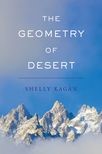
The launch has been followed  by a reading group working through (now chapter 4) of Shelly Kagan's -

Chapter 3 on Desert Graphs - seemed somehow familar, at least in the structures first presented:

Abstract

This chapter is concerned with desert graphs, which help clarify and demonstrate the complexity of the topic of desert. The first section includes graphs that explain the fault forfeits first view and its two extensions. It then studies varying slopes, graphs that depict the desert line of two different individuals, and rotation. The next section discusses the concept of peak, which represents the exact level of suffering or happiness a person actually deserves. It also includes a comparison of the eastern and western slopes of one and two individuals, as well as a section on the Sym Mountain. This chapter also introduces the mountain as the characteristic shape of an individual desert line.

Kagan, Shelly, The Geometry of Desert (New York, 2012; online edn, Oxford Academic, 24 Jan. 2013), https://doi.org/10.1093/acprof:oso/9780199895595.001.0001, accessed 16 Mar. 2026. 

The main launch programme is copied below for reference:

Day 1

9.00-9.15: Coffee/tea. Welcome addresses from Professor Peter Buse (Liverpool, Dean of the School of the Arts) and Professor Michael Hauskeller (Liverpool, Head of the Philosophy Department)

9:15-10:15 Introduction; about the project. Sorin Baiasu (Liverpool): Kantian Justice: A Desert-sensitive Responsibility-enhancing Theory; Tom Bunyard (Liverpool): 'Is Desert a Viable Concept?'; Tom Whyman (Liverpool): 'Food Justice and Desert'

10.20-11.20: Sebastian Orlander (Independent): ‘Kant, Freedom, Desert and Practical Faith’
...
11.30-12.30: Tommaso Mauri (Perugia): ‘Desert and Inequality in Kant: A Theologico-Political Approach’
...
1.15-2.15: Elisabeth Widmer (LSE): ‘What’s the point of Kantian Inequality?’
2.20-3.20: Huub Brouwer (Tillburg): ‘Defending Asymmetries of Desert’
...
3.30-4.30: Tom Mulligan (Georgetown): ‘Who deserves what AI produces?

4.35-5.20: Roundtable

7.00: conference dinner ...

Day 2

9:30-9.45: Welcome; coffee

9.45-10.45: Seniye Tilev (Kadir Has University): ‘Kant on Well-Being and Virtue: A Framework for Desert Without Consequentialism’

10.50-11.50: Krishna Pathak (Delhi): ‘Institutional Desert, Injustice, and Adaptive Preference for Suicide: A Kantian Perspective’
...
12:10-1.10: Jochen Bojanowski (Illionois): ‘Luck Egalitarianism and the Limits of Desert’
...
2.10-3.10: Gabriel Maruchi (Campinas): ‘Denotational Revisionism Cannot Escape Basic Desert’

3.15-4.15: Marius Baumann (LMU): ‘Desert, Responsibility and Skepticism’
..
4.30-5.15: Roundtable & close

Commentators: Tom Whyman (Liverpool), Sorin Baiasu (Liverpool), Bertjan Wolthuis (VU Amsterdam), Christian Españo (University of the Philippines Diliman), Sung-Yeop Jo (LMU), Tom Bunyard (Liverpool), Robin Eliath Joy (Calicut), Beşir Özgür Nayır (Boğaziçi).

https://www.liverpool.ac.uk/philosophy/research/research-projects/kantian-justice/

My source: *Philos-L https://www.liverpool.ac.uk/philosophy/philos-l/ 

Monday, August 25, 2025

c/o SDOH list "Liberal/Individualized Versus Materialist/Structuralist Approaches"

Abstract

Background: While consensus exists that the sources of health inequalities are social inequalities brought on by the experience of qualitatively different living and working conditions, means of addressing these conditions continue to be the subject of dispute. Whether to emphasis education or income as a social determinant of health is one such example of differing views on the sources of these inequalities and the means of addressing them. These different emphases are often justified through the narrow examination of the magnitude of statistical relationships between educational attainment and income with health outcomes.
Purpose: We offer a broader view, seeing these differing emphases as indicative of contrasting views of the nature of society and means of responding to these inequalities with emphasis on education representing a liberal reformist view of the issue while an emphasis on income representing a materialist structuralist view.
Research design and study sample: We examine, the validity of this hypothesis through an analysis of content of five representative publications that consider educational attainment as a social determinant of health and five that do so for income.
Analysis and results: We find that the emphasis on education as a social determinant of health focuses on the attributes of the individual and is generally accepting of the structures and processes of the existing economic and political order. In contrast, an emphasis on income – when placed within a materialist analysis – views existing systems as inequitably distributing income and other resources thereby requiring their reform or transformation.
Conclusion: Considering evidence of deteriorating living and working conditions for many in Canada and elsewhere, we see the latter emphasis as more useful for understanding and addressing these disturbing developments.

Ervin A, Raphael D. Liberal/Individualized Versus Materialist/Structuralist Approaches to Addressing Social and Health Inequalities: Education and Income as Social Determinants of Health. Community Health Equity Research & Policy. 2025;0(0). doi:10.1177/2752535X251316086

At present differentiating and conceptualising the individual and the collective (society) is ongoing. Ervin and Raphael's paper is helpful then:

'Grabb’s definition of social inequality leaves room for the importance of individuals’ attributes such as educational attainment and income – while Crossman’s definition directs explicit attention to the structures and processes of society9,10:'

Individual
|
      INTERPERSONAL    :     SCIENCES               
HUMANISTIC  --------------------------------------  MECHANISTIC      
 SOCIOLOGY  :    POLITICAL 
|
Group

'Social inequality can refer to any of the differences between people (or the socially defined positions they occupy) that are consequential for the lives they lead, most particularly for the rights or opportunities they exercise and the rewards or privileges they enjoy.9, p.1'

Physical processes

Physical structures

Infrastructures

'Social inequality is characterized by the existence of unequal opportunities and rewards for different social positions or statuses within a group or society. It contains structured and recurrent patterns of unequal distributions of goods, wealth, opportunities, rewards, and punishments.10'

Political processes 
(bureaucracy)

Political structures
(inc. Institutional)

Power

In Ervin and Rapahael (2025) there are also two tables:

Table 1. Four Primary Aspects of How Educational Attainment Comes to be a Social Determinant of Health.

Table 2. Five Primary Means of Conceptualizing How Income Comes to be a Social Determinant of Health.

- the main headings of which I have mapped to Hodges' model below.


Individual
|
      INTERPERSONAL    :     SCIENCES               
HUMANISTIC  --------------------------------------  MECHANISTIC      
 SOCIOLOGY  :    POLITICAL 
|
Group

Personal cognitive and
decision-making skills

(Cognitive) Access - Literacies


(Physical) Access to healthcare


Behavioural risk factors


SOCIO-

Life Chances - Health Career

-ECONOMIC status

Saturday, August 21, 2021

Book: "Spare Parts"

Individual
|

INTERPERSONAL : SCIENCES
humanistic ------------------------------------- mechanistic
SOCIOLOGY : POLITICAL
|
Group


"Spare Parts"


Hart, C. (2021) Not for the faint-hearted, Review, The Sunday Times, 15 August, p.24.

https://www.penguin.co.uk/books/311/311106/spare-parts/9780241370254.html

Image: Fig Tree - Penguin


Wednesday, November 20, 2019

A key to Health & Art...?

INDIVIDUAL
|
INTER-PERSONAL : SCIENCES
HUMANISTIC -------------------------------------------------- MECHANISTIC
SOCIOLOGY : POLITICAL
|
GROUP

"When you have no power, no rights, no privacy, and no control - when your humanity is denied and your liberty revoked - creativity can still save you. That is the radical message message of The Pencil is a Key, a potent and timely exhibition at the Drawing Center in New York. ...
As Milton declared, "the mind is its own place, and in itself / Can make a Heaven of Hell, a Hell of Heaven". The pencil can be a tool in this act of self-creation. Drawing unlocks the brain's shackles, empowering the passive prisoner with private forms of dignity and escape." p.15.


T
h
e

P
e
n
c
i
l


http://thebottomline.drawingcenter.org/2019/10/16/the-pencil-is-a-key-drawings-by-incarcerated-artists-extended-resource-list/
Chester Brost, Devon Daniels, Joseph Dole, Francisco “Paco” Estrada, Darrell W. Fair, R Dot Nandez,
 Damon Locks, C. McLaurin, Flynard “Fly 1” Miller, Andrés Reyes, Sarah Ross,
 B.R. Shaw, Bring, Johnny Taylor. The Long Term, 2017–2018.
Video animation, 13:05 minutes. Courtesy of the artists.
Image courtesy of C. McLaurin.

i
s

a

K
e
y


My source:
Ariella Budick, The mind unlocked, Life&Arts, FT Weekend, 2-3 November 2019, p.15.


... and looking forward next week to:

RCGP’s 7th Health and Justice Summit: Journeys Through Justice – Leadership and Transformation
Bristol, 25-26 November 2019

- on which more to follow ...
