Hodges' Model: Welcome to the QUAD: human

Hodges' model is a conceptual framework to support reflection and critical thinking. Situated, the model can help integrate all disciplines (academic and professional). Amid news items, are posts that illustrate the scope and application of the model. A bibliography and A4 template are provided in the sidebar. Welcome to the QUAD ...

Showing posts with label human. Show all posts

Sunday, September 27, 2026

Book review: 'Categories: A Study of a Concept in Western Philosophy and Political Thought'

Categories


To - Edinburgh University Press. 

Many thanks for this book -

O’Sullivan L. Categories: A Study of a Concept in Western Philosophy and Political Thought. Edinburgh University Press; 2024.

Requested in May, your response was quick. So, my apologies for the delay in picking this up. In mitigation, what I have been learning since, will help my reading of O'Sullivan's text.

As readers of W2tQ will have realised, there is a built in bias to my reading of any text. In short: It's all about the model. 

Categories was spotted in Foyles on a visit to London. It recommended itself instantly: title, Venn diagrams, sets and all.

A larger format paperback of 335 pages, the print quality, font and design match the values and usual care of the publisher. 

Given the subject, there are appropriately distinct indices of subjects and proper names.

At pages 2-3, I have already succumbed (my emphasis):

'As a result, there is widespread contemporary recognition that categories are both important and problematic. A non-exhaustive list of academic fields and disciplines in which issues to do with categories arise includes anthropology, critical theory, cultural studies, feminist studies, history, linguistics, philosophy, political science, political theory, post-colonial studies, post-modernism, post-humanism, psychoanalysis, psychology, rhetoric and sociology. It is clear, moreover, that this recognition reflects the situation in society at large. Popular authors articulate a pervasive feeling that "Things are in the wrong place. Religion is in the box where science used to be. Politics is on the shelf where you thought you left science the previous afternoon." Categorical worries have penetrated public as well as academic discourse.' pp.2-3.

But how did Luke O'Sullivan know? On page 3 having given us the informal uses of the word 'category':

'These, moreover, are only the informal uses; there are also formal, logical and mathematical, senses which we shall largely have to pass over.'13

For me it is a disappointment that the formal aspects will be passed over. It is also a relief. 

For a model that is situated, as far as nursing theory, and models of nursing/care were concerned in 1997-8; Hodges' model had been left on the shelf - gathering dust.

I recognised a slide from a Youtube video this past week, care of Cheng I think? I'll share soon.

More to follow.
13 Eugenia Cheng, Cakes, Custard, and Category Theory Easy Recipes for Understanding Complex Mathematics (London: Profile Books, 2015) provides an introduction to mathematical category theory.

Monday, March 09, 2026

Human-Technology Lecture Series – 25 March

Dear Colleagues,

The BCS Sociotechnical Specialist Group and the STEIN-UX Research Group at UWL are launching the online Human-Technology Lecture Series, connecting critical perspectives on digital technologies and design with insights about people, organisations and society.

Our first lecture is:

Thinking Language, Fast and Slow: Speed, Data, and Decolonial Inquiry

📅 25 March 2026
🕛 12:00–13:00 (UK time)
💻 Online
🎟 Free to attend

Speaker: Dr. Lindsey DeWitt Prat, whose work explores how language, culture and technology intersect in the development of AI systems.

Talk Synopsis:

As language increasingly becomes training data for AI, timing begins to shape power. Decisions about datasets are made quickly, while their consequences unfold over much longer horizons. What does it mean to design responsibly with — rather than after — underserved language communities?

Drawing on industry work with African languages and large language models, alongside research examining how AI data is produced globally, the talk reflects on why anthropological, participatory and human-centred approaches need to be integrated early in technological development.

Register here:
https://www.eventbrite.co.uk/e/thinking-language-fast-and-slow-speed-data-and-decolonial-inquiry-tickets-1983958108108?aff=oddtdtcreator

Best wishes,
José

Professor José Abdelnour Nocera
School of Computing and Engineering
Head of Sociotechnical Innovation and User Experience Research Group
University of West London
St Mary’s Road, Ealing – London W5 5RF
... and my source via the SOCIOTECH list.

Sunday, February 01, 2026

'First came the landscape' c/o Eden project & Resurgence & Ecologist

Ingela Ihrman - First Came the Landscape

Beech wood

'First Came the Landscape is a giant stick skeleton made from the trunk, limbs and branches of a single beech tree that was blown down during Storm Eunice in 2022. . . .'

https://www.edenproject.com/visit/things-to-do/first-came-the-landscape

◇

INDIVIDUAL
|
    INTERPERSONAL    :     SCIENCES               
HUMANISTIC --------------------------------------  MECHANISTIC      
SOCIOLOGY  :   POLITICAL 
|
GROUP


My source: Anna Souter & Ingela Ihrman. 'First came the landscape'. Resurgence & Ecologist, May/June 2023. 338: pp.44-46. 

See also: https://www.edenproject.com/visit/things-to-do/first-came-the-landscape

Previously: 'landscape' : 'ecology'

Wednesday, December 24, 2025

Person-centredness, Holistic approach, Prevention c/o Hippocrates

“It is more important to know what sort of person 
has a disease than to know 
what sort of disease a person has.” 
Hippocrates

 
Individual
|
      INTERPERSONAL    :     SCIENCES               
HUMANISTIC  --------------------------------------  MECHANISTIC      
 SOCIOLOGY  :    POLITICAL 
|
Group
To say that Hippocrates was ahead of his time is a gross understatement. Hippocrates recognised the importance of person-centredness and prevention, and contributed to the emergence of several medical specialties. (Kostakopoulos, et al., 2024). 


'Holistic Approach

One of the most significant innovations of the founding father of clinical medicine was the holistic approach for the diagnosis and treatment of disease. This approach is based on the assumption that the human body is a sum of many parts that function in harmony and that if one part is ill, the balance will be affected and the whole person will suffer. Hippocrates considered that patients consisted of body, mind, and spirit and this is also the modern physicians' approach when treating a disease [2].'
 

Health and social care are still playing catch-up. The vitriolic 'debate' on X over psychiatry - anti-psychiatry and DSM-X. The total inability now to shift to preventive healthcare due to the perverse, entrenched economic incentives, which facilitate increasing inequity, inequality.

Whichever Government does switch to preventive medicine, perhaps other governments had better take note? 

I think Hippocrates would have approved - wholeheartedly - of Hodges' model. 


'Prevention of Disease

Another important aspect of Hippocrates' works that is widely applied in 21st-century medicine is the prevention of disease. The phrase “Κάλλιον το προλαμβάνειν του θεραπεύειν,” which means that it is better to prevent than to treat a disease, was the cornerstone of his teachings and is based on the observation that healthy Mediterranean diet and daily moderate physical activity can prevent disease. The ancient Greeks believed that all maladies started from the gut and that walking was the best available medicine [2].'


Kostakopoulos NA, Bellos TC, Katsimperis S, Tzelves L. Hippocrates of Kos (460-377 BC): The Founder and Pioneer of Clinical Medicine. Cureus. 2024 Oct 1;16(10):e70602. doi: 10.7759/cureus.70602. PMID: 39483540; PMCID: PMC11526839.

Gabbard, G. The Person with the Diagnosis. Psychiatric News. 49;6. 19 March 2014. 
https://doi.org/10.1176/appi.pn.2014.3b19.

Brigić, A., Hasanović, M., Pajević, I., Aljukić, N., Hamidović, J., & Jakovljević, M. (2021). Principles of Hippocratic Medicine from the Perspective of Modern Medicine. Psychiatria Danubina, 33(Suppl 4), 1210–1217. 

See also: 'medicine' : 'person' : 'diagnosis' : 'prevention'

Saturday, July 19, 2025

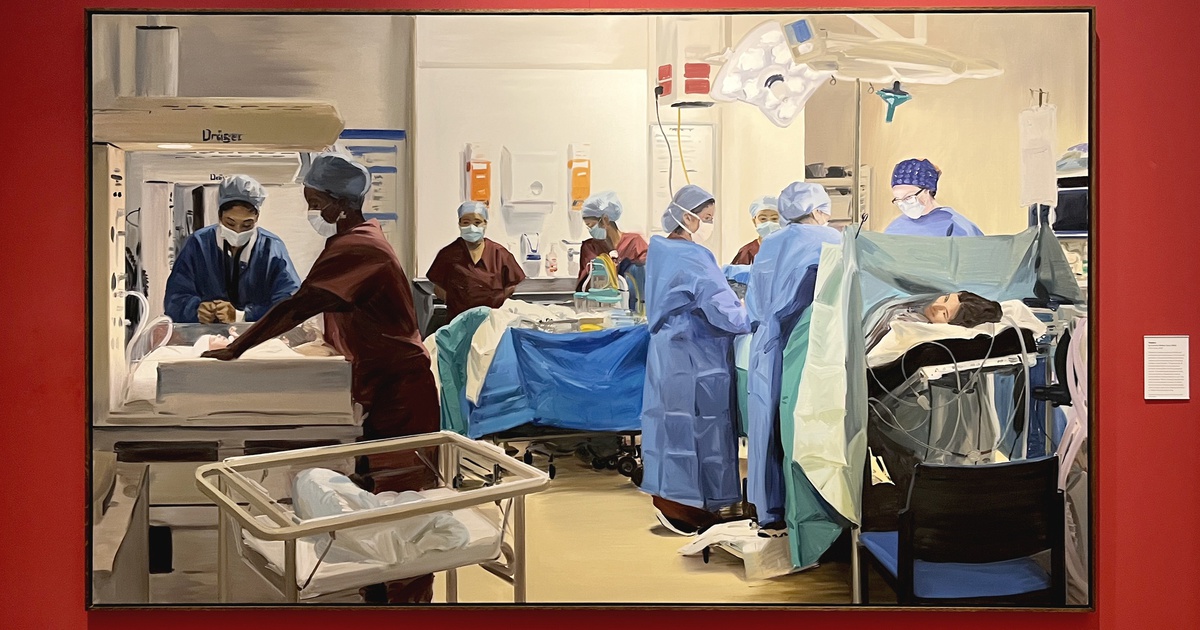
'Theatre' by Caroline Walker

Individual
|
      INTERPERSONAL    :     SCIENCES               
HUMANISTIC  --------------------------------------  MECHANISTIC      
 SOCIOLOGY  :    POLITICAL 
|


Image source: 
https://www.inglebygallery.com/news/7465-caroline-walker-the-scottish-national-portrait-gallery-theatre/

line of sight (seeing is believing) : 'care' : 'community' : 'theatre'

My source:
Harriet Baker, PAINT, FEED & PLAY, FT Weekend, Magazine. July 12 2025.  #1,133, pp.46-52.
https://www.ft.com/content/6e50181b-689e-4cd5-b084-37b311446e94

Great read too. The exhibition moves to Pallant House Gallery, Chichester from November 22nd.

Friday, May 16, 2025

RCN Congress 2025 Liverpool i

... the twists and folds of debates

Repeating myself (again) but worthwhile I think(?), the past week brought my second RCN Congress. If you are new student nurse, international (Std) nurse, or nursing support worker and not engaged with a professional body, or union; do try to get involved. Don't leave it as long as I have (I joined a union as a nursing assistant). By way of a small excuse, listening this week it seems I am not the only one to leave it 'late'. Based in Liverpool (again after 2019) means there's a torrent of potential content. So where am I/We? By their nature all the debates are worthy. I have picked a few:

Discussion - Celebrating a nursing career

You can read above the main focus for the discussion. For me it prompted the following (no doubt - familiar)  reflections ...

The number of potential careers in health and social care is amazing:

Not only what the NHS (for training, education) can 'offer', but within that the number of nursing roles and specialities. The discussion inevitably drew the 'longevity' card. Students do pick on the temperature of their chosen community of practice. They recognise when they are surrounded (not literally!) by colleagues who have careers numbered in the several decades. But like a card the side that presents the occupational safe harbour from the threat posed by artificial intelligence, is countered by the seemingly relentless pressures imposed on nursing staff. The debates also revealed the pressure and negative impact of 'lived' work experiences for students and newly qualified nurses. I remember in the late 1970s early 1980s student nurses being counted as 'staff'. Have we really not progressed? I wrote 'offer' above because many students cannot get jobs once they have qualified. Not the best start to a shiny career. Having to fold, as they qualify.

Speaking of "career", can we please twist that? There is a great deal of talk - soul searching - about how on earth the (so-called) health service truly transforms itself to be health promoting and preventive. In the NHS's history perhaps there was a window of opportunity to begin in the late 1960s. Not so much a 'moonshot' as a healthshot. Now with the demographics that potential is being lost, unless this is positive way that AI can make up the shortfall? Alternately, nursing can utilise the health career, as in Hodges' model which are invariably impacted by an individual's life chances. As such there may be signs and signatures in the person's familial background? We can imagine a timeline composed of Hodges' model as 2x2 frames through a person's life, even prior to their conception and their legacy. 

More to follow . . .

Previously: 'RCN' : 'nursing' : 'power'

Please pardon the 'gambling' analogies, but we are literally asking students to gamble with their careers, financial status and well-being (life chances - no less). Should they be lost to the service, you can't blame young people. They know the logic of care, also known as demographics. They can do the maths? So who is it who can't do basic arithmetic?

Thursday, March 27, 2025

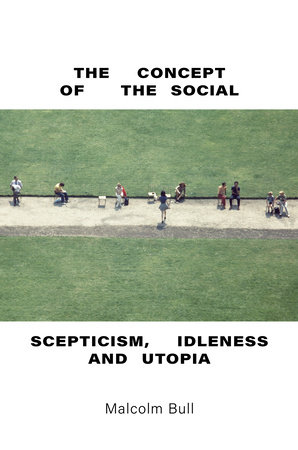
Vectors of the Biopolitical - (Chap. 2) c/o Bull

The Concept of the Social
'From one sentence in Aristotle derive two arresting theoret- ical discourses of the twenty-first century: Michel Foucault's biopolitics, provocatively reformulated by Giorgio Agamben in terms of the relationship between sovereignty and the body, and the capabilities approach developed by Amartya Sen and Martha Nussbaum as a means of evaluating and promoting development, justice and freedom. Both are characterized by deep reflection on the sources of Western political thought, and by urgent engagement with contemporary social and legal problems. Both are in some sense biopolitical in that they are shaped by the interplay of the same Aristotelian categories the human and the animal, politics and nature. But they are on opposite sides of the divide that has opened up in the human sciences since the 1960s, and there currently seems no optic through which they might simultaneously be viewed, no way of integrating or comparing their insights.
 
In part, this reflects a situation in which political debate appears to have fragmented into a multiplicity of single issues. The ancient 'Who will rule?' and the modern 'Who shall have what?' have been supplemented by an array of questions that deal with matters once exclusively cultural, personal or natural. For previous eras, the relative integrity and unmalleability of cultures, bodies and environments rendered such questions redundant. Now they frequently appear unanswerable from within established political traditions, and incommensurable in relation to each other. Within this expanded field, biopolitics and the capabilities approach have unusual salience and potential, for both bundle together issues otherwise assumed to be distinct. If they, in turn, could be coordinated, perhaps we could begin to map the new territory.' p.68.

individual
|
INTERPERSONAL : SCIENCES
humanistic ------------------------------- mechanistic
SOCIOLOGY : POLITICAL
|
group
'Who shall have what?'

nature

human - animal

bio-
culturepolitical

'Who will rule?'


Bull, M. (2021) The Concept of the Social, London: Verso.

Tuesday, October 08, 2024

Capital -ism in Hodges' model

The New Nature of Business
'In The New Nature of Business, Luc's son André, now vice-chair of Roche, and co-author Peter Vanham lay out how to bring these parallel tracks together. "The business of business isn't just m of business," they write. "The business of business is to at least preserve and where possible expand the world's human, social, environmental and financial capital." 

 The book makes the familiar case that maximising short-term profit leads to long-term destruction of value. But it also suggests that a "narrow focus on [reducing] carbon emissions" could have dangerous unintended consequences. Those four "capitals" depend on one another, write Hoffmann and Vanham. They call for nothing less than a systemic change to a "sustainable, inclusive form of capitalism, with new principles, and new practices".

The most interesting parts of the book describe Hoffmann's path to the realisation in the early 2000s that the profit- making power of business should be harnessed in the quest for sustainability.' (My emphasis with some re-formatting.)

Hill, A. (2024) The sweeter pill, FTWeekend, Life&Arts, 28-29 September. p.11. 


individual
|
INTERPERSONAL : SCIENCES
humanistic ------------------------------- mechanistic
SOCIOLOGY : POLITICAL
|
group
HUMAN

ENVIRONMENTAL

the new nature
SOCIALof business

FINANCIAL


Andre Hoffmann, Peter Vanham (2024) The New Nature of Business: The Path to Prosperity and Sustainability. London: Wiley. ISBN: 978-1-394-25754-6

Previously: 'capital' e.g. 'Capital Patient' :: 'Patient capital'.

Saturday, August 31, 2024

Books... Bakhtin's centripetal and centrifugal forces in relationships

individual
|
INTERPERSONAL : SCIENCES
humanistic ------------------------------- mechanistic
SOCIOLOGY : POLITICAL
|
group


"Bakhtin's dialogism is theory of the contradicting process as realized in the ongoing tension between centripetal (i.e. unifying) and centrifugal (i.e., differentiating) dialectical poles. Each pole of the centripetal-centrifugal contradiction is constituted in the particulars of the situation at a given point in time. The centripetal pole consists of whatever phenomenon or quality occupies the dominant or normative position, whereas the centrifugal pole consists of whatever phenomena are subordinate, peripheral, or secondary. Substantial fluidity characterizes centripetal and centrifugal poles, in that a phenomenon that is dominant at one point in time can be subordinate or secondary at another point in time, and vice versa.

Because dialogism is a general theory of sociality, rather than a context-specific theory, Bakhtin did not pursue the particular  phenomena that constitute centripetal and centrifugal forces for any specific context, including the context of personal relationships. Thus a first step in extending dialogism to personal relationships is to particularize Bakhtin's abstract centripetal contradiction." p.141.


Duck, S. (Editor) Social Context and Relationships. London: SAGE Publications, 1993.

Tuesday, June 25, 2024

Book for review: iii "Philosophy of Care - New Approaches to Vulnerability, Otherness and Therapy"


Before moving beyond Pierron's 1st chapter (the whole book is very worth reading), there is much that reminds me of institutional care:

https://winwickremembered.org.uk/

Recognition of the sub-standard cockroach 'co-habiting' environment away from the entrance corridor, quality of life, task oriented, de-personalising, stagnant, passive, pervasive sense of hopelessness and helplessness. There was a chink of light. 

As registered mental health student's we were on a crusade. Carrying a torch, lit outside in the community to help open the doors to community care.

 On trips outside, gradually the institutional skin sloughed off, to reveal the person - the individual came alive (even through medication). 

'Bill' had a sense of humour, a lovely smile. He'd had the prospect of another life. So many people there for so long: too long. Potential unrealised?

"To be in contact with the other in care is not to exercise a hold over them." p.16. 

The problem is - within institutions this can be forgotten and lost:
"To suspect a substituting mode of solicitude (cf. Heidegger) of being a highhanded charitable hold over someone invites one to consider the ethical and political fecundity of a solicitude which looks ahead. To think through this alternative would amount to unmasking the mechanisms of domination, whether voluntary and involuntary - naturalisation of roles, masculine domination, organisational violence, etc, - at work in care. Doing so politicizes care, enabling it to overcome that democratic optimism which doesn't want to recognize that violence is part of human history (Merleau-Ponty 1996: 124-125), that violence insinuates^ itself into care relations, and, as such, comes under the sway of what Merleau-Ponty called the 'maleficence of living among many' (maléfice de la vie à plusieurs)." p.16. 

^The need to be aware of subtle abuse? 

My notes for chapter 2 'From an Anthropology of Vulnerability to the Ethics of Care' by João Maria André, reflects a lot on relationality, and maps which I've drawn: "(identity is always dialogical identity)" and "how we map ourselves". Again this helps my (other) current reading and draft work. There's time here, plus "there is no such thing as abstract vulnerability - vulnerability is necessarily concrete". p.25. I don't think André mentions future generations but I've added a note; 'I-we' too. There's a triple axis, and more encouragement as Tronto and Gilligan feature. Heidegger's reference to Hyginus' Fable 220 (in which Care moulds man out of clay, Jove grants it spirit, and Earth gives him body, with Care being assigned the task of keeping him alive." (Gaia?) p.26.

As in chapter 1, and previously reviewed text 'General Psychotherapy', the term 'constellation' appears. In chapter 2 it is expanded (with reference to Corine Pelluchon); leading us to "appreciation of the world, and self-care as care for the world" p.29. So, planetary health too. With Hodges' model purposed (1/4) to help bridge the theory - practice gap; this perennial problem exhibits existential relevance here (p.27). We by-passed biopolitics on page 17, but  the interrelation of psychosocial and other examples informs the text (philosophy). As I scribbled, Hodges' model is simultaneously a space for resonance and unconditional positive regard (pp.30-31). Authors inevitably find themselves deliberating upon dualisms, Descartes of course, plus Spinoza and others. Entralgo is nails the duality: "the aim of caring is to lead the I from being 'a body that says I' to a learning how to progressively become, and define itself as, 'a body that says we'". p.35.

Braga, J. & Santiago de Carvalho, M. (Eds.), Philosophy of care: New approaches to vulnerability, otherness therapy. Springer. 

Many thanks again to Springer for my copy.

Individual
|
      INTERPERSONAL    :     SCIENCES                   
HUMANISTIC  --------------------------------------  MECHANISTIC      
 SOCIOLOGY  :    POLITICAL 
|
Group

relational

'I' - mind 

individual vulnerability

intention

affection - as movement


climate change

'I' - body

maps - cartography

Planetary Health

action - movement


We

context

equity - equality

social vulnerability


We

policy

bio-POLITICS

accountability of government(s)


See also:
body & soul - Book: Philosophy of care: New approaches to vulnerability, otherness therapy

Sunday, June 23, 2024

Book for review: ii "Philosophy of Care - New Approaches to Vulnerability, Otherness and Therapy"

What I like here is being drawn (rescued then!) from the torrent that is the near reaches of the 

    bit, byte ... data, information, knowledge, wisdom

continuum, to its latter realm. The forever incomplete project of wisdom in 'care':
"Care, which is prior to all curing, identifies a fundamental availableness that has not yet been appropriated in the expert and technical discourses of care specialists." p.9.
This goes back to Pierron's 1st chapter focus upon 'Care: A New Arrival in the History of Philosophy'?

J. Braga & M. Santiago de Carvalho (Eds.), Philosophy of care: New approaches to vulnerability, otherness therapy. Springer.

A real gift for me (Hodges' model) is:
"Narration .. In opposition to the mathematization of the world, which reduces human problems to theoretical questions and to a universalized and rational formulation of moral dilemmas, the philosophies of care present a conflict of interpretations which deconstructs official and stereotyped narratives. Amy (or the voice of care) does not conceive a dilemma as a mathematical problem but rather as a narration of human relations, whose effects extends over time. (Gilligan 2008: 53)." p.13.
In addition to Tronto "Care is <<a species of activity that includes everything we do to maintain, contain, and repair our 'world' so that we can live in it as well as possible. That world includes our bodies, ourselves, and our environment>> (Tronto 2009: 143)." p.15. (see i) - I must add Gilligan to the list. 

In this weekend's FT, there's an item about the sorry state of the UK's statistical infrastructure (a post will follow, and mention of another book). I remember* Derek Hoy (RIP) doing a presentation about using data, and nursing informatics to make nursing visible. I wonder how he would make sense of the contrast between nursing whilst in COVID and post?
"Gilligan puts forward a distinction between a feminine ethics of care, which makes use of the idea of the natural solicitude of women by associating self-sacrifice and concern for others, and a feminist ethic of care, thought of as a critical approach that brings to light the mechanisms which favour the "invisibilisation" of care. The latter makes it possible to analyse the ways in which we lose the capacity to care for the other when relations of mutual caring are damaged." p.14. 

As usual below I've mapped some concepts to the domains of Hodges' model. 
Many thanks again to Springer for my copy.

Please note, also - as usual I am trapped in chapter 1! :-)

Individual
|
      INTERPERSONAL    :     SCIENCES                   
HUMANISTIC  --------------------------------------  MECHANISTIC      
 SOCIOLOGY  :    POLITICAL 
|
Group

"Amy - voice of care"

relational

situated


data, information, informatics

visibility

statistical infrastructure


context

equity - equality

social justice

context

feminism

data - reporting

accountability of government(s)


See also:
body & soul - Book: Philosophy of care: New approaches to vulnerability, otherness therapy

*https://hodges-model.blogspot.com/2010/08/drupal-musings-12-semantic-web-icnp.html

Wednesday, June 19, 2024

IO Magazine #41 Being = Space x Action


"The Parmenides poem in fact opens a rather impressively large range of philosophical issues which remain unresolved to this day: the questions of the unity of knowledge, the unity of being, the unity of knowledge and being, the nature of proof, the nature of thought itself, the nature of justice, the relations between thought, proof, knowledge and justice, the possibility of rational cosmology and the relationships between logic and cosmology, the existence and nature of abstract entities, the privileged status of philosophical knowledge - all these questions became explicitly formulatable questions immediately following the production of Parmenides poem, none of them are definitely resolved today, and the future of science, culture and the human spirit all depend to a far from trivial degree on how these questions come to be reflected upon." pp.3-4.


IO Magazine. Reveal Digital, 01-01-1988
Contributed by: Charles Stein; Don Byrd; A.S. Yessenin-Volpin; Christer Hennix; Henry Flynt; Henry Flynt; George Quasha; Charles Stein; Christer Hennix; Luitzen Egbertus Jan Brouwer; L.E.J. Brouwer; L.E.J. Brouwer; Charles Stein. Stable URL: https://www.jstor.org/stable/community.28038534

The poem: http://philoctetes.free.fr/parmenidesunicode.htm

Friday, June 14, 2024

Book for review: i "Philosophy of Care - New Approaches to Vulnerability, Otherness and Therapy"


Among the questions that research might answer regards Hodges' model I have in mind:
  • At what age can Hodges' model be introduced in the general curriculum?
  • Is there consistency in how people view/interpret and apply Hodges' model?
  • How simple is it (or complex)?
  • Is it a meta-model?
  • How can Hodges' model relate to the spiritual?
My B.A.(Joint Hons) is in Philosophy and Computer Science, so the 'Philosophy of Nursing' is a preoccupation. In January 2022 I discovered:

J. Braga & M. Santiago de Carvalho (Eds.), Philosophy of care: New approaches to vulnerability, otherness therapy. Springer.

I requested a copy but ever distracted did not register any further action beyond acknowledgement and being forwarded. Discovering I'd missed this, I picked it up again. I must admit two years ago I was expecting a book with 'care' in the nursing, medicine, health context. Revisiting the 'blurb' I saw that this is not the full picture. Last year and this however drawn to conferences that combine the environment and religion this book really did fit the bill. Requesting a 'review copy' so late in the publishing cycle presents a challenge. 

Hodges' model provides a long-tail, surely a defining property of a lifelong learning resource? This plus a history of cataract surgery brought a print copy and many thanks to Daniela Rohrmann and team. I've now reached Part V, chapter 19 and 'medical care'.

The book's physical quality (printed hardcopy) is up to Springer's usual high quality standard. The fact that much of the contents have, I believe, been translated appears to show at times, in one chapter especially, with missing, or additional words. Perhaps this also reflects proof reading, an important part of production I would have thought (and still best not left to AI)? The font and print size is very readable and the format and design - architecture - of headings and layout are inviting and engage the reader. There are Any problems with grammar, flow were readily overcome. 

In meeting this text I oscillated in expectation - philosopher of care, as in the clinical context; and then the spiritual, pastoral. Which is it? The emphasis is on the latter with the final part focussed more on medicine. The book has extended my appreciation of 'care' in the wider sense, it is rewarding and well-worth reading.
"Finally, the fifth part – Care and Therapy – examines issues relevant to medical
care. This volume would be remiss if it did not take therapeutic care into account.
Practical and theoretical knowledge mutually influence each other. This highly specialized
domain imparts a significant amount of the status that care is given in our
daily lives. Thus, in this last part, the previous themes of otherness and ipseity converge
systematically. Through the theoretical emphasis that is placed on the issue of
suffering – whether it concerns physical illnesses or those of the psychological and
psychiatric realm – the authors of these chapters show us the urgency of thinking
about therapeutic care practices in the light of a theory of intersubjectivity, where
the disease itself and its cure are understood within the communication processes
and not only as exclusively technical-scientific processes." p.vii. (Introduction).
Don't worry I'm not going through each chapter, but Chapter 1 is a fascinating read, the title 'Care: A New Arrival in the History of Philosophy?' https://link.springer.com/chapter/10.1007/978-3-030-75478-5_1 presented an immediate challenge. For me, love, compassion, philosophy - as the love of wisdom, knowledge, what it is be, think, exist, the human condition and more all imply 'care' including care of thought and argument. I'm probably begging the question and I realise the Peirron's purpose is more specific, nuanced. I'm reassured though as care is defined by three criteria:
"(a) care is contextual and anti-essentialist... The characterization of care requires a great deal of attention to the precise details of each situation (Tronto, 2012: 35)."

"(b) care is relational and accepts that human beings , other beings, and the environment are interdependent  (Tronto, 2012: 32)."

"(c) In human societies which would like to assume the equal value of all human life, care needs to be democratic and inclusive  (Tronto, 2012: 36)." p.6.
I must read Tronto - who work has elevated vulnerability as flagship concept of her politics of care (Tronto, 2009) (p.8); 'dialectical' too (p.10). The book is full of many leads, the writing scholarly and authoritative.

With some studies in education and philosophy the pragmatic school of thought quickly surfaces. I see Hodges' model as a pragmatic solution. In addition to the 'pragmatics of care', Peirron opens the door even further in respect of 'care':
"Giving through care involves much more than what is described in the interactional framework of exchanges characteristic of homo economicus (economical animal) paradigm. Giving is not exchanging because care involves so much more than just the provision of a service. Care, as understood as a politically relevant anthropological position, is thus very different from a Hobbes-inspired anthropology which supposes a social epistemology based on a an atomistic approach to individuals. It provides a fundamental interpretation of our social intelligence by thinking it, starting from a relational anthropology within which the concept of vulnerability plays, as we will see, a strategic role. A pathetics of care rethinks the balance between reason and feeling, argument and emotion in the spirit of the tradition of Scottish philosophy, in order to allow a "different voice" to be heard in the analysis, the description, and the support of the human world." p.7. 
The pathetic view of care requires a language, methods, aesthetics that can manage 'the singularity of an enduring life history' (p.10). This equates for me with the health career in Hodges' model.

As usual below I've mapped some concepts to the domains of Hodges' model. I will add to this post too.

Individual
|
      INTERPERSONAL    :     SCIENCES                   
HUMANISTIC  --------------------------------------  MECHANISTIC      
 SOCIOLOGY  :    POLITICAL 
|
Group

contextual

anti-essentialist

relational

situated


context

human being, other being 

and environment -

interdependent


context

interdependence

care in human societies 

equality within human societies

context

situated

human societies are democratic

and inclusive


See also:
body & soul - Book: Philosophy of care: New approaches to vulnerability, otherness therapy

Monday, June 10, 2024

body & soul - Book: Philosophy of care: New approaches to vulnerability, otherness therapy

Near the end now of Braga & Carvalho's (2021) Philosophy of care on page 318 I came across:
"When we come up against the demon of acedia, then with tears let us divide the soul and have one part offer consolation and other receive consolation. (Pr. 27)."

Individual
|
      INTERPERSONAL    :     SCIENCES               
HUMANISTIC  --------------------------------------  MECHANISTIC      
 SOCIOLOGY  :    POLITICAL 
|
Group

soul

body


- and a footnote (42):

"The generally accepted treatment for depression, with or without pharmaceutical intervention, is gentleness. Eat well, avoid stress, do not feel guilty; be kind to yourself, seek quiet but real amusement, rest a lot. But such a regime would find little sympathy with the spiritual directors of those afflicted with accidie. The classic cure for accidie is penance, a strict 'rule' of life, self-discipline and hard work" (Maitland, 2008: 113).

Maitland, Sara. 2008. A Book of Silence. London: Granta.

Interesting, the similarity between afflicted and affected?

A lot more to follow ...

Carvalho, C.A.S. Acedia and Its Care. In J. Braga & M. Santiago de Carvalho (Eds.), Philosophy of care: New approaches to vulnerability, otherness therapy. Springer. pp.297-323.

Abbrev. (Pr. 27) Evagrius of Pontus. 1971. Praktikos. ...

With thanks to Springer for hard copy - helps greatly. 👀

Friday, July 21, 2023

Cognitive and Affective Empathy c/o Simon Baron-Cohen

   New Scientist 3311
"At the bottom, Nicholas Conard, archaeologist and director of the nearby museum in Blaubeuren, Germany, pointed to a layer of rock. 'Right here is 20,000 years ago,' he said. Then he pointed about a metre lower. 'Here, we are at 40,000 years ago.' 
I was in awe, suddenly aware that I was standing where our early human ancestors lived and breathed so long ago. But it was what they invented that inspired my trip. Hohle Fels is where, in 2008, Conard and his colleagues discovered the earliest known musical instrument, a flute carved from a vulture bone that is thought to be about 40,000 years old.

It is the product of what I argue are parallel revolutions in human cognition. In my career studying the human brain through the lens of understanding autism, I have devoted a lot of time to understanding empathy, its role in our evolution and how it still underpins human interaction today. But around the same time that the brain changes arose that enabled us to use empathy, another equally critical set of changes took place: the evolution of a pattern-seeking brain network, what I refer to as the systemising mechanism, that provides the foundation for human invention - including that of musical instruments." p.34.
INDIVIDUAL
|
     INTERPERSONAL    :     SCIENCES               
HUMANISTIC --------------------------------------  MECHANISTIC      
SOCIOLOGY  :   POLITICAL 
|
GROUP

"One of these circuits, the empathy circuit, enabled a raft of new behaviours, including the ability to deceive others, teaching, self-reflection, social "chess" and flexible communication that relied on shared reference, including storytelling. These explain why modern humans could make stealth weapons and jewellery: we were keeping track of what others might think, know, intend, feel, want and believe." p.36.

COGNITIVE EMPATHY
theory of mind

AFFECTIVE EMPATHY

"- the drive to respond to another person's mental state with an appropriate emotion." p.36.


Baron-Cohen, S. (2020) Our Restless Minds, New Scientist, 248: 3311, pp.34-39.

Autism Research Centre, Cambridge University

The Pattern Seekers, Simon Baron-Cohen.

Saturday, June 03, 2023

Let Us Speak With One Voice . . .


INDIVIDUAL

|
INTERPERSONAL    :     SCIENCES              
HUMANISTIC --------------------------------------  MECHANISTIC
SOCIOLOGY :   POLITICAL
|
GROUP

"A singer's voice may
be their prize asset,


but its sonic frequency

If the world should blow itself up,
the last audible voice would be that of
an expert saying it can't be done.*
Peter Ustinov (1921 - 2004)


isn't theirs to copyright."


Hunter-Tilney, L. (2023) Can AI make me a star? Life&Arts, FTWeekend, 27-28 May, pp.1-2. 
https://www.ft.com/content/408a8920-cf0c-4f23-925f-8496da15153f 

https://www.ft.com/ludovic-hunter-tilney

Illustration: Raj Dhunna

*How times have changed, and for many 'voice' related quotes.

Listen also: BBC Radio 3 - Artificial intelligence and music

https://www.bbc.co.uk/programmes/m001md3n

Friday, November 11, 2022

Book review iv "Human Landscapes: Contributions to a pragmatist anthropology"

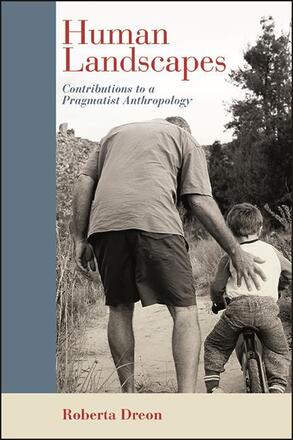
Human landscapes

I am rueing the day (whichever it was) I lost my hard copy. Despite best intentions, I'm taking it slowly with the pdf, also much appreciated c/o the author Prof. Roberta Dreon.

The cover resonates at present as it was my mother's funeral on Wednesday. This provoked memories of my father too - happy times. Whatever emotional intelligence I can lay claim to I realise it is a gift from mum: a pragmatist anthropology indeed, as grief flies around.

 I can't help 'read' this as I apply a pragmatic tool:

"By following or even radicalizing Mead, it could be argued that it is at least partly through the use of verbal communication that the sense of one’s own self has been made possible—where self-reflection is considered to be a primarily affectively based form of awareness. While avoiding any hypostatization of interiority as a primary condition—which would give rise to the well known philosophical problems of the internal/external, private/public dichotomies—we should consider why humans are often capable of having a rich interior experience." p.68.

Dreon's (necessary) focus upon sensibility, habits and the insights obtained are rewarding:

In Chapter 3 Pragmatist Contributions to a Theory of Emotions -

"In spite of the abundance of theories, I think that developing a pragmatist approach can still be fruitful, because it helps to get rid of many of the noxious dichotomies that have shaped the philosophical as well as psychological conception of emotions—mind-body dualisms, nature-culture gaps, and private-public oppositions.." p.71.
The book isn't dizzying but the traversals from the sciences to the affective sciences, as an understanding of the emotions is sought highlights the elephant that follows us on the journey across Cartesian and other divides. Salience is here - in qualitative form, epigenetic threads are highlighted (p.73). As noted key to the project is dealing with a pragmatist theory of emotion. The legacy of issue in health and other disciplines is evident here, even if not explicitly stated. Conjoining experience, the environment and emotion is to grapple with parity of esteem - even if apolitically.

Clearly not a nursing or psychotherapy text - there are many connections: emotional intelligence, introspection (and its limits?).

"Emotions often arise out of a break in habitual behavior and provide the organism with a kind of affective proto-evaluation of environmental conditions that can later become an object of reflection and judgment." p.74.

I've reading to follow on enactivism, embodiment ever since at least: 

Paley J. Clinical cognition and embodiment. Int J Nurs Stud. 2004 Jan;41(1):1-13. doi: 10.1016/s0020-7489(03)00081-6. PMID: 14670389.

Plus some books (yes two in :: two out mum...).

When aged 16-17 I read and wrote about Wundt's recognition of the limits of introspection:

".. from the perspective of the methodological hypothesis that introspective analysis should be avoided because it is scientifically unreliable." p.76.
(If I find that notebook I'll do another post. Reading about the history of psychology, I was drawn to mental health/illness.)

Anyone familiar with h2cm and posts here will appreciate the trigger of association produced by:

"... 'interactive' is different from 'intentional'..." AND ".. a mechanical process; on the contrary, by emphasizing its plasticity." p.76.

We can even link book reviews!

"... recent ideas that the brain is at least partially configured after birth ..." p.77
(Brainscapes)

Clearly in the slow lane with this - but enjoying the learning and a further post - when I'll point to the review as a series.

Dreon R. (2022) Human landscapes. Contributions to a pragmatist anthropology. Suny Press, Albany.


Tuesday, September 06, 2022

Book review iii "Human Landscapes: Contributions to a pragmatist anthropology"

 
Human Landscapes

As per previous 'reviews', this reader can get lost in the Introduction.

Discussing - "interactions, and loop effects within the organic-environmental system" - there is emergentism, causality, teleology, and supervenience with argument about definitions and word-use through the historical development of pragmatism and understanding of human behaviour individually, collectively and as a culture.

 A close reading can help, is called for here ...


What is of interest to me at present is the non-surprising mention of logic, Dreon points to the many problems that Dewey and pragmatic and other philosophers encountered from the introduction of subjective-objective dichotomies. 

For a mental health nurse the intra- interpersonal is your 'bread and butter' so to speak. Dreon has you reflecting on your professional field, by raising the dichotomy of feelings and cognition, the psychical and the physical aspects of emotions, language and experience. (Interesting, does a pragmatic approach foster identification of dichotomy or continuity?)

For a moment on page 66 I thought we were still on the introduction: 

"The final chapter of this volume will be devoted to the development of a qualitatively richer conception of human linguistic experience conceived as continuous, rather than as opposed to sensibility."
But this is fine and is a statement of Dreon's argument, its depth in dealing with the thought of Dewey, James and others (e.g. Mead). This is dense, and yet detailed, when it is not your field, but you can - begin, at least - to see how the historical development of pragmatism (schools of philosophy), psychology and sociology create so many dilemmas and debates:

"In my opinion, some of the Classical Pragmatists’ insights should
be brought to a coherent conclusion by basically working on two sides,
in order to avoid a foundational conception of language, while at the
same time gaining a more rounded view on sensibility, as it unfolds in
our ordinary lives. As already hinted at in response to Dreyfus, I endorse
a more complex conception of language as primarily consisting in fully
embodied and socially shared linguistic practices that have a variety
of different ends in view and are largely regulated by an affectively or
qualitatively oriented mutual sensibility." p.66.

The book is also 'developmental' too:

"Those practices—from so-called motherese to lullabies, nursery rhymes, and storytelling—are often specifically directed at eliciting responses from the baby and catching attention. The baby’s behaviors—shaking the arms, keeping the eyes wide open,
squealing—are strongly embodied, even when they are vocal; but they are also affectively based and oriented responses to cultural-linguistic stimulations on the part of its caregivers." p.67.
All this shouted emergence to me (and as above), and Dreon rewards this reading. 

Thinking about the 'logic' (if any) in Hodges' model, this stood out:

"The point is to change our approach and to adopt the point of view of the
shared social context in which an individual’s first perceptions occur,
rather than the still monological perspective of an isolated individual
as the primary starting point of experience." p.67.
With more to follow ... I know now why I saved this:

embodied nature

an interactive installation to nurture
our sensibility to the living world


Dreon R. (2022) Human landscapes. Contributions to a pragmatist anthropology. Suny Press, Albany.

https://sunypress.edu/Books/H/Human-Landscapes

Video: Roux, Caroline, Design Miami: Tangled up in the natural world. FT Weekend, Collecting, 27-28 November 2021, p.3.

https://mischertraxler.com/projects/embodied-nature/

Sunday, August 28, 2022

Book review ii "Human Landscapes: Contributions to a pragmatist anthropology"

When I have a book to review I need a hard copy - too much screen already - and while I hope the review is worth the author's and publisher's kind engagement my purpose includes gathering insights and evidence to support the project here.

Back in July I lost this book (OK I fessed up). I've searched ... and must have left it somewhere! This is a great loss.*

Human Landscapes

Thankfully, Roberta forwarded an early pdf, and I'm enjoying an informed and challenging read:

The author's task:

"... only a few scholars have sought to outline a philosophical anthropology through a pragmatist lens." p.8.

Distracted, as ever, I'm making progress and can see an author who is:

- embodied, embedded, enacted, and extended (p.7) - in this subject matter.

I'm going backwards from post i, but I commented on this:

"Even if Michael Quante’s proposal is not grounded in Pragmatism, I agree with his claim that, in order to be pragmatistic, a philosophical anthropology should assume that each concept or theory requires questions like: “How is this related to human action? What place does it have in the context of our
actions? (2018, 22)." p.15.

In the context here, this is precisely the role of Hodges' model, at the conceptual level - placement in the care domains, and in theory, care approach (context), philosophy. I like Dreon's focus on evaluation too, and the fact that an example is the impact of COVID on education and the resort and reliance of online learning.

Dreon concentrates on the organism and the environment (a key debate) from across the literature, and discusses concepts that are notoriously problematic, terms like, sensibility, and human nature.

"The situation is particularly complex because, evidently, this is not a merely
theoretical issue; rather, it has serious existential implications, both moral
and political." p.17.

Reading, I instantly thought of the social determinants of health [SDoH], moving away from reductive explanations. But the SDoH are precarious in the extent to which they will affect policy, and give rise to specific metrics - similarly to the sustainable development goals [SDGs]. These have a pragmatic and clearly anthropocentric quality about them. As Dreon notes the oppositions and dichotomies (very quickly as per post i) these policies 'light up' the humanistic domains. As health professionals and educators we can shout, warm, warmer, colder ... to the policy makers (and currently the 'purse' holders).

A 'good' book reassures you about what you've read - Whorf, time, Hopi; but also points to what you might like to read:

"In his entry for the Encyclopaedia, Dewey claims that isolating
the allegedly native and original constitution of human nature is possible
only through the assumption of a static point of view on it, for example,
by privileging features at birth over traits characterizing the intrauterine
past or the organism’s future development and adulthood." p.19.

Bubbles: Spheres I by Peter Sloterdijk, Wieland Hoban (Translator) - my emphasis above.

My .pdf copy is littered with comments where I (inevitably) read evidence in support of h2cm. I don't want to dilute Dreon's purpose, which is comprehensive (for me) in referencing and critical analysis of the latest thought. But if Roberta and Suny Press will (please) forgive me for losing the hard-copy hopefully they can see why I draw attention to the following:

"Grene was very careful to avoid reducing the relationship between biological factors and culture to causal dependence: she preferred to speak of a widespread dependence of sociocultural life on biophysical reality and to consider the relation as an “anthropological circle” (Peterson 2010)." p.24.

 INDIVIDUAL
|
 INTERPERSONAL    :     SCIENCES               
HUMANISTIC --------------------------------------  MECHANISTIC      
SOCIOLOGY  :   POLITICAL 
|
GROUP

sustainable mindset
(volunteered - incentivised)


"biophysical reality"

"sociocultural life"

circular economy


There are many circles, not just at work, but circles that need to work.

More to follow - as I pick up speed ...

Dreon R. (2022) Human landscapes. Contributions to a pragmatist anthropology. Suny Press, Albany.

https://sunypress.edu/Books/H/Human-Landscapes

*Looking at the photo, the table looks like a Booths cafe? I have phoned them and elsewhere - no joy. :-(