Hodges' Model: Welcome to the QUAD: pragmatism

Hodges' model is a conceptual framework to support reflection and critical thinking. Situated, the model can help integrate all disciplines (academic and professional). Amid news items, are posts that illustrate the scope and application of the model. A bibliography and A4 template are provided in the sidebar. Welcome to the QUAD ...

Showing posts with label pragmatism. Show all posts

Monday, April 28, 2025

Book review: 'Categories we live by' ii
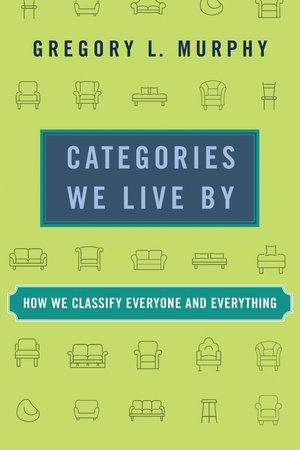
In that first post I felt a bit guilty getting bogged down in the introduction, and not really saying much about the book itself.

Well, Chapter 1 is the 'Introduction' so that is great, and as you may be I am swept up by what's between the covers. Speaking of which, this is an effective design, and green colour; especially for a northern reading in March - May.

The book is slim considering the topic, 164 pages, plus just over a page of notes, four and a half of references and an index. It is, I think a slightly larger format paperback but fits well in the hands for outdoors reading. The fonts and layout are clear.

Murphy's style is straightforward and readable. It is not technical, but includes terms such as classification, nomenclature, and domain [ ;-) ]. The division into two parts, lends itself to a wide readership, the second part providing case studies giving the book a pragmatic, practical emphasis. I'll post again about chapters 6 & 7 on Psychodiagnostic Categories; and Categories and Power respectively (brief, but a joy!).


Before moving on from the Intro, Murphy explains how the same category may be thought of in different ways at different times' and encourages us to be 'critical of our categories'. p.12. This stands out for me. Especially being suitably equipped to critique our categories as we use them.

Chapter 2 on The Classical Tradition, has a natural starting point; describing Aristotle (with his book Categories), essences, definitions with properties that are necessary and sufficient p.14-15.
'Necessity: If it's in the category, it has the features,
Sufficiency: If it has the features, it's in the category.' p.15.

I was prompted to reflect on relations and identities here. While I suggested the book is not technical, there is a important point about dictionaries and the definitions we seek there. We should remember that many members of the public would still rely on what is the classical way to create, confirm category membership: there must be a rule.

Wittgenstein follows pp.17-20, but I took note of:
'The problem is that necessity and sufficiency are in tension with each
other. As you make the list of properties longer and longer, it's more likely
to be sufficient but less likely to be necessary. Forming a list of features that
are both necessary and sufficient is usually impossible.' p.19.
I pencilled in (Eleanor) Rosch on p.13, and on page 21 her contribution to the destruction of the classical world is described; with other researchers. The book is well referenced, without being intrusive. Murphy provides specific pointers, suggesting further reading and skipping a chapter. Helpful, given how precious time is these days.

There is a critical invitation on page 13: 

'Want to start an argument with someone? Ask them whether a stove is a kitchen utensil or nursing is a science.'

I wonder if nursing theory colleagues in the United States and globally have already responded?

More to follow - surely!

Murphy, Gregory L. Categories we live by: how we classify everyone and everything. Cambridge, MA: The MIT Press, 2024.

Many thanks to MIT Press for the review copy.

Sunday, August 25, 2024

Hodges' model? Ah! You mean the naïve conceptual framework that ...

... thinks it's a theory! (i)

Yes, I suppose it is naïve, now you mention it. It's naïve in a number of ways:

  1. The assumed state of students - new learners; although of course, in healthcare and other professions for many years mature students - far from naïve - can make up a notable proportion;
  2. When a patient assessment begins, especially upon initial (and first) referral, the data gathering, our knowledge should then be assumed to be naïve.
  3. The quest for a theoretical underpinning of Hodges' model, may display naïve associations between concepts that are misplaced, misunderstood and wholly inappropriate.
Worth noting in #1, that policy-makers and recruitment specialist hope to increase the number of mature entrants, given demographic pressures.

If you consider the way nursing as a profession has received 'nursing theory', or in a similar vein, consider the status of nursing theory, and models of care in nurse (and healthcare) curricula today, then the approach is pragmatically naïve? From the 1970's -

Vinner, S. (1976). The Naive Concept of Definition in Mathematics. Educational Studies in Mathematics, 7(4), 413–429. http://www.jstor.org/stable/3481947

Vinner writes:

"As a matter of fact, all of us start to deal with definitions at a very young age when we start to leam our mother tongue. At this stage, various types of definition occur and the subject is too complicated to be dealt with here. After several years, especially at school, one type of definition becomes dominant; the lexical definition. In a lexical definition, the meaning of a certain word (or words) is explained by means of other words (we shall deal here only with the case in which the word and its definition are at the same language). This type of definition generally occurs in mono-lingual dictionaries." p.425.

"The sentence: 'A rectangle is a quadrangle that has four right angles' does not have in it any underlying assumptions about the role of definition in mathematics. It can be interpreted in any of the following three ways:
  1. We (math teachers and math students) hereby agree that instead of saying, "a quadrangle that has four right angles" we will say: "a rectangle" (The formalistic approach).
  2. In the mathematical community the meaning of the word rectangle is a quadrangle that has four right angles (The lexical approach from the expert's point of view).
  3. The object denoted by the word 'rectangle' is a quadrangle that has four right angles (The lexical approach from the naive standpoint). 
Thus, not adding anything to definitions like the above we let the student choose his own interpretation out of the three mentioned (or even possibly more) interpretations. We claim that in most cases the student's choice will be the third one." pp.427-428.

Does the diaeresis here point to forms of parity of esteem, oppositions, polarities, dichotomy?

Friday, June 14, 2024

Book for review: i "Philosophy of Care - New Approaches to Vulnerability, Otherness and Therapy"


Among the questions that research might answer regards Hodges' model I have in mind:
  • At what age can Hodges' model be introduced in the general curriculum?
  • Is there consistency in how people view/interpret and apply Hodges' model?
  • How simple is it (or complex)?
  • Is it a meta-model?
  • How can Hodges' model relate to the spiritual?
My B.A.(Joint Hons) is in Philosophy and Computer Science, so the 'Philosophy of Nursing' is a preoccupation. In January 2022 I discovered:

J. Braga & M. Santiago de Carvalho (Eds.), Philosophy of care: New approaches to vulnerability, otherness therapy. Springer.

I requested a copy but ever distracted did not register any further action beyond acknowledgement and being forwarded. Discovering I'd missed this, I picked it up again. I must admit two years ago I was expecting a book with 'care' in the nursing, medicine, health context. Revisiting the 'blurb' I saw that this is not the full picture. Last year and this however drawn to conferences that combine the environment and religion this book really did fit the bill. Requesting a 'review copy' so late in the publishing cycle presents a challenge. 

Hodges' model provides a long-tail, surely a defining property of a lifelong learning resource? This plus a history of cataract surgery brought a print copy and many thanks to Daniela Rohrmann and team. I've now reached Part V, chapter 19 and 'medical care'.

The book's physical quality (printed hardcopy) is up to Springer's usual high quality standard. The fact that much of the contents have, I believe, been translated appears to show at times, in one chapter especially, with missing, or additional words. Perhaps this also reflects proof reading, an important part of production I would have thought (and still best not left to AI)? The font and print size is very readable and the format and design - architecture - of headings and layout are inviting and engage the reader. There are Any problems with grammar, flow were readily overcome. 

In meeting this text I oscillated in expectation - philosopher of care, as in the clinical context; and then the spiritual, pastoral. Which is it? The emphasis is on the latter with the final part focussed more on medicine. The book has extended my appreciation of 'care' in the wider sense, it is rewarding and well-worth reading.
"Finally, the fifth part – Care and Therapy – examines issues relevant to medical
care. This volume would be remiss if it did not take therapeutic care into account.
Practical and theoretical knowledge mutually influence each other. This highly specialized
domain imparts a significant amount of the status that care is given in our
daily lives. Thus, in this last part, the previous themes of otherness and ipseity converge
systematically. Through the theoretical emphasis that is placed on the issue of
suffering – whether it concerns physical illnesses or those of the psychological and
psychiatric realm – the authors of these chapters show us the urgency of thinking
about therapeutic care practices in the light of a theory of intersubjectivity, where
the disease itself and its cure are understood within the communication processes
and not only as exclusively technical-scientific processes." p.vii. (Introduction).
Don't worry I'm not going through each chapter, but Chapter 1 is a fascinating read, the title 'Care: A New Arrival in the History of Philosophy?' https://link.springer.com/chapter/10.1007/978-3-030-75478-5_1 presented an immediate challenge. For me, love, compassion, philosophy - as the love of wisdom, knowledge, what it is be, think, exist, the human condition and more all imply 'care' including care of thought and argument. I'm probably begging the question and I realise the Peirron's purpose is more specific, nuanced. I'm reassured though as care is defined by three criteria:
"(a) care is contextual and anti-essentialist... The characterization of care requires a great deal of attention to the precise details of each situation (Tronto, 2012: 35)."

"(b) care is relational and accepts that human beings , other beings, and the environment are interdependent  (Tronto, 2012: 32)."

"(c) In human societies which would like to assume the equal value of all human life, care needs to be democratic and inclusive  (Tronto, 2012: 36)." p.6.
I must read Tronto - who work has elevated vulnerability as flagship concept of her politics of care (Tronto, 2009) (p.8); 'dialectical' too (p.10). The book is full of many leads, the writing scholarly and authoritative.

With some studies in education and philosophy the pragmatic school of thought quickly surfaces. I see Hodges' model as a pragmatic solution. In addition to the 'pragmatics of care', Peirron opens the door even further in respect of 'care':
"Giving through care involves much more than what is described in the interactional framework of exchanges characteristic of homo economicus (economical animal) paradigm. Giving is not exchanging because care involves so much more than just the provision of a service. Care, as understood as a politically relevant anthropological position, is thus very different from a Hobbes-inspired anthropology which supposes a social epistemology based on a an atomistic approach to individuals. It provides a fundamental interpretation of our social intelligence by thinking it, starting from a relational anthropology within which the concept of vulnerability plays, as we will see, a strategic role. A pathetics of care rethinks the balance between reason and feeling, argument and emotion in the spirit of the tradition of Scottish philosophy, in order to allow a "different voice" to be heard in the analysis, the description, and the support of the human world." p.7. 
The pathetic view of care requires a language, methods, aesthetics that can manage 'the singularity of an enduring life history' (p.10). This equates for me with the health career in Hodges' model.

As usual below I've mapped some concepts to the domains of Hodges' model. I will add to this post too.

Individual
|
      INTERPERSONAL    :     SCIENCES                   
HUMANISTIC  --------------------------------------  MECHANISTIC      
 SOCIOLOGY  :    POLITICAL 
|
Group

contextual

anti-essentialist

relational

situated


context

human being, other being 

and environment -

interdependent


context

interdependence

care in human societies 

equality within human societies

context

situated

human societies are democratic

and inclusive


See also:
body & soul - Book: Philosophy of care: New approaches to vulnerability, otherness therapy

Friday, November 24, 2006

There Are Four P's in "Hodges model"

People are not very good at multitasking (surprise, surprise!).

In conversation people discuss one topic or thing at a time. If the subject alters, the change of context is indicated through a verbal redirect "There's something else...", or a gesture. When writing, paragraphs help structure our prose. If there are several tasks to perform, then it really is a case of "one at a time thank you!". Although, as the saying goes though - where there's a will, there's a way - hence the constant emphasis on EFFECTIVE team working.

Reality is of course rarely presented to us in discrete contextualised packets. Experience is not always filtered to the extent that only information relating to one context is delivered to our senses. Can you imagine the informational equivalent of the IV drip? (Virtual reality?) And yet this is what our brains are tasked with, to select, sort and prioritise....

There are exceptions:- the arrival of news about an impending birth or sudden illness or accident. Then informationally speaking the world is ordered and yet a personal chaos ensues. We move like the wind...

So usually several contexts are knotted and presented together. Predicatable consequences may follow; confusion, a task may be left incomplete, risk becomes a dance partner, although at first this passes unnoticed as we are still going with the flow. A key message becomes garbled, the meaning fails to get through.

The amount of information needed by a team is erm... well - a big number! The demand for data and information on just process and policy is monumental. Project management tools are no guarantee against satisficing. The volume of information and human fallibility can fracture discipline and has us saying "that’s far enough", or "that will do for now".

So without untying the contexts, unwrapping the complexity - key parts of the picture may be missing. Sometimes even when the picture is complete, we forget about the frame and picture hook? Just which way is 'up' if that matters a[r]t all?

In the same way that items of data can have meta-data (that is data about data), could it be that Hodges’ care domains have their own meta-terms of reference? These terms characterise each of the care domains and their respective contents. In the same way that process is integral to project management, perhaps there are terms that can contribute to the overall effectiveness and scope of Hodges’ model? What I have in mind is the following:

Purpose Process
Practice Policy

Surely this rather complicates matters? For an artist this would actually prove a very limited palette. And yet this is a common strategy – reduce the palette to four colours. This greatly affects the 'masterpiece' assuring discipline and influencing style before the paint is even amb(r)ushed.

For project managers armed with their PM tools the 4Ps really are a handful, but well worth getting to grips with.
