Hodges' Model: Welcome to the QUAD: definitions

Hodges' model is a conceptual framework to support reflection and critical thinking. Situated, the model can help integrate all disciplines (academic and professional). Amid news items, are posts that illustrate the scope and application of the model. A bibliography and A4 template are provided in the sidebar. Welcome to the QUAD ...

Showing posts with label definitions. Show all posts

Wednesday, July 29, 2026

Arriving at Hodges' model via guided discovery ...

Following Brian Hodges’ lead in his notes, I have engaged a great many learners with a guided discussion through the following questions:

Questions

Answers

Outcome/Significance

Who do we care for?

The person, individual, patient, client, carer.The group, family, community, national/global population. The 'duty of care'. The Planet.

It is the individual (guardian) who consents to care. The subject at the top of the vertical axis of Hodges’ model is first identified. It is the person who consents to care (or their guardian); then the group occupies the bottom of the vertical axis.

What do we do to help deliver care?

We attempt - complete tasks and interact in ways that are both mechanistic and humanistic. We use procedures, equipment, devices, technologies, physical interventions; and the self – empathy, rapport listening, being present. Team work with effective communication, coordination and collaboration are also essential.

To care is to act. The horizontal axis is added, with humanistic to the reader’s left; and mechanistic to the right.

The axes are then complete, revealing the model’s ‘fixed’ structure. Interdisciplinary can be identified and further discussed.

What skills and knowledge do we need to care for the individual, family and populations?

Here we are concerned with the content of the given situation. This can encompass the whole curriculum and acknowledges experiential learning.

The epistemological and ontological scope and scale of health is revealed from self to planet. The importance of context and situation can be stressed. Including first-aid and its rules and risk assessment. Discussion visits and demonstrates the significance of each of the domains of Hodges’ model and the spiritual to participants. The relevance of Hodges' model to the 21st century, as a bio-psycho-socio-POLITICAL model is emphasised.

Previously: 'Hodges' model'.

Thursday, July 09, 2026

Leapspace? Why not ...?

Referred to a paper in an email: https://doi.org/10.1016/j.jclinepi.2026.112401.

- I noticed an invitation to try Leapspace. 

So I leapt (with much editing - for formatting here). ...


Copilot steps

Creating a plan to respond to your query

Performing search for foundational documents
Performing keyword search
Using data from Scopus
("Hodges' model" OR "Hodges model" OR "Hodges' health career model" OR "health career model" OR "care domains model") AND (nursing OR healthcare OR "health care" OR education) AND (domain* OR component* OR framework OR concept* OR definition*)

Performing natural language search
Using data from Scopus
What are the conceptual definitions, domains, and components of Hodges' model in nursing and healthcare education?

Performing keyword search
Using data from Full text
("Hodges' model" OR "Hodges model" OR "care domains") AND (diagram* OR figure* OR visual* OR schema) AND (teach* OR education OR curriculum OR learning) AND (critique OR adaptation* OR application*) AND (method* OR framework OR discussion)

Performing natural language search
Using data from Full text
How is Hodges' model represented, taught, and adapted in nursing or healthcare education, including diagrams and critiques?

Performing keyword search
Using data from Scopus
("Hodges' model" OR "Hodges model" OR "care domains framework") AND (application* OR use OR implementation OR practice) AND (critique* OR limitation* OR adaptation* OR evaluation*) AND (nursing OR healthcare OR "health care")

Performing natural language search
Using data from Scopus
What applications and critiques of Hodges' care domains framework have been reported in nursing and healthcare practice?

Done

Generated by LeapSpace, Thu Jul 09 2026

Hodges' health career - care domains - model

Hodges’ Health Career – Care Domains – Model is a generic, practice-based conceptual framework for health and social care that organizes thinking into four knowledge/care domains: science, political, sociology, and interpersonal. It is presented as broadly applicable across healthcare contexts and is used to structure reflection, critical thinking, and care planning. [1] [2] [3]

Core domains

Domain

What it covers

How it is used

Science

Cause and effect, evidence, costs, benefits, and trade-offs

Helps frame the “hard” evidence side of care and service decisions. [1]

Political

Policy, systems, and structural influences on care

Helps connect care to wider health and social policy contexts. [1] [4]

Sociology

Social context, culture, stigma, and relationships

Helps explain how social factors shape health and illness experiences. [1] [5]

Interpersonal

Therapeutic relationships, patient/carer engagement, and human interaction

Supports person-centred and relational practice. [1] [2] [6]

What the model is for

  • It is described as universal in structure and adaptable to many healthcare settings, including informatics, dementia/palliative care, forensic mental health, and oral health. [2] [3] [4] [7] [8]

  • It helps practitioners map concepts into domains, build a mind-map-like structure, and support reflective practice and critical thinking. [3] [9]

  • In forensic mental health nursing, it is proposed as a way to guide assessment, decision-making, and recovery-oriented practice. [2]

Bottom line

Hodges’ model is best understood as a four-domain lens for integrating clinical evidence, policy, social context, and relationships into one framework for care and reflection. Its main value is not in prescribing a single care process, but in helping users think more holistically and systematically about health problems and care systems. [1] [2] [3]

Confidence level: High — multiple sources consistently describe the model’s four domains, generic structure, and broad healthcare applications.

References

  1. Fox, Siobhán, FitzGerald, Carol, Harrison Dening, Karen, (...), Timmons, Suzanne (2017) Better palliative care for people with a dementia: summary of interdisciplinary workshop highlighting current gaps and recommendations for future research. BMC Palliative Care. https://doi.org/10.1186/s12904-017-0221-0

  2. Doyle, M., Jones, P. (2013) Hodges' Health Career Model and its role and potential application in forensic mental health nursing. Journal of Psychiatric and Mental Health Nursing. https://doi.org/10.1111/j.1365-2850.2012.01961.x

  3. Jones, P., Wirnitzer, K. (2022) Hodges' model: The Sustainable Development Goals and public health - Universal health coverage demands a universal framework. BMJ Nutrition, Prevention and Health. https://doi.org/10.1136/bmjnph-2021-000254

  4. Bettiol, S., Jones, P., Onyedikachi, H.A., Kernohan, W.G. (2026) Bridging Gaps in Oral Health Frameworks: Mapping With Hodges' Health Career - Care Domains - Model. Journal of Public Health Dentistry. https://doi.org/10.1111/jphd.70034

  5. Jones, P. (2008) Exploring serres' atlas, Hodges' knowledge domains and the fusion of informatics and cultural horizons. Social Information Technology: Connecting Society and Cultural Issues. https://doi.org/10.4018/978-1-59904-774-4.ch007

  6. Merritt, M.K., Procter, N. (2010) Conceptualising the functional role of mental health consultation-liaison nurse in multi-morbidity, using Peplau's nursing theory. Contemporary Nurse. https://doi.org/10.5172/conu.2010.34.2.158

  7. Jones, P. (2009) Socio-technical structures, 4Ps and hodges' model. Nursing and Clinical Informatics: Socio-Technical Approaches. https://doi.org/10.4018/978-1-60566-234-3.ch011

  8. Jones, P. (2011) Socio-technical structures, 4Ps and hodges' model. Clinical Technologies: Concepts, Methodologies, Tools and Applications. https://doi.org/10.4018/978-1-60960-561-2.ch215

  9. Jones, P. (2025) A Generic Model and Conceptual Framework to Prime Curiosity Across Health and Social Care Disciplines to Facilitate Lifelong Learning. Journal of Evaluation in Clinical Practice. https://doi.org/10.1111/jep.70252

Follow-up Suggestions 

What are the key components of Hodges' health career care domains model?

How does Hodges' model apply to interdisciplinary health care practices?

What are the implications of Hodges' health career care domains model for patient-centered care?

Sunday, May 31, 2026

iv Book: 'Complexity in Health Care - A Paradigm Shift for Clinical Practice'

After a first mention on page 23, it is chapter 6 that discusses "awe" - the chapter's title. I wrote (in light pencil!) 'It keeps you going'. This is deeper than job satisfaction, but in healthcare is a contributing factor. And different again to (clinical) intution (with many mentions), which recurs, despite (or due to) its subjective nature.

Within its 3.5 pages you will find 'interpersonal awe', Piaget's 'accomodation', the neuroscience of awe, and humility. From a physiological and experiences with short-sightedness and vision, I have applied the concept of accommodation over the years. All this, quite rightly, places emphasis upon the therapeutic relationship. Even since the book's publication in 2023, this relationship has grown in importance.

'The sense of awe is an emotional reaction to events characterized as "vast" or to experienced stimuli outside the domain of the usual and prototypical. A sense of "awe" is often described by scientists who peer through telescopes (immensity) or who observe the uniqueness and expansiveness of the microscopic world. A similar emotional reaction can ocur with respect to the overwhelming experience of the clinician processing the complexity of intertwined variables experienced with a patient. When interpersonal awe occurs, it potentially opens the mind of the clinician to enhanced information gathering, cognitive processing, and empathic understanding.' p.49.

I often feel obliged to apologise that the spiritual does not have a concrete home in Hodges' model. Personally, it is INTRA- and interpersonal. Our religious beliefs, and committments were they apply. Unfortunately, the spiritual is often expressed politically: 'shock and awe'(?). Socially, the spiritual is manifest in the world's religions, our cultures and upbringing, recognition of others - in our communities, the media, ability to 'see' beauty, experience empathy, rapport and shared emotions. On twitter I've often written -

(SPIRITUAL [Intra- Interpersonal; Sciences; Political; Sociology] )

So, Hodges' model is embedded within - should be viewed as surrounded by the spiritual. 

Chapter 7, 'Clinical Decision-Making' utilises the thought of Daniel Kahneman. I like the use of ratiocinations here. I do try to bear in mind the 'traps' afforded by Hodges' model. To be clear, it is not the only clinical cognitive tool I have used. For some reason, against ratiocinations I scribbled 'running the axes, or the corridors of care'. Formal training brought to mind training to assure the marking of student's work (if still needed!), and mentoring student nurses. Case-based learning features here, and in the conclusion: CBL 'will be the central element of this book and will involve actual patients with pronounced biopsychosocial complexities.' p.56. How I wish there was an extra reference (a #16) here: clinical decision-making is fundamentally political; both reflectively and reflexively.

Part V then begins (p.59) on further technical considerations with chapter 8 Introduction to Clinical Complexity. A shift is flagged from a linear, logical-based approach to mix of logic and clinical content. At two pages I did hope for more: biological complexity and resolution left me hungry for more. There is however a key learning point on p.62, re. resolution; that of suffering. Connected to this and a well made point is priorities and what is clinically important and any contrast for the clinical team and the patient.

In a BASIC program from the 1980s on the 'Nursing Process' (essentially p.11 in the book, and somewhere on W2tQ?) I'd included a woman, medical ward with chest pain, who was agitated and couldn't explain herself that well. It wasn't delerium, but we eventually found out she was alone at home and worried about a cat. Attention and listening are not in the index, but should be in all clinical texts. An essential ingredient in the aforementioned reflective/reflexive aspect of interpersonal exchange. In the summary for C8 it was good to read of constellations. Our forebears joined the stars to provide meaning and explanation for what was life, being and experience for them, who had passed, and who was to follow. Without that political domain, the meaning is incomplete, may be repeatedly mistaken. How impoverished [we are / are we] as a result?

 Chapter 9 starts to present the clinical model, with clinical illustrations - case examples. The focus here is underrepresented factors. There is always an issue about granularity in how much data/information is needed for a comprehensive assessment/evaluation. A paragraph considers The problem of simplication. A question is raised:

'How can a clinician think of all the contributing factors on the spur of the moment, the point at which many if not most clinical decisions are made? Our guess is that your response, as a reader, may be to wipe your brow and decide to return to "treatment as usual." reverting to comfortable algorithms.' p.67.

This 'treatment as usual' is surely institutional in origin? Back to the 'political' again. Well I can think of a way to frame, apprehend all the contributing factors and on the spur of the moment. Healthcare is inherently situated. Healthcare professionals need to proceed with care, especially with constant reference to statistics and algorithms. Hodges' model can provide an anchorage, a safe harbour even if the visit is fleeting. These harbour fees, or dues, service charges are negligible.

 In Chapter 10 brings the complexcity of the clinical "field", once more through a case illustration, a woman with chronic schizophrenia, complexity based on clinical diagnosis. The process of diagnosis (and a medical matter) is largely a matter of data reduction, a means to simplify, and provide an avenue to aggregate and group. There is a history lesson in the development of hospitals, even as in the UK bed numbers have seen whole scale reductions. Interestingly (for further study), of course, diagnosis is also a way to abstract away details. The problem is that although this makes the unknown a known, it is binding when it comes to complexity. It ties down a flux, a dynamic that doesn't just want to be free it is constantly changing and may also achieve a more ordered state. The authors try to get to grips with this, they highlight housing, employment, comorbidity and how these may prevent recovery. All this as they seek to define complexity in clinical terms. No easy task: itself part of the problem.

In the summary for chapter 10 it was encouraging to see the cultural aspects for the person and group emphasised, plus how identical demographic factors can still result in disimilar prognoses, hence the importance to 'see' the person and their respective 'self-management'. 

More to follow ...

^Jones P. (2014) Using a conceptual framework to explore the dimensions of recovery and their relationship to service user choice and self-determination. International Journal of Person Centered Medicine. Vol 3, No 4, (2013) pp.305-311. 

Steven A. Frankel, Steven D. Thurber, James A. Bourgeois (2023) Complexity in Health Care: A Paradigm Shift for Clinical Practice. Cham. Switzerland: Springer. ISBN: 978303114948.

Sunday, May 24, 2026

Glossaries - calques, standards and what is, or can be canonical?

Post Marrakech and WCCS26 I'm still contemplating on matters 'complex' and 'complexity', across complex systems and complex care. We humans (and this one in-particular) have a penchant for compunding complexity, adding complications. Our languages are a case in point. 

As the conference demonstrated mathematical is central to the discovery of chaotic and complex systems. Maths itself preempted the discovery of the Lorenz System, and the Mandelbrot Set.

Efforts to look at Hodges' model mathematically has resulted in a small draft comparative glossary (4-5 terms). In addition to the history of chemistry and its adaptation of mathematical symbols, I soon came across complex numbers, complex dynamics, complex mathematics (don't worry I know my limits). But, symplectic geometry! What is that?

Apparently, 'The term "symplectic" is a calque of "complex" introduced by Hermann Weyl in 1939.'
(https://en.wikipedia.org/wiki/Symplectic).

So, over decades of ward meetings, reviews, care plans it was symplectic patients, symplectic care and situations all the time? Where am I heading with this? Probably nowhere in particular. There's still the risk of a meeting c/o gravity with the floor. I've been fascinated with the way words such as design and architecture are conjoined and added to things that do not qualify, at least from the purists perspective. This is joy of languages, they change constantly. 

Familiar with 'standard' in the clinical and informatics sense; 'canonical (form)' has come up within maths. It occurs in health too:

Graham, M., Winter, A. K., Ferrari, M., Grenfell, B., Moss, W. J., Azman, A. S., Metcalf, C. J. E., & Lessler, J. (2019). Measles and the canonical path to elimination. Science, 364(6440), 584–587. https://www.jstor.org/stable/26649426 

Sepehri, A. (2015). A Critique of Grossman’s Canonical Model of Health Capital. International Journal of Health Services, 45(4), 762–778. http://www.jstor.org/stable/45140527
Lee, H.-S., Paik, M. C., & Lee, J. H. (2009). Estimating a Multivariate Familial Correlation Using Joint Models for Canonical Correlations: Application to Memory Score Analysis from Familial Hispanic Alzheimer’s Disease Study. Biometrics, 65(2), 463–469. http://www.jstor.org/stable/25502307 
Voit, E. O. (2000). Canonical Modeling: Review of Concepts with Emphasis on Environmental Health. Environmental Health Perspectives, 108, 895–909. https://doi.org/10.2307/3454323 
 
Goddu, A. (1985). The Effect of Canonical Prohibitions on the Faculty of Medicine at the University of Paris in the Middle Ages. Medizinhistorisches Journal, 20(4), 342–362. http://www.jstor.org/stable/25803849
 In drawing up a glossary, and starting with a blank sheet (that is not Hodges' model) this is all worth consideration. Could Hodges' model find a place as a canonical form - even clinically?

Thursday, April 23, 2026

Picking up sticks: when axes matter ii

This past week at WCCS26, I've put Hodges' model itself on the work-, or more properly the inspection bench. Now, referring back to the - 'Our broken sticks' c/o Roger Lewin "Complexity: life at the edge of chaos" post, perhaps a theatre table is required. That is, as I try to examine the model, take it apart, have a look at the bits - as far as they are. And, what about the question posed in the above post?

'If we take the axes of Hodges' model, and break them at twenty-five points, I wonder what we end-up (or start) with?'

If there are twenty-six sticks, well, amongst other things - we've made quite a mess. But, there's more going on.

There may be some kind of idealised symmetry, or is it equality between the necessary, or projected length of the I-G axis. That is, as it extends for the INTERPERSONAL and SOCIOLOGICAL domains. But is there equivalence, in a default sense, for the SCIENCE and POLITICAL domains? Or am I (once again) overthinking? If medicine, health and by implication social care are bio-psycho-social, then surely we have a structural problem? Not only that, but we see a boundary, partition ... axis - in action. In Hodges' model the axes have two parts, two sides, so they are in effect composite. If the bio-psycho-social model is true, in whatever senses we wish to declare, derive or pursue in research (the literature, logic, practice, political expediency, or realism ...), then the group axis is incomplete. 

Hodges' model: Structure and Content - Axes and Domains

Is this literally why health care systems are so difficult to design, develop, establish and sustain? Think about that too, please. Is this why we as individuals rely on a functioning (caring) society and political systems? Is this why health care systems can suddenly be faced with collapse, as geopolitics has revealed. Vulnerability, becomes more than an individual characteristic and experience; when nations are dependent upon others for their funding, organisation, logistics, personnel, continuity and more. As a result, many understandably want to break with this socio-political and coloanial legacy.

Is there something in the sentence above in italics, that we can actually utilise to help define the foundation of Hodges' model? Again, not wanting to sound grandiose, but is there an axiom hidden in there? Even as 'health' is the inevitable election issue. The irony of this! Even if the politics of health and health in politics is not so much hidden as often denied. History reveals the influence of triage on the battlefield on the emergence of medicine and surgery. The future is here now. There is a political fight to follow for health in all its manifest forms. So here is another post to return to.

Tuesday, March 31, 2026

Global health is ... c/o King & Koski (2020)

Use of the word 'global' in health care is common: from global assessment; global as in a pandemic, as per Covid which for a time closed down most human activity across the world; the global health workforce; and global health crises, that must include the climate crisis and pollution. Universal health coverage, allied with universal healthcare access, refers to (national and aspirational ...) global access to quality health services. 

Above, 'global health' has itself already occurred several times. I've posted about global health on a great many occasions on behalf of other parties.

Defining global health in the context of public health, King and Koski (2020) write:

'We propose the following definition:
global health is public health somewhere else.'

More specifically, they add: 

'Global health as a field is not distinguished by its aspirations, methods of research and practice, intervention strategies or even geographical area per se, but rather by a particular relationship between its practitioners and its recipients: a person engages in global health when they practise public health somewhere—a community, a political entity, a geographical space—that they do not call home.'


To apply Hodges' model to global health, there must be another definition.

King NB, Koski A. Defining global health as public health somewhere else. BMJ Global Health
2020;5:e002172. doi:10.1136/bmjgh-2019-002172

Saturday, March 21, 2026

'Health - Illness': Status - presence - absence - Being

A pre-charity shop revisit: 

'So long as we are healthy, we do not notice that we are healthy. Health is one of those phenomena that we do not perceive as anything special because they are a part of everyday life. We discover them by their absence. Only illness enables us to see health as health. That I am healthy, and in what way I am healthy, is something I experience when, and to the extent that, I am or was not healthy, or when I perceive (but this it is difficult to do) that, and to what extent, someone else is or was not healthy. Being healthy is not the only 'being' that escapes our gaze precisely by being, and that appears to us by its absence. One could say the same of being as such.' p.257.

von Weizsäcker, Carl Friedrich (1971 [1980 trans.]). Einheit der Natur [The Unity of Nature] New York: Farrar Straus Giroux.

If we are to demonstrate ('prove') that Hodges' model can be applied, is relevant in:

  • illness, disease, trauma (physical and mental);
  • health and well-being; 
  • human development, ageing, pregnancy;
  • social care; 
  • preventive medicine, health promotion, health education;
  • life sciences, bioengineering; 
  • public (community and mental) health;
  • self care;
  • spiritual health;
  • and global - planetary (political) health ...

Then these observations by Friedrich, allied with definitions of health, as per the WHO's Constitution:

'Health is a state of complete physical, mental and social well-being and not merely the absence of disease or infirmity.'
https://www.who.int/about/governance/constitution

The oft cited (when I was a student nurse) definition of nursing by Virginia Henderson:

“Assisting the individual, sick or well, in the performance of those activities contributing to health or its recovery (or to peaceful death) that an individual would perform unaided if he had the necessary strength, will or knowledge”.
https://libguides.twu.edu/c.php?g=270174&p=1803121

We need to 'see' beyond these sources, to take in the global situation. But, being situated this is something Hodges' model is ideally equipped to achieve.

Wednesday, November 12, 2025

The INDIVIDUAL ↔ GROUP axis

Looking at the axes of Hodges' model, specifically the INDIVIDUAL ↔ GROUP axis, I realise (as ever) there's more than meets the eye. 

The labels for the axes are placeholders. To a certain degree they are open, flexible. In the template (link and figure in the sidebar), the what should now be familiar labels are provided for guidance, and convenience.

The care, knowledge domains can be viewed as giant - compound placeholders, even as an opportunity to abstract away a lot of detail. In care delivery, as we concentrate on patient care, , clinical interactions, procedures ... we tend to do this in political terms. Until that is, we are jolted to the wider situation and the true realities of policy, law, and practice.

While the HUMANISTIC ↔ MECHANISTIC labels are fixed, I've often shown how the I ↔ G is itself situated, so you could variously have (titles & names to follow...):

person, self, I, individual, client, patient,
carer, student, nurse x, dr y, allied health z ..

|

nurse .., husband, wife, partner, kin, couple, guardian, friend, family, team, group, community, region, nation, populations, Planet

Usually, what we have is a ONE-TO-MANY relationship, that is 1:N.

In Hodges' model can we also say that the team is the 'individual' and the organisation the group?

Another thought regarding self-care. ... Some times this state might be concurrent with being a patient.

Part of the journey in a patient's recovery. But at some point the person does not need a professional and is indepedently self-caring. Care episodes are not what they used to be. Although when 'true' self-care is achieved, it might appear One-to-None, but this is not correct. Not correct, that is, if we can credit society acting as a safety net. Usually, it would be One-to-Family; if there is no family, then the One-to-Community should (must) be the placeholder of choice.

On self-care, and the vertical axis of Hodges' model, is this also a way to define sustainable health and social care?

See also: https://hodges-model.blogspot.com/2025/10/l-shaped-model.html

Thursday, July 17, 2025

Ryle's 'logical geography'

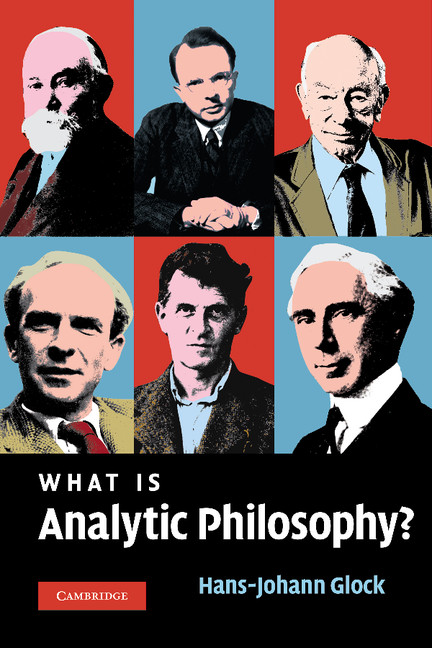
I like the way Ryle apparently analogised philosophy to cartography.*

'Similarly, Ryle advocated that philosophy should chart the 'logical geography' of our concepts. In The Concept of Mind he argued that the Cartesian dualism of mind and body results from 'category-mistakes': it treats mental concepts which signify behavioural dispositions as if they referred to processes that are just like physical ones, only more ethereal. Ryle rejected Wittgenstein's therapeutic image according to which 'the philosopher treats a question like a disease' (1953: §255). Yet he accepted that philosophy is a meta-discipline which does not 'talk sense with concepts' but tries to 'talk sense about concepts' (1949: 9-10). The paradox of analysis disappears since the task is not to provide novel information about a realm extrinsic to us. According to Wittgenstein, philosophy reminds us of rules that we have mastered in practice but which mislead us in the course of philosophical reflections. According to Ryle, it takes us from the knowledge how to use words to an explicit knowledge that they are used according to certain rules. Either way, analysis is not a trivial pursuit, because the explanation of philosophically interesting concepts is complex and rich, especially when it places these concepts in their diverse contexts (everyday, scientific, philosophical).' p.43.
Hans-Johann Glock. 2008. What is analytic philosophy? Chapter 2. Historical survey. pp.21-60. CUP. Pb. 
https://www.cambridge.org/us/universitypress/subjects/philosophy/philosophy-general-interest/what-analytic-philosophy

* 'Ryle analogises philosophy to cartography. Competent speakers of a language, Ryle believes, are to a philosopher what ordinary villagers are to a mapmaker: the ordinary villager has a competent grasp of his village, and is familiar with its inhabitants and geography. But when asked to interpret a map of that knowledge, the villager will have difficulty until he is able to translate his practical knowledge into universal cartographic terms. The villager thinks of the village in personal and practical terms, while the mapmaker thinks of the village in neutral, public, cartographic terms.[20]: 440–2 '. https://en.wikipedia.org/wiki/Gilbert_Ryle

I've wondered about 'cogeography' - combining cognition and geography, even care cartography. There is also of course psycho-politics, geo-psychiatry and psycho-geography ...

Hopefully a more current text would be more diverse.^

Wednesday, June 25, 2025

ICN - Definition of 'Nursing' & 'a Nurse'

Renewing the Definitions of
 'Nursing' and 'a Nurse'  


 Defining 'nursing' and 'a nurse' has always had a place in both theory and practice. This is one thing that can bridge the theory-practice gap, but still needs to be explained and made sense of. Especially when the values that underpin our definitions are challenged by social, political, physical and attitudinal change.


Of course see the report for the latest definitions. 


Previously:

'nursing' : 'nurse' : 'definition' :


Individual
|
      INTERPERSONAL    :     SCIENCES               
HUMANISTIC  --------------------------------------  MECHANISTIC      
 SOCIOLOGY  :    POLITICAL 
|
Group

PERSON-CENTRED CARE 
Ack. Identity of Others
Balance Subjective - Objective 

Care for and Compensate for
Emotional and Psychological Needs

Knowledge and (Interpersonal) Skills

Emotional labour, Compassion, Courage

Self-Awareness - Competence (recognise limits), When/If stressed :: Act for Safety of All, Please See your Strengths too! Commitment

Active Listening - Attention
Mentor Students - Newly Qualified Nurses

Philosophical stance Ethics & Values

Exercise Emotional Literacy

Collaborate when possible
Supoport Self Care improve Health Literacy
PERSON-CENTRED CARE
Care for and Compensate for Physical Needs 

Skills and Knowledge of Sciences, Technology, Devices, treatments, drugs, procedures, processes

Seek Evidence-based Care and Record

Observational Acuity
Situational Awareness
Anticipate Needs

Foster SELF CARE -
'See' Strengths, Recovery'
- and PLANETARY HEALTH

Be aware of Information Disorder

Assure Parity of Esteem

Document Care - Gather Data for Reporting/Research/Outcomes

Consider Patient's/Individual's
Journey - Health Career
PEOPLE-CENTRED - Inclusive

Seeing Others and Promote Wellbeing of Colleagues inc. All Students/Newly Qualified Professionals

Understand (your) Community 
as Resource & needing Care

Recognise Family - Friends but ensure Confidentiality
Exercise Empathy & Rapport

Seek Public Involvement

Public Safety & Protection

Maintain Professional Confidentiality

See Person as a 'Whole' - Integrate Care

Advocate for Social Justice
Exercise Duty of Candour

Seek Psychological Safety for all Team

Work Relationally within/across  Communities of Practice - Foster Therapeutic Relationships

Envision Patient at 'Home' in the Community - Seek re-housing placement as early as possible
SERVICE-CENTRED CARE
Advocate for Equity, Equality in Access to Care and Universal Health Coverage

Seek to Assure Safety of Self, Colleagues
 & Public (1st Rule of 1st Aid) esp. in Conflict Environments - Refugees/Migrants

Nursing - Profession - Registered
Protected Occupational Title

Seek Supervision & Feedback
Manage Services
Seek to Improve Quality - Monitor Policy

Security of Care Environment, Data, Record, Confidentiality (Vigilance across the domains*)

Practice as per Professional Standards, 
Code of Conduct

Ack./work to reduce impacts of ALL Determinants of Health to increase Sustainability

Accountability - Transparency

Continuing Professional Development

Revalidation of Registration/Licensing

Advocate for Future Generations - Humanity
Population & Biospheric Health


*This is why nursing, being a nurse is 'emotional labour'.

Hodges' model can be embedded within the SPIRITUAL, as per cultural and situational context.

P.S. By the way, if anyone asks - you can just be 'a nurse'.


White, J., Gunn, M., Chiarella, M., Catton, H., Stewart, D., (2025). Renewing the Definitions of 'nursing' and 'a nurse'. Final project report, June 2025. International Council of Nurses.
https://www.icn.ch/resources/nursing-definitions/current-nursing-definitions

Friday, May 02, 2025

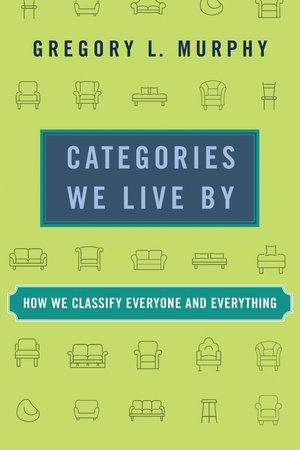
Book review iii: 'Categories we live by'

In thinking about (with?) Hodges' model, I often feel there is a flip-flop nature to where exactly concepts sit; or more accurately the perspective (care/knowledge domain) from which they are viewed.

Murphy introduces dual-character concepts, 'which are things that have both a prototype (or rule) and an ideal.' p.30. and quotes from:

Knobe J, Prasada S, Newman GE. Dual character concepts and the normative dimension of conceptual representation. Cognition. 2013 May;127(2):242-57. doi: 10.1016/j.cognition.2013.01.005. Epub 2013 Mar 1. PMID: 23454798.
Do dual character concepts operate at varied levels, and in their association (semantic) proximity - relationship to other concepts? All this changing according to context.

Murphy explores the dual category nature of people who claim to be scientists, but are really following a hobbyhorse. That is not lost on me. Others, a baker is following scientific principles while not technically being a scientist p.31. The discussion on art - artists is also informative; turn the page, and that on RINOs - Republican In Name Only - is very timely! There are the problems that science itself can contribute. If you don't know your oxeye daisy from osedaxes you can find out here: fascinating. 

'Health' is dual category in a great many respects (and with a chapter to follow). Many have been and will continue to be discussed here:
  • person :: service-centredness
  • parity of esteem (mental - physical)
  • confusion - dementia :: delirium (infection, dehydration)
  • mental capacity :: best interests
  • community care :: 'in care'
  • clinical risk - positive risk taking
  • healthcare :: social care
There's a need for careful deliberation too as does this apply to any situation in which there is a smell of  dichotomy: good, or bad?

Chapter 3 'Categories in the World and in the Head' helps straight away - declaring a false dichotomy. For me, it's worth revisiting natural categories, natural kinds and essential categories and psychological essentialism. Get these right and surely that's a useful toolkit, or more accurately - first aid kit?

I'm grateful for the placeholder essence (p.46) from:
Medin, D. L., & Ortony, A. (1989). Psychological essentialism. In S. Vosniadou & A. Ortony (Eds.), Similarity and analogical reasoning (pp. 179–195). Cambridge University Press. https://doi.org/10.1017/CBO9780511529863.009
'Psychological essentialism should not be equated with the classical view that concepts are representations of classes of objects that have singly necessary and jointly sufficient conditions for membership. ... More generally, we propose that the knowledge representations people have for concepts may contain what might be called an essence placeholder. There are several possibilities for what is in such placeholder. In some cases, but by no means in all, it might be filled with beliefs about what properties are necessary and sufficient for the thing to be what it is. In other cases it might be filled with a more complex, and possibly more inchoate, "theory" of what makes the thing the thing that it is (see Murphy & Medin,1985). It might, additionally, contain the belief (or a representation of the belief) that there are people, experts, who really know what makes the thing the thing that it is, or scholars who are trying to figure out exactly what it is. Just as with theories, what the placeholder contains may change, but the placeholder remains.' pp.184-185.
Hodges' model provides four placeholders. In reading and watching videos on category theory, it appears there is a role for 'placeholders'. I realise the applications - contexts differ, but analogies are powerful too.

Regards, classification as an exercise in convenience, despite the emphasis upon evidence, how often even in clinical matters does it come down to convenience? More to follow on this.

I've never wanted Hodges' model to be a grab-bag for keywords, concepts - categories! So it helps ease that concern, in chapter 4 to see words and categories contrasted. I always wondered about the media's preoccupation with the Inuit and 'snow'. 'Salient' is here as expected in 'Language, Culture and Categories' and with the Sapir-Whorf hypothesis p.53. And, of course, nursing and everything else relies on language p.57. Prof. Murphy's mention of children figuring out when it comes to language, and adults just how crazy it - the rules - can seem. While impossible, by definition, I had this thought of toddlers instigating a class action to get things put right. I like the way Murphy reaches across cultures for answers, highlighting the field of ethnobiology p.61. The appeal of this is exaggerated as it stretches across Hodges' model diametrically [sociology - sciences]. I'm still on the look out for models possessed of an 'otherness', that retain legitimacy, validity where and for whom they are employed. (There is much to debate there still.) The objective and subjective dimensions also loom large. I remember a meeting concerned with nursing terminology 1990s, with reflection on the terms used for injection across the UK. That in itself demonstrated wide regional variations that also give pause for thought.

More to follow, with Part 2 'case studies'.

Murphy, Gregory L. Categories we live by: how we classify everyone and everything. Cambridge, MA: The MIT Press, 2024.

Many thanks to MIT Press for the review copy.

See also:

Categories are destiny' Freud p.6. of 'Categories we live by'


Monday, April 28, 2025

Book review: 'Categories we live by' ii

In that first post I felt a bit guilty getting bogged down in the introduction, and not really saying much about the book itself.

Well, Chapter 1 is the 'Introduction' so that is great, and as you may be I am swept up by what's between the covers. Speaking of which, this is an effective design, and green colour; especially for a northern reading in March - May.

The book is slim considering the topic, 164 pages, plus just over a page of notes, four and a half of references and an index. It is, I think a slightly larger format paperback but fits well in the hands for outdoors reading. The fonts and layout are clear.

Murphy's style is straightforward and readable. It is not technical, but includes terms such as classification, nomenclature, and domain [ ;-) ]. The division into two parts, lends itself to a wide readership, the second part providing case studies giving the book a pragmatic, practical emphasis. I'll post again about chapters 6 & 7 on Psychodiagnostic Categories; and Categories and Power respectively (brief, but a joy!).


Before moving on from the Intro, Murphy explains how the same category may be thought of in different ways at different times' and encourages us to be 'critical of our categories'. p.12. This stands out for me. Especially being suitably equipped to critique our categories as we use them.

Chapter 2 on The Classical Tradition, has a natural starting point; describing Aristotle (with his book Categories), essences, definitions with properties that are necessary and sufficient p.14-15.
'Necessity: If it's in the category, it has the features,
Sufficiency: If it has the features, it's in the category.' p.15.

I was prompted to reflect on relations and identities here. While I suggested the book is not technical, there is a important point about dictionaries and the definitions we seek there. We should remember that many members of the public would still rely on what is the classical way to create, confirm category membership: there must be a rule.

Wittgenstein follows pp.17-20, but I took note of:
'The problem is that necessity and sufficiency are in tension with each
other. As you make the list of properties longer and longer, it's more likely
to be sufficient but less likely to be necessary. Forming a list of features that
are both necessary and sufficient is usually impossible.' p.19.
I pencilled in (Eleanor) Rosch on p.13, and on page 21 her contribution to the destruction of the classical world is described; with other researchers. The book is well referenced, without being intrusive. Murphy provides specific pointers, suggesting further reading and skipping a chapter. Helpful, given how precious time is these days.

There is a critical invitation on page 13: 

'Want to start an argument with someone? Ask them whether a stove is a kitchen utensil or nursing is a science.'

I wonder if nursing theory colleagues in the United States and globally have already responded?

More to follow - surely!

Murphy, Gregory L. Categories we live by: how we classify everyone and everything. Cambridge, MA: The MIT Press, 2024.

Many thanks to MIT Press for the review copy.

Tuesday, March 11, 2025

Joint-carving - 'The First Cut is the Deepest' c/o Traldi

Last Friday I joined in another online session of the Argumentation network c/o Andrew Aberdein and Kat Stevens. 

The subject was “The Epistemology and Politics of Redefinition” by Oliver Traldi.

As ever, it was interesting, technical, relevant and a prompt to concepts new, briefly encountered previously. I can't remember if in the talk, or Q&A, but mention was made of 'joint-carving' but I checked some sources:
'Because properties are so abundant, they are undiscriminating. Any two things share infinitely many properties, and fail to share infinitely many others. That is so whether the two things are perfect duplicates or utterly dissimilar. Thus properties do nothing to capture facts of resemblance. That is work more suited to the sparse universals. Likewise, properties do nothing to capture the causal powers of things. Almost all properties are causally irrelevant, and there is nothing to make the relevant ones stand out from the crowd. Properties carve reality at the joints -- and everywhere else as well. If it's distinctions we want, too much structure is no better than none.' p.346.
Lewis, D. 1983. New Work for a Theory of Universals, Australasian Journal of Philosophy, 61(4): 343–377. doi:10.1080/00048408312341131

'Though the facts or truths that the realist judges mind-independent are most commonly put in terms of a kind’s ‘naturalness’ (or lack thereof), they may be formulated in alternative locutions, such as the ‘reality,’ ‘non-reality,’ or ‘artificiality’ of a kind or kinds. For example, that human races are not real, or that protons form a natural kind, both express such facts. Equivalently, Plato’s famous carving metaphor may be used to do so, as when it is asserted that the classifications of the DSM-5 do not carve nature at the joints. For the sake of expository simplicity I will exclusively use the language of ‘naturalness’ here, but translations into alternative terminology are straightforward.'
Franklin-Hall, L. 2015. Natural kinds as categorical bottlenecks. Philosophical Studies 172 (4):925-948.


Further, Sass writes:
'The goal is to have a consistent and informative test for what counts
as a realist versus an anti-realist view about natural kinds. Bird’s(2018) taxonomy,
building on Hawley and Bird(2011), focuses on the questions of whether natural
kinds exist, and if so, what sort of entity kinds are. Franklin-Hall’s (2015) taxonomy
focuses instead on whether kinds are individuated by a mind-independent principle,
or whether kinds “carve at the joints”.1 This paper focuses mainly on the issues raised
by Bird’s (2018) taxonomy.' p.11862.
Sass, R. 2021. An ontology of weak entity realism for HPC kinds. Synthese, 198(12), 11861–11880. https://www.jstor.org/stable/48692794 [ homeostatic property cluster (HPC) theories of kinds ].

In the past, I've written about the (nursing, IT, psychological...) models muddle. At the risk of adding to my muddle, Traldi's presentation is a timely prompt. Timely, because trying to looking at Hodges' model as a mathematical object, it needs to be stripped down to its bare components (and purposes?). Is redefinition the order of the day? I will leave defining the components to one-side at present (in drafted notes). But even from Hodges' model as a template, with its (two) axes and (four) domains we can (must) consider:

1. The two axes taken as a whole - do they intersect, or not?*

Relationally, the axis between:

INTERPERSONAL | SCIENCES
SOCIOLOGY | POLITICAL
INTERPERSONAL - SOCIOLOGY
SCIENCES - POLITICAL

2. Each axis (treated independently) to the centre of Hodges' model. (See 1.)

The conjoining of axes (do they?):

The INDIVIDUAL - HUMANISTIC and INDIVIDUAL - MECHANISTIC.

The HUMANISTIC - GROUP and GROUP - MECHANISTIC.
                                
Hodges' model
I won't continue now, but I have wondered if one axis is primary? Which one comes first? Faced with a blank piece of paper, or flipchart ... which axis gets drawn first?

In guided discovery workshops, teaching sessions I have been directed by the context and duty of care. Given that this is clinical then the I-G is where I start, or lead the discussion.

Perhaps, (as per the previous post) there is a safety dividend in having to consider this question more formally (forcibly)?


I remember Rod Stewart's rendition of  'The First Cut is the Deepest' - even as governments work to make this cut as shallow as possible.

The INDIVIDUAL - GROUP cut: has it every time.

Previously: 'argumentation'

Thursday, March 06, 2025

Understanding Mathematics + Domains towards Corridors

It is for others to judge - whether it is helpful or distracting; but I find concepts defined by other disciplines, or professions illuminating and insightful. Especially so, when it comes to 'domain'. In Hodges' model - all four of them. Five! When (not if), we include the spiritual:
'Greeno (1991) argued that students develop understanding when

"a domain is thought of as an environment, with resources at various places in the domain. In this metaphor, knowing is knowing your way around ir the environment and knowing how to use its resources. This includes knowing what resources are available in the environment as well as being able to find and use those resources for understanding and reasoning. Knowing includes interactions with the environment in its own terms - exploring the territory appreciating its scenery and understanding how its various components interact. Knowing the domain also includes knowing what resources are in the environment that can be used to support your individual and social activities and the ability to recognize, find, and use those resources productively. Learning the domain, in this view, is analogous learning to to live in an environment: learning your way around, learning what resources are available, and learning how to use those resources in conducting your activities productively and enjoyably. (p. 175)"

In particular, in chapter 8, Nemirovsky et al. use the metaphor of becoming familiar with a new place (e.g., a town, a train station) and the process of learning a new mathematical concept.' p.7.

Greeno, J. (1991), Number sense as situated knowing a conceptual domain.,Journal for Research in Mathematics Education, 22(3), 170-2 18. 

Understanding Mathematics and Science Matters
. Edited by Thomas A. Romberg Thomas P. Carpenter Fae Dremock University of Wisconsin-Madison. EA LAWRENCE ERLBAUM ASSOCIATES, PUBLISHERS 2005 Mahwah, New Jersey London. (I hope there is a 2nd edition?)

(I will try to add the Nemirovsky et al. reference when I can.)

Previously: 'territory' : 'map' : 'vocabulary'

Friday, February 21, 2025

Rediscovering nursing ...? [ concepts-maths i/iii ]

   Individuals


'In the Introduction to his landmark book, Individuals Peter Strawson talked of the “massive central core” of human thinking that has no history … categories and concepts which, in their most fundamental character, change not at all”.'

'Strawson’s central core revolved around the need for us to identify persistent objects in a unified framework of space and time. He was not troubled that with the arrival of special and general relativity our concepts of space and time had changed, nor that our concept of middle-sized dry goods had changed to accommodate what we suppose to be their constitution by quantum particles.'


Blackburn, S. Rediscovering the Past, The Philosopher's Magazine, 1st Quarter 2018. 80: 72-73. 
https://archive.philosophersmag.com/rediscovering-the-past/

Strawson, P.F. (1964). Individuals (1st ed.). Routledge. https://doi.org/10.4324/9780203221303

https://www.taylorfrancis.com/books/mono/10.4324/9780203221303/individuals-strawson

See also:

How 'divine' is the language of care?


Saturday, December 14, 2024

The Science of Conceptual Systems - and Hodges' model

Wallis, S.E. The Science of Conceptual Systems: A Progress Report. Found Sci 21, 579–602 (2016). https://doi.org/10.1007/s10699-015-9425-z

From the conclusion:
'The approaches presented here do not provide a ‘‘map’’ for advancing the sciences. Indeed, none is available because we are advancing across that new terrain. What it does provide is a compass suggesting a new and potentially exciting direction to travel. Historically/traditionally, scholars have travelled about the countryside of the social/behavioral land making useful observations and gathering interesting data. They have often staked claims regarding the importance of their terrain. They could not advance more purposefully because they were guided only by intuition. So, they did not know what direction was ‘‘forward’’ although it seemed to have something to do with empirical analysis. Today, with the creation of a new science, we have a new direction.

When we do have a choice between theoretical maps, generally, and metaphorically, this paper suggests that we should choose to create and use roadmaps with many dots connected by many lines; not maps with few disconnected dots.' p.594.

There is also a glossary [pp.594-599] that includes:
'Integral thinking

Understanding (or attempting to understand) the world from a transdisciplinary perspective where those many perspectives are interrelated'
'Integrative propositional analysis (IPA)

Combined processes of qualitative and quantitative analysis involving rigorous hermeneutic deconstruction of propositions found in formal texts including the rigorous reintegration of propositions from those texts following a structured methodology. Also a process of meta-analysis for investigating conceptual systems to determine the Complexity of conceptual systems (diversity of concepts) and the Systemicity of the conceptual system (connectedness between concepts)'

'Mental model 

A representation within one’s mind about how the world works. Useful for understanding and engaging the world and for making predictions'

'Parsimony 

Generally, the understanding that a theory is better when it is smaller. Or, as small as possible while including ideas that are necessary or useful. Ockham’s Razor is a common example'

INDIVIDUAL
|
INTERPERSONAL : SCIENCES              
humanistic ---------------------------- mechanistic
SOCIOLOGY : POLITICAL   
|
GROUP

more SUBJECTIVE

more OBJECTIVE
QUALITY

QUANTITY


'Reflexive dimensional analysis (RDA) 

A process for creating a unified conceptual system from multiple conceptual systems through a process of categorization, abstraction, dimensionalization, and the identification of causal connections'
'Theory 

An ordered set of assertions. Weick (1989, p. 517. Drawing on Southerland)'
Cited above: 
Weick, K. E. (1989). Theory construction as disciplined imagination. Academy of Management Review, 14(4), 516–531.

Previously:
terrain : landscape : line-of-sight (with overlap; of interest in itself)

Sunday, December 08, 2024

Critical thinking: several definitions

Critical Thinking 
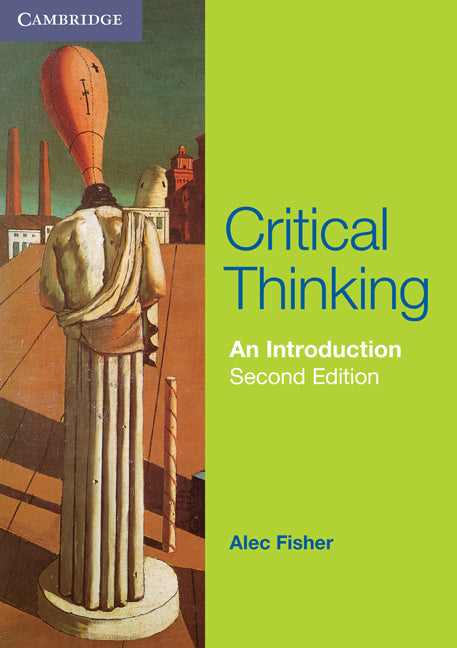
2nd Ed. Cover


An original purpose of Hodges' model was to facilitate reflection, and so help to develop practitioners who were also competent reflective practitioners, and critical thinkers.

Continuing to clear books, I've arrived at:

Fisher, A. (2001) Critical Thinking: An Introduction. Cambridge University Press, Cambridge, England. PB. 

Now in a 2nd edition (2011), my copy has several definitions of 'critical thinking' quoted below, with my emphasis.

There is a pdf of this 1st edition online which may be useful. The reward of the book, however, is in the discussion about each definition and how more recent work has built upon Dewey's legacy.  There is also a baseball analogy, which I will return to soon, or append here. I have omitted a definition by Richard Paul, which is nonetheless important to me, as it draws on meta-cognitive qualities:
"1.1.1 John Dewey and 'reflective thinking' ...

In fact, people have been thinking about critical thinking and have been researching how to teach it for about a hundred years In a way, Socrates began this approach to learning over 2,000 years ago, but John Dewey, the American philosopher, psychologist and educator, is widely regarded as the 'father' of the modern critical thinking tradition. He called it 'reflective thinking' and defined it as: 
"Active, persistent, and careful consideration of a belief or supposed form of knowledge in the light of the grounds which support it and the further conclusions to which it tends. (Dewey, 1909, p. 9)."' p.2.
 'Glaser defined critical thinking as:
(1) an attitude of being disposed to consider in a thoughtful way problems and subjects that come within range of one's experience; (2) knowledge of the methods of logical enquiry and reasoning; and (3) some skill in applying those methods. Critical thinking calls for a persistent effort to examine any belief or supposed form of knowledge in the light of the evidence that supports it and the further conclusions to which it tends. (Glaser, 1941, p.5).' p.3.
1.1.3 Robert Ennis - a widely used definition ...
'Critical thinking is reasonable, reflective thinking that is focused on deciding what to believe or do. (Cf. Norris and Ennis, 1989).' p.4.
Notice the emphasis on being 'reasonable' and 'reflective', which picks up on earlier definitions, but notice also that Ennis speaks of 'deciding what to do', which was not explicitly mentioned earlier; so decision making is part of critical thinking in Ennis's conception. Unlike Dewey's definition, this definition needs no further explanation

A final definition of critical thinking 
One last definition is worth reviewing. Michael Scriven has recently argued that critical thinking is 'an academic competency akin to defines it thus: reading and writing' and is of similarly fundamental importance. He defines it thus:
'Critical thinking is skilled and active interpretation and evaluation of observations and communications, information and argumentation. (Fisher and Scriven, 1997, p. 21).' p.10."

Tuesday, August 27, 2024

(ii) Hodges' model? Ah! You mean the naïve conceptual framework that ...

... thinks it's a theory!

Apparently, the support of computers, through computer proof assistants, to help test and generate proofs in mathematics is creating confusion for mathematicians. 

"When you see “2 + 2 = 4”, what does “=” mean? It turns out that’s a complicated question, because mathematicians can’t agree on the definition of what makes two things equal. ... 

It was the late 19th century when things began to change, with the development of set theory, which provides the logical foundations for most modern mathematics.

To understand why, take the sets {1, 2, 3} and {a, b, c}. Clearly, the elements of each set are different, so the sets aren't equal. But there are also ways of mapping between the two sets, by identifying each letter with a number. Mathematicians call this an isomorphism. In this case, there are multiple isomorphisms because you have a choice of which number to assign to each letter, but in many cases, there is only one clear choice, called the canonical isomorphism. ...

Because a canonical isomorphism of two sets is the only possible way to link them, many mathematicians now take this to mean they are equal, even though it isn't technically the same concept of equality that most of us are used to."


Does this create an 'opening' for others? Others, whose commute also falls between the cold-logic of the hard sciences, and the fuzzy fields of the humanities? Others who may find the threshold as daunting, as it is (truly!?) tantalising.

Alex Wilkins, Confusion over what 'equals’ means. New Scientist, 262: 3495: 15 June 2024. pp.10-11.

Many thanks to Alex Wilkins for a pdf copy.

Sunday, August 25, 2024

Hodges' model? Ah! You mean the naïve conceptual framework that ...

... thinks it's a theory! (i)

Yes, I suppose it is naïve, now you mention it. It's naïve in a number of ways:

  1. The assumed state of students - new learners; although of course, in healthcare and other professions for many years mature students - far from naïve - can make up a notable proportion;
  2. When a patient assessment begins, especially upon initial (and first) referral, the data gathering, our knowledge should then be assumed to be naïve.
  3. The quest for a theoretical underpinning of Hodges' model, may display naïve associations between concepts that are misplaced, misunderstood and wholly inappropriate.
Worth noting in #1, that policy-makers and recruitment specialist hope to increase the number of mature entrants, given demographic pressures.

If you consider the way nursing as a profession has received 'nursing theory', or in a similar vein, consider the status of nursing theory, and models of care in nurse (and healthcare) curricula today, then the approach is pragmatically naïve? From the 1970's -

Vinner, S. (1976). The Naive Concept of Definition in Mathematics. Educational Studies in Mathematics, 7(4), 413–429. http://www.jstor.org/stable/3481947

Vinner writes:

"As a matter of fact, all of us start to deal with definitions at a very young age when we start to leam our mother tongue. At this stage, various types of definition occur and the subject is too complicated to be dealt with here. After several years, especially at school, one type of definition becomes dominant; the lexical definition. In a lexical definition, the meaning of a certain word (or words) is explained by means of other words (we shall deal here only with the case in which the word and its definition are at the same language). This type of definition generally occurs in mono-lingual dictionaries." p.425.

"The sentence: 'A rectangle is a quadrangle that has four right angles' does not have in it any underlying assumptions about the role of definition in mathematics. It can be interpreted in any of the following three ways:
  1. We (math teachers and math students) hereby agree that instead of saying, "a quadrangle that has four right angles" we will say: "a rectangle" (The formalistic approach).
  2. In the mathematical community the meaning of the word rectangle is a quadrangle that has four right angles (The lexical approach from the expert's point of view).
  3. The object denoted by the word 'rectangle' is a quadrangle that has four right angles (The lexical approach from the naive standpoint). 
Thus, not adding anything to definitions like the above we let the student choose his own interpretation out of the three mentioned (or even possibly more) interpretations. We claim that in most cases the student's choice will be the third one." pp.427-428.

Does the diaeresis here point to forms of parity of esteem, oppositions, polarities, dichotomy?

Saturday, September 10, 2022

Is there an implicit theory in Hodges' model?

 INDIVIDUAL
|
 INTERPERSONAL    :     SCIENCES               
HUMANISTIC -------------------------------------  MECHANISTIC    
SOCIOLOGY  :   POLITICAL 
|
GROUP


From early on I've thought that there is a theory in Hodges' model. Maybe not in the structure - the axes, or the (potential and eventual) content - the care (knowledge) domains, but in combination is there an implicit theory?

"Models in the philosophy of science are usually distinguished from theories. However, the distinction is not always clear cut and some authors slip from one to the other. Three examples of philosophers who use the terms differently are: Apostel [16] who allows a theory to be a model, Hesse [216] who argues that a theory is meaningless if it does not include a model and van Frassen who says “To present a theory is to specify a family of structures, its models...” [161] p. 64). On the whole the use of the term ‘model’ implies something relatively concrete, possibly visualisable, approximate, specific and tractable whereas a ‘theory’ implies a more general, abstract and reliable construction. In the social sciences it is more common to use the term ‘model’ for things that would be called theories in the physical sciences (according to Braithwaite, 1962, who deplores the practice)."


Edmonds, B. (1999). Syntactic Measures of Complexity. Doctoral Thesis, University of Manchester, Manchester, UK. http://bruce.edmonds.name/thesis/

[16] APOSTEL, L. Towards the Formal Study of Models in the Non-Formal Sciences. Synthese, 1960, 12, 125-161.

[216] HESSE, MB. Models and Analogies in Science. London: Sheed and Ward, 1963.

[161] VAN FRASSEN, BC. The Scientific Image. Oxford: Clarendon, 1980.

[73] BRAITHWAITE, R. B. Models in the Empirical Sciences. In NAGEL, E; SUPPES, P; TARSKI, A (eds.). Logic Methodology and the Philosophy of Science: Proceedings of the 1960 International Congress. Stanford, CA: Stanford University Press, 1962, 224-239.