Hodges' Model: Welcome to the QUAD: linguistics

Hodges' model is a conceptual framework to support reflection and critical thinking. Situated, the model can help integrate all disciplines (academic and professional). Amid news items, are posts that illustrate the scope and application of the model. A bibliography and A4 template are provided in the sidebar. Welcome to the QUAD ...

Showing posts with label linguistics. Show all posts

Wednesday, September 23, 2026

'Compositionality' - Journal

'Compositionality is a diamond open-access journal for research using compositional ideas, most notably of a category-theoretic origin, in any discipline. Compositionality describes and quantifies how complex things can be assembled out of simpler parts. Topics may concern foundational structures, an organizing principle, or a powerful tool. Example areas include but are not limited to: mathematics, computation, logic, physics, chemistry, engineering, linguistics, and cognition.

Compositionality is free of cost for both readers and authors (diamond open access). You can find our editorial policies here. Our first issue was published, under ISSN 2631-4444, in December 2019.'
Continued ... 

Thursday, July 17, 2025

Ryle's 'logical geography'

I like the way Ryle apparently analogised philosophy to cartography.*

'Similarly, Ryle advocated that philosophy should chart the 'logical geography' of our concepts. In The Concept of Mind he argued that the Cartesian dualism of mind and body results from 'category-mistakes': it treats mental concepts which signify behavioural dispositions as if they referred to processes that are just like physical ones, only more ethereal. Ryle rejected Wittgenstein's therapeutic image according to which 'the philosopher treats a question like a disease' (1953: §255). Yet he accepted that philosophy is a meta-discipline which does not 'talk sense with concepts' but tries to 'talk sense about concepts' (1949: 9-10). The paradox of analysis disappears since the task is not to provide novel information about a realm extrinsic to us. According to Wittgenstein, philosophy reminds us of rules that we have mastered in practice but which mislead us in the course of philosophical reflections. According to Ryle, it takes us from the knowledge how to use words to an explicit knowledge that they are used according to certain rules. Either way, analysis is not a trivial pursuit, because the explanation of philosophically interesting concepts is complex and rich, especially when it places these concepts in their diverse contexts (everyday, scientific, philosophical).' p.43.
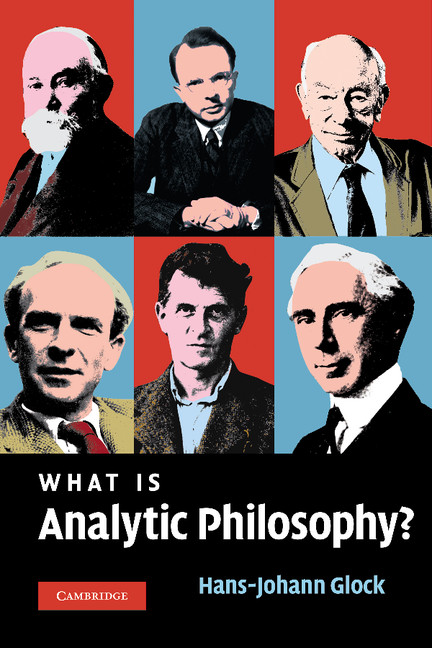
Hans-Johann Glock. 2008. What is analytic philosophy? Chapter 2. Historical survey. pp.21-60. CUP. Pb. 
https://www.cambridge.org/us/universitypress/subjects/philosophy/philosophy-general-interest/what-analytic-philosophy

* 'Ryle analogises philosophy to cartography. Competent speakers of a language, Ryle believes, are to a philosopher what ordinary villagers are to a mapmaker: the ordinary villager has a competent grasp of his village, and is familiar with its inhabitants and geography. But when asked to interpret a map of that knowledge, the villager will have difficulty until he is able to translate his practical knowledge into universal cartographic terms. The villager thinks of the village in personal and practical terms, while the mapmaker thinks of the village in neutral, public, cartographic terms.[20]: 440–2 '. https://en.wikipedia.org/wiki/Gilbert_Ryle

I've wondered about 'cogeography' - combining cognition and geography, even care cartography. There is also of course psycho-politics, geo-psychiatry and psycho-geography ...

Hopefully a more current text would be more diverse.^

Saturday, March 16, 2024

Hodges' model: An architectonic sense-making tool

"Translation by architectonic map is a sense-making tool inspired by Peirce's use of the term, architectonic, to describe the systematic form of a body of knowledge. Theorists create a structure around which their approach to understanding human conduct is built. Familiarity with the overall structure facilitates generalized discourse among those interested in the framework. An architectonic map identifies all the major components of a scientific text or canon, including its assumptions, concepts, propositions, and theories, and the paths connecting these components. Mapping architectonics is an intersemiotic (across two different types of sign systems) translation process when the translation product is a diagram, and an intralingual process when the product is a narrative." p.111. (My emphasis)

"Models employ symbols (terms and their meanings), but also have an iconic function (a design meant to represent a object or process in important ways) and an indexical function (notation indicating and pointing to persons, processes, relationships, organizations)." p.112. 


Individual
|
      INTERPERSONAL    :     SCIENCES               
HUMANISTIC  --------------------------------------  MECHANISTIC      
 SOCIOLOGY  :    POLITICAL 
|
Group
person

concepts

critical thinking

person

maps

framework


languages

dialogue - narrative

shared understanding

social worlds*

anthropology

organisations

communities of practice

professions, scope of practice

*translation here too:

policy, power, status ...


Forte, J. A. (2009). Interactionist Practice: A Signs, Symbols, and Social Worlds Approach. Humboldt Journal of Social Relations, 32(1), 86–122. http://www.jstor.org/stable/23263237


Sunday, January 08, 2023

Special Issue - Theorytellings: Epistemic Narratives in the Digital Humanities

Photo by Marcus Urbenz on Unsplash

Journal of Cultural Analytics

Vol. 7, Issue 4, 2022
Theorytellings: Epistemic Narratives in the Digital Humanities

"This special issue deals with existing theory narratives and conceptions in DH scholarship. Introducing the neologism “theorytellings”, this special issue invites DH scholars to narrate and discuss their own theoretical contributions to the field."
 
Kleymann, Rabea, et al. “Foreword to the Special Issue ‘Theorytellings: Epistemic Narratives in the Digital Humanities.’” Journal of Cultural Analytics, vol. 7, no. 4, Nov. 2022, doi:10.22148/001c.55593.
 
Includes:

Abstract

The status of theory in the Digital Humanities (DH) has been the subject of much debate. As a result, we find different theory narratives competing and entangled with each other. If at all, these narratives can only be grasped and examined from a somewhat detached perspective. Here, we attempt to investigate these elusive narratives by means of a conceptual history approach. In doing so, we define different theory dimensions, ranging from specific cultural and literary theory frameworks to more generic uses of the concept of theory. We examine the use and semantic changes of these theory notions in a large corpus of DH journals. Using a mixture of heuristic methods and approaches from the field of distributional semantics, we aim to create tellable conceptual stories of DH theory.

Kleymann, Rabea, et al. “Conceptual Forays: A Corpus-Based Study of ‘Theory’ in Digital Humanities Journals.” Journal of Cultural Analytics, vol. 7, no. 4, Dec. 2022, doi:10.22148/001c.55507.


 INDIVIDUAL
|
 INTERPERSONAL    :     SCIENCES               
HUMANISTIC --------------------------------------  MECHANISTIC   
SOCIOLOGY  :   POLITICAL 
|
GROUP


'theorytellings'
storytelling


Abstract

Instead of looking for new paradigms for Digital Humanities (DH), we present Grounded Theory Methodology (GTM) as a methodological approach to frame digital research practices more reflectively. By turning to the epistemological and practical implications of digital tools like Topic Modeling and digital data sources like YouTube comments, we highlight the theoretical assumptions that are already in the game—and call for more explicitness and methodical monitoring. To explain the procedures of GTM and the proposed worth for DH, we present an example of a qualitative research project using machine learning techniques to narrow down a large scale of data to human interpretable resample. The methodically monitored resampling process provided valuable means to validly minimize the amount of data without losing a qualitative trajectory of the process itself. Defining and tracing relevant content in our original data set enabled us to find related comments and textual conversations to be analyzed further. We discuss the example iteration in two ways: Our prototype and procedure show on the one hand, how qualitative research and computational methods can be better intertwined without compromising their epistemological foundations. On the other hand, we argue for an understanding of DH as research practice, that should follow an abductive research agenda in order to ground its theories in data.

Bischof, Andreas, and Konstantin Freybe. “Grounding Theory in Digital Data: A Methodological Approach for a Reflective Procedural Framework.” Journal of Cultural Analytics, vol. 7, no. 4, Dec. 2022, doi:10.22148/001c.57197.

Monday, July 19, 2021

"The day a language died"

individual
|
INTERPERSONAL : SCIENCES
humanistic ----------------------------------------------- mechanistic
SOCIOLOGY : POLITICAL
|
group


Catawba


"This week another language died: Carlos Westez, more widely known as Red Thunder Cloud, the last speaker of the Native American language Catawba, died of a stroke at the age of 76. With him passed away the Catawba language. 
Anyone who wants to hear the war songs, the hunting songs and the religious chants of the Catawba can apply to the Smithsonian Museum, where, back in the Forties, Red Thunder Cloud recorded a series of them for posterity. Some earnest folk might even take the trouble to learn some of them by heart. But Catawba as something that lived and breathed and developed organically is gone for good. Of the creatures alive on the planet, only Red Thunder Cloud's dog, which survived him and understood commands in no other tongue, still presumably has snatches of Catawba rolling around his brain."


Popham, P. The day a language died, The Independent, 20th January, 1996, p.15.

https://en.wikipedia.org/wiki/Red_Thunder_Cloud
