Hodges' Model: Welcome to the QUAD: understanding

Hodges' model is a conceptual framework to support reflection and critical thinking. Situated, the model can help integrate all disciplines (academic and professional). Amid news items, are posts that illustrate the scope and application of the model. A bibliography and A4 template are provided in the sidebar. Welcome to the QUAD ...

Showing posts with label understanding. Show all posts

Tuesday, August 25, 2026

Medicine - Mathematics & History

'We now come to the input of mathematics into medical history, and to the related questions of arithmetic and quantification, ratio and proportion, geometrical argument and diagrams, and probability. Mathematics (consisting in arithmetic, geometry, astrology and music) had an established place in the quadrivium of the medieval arts course; its application to medicine is demonstrated in such textbooks as the Articella, which include treatises on weights and measures, and in studies of proportion and ratio such as those of the medieval Oxford calculators which Italian doctors among others caused to be revived at the beginning of our period. In the sixteenth century, it was a vigorously debated subject; there is a well-documented discussion of the certainty of mathematics, concerning its status in respect to the logical adequacy of its proofs, in which some natural philosophers and doctors (notably Cardano) take part. It will come therefore as no surprise that it was prescribed for doctors by most Renaissance pedagogical writers;  this prescription is often specifically linked to Galen's geometrical (axiomatic) method whose operations are the constitution of objects from elements, the comparison of existing objects and their reduction into their constitutive elements.

Associated with mathematics are diagrams, that is, abstract quantified spatial representations. There is a modern debate about the contribution of technical innovations in illustration in the Renaissance (most notably perspective) to the scientific revolution: this is only relevant here insofar as some participants in this debate argue for the importance of diagrammatic symbolisation of mental abstractions above those, like perspective, which are still representations of the real world, and see the former as a step on the path to full algebraic notation of geometry. Not all Renaissance thinkers were persuaded of their usefulness: Argenterio describes the diagrams of Manardo and Akakia reproduced below as 'vain and false tables and figures'; but I shall argue here that they were related to the uptake of doctors from the arts course insofar as well-known logical diagrams reproduced above (4.3:3) were adapted by them for their own purposes.' pp.171-172.

Maclean, Ian. 2002. Chapter 5, Beyond logic: geometry, proportion, quantity. In Logic, Signs, and Nature in the Renaissance: The Case of Learned Medicine. Cambridge/New York: Cambridge University Press.

Related to ongoing reading, Maclean provides two (among several) historical illustrations (with apologies for the quality) on pp.174-175, the first is from the Wellcome Collection:

Dubois, Jacques, 1478-1555 (Boe͏̈, Jacques, Bois, J. d., Boë, J., del, Boë, J., Del Boë, J., DelBoe͏̈, J., . . . Sylvius/de Bois). (1548). Methodus sex librorum galeni in differentiis et causis morborum et symptomatum in tabellas sex ordine suo conjecta paulo fusius ne brevitas obscura lectorem remoretur & fallat. de signis omnibus medicis, hoc est salubribus, insalubribus, & neutris, commentarius / ... per jacobum sylvium ..Paris: Retrieved from https://www.proquest.com/books/methodus-sex-librorum-galeni-differentiis-et/docview/2090356749/se-2

Jacobus Sylvius, 1539

Which Maclean then translates / interprets (p.174):

Maclean. Figure 5.1, p.174.

'Manardo goes further, and causes and symptoms adapts the square of contraries to represent not only all the possible combinations of temperaments (combinations of cold and hot and wet and dry are cleverly excluded) but also inserts a mediate point to represent the absolutely temperate body: see fig. 5.2.
This adaptation of the square of contraries (which has precedents in the medieval period) shows the appropriation for their own use by doctors of the logical instruments at their disposal.

As we have seen, it is a feature of medical thinking to take into account many circumstantiae or variables, and, over time, the numbers of variables taken into consideration increases.' p.174-175.

Figure 5.2 Giovanni Manardo, p.175.

individual
|
INTERPERSONAL
: SCIENCES             
humanistic ------------------------------- mechanistic
SOCIOLOGY : POLITICAL   
|
group

quality

logic

quantity
past - present - future
diagrams

symptoms - signs


subjective

objective

Previously: 'medicine' : 'history' : 'diagram'

Friday, August 07, 2026

'From Tree to Sea [5] - The Bare Necessities' c/o BBC R4

My name is not Robinson Crusoe, but I feel privileged to live on an island. The sea has always been close. Liverpool (Scouser) has a history, to celebrate and seek forgiveness for. It was a surprise and yet wasn't from the map in the Bluecoat of the slave ships that plied the route to West Africa, to the West Indies and USA to see the same reflections in the dock area of Nantes in May 2025.

These reflections followed a BBC Radio 4 programme this afternoon (one of a series):

5. From Tree to Sea - The Bare Necessities

https://www.bbc.co.uk/sounds/play/m002ztzy

'We are living in turbulent times and it is easy to feel anxious about the state of the world. The pace of change is fast, and the future often seems uncertain and out of our control. Given our reliance on technology, any sort of outage could be catastrophic. Could you survive - and thrive - in a world without global supply chains, the internet and 24-hour energy?

In this series the writer Dan Richards seeks out the tradition bearers and carriers of ancient knowledge who actively choose to live in close connection with the natural world around them. A return to first principles of what it means to be human and the kind of people you would like to be around if things fell apart.

Dan heads to Whithorn in Dumfries and Galloway where he meets Traditional Boat Builder Gail McGarva who is putting the finishing touches to a skiff before its launch. Gail has gathered knowledge of the ancient craft of wooden boat building through her relationship with tradition bearers and mentors, without whom the knowledge would disappear completely. What Dan finds is that this small wooden boat represents not only an evolution of form and process, but soul. The souls of all who have gone before and how they might influence a sustainable future with community at the heart of it.'

In making the skiff there is a marvellous observation about:

 "when the boat hits the water it knows what to do ..".

For students entering a profession or trade (any) that strikes a chord.

Saturday, July 18, 2026

Hodges' conceptual framework: A model for Narrative Medicine ...

Abstract

The effective practice of medicine requires narrative competence, that is, the ability to acknowledge, absorb, interpret, and act on the stories and plights of others. Medicine practiced with narrative competence, called narrative medicine, is proposed as a model for humane and effective medical practice. Adopting methods such as close reading of literature and reflective writing allows narrative medicine to examine and illuminate 4 of medicine's central narrative situations: physician and patient, physician and self, physician and colleagues, and physicians and society. With narrative competence, physicians can reach and join their patients in illness, recognize their own personal journeys through medicine, acknowledge kinship with and duties toward other health care professionals, and inaugurate consequential discourse with the public about health care. By bridging the divides that separate physicians from patients, themselves, colleagues, and society, narrative medicine offers fresh opportunities for respectful, empathic, and nourishing medical care. ...


Charon R. Narrative Medicine: A Model for Empathy, Reflection, Profession, and Trust. JAMA. 2001;286(15):1897–1902. doi:10.1001/jama.286.15.1897 

With my emphasis.

#Identity #Group #Individual #Collective #Mind #Body #TheOdysseyHasBegun

Monday, July 06, 2026

Ebola and Mental Health, CDC Response to Ebola in West Africa in 2014-2015: Weds 15 July

Dear Peter, we are thrilled to invite you to our upcoming Webinar: 

Ebola and Mental Health, CDC Response to Ebola in West Africa in 2014-2015 on Wednesday, 15 July at 13:00-14:00 (CEST) 

Register here 

What can the Ebola response in West Africa teach us about mental health, trust, and outbreak preparedness today? We warmly invite you to our upcoming webinar “Ebola and Mental Health: Lessons from the CDC Response in West Africa, 2014–2015” on July 15, 13:00–14:00 CEST. 

Drawing on the 2014–2015 Ebola outbreak in West Africa and its rapid escalation, this webinar will explore why mental health and psychosocial support must be considered an essential part of outbreak response. The session will connect past lessons to current challenges, including the ongoing Ebola outbreak caused by Bundibugyo virus in the Democratic Republic of the Congo and Uganda. We are delighted to welcome Dr. Anna Grigoryan as our keynote speaker. Based on her personal experience and deployment to Sierra Leone in 2015 as part of the CDC Ebola Response Mission, Dr. Grigoryan will share reflections on key response activities, communication challenges, and the intersection of Ebola response and mental health. The webinar will highlight why coordinated, international, and rapidly scaled-up responses are essential to reduce illness, deaths, fear, and psychosocial distress during outbreaks. 

Agenda 
13:00–13:30 Keynote by Dr. Anna Grigoryan 
13:30–13:50 Q&A session 
13:50–14:00 Wrap-up 

About the speaker 

Dr. Anna Grigoryan is a physician–scientist with over 20 years of international experience leading complex public health projects, fostering innovation, and building strategic partnerships. She spearheaded the WHO–CDC Collaborating Center for Global Public Health Informatics, serving as its first Program Manager. During her tenure at the U.S. Centers for Disease Control and Prevention (CDC), she contributed directly to emergency responses to major crises, including the Haiti and China earthquakes, the avian influenza outbreak, and the Fukushima nuclear accident.

In 2015, Dr. Grigoryan supported the Sierra Leone Ministry of Health during the Ebola epidemic as part of the CDC Ebola Response Mission. In her more recent role at the UN/IAEA, she managed a portfolio of projects focused on laboratory strengthening, cancer control, and emergency preparedness, supporting Member States across Africa. She has also mentored emerging leaders and promoted cultures of accountability and inclusion during periods of organizational transition.This webinar is intended for public health and mental health professionals, as well as everyone interested in Ebola response, outbreak control, pandemic preparedness, and mental health and psychosocial support.

Please note: 
The webinar will be recorded. If you do not wish to appear in the recording, you are welcome to keep your camera turned off.

We look forward to your participation and to an engaging discussion on the role of mental health in outbreak response.

Please register even if you cannot attend and we will let you know when the video of the webinar is available. 

For any questions, feel free to contact the Hub Management Team at info AT globalhealthhub.de. 

Warm regards,
Katrin 
------
Katrin Würfel, Global Health Hub Germany

Previously: 'ebola' : 'Africa' : 'epidemic'

Thursday, May 28, 2026

International Menstrual Hygiene Day 2026

Facts & figures about MH Day and menstrual health & hygiene

About Menstrual Hygiene Day (MH Day)

  • MH Day is celebrated annually on 28 May to symbolize the average length of the menstrual cycle (28) and duration of menstruation (5).
  • It was initiated by WASH United and was first celebrated in 2014. WASH United is an award-winning non-profit based in Berlin/Germany, founded in 2011, with a focus on menstrual health and hygiene (MHH). WASH United focuses on strengthening the global MHH ecosystem by offering free, easy-to-use solutions for awareness, advocacy, and education, and engages in strategic advocacy throughout the year.
  • The mission of the MH Day movement is to create a period-friendly world.

A period-friendly world is a world in which menstruation is accepted as a normal fact of life and is no longer stigmatised. It is a world in which everyone is educated about menstruation from an early age. In a period-friendly world, everyone has access to quality and affordable period products of their choice. Everyone has access to period-friendly toilets. And in a period-friendly world, menstrual health services are available to everyone. It is a world where no one is held back just because they menstruate. (MH Day mission)

  • The impact of MH Day 2025: reach of 971 million people, 25,026 pieces of media coverage, 198,132 social media contributions, more than 2,000 events, and 1,350 partner organizations.
 
About Menstrual Health and Hygiene (MHH)

Global perspective of menstruation

MHH-related challenges


1 of 3  April 2026                                         Continued ...                                       #PeriodFriendlyWorld 

Sunday, March 22, 2026

Slingshot AI? Meet the Earthshot (Prize ...!)

Slingshot AI

Ash
"the first AI designed for therapy"
 

'In January 2024, we set out to build a 
foundation model for psychology. 

The mental health crisis sweeping across 
our communities isn’t going anywhere, 
and what we’re doing clearly isn’t enough. 
Therapists have one of the hardest jobs in the world,
and there just aren't enough people 
or resources to help everyone in need.
And we all know in our hearts that everyone 
could use some help with their mental health. ...'

'We need a foundation model for psychology.'
 
🔷 
 
Plus a bit more ...? 
 
INDIVIDUAL
|
    INTERPERSONAL    :     SCIENCES               
HUMANISTIC --------------------------------------  MECHANISTIC      
SOCIOLOGY  :   POLITICAL 
|
GROUP

The four primary therapeutic approaches used by Ash are:
  1. Cognitive Behavioral Therapy (CBT): Focuses on identifying and modifying dysfunctional thoughts, emotions, and behaviors.
  2. Dialectical Behavior Therapy (DBT): Teaches skills for emotion regulation, distress tolerance, and interpersonal effectiveness.
  3. Acceptance and Commitment Therapy (ACT): Focuses on accepting difficult emotions while committing to actions that align with personal values.
  4. Psychodynamic Therapy: Explores unconscious patterns and early life experiences to understand current behaviors. [ Google AI Overview* ]
?

?

?


Our 'Intelligence' is embodied.
The whole of Hodges' model is / can be 
embodied - embedded within the SPIRITUAL.

My source: Electronic therapy - Machines of loving grace, The Economist, November 15th-21st, 2025. Vol. 457: #9474. pp.72-73.

 *"slingshot ai - what are the four therapeutic approaches used by ash?"

 
Previously: 'health' : 'ai' : 'parity of esteem' : 'foundation' : 'language' : 'embodied'

Thursday, March 19, 2026

'Loud' noises and silences - Martin Luther King

INDIVIDUAL
|
    INTERPERSONAL    :     SCIENCES               
HUMANISTIC --------------------------------------  MECHANISTIC      
SOCIOLOGY  :   POLITICAL 
|
GROUP


... We are confronted with the fierce urgency of now. In this unfolding conundrum of life and history, there is such a thing as being too late. Procrastination is still the thief of time. Life often leaves us standing bare, naked, and dejected with a lost opportunity. ... We may cry out desperately for time to pause in her passage, but time is adamant to every plea and rushes on. Over the bleached bones and jumbled residues of numerous civilizations are written the words, "Too late." There is an invisible book of life that faithfully records our vigilance or our neglect. Omar Khayyam is right: "The moving finger writes, and having writ moves on."
    -DR. MARTIN LUTHER KING, J.,
    Beyond Vietnam - A Time to Break Silence


Saturday, March 07, 2026

A definition of the 'Psycho-Political'

Clearing books, magazines and journals (to make space for a few new acquisitions) on a trip to Hay-on-Wye, I bought a secondhand copy of:

Weizsacker, Carl Friedrich von. (1980). The Unity of Nature.

I noticed chapters on the definition of health and illness, and information.

Models of Health and Illness, Good and Evil, Truth and Falseness

Chapter  Jun 2014 
https://doi.org/10.1007/978-3-319-03671-7
In book: Carl Friedrich von Weizsäcker: Major Texts in Philosophy (pp.74-89)

Abstract

This essay is the core of our reflections on cybernetics. It is the only essay in this Part that tries to describe concretely what cybernetics can achieve. Written in the fall of 1967 but unpublished until now, it was inspired by a lecture on “Peacelessness as Mental Illness” delivered in Bethel in 1967 (published in Der ungesicherte Friede; Göttingen: Vandenhoeck & Ruprecht, 1969). On that occasion the question arose whether it is medically justifiable, or merely metaphoric, to call the inability to maintain peace an illness. As far as I can see, contemporary medicine lacks a sufficiently clear concept of illness to decide this question. Since I had no desire to merely skirt the issue, I was faced with the task of outlining a scientifically justifiable definition of illness. The result is presented in Sect. 6.2 of this essay; its social application is very briefly sketched in Sect. 6.4.

(My emphasis)
Unfortunately, I cannot find a copy of the lecture. In my softback copy the title is "Lack of Peace as Psychic Illness".

We don't tend to think of mental illness in the collective, but history provides many examples within and extended across communities - 'mass psychogenic illness'. More recently there is a literature on the mental health, competency of global leaders, also known as 'hubris syndrome' previously. Even the history of Carl Friedrich von Weizsäcker is controversial, his World War II record and knowledge of nuclear physics.

We have a veritable storm across all the domains of Hodges' model (including the spiritual) that point to the model's ongoing  relevance, consider:

  • climate crisis;
  • pollution (air, water ...)
  • geopolitics;
  • disruption of the international rules-based order;
  • the status and reputation of global organisations (were they ever 'international'?);
  • the record of current global political leadership;
  • the need to protect Political titles (not just Professional titles, Dr, Nurse, ...)?;
  • the rise of artificial intelligence.


Link: 
https://www.researchgate.net/publication/300477492_Models_of_Health_and_Illness_Good_and_Evil_Truth_and_Falseness?

Friday, February 27, 2026

Rare Disease Day 2026 Official Video

28 February is 
Rare Disease Day


'Raising awareness and generating change for the 300 million people worldwide living with a rare disease, their families and carers.'

Manchester, UK https://www.rarediseaseday.org/event/light-up-for-rare-2/

Continued ... https://www.rarediseaseday.org/

Monday, February 16, 2026

The UK Dementia Awards 2026

Dear CHAIN member,

We would like to draw your attention to the following opportunity. Please pass on as appropriate. Thank you.

Dementia Community

The UK Dementia Awards 2026

The awards are judged by a panel of dementia experts, including people with lived experience, ensuring that every nomination is seen, valued, and understood.

Whether nominating a colleague, a team, a service, or someone whose quiet dedication deserves the spotlight, this is the chance to say: you matter, and your work matters too.

Friday 27 February 2026, 5pm: Nominations Close.

For more details please see: https://journalofdementiacare.co.uk/awards/listings
Regards,

Irina Johnston

CHAIN Administrative Assistant


If you wish to publicise information on the CHAIN Network please email your request to: enquiries AT chain-network.org.uk


CHAIN - Contact, Help, Advice and Information Network – is an online international network for people working in health and social care. For more information on CHAIN and joining the network please visit website: www.chain-network.org.uk


Follow CHAIN on X: @CHAIN_Network ; Connect with CHAIN on LinkedIn

Previously: 'dementia' : 'carer'

Saturday, January 24, 2026

Affordances


Affordance

An affordance is a perceptual pattern with survival significance. Affordances are relational, rather than objective or subjective properties. As Gibson, who coined the term, observes, 'An important fact about the affordances of the environment is that they are in a sense objective, real, and physical, unlike values and meanings, which are often supposed to be subjective, phenomenal and mental. But, actually, an affordance is neither an objective property nor a subjective property; or it is both if you like. An affordance cuts across the dichotomy of subjective-objective and helps us to understand its inadequacy' (Gibson 1979, 129). 
[Proust, Glossary, p.309.]


INDIVIDUAL
|
 INTERPERSONAL    :     SCIENCES               
HUMANISTIC --------------------------------------  MECHANISTIC      
SOCIOLOGY  :   POLITICAL 
|
GROUP

subjective

objective


Re. 'Survival significance' ...

Does this make affordances relevant in clinical education, and education more generally?

What of assisted dying in theory, policy, law and practice?

Are there any implications for the models employed by artificial intelligence - LLMs, neurosymbolic reasoning / AI (wave x)?

Source: Joëlle Proust (2013). The Philosophy of Metacognition: Mental Agency and Self-Awareness.  Oxford: Oxford University Press, Oxford. ISBN: 978-0-19-960216-2

Précis of The Philosophy of Metacognition:
https://joelleproust.org/wp-content/uploads/2012/09/pdf15.pdf 


See also: 'subject' : 'object' : 'affordance' : 'interface'

Thursday, September 18, 2025

Nurses - Ask 5 complimentary questions

I received an email from RCNi subject heading - 'Q. What questions are nurses asking?'

An invitation to sign-up and ask five free questions: https://rcni.com/ask 

Question 1

Is there a model of care, or nursing that encompasses the sciences, mental health, sociology and political domains of care?

Several models of care and nursing frameworks integrate diverse domains beyond purely biological aspects, encompassing scientific, mental health, sociological, and even political dimensions. These models emphasise a holistic approach to patient well-being, recognising the complex interplay of various factors in health outcomes.

  • Social Model of Health: This model focuses on salutogenesis, examining what contributes to health rather than just illness, by considering broad social, economic, environmental, and cultural influences on an individual's well-being .
  • Person-Centred Nursing Framework: This framework extends beyond individual biological health to include the person's intricate cultural context, family, spirituality, and life experiences, defining health as encompassing intellectual, social, and spiritual dimensions .
  • Biopsychosocial Model of Care: This approach integrates biological, psychological, and social factors to address a patient's holistic needs, moving beyond the biomedical model's sole focus on physical illness .
  • Dual Registration Degrees: Educational programmes for nurses and social workers combine life sciences with social work principles, law, and policy, preparing professionals to understand factors influencing health, social justice, structural inequalities, and anti-discriminatory practises .
  • Multidisciplinary Team (MDT) Care Model: While not a nursing model itself, the MDT approach enhances patient care by integrating expertise from various professionals, including specialist doctors, nurses, psychology counsellors, dietitians, and pharmacists, to deliver individualised treatment plans and coordinate care .
Modern healthcare increasingly recognises the necessity of comprehensive care models that extend beyond traditional medical approaches. These integrated frameworks, including the social model of health, person-centred nursing, and the biopsychosocial model, provide a foundation for understanding and addressing the multifaceted nature of health, incorporating scientific, mental health, sociological, and policy-related aspects to improve patient outcomes. [Five references provided - hence poor formatting in transfer.]

Question 2

What model of care has the conceptual scope to critique parity of esteem in mental health nursing?

Critiquing the concept of parity of esteem in mental health nursing requires models that move beyond a purely biomedical focus to embrace holistic, person-centred, and culturally sensitive approaches. These models emphasise equality, social justice, and comprehensive care, addressing the historical imbalance between physical and mental health provision.

  • Biopsychosocial Model: This model offers a conceptual framework to critique parity of esteem by considering biological, psychological, and social factors in a patient's health, aiming for holistic needs rather than just biological ones . It contrasts with the biomedical model, which has historically led to paternalistic decision-making in healthcare .
  • Culturally Sensitive and Competent Care: Essential for critiquing parity of esteem, culturally sensitive care requires nurses to appreciate diverse cultures and adopt personalised, flexible approaches to mental health support . Culturally competent care, underpinned by equality and diversity principles, involves behaviours and attitudes that value patients' diverse backgrounds, improving satisfaction and outcomes .
  • Person Centred Care: This approach is crucial for addressing the historical paternalism in healthcare, ensuring patients participate in decisions about their care and re viewed as individuals with unique experiences rather than just labels or symptoms . Recent mental health reforms, such as the Mental Health Bill 2025, aim to embed person-centred and equitable care further .
  • Holistic Care: The Nursing and Midwifery Council (2024) emphasises assessing spiritual needs to provide effective holistic care, recognising that "seeing the whole person supports better care" . This aligns with the biopsychosocial model's aim to meet holistic needs and challenges the organisational and practice divisions between mental and physical healthcare .
Effective critique of parity of esteem in mental health nursing necessitates a shift towards models that integrate biopsychosocial, culturally sensitive, and person-centred approaches. These frameworks are vital for fostering equality, social justice, and comprehensive care, moving beyond traditional biomedical limitations to address the full spectrum of patient needs. [Eight references.]

I'll leave it there. I think. PJ
<>

My emphasis: In the spring I tried to engage and see if I could write a short article about Hodges' model for RCNi. After an online chat and following up by email, Hodges' model isn't for them apparently. It was kindly suggested that I try another journal.

I must improve my prompt writing.
Nurse, you must improve your prompt writing ...

Sunday, August 10, 2025

"Readers! Where exactly does this go?"


Individual
|
      INTERPERSONAL    :     SCIENCES               
HUMANISTIC  --------------------------------------  MECHANISTIC      
 SOCIOLOGY  :    POLITICAL 
|
Group
?

?

?
?


Frankfurt, H. G. (2025). On bullshit. Anniversary Edition. Princeton University Press. https://press.princeton.edu/books/hardcover/9780691276786/on-bullshit

Thursday, August 07, 2025

'Finding the Signal through the Noise' - WHO EARS

It is deprived communities who desperately want to do their best for family, but struggle to have access to and make sense of many sources of information. News and information not just through 'traditional' channels, but social media. Trying to be objective, non-judgemental it can still be surprising how TVs and smartphones are the key personal and furniture items.

Outside of London, Liverpool has a low uptake of immunisation against measles:

Liverpool, now has cases and a child's death from measles:

https://liverpool.gov.uk/council/public-health-liverpool/measles-on-the-increase/

https://www.liverpoolecho.co.uk/news/liverpool-news/alder-heys-plea-after-child-32050189

Located in-between, I often visit Manchester and Liverpool. I wonder now if I should visit Liverpool less. My daughter and her partner expecting their second child have a decision to make next year.

I noticed on X a reference to 'social listening'. This was missed while drafting a paper on COVID, technology, social media and information disorder. More positively, work on 'infodemic' was captured and posted. 

Blowing the dust of another draft, I will reassess this stream of work and seek specific literature, especially contributions to improved outcomes - public (mental) health.


McGowan B. S. (2022). World Health Organization's Early AI-supported Response with Social Listening Platform. Journal of the Medical Library Association : JMLA, 110(2), 273–275. https://doi.org/10.5195/jmla.2022.1398

See also:

Fryer, Jon. “Information Literacies – Learning, to Thrive in a Digital Age” IRMS Bulletin 230 (2022): 16-21.

Jones, P. (1996) Humans, Information, and Science, Journal of Advanced Nursing, 24(3),591-598.

Saturday, March 22, 2025

THE PERIODICAL: Your Menstrual Hygiene Day Secretariat

Dear readers,
It was a rough first three months for many of us with US Aid ending abruptly in January.
Additionally, the global pushback against gender equality and menstruation-related topics continues.
Yet, in the face of this, we continue to stand strong.
Progress in menstrual health and hygiene (MHH) is happening—
from landmark funding commitments to critical research shaping
policies and understanding worldwide.

In this edition, we bring you:

Funding Updates / Events / Publications / Lots of new research


🩸🩸🩸


My source: Email - Newsletter: The Periodical.

Thursday, March 06, 2025

Understanding Mathematics + Domains towards Corridors

It is for others to judge - whether it is helpful or distracting; but I find concepts defined by other disciplines, or professions illuminating and insightful. Especially so, when it comes to 'domain'. In Hodges' model - all four of them. Five! When (not if), we include the spiritual:
'Greeno (1991) argued that students develop understanding when

"a domain is thought of as an environment, with resources at various places in the domain. In this metaphor, knowing is knowing your way around ir the environment and knowing how to use its resources. This includes knowing what resources are available in the environment as well as being able to find and use those resources for understanding and reasoning. Knowing includes interactions with the environment in its own terms - exploring the territory appreciating its scenery and understanding how its various components interact. Knowing the domain also includes knowing what resources are in the environment that can be used to support your individual and social activities and the ability to recognize, find, and use those resources productively. Learning the domain, in this view, is analogous learning to to live in an environment: learning your way around, learning what resources are available, and learning how to use those resources in conducting your activities productively and enjoyably. (p. 175)"

In particular, in chapter 8, Nemirovsky et al. use the metaphor of becoming familiar with a new place (e.g., a town, a train station) and the process of learning a new mathematical concept.' p.7.

Greeno, J. (1991), Number sense as situated knowing a conceptual domain.,Journal for Research in Mathematics Education, 22(3), 170-2 18. 

Understanding Mathematics and Science Matters
. Edited by Thomas A. Romberg Thomas P. Carpenter Fae Dremock University of Wisconsin-Madison. EA LAWRENCE ERLBAUM ASSOCIATES, PUBLISHERS 2005 Mahwah, New Jersey London. (I hope there is a 2nd edition?)

(I will try to add the Nemirovsky et al. reference when I can.)

Previously: 'territory' : 'map' : 'vocabulary'

Friday, February 28, 2025

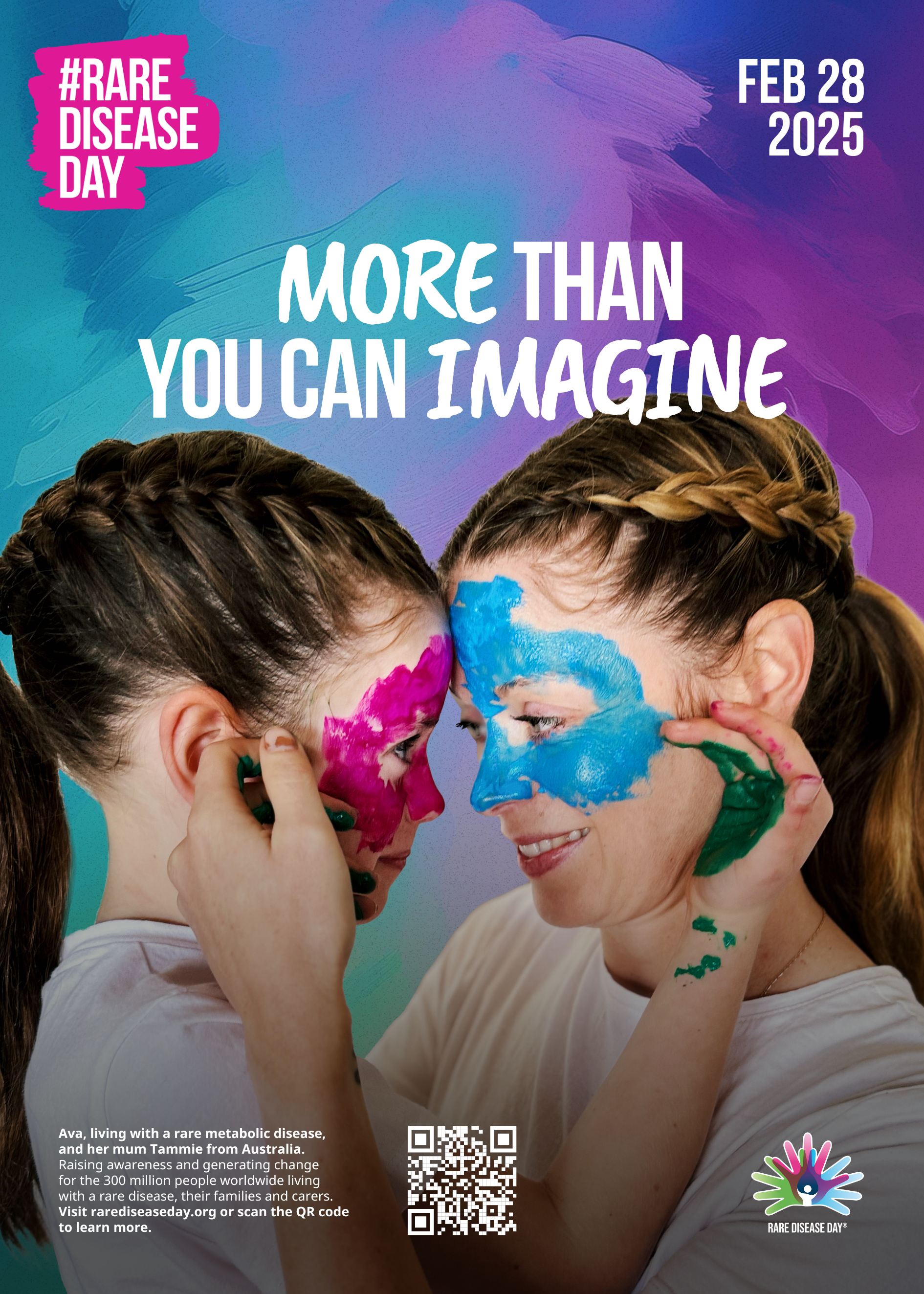
RARE DISEASE DAY FEB 28 2025

Ava and Tammie

Individual
|
      INTERPERSONAL    :     SCIENCES               
HUMANISTIC  --------------------------------------  MECHANISTIC      
 SOCIOLOGY  :    POLITICAL 
|
Group

IMAGINATION
IDENTITY
EXPERIENCE
EXPERTISE


ACTION
RESEARCH -
qualitative - quantitative
ACCESSIBILITY


SUPPORT
AWARENESS
COMPANIONSHIP
SOCIAL NETWORKS
FAMILIES


FUNDING
ACTIVISM
COOPERATION
COLLABORATION
COORDINATION


Previously: 'Rare'

Wednesday, February 19, 2025

Frayn's - shared 'Home Address'

Frequently I've made the point that 'person-centred' means placing the individual, patient, carer ... whatever the context, at the centre of Hodges' model. At the same time this is of course an idealisation:

individual
|
INTERPERSONAL : SCIENCES
humanistic ------------------------------- mechanistic
SOCIOLOGY : POLITICAL
|
group

What is your
'home' address?


'Science, it turns out, is in this respect simply an extension of all the other means we have found of representing the world. As with pictures and narratives, the world is unimaginable without the focus of a viewpoint. To understand the world in any way whatsoever scientifically, historically, artistically, anecdotally, imaginatively we find ourselves compelled to assume a potential point of convergence from which everything is  viewed, measured, and recounted. About the entity that defines this point we know only that it is by definition invisible to us. And since the instruments of science, of logic and mathematics, and of art, are all products of this invisible entity, they will not serve to represent or explain it to us. Anything in the world, or out of it, can be perceived or thought about, or both, and represented in our various codes. The only thing that systematically eludes us, whichever way we turn, is the something upon which everything else depends. The conscious subject that gives meaning to the objective universe cannot give meaning to itself. Without it nothing can be understood; about it nothing can be said. 
'The point of convergence . . .' And already we've gone wrong. The self isn't a point, in any remotely geometrical sense, but a complex organisation; and the consciousness that it generates, and by which it is animated, is a complex phenomenon.' pp.401-402. (my emphasis)


Frayn, Michael (2006). The human touch: our part in the creation of a universe. 'Home Address', Chapter 5. London: Faber & Faber. 

A final post from my paperback copy, next - off to a good secondhand home. Previously: 'Frayn'.