Hodges' Model: Welcome to the QUAD: youth

Hodges' model is a conceptual framework to support reflection and critical thinking. Situated, the model can help integrate all disciplines (academic and professional). Amid news items, are posts that illustrate the scope and application of the model. A bibliography and A4 template are provided in the sidebar. Welcome to the QUAD ...

Showing posts with label youth. Show all posts

Saturday, August 22, 2026

Re. 'Population mental health in England, 2003–2022: Teasing apart psychological distress, mental illness and activity limitation'

Last month I was struck reading John Burn-Murdoch's regular opinion piece 'Data Points' in the FTWeekend.

This one 'What's really going on with mental health around the world?' concerned a report:

Henking, C. and Baumberg Geiger, B. (2026), 'Population mental health in England, 2003–2022: Teasing apart psychological distress, mental illness and activity limitations'. ESRC Centre for Society and Mental Health, King's College London.
https://osf.io/preprints/socarxiv/8ygrz_v2

Below I have mapped some points to Hodges' model and added others. 

By accident or not, Mr Burn-Murdoch continued this theme last weekend, discussing pandemic lockdowns and how they never ended for some people (citations below):

individual
|
INTERPERSONAL
: SCIENCES             
humanistic ------------------------------- mechanistic
SOCIOLOGY : POLITICAL   
|
group


Getting stuck in a psychological minima. Becoming fixed in mindset, lack of self-development through others - empathy, rapport. 

Subtle self-harm becoming more serious.

What is character in the 21st C?

Lack of measures.
^Lack of coherence - parity in health policy.

Lack of assertiveness, self-advocacy, prone to self-stigma (non-help seeking!)

Qualitative lived experience becomes self-reinforcing (and other - family?)

Getting fixed with a physique, posture - shaped by technology.
Physical equivalent-complement 
of 'mindset'.

Getting stuck in a physical minima 'long-term'. Subtle self-harm becoming more serious.


'Systems medicalisation'
PROCESSES

Convenience (POLITICAL) of binary responses, e.g. 
DISABLED -------- NOT DISABLED

Search for 'answers' - diagnosis

Search for 'solutions' interventions

Early effect of lack of external play, risk-taking with others, friends - testing - trust.
Lack of social skills.
Impact of social and other media - reduction of stigma.
Social roles models - father-
figure? 

Lack of 'real' socialisation - meeting peers.

Socio-Political Power, hence resort to 'sick role'.

Social media - contribution to self-diagnosis. 

Support inc. Social prescribing: "You're not listening! How dare you suggest walking, gardening, volunteering, discussion group .. as a way to deal with this!"

'It's life - get on with it!' 

The compound effect of 'World News' on young people: cost of living; housing; cost of/access to education; employment options - related to AI; geopolitical events; climate change, state of economics since birth; COVID; housing; and isolation.
'Jobs' for teenagers?
(I had a 7-day paper-round)

 ^Parity of esteem (see above)

Welfare traps - 
especially by age xx

Realisation of the importance of outdoors play. Streets being protected for children.

Early Start Nursery


Imagine four characters called Harlequin meet for dinner. Halfway through another Harlequin gatecrashes the party, called spirit, then add psychiatry, anti-psychiatry, psychology, service users, policy-makers, the pharma-industry and education to the guest list and you are set for a marvellous time.

My source: John Burn-Murdoch, What's really going on with mental health around the world? FTWeekend, 11-12 July 2026, p.10.

John Burn-Murdoch, Pandemic lockdowns never ended for some people. FTWeekend, 15-16 August 2026, p.8.

Previously: 'young people' : 'mental illness' : 'behaviour' : 'Serres'

Thursday, April 02, 2026

Launch of National Knife Crime Centre

INDIVIDUAL
|
    INTERPERSONAL    :     SCIENCES               
HUMANISTIC --------------------------------------  MECHANISTIC      
SOCIOLOGY  :   POLITICAL 
|
GROUP
Is this a knife I see before me?
Or is it something else?
 
Am I being duped and taken for a fool?
But, nobody will bother me now!
I'm ready...!
 
I don't think this is right.
 
Either way, I'm asking for trouble?
 
Will anybody else listen? 


Should I risk trying to buy a knife?
How? Shop, or online?

Do I look 18?
I've seen the signs by the tills.

Can I pass as an 18 year old?
Should I pick it up and take it?

Or, do I leave it exactly where it is hidden?

Do I really need a knife, 
because he/she/they have one?

Can I ask a friend?
My cousin? No they'd grass on me.
Could I pay that 5th year?

Ben Kinsella Trust


NATIONAL CENTRE FOR KNIFE CRIME
 
Ronan's Law


My sources: BBC Radio 4 'Today' 2nd April 2026.

Previously: 'crime' : 'knives' : 'law'

Friday, February 27, 2026

Rare Disease Day 2026 Official Video

28 February is 
Rare Disease Day


'Raising awareness and generating change for the 300 million people worldwide living with a rare disease, their families and carers.'

Manchester, UK https://www.rarediseaseday.org/event/light-up-for-rare-2/

Continued ... https://www.rarediseaseday.org/

Wednesday, December 31, 2025

‘Life & health’: overview of global health, climate crises, SDGs and Africa Agenda 2030

26 December, 2025 

Afrihealth Optonet Association (AHOA) proudly announces its Maiden ‘Life & Health’ Symposium, a landmark convening designed to inspire dialogue, innovation, and collective action around one of the most pressing issues of our time: “Overview of Global Health, Climate Crises, SDGs and Africa Agenda 2030.” This inaugural symposium represents AHOA’s commitment to shaping forward-looking conversations that connect health, environment, and sustainable development across Africa and beyond.

The world is experiencing an unprecedented convergence of health challenges and climate-related crises. Rising temperatures, extreme weather events, environmental degradation, and biodiversity loss are reshaping disease patterns, food systems, water security, and livelihoods. These realities disproportionately affect low- and middle-income countries, particularly in Africa, where fragile health systems and socioeconomic inequalities amplify vulnerability. The ‘Life & Health’ Symposium seeks to interrogate these realities and offer integrated, actionable pathways aligned with the Sustainable Development Goals (SDGs) and Africa Agenda 2030.

At the heart of the symposium is a bold premise: health is both a driver and an outcome of sustainable development. Achieving good health and well-being (SDG 3) is inseparable from progress on climate action (SDG 13), clean water and sanitation (SDG 6), zero hunger (SDG 2), sustainable cities (SDG 11), and reduced inequalities (SDG 10). By convening experts across disciplines, the symposium will explore how these interconnected goals can be pursued through coordinated policies, resilient systems, and inclusive partnerships.

The Maiden ‘Life & Health’ Symposium is designed as a multi-stakeholder platform, bringing together policymakers, health professionals, climate experts, development practitioners, civil society leaders, academics, youth advocates, and the private sector. Participants will engage in high-level discussions, evidence-based presentations, and solution-oriented exchanges that bridge science, policy, and practice. The symposium will also provide a space for emerging voices and community perspectives, ensuring that local realities inform global ambitions.

A key focus of the symposium is Africa’s Agenda 2030, which contextualizes global commitments within the continent’s development aspirations. Africa stands at a pivotal moment: with a rapidly growing youth population, expanding urban centres, and increasing climate exposure, the choices made today will define health and development outcomes for decades. The symposium will highlight opportunities to harness Africa’s demographic dividend, promote climate-resilient health systems, and foster innovation that aligns with the continent’s priorities.

Participants can expect rich thematic sessions addressing:

I. Global health trends and emerging risks in a changing climate;

II. Climate-sensitive diseases and the future of prevention and preparedness;

III. Universal Health Coverage (UHC) in the context of climate resilience;

IV. Policy coherence and governance for integrated SDG implementation;

V. Financing and partnerships for sustainable health and climate action; and

VI. Youth leadership and community engagement as catalysts for Agenda 2030.

Beyond knowledge exchange, the symposium is action-oriented. It aims to catalyze policy-relevant recommendations, foster cross-sector partnerships, and inspire practical initiatives that can be scaled across regions. Afrihealth Optonet Association envisions the symposium as a springboard for sustained collaboration, research, advocacy, and capacity-building that advance health equity and climate justice.

The ‘Life & Health’ Symposium also reflects AHOA’s broader mission to promote evidence-informed decision-making and civil society leadership in health and development. By creating a recurring platform for dialogue and learning through the 52 Sessions in the 2026 ‘Life & Health’ Dialogue Series, AHOA seeks to strengthen the role of civil society in shaping inclusive policies, amplifying marginalized voices, and holding stakeholders accountable to shared commitments.

As the world accelerates toward 2030, time is of the essence. The interlinked crises of health and climate demand urgency, innovation, and solidarity. AHOA’s Maiden ‘Life & Health’ Symposium offers a timely opportunity to rethink silos, align strategies, and recommit to a future where people and planet thrive together, a future that will always seek to ‘Leave No One Behind’.

Afrihealth Optonet Association warmly invites policymakers, practitioners, scholars, development partners, youth leaders, and all stakeholders committed to sustainable development to be part of this historic inaugural symposium, as well as partner with AHOA through the 2026 Dialogue Series. Together, we can deepen understanding, strengthen partnerships, and chart a resilient pathway toward better health outcomes, climate resilience, and the realization of the SDGs and Africa Agenda 2030.

Continued - with links (and my source):

https://www.hifa.org/dgroups-rss/%E2%80%98life-health%E2%80%99-overview-global-health-climate-crises-sdgs-and-africa-agenda-2030

And - Happy New Year to All!

Friday, November 28, 2025

The Silent Pandemic? The Global Rise of Early-Onset Colorectal Cancer - via HIFA

Last year, a team at The Christie NHS Foundation Trust in Manchester, UK published a real-world analysis of 203 patients with early-onset colorectal cancer (eoCRC). The study showed a dramatic surge in cases over a short period, with over half of patients presenting with metastatic disease, predominantly left-sided tumours, and a median symptom duration of just 3 months before diagnosis. The authors warned that eoCRC could represent an "evolving pandemic." 


See - http://doi.org/10.1093/oncolo/oyae239

Since then, incidence continues to rise across all continents, with similar patterns emerging in multiple national and international datasets.

Why This Matters for the HIFA community
  • eoCRC is rising rapidly among people in their 20s, 30s, and early 40s.
  • Most cases are sporadic, suggesting major gaps in understanding modifiable and early-life risk factors.
  • Awareness among young adults and clinicians remains limited, contributing to delayed presentation.
  • Meanwhile, short-form social media (e.g. TikTok reels) and AI-driven content are now the dominant information sources for young people - creating both opportunities and risks for public health.
Introducing Our Upcoming Initiative

We, the Special Interest Group in Digital Health & AI at WHO/Europe Youth4Health network, are launching a global project to develop evidence-based communication guidance for raising eoCRC prevention and awareness among young adults. The project will:
  • Convene clinical specialists, youth advocates, communication scientists, social-media creators, and digital-health experts.
  • Identify which prevention and awareness messages should be prioritised for youth.
  • Define how these messages can be adapted effectively for short-form platforms such as TikTok and Instagram Reels.
  • Examine how generative AI can support safe, accurate, and engaging content creation.
  • Co-design prototype posts to illustrate how the consensus messages can be translated into youth-appropriate communication
  • Our aim is to bridge the gap between emerging science, behavioural insights, and contemporary digital communication channels.
Why We're Sharing This Here

As we shape this work, we're keen to learn from the HIFA community:
  • What approaches have you seen succeed in raising awareness of cancer symptoms among younger populations?
  • Are there youth-driven or co-designed campaigns that we should look to as models?
  • What are the risks you foresee when using short-form social media or AI tools for public-health communication?
  • What considerations are especially important in LMIC contexts?
  • How can we strike the right balance between urgency and fear-avoidance when communicating about cancer to young adults?
eoCRC incidence is increasing rapidly and globally. Communication strategies - particularly those targeting young people - have not kept pace with this trend. We would greatly value your insight and experience as we develop this work.

HIFA profile: Kathleen Guan is a multidisciplinary researcher passionate about all things digital behavioral health and (global) community engagement. Her PhD research focuses on involving young people in the co-design of personalized AI and emerging technologies, including adaptive mobile apps, LLMs, neurotechnology, and social media reels. By developing novel participatory approaches with a focus on preventative and precision health, Kathleen aims to inform how digital tools can meaningfully enhance everyday life and help reduce mental health challenges alongside chronic disease risks. To achieve this, she prioritizes community-based implementation by working closely with stakeholders across healthcare, engineering, policy, industry, education, and the arts.

Kathleen previously studied human rights and developmental neuroscience (BSFS, Georgetown; MRes, UCL) and has experience in public health and digital innovation (with WHO, Johns Hopkins, Yale, Qatar Computing Research Institute, various early-stage digital health start-ups) as a research collaborator and advisor. She chairs the Special Interest Group in Digital Health & AI within WHO Europe's Youth4Health Network. Kathleen has resided in 7 countries and worked in diverse settings across Asia, North America, and Europe, fostering her deep commitment to global health equity. She is always open to collaboration for social impact and can be found at https://www.linkedin.com/in/kathleenwguan/.

Thursday, June 05, 2025

World Happiness Report 2025

WORLD HAPPINESS REPORT 2025


. . . and looking ahead to WHR 2026 . . .


Prof Lord Richard Layard

Editor, World Happiness Report

In World Happiness Report 2024, we presented evidence of a concerning decline in the wellbeing of young people in Western industrialised countries.

Obviously, a child’s wellbeing matters for the same reason that any individual’s wellbeing matters. But wellbeing among children and adolescents is also critical since it is the best predictor of how happy said child will be in their subsequent life – with a higher predictive power than the qualifications which they might obtain.


There has been much debate about the reasons for such a downward trend, with many competing theories and policy recommendations. However, one explanation has captured public and political attention more than any other: social media.


Also in 2024, Jonathan Haidt, a social psychologist at New York University’s Stern School of Business, published The Anxious Generation, arguing that the decline in youth wellbeing is driven by a transition from a play-based childhood to a phone-based childhood. The book has been a best-seller and sparked heated debate, both in academia and the wider world.


As editors of the World Happiness Report, we have followed this debate closely, concerned that rigorous science was being overshadowed by shallow media narratives.


In World Happiness Report 2026, we see an opportunity to bring all sides of the debate together to establish the facts, clarify disagreements, and provide decision-makers with a balanced assessment of what we know, what we don’t know, and what should be done.


We’re encouraging researchers from across the world to submit chapter proposals focusing on the relationship between social media and subjective wellbeing before the deadline of Sunday 15 June. Full details are available on the World Happiness Report website.


My source: Email from info AT worldhappiness.report

Previously: 'happiness'

Wednesday, November 20, 2024

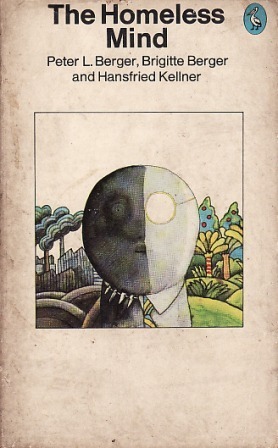
Hello? Is anyone there? 'The Homeless Mind'

individuality
|
INTERPERSONAL : SCIENCES              
humanistic ------------------------------- mechanistic
SOCIOLOGY : POLITICAL   
|
group

'Put differently, the componentiality of the cognitive style pertaining to technological production extends to identity. Again, a specific kind of double consciousness develops. In this case the dichotomy is between concrete identity and anonymous identity. The individual now becomes capable of experiencing himself in a double way: as a unique individual rich in concrete qualities and as an anonymous functionary. This dichotomization in the subjective experience of identity makes it possible for the individual to establish subjective distance vis-à-vis certain features of this identity.9 

For example, the individual will now experience that portion of his identity that contains his anonymization as a 'worker' as being 'less real' than his identity as a private person or family man. Since each portion of identity relates to specific roles, it now becomes possible for the individual to perform some of these roles 'tongue in cheek'. The componentiality of identity, as the componentiality of social relations, makes possible an 'engineering' practice. This time what is involved is the 'engineering' of one's own self. Those aspects of identity that a defined as 'more real' must be protected against threats coming from the 'less real' components of identity.' p.37-38.


Helpful reference to ideas of multi-relational synchronization and institutional vectors and how our mind's became homeless.

Also encouraging, even though 'historic', discussion on life plans and life planning.

'A basic presupposition is that life careers are not firmly fixed but are at least relatively open. Put simply the individual is faced with a number of alternative careers, especially in his " younger years, and therefore must make decisions about these available options. It is possible for the individual to imagine, himself as having different biographies. This possibility has both positive and negative consequences for the emotional economy of the individual. Positively, it may give him a feeling of frees dom to shape at least certain parts of his life. Negatively, it increases the likelihood of frustration regarding specific careers One is, after all, less likely to resign oneself to a particular situation if one believes that other situations are, in principle, possible.' p.67.
'Implicit in this scale of probabilities is a general 'sociology', on whatever level of theoretical sophistication. The individual has a `map of society' within which he can locate and project himself in terms of both past biographical recollection and future projects. The individual's life is perceived as a trajectory across this 'map'. There is also a large body of factual knowledge, most of which is 'weighted' in terms of the individual's life plans. Thus if a particular career appears to the individual as a realistically plausible project, he will have more factual knowledge about it than about a career in which he can participate only in pragmatically irrelevant fantasy. In other words, a good deal of background knowledge is related to 'anticipatory socialization'. p.68.
'However vaguely this may be defined, there is the underlying concept of life plan, both for the individuals and for the a family unit. This life plan is the totalization of all the relevant timetables, their grand sum and their integrative meaning In modern society, such life planning has become a value in itself. Its absence is commonly an occasion for reproach. The family unit thus operates as a life-planning workshop.' p.69.

'There is a general expectation of justice. It is expected that everyone in the relevant category - as, for example, those en-titled by law to a passport - will receive equal treatment. It is, of course, understood that certain persons may be excluded from this relevant category - for example, resident aliens or convicted criminals. It is also understood that the bureaucratic procedures may codify certain preferences, for example, in favour of diplomats or other people travelling on urgent government business. Once the categorial system has been established, however, the presumption of equality holds within each category. In the most general way, bureaucracy is expected to conform to the Roman principle suum cuique. An implication of this is that there will be no favouritism or any other intrusion of personal bias in the bureaucrat's handling of each client's case. The bureaucrat is expected to handle every case sine ira et studio. In other words, there is the general expectation that bureaucracy will operate impersonally and with 'affective neutrality'.2 These considerations bring us to an important point: unlike anything discussed in the preceding chapter, the cognitive style of bureaucracy contains a moral quality, not just as a limiting factor (after all, there are also moral assumptions about technological production - for example, that no one will be killed in the course of it), but as an intrinsic part of its own structure of consciousness. The source for this moral element is probably to be sought in the primary social location of bureaucracy in the political sphere.' pp.52-53.


Berger, P. L., Berger, B., & Kellner, H. (1973). The homeless mind: Modernization and consciousness. Penguin. 

Cover image: https://www.goodreads.com/book/show/3368465-the-homeless-mind

9 This is an amplification, by way of phenomenological description, of what Erving Goffman has called 'role distance'.

2 This term was coined by Talcott Parsons.

See also: 'homeless'

Saturday, January 20, 2024

c/o Eliot Higgins: 'Moment of truth' or 'Movement to Critical Thinking'?

   moment

a : tendency or measure of tendency to produce motion especially about a point or axis

b : the product of quantity (such as a force) and the distance to a particular axis or point

https://www.merriam-webster.com/dictionary/moment


Here on W2tQ in posts applying Hodges' model I have tended to equate the subjective and the objective with the humanistic and mechanistic domains respectively. Of course, these mappings - conceptual placements are idealised. In reality there is a great deal of overlap. 

"Social media platforms such as X, once celebrated as democratising forces, are under even more scrutiny. The challenge isn't just rogue posts or unchecked algorithms. It reflects a deeper malaise, rooted in societal distrust, exacerbated by business models and perpetuated by reactive policies. The ramifications of disinformation spill on the streets with tangible, often devastating real-world consequences. 
These processes were already underway in 2014, when I founded the open-source investigative group Bellingcat." p.1. 
"The delicate balance between combating misinformation and ensuring digital freedoms remains elusive. ...

Addressing the root causes of disinformation requires a grassroots approach. Education stands at the forefront of this strategy. The idea is simple yet transformative: integrate open-source investigative and critical thinking into the curriculum. Equip the youth with the skills to navigate the labyrinthine digital realm, to question, analyse and verify before accepting or sharing information. ...

The potential of such a grassroots movement doesn't stop at school gates. Envision a world where universities become hubs of open source investigation, with national and international networks of students sharing methodologies, tools and insights. As these students move into their professional lives, they carry forward not just skills but a mindset - one that values critical thinking over blind acceptance." p.2.

Higgins, E. Moment of truth, Life&Arts, FT Weekend, 16-17 December 2023, pp.1-2.
 

 Individual
  |
    INTERPERSONAL    :     SCIENCES               
HUMANISTIC --------------------------------------  MECHANISTIC      
SOCIOLOGY  :   POLITICAL 
|
Group

mental well-being

critical thinking

education - learning

subjective
PSYCHO-

physical well-being

fact (checking)

digital media literacy

objective


social well-being

society

social impacts of info disorder


-POLITICAL
political well-being

policy - regulation

political impacts of info disorder


https://thestudentview.org/

https://citizenevidence.org/

Access to education to combat information disorder, through digital media literacy is essential. There are now many claimed forms of literacy, and informatics. Engaging students must not just rest with  universities and graduate level education; especially as the 'professions' are set to change and new ones arise.

Previous posts 'information disorder' , 'ignorance'.

Saturday, August 13, 2022

"Suffering in Silence" c/o David Robertson

 INDIVIDUAL
|

   INTERPERSONAL    :     SCIENCES               
HUMANISTIC --------------------------------------  MECHANISTIC      
SOCIOLOGY  :   POLITICAL 
|
GROUP
David Robertson www.davidrobertsonprintmaker.com QEST Scholar Instagram.com/multiple_of_one
Suffering in Silence, 2018. Woodcut, each 2000 x 910 mm.
Installation: 2400 x 5500 x 5500 mm


"David Robertson’s immersive print installation explores the stigma around mental health and the difficulties men have in reaching out for help. Consisting of 25 life-sized men, the figure is a self-portrait but is representative of any man. Formed of tally marks, each mark representing an individual." ...
[my emphasis].

The Holburne Museum:
https://www.holburne.org/events/holburne-open-david-robertson/

Image: With thanks to David Robertson

David Robertson
www.davidrobertsonprintmaker.com
QEST Scholar
Instagram.com/multiple_of_one 

My source: Printmaking Today Summer 2022, 31:122, p.7.
https://www.cellopress.co.uk/page/printmaking-today

Saturday, April 10, 2021

An atmospheric inversion

individual
|
INTERPERSONAL : SCIENCES
humanistic ----------------------------------------------- mechanistic
SOCIOLOGY : POLITICAL
|
group


.. a t m o s p h e r e ..
........................
methane and carbon dioxide
at record levels

We need to take care

 .. a t m o s p h e r e ..
.......................
nitrous oxide

You need to take care


Prompt:

World Week in Review, Methane and carbon dioxide in atmosphere rise to record levels, FT Weekend, 10-11 April, 2021, p.4.


Sunday, November 22, 2020

Nature, Arts + Sciences: Dear Nancy and Tim ...

 individual 
|
INTERPERSONAL : SCIENCES
humanistic ----------------------------------------------- mechanistic
SOCIOLOGY : POLITICAL
|
group
Soft sciences

[Soft] observation

Arts, creativity

Innovation

Wild mental 'grounding'

Mary  ::   Tim

HARD sciences

[Hard] Observation

Students need a mixture of Art and Science A levels

A Natural History GCSE

Taking young people outdoors

Forest school

Colwell :: Smit

Arts

Nature literate society

Curricula

The human-ities in Politics?


My sources:

Woolcock, N. (2020) Pupils should mix arts and science, says woman leading top universities, The Times, 24 October, p.6.

Today, BBC Radio 4, 16 November, 2020, 0845-0851 Available for 25 days)


Monday, October 12, 2020

Conference: Improving Child & Adolescent Health for better Public Health

Dear Ladies and Gentlemen,

Dear Professors and Researchers,

Dear Colleagues!

It is our pleasure to invite you to this international 2-day meeting and research exchange

held online on Tuesday & Wednesday, November 10 & 11 2020 – save the date!

Improving Child & Adolescent Health for better Public Health

– Fiction or within the scope of possibility?

to bring together researchers and stakeholders to introduce completed research projects as well as new research ideas

that address the complex challenges and needs of child & adolescent health for future collaborative projects in order to apply for national and international grants.

Please find attached a brief outline with preliminary program (contents, schedule).

We greatly appreciate your attendance and would ask for a confirmation by Friday, October 23, by replying to this email.

We also welcome your contribution in form of a short talk/pitch.

In order to finalize the program, please include the following information in your response to this e-mail:

120 Researchers from 56 Universities/Organizations around the world and cross-cutting disciplines and research interests are invited.

Please feel free to forward this invitation to any colleagues you think would be interested as well.

Further detailed information along with the final program will be provided as soon as it is finalized, but right in time before the event in November 2020.

We look forward to welcoming you to this international 2-day meeting on „Improving Child & Adolescent Health“!
 
 
Kind regards,
 
Katharina Wirnitzer, University College of Teacher Education Tyrol & Leopold-Franzens University, Innsbruck, AT

Prof. Clemens Drenowatz, University College of Teacher Education Upper Austria, Linz, AT

Prof. Nandu Goswami, Medical University of Graz, Graz, AT

Studienleitung (PI)

Member of Schools for Health in Europe – SHE Research Group

__________________________________

Dr. rer. nat. Katharina Wirnitzer (PhD)

Institut für fachdidaktische und bildungswissenschaftliche Forschung und Entwicklung

Pädagogische Hochschule Tirol

Department of Subject Didactics and Educational Research and Development

University College of Teacher Education Tyrol

Pastorstraße 7/A.008, 2. OG
A – 6010 Innsbruck

E  katharina.wirnitzer AT ph-tirol.ac.at
I    www.ph-tirol.ac.at

Saturday, September 14, 2019

Loot boxes: GET YOURS TODAY!

individual
|
INTERPERSONAL : SCIENCES
humanistic ----------------------------------------------- mechanistic
SOCIOLOGY : POLITICAL
|
group - population

LOOT BOXES

'Liminality' - a journey -
into gambling?

e-Gaming
Immersive Worlds
Part-work encyclopaedias
Model part-work products
(so many plastic things)

Antique collectables -
Football cards
Stamps, Coins ...


Overall cost
Oversight: parental
Policy - Government


There are no loot boxes in Hodges' model, but then again,

you could say there are four.

The loot boxes in Hodges' model are not free,

the cost is time.

For many that is already a major expenditure and at the expense of relationships, friendships and studies.

Like many games there is a challenge in Hodges' model.

By all means please do explore the knowledge (care) domains of Hodges' model.

You are then invited to reflect, weigh, balance ... and find the real loot boxes you seek.

Your mission [ if you choose to accept it ;-) ] is to learn from each of the boxes about the situation you find yourself in and fuse these new insights into one.


WHO: Gaming disorder

Note to self:
#h2cm has an addictive - memetic quality (but is not a 'memetic hazard')
As a tool it is not the only one, but is a key resource for reflection, critique and problem solving.


Friday, August 23, 2019

Barber's model of hairdressing - "Care in the Community"?

Through the 1980s and 90s when models of nursing and nursing theory were flavour of the month, I remember a conversation that being so numerous, there was no doubt a "Model of Hairdressing" too. This is not to denigrate hairdressing in anyway (not at all Sis!).  I've actually considered this as a demonstration of the scope of Hodges' model. This post even prompted me to check the previous 2379 to see if I've been here before on W2tQ, but it appears not. (I do have an article somewhere - a parody on 'models of care'.)

There is a developmental tale here though, that is itself interesting. The story runs from the late 90s early 2000s thinking about hair, its qualities, scalp problems, nits (and diplomacy), health and safety at work, the equipment, the pictures displayed - advertising, ingredients, person-centredness, position - comfort and mobility, safety with some preparations and processes, gender and cultural aspects, the history of barbers and of the other 'services': ("Something for the weekend sir?"). So clearly hairdressing like all employment can be complex and rewarding. In addition: there are hosts of medical conditions and psychological factors (for example, self neglect*, phobias, children's reactions) that can affect the hair; its care, management, loss and compensating for this (with specialist help) as needed.

The social event that a visit to the hairdressers / barbers invites, was apparent as a child recalling my mother's former visits and the local 'news' that followed afterwards. In the later 2000's the need for dementia friendly communities was a further development. Business owners can see changes in their regular customers too. Many businesses seek to sustain this awareness and sensitivity in their approach and business. On my visits, the whole process is very relaxing. A further invitation as we shift from the sinks to the chair and mirror. There we are reflected in a before and after. The banter may also include the aspirations and educational options as students work through part-time work. As you may also have heard, over the past few years the actual and potential role of barber's in mental health has been more formally recognised:

https://www.thelionsbarbercollective.com/about-us/

https://www.independent.co.uk/life-style/hairdresser-suicide-prevention-mental-health-tom-chapman-safe-space-torquay-a7644021.html

Recognised also in the arts:

individual - SELF
|
INTERPERSONAL : SCIENCES
talk - HUMANISTIC - chat ----------------------------------------------- snip - MECHANISTIC - buzz..
SOCIOLOGY : POLITICAL
|
OTHERS - population

Mental health

Physical health

Public mental health policy


*What are the thresholds that pertain here - no doubt there are several - compounded?

Tuesday, April 30, 2019

Book: "The Healing Next Time"

SELF - individual
|
INTERPERSONAL : SCIENCES
humanistic ----------------------------------------------- mechanistic
SOCIOLOGY : POLITICAL
|
group - POPULATION


"Roy McFarlane’s second poetry collection, The Healing Next Time, is a timely and unparalleled book of interwoven sequences on institutional racism, deaths in custody and of a life story set against the ever-changing backdrop of Birmingham at the turn of the millennium. Here forms a potent and resolute narrative in lyrical and multidimensional poems which refuse to look the other way or accept the whitewashed version of events."

TIME

healing


Roy McFarlane, "The Healing Next Time"


Book cover artwork: Barbara Walker

My source: Richard Booth Bookshop, Hay-on-Wye

Tuesday, May 01, 2018

Why is the Sky Blue? c/o BBC

individual
|
INTERPERSONAL : SCIENCES
humanistic ----------------------------------- mechanistic
SOCIOLOGY : POLITICAL
|
group
Why


is the Sky Blue?


My source: BBC Radio 4 Woman's Hour:
"For her offbeat musical Why is the Sky Blue? Abbey Wright, the director, interviewed more than 10,000 children and young people about their experiences of online pornography. Currently being performed at the Southwark Playhouse in London, the outcome is a new piece of verbatim theatre with explicit references performed by a company of 6-22 year olds. Abbey joins Jane as does Annie Hawkins, one of the young actors."

Thursday, May 11, 2017

Mental Health Awareness (Second) ... (Hour) (Day) Week (Month) (Year) (Life) (History)

INDIVIDUAL
|
INTERPERSONAL : SCIENCES
humanistic ----------------------------------------- mechanistic
SOCIOLOGY : POLITICAL
|
POPULATION

Thoughts Beliefs Emotions Mood...
Motivation, Confidence
Memory, Experiences, Trauma, Grief

Mental Health - Reasons for Referral

Assessment

Self-help     Self      Self-stigma

Learned Helplessness

Psychological Theories & Therapies

Sleep  Coping  Concentration

self-harm risk, specialist services

Surviving OR Thriving?
Vulnerability

Debate: Ethics, Diagnosis, Philosophy of Care

PSYCHO-
Systematic diagnosis

Evidence-based Care, Treatments

Effective Treatment, Outcomes

Drugs, Side Effects

Local access (200+ miles for a bed?)

Demographics - Research

Data, Information, IT Records

Emergency (MH Crises) Services

Referrer's Knowledge of Care Pathways

Debate: Pathologizing,
Big-Pharma

Evidence Based measures


SOMATIC - BIOLOGICAL
SOCIAL

Group Therapies

Community Family Friends

Relationships - Social Network

Risk  Behaviour  Safety

Mental health as a Social Construct

Stigma

Folk theory UNDERSTANDING Specialist

Sociological Theories
prediction uncertainty expectations

Social Norms      Conformity

Culture, Ethinicity, Education

Anthropology

Quality of Life
POLITICAL

Power         Mental Health Law

Review of Mental Health Act?

WAIT! Government Policy Targets

Gate-keeping
????RING FENCED???
 ? Funding of Services ?
??  Parity of Esteem  ??
???RING FENCED???

 Community Care - Beds - In-patients

Mental Health Services

Primary, Secondary, Tertiary

Mental Health Professionals

Human Resource Planning

Work

Thursday, September 08, 2016

Gateways: International Journal of Community Research and Engagement

Dear Readers,

Gateways: International Journal of Community Research and Engagement is delighted to announce the publication of its latest issue at https://epress.lib.uts.edu.au/journals/index.php/ijcre. We invite you to review the Table of Contents here and then visit our website to review articles and items of interest.

Thanks for the continuing interest in our work,

Margaret Malone
Managing Editor, Gateways
Margaret.Malone AT uts.edu.au

Gateways: International Journal of Community Research and Engagement
Vol 9, No 1 (2016)
Table of Contents
https://epress.lib.uts.edu.au/journals/index.php/ijcre/issue/view/397

Research articles (Refereed)

The journey and destination need to be intentional: Perceptions of success in community-academic research partnerships (1–21)
Robin Lindquist-Grantz, Lisa M Vaughn

Two steps forward, one step back: Achievements and limitations of university-community partnerships in addressing neighbourhood socioeconomic disadvantage (22–40)
Deborah Warr, Richard Williams

Caught up in power: Exploring discursive frictions in community research (41–57)
Cindy Hanson, Adeyemi Ogunade

Supporting communities of practice: A reflection on the benefits and challenges facing communities of practice for research and engagement in nursing (58–73)
Maretha De Waal, Oumiki Khumisi

'Culture' as HIV prevention: Indigenous youth speak up! (74–88)
Ciann Wilson, Vanessa Oliver, Sarah Flicker, Native Youth Sexual Health Network, Tracey Prentice, Randy Jackson, June Larkin, Jean-Paul Restoule, Claudia Mitchell

Engaging youth in post-disaster research: Lessons learned from a creative methods approach (89–112)
Lori Peek, Jennifer Tobin-Gurley, Robin S Cox, Leila Scannell, Sarah Fletcher, Cheryl Heykoop

Impact of international humanitarian service-learning on emerging adult social competence: A mixed-methods evaluation (113–131)
Paul Schvaneveldt, Todd Spencer

Practice-based articles (Non-refereed)

Unusual conversations: A reflection on the mechanics of internationally engaged public scholarship (132–144)
Jonathan Damiani

Fundamental researcher attributes: Reflections on ways to facilitate participation in Community Psychology doctoral dissertation research (145–158)
Renato M Liboro, Robb Travers

Innovating for skills enhancement in agricultural sciences in Africa: The centrality of field attachment programs (159–171)
Anthony Egeru, Paul Nampala, Henry Massa-Makuma, Moses Osiru, Adipala Ekwamu

Mobilizing Minds: Integrated knowledge translation and youth engagement in the development of mental health information resources (172–185)
Christine A Garinger, Kristin A Reynolds, John R Walker, Emma Firsten-Kaufman, Alicia S Raimundo, Pauline C Fogarty, Mark W Leonhart, Mobilizing Minds Research Group
________________________________________________________________________
Paul Ashton, Marilyn Krogh, Margaret Malone, Phil Nyden and Pauline O'Loughlin
Editorial Committee Gateways

My source c/o Margaret Malone via LIVINGKNOWLEDGE-L AT LISTS.UCC.IE

Friday, July 24, 2015

Mental Life and Death in Squares*

individual
|
INTERPERSONAL : SCIENCES
humanistic --------------------------------------- mechanistic
SOCIOLOGY : POLITICAL
|
group

Mental 

health

"Approximately half of all deaths in or following police custody involve detainees with some form of mental health problem. The IPCC is keen to get a better insight into the issues concerning mental health and custody. A key way in which individuals with mental disorder may have contact with the police is when they are in a public place and are believed to be in need of ‘immediate care and control. ... "
Please see: IPCC


'cost to ...'


Deaths
in
police custody


BBC: Custody deaths represent failure...

*or rectangular cells.

Doyle, M., Jones, P. (2013). Hodges’ Health Career Model and its role and potential application in forensic mental health nursing. Journal of Psychiatric and Mental Health Nursing. 20, 7, 631-640.
http://onlinelibrary.wiley.com/doi/10.1111/j.1365-2850.2012.01961.x/abstract

Sunday, July 14, 2013

ERCIM News No. 94 Special theme: "Intelligent Cars"


Dear ERCIM News Reader,

ERCIM News No. 94 has just been published at
http://ercim-news.ercim.eu/en94

Special Theme: "Intelligent Cars"
Guest editors: Jaroslav Machan (ŠKODA AUTO a.s., Czech Republic) and Christian Laugier (Inria, France)
http://ercim-news.ercim.eu/en94/special/


Keynote: "Collaborative Mobility – Beyond Communicating Vehicles"
by Ilja Radusch, Ilja Radusch, head of department “Automotive Services and Communication Technologies” at Fraunhofer FOKUS and head of the Daimler Center for Automotive IT Innovations

This issue for download
pdf
: http://ercim-news.ercim.eu/images/stories/EN94/EN94-web.pdf
epub format: http://ercim-news.ercim.eu/images/stories/EN94/EN94.epub

Next issue: No. 95, October 2013 - Special Theme: "Image Understanding" (see Call at http://ercim-news.ercim.eu/call)

Thank you for your interest in ERCIM News.
Feel free to forward this message to others who might be interested.

Peter Kunz
ERCIM News central editor
------------------------------------------------------------------------
About ERCIM
ERCIM - the European Research Consortium for Informatics and Mathematics - aims to foster collaborative work within the European research community and to increase co-operation with European industry. Leading European research institutes are members of ERCIM. ERCIM is the European host of W3C.
http://www.ercim.eu/