Hodges' Model: Welcome to the QUAD: neutrality

Hodges' model is a conceptual framework to support reflection and critical thinking. Situated, the model can help integrate all disciplines (academic and professional). Amid news items, are posts that illustrate the scope and application of the model. A bibliography and A4 template are provided in the sidebar. Welcome to the QUAD ...

Showing posts with label neutrality. Show all posts

Monday, June 15, 2026

"Keep politics out of sport!"

individual
|
INTERPERSONAL
: SCIENCES             
humanistic ------------------------------- mechanistic
SOCIOLOGY : POLITICAL   
|
group
Lewis
 
Russell


Norris


Previously: 'sport'

See also: https://www.formula1.com/ 

Wednesday, November 20, 2024

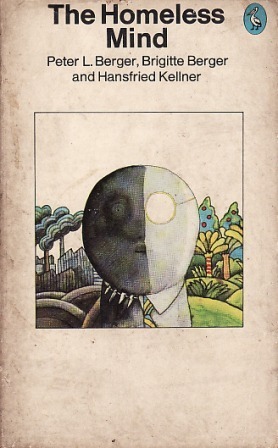
Hello? Is anyone there? 'The Homeless Mind'

individuality
|
INTERPERSONAL : SCIENCES              
humanistic ------------------------------- mechanistic
SOCIOLOGY : POLITICAL   
|
group

'Put differently, the componentiality of the cognitive style pertaining to technological production extends to identity. Again, a specific kind of double consciousness develops. In this case the dichotomy is between concrete identity and anonymous identity. The individual now becomes capable of experiencing himself in a double way: as a unique individual rich in concrete qualities and as an anonymous functionary. This dichotomization in the subjective experience of identity makes it possible for the individual to establish subjective distance vis-à-vis certain features of this identity.9 

For example, the individual will now experience that portion of his identity that contains his anonymization as a 'worker' as being 'less real' than his identity as a private person or family man. Since each portion of identity relates to specific roles, it now becomes possible for the individual to perform some of these roles 'tongue in cheek'. The componentiality of identity, as the componentiality of social relations, makes possible an 'engineering' practice. This time what is involved is the 'engineering' of one's own self. Those aspects of identity that a defined as 'more real' must be protected against threats coming from the 'less real' components of identity.' p.37-38.


Helpful reference to ideas of multi-relational synchronization and institutional vectors and how our mind's became homeless.

Also encouraging, even though 'historic', discussion on life plans and life planning.

'A basic presupposition is that life careers are not firmly fixed but are at least relatively open. Put simply the individual is faced with a number of alternative careers, especially in his " younger years, and therefore must make decisions about these available options. It is possible for the individual to imagine, himself as having different biographies. This possibility has both positive and negative consequences for the emotional economy of the individual. Positively, it may give him a feeling of frees dom to shape at least certain parts of his life. Negatively, it increases the likelihood of frustration regarding specific careers One is, after all, less likely to resign oneself to a particular situation if one believes that other situations are, in principle, possible.' p.67.
'Implicit in this scale of probabilities is a general 'sociology', on whatever level of theoretical sophistication. The individual has a `map of society' within which he can locate and project himself in terms of both past biographical recollection and future projects. The individual's life is perceived as a trajectory across this 'map'. There is also a large body of factual knowledge, most of which is 'weighted' in terms of the individual's life plans. Thus if a particular career appears to the individual as a realistically plausible project, he will have more factual knowledge about it than about a career in which he can participate only in pragmatically irrelevant fantasy. In other words, a good deal of background knowledge is related to 'anticipatory socialization'. p.68.
'However vaguely this may be defined, there is the underlying concept of life plan, both for the individuals and for the a family unit. This life plan is the totalization of all the relevant timetables, their grand sum and their integrative meaning In modern society, such life planning has become a value in itself. Its absence is commonly an occasion for reproach. The family unit thus operates as a life-planning workshop.' p.69.

'There is a general expectation of justice. It is expected that everyone in the relevant category - as, for example, those en-titled by law to a passport - will receive equal treatment. It is, of course, understood that certain persons may be excluded from this relevant category - for example, resident aliens or convicted criminals. It is also understood that the bureaucratic procedures may codify certain preferences, for example, in favour of diplomats or other people travelling on urgent government business. Once the categorial system has been established, however, the presumption of equality holds within each category. In the most general way, bureaucracy is expected to conform to the Roman principle suum cuique. An implication of this is that there will be no favouritism or any other intrusion of personal bias in the bureaucrat's handling of each client's case. The bureaucrat is expected to handle every case sine ira et studio. In other words, there is the general expectation that bureaucracy will operate impersonally and with 'affective neutrality'.2 These considerations bring us to an important point: unlike anything discussed in the preceding chapter, the cognitive style of bureaucracy contains a moral quality, not just as a limiting factor (after all, there are also moral assumptions about technological production - for example, that no one will be killed in the course of it), but as an intrinsic part of its own structure of consciousness. The source for this moral element is probably to be sought in the primary social location of bureaucracy in the political sphere.' pp.52-53.


Berger, P. L., Berger, B., & Kellner, H. (1973). The homeless mind: Modernization and consciousness. Penguin. 

Cover image: https://www.goodreads.com/book/show/3368465-the-homeless-mind

9 This is an amplification, by way of phenomenological description, of what Erving Goffman has called 'role distance'.

2 This term was coined by Talcott Parsons.

See also: 'homeless'

Saturday, March 11, 2023

ICT and Brexit Change Survey – Extended deadline

Date:    Fri, 10 Mar 2023 09:16:49 +0000
From:    e.lomas AT UCL.AC.UK
Subject: ICT and Brexit change survey – extended deadline

Apologies for cross posting
We have been asked to extend this survey (https://opinio.ucl.ac.uk/s?s=80453) for a further month in line with the time previous surveys ran. It will therefore close on Tuesday 11th April straight after Easter. This is because a lot of people are part way through and in addition a number of people had not seen the save button which appears at the bottom of each survey page. We would further note that the survey is intended to be neither remain or leave in its questioning – both sides have queried this. We are keen to understand perspectives of the ICT/information sectors following Brexit. We appreciate everyone’s time and perspectives on this. Below is the original text when posted with an update on timeframes…

Brexit has been a significant change for the UK and EU, including in the contexts of  the ICT sector and those who manage information, whether in the public or private sectors. At the three-year departure point we are seeking the views of information professionals on the shifting opportunities and threats for the ICT/information sector in the light of Brexit. Whilst Brexit was a UK decision, it has had potentially global ramifications and therefore we are looking to draw in perspectives from across the globe. We understand that there will be differing views both negative and positive – we want to hear all these perspectives.

We would be so grateful if you would respond to this survey at  - it will take 10-20 minutes to complete depending on if you just check the multiple-choice boxes or if you wish to share further written comments. All questions are optional. The survey is anonymous and no IP addresses are being collected. We know that you are busy and appreciate your time. The survey will close on 11th April 2023.

Please do forward on this email so that we can reach as many people as possible and tweet:

Please complete survey on information/ICT professionals’ views on Brexit and  change https://opinio.ucl.ac.uk/s?s=80453 #Brexit #ICT

The results of this survey will be published in an open access form. Please note this survey follows four earlier surveys charting change through the Brexit process, the first immediately after the Referendum (written up at: https://journals.plos.org/plosone/article?id=10.1371/journal.pone.0186452), one at a mid-point which was accompanied by workshops (written up at: https://journals.plos.org/plosone/article?id=10.1371/journal.pone.0227089) and the others from the transition points onwards. Whether or not you have completed any earlier surveys, we would appreciate your input now. This is likely to be the last survey we publish tracing the changes.

The research is a partnership between the iSchools at UCL (Dr Elizabeth Lomas) and Northumbria University (Emerita Professor Julie McLeod). The survey is being facilitated by Dr Elizabeth Lomas (mailto:e.lomas AT ucl.ac.uk).

Thank you for your help.

Elizabeth and Julie

Dr Elizabeth Lomas
University College London
Email: e.lomas AT ucl.ac.uk

Emerita Professor Julie McLeod
Northumbria University
Email: julie.mcleod AT northumbria.ac.uk

My source:
www.jiscmail.ac.uk/FREEDOM-OF-INFORMATION
a mailing list hosted by www.jiscmail.ac.uk
Saturday, August 03, 2019

Seeking Care & Global Cultural Neutrality in White Houses(?)


The email concerned a book
- | White Houses | -
 and posed a question.

Needless to say it caught my attention ...

Is White a Statement or a Neutral Surface for Expression?


This is a question I ask myself, but in respect of Hodges' model.

To what extent is Hodges' model neutral across cultures?

Remove the green, blue and red colours I adopted for the care domains  and what you have is a blank sheet; an empty conceptual space.

Is it empty? 

Very quickly it can become filled with what the person, patient, client, group ... brings with them.

Hodges' model is a stage. Several stages.

It is a theater.

It is a challenge for the performer, as they take their turn. As they navigate the space, they seek to ensure, assure, obtain feedback that the other - listener(s) are with them; whether in agreement or not.
Hodges' model is an arena for personal, group reflection, debate, argument(ation) or as described these days - co-production.


How suitable is #h2cm as a tool to support global health objectives, such as, the Social Development Goals and the Social Determinants of Health (and their ongoing development)? For me, Hodges' model is not just a neutral surface, it is a neutral substrate for the many forms of knowledge needed to solve the problems of the 21st Century.

individual - self
|
INTERPERSONAL : SCIENCES
humanistic ----------------------------------------------- mechanistic
SOCIOLOGY : POLITICAL
|
group- population


My source: Thames & Hudson

Later in the summer - autumn I might post another photo in memory of my father and a holiday ...
