Hodges' Model: Welcome to the QUAD: skills

Hodges' model is a conceptual framework to support reflection and critical thinking. Situated, the model can help integrate all disciplines (academic and professional). Amid news items, are posts that illustrate the scope and application of the model. A bibliography and A4 template are provided in the sidebar. Welcome to the QUAD ...

Showing posts with label skills. Show all posts

Monday, September 14, 2026

Paper: What factors influence evidence use in policy? An updated systematic map

 Abstract  [ REVIEW | Article in Press ]

In 2014, a large systematic map found that relational factors were amongst the most frequently reported facilitators of evidence use in policy. Since then, there has been a growth in evidence-use initiatives and research, many of which have attempted to address relational factors. In this timely updated map, we describe the current state of research about which factors influence evidence use in policy. A search strategy combining ‘evidence’, ‘barriers and facilitators’ and ‘policy/policymakers’ was used to identify studies across 15 electronic databases between 2012 and 2022. Studies were screened for those that include empirical data about evidence use in policy. Data extraction enabled descriptive analyses characterising studies in terms of focus, topic area, setting, and types of factors influencing use. Two thousand, one hundred and ninety-nine studies were included, a 20-fold increase over 10 years. The most commonly reported factors influencing use were the relevance of evidence, and then organisational (resources, skills, personnel and managerial support). A large number of studies reported on evidence-use interventions (n = 877) of which 379 were evaluations. Findings may indicate a shift towards relational and systemic thinking about evidence use. There appears to be a growing recognition of the resourcing, work, time, and workforce required to embed evidence use within and between organisations. With this huge growth in the literature, particularly in new evidence use interventions being tested across policy sectors, continued review and mobilisation is necessary to effectively inform the design and implementation of evidence use interventions and research.


Oliver, K., Malin, J., Akerlof, K.L. 
et al. What factors influence evidence use in policy? An updated systematic map. Humanities and Social Sciences Communications. (2026). 
https://doi.org/10.1057/s41599-026-08391-6

Not a citation for Hodges' model, but I am grateful to Prof. Oliver and co-authors for being able to assist with data extraction using EPPI-Reviewer Screening Wizard. The preceding patience and guidance to complete the coding tasks was also invaluable in being transferable. I learned a great deal and it has been perversely reassuring (disheartening!) to see that the path to final publication is also 'circuitous' for academics.^  An additional lesson is building on existing work and publication (Oliver, 2014) to revisit a method and research question. (Updates to follow).

Previously: 'map' : 'systematic' : 'policy'

^A conclusion, much shared I believe: academic publishing is systematically dysfunctional.

Friday, August 07, 2026

'From Tree to Sea [5] - The Bare Necessities' c/o BBC R4

My name is not Robinson Crusoe, but I feel privileged to live on an island. The sea has always been close. Liverpool (Scouser) has a history, to celebrate and seek forgiveness for. It was a surprise and yet wasn't from the map in the Bluecoat of the slave ships that plied the route to West Africa, to the West Indies and USA to see the same reflections in the dock area of Nantes in May 2025.

These reflections followed a BBC Radio 4 programme this afternoon (one of a series):

5. From Tree to Sea - The Bare Necessities

https://www.bbc.co.uk/sounds/play/m002ztzy

'We are living in turbulent times and it is easy to feel anxious about the state of the world. The pace of change is fast, and the future often seems uncertain and out of our control. Given our reliance on technology, any sort of outage could be catastrophic. Could you survive - and thrive - in a world without global supply chains, the internet and 24-hour energy?

In this series the writer Dan Richards seeks out the tradition bearers and carriers of ancient knowledge who actively choose to live in close connection with the natural world around them. A return to first principles of what it means to be human and the kind of people you would like to be around if things fell apart.

Dan heads to Whithorn in Dumfries and Galloway where he meets Traditional Boat Builder Gail McGarva who is putting the finishing touches to a skiff before its launch. Gail has gathered knowledge of the ancient craft of wooden boat building through her relationship with tradition bearers and mentors, without whom the knowledge would disappear completely. What Dan finds is that this small wooden boat represents not only an evolution of form and process, but soul. The souls of all who have gone before and how they might influence a sustainable future with community at the heart of it.'

In making the skiff there is a marvellous observation about:

 "when the boat hits the water it knows what to do ..".

For students entering a profession or trade (any) that strikes a chord.

Wednesday, July 29, 2026

Arriving at Hodges' model via guided discovery ...

Following Brian Hodges’ lead in his notes, I have engaged a great many learners with a guided discussion through the following questions:

Questions

Answers

Outcome/Significance

Who do we care for?

The person, individual, patient, client, carer.The group, family, community, national/global population. The 'duty of care'. The Planet.

It is the individual (guardian) who consents to care. The subject at the top of the vertical axis of Hodges’ model is first identified. It is the person who consents to care (or their guardian); then the group occupies the bottom of the vertical axis.

What do we do to help deliver care?

We attempt - complete tasks and interact in ways that are both mechanistic and humanistic. We use procedures, equipment, devices, technologies, physical interventions; and the self – empathy, rapport listening, being present. Team work with effective communication, coordination and collaboration are also essential.

To care is to act. The horizontal axis is added, with humanistic to the reader’s left; and mechanistic to the right.

The axes are then complete, revealing the model’s ‘fixed’ structure. Interdisciplinary can be identified and further discussed.

What skills and knowledge do we need to care for the individual, family and populations?

Here we are concerned with the content of the given situation. This can encompass the whole curriculum and acknowledges experiential learning.

The epistemological and ontological scope and scale of health is revealed from self to planet. The importance of context and situation can be stressed. Including first-aid and its rules and risk assessment. Discussion visits and demonstrates the significance of each of the domains of Hodges’ model and the spiritual to participants. The relevance of Hodges' model to the 21st century, as a bio-psycho-socio-POLITICAL model is emphasised.

Previously: 'Hodges' model'.

Monday, June 22, 2026

Maker-field: More than just a point* on a map

Ashton-in-Makerfield has been in the news of late. With Andy Burnham MP championing the communities of the north; local issues, socio-economic gaps, needs and everyday lived experience up North.

But Makerfield holds much more as a veritable rabbit-hole supporting lifelong learning, character development, reflective practice and critical thought:

 'maker' - 'field'

* - a political constituency.

Previously: 'map'

Monday, June 15, 2026

"Keep politics out of sport!"

individual
|
INTERPERSONAL
: SCIENCES             
humanistic ------------------------------- mechanistic
SOCIOLOGY : POLITICAL   
|
group
Lewis
 
Russell


Norris


Previously: 'sport'

See also: https://www.formula1.com/ 

Wednesday, March 18, 2026

Caring with Excellence, Care that Evolves: Filipinos in Care Anniversary Event 2026

Time & Location

17 Apr 2026, 14:00 – 23:00 BST

St Mary Abbots Centre, Vicarage Gate, London, W8 4HN

About the event

This engaging 2-panel session will delve into the inspiring journeys of Filipino nurses and nurse leaders who are making significant contributions in the social care sector. Participants will have the opportunity to hear firsthand accounts of challenges, triumphs, and the unique experiences that shape their careers. The session aims to highlight the vital role that Filipino nurses play in providing compassionate care and leadership in diverse settings.

Panel 1: Personal Journeys and Experiences of Award-Winning Filipinos

The first panel will feature a diverse group of nurses who will share their personal stories. Topics will include:
  • Overcoming cultural and professional challenges
  • Adapting to different healthcare environments
  • Building resilience and community support

Panel 2: Transitioning to Social Care

The second panel will focus on the experiences of Filipino nurses who moved from the NHS to social care. Key discussions will revolve around:
  • Developing skills in a care home setting
  • Key tips for the career move
  • Key learnings from the shift from acute to chronic care

Takeaways: A Practical Toolkit

Attendees will leave the session equipped with a practical toolkit designed to inspire and guide them in their own nursing careers. This toolkit will include:
  • Resources for professional development
  • Strategies for effective leadership in nursing
  • Networking opportunities with fellow nurses and leaders

Join us for this enlightening session to celebrate the contributions of Filipino nurses in social care and to gain valuable insights that can enhance your own journey in the field. Sessions moderated by Filipinos in Care Founder Kier Dungo and Co-Founder Jay Trondillo.

Tickets and website: https://www.filipinosincare.org.uk/event-details/fic-anniversary-event

My source: RCN North West Multicultural Group

Friday, January 09, 2026

Space for Medicine - ISS


Individual
|
     INTERPERSONAL    :     SCIENCES               
HUMANISTIC  --------------------------------------  MECHANISTIC      
 SOCIOLOGY  :    POLITICAL 
|
Group
 
ETHICS
CONFIDENTIALITY
CONFIDENCE
 
'COMMS' 
 
MENTAL HEALTH
 
BEHAVIOURAL HEALTH &
PERFOIRMANCE
 
PRIVATE PSYCHOLOGICAL
COMMUNICATION 
 
CIRCADIAN HEALTH

PERSON-CENTRED HEALTH/DISABILITY


INTERNATIONAL SPACE STATION 
distance - remoteness
EARTH orbit

 LAUNCHES - RE-ENTRY WINDOWS  

TRAINING
MEDICAL EMERGENCY in SPACE

HEALTH - EMERGENCY
CONSTRAINTS - CONTIGENCIES
PLANNING - TIME - PROBABILITY
'MONTE CARLO' MODELS/SIMULATIONS

DIAGNOSIS: INJURY, RADIATION, MUSCULOSKELETAL, NEUROLOGICAL, VISION, microGRAVITY


CREWS
WELFARE - PRIORITY 
SOCIAL - WELL-BEING


NASA
POLICY - PREPAREDNESS
MEDIA RELATIONS


NASA Spaceflight Human System Standard Volume 1: 
Crew Health

'NASA-STD-3001 Volume 1 covers the requirements needed to support astronaut health and provide medical care while Volume 2 covers human-related vehicle system design and operations requirements that will maintain astronaut safety and promote performance.'

Additional reading:
Farrell, R.M., Fogarty, J.A., Covington, M. et al. A moonshot for female astronaut health, a win for all astronauts and space exploration. npj Microgravity 11, 38 (2025). https://doi.org/10.1038/s41526-025-00495-8
 
Marshall Porterfield, D., Tulodziecki, D., Wheeler, R. et al. Critical investments in bioregenerative life support systems for bioastronautics and sustainable lunar exploration. npj Microgravity 11, 57 (2025). https://doi.org/10.1038/s41526-025-00518-4
  
Rizzo, A., Borra, E.M., Ciciani, L. et al. Foundations of radiological protection in space: the integrated multidisciplinary approach for next manned missions in deep space. Eur. Phys. J. Plus 138, 1001 (2023). https://doi.org/10.1140/epjp/s13360-023-04572-3


The National Space Institute -  
https://nss.org/the-national-space-institute/

During the 1990s I was a member of the 
Space Nursing Society -
https://nss.org/space-nursing-society-chapter/ 

London Institute of Space Policy and Law - 
https://www.space-institute.org


See also: 'NASA' : 'astronautics'


Tuesday, November 18, 2025

'Nurses and Nursing's Issues' ...

1975 .. plus ça change, plus c'est la même chose .. 2025
"The question I ask myself all the time is not can we close the gaps in practice and administration, but, more importantly, can we develop a nursing system, not the profession of nursing, but a nursing system which will weave together all practitioners with what-ever skills they bring to the system" Jessie Scott, p.1854. 

 
Nurses and Nursing's Issues. The American Journal of Nursing, Vol. 75, No. 10, 75th Anniversary Issue (Oct.,1975), pp. 1848-1859. Stable URL: https://www.jstor.org/stable/3423579

Now, in 2025 we can make an impression - not just on the nursing profession, but in how all the health professions work, learn and relate to each other and social care colleagues too.

https://en.wikipedia.org/wiki/Jessie_M._Scott

https://en.wiktionary.org/wiki/plus_%C3%A7a_change,_plus_c%27est_la_m%C3%AAme_chose

Wednesday, October 29, 2025

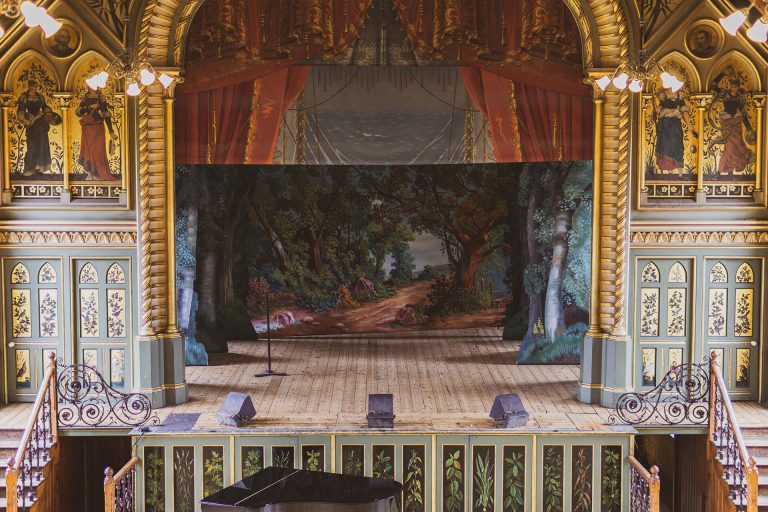
Normansfield Theatre in Teddington

Normansfield Theatre in Teddington

'My favourite building is the amazing Normansfield Theatre in Teddington that John Langdon Down (1828-1896) built to provide positive and stimulating education for learning disabled people (Down syndrome is named after him). At a time when most disabled people would have been shut away in horrific asylums, Down adapted his own house as a residential home, and built a beautiful theatre for creative rehabilitation. It's one of the few surviving private theatres from the period, with original painted scenery and other ornate fixtures, recently remodelled. For me, it's also a reminder of how the wealthy often used their money for good causes, which feels less common now. Jos Boys, guest curator and co-director of The DisOrdinary Architecture Project'


My source: The pick of London Open House. House&Home, FTWeekend. 6/7 September 2025. p.8.

Image: Langdon Down Centre

Previously: 'learning disability' : 'theatre' : 'architecture'

Monday, September 08, 2025

Online: Artificial Intelligence (AI) in Healthcare - Weds 17th Sept 2025 BCS Coventry Branch

Online event organised by British Computer Society (BCS)

Full details: 
https://www.bcs.org/events-calendar/2025/september/webinar-ai-in-healthcare-neural-ai-v-symbolic-ai-why-we-need-neuro-symbolic-ai/

*** Agenda (UK time) *** 

18:30 - Meeting opens
Welcome and Introductions
18:40 - Hand-over to speaker
19:30 - Questions
20:30 - End

Scope of workshop

This is to support you in putting together your application for the FEDIP application and the workshop will focus on:

  • What level you should apply for
  • How to work with the Standard
  • How to map your evidence
  • Putting together context
  • Preparing your evidence in the best way 
  • What the assessors will look for
Free-of-charge registration to obtain the Zoom link

https://www.eventbrite.co.uk/e/ai-in-healthcare-neural-ai-v-symbolic-ai-why-we-need-neuro-symbolic-ai-registration-1383661000299?aff=oddtdtcreator
___________________________

My source: Dr Mercedes Arguello Casteleiro.

FEDIP: https://www.fedip.org/

Sunday, June 01, 2025

RCN Congress 2025 iv - AI & quality improvement

Discussion: Artificial intelligence in nurse education &
Discussion: The role of nursing staff in quality improvement


We'll cover two agenda items in this post. First, resistance is futile in the apparent rise and ubiquity of artificial intelligence.

Discussion: Artificial intelligence in nurse education

Here is, another thing 'we need to get right'. Without checking, I'm sure I posted/tweeted about 'essay factories'. Now Generative AI has put the automated generation of academic essays on steroids. If a student is not motivated to learn, enthusiastic about their seemingly chosen course of study and the professional reward to be earned, then we are in trouble. Public and patient safety are at risk. AI, is however is here to stay - change and help us prosper(?). AI and GenAI are tools, just another step forward, an advance on finger tips, palms, stick, chalk, pencil, and pen. The brief for the discussion includes, with specific points emboldened:

'... Additionally, AI-driven simulations and virtual reality scenarios can provide hands-on experience in a controlled environment, enabling students to practice and refine their skills with greater confidence. 

Creating an engaging and supportive learning environment is key to helping nursing students embrace AI. HEIs can introduce AI concepts early in the curriculum and provide ongoing training and resources. Encouraging collaboration and open discussions about the benefits and challenges of AI can further enhance students' confidence in using these tools.

By taking these steps, nursing education can seamlessly integrate AI, ensuring future nurses are equipped to excel in an evolving health care landscape.

To effectively integrate AI into nursing education, RCN Wales, for example, advocates for higher education institutions (HEIs) to equip students with the skills to continually enhance their digital and biotechnological literacy, ensuring they meet their programme outcomes.

HEIs can incorporate regular assessments and feedback mechanisms to monitor a student’s progress and determine where AI tools add the most value.' . . .

Computer-aided learning has matured greatly since the 1980s and 1990s. AI and GenAI mark the seeming leap in progress over the past two years, with governments, professional bodies and society having to adjust and quickly. We need to watch how simulation, and virtual reality and other approaches to learning are applied, to assure the quality, safety and learning experience provided to students. There appears to be a risk in mental health nursing curricula being 'diminished'. Interpersonal skills are critical in psychiatric and psychological care. This might afford the advocates of technically-laden solutions to side-step the nuances of face-to-face human interaction. Amid the pursuit of what is mechanistic, let us value the humanistic also.

The biotechnical, is one a several literacies to keep sight of. AI, is of course bound up in bio-political concerns, that are still emerging. The 'health care landscape' is plural too: consider the patient's home, a ward, out-patient department, e-consultation, e-learning intervention, brief psychotherapy, occupational health, carceral care, and field hospital, veterans, migrant - refugee health and the homeless.

There's more, and references and a reading list are also provided on the above link.

'Quality improvement is about making a difference to patients by improving safety, effectiveness, and experience of care.

All nursing staff should have the abilities and support to become involved in addressing health care pressures, utilising their expertise in the profession as leaders, not only in care delivery, but also within the system. However, the work of nursing staff to deliver quality improvement is often limited to opportunities that are dependent on staffing, seniority and availability. 

Nurses’ willingness to attend training is often superseded by patient demand making attendance impossible. Other health care colleagues undertake work on research and service improvement alongside their role and as a requirement for their revalidation, this is not the case for nursing staff who don’t get these opportunities.

Consider the benefits of the nursing workforce undertaking quality improvement, conducting local research, reorganising working environments, translating or updating patient materials, trialling novel approaches to care or addressing health inequalities. These skills would not only improve the quality of care we provide but also prepare the nurse to influence and change systems throughout their career.

This is relevant UK-wide. Scotland's 2030 vision for nurses, states an intention to equip nurses with quality improvement tools and support, but only nurses in non-hands-on roles. NHS Wales offers quality improvement training through e-learning  via the ESR to health care professionals, in Wales. In Northern Ireland training is available, but only for Band 7 and above.'

What is the role of all nurses to get involved in quality improvement?'


There is a point with IT security that if it was 100% assured with all the prospective log-ins of an average user, would we ever get any 'real' work done? Does the same apply to research? I have heard this as an argument in practice; and a response to a drive for quality improvement too. Data takes time to collect, especially to answer new questions. Such arguments were also fielded when models of nursing were spoke of with eye-rolls and sighs of experience. Quality improvement is a fight, opportunities and resources can be found, especially if a culture of research is nurtured and sustained. What questions does a ward, unit, team have currently? What queries might new starters, newly qualified, students, and placement candidates provoke? If my reference to fighting seems strong; the fight is for time. The raw truth is in the NHS that quality improvement, research and supervision (in its various forms) are in competition, in the absence of coherent integration.

In bold above, the discussion includes:

'trialling novel approaches to care or addressing health inequalities'.

I wonder what that springs to mind? More seriously, we need be aware of what happens to 'quality'; in whatever educational form it is encountered and experienced. 

individual
|
INTERPERSONAL : SCIENCES
humanistic ------------------------------- mechanistic
SOCIOLOGY : POLITICAL
|
group

interpersonal skills

informal / formal education
QUALITY
lifelong learning

biotechnical

landscape

quality improvement - clinical supervision?
inequity

social preparedness for AI/GenAI


management supervision?


Friday, May 23, 2025

RCN Congress 2025 ii - Losing direct nursing skills

No longer an issue for me, but in the mix of careers: health, education, work - professional; employees often find that they are pulled away from what originally brought them to their chosen career. "I want to help people, care for them, make them better." Especially, if they are ambitious, seek better pay and prospects, for themselves and (a) their family. 

This was an issue and tension for discussion at the RCN Congress:

'Climbing the ladder often means leaving the “bedside”, this is something that can leave mixed emotions for the individual. As a result, we are losing years of clinical experience and expertise which could impact on the future training and on-the-job development for early career or inexperienced colleagues.

The secondary issue that arises with nurses leaving the bedside is skill decay, where a person loses the skills developed in the clinical area through lack of everyday practice. This is being increasingly acknowledged in health care literature (Maehle, 2017). However, the biggest barrier is the resulting lack of confidence in personal skills and ability, particularly where someone is now seen as a senior colleague by those at the bedside.' cont. ...

Discussion - Losing direct nursing skills

I didn't make notes but reflected on how your 'basic training' (for me ...) registered mental nurse (RMN) and state registered nurse (SRN) provides the foundation for professional (and lifelong?) learning? This is, after all, what continuing professional development and post-registration refer to. I did realise that in returning to mental health nursing after qualifying as a SRN, I would surrender much learning - instead of consolidating.

Lecture 101, sets in train the scope of your theory and practice. This is why, and where I see Hodges' model having a role at this point in our professional education, whatever the discipline, or profession. Congress included a resolution for debate: Physician associates. 

We really do need to get this right. Get it wrong, and the quality of care and safety of the public are threatened. If existing standards and professional relationships are perturbed, the effects can be long-lasting and (grossly) injurious. Especially at a time of increasing demographic pressures globally for health systems and services.

individual
|
INTERPERSONAL : SCIENCES
humanistic ------------------------------- mechanistic
SOCIOLOGY : POLITICAL
|
group

1. Is the divide represented by parity of esteem in healthcare MIND :: BODY associated with the fact that in mental illness patients do not ordinarily need to be nursed, cared for in bed?
png image from pngtree.com
2. But, wait! What does history, medical sociology have to say?

3. Is the 'bed' the signifier of instititionalised care? It appears to be.

The pejorative term 'big bins' seems to epitomise the mechanisation of care. In prisons do they throw away the key? 


Previously: 'RCN' : 'skills' : 'beds'.

Also at Congress was the RCN Northwest Multicultural Group, which may be of interest if you are UK based (and not just in the NW). The following is edited from an email ...

Dear All,

I would like to congratulate everyone for an amazing Congress 2025 and take this opportunity to welcome the new members. It was really lovely to meet all of you in person.

Please see below the link to the webpage of multicultural group:

https://www.rcn.org.uk/northwest/Get-Involved/NW-Multicultural-Group

I will be sharing the details of the next meeting and other information via the group and email.

Kind regards,

Olanike Babalola (She/Her/Hers)
Chair/Cofounder RCN Northwest Multicultural Group
Email: olanike.babalola AT reps.rcn.org.uk

Monday, May 12, 2025

'International Nurse's Day' 2025 - c/o The RCN


'Today is International Nurses’ Day – a day to highlight and celebrate the incredible skill, dedication and impact of nursing.


Nursing staff like you bring so much to those you care for each day. You are there for people during their best and worst moments. You change lives every day, despite our profession facing considerable challenges.


Nursing is highly skilled and rooted in excellence. That’s why patients place their trust in you when they’re at their most vulnerable.


We see the resilience and strength it takes to do this complex, safety-critical work. So today – and every day – we say thank you.'

Text c/o The RCN and video:


Also with RCN Congress starting today ...

Monday, April 21, 2025

Biblio - addition: Conceptual Mapping Exercise of DoLS in Residential & Community Care Using Hodges' Model and Threshold Concepts


After a great many years of on-off effort, radical revisions - from one to two papers - part 1 and part 2; and then finally two standalone papers, I received news this morning from ORCID and Wiley of online publication.

News of the second paper (part 1 - to me) is still to follow.

Many thanks to the individuals who read earlier drafts, the editor and team of JECP.

It is a real delight to add an item to the blog's bibliography in the sidebar.

Apologies in advance, the paper is not open access, I cannot personally cover the fees. Happy to assist with an earlier draft.


Once again, if you can add to the bibliography, or are interested in using Hodges' model please let me know. Or as several researchers have done: 'Just get on with it!'. Learning post-publication of a citation for Hodges' model, is a welcome surprise too.


Jones, P. (2025), A Conceptual Mapping Exercise of Deprivation of Liberty Safeguards in Residential & Community Care Using Hodges' Model and Threshold Concepts. Journal of Evaluation in Clinical Practice, 31: e70085. https://doi.org/10.1111/jep.70085

Saturday, September 28, 2024

'It takes a village ...

individual
|
INTERPERSONAL : SCIENCES
humanistic ------------------------------- mechanistic
SOCIOLOGY : POLITICAL
|
group

... to raise a child.'

"The artist returned to this subject almost  twenty years after he had drawn his red chalk  studies of children walking and standing,  shown nearby. As was typical in Rembrandt's  later works, facial expressions and gestures  are indicated with sparse and abbreviated  lines. It is remarkable that with such economy  the artist conveys an encouraging atmosphere  from the figures who surround the child, as it  takes its first steps. The British artist David  Hockney described this as 'a perfect drawing' in an interview in 2016."

1912,0416.2'


Rembrandt van Rijn (1606-1669)
A child being taught to walk, around 1656
 
Pen and brown ink on grey-brown paper.


The British Museum, Room 90. 28th September 2024.
https://www.britishmuseum.org/exhibitions/new-life-rembrandt-and-children


Thursday, July 18, 2024

A Workforce Strategy for Adult Social Care in England

"For the first time ever, the adult social care sector has come together, led by Skills for Care, to develop the Workforce Strategy it needs. Adult social care needs a workforce strategy to ensure we have enough of the right people with the right skills to provide the best possible care and support for the people who draw on it. 
Development of this vital Strategy has been truly collaborative and it could not have been developed without the expertise, time and commitment of many stakeholders."
Individual
|
      INTERPERSONAL    :     SCIENCES                   
HUMANISTIC  --------------------------------------  MECHANISTIC      
 SOCIOLOGY  :    POLITICAL 
|
Group
Job satisfaction

Personalisation - Belongings

Motivation

Attitudes, Opportunities, Incentives

Access to Training


Activities, Reablement

Arts, Dance, Music

Dental and other services

Systems view - Demographics

Collaboration / Liaison


Social Care: At home & residential care

Job status

Local community, schools

Funding of Social Care

Integrated & Person-centred Care

Workforce strategy

Pay - terms and conditions

Government policy

Workforce recruitment & retention:

National - International


Source: Email - Skills for Care and BBC Radio 4 Today.

Saturday, June 15, 2024

Hodges' model: A tool to watch the complications of Care

Individual
|
      INTERPERSONAL    :     SCIENCES               
HUMANISTIC  --------------------------------------  MECHANISTIC      
 SOCIOLOGY  :    POLITICAL 
|
Group
How many
complications
here?
... here?

"Despite its achievement, Vacheron Constantin has not filed a patent, on the Chinese perpetual calendar, saying it doesn't want to reveal details." p.S9.

... and here too?


Foulkes, N. Inside Vacheron's exclusive cabinet of complications, Watches & Jewellery, Financial Times, 9 April 2024, p.4.

Image and text: https://www.hodinkee.com/articles/introducing-vacheron-constantin-berkley-grand-complication

The Complications, 1 Through 63

"There's likely some part of you that's curious about each of the 63 functions that have totaled a record-breaking level of complication. I'll list the functions below, broken down by type, to simplify things.

Time measurement (9 Total): 1. Regulator-type hours, minutes, and seconds for mean solar time 2. Retrograde second for mean solar time 3. Day and night indication for reference city 4. Visible spherical armillary tourbillon regulator with spherical balance spring 5. Armillary sphere tourbillon 6. World time indication for 24 cities 7. Second time zone hours and minutes (on 12 hours display) 8. Second time zone day and night indication 9. System to display the second time zone for the Northern or Southern hemispheres

Gregorian Perpetual Calendar (7 Total): 10. Gregorian perpetual calendar 11. Gregorian days of the week 12. Gregorian months 13. Gregorian retrograde date 14. Leap-year indication and four-year cycle 15. Number of the day of the week (ISO 8601 calendar) 16. Indication for the number of the week within the year (ISO 8601 calendar).

Chinese Perpetual Calendar (11 Total): 17. Chinese perpetual calendar 18. Chinese number of the day. 19. Chinese name of the month 20. Chinese date indication 21. Chinese zodiac signs 22. 5 elements and 10 celestial stems 23. 6 energies and 12 earthly branches 24. Chinese year state (common or embolismic) 25. Month state (small or large) 26. Indication for the Golden number within the 19-year Metonic cycle 27. Indication for the date of the Chinese New Year in the Gregorian calendar.
Chinese Agricultural Perpetual Calendar (2 Total): 28. Chinese agricultural perpetual calendar. 29. Indications of seasons, equinoxes, and solstices with solar hand.

Astronomic Calendar (9 Total): 30. Sky chart (calibrated for Shanghai) 31. Sidereal hours 32. Sidereal minutes 33. Sunrise time (calibrated for Shanghai) 34. Sunset time (calibrated for Shanghai) 35. Equation of time 36. Length of the day (calibrated for Shanghai) 37. Length of the night (calibrated for Shanghai) 38. Phases and age of the moon, one correction every 1027 years.

Split-seconds Chronograph (4 Total): 39. Fifths of a second chronograph (1 column wheel) 40. Fifths of a second split-second chronograph (1 column wheel) 41. 12-hour counter (1 column wheel) 42. 60-minute counter.

Alarm (7 Total): 43. Progressive alarm with single gong and hammer striking 44. Alarm strike/silence indicator 45. Choice of normal alarm or carillon striking alarm indicator 46. Alarm mechanism coupled to the carillon striking mechanism 47. Alarm striking with choice of grande or petite sonnerie 48. Alarm power-reserve indication 49. System to disengage the alarm barrel when fully wound.

Westminster Carillon (8 Total): 50. Carillon Westminster chiming with 5 gongs and 5 hammers 51. Grande sonnerie passing strike 52. Petite sonnerie passing strike 53. Minute repeating 54. Night silence feature (between 22.00 and 08.00 hours – hours chosen by the owner) 55. System to disengage the striking barrel when fully wound 56. Indication for grande or petite sonnerie modes 57. Indication for silence / striking / night modes.

Additional features (6) 58. Power-reserve indication for the going train 59. Power-reserve indication for the striking train 60. Winding crown position indicator 61. Winding system for the double barrels 62. Hand-setting system with two positions and two directions 63. Concealed flush-fit winding crown for the alarm mechanism."

Also: Naas, R. New and extremely complicated. Watches. The New York Times International Edition, April 9, 2024, p.S9

Craftsmanship. "It took a watchmaker a year to assemble the Complication's 2,877 parts, including 31 hands, nine discs and 245 jewels." p.S9. Plus, quote regards the question of a patent.

Vacheron Constantin


(Just to be clear - this post, as with all others is not paid/sponsored.)

Friday, February 23, 2024

Do we need to / can we 'cancel' Mental Health Nursing / Psychiatric Nursing?

Ever since August 15th 1977 (and prior to starting in the NHS), I've been acutely aware of the politics of my chosen career choice. Once again this explains my focus here since April 2006 and prior...

Make no mistake, starting as a Nursing Assistant at Winwick hospital, a Victorian asylum then two months later entering Warrington School of Nursing was a test. Quickly, you were preoccupied with trying to innovate and move beyond task oriented care, ritualised practice, trying to escape (the irony) from custodial care - despite the clink of keys (even on non-secure wards/clinical areas).

The quality of debate on Twi/X regards psychiatry is saddening.

The structure and domains of Hodges' model have been applied to the following editorial:

Wand, T. (2024), We have to cancel psychiatric nursing and forge a new way forward. Int J Mental Health Nurs. https://doi.org/10.1111/inm.13301


Individual
   |
      INTERPERSONAL    :     SCIENCES               
HUMANISTIC  --------------------------------------  MECHANISTIC      
 SOCIOLOGY  :   POLITICAL 
|
Group
MIND
Evidence-base?           neuro-

Person - identity

Yes, how do we conceptualise ...

"Mental health nurse" (Long-term)
"Psychiatric Nurse" (Crisis)

What's in a Title:
REGISTERED Nurse
Mental illness nurse

ENOUGH!
Let's Fully integrate MIND-BODY!

You/We must manage legacy

Recognition of emotional intelligence, rapport-empathy; people who want to 'help' others

Lived experience:
Care in Community

Contrast with 'pastoral care'? Counselling - pre-'therapist'?

RMN, RNMH ..
1. Subservient to Medicine?* Use of power, pharmacology, beds - 'controlled' environment, place of safety, restraint, loss of freedoms ..
2. Therapeutic agents - therapist? (Never truly realised: Psychology - scope of practice, Banding, Career pathways).
Conscientious objection. 

VALUE - VALUES
Diagnosis here?
 Respond to distress ? - OR 
BODY
-biogenic         Evidence-base?

Iatrogenesis

DEFINE^: 'sustainable' in terms of:
individual - population
NHS
Professions
Demographics (time-scales)
Environment
Economic
Ethics - Human Rights
Curricula
medical model
bio-psycho-social model
...
[ ^Research ]

Modalities of care - student experience/placement has changed

Nurse education - curricula

What would a properly funded NHS/Mental health services 'look' like?
 
Models  of care

DEBATE ongoing:
Anti-psychiatry

PSYCHIATRIC DIAGNOSIS
biomarkers, genetics, neurological explanations - pathologising,
safety of anti-psychotics,
long-term use ...

Demographics - workforce scope
Diagnosis here?
Where - psycho-SOCIALLY has policy been thus far?

Wither humanism?
Therapeutic relationship -
human connection

Social history:
Creation of asylums to standardise care for the insane

Anti-psychiatry:
Psychiatry as MECHANISTIC social control

Role of language, history, expections, social justice, law-public safety ...
 (can you 'cancel' here?)

Lived experience, family, carers, peer support workers

"Lifestyle Medicine"
(Map the 6 pillars to Hodges' model)

Social prescribing (research?)

Attitudes, Stigma, Social media

Sense-making, 'Faith' 1:Pop.

Social care, community resources

Integrated & Person-centred care

Other models of MH care/services

 - mechanistically assess risk? 

Formal distinction (break):
MH Nursing <-> Trad. Psychiatric family?

POLICY:
Community care set in aspic,
NHS also: funding £££££?
Innovation in POLICY?

No slack resource - HOW to shift to prevention/education

Sustainable health care

What crises are you (health professions) responding to?

Determinants of health: 
social, commercial, economic, social, political, education ...

Mental Health Law: inc. Consent, MH Capacity
(now also a 'football'?)

UNHCHR - Mental Health: ‘Mental health, human rights and legislation’ (World Health Organization and the United Nations, 2023)

Former: RCP Reports on CPNs*
National Reports:
Suicides, Homicides, Forensic, Prisons

Change [Progress!]: predicated upon research & evidence,
not 'rebellion' as befits
a profession - Duty of care?

Once you start to apply Hodges' model then additional content often presents itself. For example, (12th March) apart from people employed in tax and undertakers how many professions, would admit to a value system that aims for, seeks making the collective enterprise redundant? A utopic appeal no doubt, and this would for a population demand that the socio-political foundation (ills!) for our individual lives are finally addressed. What are referred to as the determinants of health. It is a sign of the times that trying to do a search on this, 'redundancy' / redundant is taken as related to the state of being employed, not an ideal.

If this sounds like pie-in-the-sky, consider the birth of social medicine - the NHS. Consider too the future of the NHS and we arrive at sustainable health care systems?

National Confidential Inquiry into Suicide and Safety in Mental Health
The University of Manchester - https://sites.manchester.ac.uk/ncish/

Homicide in England and Wales: year ending March 2023 -
https://www.ons.gov.uk/peoplepopulationandcommunity/crimeandjustice/articles/homicideinenglandandwales/yearendingmarch2023

Wednesday, January 24, 2024

Psycho-Philosophical Creativity - Csikszentmihalyi (1934-2021)

"Hungarian-American psychologist Mihaly Csikszentmihalyi (1934-2021) identified a type of highly focused mental state conducive to productivity and creativity. He called it the 'flow'. He described flow as "being completely involved in an activity for its own sake. The ego falls away. Time flies. Every action, movement, and thought follows inevitably from the previous one, like playing jazz. Your whole being is involved, and you're using your skills to the utmost." Csikszentmihalyi advanced a model odf creativity that stresses the importance of a 'specific domain' to make meaningful contributions within a culture - a time and place in history where many variables come together to form a situation where creativity can bloom. . . .

Csikszentmihalyi work focuses on creativity as a cultural phenomenon. It is useful, he says, to think about culture as systems of interrelated domains. He puts forward a model of creativity consisting of a domain, a field, and a person. The domain is the wider area of cultural application, whether that be sculpture, mathematics, reason or science. Inside the domain is the specific field; and inside the field is the person. Csikszentmihalyi outlines the creative person as having "a sense that one's skills are adequate to cope with the challenges at hand, in a goal directed, rule-bound action system" (Flow: The Psychology of Optimal Experience, 1990)." p.10.

 Individual
   |
      INTERPERSONAL    :     SCIENCES               
HUMANISTIC  --------------------------------------  MECHANISTIC      
 SOCIOLOGY  :   POLITICAL 
|
Group
person

domain

field

creativity

person

domain

field

creativity


domain

field

culture

creativity

domain

field

culture

creativity


Culture also extends to the psychological (mental life) and physical (sciences); person(s) are supported, it is hoped, by their society, and political structures and services.

'Domain(s) can be organised, designated and structured in other ways. This would include, the center of Hodges' model not necessarily being fixed.

There is a paper to be written on Hodges' model related to inter- multi- transdisciplinarity.

Jones, L., Plaiting Gravy, Philosophy Now. Creativity. December 2022 / January 2023: Issue 153. pp.9-11.

Sunday, November 19, 2023

Attending: Active listening c/o Baggini & TPM

Reading through more past issues of The Philosopher's Magazine, I came across Baggini's short contribution of Attending one of "50 New Ideas".

That Hodges' model has a role in attention must follow from its main purpose as an aide-mémoire. To 'know', to recognise that your memory has been jogged is surely to attend.

I realise that Hodges' model represents a philosophical smörgåsbord, rather like the 50 ideas in this issue.^

Baggini draws on a film for inspiration on empathy, feelings for other, humanity and moral philosophy. For Hodges' model our context can encompass media, but the focus remains empathy, ability to relate in the clinical, social care context. Attention and interpersonal skills come the fore here.

If you are not hungry, the model (smörgåsbord) can be considered as empty. This is a precondition for 'attending' - having unconditional positive regard. Apart from information that relates to the patient's, student's, and your safety the domains of Hodges' model are vacant spaces. How they are populated depends on how we attend. There are important lessons for students here. The first is their phone. Its being on their person, may impact their ability to attend to the other (person). The window to outside isn't a screen either.

 Individual
  |
     INTERPERSONAL    :     SCIENCES               
HUMANISTIC --------------------------------------  MECHANISTIC      
SOCIOLOGY  :   POLITICAL 
|
GROUP

previous experience
cognitive furniture -
elephants in the room (for all?)

attend/attending
attention
active listening
authenticity
observation

empathy - rapport
therapeutic relationship

unconditional +ve regard

I see, I hear you ...

physical space
physical environment measurements
furniture - layout
position / posture
observation


Attending needs to be active listening. This includes all the senses, although sniffing the air is probably  best avoided - body odour may announce itself. Attention, then is synonymous with observation and in this context must span an individual's physical and their psychological presentation. You may draw social, political and spiritual assumptions, it is human to do so. Intuition has a role in healthcare but initial conclusions must be recognised as potentially premature and be verified. 

To initiate, be-in, partake-in such situations is to attend to the verbal, and non-communication; the data you already have and information communicated, including in a referral. Is this confirmed, challenged, what is your opinion? What about your colleagues? Most importantly, what does the person (patient, client... say)? What is unspoken? Do you understand? Did you seek clarification? 'Where' have you been / not been in Hodges' model? What picture is emerging at this stage?

It is gratifying that this is the first of the 50 'new' (2016) ideas in TPM #72. 

More to follow - drawing on TPM and (I think, Hodges' model as a 'philosophy? Surely not!)

Baggini, J., Attending, The Philosopher's Magazine, 1st Quarter 2016. Issue 72. pp.21-22.

TPM #72 cover image: https://ericthomasweber.org/correcting-political-correctness/