Hodges' Model: Welcome to the QUAD: demographics

Hodges' model is a conceptual framework to support reflection and critical thinking. Situated, the model can help integrate all disciplines (academic and professional). Amid news items, are posts that illustrate the scope and application of the model. A bibliography and A4 template are provided in the sidebar. Welcome to the QUAD ...

Showing posts with label demographics. Show all posts

Saturday, November 01, 2025

On Sociology & Becoming a Patient

'The Subject matter of Sociology
& Becoming a Patient'

A primer for my picking up Hodges' model, or being pressed onboard, was early exposure to history and sociology. There was an understandable emphasis in the (then) school of nursing (registered mental nursing) on the role of society, social history, lunacy and the asylums, law, and attitude towards mental illnesses.

Continuing to sort books (inc. secondhand) and papers, there is:

Maclean, Una. (1974) Nursing in contemporary society. London: Routledge & Kegan Paul.
https://wellcomecollection.org/works/qhqc24fv

individual
|
INTERPERSONAL : SCIENCES
humanistic -------------------------------------------  mechanistic
SOCIOLOGY : POLITICAL
|
group-population


'The sociological viewpoint can be taken on many different subjects. Thus, political sociology has to do with people's voting behaviour and their reactions to the processes of government, while the sociology of education takes into account the influence of various social factors upon educational opportunities and achievements. In addition, social psychology, social psychiatry and social medicine are all related to medical sociology. These terms all imply the use of sociological methods and insights in different areas of human behaviour, and the divisions between them are a convenient way of dealing with what is a very wide territory. Such divisions may suggest that events and things in the real world are already separated in themselves, whereas the divisions are actually in the minds of the people who make them.
It is easier to regard sociology generally as being the study of people's behaviour in groups, groups of all kinds, large and small, casual or permanent, groups of which people are very conscious as well as those of which they may scarcely be aware. Thus, much of sociology is concerned with the human family, a group whose form and composition varies from one part of the world to another and from one set of people to another but which does have common features and functions wherever it is studied. The family will be referred to repeatedly in this book, since not only does it affect all our lives but it profoundly influences the way in which people react in relation to illness.' pp.8-9.


Maclean pointed to the 'innumerable other human groupings' (p.9) and how these - family, schools, clubs, professional training, friendships, audiences, tourist crowds, customers, villager, hostel dweller; such groupings, some historic, temporary or transient - also differentiate into populations, that inform epidemiological and demographic studies. 

It is remarkable how societies have changed globally, since Maclean's 1974 text.

As if to presage the one-to-one encounters to follow, chapter 2 'Becoming a patient' after a brief history 'sickness' arrives at the work of the American sociologist Talcott Parsons.

I don't have the date but I remember making a note the four combined conditions at work for an individual to adopt the sick role. What stood out was how something we think is individually determined is social and so often a question of permission.

Maclean's text (with my emphasis) on these factors follows;
 and is then mapped to the domains of Hodges' model:
'In the first place, the illness must be outside the patient's control, in no sense his own fault. Second, the sick role will allow him exemption from his other roles. with their associated obligations and duties. For example, a man can legitimately give up work and leave his usual family 'responsibilities to his wife. But, third, the sick role requires that the patient should positively desire to get well, he should not relish the relinquishment of responsibility and, fourth, he has the obligation to seek competent medical help.' p.25.
individual
|
INTERPERSONAL : SCIENCES
humanistic -------------------------------------------  mechanistic
SOCIOLOGY : POLITICAL
|
group-population
the sick role requires that the patient should positively desire to get well

the illness must be outside the patient's control,
in no sense his own fault.

the sick role will allow him exemption from his other roles. with their associated obligations and duties

he has the obligation to seek
competent medical help


Again as an exercise you might care to reflect on this and our experiences since the millennium?

What is most remarkable is the need to view this as a 'future lesson' in terms of how societies must, will change to meet the challenges of tomorrow, and the day after that ...
Saturday, August 30, 2025

Revisiting "patient career"

Almost a decade ago I posted:

Medical Sociology: The Importance of 1894....2015 patient career - health career

- which was prompted by:

McKinlay, J.B. (1971) The concept “patient career” as a heuristic device for making medical sociology relevant to medical students. Social Science and Medicine, 5(5), 441-460.
https://pubmed.ncbi.nlm.nih.gov/5160599/

McKinlay's abstract reads:
Abstract

Increasingly it is being suggested that the behavioural sciences can contribute to medical education and should be incorporated into the medical curriculum. Evidence for the development of this view in Great Britain can be found in the recommendations of the recent Royal Commission on Medical Education and the submissions of various bodies to it. Given that the behavioural sciences in general and medical sociology in particular, can contribute in a positive way to the medical curriculum this paper attempts to: (a) draw together and crystallize some of the major problems inherent in past attempts to organize and include the behavioural sciences in the medical curriculum; (b) devise some criteria for determining the behavioural science content of the medical curriculum; (c) outline and discuss one possible course in medical sociology utilizing, as an organizing framework, the concept “patient career”.
Brian Hodges created his eponymous model with curriculum planning, design and development as a key purpose. In the early-mid 1980s nursing was looking forward to becoming a degree, undergraduate course of study.

McKinlay's use of 'patient career' (and others) can obviously be associated with the impact of life chances upon a person's health career. 

Individual
|
      INTERPERSONAL    :     SCIENCES               
HUMANISTIC  --------------------------------------  MECHANISTIC      
 SOCIOLOGY  :    POLITICAL 
|
Group


'While discussing the relationship between the medical and social sciences, and the role of the social scientist in teaching and research in medicine, Butler groups the range of medical topics which have been studied sociologically into four main categories [l4]. These are,

the sociology of illness,
the sociology of health,
the sociology of medical care
and the sociology of healing.' p.443.^


McKinlay sees these categories as too comprehensive. Although within the SOCIOLOGICAL domain of Hodges' model this is a 'start'? McKinlay proceeds to identify specific difficulties presented to educators, which include (in summary and with my emphasis):
'(a) The failure to identify needs, specify objectives and devise criteria
(b) The failure to distinguish between perspectives

'Very generally, the behavioural sciences can be said to be conccrned with the description and explanation of the health and illness behaviour of groups and social categories, whilst medicine (especially clinical medicine) aims at the understanding and successful treatment of individual patient cases. By working exclusively on the basis of (or failing to take account of) these separate perspectives, meaningful dialogue between behavioural scientists and medical students has been made extremely difficult.'

(c) The failure to distinguish the audience
(d) The failure to take account of temporal location
(e) The failure to provide a conceptual framework

Most courses in the behavioural sciences either offered or proposed, to a greater or lesser extent, tend to ressemble a sort of shopping list. For example, the courses offered by Badgley, Martin et al., and those proposed by the Society for Social Medicine and the Royal Commission all reflect this "'shopping list" charactcristic. After working down the list it is assumed that students will have the technical goods required. It is, of course, difficult for students undertaking these "shopping list" courses to reflect on where they have been, appraise their current position, or consider where they may be going.
Two further general problems seem to be inherent in many of the attempts to systematize the field of medical sociology, and to some extent are associated with some of the problems already outlined. 
(f) The problem of trying to cover too much [Which lists 18 topics for 2nd year students.]
 (g) The problem of omitting important areas' pp.443-445.
McKinlay then, is similarly preoccupied with the curriculum (for medical students):
'This section is concerned primarily with devising criteria which, given the finite amount of teaching time available, will offer some guidance in determining what aspects or areas of medical sociology should be given priority for teaching in the medical curriculum.' p.445.
This work from the 1970s surely invites reflection upon the meaning of 'progress'? 

^My formatting.

More to follow...?

Tuesday, August 05, 2025

Collective loneliness

Individual
|
      INTERPERSONAL    :     SCIENCES               
HUMANISTIC  --------------------------------------  MECHANISTIC      
 SOCIOLOGY  :    POLITICAL 
|
Group
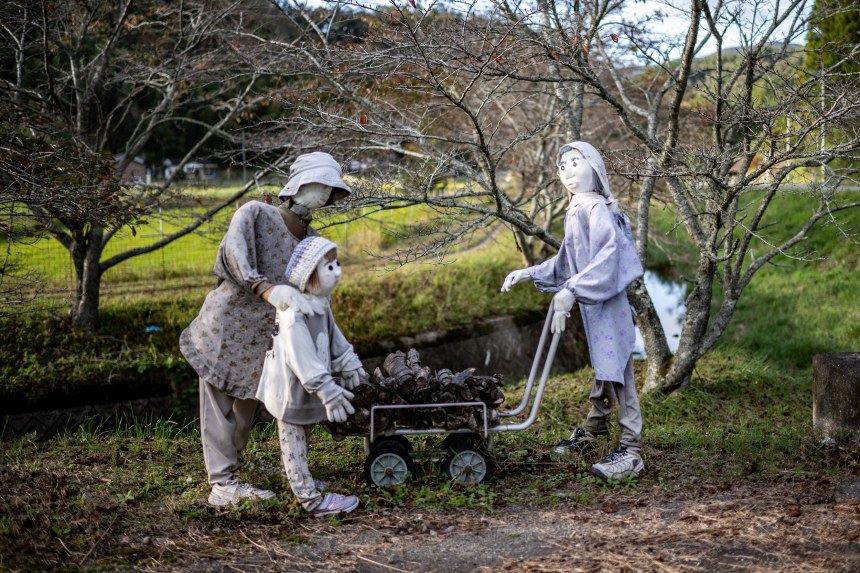
loneliness

depopulation
demographics

Japan

 A family of puppets collects wood in 
 the Japanese village of Ichinono.
 Philip Fong / AFP - Getty Images 
'Stop the boats'

'global trends'


My source: Sam Freedman. The truth about migrant workers: demonised but in demand, and few of us can live without them. The Observer, 03.08.25. pp.12-13.
https://observer.co.uk/news/national/article/sam-freedman-demonising-migrants-wont-fill-jobs-or-boost-falling-populations

Image and context:
'Outnumbered by puppets': Depopulated village in Japan crafts dolls for sense of life
https://www.nbcnews.com/news/world/outnumbered-puppets-depopulated-village-japan-crafts-dolls-sense-life-rcna177216

Saturday, January 04, 2025

Are concepts of adolescence from the Global North appropriate for Africa? A debate

'The proponents for the motion argued that adolescence is indeed a distinct developmental phase when puberty is achieved and the neurocognitive development that occurs shapes behaviours that impact health outcomes. This occurs universally, is marked by cultural rites, and recognised in legal frameworks and therefore geographical distinctions in understanding are unnecessary.'

'The opponents argued that adolescence is more than a biological or legally recognised transition to adulthood: instead, concepts, including that of adolescence, are shaped by beliefs, values and expectations founded within a cultural milieu. The concept is dissonant to Africa as it prioritises individualism over communalism, and attributes gender and social roles as accepted in the Global North.'

'Thus, many interventions targeted at adolescents in Africa have remained ineffective. The notion that the concept of adolescence, which originated in the Global North but is universally applied, is a consequence of colonialism giving less value to the lived realities and understandings of peoples from the Global South.

For achieving both epistemic justice and effective health policy and programmes in global health, acknowledgement and centralisation of context are critical. However, in a more interlinked and open world, there is a massive potential for cross-learning and collaboration across geographies to develop a concerted approach to improve the health of adolescents and for a more equitable global health practice.

However, adolescence is also a social entity shaped by beliefs and values within different cultural contexts. A move away from universal, often western-defined concepts of adolescence, to centring the distinct sociocultural factors that shape adolescence in different societies will enable more effective policies and programming.' (Summary box) 

INDIVIDUAL
|
   INTERPERSONAL : SCIENCES              
humanistic ------------------------------- mechanistic
 SOCIOLOGY : POLITICAL   
|
GROUP
debate (argumentation)


mental space, mindset

my beliefs

values
expectations

ENCULTURATION

Not just NORTH - SOUTH 
but WEST - EAST
philosophy of mind
belief systems

"I DID IT MY WAY"

individualism
[Hodges' model] 'Health career' - 'life chances'

 2018 - scientific symposium
Mwanza, Tanzania

'Adolescence is widely defined as a distinct phase in the life-course during which an individual completes their biological development and transitions from childhood to adulthood.'

Appropriate for Africa - health interventions and global health policy that are shaped by such concepts can be universally applicable and relevant?

geographical distinctions

physical place, space, locale

biology - neurocognitive - puberty
communalism

universal - cultural rites

adolescence - global north culture
but applied universally

'adolescence is also a social entity shaped by beliefs and values within different cultural contexts'

ETHNOLOGY - SOCIO-CULTURAL

Gender - social roles

The rise of POPULAR CULTURE:
Arts - music, film, drama, literature ...
media, technology

"WE DO IT OUR WAY"?!

"Comme d'habitude"

legal - policy

Is there a universal conceptual model to critique*:

UNIVERSALITY
'GLOBAL HEALTH'
UNIVERSAL HEALTH COVERAGE
HEALTH FOR ALL
HEALTH INFORMATION FOR ALL
'COLLECTIVE EMPATHY'
EQUITY - EQUALITY ...?

In policy can you ignore LONG-LAT?

epistemic justice 
effective health policy
programmes in global health
- aimed at adolescents

acknowledgement
centralisation of context 

glocal/global - WHO - national/local


Many thanks to the authors:

Nothando Ngwenya, Chido Dziva Chikwari, Janet Seeley, Rashida Abbas Ferrand - Are concepts of adolescence from the Global North appropriate for Africa? A debate: BMJ Global Health 2023;8:e012614. https://gh.bmj.com/content/8/12/e012614

My source:
https://x.com/chidodc/status/1735564926423277571?s=20

Reminded of 'My Way' :: 'American Graffiti'

*I have long wondered what models of care, models of nursing, nursing and care theories may be found in Africa, across Europe, Asia, South America, Native North America, Australasia and Oceania?  
Is Hodges' model truly global and universal - is it (can a model of care be) culturally neutral? Perhaps, this is another conference debate, or might constitute a special journal issue?

Thursday, July 18, 2024

A Workforce Strategy for Adult Social Care in England

"For the first time ever, the adult social care sector has come together, led by Skills for Care, to develop the Workforce Strategy it needs. Adult social care needs a workforce strategy to ensure we have enough of the right people with the right skills to provide the best possible care and support for the people who draw on it. 
Development of this vital Strategy has been truly collaborative and it could not have been developed without the expertise, time and commitment of many stakeholders."
Individual
|
      INTERPERSONAL    :     SCIENCES                   
HUMANISTIC  --------------------------------------  MECHANISTIC      
 SOCIOLOGY  :    POLITICAL 
|
Group
Job satisfaction

Personalisation - Belongings

Motivation

Attitudes, Opportunities, Incentives

Access to Training


Activities, Reablement

Arts, Dance, Music

Dental and other services

Systems view - Demographics

Collaboration / Liaison


Social Care: At home & residential care

Job status

Local community, schools

Funding of Social Care

Integrated & Person-centred Care

Workforce strategy

Pay - terms and conditions

Government policy

Workforce recruitment & retention:

National - International


Source: Email - Skills for Care and BBC Radio 4 Today.

Friday, September 09, 2022

2021/22 Human Development Report: Uncertain Times, Unsettled Lives: Shaping our Future in a Transforming World

On Friday, 9 September 2022 at 00:37:02 BST, Dennis Raphael <draphael@yorku.ca> wrote:

Canada ranked 15th… UK 18th…

From: Pophealth <pophealth-bounces AT mailman13.u.washington.edu> On Behalf Of Stephen Bezruchka
Sent:
Thursday, September 08, 2022 6:21 PM
To: pophealth AT u.washington.edu
Subject: [Pophealth] 2021 Health Olympics & vast US Health decline

Today the UN released its human development report with life expectancy for 2021. You can access it (Table 1) at http://report.hdr.undp.org.s3-website-us-east-1.amazonaws.com/


I've been using the UN rankings to create the health Olympics since the early 1990s for consistency. The U.S. ranks 44th, down from tied for 36 in 2019.  We are 7.6 years behind the longest lived country, Japan.  If we eradicated our three leading killers (heart disease, cancer, and COVID-19), we would be close to the first in the finish line.  In the UN rankings Thailand is now ahead of us!  And quite a few poorer nations.  

Trying to get action on our not being dead first is challenging.  

Stephen

Stephen Bezruchka MD, MPH
Departments of Health Systems and Population Health & of Global Health
School of Public Health 
Box 357660 
University of Washington 
Seattle, Washington 98195-7660

********************

My source - Dennis Raphael: draphael AT yorku.ca (with additional image c/o UNDP).

Politics of Health Group Mail List Messages

Visit the PoHG website for lots of interesting links and publications: http://www.pohg.org.uk/

Visit PoHG on Facebook: https://www.facebook.com/282761111845400
Follow us on Twitter: @pohguk
You can subscribe to / unsubscribe from the PoHG mail list here: http://www.jiscmail.ac.uk/POHG

Thursday, August 18, 2022

Africa Re-Imagined

 INDIVIDUAL
|
 INTERPERSONAL    :     SCIENCES               
HUMANISTIC --------------------------------------  MECHANISTIC      
SOCIOLOGY  :   POLITICAL 
|


Owolade, T. (2022) Africa reimagined, FT Weekend, Books Life&Arts, 23-24 July, p.8.


Image 'IT'S A CONTINENT'

https://www.waterstones.com/book/its-a-continent/astrid-madimba/chinny-ukata/9781529376784

Wednesday, December 23, 2020

ERCIM News No. 124 Special Theme: "PANDEMIC - Modelling & Simulation"

Dear ERCIM News reader,

ERCIM NEWS

ERCIM News No. 124 has just been published at https://ercim-news.ercim.eu/ The Special Theme of this issue focuses on research surrounding the current epidemic emergency. The contributions address actions to understand and counteract the spread of the virus. This special theme has been coordinated by our guest editors Salvatore Rinzivillo (ISTI-CNR), Joakim Sundnes (SIMULA) and Karin Rainer (AGES).

In the section "Research and Society" some of our institutes describe how they are meeting the challenges of COVID-19.

Thank you for your interest in ERCIM News. Feel free to forward this message to anyone who might be interested.

Next issue:
No. 125,  April 2021
Special Theme: "Brain-Inspired Computing"

Announcements in this issue:


Call for Proposals: Dagstuhl Seminars and Perspectives Workshops
Schloss Dagstuhl – Leibniz-Zentrum für Informatik is accepting proposals for scientific seminars/workshops in all areas of computer science, in particular also in connection with other fields. https://www.dagstuhl.de/dsproposal

SAFECOMP 2021
York, UK, 7-10 September 2021
Call for Papers and Workshop Proposals

The GATEKEEPER 1st Open Call
600,000€ available for AI and Big Data Applications, tools or components


-- 
Peter Kunz                      	
ERCIM Office

Monday, October 26, 2020

Book: Labours of Love

individual
|
INTERPERSONAL : SCIENCES
humanistic ----------------------------------------------- mechanistic
SOCIOLOGY : POLITICAL
|
group - population
|
|
|

"Good care shown to us in our most vulnerable moments can serve 'as an epiphany, not necessarily leading to new knowledge, but to recognition of the importance of something already known.


"The Lancet projects that the number of over-85s requiring 24-hour care will double by 2035."

Bad care, in contrast, can dehumanise us ...
'our sense of dignity is precarious'."


Economic precarity

"the invisible heart"

"in contrast to Adam Smith's "'invisible hand'"


See also previously on  W2tQ:

https://hodges-model.blogspot.com/search/label/social%20care

My source:

Urwin, R. (2020) Crying out for change, The Sunday Times, Culture, 27 September, pp.28-29.

Wednesday, December 11, 2019

Poverty on Election Eve: Gross Neglect

INDIVIDUAL
|
INTER-PERSONAL : SCIENCES
HUMANISTIC -------------------------------------------------- MECHANISTIC
SOCIOLOGY : POLITICAL
|
GROUP

POVERTY
in
THOUGHT

Social care
(Displaced demand)
'here'
Social Care
(Supply deficit)
'here'

POVERTY
in
POLICY 
&
LEADERSHIP

Friday, November 01, 2019

Here is the News: another "Brilliant Map"

Or, to be more precise -

"Brilliant Maps"

An Atlas for Curious Minds – 100 New Ways to See the World

A new book released 5 November 2019:
Brilliant Maps - Book
"Which nations have North Korean embassies? How many countries have bigger economies than California? Who drives on the “wrong” side of the road? And where can you find lions in the wild?
In Brilliant Maps for Curious Minds, you’ll learn all this and much more. One hundred visually arresting maps strike a balance between sobering analysis (number of executions by state) and whimsical insight (the countries of the world where there aren’t any McDonald’s).
Thought-provoking and flat-out fun, this one-of-a-kind atlas—compiled by the editor of the popular Brilliant Maps website—makes surprising connections that illuminate the contours of culture, history, and politics. Brilliant Maps for Curious Minds will change the way you see the world—and your place in it".

See also:

https://www.infographic.ly/


My source:
Wright, I. The World as you've Never Seen It, The Sunday Times Magazine, 27 October 2019, pp.26-31.
 

Monday, August 27, 2018

Chartered Accountant: The value of caring workers

individual
|
INTERPERSONAL : SCIENCES
humanistic ----------------------------------------------- mechanistic
SOCIOLOGY : POLITICAL
|
group


Social care jobs, ... are defined by economists everywhere as low-skilled, or unskilled. For a chartered accountant taking part in a discussion on automation recently, this prompted an existential wobble: "It's easier to automate me than a carer or a cleaner," he said. "So am I really more skilled?"


chartered accountant
formal qualifications


My source: Sarah O'Connor, (2017) Ageing nations need to value caring workers, Financial Times, 17th May, p.11.

Tuesday, April 17, 2018

Enough Nurses - Special Collection c/o Journal of Research in Nursing

http://journals.sagepub.com/page/jrn/collections/virtual-special-issues/enough-nurses


"JRN is pleased to introduce this online special collection of papers. Edited by Jane Ball, this collection comprises previously published papers and reviews that give a taste of the constellation of issues that contribute to having 'enough nurses'. They illustrate the complexity and interdependency of the many elements that must be addressed to achieve the elusive goal of having the right staff, in the right place, at the right time."


My source: https://twitter.com/JRN_latest/status/985889478882578432

Friday, March 16, 2018

UKSS 2018 – Can systemic thinking help shape health services?

Looking forward to a 20 minute presentation I have just sorted accommodation for this conference in June. I am still wondering about train or car, preferring the former if possible for the c.240 mile trip to Portsmouth. With an interest in ecology I welcome the opportunity to be involved in an event connected with Schumacher College. I have long wondered about Dartington. Now that would be an excellent way to study and learn about Hodges' model and 'holistic bandwidth'...

News of this conference I posted on 2 January 2018 but as I add the news to the sidebar - here are some details once again and the necessary links...

UKSS Conference 25th June 2018

Can systemic thinking help shape health services?

A UK Systems Society conference in association with SPMC and the Schumacher institute; supported by the World Organisation of Systems and Cybernetics and the Associazione Italiana per la Ricerca sui Sistemi

Speaker: Alex Whitfield, CEO Hampshire Hospitals NHS Trust

Provision of health service is facing major challenges in every country. Life expectancy has increased, people are active for longer, and citizens expect first class healthcare and for “repairs” to be done quickly to restore them to their full capacity. Some expectations are fantasy but others are justifiable, yet every day we hear or read about outcomes that give cause for concern. In the UK we recognise that the NHS cannot continue in its present form. But the NHS is close to the heart of our citizens making major reforms difficult because of the intense passion that any discussion generates. But the NHS as a ‘system’ is more than 3/4 of a century old. The way that illness and old age are viewed now is different to that when the health service was created. This conference will provide a platform for ideas that might contribute to a way forward.

We would be delighted to see and hear from you at this conference.

Thursday, June 08, 2017

The Care Domains: Where numbers count...

INDIVIDUAL
|
INTERPERSONAL : SCIENCES
humanistic ----------------------------------------- mechanistic
SOCIOLOGY : POLITICAL
|
POPULATION
1:1
Intra- Interpersonal Skills


"All the monoliths, though they vary greatly in size, were fashioned to the exact proportions of 1:4:9, the squares of the integers 1, 2, and 3."


"The rise of capitalism in China resulted in the demise of the "iron rice bowl", under which the state-owned industries provided pensions. Retirees now have to fend largely for themselves or rely on their children, but the collapsing fertility rate has led to the infamous "1-2-4" problem in which a single working-age adult will eventually have to support two parents and four grandparents." p.219.

"2 for 1 offer"
Naylor Report


So let's listen to the wisdom of the four elders...

Sources:
2001: A Space Odyssey Wiki

Ford. M. (2015) Rise of the Robots: Technology and the Threat of a Jobless Future, London: Oneworld Publications. p.219.

Thursday, May 11, 2017

Mental Health Awareness (Second) ... (Hour) (Day) Week (Month) (Year) (Life) (History)

INDIVIDUAL
|
INTERPERSONAL : SCIENCES
humanistic ----------------------------------------- mechanistic
SOCIOLOGY : POLITICAL
|
POPULATION

Thoughts Beliefs Emotions Mood...
Motivation, Confidence
Memory, Experiences, Trauma, Grief

Mental Health - Reasons for Referral

Assessment

Self-help     Self      Self-stigma

Learned Helplessness

Psychological Theories & Therapies

Sleep  Coping  Concentration

self-harm risk, specialist services

Surviving OR Thriving?
Vulnerability

Debate: Ethics, Diagnosis, Philosophy of Care

PSYCHO-
Systematic diagnosis

Evidence-based Care, Treatments

Effective Treatment, Outcomes

Drugs, Side Effects

Local access (200+ miles for a bed?)

Demographics - Research

Data, Information, IT Records

Emergency (MH Crises) Services

Referrer's Knowledge of Care Pathways

Debate: Pathologizing,
Big-Pharma

Evidence Based measures


SOMATIC - BIOLOGICAL
SOCIAL

Group Therapies

Community Family Friends

Relationships - Social Network

Risk  Behaviour  Safety

Mental health as a Social Construct

Stigma

Folk theory UNDERSTANDING Specialist

Sociological Theories
prediction uncertainty expectations

Social Norms      Conformity

Culture, Ethinicity, Education

Anthropology

Quality of Life
POLITICAL

Power         Mental Health Law

Review of Mental Health Act?

WAIT! Government Policy Targets

Gate-keeping
????RING FENCED???
 ? Funding of Services ?
??  Parity of Esteem  ??
???RING FENCED???

 Community Care - Beds - In-patients

Mental Health Services

Primary, Secondary, Tertiary

Mental Health Professionals

Human Resource Planning

Work

Friday, August 12, 2016

Dynamism - Stasis : Demand - Supply :Bed-blocking

individual
|
INTERPERSONAL : SCIENCES
humanistic ---------------------------------------  mechanistic
SOCIOLOGY : POLITICAL
|
group-population


Gibbons, K. (2016). NHS crisis deepens as bed blocking costs £6bn. The Times, August 12, p.1.

Image source:
Hospital Bed By Wojciech Zasina, PL, Noun Project

Friday, April 29, 2016

"Index Case": Do we need a new form..? ( cas index, Indexfall, caso índice, 指數情況, الحالة الدالة, सूचकांक के मामले ... )

index case
nounMEDICINE
noun: index case; plural noun: index cases
  1. the first identified case in a group of related cases of a particular communicable or heritable disease.

Source: Google (and translations)

Hodges' model can map the first identified case of any disease, but just as medicine can turn a crisis around - we need a new form of 'index case'.

In healthcare we spend a lot of time managing 'caseness' and for a population casenesses. While triage is concerned quite rightly with prioritization, safety, efficiency, it also seeks to deny people caseness through gate-keeping. Alternately, for those diagnosed and meeting criteria, services then seek to assess when they are better - on the other side...

A new index case is required to respond to demographic, socioeconomic and environmental pressures. Talk, action and outcomes must be about well-being, sustainable health, strengths, health literacy self-care and recovery.

Hodges' model can facilitate this change in care philosophy, perspective and the concurrent focus of disease AND health.

Consider:

For how long how we espoused person-centered care?

Health is where the person resides*.

So often disease fragments identity, memory, the person, relationships, even the whole community...

Disease is a matter for our humanity.

Hodges' model can be the index case for a person's health and well-being and how they maintain, maximize this status. This might even help us define person-centeredness. A care indices.

Being person-centered should be a index-phenomena that takes cognizance of history where this is available.
This should - must be the index case?

*taken-4-grantedness

Tuesday, May 12, 2015

Nightingale forgotten: Leaving the optimism to others...

individual
INTERPERSONAL : SCIENCES
humanistic ------------------------------------------- mechanistic
SOCIOLOGY : POLITICAL
group
?
One in four 18 - 24-year-olds failed to identify Florence Nightingale as a nurse in a survey that also revealed that one in five people chose not to go into the profession because they felt nurses were unappreciated. ... The Times, p.4.

?

?


Bates Center Blog:

What Would Florence Nightingale Do (WWFND)?: Nightingale and 21st Century Health Care Reform

 c/o IPONS


The Times, Nightingale forgotten, Tuesday May 12 2015. p.4.(Poll, London Clinic)

Hodges' model = Four care domains + Spiritual

Thursday, September 25, 2014

1 in 3 will be older adults by 2025 in Japan

In June Dr Mayumi Hayashi described Japan's vision of 'total care' for its older population in HSJ. The article that prompts this post follows another with lessons for England.

Referring to a "2025 vision" this forward thinking has its roots in established systems of healthcare set up in 1961 and social care established in 2000 (p.25).

Care integration is not new as a fundamental issue in health and social care. It is for me a career legacy issue. As a student nurse it was discussed and debated, closely allied with multidisciplinary and holistic (joined up physical and mental health) care. Even now 37 years later it will drive many arguments and policy deliberations in the run up to the next election here.

Many nations are faced with stark demographics. As the population ages and works its way through wooden blocks, Rubik cubes, it is the population pyramid that takes on increasing significance.


Dr Hayashi lists the need for inclusion, integration and continuation of four components that are essential to the realisation of this vision:
  • maximising the integration of healthcare and social care;
  • promoting policies for prevention and outreach together with safeguarding;
  • embedding supported living programmes and dementia friendly community initiatives; and
  • addressing “late life specific” housing needs.
I have mapped these to Hodges' model below:

individual
INTERPERSONAL : SCIENCES
humanistic ------------------------------------------- mechanistic
SOCIOLOGY : POLITICAL
group
embedding supported living programmes and dementia friendly community initiatives integration of health and social care
"late life specific" housing needs
(integration of health and social care)
promoting policies for prevention and outreach, together with safeguarding


It becomes clear to see in Japan, China and other nations how telecare and smart homes have a role to play. Getting the basics of integrated care resolved firstly is the prerequisite whatever the culture.

Where achieved the integration of health and social care can act as a diagonal brace as it straddles two care domains. Perhaps the model also reflects the ongoing challenges of parity in esteem in mental health care and physical care; and the funding ambiguity for people living with dementia as opposed to other medical conditions?

In January 2014 the FT Weekend magazine also featured an article on ageing in Japan.

Hayashi, M. (2014) Japan's vision of a 'total care' future looks bright, Health Service Journal, 124, 6404, 25-27. 

FT magazine cover image:
https://www.facebook.com/financialtimes/photos/a.10150157857040750.297340.8860325749/10152119294570750/?type=1