Hodges' Model: Welcome to the QUAD: perception

Hodges' model is a conceptual framework to support reflection and critical thinking. Situated, the model can help integrate all disciplines (academic and professional). Amid news items, are posts that illustrate the scope and application of the model. A bibliography and A4 template are provided in the sidebar. Welcome to the QUAD ...

Showing posts with label perception. Show all posts

Thursday, October 01, 2026

Paper - 'Women's voices in rural Malawi: antenatal care research and community learning'

Dear HIFA colleagues,

My friend, Ted Lankester, suggested I share my recently published research with this community.

The paper, published in PLOS Global Public Health, explores women’s perceptions of pregnancy and antenatal care in Chizenga village, Chikwawa, Malawi. It arose from my MSc dissertation at the Liverpool School of Tropical Medicine, with co-authors Deborah Nyirenda and Terry Kana.

Through interviews with 14 pregnant women, we explored how understanding of antenatal care interacts with transport costs, distance, nutritional constraints, gender dynamics and experiences of respectful and disrespectful care. Women also expressed a desire for more community-based education and outreach.

The full open-access paper is available here: https://doi.org/10.1371/journal.pgph.0005515

Layton H, Nyirenda D, Kana T (2026) A qualitative study to explore women’s perceptions of pregnancy and antenatal care in Chizenga village, Chikwawa, Malawi. PLOS Glob Public Health 6(9): e0005515. https://doi.org/10.1371/journal.pgph.0005515

Their accounts inspired me to develop the Sangalala Maternal Health Partnership Programme with local partners, through The Reach Foundation UK. Our first cohort (39 women and 1 man) has recently completed the programme in Uganda, and we are now learning from participants’ experiences to strengthen it.

I would welcome members’ experiences of making maternal health information accessible and useful in rural communities, particularly where information needs sit alongside practical barriers to accessing care.

I promised the women who participated that I would help raise their voices. Sharing their perspectives and learning from this community is one way I hope to honour that promise.

Best Wishes,

Helen

HIFA profile [and my source]: Helen Layton is a Nurse and Global Health Consultant; Founder & Clinical Director, The Marula Institute; Co-founder & Executive Director, The Reach Foundation UK/Spain. My professional interests include maternal and child health, global health equity, respectful maternity care, community-led health education, and translating research into practice. As Co-founder and Executive Director of The Reach Foundation UK and Founder and Clinical Director of The Marula Institute, I am particularly interested in strengthening health systems, workforce education, safe care for children with complex needs, and ensuring women’s and families’ voices inform care. 
Helen AT cathcom.org

Saturday, September 05, 2026

UN votes to adopt new world map to reflect Africa's true size | BBC News

UN tells the world: Stop making Africa look small

'By 164 votes to one, Member States on Friday endorsed a resolution promoting map projections that more accurately reflect the true size of continents – the culmination of an African-led campaign against the 16th-century Mercator projection, still the most widely used map in the world. 

The United States cast the sole vote against, dismissing the initiative as part of a “radical ideological project.” 

Six countries – Estonia, Georgia, Lithuania, Moldova, Serbia and Ukraine – abstained. 

The resolution does not ban the Mercator projection or impose a replacement. Instead, it encourages governments, schools, international organizations and technology companies to use the Equal Earth projection and other so-called equal-area maps when relative size matters, and to teach the limitations of any flat map in representing a spherical planet.'

Continued ... UN


Previously: 'cartography'

Friday, April 10, 2026

'Healing grid' - the penultimate?

Healing grid by Ryota Kanai

Hodges' model is surely a clear winner 'healing grid'? Acting not only in healing, but in recovery, rehabilitation, reablement, palliative, illness and well-being too.

Quite a grid all-in-all (which also fascinate grandchildren).

My source: 

Previously: 'grids' : 'perception' : 'vision' : 'lines' : 'geometry'

#ArtemisSafeReturn #PrecisionGridManoeuvres

Saturday, March 21, 2026

'Health - Illness': Status - presence - absence - Being

A pre-charity shop revisit: 

'So long as we are healthy, we do not notice that we are healthy. Health is one of those phenomena that we do not perceive as anything special because they are a part of everyday life. We discover them by their absence. Only illness enables us to see health as health. That I am healthy, and in what way I am healthy, is something I experience when, and to the extent that, I am or was not healthy, or when I perceive (but this it is difficult to do) that, and to what extent, someone else is or was not healthy. Being healthy is not the only 'being' that escapes our gaze precisely by being, and that appears to us by its absence. One could say the same of being as such.' p.257.

von Weizsäcker, Carl Friedrich (1971 [1980 trans.]). Einheit der Natur [The Unity of Nature] New York: Farrar Straus Giroux.

If we are to demonstrate ('prove') that Hodges' model can be applied, is relevant in:

  • illness, disease, trauma (physical and mental);
  • health and well-being; 
  • human development, ageing, pregnancy;
  • social care; 
  • preventive medicine, health promotion, health education;
  • life sciences, bioengineering; 
  • public (community and mental) health;
  • self care;
  • spiritual health;
  • and global - planetary (political) health ...

Then these observations by Friedrich, allied with definitions of health, as per the WHO's Constitution:

'Health is a state of complete physical, mental and social well-being and not merely the absence of disease or infirmity.'
https://www.who.int/about/governance/constitution

The oft cited (when I was a student nurse) definition of nursing by Virginia Henderson:

“Assisting the individual, sick or well, in the performance of those activities contributing to health or its recovery (or to peaceful death) that an individual would perform unaided if he had the necessary strength, will or knowledge”.
https://libguides.twu.edu/c.php?g=270174&p=1803121

We need to 'see' beyond these sources, to take in the global situation. But, being situated this is something Hodges' model is ideally equipped to achieve.

Sunday, February 22, 2026

BCS SPECIALIST GROUP ON ARTIFICIAL INTELLIGENCE: Virtual seminar 'Generative AI'

BCS SPECIALIST GROUP ON ARTIFICIAL INTELLIGENCE (SGAI)

The next in our series of free evening virtual seminars will be on Wednesday March 11th from 6 p.m. to 7.30 p.m. (UK time). The topic will be Generative AI.

Synopsis
Generative AI is rapidly reshaping the landscape of intelligent systems. This virtual seminar covers cutting-edge research and visionary perspectives on the design, deployment, and governance of generative models. It explores how generative models are enabling adaptive control, task planning, and embodied intelligence in dynamic environments. It also addresses GenAI robustness, interpretability, and alignment which are critical pillars for deploying generative systems in high-stakes domains.

The speakers will be Dr Mark Post (University of York) on 'Safety, Trust, and Perception of Generative AI: Is it deceiving us, or are we deceiving ourselves?' and Dr Erfu Yang (University of Strathclyde) on 'Generative AI in Robotics and Automation: Applications, Advancements and Challenges'.
The virtual seminar series is free and open to all. For further details and for the zoom link to use go to http://https://bcs-sgai.org/seminars/2026-03-11/.

Details of future SGAI events will be placed on the website at https://bcs-sgai.org as they become available. To register to be sent information about future SGAI events by email go to https://www.bcs-sgai.org/register/.

Max Bramer
Chair, BCS SGAI
----------------------------------------------------
Chair, British Computer Society Specialist Group on Artificial Intelligence
Emeritus Professor, School of Computing, University of Portsmouth, UK
http://www.maxbramer.org

My source: BCS-AI mail list.

Friday, February 13, 2026

{ Humanise } ARChITECTURE

INDIVIDUAL
|
    INTERPERSONAL    :     SCIENCES               
HUMANISTIC --------------------------------------  MECHANISTIC      
SOCIOLOGY  :   POLITICAL 
|
GROUP


ARChITECTURE


Humanise.org


My source: Francesca Specter, Which is the fairest of them all? House&Home, FTWeekend, 11-12 October, 2025. pp.1-2.  

Spector refers to the Policy Exchange publication above, and other works:

McAdams P, Svobodova S, Newman T-J, Terry K, Mather G, Skelton AE, et al. (2025) The edge orientation entropy of natural scenes is associated with infant visual preferences and adult aesthetic judgements. PLoS ONE 20(2): e0316555. https://doi.org/10.1371/journal.pone.0316555

Valentine, C.; Wilkins, A.J.; Mitcheltree, H.; Penacchio, O.; Beckles, B.; Hosking, I. Visual Discomfort in the Built Environment: Leveraging Generative AI and Computational Analysis to Evaluate Predicted Visual Stress in Architectural Façades. Buildings 2025, 15, 2208.
https://doi.org/10.3390/buildings15132208

Calder, B. (2016). Raw Concrete: The Beauty of Brutalism. London: William Heinemann. 

Previously: 'housing' : 'homeless' : 'architecture'

Saturday, January 24, 2026

Affordances


Affordance

An affordance is a perceptual pattern with survival significance. Affordances are relational, rather than objective or subjective properties. As Gibson, who coined the term, observes, 'An important fact about the affordances of the environment is that they are in a sense objective, real, and physical, unlike values and meanings, which are often supposed to be subjective, phenomenal and mental. But, actually, an affordance is neither an objective property nor a subjective property; or it is both if you like. An affordance cuts across the dichotomy of subjective-objective and helps us to understand its inadequacy' (Gibson 1979, 129). 
[Proust, Glossary, p.309.]


INDIVIDUAL
|
 INTERPERSONAL    :     SCIENCES               
HUMANISTIC --------------------------------------  MECHANISTIC      
SOCIOLOGY  :   POLITICAL 
|
GROUP

subjective

objective


Re. 'Survival significance' ...

Does this make affordances relevant in clinical education, and education more generally?

What of assisted dying in theory, policy, law and practice?

Are there any implications for the models employed by artificial intelligence - LLMs, neurosymbolic reasoning / AI (wave x)?

Source: Joëlle Proust (2013). The Philosophy of Metacognition: Mental Agency and Self-Awareness.  Oxford: Oxford University Press, Oxford. ISBN: 978-0-19-960216-2

Précis of The Philosophy of Metacognition:
https://joelleproust.org/wp-content/uploads/2012/09/pdf15.pdf 


See also: 'subject' : 'object' : 'affordance' : 'interface'

Thursday, October 16, 2025

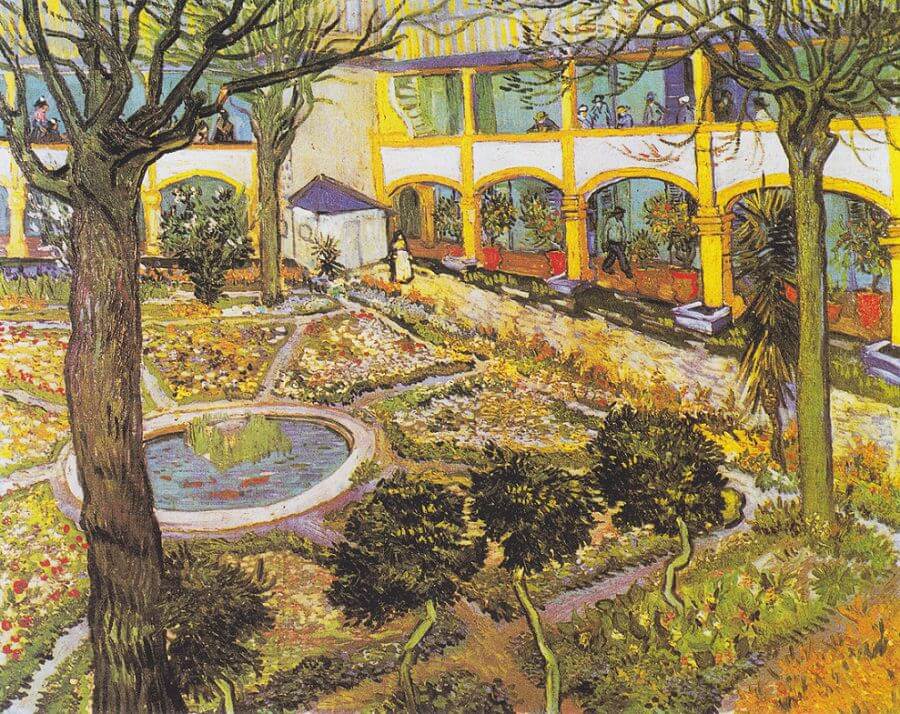
Recovery, Rehabilitation, Reablement by Van Gogh

Individual
|
      INTERPERSONAL    :     SCIENCES               
HUMANISTIC =========================  MECHANISTIC      
 SOCIOLOGY  :    POLITICAL 
|


My source: Van Gogh exhibitions (at least two); and Robin Lane Fox. Two years in Provence, House&Home, FTWeekend, 11/12 January 2025. p.10. 

Image source: https://www.vincentvangogh.org/the-asylum-garden-at-arles.jsp

Friday, April 11, 2025

The 'animal' in Hodges' model i

The New York Review of Books


'The fact that a horse has his eyes on the sides of his head identifies horses as animals of flight rather than fight, in contrast with animals like tigers, who have their eyes in the front.' p.17.


Hodges' model has two pairs of 'eyes'.

Can you see them?


Hodges' model: Axes & Domains
Structure AND Content :: Fight OR Flight

Doniger, Wendy. The Rise and Fall of Warhorses. The New York Review of Books. April 10, 2025. Volume LXXII, Number 6. pp.17-19. https://www.nybooks.com/issues/2025/04/10/

Wednesday, April 09, 2025

All Day All Night - c/o Christine Sun Kim

Source: https://whitney.org/media/61514


individual
|
INTERPERSONAL : SCIENCES
humanistic ------------------------------- mechanistic
SOCIOLOGY : POLITICAL
|
group
'synaesthetic sphere'

DEAFNESS


SOCIETY

parents signing
friends signing?

ghosting

SOCIO-


ghosting

accessibility
inclusion


-POLITICAL

Ack. Christine Sun Kim - https://christinesunkim.com/

Liverpoool Biennial 2025 - Christine Sun Kim (Look forward to this - may post again.)

My source: Budick, A. The sound of Deaf rage, Life&Arts, FT Weekend. 1-2 March 2025, p.16.

Wednesday, March 26, 2025

Objectify me by Nicola L.

Individual
|
      INTERPERSONAL    :     SCIENCES               
HUMANISTIC  --------------------------------------  MECHANISTIC      
 SOCIOLOGY  :    POLITICAL 
|
Group
'You can touch
my breasts,
caress my stomach,
my sex.
But, I repeat it,
it is the last time,'

- read a note
L. left in a drawer.


Nicola L.
 'La Femme Commode' (1969)


My source: Stoppard, L. Objectify me, House&Home, FTWeekend, 5-6 October 2024, pp.1-2.

Monday, November 04, 2024

Paths, lines, corners, edges and axes . . .

'If a farmer has made a path, he is able to saunter easily up and down it. That is what the path was made for. But the work of making the path was not a process of sauntering easily, but one of marking the ground, digging, fetching loads of gravel, rolling, and draining. He dug and rolled where there was yet no path, so that he might in the end have a path on which he could saunter without any more digging or rolling. Similarly a person who has a theory can, among other things, expound to himself, or the world, the whole theory, or any part of it; he can, so to speak, saunter in prose from any part to any other part of it. But the work of building the theory was a job of making paths where as yet there were none.' 
Gilbert Ryle, The Concept of Mind (1949; Penguin, 1999), p. 272.

path
https://hodges-model.blogspot.com/search?q=path

line (line of sight)
https://hodges-model.blogspot.com/search?q=line

corners
https://hodges-model.blogspot.com/search?q=corners

edges
https://hodges-model.blogspot.com/search?q=edges

axes: STRUCTURE
domains: CONTENT

Frayn, Michael (2006). The human touch: our part in the creation of a universe. Notes. London: Faber & Faber. p.425.

Previously: 'Frayn on maths'

I will keep this book a bit longer - chapter 'Home Address' (the self) a good read.

Wednesday, October 02, 2024

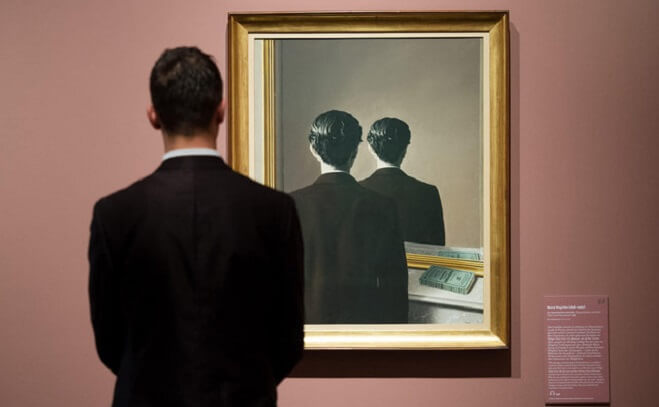
It's not that I want a copy ...

... I just want to know what it means to you?

individual
|
INTERPERSONAL : SCIENCES
humanistic ------------------------------- mechanistic
SOCIOLOGY : POLITICAL
|
group
Not to Be Reproduced, 1937 by Rene Magritte


Image: https://www.renemagritte.org/not-to-be-reproduced.jsp

Saturday, June 29, 2024

Book for review: iv "Philosophy of Care - New Approaches to Vulnerability, Otherness and Therapy"

Don't worry this is not a chapter-by-chapter review. Having cast the stone that is Hodges' model we will skip a few times.

The use of footnotes varies from chapter to chapter. They inform the text, in several instances being quite illuminating. Beside the footnote (1/3 of a page) I noted - 'baby, cacophony, perception - brain - not overwhelmed but can't ignore' (p.41). Stoicism is the focus in chapter 3; perception, fields, manifold, circles of care, self, time, situation! We have field, subfields, domains.
"Perception is always about a diagnosis of the situation in which the living being finds itself. ...

... perception is always about finding one's "whereabouts" or one's "location" in life's journey." p.42.

On the features of perception, 4/4: "might be termed the breadth or width of the perceptual field." p.42. 

"As pointed out above, all perception has the structure of a compact, continuous, and uninterrupted manifold. In other words, it forms what we have termed a field. But the perceptual field  could contain nothing but the "bare bones" of "inert" qualia, (a manifold of simple qualities impinging themselves upon the perceiver)." p.42. 

The author, Jorge de Carvalho continues another view of qualities that take place in "each given moment". This is the challenge of salience, what is significant? How to 'read' in care: the spoken, the unspoken? 

Developing notes on Hodges' model as a mathematical object, Hodges' model in its basic form as a template, I'm proposing as an empty set. The structure of Hodges' model, its two axes instantiate the "bare bones". In programming/instruction terms ... Hodges' model provides INITIALISATION. A reset. This can act as a prompt for learners to acknowledge the person - the other and consider 'unconditional positive regard'. There's polarity too (p.46) and each living being lives in its own global field, in its own global 'map' - in its own geography" (p.49). Physical geography and the change 'there' is giving rise to cogeographical (a neologism?) disruption - eco-anxiety and climate-angst. 

Psycho-geography: the polarity of our times?

Another note, amongst Hierocles' circles is 'reflex arc'. So many feedback loops, cascades to worry about. 

As Jorge de Carvalho writes: 'what we are talking about is a very complex field of fields. ... described both as a compass rose and as a framework of concentric circles" (p.51). [There's a relay race, a torch relay in ancient terms p.54. Care is the object that is passed on. I've a dual-shaped baton to pass on.]

Care is more than perception (p.52), care presupposes a degree of activity or action. I like the acknowledgement of 'vigilant waiting' too. For me this draws in the importance of communication; Watzlawick's Five Axioms of Communication. After all, what happens to all these perceptions? There's vulnerability, fragility and care for the sheer existence and the whole content of a given being (p.56). Jorge de Carvalho, deploys a series of numbered points which helps reading. Page 60's footnote had me drawing circles, unborn at the centre: as one. But the collective unborn in another rough circle. Eachtimeness: I like this Stoic formulation through circles. Fourthly, we arrive at pure care. I'm still pondering on ".. there is no absolute either/or dichotomy between care and its opposite" (p.61). Integration is also here, an issue for modern times, a legacy problem from ancient times?

Luis Mendes's chapter I must read again. The abstract includes:
"Three fundamental aspects will be identified: (a) the need to consider self-existence from a global point of view; (b) the need for an axis for that life-view; (c) the need for correspondence between self-existence and life-view. Apparently, this structure is formal and arbitrary. Secondly, I will analyse the structure of despair. Three fundamental aspects will be analysed: (α) the requirement for a life-view which can be applied to the totality of subjective existence; (β) the requirement for an unconditioned instance of meaning; (γ) the requirement for the exclusion of the possibility of failure." p.79.
I'm sure Kierkegaard has featured in Philosophy Now, and The Philosophers' Magazine. Mendes' focus is arbitrariness. The hypothesis is well explained (p.80) structure of care. There's much for me here: care, life-view (health career - life chances), "a global understanding maps the world" (p.81), existential map, fulfilment, meaning (of course!). Reading -
"So, a life-view needs to be stabilized, to have unity. It needs an instance that works as an axis and as a point of support. We need something to support our life" (p.83).
I could have jumped up, waved and shouted "OVER HERE!" Would Kierkegaard have been pleased? Perhaps I should have read Kierkegaard, not Michel Serres (please see bibliography in the sidebar)? Still time (fingers x'd); especially if there's any interest in the form of co-author(s)? Care is full of ideals. Mendes through Kierkegaard gives my  project encouragement: "Truth is to live for an idea." p.84. Not necessarily truth but the idealism in care, including identity. It is helpful in care to be reminded of the ideal as a calling, hence motivation (intrinsic and extrinsic) is still key. If you're intrinsically motivated, devoted to your chosen vocation, is your pay that important - to the government/organisation that employs you? A shame this is so often lost to political leaders; who, given their chosen vocation, exhibit a markedly short memory.

Braga, J. & Santiago de Carvalho, M. (Eds.), (2021) Philosophy of care: New approaches to vulnerability, otherness therapy. Springer. 

Many thanks again to Springer for my copy, especially given a follow-up request, well post-publication date.

Individual
|
      INTERPERSONAL    :     SCIENCES                   
HUMANISTIC  --------------------------------------  MECHANISTIC      
 SOCIOLOGY  :    POLITICAL 
|
Group

personal courage

relational - (emotional) care

despair - fulfilment

motivation

ideals

unity - stability

maps

compass - orientation

models - frameworks

geography

life as a whole

society - community of practice

external validation

extrnisic motivation


sustainable development goals

policy

accountability

failure (courage here - political convictions?)


See also:

body & soul - Book: Philosophy of care: New approaches to vulnerability, otherness therapy


Book for review: iii "Philosophy of Care - New Approaches to Vulnerability, Otherness and Therapy"

Friday, October 13, 2023

Hodges' model: How the I-G axis is idealised

As a conceptual model, Hodges' model is idealised.

As an example, take the concept individual in the vertical axis. Whether a patient, client, carer, student or teacher, the individual is where the self also resides.


'I' - INDIVIDUAL 'Self'
|
     INTERPERSONAL    :     SCIENCES               
HUMANISTIC --------------------------------------  MECHANISTIC      
SOCIOLOGY  :   POLITICAL 
|
GROUP

spiritual - emotional self
(my mind)
Identity?


material / physical self
(my body)
identity?


social self
(realised, or not; loneliness, excluded, isolated, ostracized, or loner by choice/character. Socio-Politically we arrive at 'civil society', if indeed it is civil.)


political self
(whether or not politically
motivated / engaged. Self as a citizen arises here, with the law in whether in States voting is mandatory.)


 James, W. (1892). The conscious self. In W. James The principles of psychology (Volume 1), Chapter 10. Harvard university Press: MA.

"From the very beginning of the chapter, James established that he was going to take a fresh approach to his subject. "In its widest possible sense," he wrote,
'a man's Self is the sum total of all that he CAN call his, not only his body and his psychic powers, but his clothes and his house, his wife and children, his ancestors and friends, his reputation and works, his lands and horses, and yacht and bank-account.' (p. 279) 
The explication James offered for this claim is telling: All these various things and persons are part of an individual's self insofar as they give that individual the same emotions (pp. 279-280). In pointing thus toward the emotional foundations of the self, James indicated right at the start that he was going to follow Bain (1859, chap. 7) and others in reaching beyond the old rationalist approach to "the soul" in order to ground his treatment of the human self on the experience and makeup of the whole person, emotional as well as intellectual." (p.107)

 
Leary, David E. "William James on the Self and Personality: Clearing the Ground for Subsequent Theorists, Researchers, and Practitioners."Reflections on The Principles of Psychology: William James after a Century. Ed. William James, Michael G. Johnson, and Tracy B. Henley. Hillsdale, NJ: L. Erlbaum Associates, 1990. 101-37. Print.

Thursday, October 12, 2023

Nursing observations: the need for Political inoculation in "Intro 101"

"Hockey's (1989b) typology of nursing activities as consisting of autonomous, derived and delegated elements suggests we should focus on the interventions which are initiated as well as undertaken by nurses. This is the core of nurses' work. It is what nurses do which is not done by other people. Nursing has always found it difficult to describe this core. Goddard's (Nuffield Provincial Hospitals Trust 1954) choice of the term 'basic' to describe this element of nursing work has had a disastrous influence not only on nurses' perceptions of the value of their work but also on the way in which nursing is regarded by other professional groups. It has been suggested that the term was used as a shorthand for 'fundamental' or 'essential' and that is has been systematically misinterpreted over the last three decades* by those who wish to use it to justify the horizontal division of nursing labour. Goddard demonstrated that basic nursing was undertaken by the least qualified and the lowest skilled. This observation might have sparked off a revolution in the delivery of nursing care but instead it has been and is used to justify the continued employment of unskilled labour in direct patient care." p.128.

*My emphasis: "... over the last three decades .." hence, since the early 1960s.


INDIVIDUAL
|
     INTERPERSONAL    :     SCIENCES               
HUMANISTIC --------------------------------------  MECHANISTIC      
SOCIOLOGY  :   POLITICAL 
|
GROUP


"The struggle between the twin poles of professionalism and bureaucracy is mirrored in that between the holistic, therapeutic approach in nursing, and that which is reductionist and functional (e.g. the task-centred approach to care).
To work successfully in such a climate demands considerable skills of nurses, for they must seek to change the nature of the organisation, or at least to neutralise its effects so that they can concentrate on therapeutic practice. Amongst these skills must be those of change agency." p.107. 

"Much of health care and particularly nursing is still organised along hierarchical and bureaucratic lines. To work professionally in such a system may in some way be seen as a contradiction in terms. The nurse may seek to exercise professional autonomy and make decisions about patient care (and indeed the organisation may seem to be encouraging him or her, at least superficially, to do so). Yet at the same time the nurse receives conflicting signals as others endeavour to exercise control over nursing practice such as doctors, senior nurses, finance directors, supplies officers and so on." p.107. 


In this book's final chapter: Paterson and Zderad's five Phases of Phenomenological Nursology.^

INDIVIDUAL
|
     INTERPERSONAL    :     SCIENCES               
HUMANISTIC --------------------------------------  MECHANISTIC      
SOCIOLOGY  :   POLITICAL 
|
GROUP

1. Preparation for the nurse knower coming to know.

(Hodges' model as a template - 'clean slate' also facilitating unconditional positive regard - openness to a new encounter - whether the first or subsequent.)

2. Nurse knowing the other intuitively.

(Intuition still has a role. A message: speak to a colleague - seek supervision!)

3. Nurse knowing the other scientifically.

(Reductionism is needed yet balanced with the humanistic esp. as the march (float ...) of the robots/AI follows apace.)

4. Nurse complementarily synthesising known others. 

(This is a purpose for Hodges' model, supporting the user to identify salient concepts and the relationships between them and their quality; then to reflect, think critically and move towards formulation.)

5. Succession within the nurse from the many to the paradoxical one. 

Nursing as Therapy
  (Tied to #4 above, but can emphasize health education, health literacy, co-production and co-creation with the patient - client. A collapse - in the synthesis with simultaneity of the individual and collective. Arriving at a conclusion and for the future of Hodges' model in theory and practice: an abstraction.)

Paterson J.G., Zderad L.T. (1976). Humanistic nursing. New York: John Wiley.
 

The conceptual scope of Hodges' model is demonstrated in how it can encompass other (all?) models of care and frameworks, including humanistic nursing.

McMahon, R. and Pearson, A. (1991) Nursing as Therapy. London: Chapman & Hall.
^Chapter 8 - Breaking the mould: a humanistic approach to nursing practice. pp.170-191.

Bought secondhand, 'Nursing as Therapy' caught my attention as I have read and wondered about 'assessment as therapy' across disciplines.

Wednesday, June 14, 2023

[ Towards . . .] A Geometry of Care*

Context -
"Introduction: We present a new model of skilled performance in geometry proof problem solving called the Diagram Configuration model (DC)." p.577.

INDIVIDUAL
|
INTERPERSONAL    :     SCIENCES               
HUMANISTIC --------------------------------------  MECHANISTIC      
SOCIOLOGY  :   POLITICAL 
|
GROUP
"A safe abstraction only ignores irrelevant details, i.e., details which only discriminate between objects that are functionally equivalent with respect to the problem solving task." p.582.

So much to consider here, I may be overstretching analogies but then Hodges' model can act as both a conceptual rack and resolver.


"For instance, to use the side-angle-side rule for inferring triangle congruence a problem solver must locate three congruence relationships - two between corresponding sides of the triangles and one between corresponding angles. In searching for a list of statements for these three relationships, one might need to consider numerous possible combinations of three statements that exist in the list. However, if these relationships are marked on a diagram, one can quickly identify them since the side-angle-side configuration comes together in each triangle at a single vertex. In other words, related information is often easier to find in a diagram because it is typically in the same locality whereas the same information may be separated in a in a list of statements. This is the locality feature of diagrams." p.584.


not just 'local' -


- but intra- interdomain -
with constant stress on safety.


Koedinger, K.R. & Anderson, J.R. (1995) Abstract Planning and Perceptual Chunks. In  Diagrammatic Reasoning: Cognitive and Computational Perspectives. Janice Glasgow, N Hari Narayanan, B. Chandrasekaran (Eds.). Massachusetts: AAAI PRESS / MIT Press. pp.577-625.

Book cover: https://dl.acm.org/doi/book/10.5555/546459

*There may be several? But -
"One of the places where the Geometry tutor expert (GTE) gets bogged down while attempting difficult problems is in the fruitless application of algebra inferences. Algebra expressions can be combined and manipulated in infinite variety and as a result, algebra inferences often lead problem solvers into black holes in the search space from which they may never return." (17.4.3 Avoiding Algebra in the Diagram Configuration Space),  p.593. 


Wednesday, November 23, 2022

Communication - "See what I mean?"

"Lasswell (1948) claimed that an act of communication was adequately explained only when every aspect of his famous question had been answered:

who - says what - in which channel - to whom - with what effect?"

Lasswell, H.D. (1948) The Structure and Function of Communication in Society. In Bryson, (ed.), The Communication of Ideas, Harper & Brs.


 INDIVIDUAL
|

INTERPERSONAL
   :     SCIENCES             

HUMANISTIC --------------------------------------  MECHANISTIC     

SOCIOLOGY
  :   POLITICAL
|
GROUP


who

says what
in which channel

to whom

with what effect?


My source: 

Morgan, John. & Welton, Peter.  (1992).  See what I mean? An introduction to visual communication. London :  Edward Arnold. pp.2-3.  http://www.loc.gov/catdir/enhancements/fy0638/92229403-t.html


See also - the concept of information remains an interest here:

Jones, P. (1996) Humans, Information, and Science, Journal of Advanced Nursing, 24(3),591-598.

Jones, P. (1996) An overarching theory of health communication? Health Informatics Journal,2,1,28-34.

Tuesday, July 05, 2022

PsychoPathology: Space, Social Perception, and Mental Disorders ...

In the Philos-L "The Liverpool List" I noticed this (online) issue of Psychopathology and was drawn to its themes, especially that of space.

TABLE OF CONTENTS

129. Space, Social Perception, and Mental Disorders: Phenomenological and Empirical Approaches
Bader, O.; Bizzari, V.; Fuchs, T.
https://www.karger.com/Article/FullText/524754 (Open Access)

132. Scale for Space and Time Experience in Psychosis: Converging Phenomenological and Psychopathological Perspectives
Arantes-Gonalves, F.; Wolman, A.; Bastos-Leite, A.J.; Northoff, G.
https://www.karger.com/Article/FullText/519500

143. Alterations in the Experience of Time, Space, and Intersubjectivity and the Interaction with Pre-Existent Psychopathology during the COVID-19 Pandemic
Lau, I.; et al.
https://www.karger.com/Article/FullText/522345

156.  Reopening Selves: Phenomenological Considerations on Psychiatric Spaces and the Therapeutic Stance
Thoma, S.; Schwnzl, I.; Galbusera, L.
https://www.karger.com/Article/FullText/517888

168. Borderline We-Space? The Phenomenology of the Background of Safety in Borderline Personality Disorder
Van Duppen, Z.; Schmidt, P.; Lowyck,B.
https://www.karger.com/Article/FullText/520860

179. Borderline Personality Disorder, Lived Space, and the Stimmung
Lo Monte, F.; Englebert, J.
https://www.karger.com/Article/FullText/521182

190. Background Feelings of Belonging and Psychological Trauma
Wilde, L.
https://www.karger.com/Article/FullText/518327

201. Interpersonal and Intersubjective Alienation in Social Stigmatization and Depression
Paskaleva-Yankova, A.
https://www.karger.com/Article/FullText/519253 (Open Access)

211. Gestalt Perception and the Experience of the Social Space in Autism: A Case Study
Bader, O.; Fuchs, T.
https://www.karger.com/Article/FullText/524562 (Open Access)

Edited - removed active links, affiliations, spurious text codes/line breaks, added one et al.


INDIVIDUAL
|
 INTERPERSONAL    :     SCIENCES               
HUMANISTIC --------------------------------------  MECHANISTIC      
SOCIOLOGY  :   POLITICAL 
|
GROUP

psycho-

space

Intra- Interpersonal
Intersubjective


-pathology

space


empirical


social perception

'We-space'?

space

'We-space'?

Tuesday, June 01, 2021

Book: Noise

individual
|
 
 INTERPERSONAL : SCIENCES
humanistic ----------------------------------------------- mechanistic
SOCIOLOGY : POLITICAL
|
group
noise?

noise? noise?

Daniel Kahneman, Olivier Sibony, Cass R. Sunstein, Noise: Exclusive Edition (Hardback), HarperCollins Publishers.