Hodges' Model: Welcome to the QUAD: grids

Hodges' model is a conceptual framework to support reflection and critical thinking. Situated, the model can help integrate all disciplines (academic and professional). Amid news items, are posts that illustrate the scope and application of the model. A bibliography and A4 template are provided in the sidebar. Welcome to the QUAD ...

Showing posts with label grids. Show all posts

Saturday, September 12, 2026

TED - Talks & Listenings

THOUGHT

EDUCATION

DESIGN

  
individual
|
INTERPERSONAL
: SCIENCES             
humanistic ------------------------------- mechanistic
SOCIOLOGY : POLITICAL   
|
group
 
THOUGHT
 
Cognitive maps

Your -
Sense of direction?

Maps

DESIGN

'True South'


Ancient maps - periplus

EDUCATION for All


Maps - Power
 

Our -
Sense of direction?


Previously: 'thought' : 'education' : 'design' : 'cognitive map'

My source:  https://x.com/NobelPrize/status/2098073718371262921?s=20 and @TED_ED

Friday, April 10, 2026

'Healing grid' - the penultimate?

Healing grid by Ryota Kanai

Hodges' model is surely a clear winner 'healing grid'? Acting not only in healing, but in recovery, rehabilitation, reablement, palliative, illness and well-being too.

Quite a grid all-in-all (which also fascinate grandchildren).

My source: 

Previously: 'grids' : 'perception' : 'vision' : 'lines' : 'geometry'

#ArtemisSafeReturn #PrecisionGridManoeuvres

Wednesday, September 11, 2024

THE GRID by Eli Payne Mandel

individual
|
INTERPERSONAL : SCIENCES
humanistic ------------------------------- mechanistic
SOCIOLOGY : POLITICAL
|
group

[125]
'Therefore, a mathematician babbles when he refers to cutting a given line in two. The actual line that he shows to us on the abacus has length and width. But the line he has in mind is a stroke with length and no width. What is drawn on the abacus cannot be such a stroke, and he who goes about cutting it cuts not the line that is but the line that is not.'

(Sextus Empiricus, Against the Mathematicians 9.282)
(n.b. The above is printed upside-down on the page.)

Scatter the trace of the vessel from the ash. Pythagoras here is riddling about confusion and mental cloudiness, for if one wants to do philosophy one must pass over physical and sensible demonstration in favor of abstract argumentation. The ash is analogous to the dust on the abacus in which diagrams are delimited and proofs brought to an end. 

(Iamblichus, Exhortation to Philosophy 34)' p.55


'[1] In ancient Greek, an abacus is a sand table. 'The abacist draws lines and maybe moves pebbles around the lines. When done, she wipes the sand blank. 


[2] A board or slab for drawing, computation, games; a cutting board. Technical term, likely to be a loanword, but conjectured origin in Hebrew abãq "dust" remains unproven. --  Pierre Chantraine, Dictionnaire etymologique de la langue greque.' p.10.

'[122] The abacus computes and it erases. It tells a life. Then gambles it away. Achilles and Ajax sit down to play a game of dice. They have hung up their shields. They lean on their spears. They are tired. The Anatolian air is cold off the water. Attendants wrap them each in wool cloaks thick with eight-pointed stars. The stars wander along eddies and meanders. The only straight lines are servants of error. Their fingers are on the abacus, but Achilles and Ajax do not play, do not speak, lost in the maze of their cloaks.

[124] The first reference in Western literature to written language is in the Iliad. An unsuspecting  man in a story is carrying semata lygra / grapsas en pinaki ptukto thymophthora polla: baleful signs written on a folded tablet, utterly soul-  destroying. The words, which some scholars conjecture to be Linear B, spell out the man's death, and the reader murders  the unreading man. After the murder, Death Wipes the tablet  blank and folds it back again.' p.54.

'[3] Because dust blows away and only the slab remains, an abacus is also the part of a column in immediate contact with what it supports. If that structure no longer survives, the abacus upholds the edifice of the sky.' p.10.


THE GRID by Eli Payne Mandel, Carcanet Press. 2023.

https://www.elipmandel.com/

Previously on W2tQ (with overlap):

arts :: drama :: poetry :: literature :: narrative

Wednesday, November 02, 2022

Three Norths <----> Souths too...?

Map norths converge on Dorset village in historic first (BBC News)

Ordnance Survey said the historic triple alignment made landfall in Langton Matravers near Swanage on Wednesday

"A small village has made map reading history and become the first place where true, magnetic and grid north have met at a single point.

According to the Ordnance Survey (OS) the historic triple alignment made landfall in Langton Matravers, near Swanage in Dorset, on Wednesday.

It will stay converged for three and a half years as it travels through the UK.

OS spokesman Mark Greaves said it was not related to climate change.

Records held by the OS, Britain's national mapping service, date back to the 1930s but Mr Greaves said this was the 'first time ever in British mapping history' the three norths had aligned.

'Magnetic north has a habit of wandering around, but this is unusual, it's not been in this orientation for hundreds of years,' he added" 

Continued...

Map image: http://www.itraveluk.co.uk/maps/england/4876/dorset/langton-matravers.html 

Previously: 'compass' & 'SOUTH'

Wednesday, April 22, 2020

Munker illusion: Finding a palette for holistic, person-centred care

Hodges' model - Integrated Care?

It is as obvious as black and white.

Health, social care & education
are bound to be siloed.

Get over it!

What do you want: a rich picture?

Color Assimilation Grid Illusion


"Only the grid is colorful, the rest of the video is in grayscale, but the lower resolution of our color perception makes the color assimilate/blend into the grayscale cells within the human visual system."
https://www.patreon.com/posts/color-grid-28734535
 
"I've found that the grid works best."  Øyvind Kolås

individual
|
INTERPERSONAL : SCIENCES
humanistic ----------------------------------------------- mechanistic
SOCIOLOGY : POLITICAL
|
group - population


#carearchitecture #careresolution #integratedcare

See for original post:
https://www.patreon.com/posts/color-grid-28734535

My source: Massimo

Thursday, February 08, 2018

Grid Corrections at a Crossroads


or Grid Care Corrections at a Crossroads?


GERCO DE RUIJTER

My source:
https://twitter.com/Rainmaker1973/status/961542009193402368

Wednesday, September 07, 2016

Grid Design: The architecture of care? c/o Brinson (2007)

The context of Brinson's (2007) thesis is graphic design, but there are many insights, overlaps and references in a study that ...

"explores the logical integration of conceptual meaning into the grid structure" (p.61). 
 “All innovation and most design is the result of connections—the link between experience and action, between deductive logic and inductive insight, between the analysis of a problem and the verification of its solution”1 (p.2) 
“The important thing to remember is that while a grid can help to generate a sense of unity and continuity in a design, it is within itself creative. In the hands of unskilled designers, grids can become straightjackets that inhibit creative concepts.”4 (p.5)

 “Ostensibly, the best grids are based on a general evaluation of content and reflect the particular character and presentational requirements of that content.”78 (p.105)
individual
|
INTERPERSONAL : SCIENCES
humanistic -------------------------------------------  mechanistic
SOCIOLOGY : POLITICAL
|
group-population


While analysis is to the fore in the thesis there is less emphasis on synthesis amid talk of deconstruction. Hodges' model can (I believe) be used for conceptual analysis and synthesis. A tool to deconstruct, to identify the parts and integrate the whole. As a representational frame Hodges' model could also represent change through time.

Brinson, Valorie Michelle, "An evolution in grid structures: a study for conceptual grid structure design" (2007). Retrospective Theses and Dissertations. Paper 14805.

Saturday, February 28, 2015

A "science for safety": getting the formula - and the grid right

The grid holds great fascination for me.
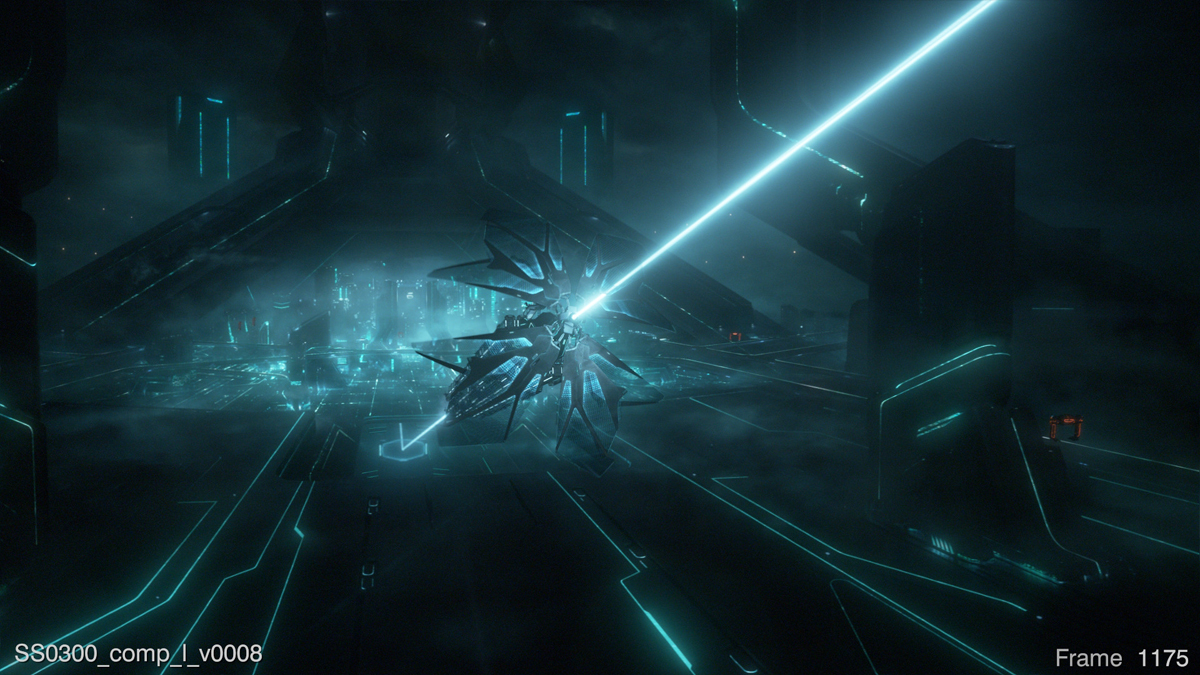
TRON LEGACY

It didn't start with The Grid in TRON, nor obviously TRON Legacy - even though the realisation is superb.

No, the first grid was in the cobbled back alley at my grandparent's house in St Helens. As a kid staying over in the summer I would take a spoon and the melting tar between the cobblestones was a syrupy invitation.

I must have got in trouble, as spoons were lost down the 'grid'.

In the here and now the "science for safety" report* bears further consideration:
If healthcare is to significantly reduce patient harm, a holistic perspective is necessary to capture the requirements and needs related to the culture, workflow, and technology associated with caring for patients. In this paper, we relate the problem to other industries and how these industries have addressed safety. We identify the current gaps in today’s healthcare approach and describe the actions that can be taken, and the change in mental models that must be made by the global healthcare community, to continuously improve patient safety. p.3 [my emphasis]

The Formula 1 season beckons. The cars tested to the max are still to be tested in anger. They will soon, be ready - on the starting grid.

The "science for safety"
also needs a starting grid.

A conceptual framework recognisable and relevant to all.


*Transforming Patient Safety: A Sector-Wide Systems Approach
Peter J Pronovost, Alan D Ravitz, Robert A Stoll, Susan B Kenned

https://www.imperial.ac.uk/media/imperial-college/institute-of-global-health-innovation/public/Patient-safety.pdf 

See also: How do you Balance and Elevate Holism and Patient Safety?

Image source:
https://www.artofvfx.com/tron-legacy-chris-harvey-superviseur-vfx-prime-focus/

Friday, January 18, 2013

ERCIM News No. 92 Special theme: "Smart Energy Systems"

Dear ERCIM News Reader,

ERCIM News No. 92 has just been published at
http://ercim-news.ercim.eu/en92

Special Theme: "Smart Energy Systems"
Guest editors: Carl Binding, IBM Research Lab, Switzerland and Han La Poutré, CWI and Utrecht University, the Netherlands

Modern, industrialized, society is heavily dependent on ubiquitous, cheap energy, which we expect to be readily available, not to be polluting, and to be convenient to use.
Since the invention of the steam engine by James Watt, this paradigm has lead towards tremendous improvement of life quality in the developed world, and developing countries eagerly aspire to similar energy standards.
However, the price of this hunger for energy is increasing. Fossil fuel resources such as oil or gas are becoming harder to explore, even leading to environmental disasters as with the Gulf of Mexico oil-platform, recently. Exploration of shale gas (“fracking”) causes negative environmental impact, beyond the well-known CO2 problematics. Besides the sheer availability of fossil energy, associated CO2 emissions have caused wide-spread concerns about impacts on climate and on human health (fine particle emissions).
http://ercim-news.ercim.eu/en92/special

Keynote:  "Smart Energy Systems – A European Perspective" by Ariane Sutor
http://ercim-news.ercim.eu/en92/keynote

This issue for download in pdf:
http://ercim-news.ercim.eu/images/stories/EN92/EN92-web.pdf

Includes: Research and Innovation
A Projector as Mobile Visualization device on an Assistive Robot (p.48)
by Paul Panek, Christian Beck, Georg Edelmayer, Peter Mayer and Wolfgang L. Zagler 

Next issue: No. 93, January 2012 - Special Theme: "Mobile Computing"
(see call at http://ercim-news.ercim.eu/call)

Thank you for your interest in ERCIM News.
Feel free to forward this message to others who might be interested.

Peter Kunz
ERCIM News central editor
--------------------------------------------------------------------


Additional links [by PJ]:
The Communication Initiative Network - Natural Resource Management
UNESCO: Renewable and Alternative Energies