Hodges' Model: Welcome to the QUAD: senses

Hodges' model is a conceptual framework to support reflection and critical thinking. Situated, the model can help integrate all disciplines (academic and professional). Amid news items, are posts that illustrate the scope and application of the model. A bibliography and A4 template are provided in the sidebar. Welcome to the QUAD ...

Showing posts with label senses. Show all posts

Saturday, September 12, 2026

TED - Talks & Listenings

THOUGHT

EDUCATION

DESIGN

  
individual
|
INTERPERSONAL
: SCIENCES             
humanistic ------------------------------- mechanistic
SOCIOLOGY : POLITICAL   
|
group
 
THOUGHT
 
Cognitive maps

Your -
Sense of direction?

Maps

DESIGN

'True South'


Ancient maps - periplus

EDUCATION for All


Maps - Power
 

Our -
Sense of direction?


Previously: 'thought' : 'education' : 'design' : 'cognitive map'

My source:  https://x.com/NobelPrize/status/2098073718371262921?s=20 and @TED_ED

Sunday, February 08, 2026

Intelligence - mechanistically speaking^

INDIVIDUAL
|
    INTERPERSONAL    :     SCIENCES               
HUMANISTIC --------------------------------------  MECHANISTIC      
SOCIOLOGY  :   POLITICAL 
|
GROUP
Mental
Intelligence


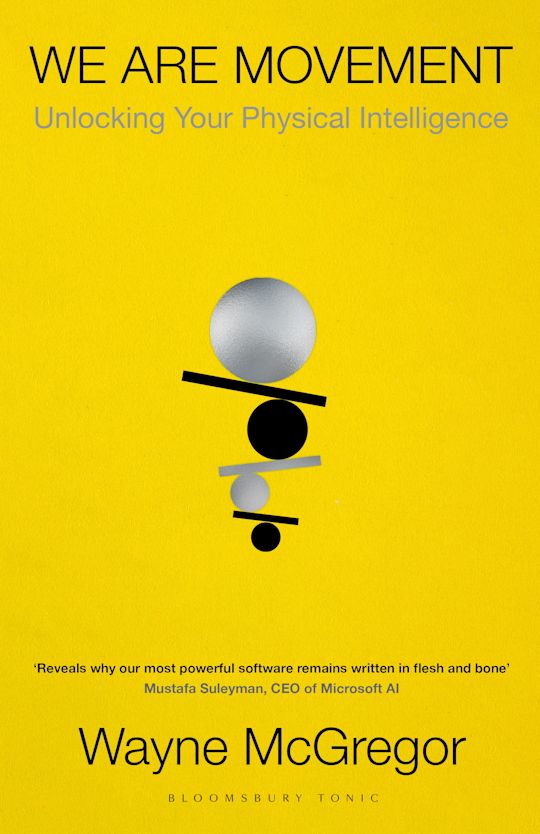
We Are Movement - Unlocking Your
Physical Intelligence

... ever increasing

'artificial' intelligence
 
here . . .?

"We?

 Yes... We! 

   We are  
a                       MOVEMENT!"


Wayne McGregor (2026) We are Movement: Unlocking Your Physical Intelligence. London: Bloomsbury. (Book cover) https://www.bloomsbury.com/uk/we-are-movement-9781526629531/

My source: Nadia Beard, Our bodies, ourselves. Life&Arts, FTWeekend, 17-18 January, 2026. p.9. 

Previously: 'movement' : 'dance' : 'intelligence' : 'art' : 'body' : 'AI'

^. . . help me find (a) the notation? 

Wednesday, September 24, 2025

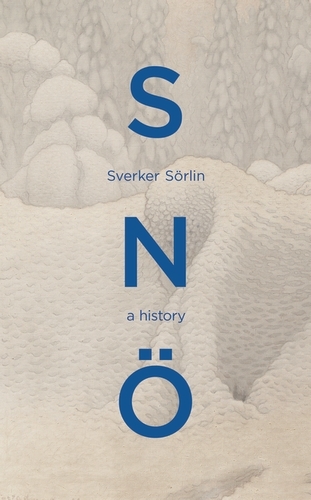
Book: SNÖ

'Snow. A single word, for an infinite variety of water formulations, frozen in air. The study of snow is physics, chemistry, meteorology, anthropology, geography, poetry and art. It is hope – annually renewed. And it is history, too.

Earth saw its first snowfall 2.4 billion years ago. The world's oldest skis, made by hand five thousand four hundred years old, pre-date the pyramids of ancient Egypt. To humanity, snow has variously been an ally and an adversary; an inspiration to countless artists and a place of breathtaking tragedy and survival. But it’s always been there. And now it is melting. 
In 1927, the snow was already more than nine metres deep on Japan's Mount Ibuki when a remarkable 230cm fell in 24 hours, bringing about the greatest depth of snow - 11.82m - ever recorded. Yet it is a fact today that, ironically not only has this mountain's resort been forced to close due to lack of snow, most people in the world have never been near snow: never felt the soft crunch of snow underfoot, never held snow to see it melt in their hands, let alone stood on a pair of skis.'  continued ...
Individual
|
      INTERPERSONAL    :     SCIENCES               
HUMANISTIC  --------------------------------------  MECHANISTIC      
 SOCIOLOGY  :    POLITICAL 
|
Group


compass defined

compass unified

mental expanse

beauty

memory

lived experience

signature of change

sadness

signifier
SNÖ by Sverker Sörlin

culture

poetry - arts

social history

shared loss

recreation - leisure

Two kids.
Uncles! In car, drenching
us driving through slush in the gutter 😎


Sverker Sörlin, Elizabeth DeNoma (Translator) (2025). SNÖ - A History. London: Doubleday.
https://www.penguin.co.uk/books/467833/sno-by-sorlin-sverker/9781529947878


My source: Clark, P. A gear shift to adapt to a warming world. Books. Genre Round-Up, Environment.  Life&Arts. FT Weekend. 23/24 August 2025. p.10.

John Denver - Season Suite (Full) The Suite is in this order:
  1. Summer
  2. Fall
  3. Winter
  4. Late Winter, Early Spring (When Everybody Goes to Mexico)
  5. Spring

Friday, April 11, 2025

The 'animal' in Hodges' model i

The New York Review of Books


'The fact that a horse has his eyes on the sides of his head identifies horses as animals of flight rather than fight, in contrast with animals like tigers, who have their eyes in the front.' p.17.


Hodges' model has two pairs of 'eyes'.

Can you see them?


Hodges' model: Axes & Domains
Structure AND Content :: Fight OR Flight

Doniger, Wendy. The Rise and Fall of Warhorses. The New York Review of Books. April 10, 2025. Volume LXXII, Number 6. pp.17-19. https://www.nybooks.com/issues/2025/04/10/

Thursday, December 21, 2023

'Freedom of belief' - really?

"We have seen that our beliefs are tightly coupled to the structure of language and to the apparent structure of the world. Our "freedom of belief," if it exists at all, is minimal. Is a person really to free to believe a proposition for which he has no evidence? No. Evidence (whether sensory or logical) is the only thing that suggests that a given belief is really about the world in the first place. We have names for people who have many beliefs for which there is no rational justification. When their beliefs are extremely common we call them "religious"; otherwise, they are likely to be called "mad," "psychotic," or "delusional." pp.71-72.

INDIVIDUAL
  |
     INTERPERSONAL    :     SCIENCES               
HUMANISTIC --------------------------------------  MECHANISTIC      
SOCIOLOGY  :   POLITICAL 
|
GROUP

my freedom of belief
senses - logic
my belief - beliefs
belief hygiene
my mental health state
continuum model -
 of mental health-illness

freedom of movement
senses logic
physical reality
personal hygiene

culture
organised religions
our beliefs


theocracy
secular states
Mental health law

Wednesday, October 11, 2023

'System 1 and 2 Modes of Thinking' in Hodges' model

 System 1 - 

"operates automatically and quickly,
with little or no effort and no sense of voluntary control. 

 System 2 - 

allocates attention to the effortful mental activities that demand it, including complex computations. The operations of System 2 are often associated with the subjective experience of agency, choice, and concentration." pp. 20-21.

"When we think of ourselves, we identify with System 2, the conscious, reasoning self that has beliefs, makes choices, and decides what to think about and what to do. Although System 2 believes itself to be where the action is, the automatic System 1 is the hero of the book. I describe System 1 as effortlessly originating impressions and feelings that are the main sources of the explicit beliefs and deliberate choices of System 2. The automatic operations of System 1 generate surprisingly complex patterns of ideas, but only the slower System 2 can construct thoughts in an orderly series of steps. I also describe circumstances in which System 2 takes over, overruling the freewheeling impulses and associations of System 1. You will be invited to think of the two systems as agents with their individual abilities, limitations and functions." p.21.


INDIVIDUAL
|
     INTERPERSONAL    :     SCIENCES               
HUMANISTIC --------------------------------------  MECHANISTIC      
SOCIOLOGY  :   POLITICAL 
|
GROUP

System 2:
  • Brace for the starter gun in a race.
  • Focus attention on the clowns in the circus.
  • Focus on the voice of a particular person in a crowded and noisy room.
  • Look for a woman with white hair.
  • Search memory to identify a surprising sound.
  • Maintain a faster walking speed than is natural for you.
  • Monitor the appropriateness of your behavior in a social situation.
  • Count the occurrences of the letter a in a page of text.
  • Tell someone your phone number.
  • Park in a narrow space (for most people except garage attendants).
  • Compare two washing machines for overall value.
  • Fill out a tax form.
  • Check the validity of a complex logical argument. p.22.

System 1:
  • Detect that one object is more distant than another.
  • Orientate to the source of a sudden sound.
  • Complete the phrase "bread and . . .".
  • Make a "disgust face" when shown a horrible picture.
  • Detect hostility in a voice.
  • Answer to 2 + 2 = ?
  • Read words on large billboards.
  • Drive a car on an empty road.
  • Find a strong move in chess (if you are a chess master).
  • Understand simple sentences.
  • Recognize that a "meek and tidy soul with a passion for detail" resembles an occupational stereotype. p.21.


Kahneman, D. (2011). Thinking, fast and slow. London: Penguin Books.

See also:
https://thedecisionlab.com/reference-guide/philosophy/system-1-and-system-2-thinking

Saturday, July 22, 2023

Migraine: Mind - Body and Art c/o Kustaa Saksi

"A migraine, says Kustaa Saksi, is like an unexpected visit from an irritating old friend. A sudden attack upends your plans; causes havoc; you never know when it will leave. 
The 48-year-old Finnish textile artist has lived with these repetitive, immobilising headaches and their accompanying visual disturbances — ranging from partial blind spots to borderline hallucinations — since childhood. 
'It usually happens on the side of my eye, then it’s like a sun, travelling from east to west,' he says. 'At one point it will take over my whole vision, then it vanishes.'" 

https://www.ft.com/content/f85c900b-9547-44a5-bbc1-ba65d44331d9


INDIVIDUAL
|
INTERPERSONAL    :     SCIENCES               
HUMANISTIC --------------------------------------  MECHANISTIC      
SOCIOLOGY  :   POLITICAL 
|
GROUP
'Aftermath' 2019 Jacquard Weave
172 x 236cm (67" x 93") 
'Attack' 2019 Jacquard Weave
166 x 238 cm (66" x 94") 


My source:
Barrett, H. (2023) Interiors: A migraine's many colours. FTWeekend, House&Home. 8-9 July. p.6.

Monday, May 02, 2022

Review ii - "Brainscapes: The Warped, Wondrous Maps Written in Your Brain―And How They Guide You"

Brainscapes

Now I know how Umami (p.87) an "example food magazine website to demonstrate some of the features of Drupal core" - got its name. I'm sure this was explained at a Drupal Meetup. Savoury indeed!

There had to be two! The brain has two strategies: brain maps and distributed codes.

"Representing information with a distributed code is entirely different from representing it with brain maps. In a brain map, neighboring neurons represent neighboring regions in space, frequency, time, and so forth. And brain maps essentially represent information using location, or where in the brain area the neurons are most active. In contrast, there is no consistent relationship between neighboring neurons in brain areas that use distributed codes. These areas represent information through the distributed pattern of activity across that entire region of the brain, rather than through the location of activity within it. This pattern of activity is a kind of code." pp.93-94.

This distinction is significant for Hodges' model, as the distributed codes act to deal with novelty, what is new - ongoing (lifelong) learning (p.95). Hodges' model can help distinguish between subjective and objective concerns. Schwarzlose unifies the two - via a catfish (also a goal here - but not necessarily with such an assistant).

"The map in the olfactory bulb is organised into odor zones based on molecular structure, an objective property of these compounds in the physical world. But the second map is organized into zones based on the significance of the odors to the animal." p.100.

Chapter 6 'On the Move: Brain Maps for Action' would have been useful as a student nurse at Winwick Hospital, the history in the book brings back many reminders - late 1970s. Epilepsy, then was less well understood, and managed. In describing the M1 brain map and movement I wondered about consent, but can see that is a distraction. Chapters -

6. On the Move: Brain Maps for Action | 107
7. Maps in the Making: How Brain Maps Develop and Adapt | 131
8. Knowing Again: Brain Maps for Recognition | 151
- offer much to relate to clinical encounters: movement, reaching, infant versus the brain in adults, the senses and catastrophic events such as cerebrovascular accident - stroke. Morphologically there is much still to learn (brain maps are 'primed' before birth), which perhaps is why we recognise the remarkable nature of gestation and birth. 'Maps in the Making' provides wondrous insights, including the need in hospitals to rethink the sensory environment and experience for premature infants.

While reading - I was struck at the experience of the newborn and mothers in Ukraine. The 'health career' model concerns life chances - from birth to later life...

As a community mental health nurse I have found subtle and less-subtle impacts on a person affected by semantic dementia (p.204) and their family. Given the ongoing invasion and war, I also thought about people living with dementia and having to flee their homes. The multiple contexts that pertain in such a crisis situation when considering 'maps' and sense-making. Especially, when the need for action is preemptive - preventive and so must be explained and justified, not once but perhaps repeatedly?

We are all innate mathematicians even if we feel we have no ability. 

https://www.google.com/search?client=firefox-b-d&q=mathematics+in+catching+a+ball

I take some succor in this (p.127).

There's a hodgepodge in here too (p.161 hb). The myriad of objects we encounter and their recognition calls for the combination of brain maps and distributed codes. Chapter 8 is more psychological, touching :-) how we categorise objects, dimensions and scales, size and animacy. Galton's contribution is discussed, his ideas on eugenics also acknowledged. Visual perception, mental imagery and visual learning style remain subjects of note for researchers. I'm not sure why figure 32 stood out ( :-) - please pardon the quality of the photo. Paul Kim's illustrations are an excellent support for the prose.):

FIGURE 32 A comparison of visual perception and mental imagery in
the V1 visual map. Paul Kim

Somewhere I've saved an article on mental imagery from New Scientist I think, about this ability - the mind's eye and how it is missing for some 'brilliant' people (p.182) and posted previously:

In my mind's eye I can picture care: Frame by Frame

I might read Chapter 9 again, attention, action and perception in combination. 

Chapter 10 had me thinking again about 'Conceptual Spaces' (quality dimensions) and threshold concepts (not in the book - but this is a positive!):

"Many of the concepts that rule our financial, social, and emotional well-being have no shape, no color, no odor or weight. How do we grasp these intangible concepts? As it turns out, we often do so by aligning abstract concepts with physical dimensions and then putting our brain maps to work." p.191.

There is a 'mental number line', vertical too, and culture is a factor in how we learn and the brain associates space and quantities, in which L-R, low-high are also brought into play. The question remains here: Is Hodges' model culturally neutral? 

Still with h2cm - mind reading, writing and 'drawing' perhaps? p.236. In "Fortune-Telling with the Brain" we read about how fMRI is allowing us to learn how the brain maps employ teamwork. There is an architecture whose stability can inform predictions of future abilities - reading is described. Reading this you see ethical implications (as Schwarzlose warns p.238), but it may help to target personalised learning, as an adjunct to personalised medicine? I double checked (index) and the connectome is not mentioned, but the benefits of this research is still to be realised. In 'prison health' here in the UK (and globally?) it is long overdue but it is encouraging to hear about the focus on investigation for previous brain injury within the prison population. Remember - lead in fuel and the socio-economic impacts of pollution (ongoing - air and plastic pollution)?

Corporations have literally only 'scratched the surface' of the future potential to 'read' us individually. Through Hodges' model I can qualify and justify the model's increasing relevance. Technology and science not only call for SOCIO-technical approaches. The brain-computer interface and AI (p.239) demands we also consider the several forms of literacy and informatics that are needed in the 21st century: bio-informatics, bio-political, psycho-political and more.

This is very informative and timely read - the diagrams too. This is a book for all. For student nurses specifically, it will enable them to maximize learning in their practical placements and throughout their course of study.

Writing this review I can also see the important messages in chapter 12 - recognition of infancy and the opportunities this affords.

Many thanks to Rebecca Schwarzlose and Profile Books for my review copy.

Schwarzlose, R. (2021) Brainscapes: The Warped, Wondrous Maps Written in Your Brain―And How They Guide You". London: Profile Books.
Thursday, April 28, 2022

Review i - "Brainscapes: The Warped, Wondrous Maps Written in Your Brain―And How They Guide You"

Brainscapes


A marvellous cover (US too), a fascinating, clearly written and hence readable book. As expected today the layout, print size and design add enjoyment to the time invested.

As a nurse with an interest in science you are aware of much of the content in broad terms but 'Brainscapes' provides more detail and made me wonder about the prospects to follow from improvements in brain imaging, The Connectome, new technologies and techniques. Rebecca maintains the focus throughout.

I'm pleased to add this to my CPD reading list.

Nature and science are humbling. It is still quite recent that we realised the milky way is one of billions of galaxies. Now we can appreciate not only the complexity of the brain, but how it is embodied in mind, body and our experience of reality.

There is history here to begin. Russia and Japan were at war in 1904. Russia had a new high-velocity rifle with smaller bullets, 7.6mm reaching speeds of 620 meters per second. Whether co-incidence, and/or ironic, there are of course many brains trying to make sense of the current conflict in Eastern Europe. A change in injuries followed with these bullets capable of passing straight through the skull, sparing the life of the soldier and yet with life altering injuries. 

As triage was founded on the battle-ground. So aftercare is grounded in the journey back 'home' for those who can make it and the extent to which 'veterans' and their families are recognised.* This lead to investigations (Inouye, see below) as soldiers experienced localised damage to the brain. Soldiers suffered scotomas affecting their vision, stimulating research and new approaches, devices 'cranio-coordinometer'. There are illustrations and some photographs throughout, the illustrator Paul Kim, adding to the text.

In 'Maps of You' maps are everywhere especially on screens, and yet as Schwarzlose notes the map's materials matter little. On p.17 "All I need is a pen and a scrap paper" I smiled - given the 'map' that Hodges' model provides, on paper, sand, black/whiteboard and mind's eye. Mental imagery is there too. Salience, figures early p.19 and with brain maps, visual maps and where we direct our gaze prompts more detailed consideration of context. The explanations of the sensory brain maps is fascinating, especially how the brain has evolved to deal with constraints of space, energy, distance and organisation. At the fovea in the eye, the map is magnified. 

Perhaps in Hodges' model there are two fovea? One is the center of the model, the person-centred nexus an assurance function/correction as the fovea that is context shifts and jumps in response to the dynamics of the situation. Reading about the audio map, p.73 I thought about the 'timbre of care' (Yes, I've a bad case of h2cm-meme-mapitis). As a further sign of the times, chapter 5 (A Body Under Siege) on taste and smell and the protective function of what we do or don't ingest, I travelled from the individual to the national and the binary choices (yes or no) being exercised right now.

More to follow ...

Alexander P. Leff (2015) Tatsuji Inouye (1881–1976), Discovery UCL.
https://discovery.ucl.ac.uk/id/eprint/1491645/1/Leff_tatsuji_inouye_1881-1976.pdf

Many thanks to Rebecca Schwarzlose and Profile Books for my review copy.

*Apologies for digression...

Sunday, November 14, 2021

Opening windows always ...

takes  effort ...
 
takes work ...
 
takes energy ...

Window pulleys - by Peter Jones @h2cm
Window pulleys

individual
|
INTERPERSONAL : SCIENCES
humanistic ----------------------------------------------- mechanistic
SOCIOLOGY : POLITICAL
|
group - population
windows on the soul

I can reflect

Hey! No looking!
frosted glass

windows of opportunity?
the eye
- touch -
the senses

(night) sky
windows on the universe


a mirror

science
Window on
GREEN spaces


shared
vision

rich-er picture

role models

stained glass wonder awe fear
social media window to identity
(glass ceilings)
transparency
/ opacity


Windows™

barred window
no light

 perseverance too ...


Monday, February 15, 2021

The Human Touch ...

INDIVIDUAL
|
INTERPERSONAL : SCIENCES
HUMANISTIC----------------------------------------------- MECHANISTIC
SOCIOLOGY : POLITICAL
|
GROUP - COMMUNITY - POPULATION

how to touch another person's mind

if 'seeing is believing',
touch is ... ...

physical touch
making a mark
leaving a trace


how distant       nature's touch?
yet
weather's touch is Constant

may I ... touch ...

policy touches
how light & legitimate
a State's touch?


Sooke, A. A reminder of how important it is to touch, The Daily Telegraph, 15 January, 2021, p.24.

Thursday, October 08, 2020

Individual :: Group - Please scratch my back!

individual
|
INTERPERSONAL : SCIENCES
humanistic ----------------------------------------------- mechanistic
SOCIOLOGY : POLITICAL
|
GROUP

< - Please, please scratch my back!
Oh, Yes! Lovely!
Now I suppose I have to sratch yours...?! ->


Source: BBC Radio 4 Inside Science 8 October 2020

"Claudia Hammond looks at the neuroscience behind our sense of touch. Why does a gentle touch from a loved one make us feel good? This is a question that neuroscientists have been exploring since the late 1990's, following the discovery of a special class of nerve fibres in the skin. There seems to be a neurological system dedicated to sensing and processing the gentle stroking you might receive from a parent or lover or friend, or that a monkey might receive from another grooming it. Claudia talks to neuroscientists Victoria Abraira, Rebecca Bohme, Katerina Fotopoulou and Francis McGlone who all investigate our sense of emotional touch, and she hears from Ian Waterman who lost his sense of touch at the age of eighteen"


Wednesday, April 29, 2020

"Field of Vision" from an excellent book

If 2020 confirms anything for humankind,
it is the need to assure our field of view
- beyond '2020' vision.


individual
|
INTERPERSONAL : SCIENCES
humanistic ----------------------------------------------- mechanistic
SOCIOLOGY : POLITICAL
|
group - population
Ernst Mach, Visual Field; looking through Mach’s left eye at his own body stretched out in his studio; limited by the curvature of the eye socket, 
one sees his nose and beard.
Mathematics and Art: A Cultural History


Lynn Gamwell (2016) Mathematics and Art: A Cultural History. Princeton, New Jersey: Princeton University Press. ISBN: 9780691165288. p.283.

(Thank you to PUP for the review copy - more to follow.)

Image source:
http://earwaveevent.org/article/cezanne-and-music/

Wednesday, November 06, 2019

So, Hodges' model is all about Vision ...?

... It depends how you define 'vision'
and even then,
Hodges' model is about so much more ...

Inclusion, Holistic bandwidth, Holistic care ...

This is what we should all aspire to
especially as children -
to realise our person-al potential.


INDIVIDUAL
|
INTRA- INTER-PERSONAL : SCIENCES
HUMANISTIC -------------------------------------------------- MECHANISTIC
SOCIOLOGY : POLITICAL
|
GROUP

Dreams
Empathy
Rapport
Attending
Listening
INSIGHT
Knowledge / Learning
Communication / Liaison
Palliative Medicine
Holistic Care
DeafBlind

Alexandra Elaine
Senses
Sight- VISION
0% - 5%
Touch
Negotiation / Navigation Physical
Physical examination
Vital signs
Observation
Surgery
 Patient assessment
Total:  DeafBlind?

Adams

Negotiation - Acceptance
"A DeafBlind Doctor?"
 Patient Reactions
Colleagues - Reactions

‘A doctor said,
what are you doing with
a patient’s cane?’

DeafBlind

Negotiation
Human Rights Law
Employment Law
Equality, Equity
Governance
Political Accessibility
'Tick Boxes'
Activism: TEDMED
DeafBlind


Sources:
BBC and Andrew Gregory, Healing touch of the deaf and blind doctor-to-be, The Sunday Times, September 29, 2019, p.3.


This post is a reminder for me about the accessibility of this blog...

Sunday, October 13, 2019

"All Heart, No Technique"

 individual
|
INTERPERSONAL : SCIENCES
humanistic ----------------------------------------------- mechanistic
SOCIOLOGY : POLITICAL
|
group - population
All heart ...
"Dear 


margins
... No technique
 Hearing World"

Space
sound, volume, voice


Deaf people - Literacy - Statistics

margins


education - system


My source: c/o @READEnglish
https://twitter.com/READEnglish

Raymond Antrobus
http://www.raymondantrobus.com/ 

https://twitter.com/READEnglish/status/1182583335962497026?s=20

Sunday, October 06, 2019

Libration before Liberation

Last week I visited "The Moon" exhibition at The National Maritime Museum Greenwich. As I videoed the phases of the moon that was on display I recalled how we actually see more than the 50% that is the near-side of the Moon.


 individual
|
INTERPERSONAL : SCIENCES
humanistic ----------------------------------------------- mechanistic
SOCIOLOGY : POLITICAL
|
group - population
Sometimes more (knowledge)
 is revealed than first
 appears ...

Attend to the 'libration of ideas'.


Reflect first ... 


Imagine
if we shared
a generic means
to share ideas and concepts...?


... then Liberate.


Tuesday, November 13, 2018

Purple Tuesday - National Day Disabled Shoppers


individual
|
INTERPERSONAL : SCIENCES
HUMANISTIC ----------------------------------------------- MECHANISTIC
SOCIOLOGY : POLITICAL
|
group

Ability to exercise choice
(visually impaired - buying clothes)

Cognitive access

Do not assume a person
does not have mental capacity

Thought... that really counts
'Exercise'

Physical access
mobility, reach

"Transact on the pavement"
Conduct business with the shopper
outside the store/shop without access

Equipment - maintenance  Extent of provision

Token-
Do not assume that the person
who is with
a disabled person is their carer.

The shopping experience
cafe, restaurant, shops
interaction

training
-ism

activism
The Purple Pound 
£249bn a year on retail and leisure 
customers - clients - citizens

Law: 
The Disability Discrimination Act 1995
The Equality Act 2010
c


My prompt and source:
BBC Radio 4 You and Yours - Consumer Affairs


Friday, December 29, 2017

Book: Sound - A Story of Hearing Lost and Found

individual
|
INTERPERSONAL : SCIENCES
humanistic --------------------------------------- mechanistic
SOCIOLOGY : POLITICAL
|
group
Sound
"Sight gives you the world, ...


... but hearing gives you other people."


Source: Holgate, A. The Sunday Times, Culture, Books, 28 May 2017. p.36.
