Hodges' Model: Welcome to the QUAD: insight

Hodges' model is a conceptual framework to support reflection and critical thinking. Situated, the model can help integrate all disciplines (academic and professional). Amid news items, are posts that illustrate the scope and application of the model. A bibliography and A4 template are provided in the sidebar. Welcome to the QUAD ...

Showing posts with label insight. Show all posts

Tuesday, January 27, 2026

c/o Intima 'Reflect on the World' . . .

CARE/of Intima:

REFLECT ON THE WORLD WITH US EVERY FRIDAY AT NOON.

No pressure, but we want to remind you that every Friday, around noon EST, we post a Crossroads blog—a short reflection that contributors from our current issue do on something from our archives.

Think of “Friday at noon” as a blip in your busy life where you take time to yourself to reflect on our small part of the universe. Pause and spend 5 minutes reading one each Friday — it’s the equivalent of a deep-breathing exercise, a short yoga stretch, a tiny palate cleanser of lemon sorbet between the complex courses served up to us every day, or a moment stolen between patients or in a waiting room when you step out of your routine. Read the titles of recent ones below, then go and read a few. If you like what you read, set up a reminder alert.

◇

INDIVIDUAL
|
    INTERPERSONAL    :     SCIENCES               
HUMANISTIC --------------------------------------  MECHANISTIC      
SOCIOLOGY  :   POLITICAL 
|
GROUP


My source: Intima (and image) - mail list.

See also: 'reflect' : 'crossroads'

Thursday, September 04, 2025

Parity of Esteem: It's all smoke and mirrors ...

Having just visited the National Gallery and an exhibition on Millet:

https://www.nationalgallery.org.uk/exhibitions/millet-life-on-the-land

Dr Sanil Rege on twitter provided:


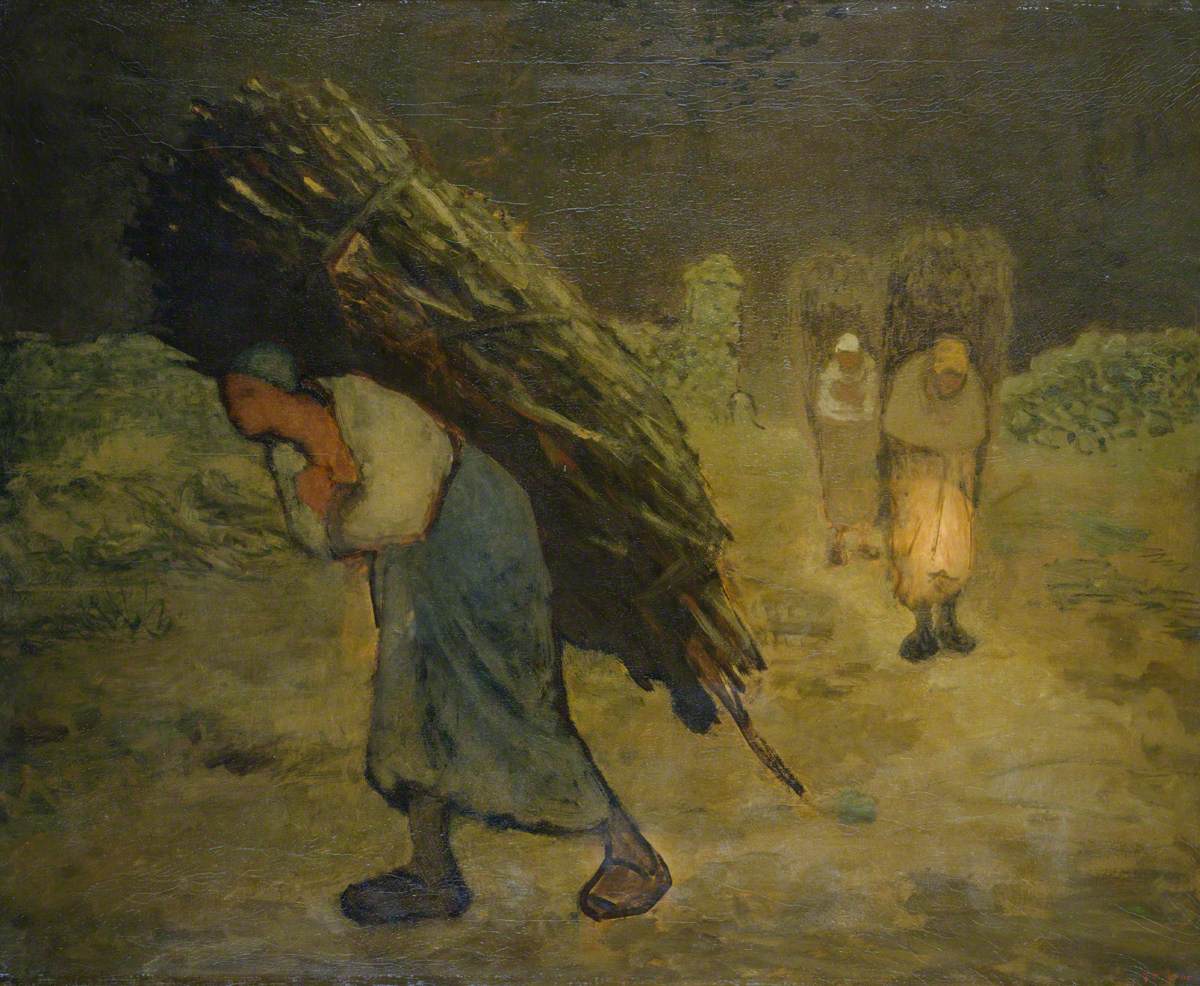
Seeing, and reading (again?) about 'The Faggot Gatherers' I couldn't help but see socio-economic history enacted:

'Two women are taking a short rest from gathering tree branches for sale as firewood. The older woman’s hunched back and clawed hands betray a lifetime of physical toil. The setting is the forest of Fontainebleau, south of Paris, close to the village of Barbizon. Millet was an exponent of Realism, a movement that rejected historical art and idealisation in favour of a truthful view of contemporary reality.'

Text: https://www.nationalgalleries.org/art-and-artists/232271
Winter, The Faggot Gatherers Jean-François Millet (1814–1875) National Museum Cardiff

The National Gallery's accompanying text reads:

'Three women are on their way home trom the forest of Fontainebleau. One of its entrances, the Porte aux Vaches, is visible at the back right. The staggering scale of their loads threatens to overwhelm them in their stumble homewards. The scene evokes Millet's 1851 letter to his biographer Alfred Sensier, in which he described how seeing 'a poor figure laden with a faggot reminded him of the constant fatigue of people's lives.
While the painting is unfinished, the elemental figures are typical of Millet's vork. The extreme simplification of their forms results in austere silhouettes.'

Mental illness has always been a facet of humanity, evidence of trephination from prehistoric times and across cultures and geographies bears testimony to the mind - body divide. Life was brutish physically too. What chance did the weakest stand? If, that is a broken bone: you could be left behind? But perhaps we underestimate the knowledge and experience of our ancient ancestors. Knowledge gained and passed orally, culturally, even before written history. Perhaps too, we struggle to understand how early humanity expressed itself beyond the big-stick of nature and the struggle for survival as the hominids that led to 'us' were winnowed down?

Even as recent as the 19th century life was hard. As the notes above attest, Millet's work seeks to record the sheer physicality of labour, even as the industrial age emerged. The advent of the industrial revolution brought its own pressures and privations, as pastoral life is replaced with change work at home (spinning cotton) to urban and factory growth. 

Severe mental illness would have been institutionalised in poor houses, religious and charitable organisations. Parity of esteem is grounded, to some extent in the questions: "What happened to you?", or "How are you feeling today?" In Millet's work the physical cost and strain stands out. While in the L'Angelus there is debate about prayer, or grief. What is visible usually speaks first, and stands for itself. This is why self-awareness, reflection, critical thinking, observational and interpersonal skills are important; and why mental health nursing calls for specific knowledge and skills. And, in psychiatry too, even when the same is contested.

Image source: Oil on carvas Lent by Amgueddfa Cymry - Museum Wales. Bequeathed by Gwendoline Davies in 1952.

Tuesday, April 01, 2025

c/o A.Word.A.Day: Hodges' model - Walk the (dual!) chalk line

A.Word.A.Day

with Anu Garg

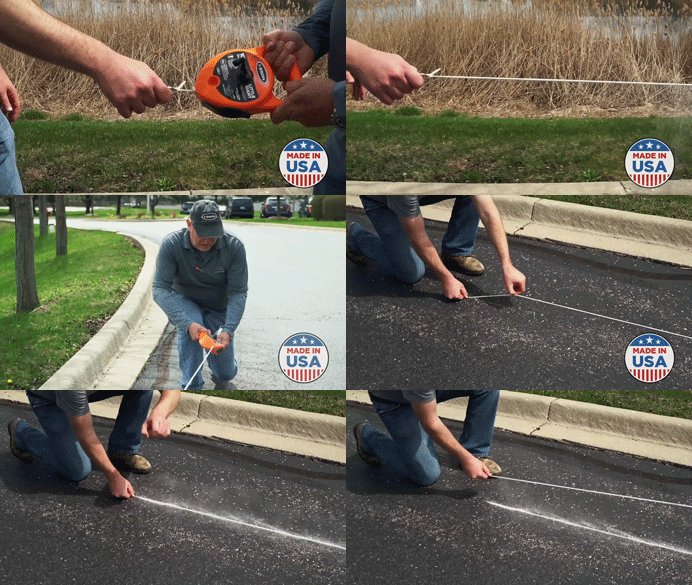
'Having a tool is like having a superpower in your pocket. With the right gadget, you can do much more than what arms and legs alone allow -- build a magnificent pyramid, lift water from deep below, or even predict whether you’ll need an umbrella tomorrow.


And not all tools need wires, batteries, or instruction manuals. Sometimes, a simple device can save labor -- a lever, a pulley, a piece of string dusted with chalk -- can save hours of sweat and toil.'

chalk line


Monday, March 03, 2025

Finding a space for Lived Experience

Individual
|
      INTERPERSONAL    :     SCIENCES               
HUMANISTIC  --------------------------------------  MECHANISTIC      
 SOCIOLOGY  :    POLITICAL 
|
Group

Whatever your personal - emotional - journey, your experience, ongoing expectations ... hope: hope-fully this is you. You can, or have discovered the potential here. Whether or not the strengths you possess, are recognised due to what others see elsewhere. 


Lived experience brings so many pathways. So many rooms and spaces to explore. Whatever the physical challenges: whether well: 'all-good thanks'; or dealing with one or more diagnoses - acutely, in recovery, relapse, may all points of the compass be open to you.


Whatever your life experience: your health career began down here [and across there ->], shaped by your life chances. These days they call them the determinants. They are many, and can influence your social network, whether you have one ...


As you (literally) negotiate - even if you fail repeatedly - the systems, that the system throws your way, trying to make ends-meet; in work or out, never under-estimate what a person can do. Here lived experience can pay dividends, across the divides that really matter.


Welcome to your space ...
and may it include hope shared and delivered ...

Saturday, July 06, 2024

Take II? Fit for Government . . ?

As a community nurse, driving is obviously pretty essential to your being able to work. I have come across non-driving community nurses (earlier this year) but they are still few(?). As a boy going to work with my father you could see how dependent he and workmates were upon a string of vans, cars and be able to drive both being on the 'right-side' of the law and his health. It was always an 'event' a new van, fitting out with racks, shelves, nooks, hooks and crannies for all sorts.*

Then as a community nurse older adults you come across individuals who still have their driving license, still have their car on the drive / front, and still have the car keys. Perhaps family have suggested to mum, dad, brother, sister, aunt: "Look, isn't it time to call it a day and give up driving?" Ouch! There's a crash - in itself.

Re-working the two-part draft paper on deprivation of liberty safeguarding, threshold concepts, Hodges' model within residential care, some thresholds are difficult, challenging to call. But some are safety critical, and perhaps need a more 'proactive' stance, without giving way to ageism. Is it the local community's job - the public's job to proffer a diagnosis: and what about persons on the world stage? Diagnosis by social media?

I quickly admired those people who, though reticent, gave up the literal fast-lane. Inevitably you wonder how you will react when the time comes. Will you have the humility, the goodness of grace to hand over the keys? To call it a day. With an ageing population, I've warned the children when driving to expect the unexpected. Cars going the wrong way. It was a struggle for my father: but safety as it so often does - did the trick - with the impetus of physical illness.

Sometimes, at work, after a family trying, and a fracas, when they've tried to hide / remove the car keys, suddenly a near-miss has upped-the-ratchet. Neighbours have seen the 'driver' reversing out into the road, with numerous car horns announcing the event. Then perhaps you are intercepted outside, a call comes to the day center (the transport is also going), the community team, or the GP's surgery (the neighbours have helped with medication).

I've had to speak to GPs for them to visit, meeting them on occasion. Do GPs - family physicians still have the same gravitas today?

This is a care transition: what can be a difficult one. A helpful point (diplomatic argument) that often gets through is the matter of car insurance and the status of the existing policy?

Does a political leader carry insurance?

It is difficult for all, a person's human rights, choices, freedom; their life story, former career perhaps, their health career - most definitely.

With events in the USA and the Democrat Party, and seeing the cover of The Economist I had to TAKE II.

Individual
|
      INTERPERSONAL    :     SCIENCES                   
HUMANISTIC  --------------------------------------  MECHANISTIC      
 SOCIOLOGY  :    POLITICAL 
|
Group

cognitive state

memory

insight

Fitness for Office:
Mentally & Physically
Legally
The Economist


safety of Others

community - duty of care -
safeguarding
 (however realised)

This is global problem that is set to increase and not just for reasons of health.

Ack. The Economist

Owen, D. (2009) In Sickness and in Power: Illnesses in Heads of Government during the Last 100 Years, London: Methuen Ltd. ISBN: 978-0-413-77689-1

Listen also ... BBC Radio 4 Moral Maze 
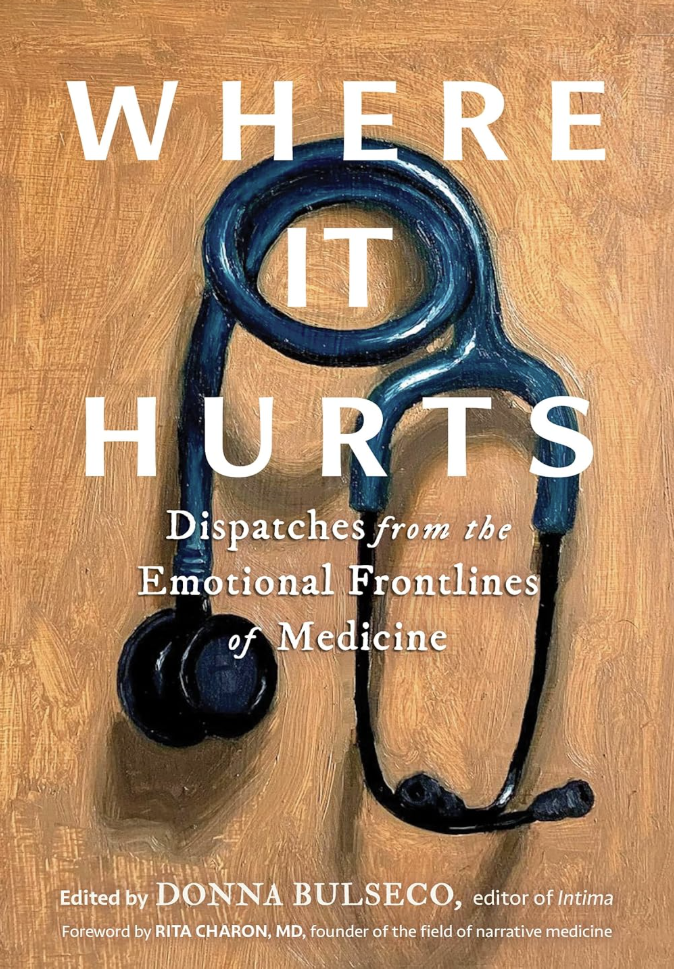
'The Morality of Stepping Down'

Previously:

*I suspect he's still driving around somewhere. x

Wednesday, February 28, 2024

HIFA Discussion: Alcohol Use Disorders - Do people understand the harms of alcohol?

Dear All (with further editing since posting)

The discussion, points, angles, questions ... are coming thick and fast it is difficult to keep up.

Many thanks for the summaries; and of course the discussion which archived also acts as a resource - repository:

https://www.hifa.org/news/hifa-announces-deep-dive-discussion-alcohol-use-disorders-starts-5-february-2024

I wonder whether the question: 
"Do people understand the harms of alcohol?" must always be placed in context?
It is radically different when asked of the tee-total, dry, safe drinker; and someone (still) actually in their alcohol drinking?

It occurs to me that alcohol, even more so than 'other' substance misuse (heroin...) represents what must be *the* contradiction, paradox in healthcare - except the tragic loss that is suicide.

Contrast substance misuse inc. alcohol, with 'help-seeking' and 'The Sick role'

https://www.england.nhs.uk/blog/ed-mitchell-2/

Plus, the (medical) sociology of the decision to consult/refer, and how in mental health (UK), the mental capacity act is apparently being misapplied ('policy-drift'?**):

https://www.lawsociety.org.uk/topics/blogs/are-mental-health-and-capacity-laws-at-risk-of-being-toxic

https://www.communitycare.co.uk/2017/08/23/flawed-use-mental-capacity-act-key-theme-safeguarding-adults-reviews-report-finds/

Individual

   |
      INTERPERSONAL    :     SCIENCES               
HUMANISTIC  --------------------------------------  MECHANISTIC      
 SOCIOLOGY  :   POLITICAL 
|
Group

continental drift

policy drift?


Previously, I highlighted how as a Community Psychiatric Nurse 1985-1995 (adult) .. if a patient/client was not working to control/reduce their alcohol consumption they may be 'counselled' re a pending discharge and referral back to their GP - family physician. In supervision with the team's manager they would want to know what is 'happening'. It being important not to create (social) dependency, or worse support someone in their alcohol misuse.

There was a sense, still is(?) that in substance misuse (across forms) - the individual has to reach 'rock-bottom', literally the 'gutter' that is the point they decide (really?)** to live, or carry on to suffer irreversible brain damage, or premature death. Regards the 'brain damage' it was a struggle for 45-60 minutes given the impact upon short-term memory, what time, .... is it indeed? When the patient was not living alone, how did the relative, family cope?

Is having to reach the gutter, the bottom, a trope/myth? In psychosis rather than assume the patient is beyond being reached prior to being medicated there are psycho-social interventions that can be commenced: being available / with. Here though this is usually 'first episode'. There is no analogue here, unless first admission to an in-patient unit is taken as a golden opportunity? But this also depends on its nature (funding, staffing - expertise), a general adult mental health ward, or specialist unit.

https://www.imdb.com/title/tt0048347/

What is the current strategy?

In terms of 'HIFA' - and the person that counts**, not only do they not have the 'information'; they do not have the EXISTENTIAL INFORMATION as it relates to them: 'Health Information for YOU'!

Again in Hodges' model we can contrast the dichotomy/polarisation of INDIVIDUAL :: GROUP.

The model's being situated; and able to encompass data, information, knowledge (facts, for example, and their delivery) - wisdom (Multi-contextual / transdisciplinary..).

I admire people who work in these services (learning disability and palliative care); as they must be severely tested as they retain an ability - the humanity - to 'see' the person whatever the patient's situation with their lack of awareness (capacity..?) and its critical salience.

Peter Jones
Community Mental Health Nurse and Researcher
Blogging at "Welcome to the QUAD"
http://hodges-model.blogspot.com/
http://twitter.com/h2cm
h2cmng at yahoo.co.uk

Location: It was just a cappuccino.

**Which points to the relevance of the POLITICAL care/knowledge domain in Hodges' model.

Friday, July 21, 2023

Cognitive and Affective Empathy c/o Simon Baron-Cohen

   New Scientist 3311
"At the bottom, Nicholas Conard, archaeologist and director of the nearby museum in Blaubeuren, Germany, pointed to a layer of rock. 'Right here is 20,000 years ago,' he said. Then he pointed about a metre lower. 'Here, we are at 40,000 years ago.' 
I was in awe, suddenly aware that I was standing where our early human ancestors lived and breathed so long ago. But it was what they invented that inspired my trip. Hohle Fels is where, in 2008, Conard and his colleagues discovered the earliest known musical instrument, a flute carved from a vulture bone that is thought to be about 40,000 years old.

It is the product of what I argue are parallel revolutions in human cognition. In my career studying the human brain through the lens of understanding autism, I have devoted a lot of time to understanding empathy, its role in our evolution and how it still underpins human interaction today. But around the same time that the brain changes arose that enabled us to use empathy, another equally critical set of changes took place: the evolution of a pattern-seeking brain network, what I refer to as the systemising mechanism, that provides the foundation for human invention - including that of musical instruments." p.34.
INDIVIDUAL
|
     INTERPERSONAL    :     SCIENCES               
HUMANISTIC --------------------------------------  MECHANISTIC      
SOCIOLOGY  :   POLITICAL 
|
GROUP

"One of these circuits, the empathy circuit, enabled a raft of new behaviours, including the ability to deceive others, teaching, self-reflection, social "chess" and flexible communication that relied on shared reference, including storytelling. These explain why modern humans could make stealth weapons and jewellery: we were keeping track of what others might think, know, intend, feel, want and believe." p.36.

COGNITIVE EMPATHY
theory of mind

AFFECTIVE EMPATHY

"- the drive to respond to another person's mental state with an appropriate emotion." p.36.


Baron-Cohen, S. (2020) Our Restless Minds, New Scientist, 248: 3311, pp.34-39.

Autism Research Centre, Cambridge University

The Pattern Seekers, Simon Baron-Cohen.

Thursday, November 03, 2022

Award: h2cm #1 Framework ... #2 and #3?


"Elden and Levin (1991) suggest distinguishing between insider and outsider frameworks. A framework is described as a way of understanding. Insiders are the project workers or programme staff who have first-hand experience of the situation. They have their views about programme goals and problem solutions. The outsiders are the external researchers, the social scientists, who bring a battery of research skills and a wealth of theoretical ideas: 'The richness and quality of the research depends on the ability of the insiders to play their different frameworks and expertise against each other to create a new, third explanatory framework." (1991: 132). p.28.

 INDIVIDUAL
|
 INTERPERSONAL    :     SCIENCES               
HUMANISTIC --------------------------------------  MECHANISTIC      
SOCIOLOGY  :   POLITICAL 
|
GROUP

outsider

new

insider

outsider

new

insider

insider

new

outsider


insider

new

outsider


Nurses, and nursing encompass all three, but (should - must) realise they are also part of the 'system', together with their colleagues in the multidisciplinary team. 

In grounded theory, participatory - ethnological and other qualitative approaches, we need to ensure the 'ground' to inhabit is sufficiently accessible. Hodges' model can assist in scoping a project; what is the perspective, standpoint, or positioning? While the health, or social care staff are the insider's and conceptually at the center of the model, the aim is to place the patient, carer at the center, with the situation we collectively encounter. The model's subjective - objective duality can also act as a regulator to assure overall balance.

Elden, M., & Levin, M. (1991). Cogenerative Learning. Bringing Participation Interaction Research. In W. F. Whyte (Ed.), Participatory Action Research (pp. 127-142). Newbury Park, CA: Sage Publications.

Clarke, A. (1999). Evaluation research. SAGE Publications Ltd,
https://dx.doi.org/10.4135/9781849209113 

[Clarke, again: p.174]

"Carol Weiss (1988a), one of the foremost writers on the impact research findings on policy, describes four ways in which evaluation information is used in the decision-making process. First, the information provided by evaluators can serve as a warning that that something is going wrong. For example, if early research findings suggest that some groups are not receiving the designated services, or intermediate outcome measures are not being achieved, then corrective action can be taken before the situation worsens. Second, evaluation findings can provide guidance for improving a programme. ... A third contribution evaluation can make is by way of offering a new way of looking at a familiar problem; Weiss refers to this as 'reconceptualization'. Finally, evaluation can be used to mobilize support for a project or programme." p.174.
Weiss, C.H. (1988a) 'Evaluation for decisions: Is anybody there? Does anybody care?', Evaluation Practice, 9 (1):5-19.

n.b. When on the PhD programme [MRes], I looked at evaluation and design-based research as potential research methods.

Friday, March 04, 2022

Danse des petits cygnes - "NO TO WAR"

INDIVIDUAL
|
 INTERPERSONAL    :     SCIENCES               
HUMANISTIC -----------------------------------  MECHANISTIC    
SOCIOLOGY  :   POLITICAL 
|
GROUP


Sunday, October 06, 2019

Libration before Liberation

Last week I visited "The Moon" exhibition at The National Maritime Museum Greenwich. As I videoed the phases of the moon that was on display I recalled how we actually see more than the 50% that is the near-side of the Moon.


 individual
|
INTERPERSONAL : SCIENCES
humanistic ----------------------------------------------- mechanistic
SOCIOLOGY : POLITICAL
|
group - population
Sometimes more (knowledge)
 is revealed than first
 appears ...

Attend to the 'libration of ideas'.


Reflect first ... 


Imagine
if we shared
a generic means
to share ideas and concepts...?


... then Liberate.


Wednesday, January 09, 2019

"The Ball and the Box"

individual
|
INTERPERSONAL : SCIENCES
humanistic ----------------------------------------------- mechanistic
SOCIOLOGY : POLITICAL
|
group

coming to terms with
loss - bereavement
pain
awareness
insight
understanding
communication

https://twitter.com/laurenherschel/status/946888282444460033?lang=en


See also:
Colin Murray Parkes, Brenda Bridgeman, Annie Flower, Margaret Foster, Peter Speck & Colin Murray Parkes (1995) REVIEWS, Bereavement Care, 14:2, 22-23,  

https://www.tandfonline.com/doi/abs/10.1080/02682629508657361?journalCode=rber20

Friday, September 21, 2018

InSight: Mars in Mind

individual
|
INTERPERSONAL : SCIENCES
humanistic ----------------------------------------------- mechanistic
SOCIOLOGY : POLITICAL
|
group


insight
[full <--------> none]


I am NOT ill !
You are ill !


Place of safety
Local vs 'Out-of-area'

Wednesday, February 28, 2018

Book: Poetry Pharmacy

individual
|
INTERPERSONAL : SCIENCES
humanistic --------------------------------------- mechanistic
SOCIOLOGY : POLITICAL
|
group


Wednesday, August 09, 2017

c/o BBC Radio 4 & Facts4Life - Balance Ball

The following is taken from the transcript of the BBC Radio 4 programme "Inside Health" which I heard today and an image from the resources of Facts4Life which featured as an item.

I have always wondered what is the youngest age at which Hodges' model might be taught. I have noted before how the model can be used implicitly - guiding the professional - or explicitly with the patient or group having insight into the model. The approach of Facts4Life is well worth publicising in the ability and intelligence that children can and should be credited with ...

individual
|
INTERPERSONAL : SCIENCES
humanistic --------------------------------------- mechanistic
SOCIOLOGY : POLITICAL
|
group
... We might have somebody else who’s representing emotions, you say oh I’m feeling a bit sad and grumpy, so their hand might come off.  As each hand comes off whilst the body or the ball wobbles it doesn’t actually fall but as more and more compromises are made, there’s more and more problems to encounter, then it could get to the point where they drop the ball altogether.  And that could be oh perhaps we need a bit of help here, what could we do to help get this body back in balance. ... Green
Around year three we’ll say okay homeostasis we can explain it by using a balance ball.  So a balance ball like a yoga ball.  And the ball represents the body and then we talk to the children about how an illness might look. ... Green 

Traditionally there’s been a lot of focus around very black and white concepts that you have good drugs and bad drugs.  Adults tend to make things black and white because they think that’s simplifying things and actually children are really good at grappling with big ideas. Green

Facts4Life
Do you think historically that we have been too black and white then, that we’ve sort of had health in one pocket and illness in another and never the twain shall meet? Porter

I do, as a profession yes and as a society there is at the moment an easy contract between the population, as it were, and the health professionals and the contract is that whatever’s wrong with people we will deliver a solution. Toft

I also note on Facts4Life's website, the audiences they are appealing to. I see Hodges' model as being applicable to:

Students - Learners (the research community)
Carers - members of the public
Teachers - Lecturers
Policy makers and Managers

So, if you need a conceptual balance ball: here + catch!

@Facts4Life
Inside Health - BBC Radio 4


Tuesday, August 01, 2017

Thought, Formulation, Thresholds and Coherence

individual
|
INTERPERSONAL : SCIENCES
humanistic --------------------------------------- mechanistic
SOCIOLOGY : POLITICAL
|
group
"The paradigms that guide our clinical thinking are necessary. They afford us, at a minimum, the comfort (and the benefits) of being in error, rather than thrashing about in confusion. And .... they provide us with the necessary consistency, coherence and vision. ...."
 (Dumont, 1993, p. 203)
Dumont:
"All that is visible must grow beyond itself, and extend into the realm of the invisible."
TRON

Or:
"All that is invisible must grow beyond itself, and extend into the realm of the visible."


Dumont, F. (1993). Inferential heuristics in clinical problem formulation: Selective review of their strengths and weaknesses. Professional Psychology: Research and Practice, 24, 196–205.

Dumont is cited in:
Vertue, F., & Haig, B. (2008). An abductive perspective on clinical reasoning and case formulation. Journal of Clinical Psychology, 64(9), 1046-68.

Tuesday, July 05, 2016

Threshold and Conceptual Mobility: Hodges' model

threshold ramp


conceptual - inter(trans)disciplinary ramps
INTRA-INTERPERSONAL
SCIENCES


SOCIOLOGY

POLITICAL


Image source:
http://www.wheelchair-ramps.co.uk/d/

Monday, February 29, 2016

Rare Disease Day, 29 February 2016

individual
|
INTERPERSONAL : SCIENCES
humanistic ---------------------------------------  mechanistic
SOCIOLOGY : POLITICAL
|
group
What does 'rare' mean here, ...

... here


and here?

Saturday, March 07, 2015

Let More Light In - Reflection

individual
INTERPERSONAL : SCIENCES
humanistic ------------------------------------------- mechanistic
SOCIOLOGY : POLITICAL
group

'total internal reflection' 
?

tungsten oxide 
has a 
high refractive
 index
??

The researcher's cells use iron oxide and tungsten oxide to do the light-capturing. Iron oxide absorbs visible light and tungsten oxide absorbs ultraviolet. Also tungsten oxide has a high refractive index. This means that light finds it hard to escape once it is inside a piece of tungsten oxide because it is bounced back and forth by a phenomenon called total internal reflection, increasing the chance it will be absorbed. p.78.

Source:
Solar Cells: Tiny Balls of Fire, The Economist, June 28th-July 4th 2014, 411: 8893, 78-79.

Additional link:
HowTheLightGetsIn 2015
https://howthelightgetsin.org/hay

Tuesday, June 17, 2014

Book: The Empathy Exams & Michel Serres Institute

individual
INTERPERSONAL : SCIENCES
humanistic ------------------------------------------- mechanistic
SOCIOLOGY : POLITICAL
group
The Empathy Exams
Interpersonal Skills

The Natural Sciences
Local, Society & Socio-

-Economics
Law


As recent posts reveal I'm overwhelmed with reading at present. Material that is essential for the TEL course and reading more tangential and yet potentially enjoyable titles. It will be a busy summer as all this is brought together(!?). Especially as I've a literature search in mind as a module submission - progress permitting.

The publication of Jamison's book this (N) spring sits well after the findings last year about the benefits of reading fiction in increasing empathy.

Since 2008-2009 I've lost touch with the work of Michel Serres:

Jones, Peter, Exploring Serres’ Atlas, Hodges’ Knowledge Domains and the Fusion of Informatics and Cultural Horizons (Aug 15, 2007). SOCIAL INFORMATION TECHNOLOGY CONNECTING SOCIETY AND CULTURAL ISSUES. Available at SSRN: http://ssrn.com/abstract=1842504 or http://dx.doi.org/10.2139/ssrn.1842504

I only scratched the surface of Serres' oeuvre in the above paper and when time permits will revisit this work having just learnt of the Institute:

The resource-systems approach

"Reframing the conceptual and operational field of natural resources requires deep interdisciplinarity across fields encompassing legal and socio-economic studies, and life-sciences. And, it goes without saying, philosophy. The priorities at present are the aid to decision-making and a participative, pro-active civil society acting to (1) manage human activities while meeting the specific territorial potential and resource capacities and (2) ensure a fair re-allocation of such resources according to vital human needs and coherent public goods policies. Who are the members, what are the missions and the activities of the (...)."

Book cover image: c/o Author.

My source: The Empathy Exams
FT Weekend, June 7-8, 2014.

Saturday, May 04, 2013

'Nursing the Nation' poem Molly Case at RCN Congress 2013

The past fortnight has been quite intense in terms of conferences and the focus upon nursing education; plus as was pointed out to me I travelled from Jordan to Jordanstown. The conference in Jordan began with a beautiful prayer and I heard of this poem while away: