Hodges' Model: Welcome to the QUAD: social networks

Hodges' model is a conceptual framework to support reflection and critical thinking. Situated, the model can help integrate all disciplines (academic and professional). Amid news items, are posts that illustrate the scope and application of the model. A bibliography and A4 template are provided in the sidebar. Welcome to the QUAD ...

Showing posts with label social networks. Show all posts

Wednesday, March 11, 2026

Cooperative Design Visualization and Engineering - CDVE2026 Call for Papers

The 23rd International conference on Cooperative Design Visualization and Engineering (CDVE2026) will be held at the Leuphana University, Lunenburg, Germany on September 21-23, 2026 in their amazing architecture landmark main building. Please check the Youtube video:

https://www.youtube.com/watch?v=0YrWvqdu6_E.

Important dates:

Long paper (10 pages): April 10, 2026
Short papers (6 pages): April 20, 2026

Topics: The conference focus is "cooperative". Papers about cooperative design, cooperative visualization, cooperative engineering and all other cooperative applications are welcome. Papers about multiple users, locations, sensors, multimodal applications and integration are all within our focus. Topics also cover social networks, IoT, sensor networks, e-health care, e-education etc. Check our web page

www.cdve.org for more information.

Proceedings publication: by Springer Nature in their LNCS - Lecture Notes in Computer Science.

All accepted papers will be indexed individually by Conference Proceedings Citation Index (CPCI), part of Clarivate Analytics’ Web of Science, EI Engineering Index (Compendex and Inspec databases), ACM, Digital Library, DBLP, Google Scholar, IO-Port, MathSciNet, Scopus, Zentralblatt MATH etc. 

Selected papers will be considered in a couple SCI journal special issues.

In addition, according to the publisher, the CDVE conference proceedings books have very high number of access among the LNCS proceedings books which can definitely raise the impact of your paper.

The submission page: https://easychair.org/conferences/?conf=cdve2026

Contact of the conference: cdve2026 AT easychair.org

You are welcome to forward this call.
---------------------------------------------

The 23rd International Conference on Cooperative Design, Visualization and Engineering
Sept. 21-23, 2026, Lüneburg, Germany
www.cdve.org
Monday, March 03, 2025

Finding a space for Lived Experience

Individual
|
      INTERPERSONAL    :     SCIENCES               
HUMANISTIC  --------------------------------------  MECHANISTIC      
 SOCIOLOGY  :    POLITICAL 
|
Group

Whatever your personal - emotional - journey, your experience, ongoing expectations ... hope: hope-fully this is you. You can, or have discovered the potential here. Whether or not the strengths you possess, are recognised due to what others see elsewhere. 


Lived experience brings so many pathways. So many rooms and spaces to explore. Whatever the physical challenges: whether well: 'all-good thanks'; or dealing with one or more diagnoses - acutely, in recovery, relapse, may all points of the compass be open to you.


Whatever your life experience: your health career began down here [and across there ->], shaped by your life chances. These days they call them the determinants. They are many, and can influence your social network, whether you have one ...


As you (literally) negotiate - even if you fail repeatedly - the systems, that the system throws your way, trying to make ends-meet; in work or out, never under-estimate what a person can do. Here lived experience can pay dividends, across the divides that really matter.


Welcome to your space ...
and may it include hope shared and delivered ...

Tuesday, May 26, 2020

Journal of Community Informatics - new submissions:

Dear CI colleagues,

After a brief pause and transition in editorial leadership, the Journal of Community Informatics is once again accepting new submissions here:


It is my honor to lead the Journal as the third Editior-In-Chief since the journal was launched by Michael Gurstein with its first issue published in 2004. I want to thank Eduardo Villanueva-Mansilla for his leadership over these past years. I also want to thank Tom Denison who has joined Eduardo as the Journal’s Associate Editors.

I am also excited to announce our esteemed Editorial Board with both new and returning members: http://ci-journal.net/index.php/ciej/editorialBoard

We are preparing our next issue to be published in Sept/Oct. 2020.  We look forward to receiving your submissions in the months and years ahead.

Warm regards,
Colin
—
Colin Rhinesmith (pronouns: he/him)
Associate Professor and Director
Community Informatics Lab
School of Library and Information Science
Simmons University
web: http://crhinesmith.com

Editor-In-Chief
Journal of Community Informatics
http://ci-journal.net/index.php/ciej
 

Friday, May 03, 2019

12th Networked Learning Conference 2020 18-20th May - Denmark

18-20th May, 2020 in Kolding, Denmark

A research-based conference on networked learning in higher education, lifelong learning & professional development

The 2020 conference is the twelfth international networked learning conference.

Since 1998 the biennial Networked Learning Conference has been an opportunity to participate in a forum for the critical examination and analysis of research in networked learning – particularly in Higher Education and lifelong learning. Networked learning has become a broader area of inquiry over the years bringing together research in education and organisations spanning formal and informal learning settings. It is a conference that has been particularly concerned with critical perspectives, theory, pedagogical values, analysis, practice based research and designs for learning. The focus of the conference has been research and practice that addresses relational and interactional aspects of learning and development with an emphasis on dialogical learning, collaborative and cooperative learning and learning in social networks.

The conference will be held at on the 18th, 19th and 20th May, 2020, at University of Southern Denmark in Kolding, and the local organisers are all from the University of Southern Denmark.

http://www.networkedlearning.aau.dk/
 

[ I greatly enjoyed attending in 2016 at Lancaster, UK. ]

Wednesday, March 13, 2019

Knife crime: treat as a 'disease'.. (in Hodges' model!)

individual
|
INTERPERSONAL : SCIENCES
humanistic ----------------------------------------------- mechanistic
SOCIOLOGY : POLITICAL
|
group
Individual Human Rights
 Self - IDENTITY
Vulnerability - Influence of others?
 Motivation, Anger, Impulsivity
Schools - bag searches

public MENTAL health
Character; Values
Self-esteem, responsibility, resilience
'Kids with attitude' (great)?
'Kids with attitude' (problem)?

 D   disease models
 A                         
 T                    Public Health
 A             Violence: stabbing, slashing

 T        Access to weapons inc. kitchen knives
 R            Weapon concealment on person
 A                            Metal detectors
 C    of individuals
peer GANGS groups
belonging
social cohesion - social integration
Family structures
'Friends and Family'
'Friends as Family'
Social services: housing, education,
community centers, community workers
'Moral Panics'?
Victim's family - aftermath
COMMUNITY 
 K    and groups
 I                   Youth Services - Funding
 N               'Global' action - All Together
 G                          Chicago - Glasgow
"STOP & SEARCH"
          Public Health approach to policing violence
School (exclusion, impact of)
Knife crime: Policy, Home Secretary
  'Strong ENFORCEMENT'
Strategy - Early Intervention
 POLICING           legal advocates

See also:

BBC Radio 4 - Moral Maze 13 March 'Moral Panics'

My source:

Various including: @rydermc "Not a sticking plaster" on https://www.tortoisemedia.com/

 https://twitter.com/rydermc/status/1104706208630489089

David Gillanders

Monday, March 12, 2018

The spread of true and false news online c/o Vosoughi et al.

individual
|
INTERPERSONAL : SCIENCES
humanistic --------------------------------------- mechanistic
SOCIOLOGY : POLITICAL
|
group
psychological well-being

trust

"Falsehood also diffused faster than the truth. The degree of novelty and the emotional reactions of recipients may be responsible for the differences observed."


TRUE vs FALSE
 epidemiology of news 
 broadcast dynamics
assertions - claims

"To understand how false news spreads, Vosoughi et al. used a data set of rumor cascades on Twitter from 2006 to 2017. About 126,000 rumors were spread by ∼3 million people. False news reached more people than the truth; the top 1% of false news cascades diffused to between 1000 and 100,000 people, whereas the truth rarely diffused to more than 1000 people."


social well-being

stories ..... rumors
virality

social media
social networks
social bots

"We define news as any story or claim with an assertion in it and a rumor as the social phenomena of a news story or claim spreading or diffusing through the Twitter network. That is, rumors are inherently social and involve the sharing of claims between people. News, on the other hand, is an assertion with claims, whether it is shared or not."


POLITICAL polarisation

political and economic well-being

'news' = institutional source?

"Defining what is true and false has become a common political strategy, replacing debates based on a mutually agreed on set of facts. Our economies are not immune to the spread of falsity either. False rumors have affected stock prices and the motivation for large-scale investments, for example, wiping out $130 billion in stock value after a false tweet claimed that Barack Obama was injured in an explosion (7). Indeed, our responses to everything from natural disasters (8, 9) to terrorist attacks (10) have been disrupted by the spread of false news online."


Soroush Vosoughi, Deb Roy, Sinan Aral, The spread of true and false news online. Science 09 Mar 2018: Vol. 359, Issue 6380, pp. 1146-1151. DOI: 10.1126/science.aap9559

Monday, November 13, 2017

... graph portability ...

individual
|
INTERPERSONAL : SCIENCES
humanistic --------------------------------------- mechanistic
SOCIOLOGY : POLITICAL
|
group
care graph portability

care graph portability


social graph portability

& care graph portability

care graph portability


Of course, social graph portability and care graph portability do not bear comparison. Social graph portability is still contested as the media reveals. But 'care graph portability' is stretching it...

In this post I wish to point out the internal transactions (conceptual portability - facets - patterns) that are needed to achieve person centred and holistic care at the individual level. This can then be integrated. Throughout an individual episode of care, to recovery and staying well this 'care graph portability' can be said to be achieved through reflective practice that also engages the patient and carer(s) to facilitate self-care and health literacy. This is true portability in the care context.

See also:
Is social graph portability workable?

My source: Harford, T. (2017) How to poke Facebook off its perch, FT Weekend, 4-5 November, p.12.


Sunday, October 22, 2017

Drawing a Care Map

individual
|
INTERPERSONAL : SCIENCES
humanistic --------------------------------------- mechanistic
SOCIOLOGY : POLITICAL
|
group


I contacted the Atlas of Caregiving and Rajiv Mehta replied:
We have found that the value to individuals has come not only from the final artifact (the diagram), but even more from the thinking that goes into its creation (if the person draws his own), and the conversations and reflections sparked by discussing the CareMap with others. This recent news article gives some insight into this: Caregivers Draw Support By Mapping Their Relationships. 
Of course, the point I’m making is true for any graph, diagram, etc.!
Also, your readers would likely appreciate a link to this page, which has more information on drawing a CareMap: 
https://atlasofcaregiving.com/drawing-using-caremap/
Rajiv Mehta
CEO, Atlas of Caregiving (www.atlasofcaregiving.com)
Board member, Family Caregiver Alliance (www.caregiver.org)
Co-organizer, Quantified Self (www.quantifiedself.com)

Monday, August 31, 2015

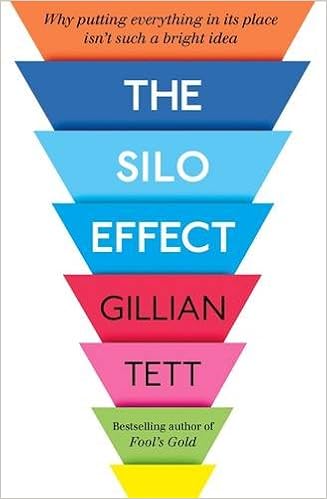
Book: The Silo Effect

individual
|
INTERPERSONAL : SCIENCES
humanistic --------------------------------------- mechanistic
SOCIOLOGY : POLITICAL
|
group
The Silo Effect
Image: Amazon.com

What are (or will be) the legacy issues that permeate your career*?
Integrated care?

We would never want 'parity of esteem' to mean 'parity of silo': would we?

*Assuming a 'career' continues to involve some sense of longevity (in healthcare 38 years)?

Related links:
Simon & Schuster: The Silo Effect
Financial Review: Why the silo effect makes us stupid

My source: Tett, G. (2015) Go Mingle, Have Fun. FT Weekend. Magazine, 22-23 August, pp. 30-33.
