Hodges' Model: Welcome to the QUAD: professionals

Hodges' model is a conceptual framework to support reflection and critical thinking. Situated, the model can help integrate all disciplines (academic and professional). Amid news items, are posts that illustrate the scope and application of the model. A bibliography and A4 template are provided in the sidebar. Welcome to the QUAD ...

Showing posts with label professionals. Show all posts

Monday, May 11, 2026

BCS Third Faculty of Health and Care Conference 2026 - London 30th June

Overview

Join us for an exciting and informative day with a mix of keynotes, debates, panels, and practical workshops.

Speakers

Please visit the Faculty of Health and Care Conference 2026 web page for a list of our speakers and speaker biographies.

Synopsis

Please join our third annual conference featuring keynote addresses, panel sessions, scientific abstracts and posters, and practical workshops.

Our theme this year is 'Collaborate, Learn and Professionalise'.

Hear from national and international speakers in a CPD awarded programme.

Join us after the event for networking in an informal drinks reception.

Further details are available here:

Faculty of Health and Care: Conferences | BCS and Faculty of Health and Care Conference 2026 | BCS.

Ticket costs

(Prices stated are inclusive of VAT and fees)

  • Venue Attendance - BCS Members - £25
  • Venue Attendance - Non-BCS Members - £35
  • Online Attendance - BCS Members - £12
  • Online Attendance - Non-BCS Members - £15

Refunds/cancellations

A refund, excluding fees, will be issued if a cancellation request is received within 14 days of the booking date or by noon on Tuesday 16th June 2026, otherwise, name substitutions will be allowed after this date.

Our events are for adults aged 16 years and over.

This meeting is conducted in accordance with the BCS Code of Conduct for Meetings.

Join BCS today

If you are attending in person, please familiarise yourself with the Visitor Instructions for the BCS London Office.

Please note, if you have any accessibility needs, please let us know via 
groups AT bcs.uk and we’ll work with you to make suitable arrangements.

This event is brought to you by:

Faculty of Health and Care | BCS

n.b. Attending in-person. PJ

Thursday, November 13, 2025

Wednesday, August 28, 2024

Call for Participation in NHS Survey

ARE YOU WORKING IN THE NHS? IF SO, HELP NEEDED URGENTLY! Please read this email. 

Glasgow Caledonian University is inviting NHS Staff across the UK to participate in this doctoral research survey to analyse the impact of responsible leadership on improving well-being and organisational trust among NHS Staff members. 


To be eligible, you must be an NHS staff member from any area of the UK in any job role. The survey collects no recognisable information and is wholly anonymised to protect participant privacy and confidentiality. It has received full ethical approval, will take around 10 minutes and will help provide an improved understanding of the area of well-being in the profession.


Please forward this survey link to everyone in your contacts working for NHS. This will help gain more responses, increasing the study's reach and validity. Your help is highly appreciated, and we thank you in advance.


Here's the link for the participant information sheet and survey: 

https://app.onlinesurveys.jisc.ac.uk/s/caledonian/impact-of-responsible-leadership-on-employee-well-being-and-org


Warm wishes
Umm E Habiba Tariq (Chief Investigator)


Umm E Habiba Tariq (she/her) | PhD Candidate, MSc, BBA (Hons)

Occasional Lecturer | Department of HRM | Glasgow School for Business and Society (GSBS)


Glasgow Caledonian University is a registered Scottish charity, number SC021474

My source: Nurse-Philosophy List.

Friday, May 03, 2024

Help us build the future - Medical Aid Films' Annual Survey 2024

On Tuesday, 30 April 2024 at 14:37:02 BST, Helen Coombe, UK <helen AT medicalaidfilms.org> wrote:

At Medical Aid Films, we are asking ourselves how we can respond to the scaling up of innovative digital information and communication technologies whilst continuing to place our primary audiences at the centre of our work – ‘ensuring people-centred systems that are enabled by digital health[i]’, one of the objectives of the WHO Digital Health Strategy 2020 – 2025. It is important to us that any digital strategy reflects the needs and aspirations of the healthcare professionals we serve. We invite any healthcare professional to complete our 2024 online annual survey to help inform forthcoming digital initiatives. Your insights will provide us with a comprehensive understanding of what matters most around training and health education and how we can best serve your needs. 

c/o Medical Aid Films 

The survey can be accessed here - now closed.

the deadline to respond is Monday 13th May. 

Thank you for helping support our work.


[i] WHO Global strategy on digital health 2020-2025, https://www.who.int/health-topics/digital-health#tab=tab_1


Helen Coombe, Head of Research, Monitoring, Evaluation and Learning. Medical Aid Films, c/o Zavros Mintikkis Associates Ltd, 1st Floor, 446a Green Lanes, London, N13 5XD

HIFA* profile: Helen Coombe is Head of Evaluation and Research at Medical Aid Films, UK.

helen AT medicalaidfilms.org

*My source.

Saturday, December 02, 2023

'Safe space' - which one?

 Individual
  |
     INTERPERSONAL    :     SCIENCES               
HUMANISTIC --------------------------------------  MECHANISTIC      
SOCIOLOGY  :   POLITICAL 
|
GROUP
psychological safety

physical safety

social safety

"NHS staff will be able to speak out about mistakes without fear of reprisal for the first time, thanks to a new investigation unit with "safe space" powers.
The Health Services Safety Investigations Body (HSSIB), which was launched last week, has been granted a remit that in effect means any testimony or evidence given to it by doctors, nurses and other staff medical staff will not be handed over to another agency - such as the police, a coroner or the General Medical Council - unless the High Court rules that it must."


Lintern, S. 'Safe space' unit to protect NHS staff reporting medical errors, The Sunday Times, 22nd October 2023, p.11.

Wednesday, November 17, 2021

c/o WHO: Opportunity for recent graduates for LDCs

Appealing to the librarian network to share this great WHO opportunity for recent graduates for LDCs

Dear Colleagues,

This may seem like an odd request but I am counting on you as the global health community who sometimes are the world’s best knowledge connectors. As many of you work with recent graduates who come from varied backgrounds, I would like to make you aware of the WHO’s young professionals (YPs) programme for young professionals (YPs) from Least Developed Countries (LDCs) https://www.un.org/development/desa/dpad/wp-content/uploads/sites/45/publication/ldc_list.pdf which aims to engage them in WHO’s work and build their capacity in key public health areas of particular relevance for their countries.

The vacancies of the first cohort are currently open for application until 6 December 2021. The vacancies can be found here:

https://careers.who.int/careersection/ex/jobsearch.ftl (please type “YPP” in the key word search to take you directly to the vacancies)

If you know someone who is 35 years old or younger and comes from a Least Developed Country, please ask them to check out WHO’s Young Professionals Programme! During your career, you may have come across some exceptional students from LDC locations who you feel worthy of an opportunity to make a big impact in the global health arena. If you know of anyone, please share this opportunity with them.

I have done this in the past and my colleagues in WHO HR saw star candidates results from the public health networking that got this message out to ideal candidates and they would like to see that success again. For some of you I know this will be a golden opportunity.

If you have any concerns about this posting, please let me know. For potential candidates, please direct them to visit the WHO website above.

Many Many Thanks to you all.

Tomas ALLEN
Professional email allent AT who.int
WHO Library
https://www.who.int/library

WHO COVID Database
https://search.bvsalud.org/global-literature-on-novel-coronavirus-2019-ncov/

HIFA profile: Tomas Allen is a librarian for the World Health Organization. 

Professional interests: Public Health. tomas.allen.who AT gmail.com

My source: HIFA

Monday, August 17, 2020

Expression of Interest to Join the Global Planning Committee


Expression of Interest to Join the Global Planning Committee

Unlocking Potential: Prioritizing Child & Adolescent Health and Well-Being in the New Decade

CORE Group Global Health Practitioner Conference (GHPC)

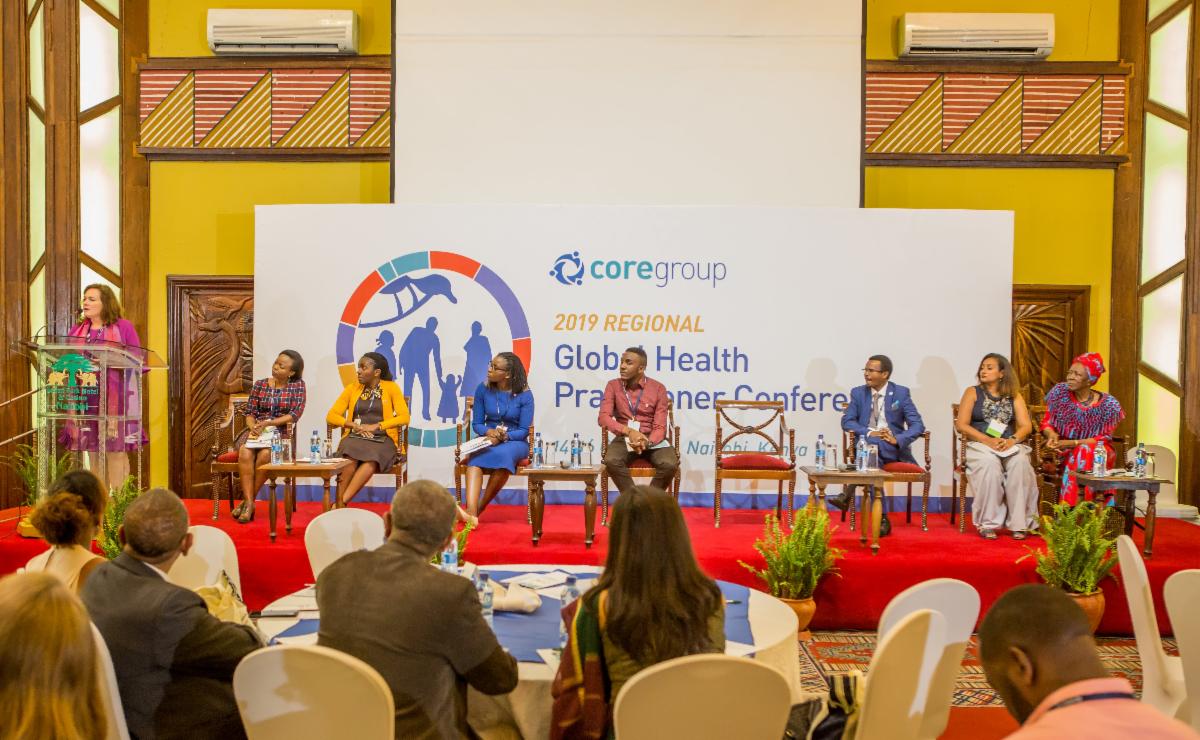
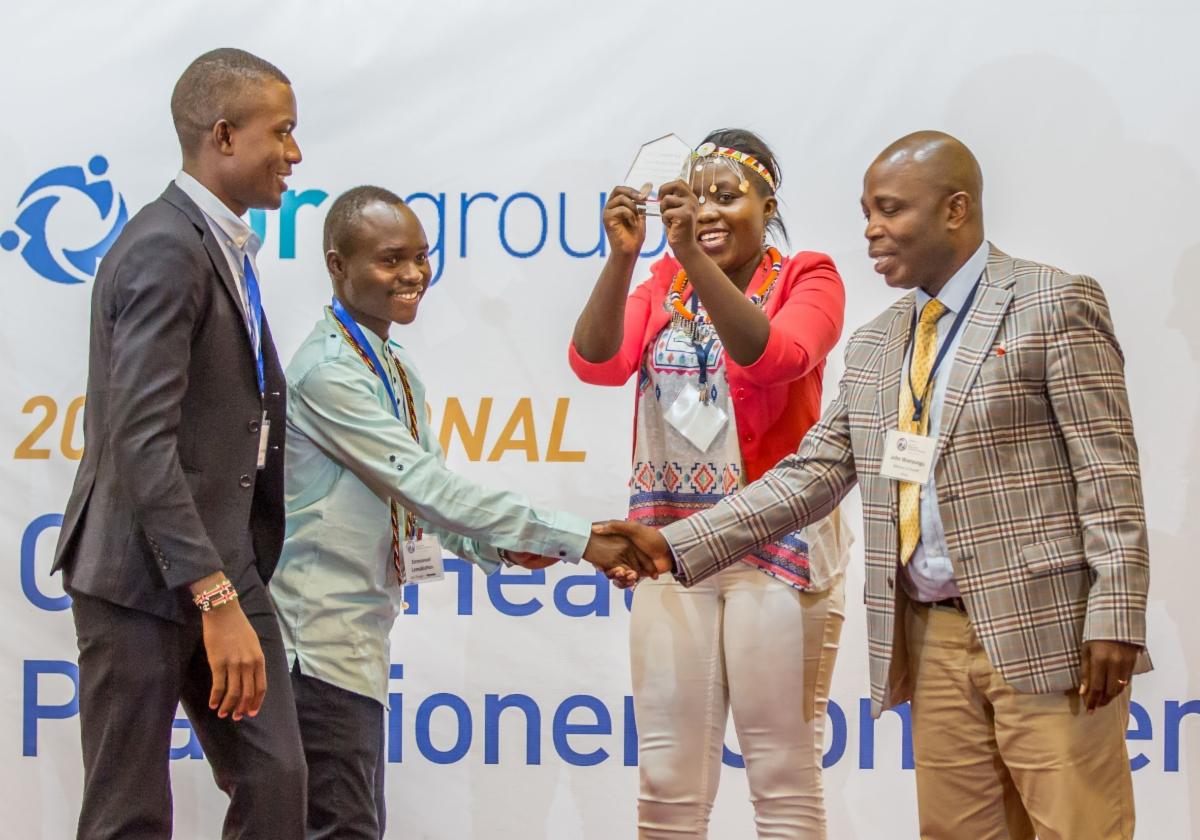
For over two decades, CORE Group has hosted a Global Health Practitioner Conference featuring skills-building sessions, recent evidence on cross-sectoral technical areas, and dialogue on community health. We have a unique opportunity this year to connect even more organizations and professionals around the world with our new digital format, and this year is particularly important as we set the stage for future investment and innovation in child and adolescent health and well-being.

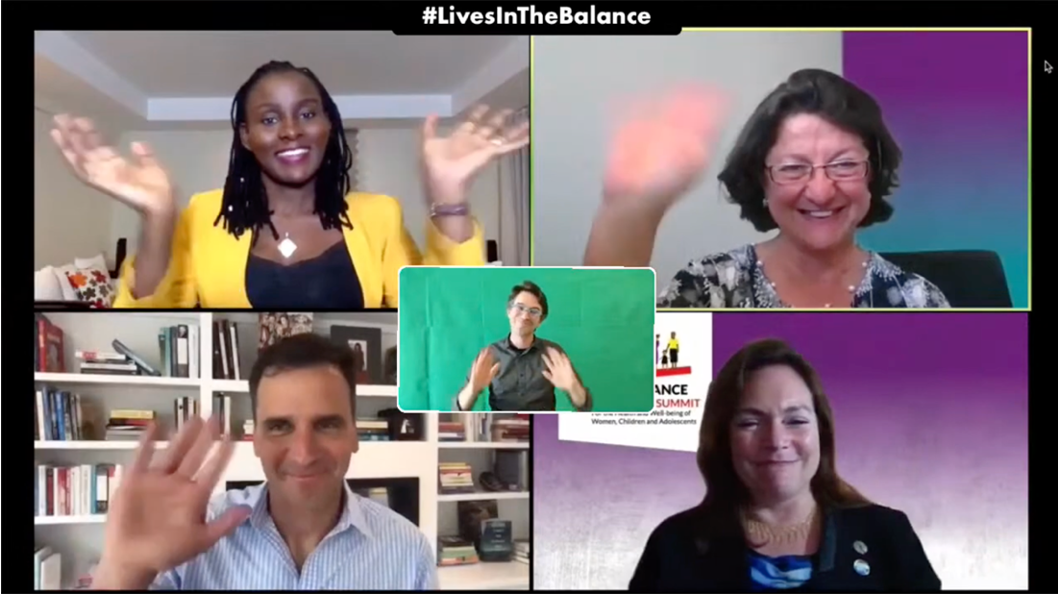
CORE Group and its membership will engage government, ministries of health, policymakers, practitioners, academia, civil society, private sector, global and local organizations in this virtual conference on December 8-10, 2020.

This Conference positions itself as a sharing platform for promising practices and innovations, ongoing challenges, and lessons learned in child and adolescent health and well-being worldwide; and as a convening space for various stakeholders - from community health workers who perform work on the ground to government policymakers who draft national policies - to discuss current opportunities and challenges for policy making, implementation, and partnership and draw consensus on key steps to move the needle forward.

CORE Group is convening a Global Planning Committee with various interested stakeholders to provide input on conference themes and objectives and to support the creation of a multi-day, interactive agenda. Being a committee member is a volunteer position* and will require up to 6 hours per month in planning calls and agenda input, outreach to speakers, and more.

If interested in participating in the Global Planning Committee, please complete the form below by Friday, August 21, 2020, COB.

*A stipend will be provided to young people in the committee, CORE Group is committed to meaningful youth engagement and aims to include 50% of young leaders in this committee. 


My source: Ados May, hss AT lists.coregroup.org

Monday, July 27, 2020

Survey: Dissertation on Artificial Intelligence and Record-keeping

My source:
records-management-uk AT jiscmail.ac.uk

Mon, 27 Jul at 14:10
 
Hi Everyone,

I hope everyone is doing well.

Thank you to everyone who has filled out my survey so far, the response has been fantastic. This is just a reminder that the closing date for the survey below is 3rd of August 2020.

As part of my Masters, I am writing a dissertation on the challenges faced by record-keepers in the digital age and how Artificial intelligence might be used to rectify these challenges.  I am currently conducting a survey to collect as many perspectives and opinions as possible from professionals working within the sector, where the data collected will form the basis of my dissertation research.

I would greatly appreciate you taking the time to complete my survey. There are 25 questions in total and it should not take more than 10-15 minutes to complete. All responses will be kept anonymous.

Please click the following link to start the survey: https://opinio.ucl.ac.uk/s?s=68574

Also, if you or your institution have implemented Artificial Intelligence and you have information that will help me in my dissertation please contact me via email: mohamed.tahayekt.19 AT ucl.ac.uk.

If you have any questions about this survey, or my research, please contact me at mohamedbentahayekt AT gmail.com or mohamed.tahayekt.19 AT ucl.ac.uk

Kind regards,

Mohamed Ben Tahayekt

Monday, January 27, 2020

What should be written in a HC Professional's DNA?

Before putting twitter down for a break, I was reminded about a form of DNA.

There are previous posts on the 6Cs in nursing here on W2tQ and taking these essential qualities as an obvious starting-point:

  1. care,
  2. compassion,
  3. courage,
  4. communication,
  5. commitment
  6. and competence
- and mapping them to the care (knowledge) domains of Hodges' model, you realise how they apply across the model. Care, Compassion and Communication are the essence of what it is to be human and humanistic. If however the time 'allowed', environment and accessibility are not attended to, then the mechanistic domains can disrupt the most caring of efforts.

What about courage? This is surely a very individual character trait? A personal quality in this context, with an emphasis on the humanistic domains.

Care is relational and we can consider courage in respect to scientific knowledge. As a member of the multidisciplinary team, or specialist practitioner a nurse may need courage to share scientific knowledge, evidence concerning genomics, for example. The public's knowledge and understanding of science is brought to the fore. There is the alternate scenario with the 'patient' as expert, for example in the case of rare diseases (especially next month).

Courage is a continua, that like strands of DNA runs through all the domains of Hodges' model and the 2020s ... will see the political realisation of courage in nursing and healthcare; locally, regionally, nationally and globally.

Reading (another) book for review, the authors draw attention to how Maslow's hierarchy says little, if anything, about altruism (but is implied?).

As these brief observations should demonstrate, Hodges' model facilitates relational, person-centredness, the cross-fertilization of ideas and high standards of care.

Who needs a double-helix when you can have a quadruple form?

individual
|
INTERPERSONAL : SCIENCES
humanistic ----------------------------------------------- mechanistic
SOCIOLOGY : POLITICAL
|
group - population


My source:
MindScience, Biochemistry, FT Magazine, FT Weekend. 26-27 January 2013, p.50.

Reminded via:

Tuesday, September 03, 2019

CLEAR as a Mental Health Million...?

individual
|
INTERPERSONAL : SCIENCES
humanistic ----------------------------------------------- mechanistic
SOCIOLOGY : POLITICAL
|
group - population
ASK 
about underlying social problems

TREAT
 the immediate health problem
...

REFER
to local social support resources

ADVOCATE
for


Constantly rationalising; it's still the Northern summer holidays, people are away, not everyone's on twitter, the tweet's still warm, blimey - get a life ...!

I wonder how no one else can consider the very obvious 'fit' between key elements of the CLEAR initiative and Hodges' model, sufficient to consider the tweet of that post worthy of a like at least? Not a one. (There's another post perhaps..?)

Oh well... Plough on ...

The other week Mental Health Million on twitter featured a gif that caught my eye again today. This graphic provides a lesson that also incorporates CLEAR.

If we consider the ASK advice, then this supposes of course that the person, patient, client is engaged with the health professional. Engaged, to such an extent that in competency terms the professional's interpersonal skills come to the fore. It really is how we ask, and at that first encounter that is crucial.

individual
|
INTERPERSONAL : SCIENCES
humanistic ----------------------------------------------- mechanistic
SOCIOLOGY : POLITICAL
|
group - population
ASK 
about underlying social problems

TREAT
 the immediate health problem
...

REFER
to local social support resources

ADVOCATE
for

Although I may write about the importance of parity of esteem in mental and physical health this is often thought of in funding, research terms and the physical health of people with more chronic forms of mental illnesses who are prescribed and take long term psychotropic medication. It is not easy to envisage the extent of the challenges for patients, their families and the health and social care team. The CLEAR website notes the use of the initiative across many health contexts and hence conditions, including dementia.

The animation tweeted by Mental Health Million and their reference to the 'One in Four' statistic, highlights the complex nature of 'care pathways'.

Yes, the solutions are "out there" but the key is making them available.

No pun intended, but pathways are often taken for granted in the sense that they are CLEARed and straightforward to follow. CLEAR checks this assumption and takes a global approach. CLEAR and Hodges' model draw attention to the humanistic, the social side of medicine, health care. These are often not factored in from the outset, as a vital part of the outcome process (policy, purposes and practices).

As mental health care professionals realise that ability to 'ask' can be hard-won in terms of the patience that needs to be exercised.
The counterpoint to that is a twitter thread last week. A person with mental illness and in difficulty at that time, was suggesting that the professionals "Go Away" (not exactly the words used).

As this animation suggests, getting referred is one thing, being heard and seen is another. Getting to the point were dialogue is possible is a delicate negotiation. Mutual respect, being able to agree to disagree. Do we agree as to the type of the fruit on the tree; never mind what might be 'low-hanging'?  Whatever the perceived and actual differences we must try to reduce that distance, listen, share and make progress.

No one should have to sit, walk, Be alone if they do not want to. ...


individual
|
INTERPERSONAL : SCIENCES
humanistic ----------------------------------------------- mechanistic
SOCIOLOGY : POLITICAL
|
group - population


TREAT
the immediate health problem


REFER
to local social support resources


ADVOCATE
for

Wednesday, August 21, 2019

"Bleak House" - not just a book: Family Homelessness

individual - home?
|
INTERPERSONAL : SCIENCES
humanistic - HOME? ----------------------------------------------- mechanistic - HOME?
SOCIOLOGY : POLITICAL
|
home? - population


"Bleak House"
- a work of fiction ...

Charles Dickens - Bleak House


"Bleak Houses"
- a work of Government ...

Bleak Houses - Report


See also:
The Stranger in the Mirror in Bleak House

Book cover - Waterstones

My source
Radio 4 and BBC 2 - Newsnight

Friday, June 21, 2019

The Art & Science of Health: [conceptual scraps iii]

In clinical administration and informatics the question of 'ownership of information' is one of what I've described as legacy problems. Here's a stab at a definition:

A legacy problem is characterised by being:

An aspiration that presents as a problem due to its scale, complexity, and the fact that they are passed-on from one generation of professionals to another. As such legacy problems are common across disciplinary and professional groups. They are embedded within professional education, teaching, learning, practice, management and are expressed in successive  policy developments and within public and media discourse. In scale legacy problems are inherited by new learners and governments.
This is admittedly a broad brush treatment - and a work in progress (I focus upon and list the characteristics). Here, I'm not concerned with the whys and wherefores, or the minutiae. (Perhaps this post is a result of not burn-out(!?) but professional and organisational exposure otherwise known as experience?)

Clinically then legacy problems include:
  • integrated care;
- across physical, mental health and social care
- between disciplines (location, co-working - teams)
- as experienced by the patient, carer (as proxy)
- financially
  • holistic care;
  • person centred care;
  • reflective practice;
  • critical thinking;
To these we can add:
  • the electronic health record
    • and as mentioned above 'ownership' of the record (as a whole and the data within).
The question is - are the above being miscategorised? Are they problems or features of healthcare that no matter how much you might wish you cannot dodge them?

Records are critical to the definitions of being a professional and professionalism - public safety, care planning and delivery, accountability, responsibility, research... Perhaps though the existence and consequent longevity of the above are bound to give rise to their analogues and not just their solution, but how they are framed?

Comprehensive record anyone and is that a computer before me...?

What are your thoughts - h2cmng@yahoo.co.uk I'd be pleased to hear from you. Can you add to the list?

To be continued ... [ and there's the legacy conundrum that is the National Health Service? ]

See also:

Daniel Bayley: The problem with Patient Online and the NHS App
Related posts i & ii:

The Art & Science of Health: [conceptual scraps i]

The Art & Science of Health: [conceptual scraps ii]

Wednesday, April 04, 2018

Paper: IJIC - Building Competencies for Integrated Care: Defining the Landscape c/o Miller & Stein

individual
|
INTERPERSONAL : SCIENCES
humanistic ---------------- Integrated Care --------------- mechanistic
SOCIOLOGY : POLITICAL
|
group

"Transformation does not only involve gaining new knowledge and skills but a more fundamental* shift in our conceptual paradigms about our roles, responsibilities and relationships." [RRR]


Clinical integration (mental health) through person-centred care of someone's health and wellbeing

building blocks 1. Electronic health records,

Functional integration (data, information)

Uni-professional education
 
Clinical integration (physical health) through person-centred care of someone's health and wellbeing
through the active engagement of
service users as partners in care


 Act-ions - Practice

[RRR] social change

[ My obs.: Health literacy
- need for a generic framework -
for health education arbitration -
as there is a sociopolitical dispute]

Professional


through the active engagement of
service users as partners in care


2. Budgetary processes,
3. Governance structures

[RRR] political change (inc. policies, professional bodies...)


Organisational & Systemic integration


integration

Normative integration

*There's that word again...

Q. Reflect upon the following using the above model - not only the text but the model itself:

"To achieve the transformation required by integrated care, this means three things: we need to include the principles of integrated working into our formal education and training systems; we need to recognize that learning continues in our workplaces; and accept that we ourselves will be informal educators throughout our careers."

The following dimensions are listed in the editorial and above :
  • Dimension 1. Person-centred care (i.e. the improvement of someone’s health and wellbeing through the active engagement of service users as partners in care)
  • Dimension 2. Clinical integration (i.e. care services are coordinated and/or organised around the needs of service users)
  • Dimension 3. Professional integration (i.e. existence and promotion of partnerships between care professionals that enable them to work together)
  • Dimension 4. Organisational integration (i.e. the ability of different providers to come together to enable joined-up service delivery)
  • Dimension 5. Systemic integration (i.e. the ability of the care system in providing an enabling platform for integrated care, such as through the alignment of key systemic factors like financing and regulation)
  • Dimension 6. Functional integration (i.e. the capacity to communicate data and information effectively within an integrated care system)
  • Dimension 7. Normative integration (i.e. the extent to which different partners in care have developed a common frame of reference of vision, norms, and values on care integration)

Miller R, Stein KV. Building Competencies for Integrated Care: Defining the Landscape. International Journal of Integrated Care. 2018;17(6):6. DOI: http://doi.org/10.5334/ijic.3946
 

Saturday, February 03, 2018

c/o [hifa] WHO Webinar: Compassion - mapped to Hodges' model

individual
|
INTERPERSONAL : SCIENCES
humanistic --------------------------------------- mechanistic
SOCIOLOGY : POLITICAL
|
group

sympathy, empathy, compassion
mental states, feelings, emotions
communication (verbal - non-verbal)
experience, sorrow, suffering
personal ethics, learning
reflection, self-compassion
psychometric instruments
mentor, role model
listening, non-judgemental
student idealism
 meditation, contemplation
(drug concordance)

Poor psycho-
Research
Teaching
methods and methodologies
measure compassion
Technical competence
diagnostic accuracy
studies - literature
(drug compliance)
QUANTITY

health & compassion
as a 'science'
social support 

QUALITY
culture
peer support - sharing
reflexive, desire to help
rapport,
PRACTICE based research
Research on empathy > compassion
role models
teamwork

better outcomes,
public demand
(for more compassionate)

health workers -
high workload
mission statements
Health Institutions
Regulatory organizations
Medical councils
harassment - poor team functioning
compassionate leadership

See also and c/o HIFA:
c/o [hifa] WHO Webinar: Compassion – the heart of quality people-centred health services

Tuesday, November 07, 2017

UK: The assessment of risk and safety in mental health services

Background

Managing the safety of patients in mental health services is a core function. A variety of tools or scales are being used in mental health services, some of which are locally developed and typically not validated. In 36% of suicides the quality of risk assessment was considered unsatisfactory (NCISH). We are conducting a nationwide evaluation of safety management in the UK.

Aims of the study

  • What are the views of mental health professionals, service users and carers on the safety planning process in mental health services and how this could be improved? 
  • Which risk assessment tools are currently being used in mental health services in the UK? 
  • How are these tools being used prior to suicide? 
Method

The study will use both quantitative and qualitative methods to examine which assessment tools for safety are currently used in mental health services in the UK, and how staff, patients and carers view them. There are three data collection sources for the study:
  1. Web-based survey
  2. Targeted survey of mental health services
  3. Interviews with clinicians
For more information and to participate in the survey please see the NCISH website and follow the link -

http://research.bmh.manchester.ac.uk/cmhs/research/centreforsuicideprevention/nci/

My source:
Jane Graney 
jane.graney AT manchester.ac.uk

Sunday, October 22, 2017

Drawing a Care Map

individual
|
INTERPERSONAL : SCIENCES
humanistic --------------------------------------- mechanistic
SOCIOLOGY : POLITICAL
|
group


I contacted the Atlas of Caregiving and Rajiv Mehta replied:
We have found that the value to individuals has come not only from the final artifact (the diagram), but even more from the thinking that goes into its creation (if the person draws his own), and the conversations and reflections sparked by discussing the CareMap with others. This recent news article gives some insight into this: Caregivers Draw Support By Mapping Their Relationships. 
Of course, the point I’m making is true for any graph, diagram, etc.!
Also, your readers would likely appreciate a link to this page, which has more information on drawing a CareMap: 
https://atlasofcaregiving.com/drawing-using-caremap/
Rajiv Mehta
CEO, Atlas of Caregiving (www.atlasofcaregiving.com)
Board member, Family Caregiver Alliance (www.caregiver.org)
Co-organizer, Quantified Self (www.quantifiedself.com)

Saturday, June 04, 2016

"eLearning for undergraduate health professional education - a systematic review informing a radical transformation of health workforce development"

"Designing for learning is a complex task which requires a holistic approach. According to Mayes and de Freitas (24), the implementation of blended learning should consider learning at three different levels: as behaviour, as construction of knowledge, and as a social practice.

The behaviourist learning theory (25,26) suggests that we learn by receiving a stimulus that consequently produces a response. It therefore concentrates on low-level cognitive tasks or psychomotor skill learning (27). ... According to Horton (28), drill-and-practice activities are useful when learners need to learn automated procedures that must be performed and applied without much conscious thought as part of higher-level activities (28). 

In contrast to the behaviourists’ approach, the cognitivists focus their attention on how students gain and organize their knowledge (27). Piaget (29) and his constructionism theory of knowledge has been particularly influential with his assumption that conceptual understanding can be reached through intellectual activity rather than by merely absorbing information. The cognitive perspective emphasizes the process of reaching “understanding” through an active process of creating hypothesis, application of knowledge and reflection (30)." (p.97)

Imperial College London, World Health Organization (2015). eLearning for undergraduate health professional education - a systematic review informing a radical transformation of health workforce development. Al-Shorbaji, N., Atun, R., Car, J., Majeed, A., & Wheeler, E. (eds.).
https://apps.who.int/iris/handle/10665/330089

Sunday, February 14, 2016

Paper - The effectiveness of internet-based e-learning on clinician behavior and patient outcomes: a systematic review

As I work on my research proposal this paper (in press) is a very useful and timely reference...


Abstract - Background

The contemporary health workforce has a professional responsibility to maintain competency in practice. However, some difficulties exist with access to ongoing professional development opportunities, particularly for staff in rural and remote areas and those not enrolled in a formal program of study. E-learning is at the nexus of overcoming these challenges. The benefits of e-learning have been reported in terms of increased accessibility to education, improved self-efficacy, knowledge generation, cost effectiveness, learner flexibility and interactivity. What is less clear, is whether improved self-efficacy or knowledge gained through e-learning influences healthcare professional behaviour or skill development, whether these changes are sustained, and whether these changes improve patient outcomes.

Sinclair et al. refer to:

"One suitable framework that is congruent with e-learning research is Kirkpatrick’s four levels of evaluation." (p.53).

I have taken the rest of the paragraph and mapped the stated levels to Hodges' model:

individual
|
INTERPERSONAL : SCIENCES
humanistic ---------------------------------------  mechanistic
SOCIOLOGY : POLITICAL
|
group

Level two pertains to learning and the evaluation of knowledge.


Kirkpatrick’s model is hierarchically based with level one relating to student reaction and how well the learner is satisfied with the education program. 


Level three expands on this and considers whether the education has influenced behavior. In the context of this review, behavior change is any practice that is intrinsically linked with the outcomes of the e-learning program undertaken.


Finally, level four evaluates the impact on outcomes such as cost benefit or quality improvements. 

The author's continue: "The majority of e-learning research has focused on participant experience and knowledge acquisition, outcomes that correspond with the first two levels of Kirkpatrick’s model. To date, few studies have examined the effectiveness of internet-based e-learning programs on HCP [health care profession] behavior, which aligns with Level 3 of Kirkpatrick’s model (p.54)."

Peter M. Sinclair, Ashly Kable, Tracy Levett-Jones, Debbie Booth, The effectiveness of internet-based e-learning on clinician behavior and patient outcomes: a systematic review, International Journal of Nursing Studies, Available online 4 February 2016, ISSN 0020-7489, http://dx.doi.org/10.1016/j.ijnurstu.2016.01.011
(http://www.sciencedirect.com/science/article/pii/S0020748916000122) 
Keywords: e-learning; Systematic Review; Education; Information Communication Technology; Health Care Professional

Friday, July 17, 2015

NHS HACK DAY 12 & 13 Sept, Manchester

Dear HANDI Member - you may be interested in the event below:-

NHS Hack Day - Manchester on 12th & 13th September 2015.

For those who aren't familiar with it, NHS Hack Day is a relaxed and free-form software development day, run as an unconference, and allowing participants to pitch their ideas and NHS problems to the audience of developers and Health IT specialists. After pitching, teams form organically and people start working on their solutions. On the Sunday, work continues, and then the work is presented to the judging panel. Prizes are awarded, but the main point of participation is the lessons learned, the community that has formed around NHS Hack Day, and the exhilaration of helping develop software over a weekend. ...

What would a CCIO get out of it?

When you see how well developers work when they get chance to work directly with users is inspiring. Realising how rarely they get this opportunity certainly suggests some reasons why NHS IT often falls short of where we would like it to be. Understanding the user need, pitched by a patient or relative, can be an important experience.

At NHS Hack Day we often get excellent representation of junior health professionals, patients, and developers from Health IT and non-Health IT backgrounds. Unfortunately, representation at NHSHD of the NHS IT 'establishment' - NHS Trusts, HSCIC, IT managers, and NHS IT technical staff etc, is less strong. I'm hoping that with the right leadership from CCIOs we can change this.

Sign up here (it's free) ...

Many thanks,
Jill Riley - HANDI Health

...

(I have my ticket.)