Hodges' Model: Welcome to the QUAD: problems

Hodges' model is a conceptual framework to support reflection and critical thinking. Situated, the model can help integrate all disciplines (academic and professional). Amid news items, are posts that illustrate the scope and application of the model. A bibliography and A4 template are provided in the sidebar. Welcome to the QUAD ...

Showing posts with label problems. Show all posts

Wednesday, July 01, 2026

Tricotyledons, systems and social problems

'If scientists and engineers are to be able to attack social problems with the same validity and effectiveness with which physical problems have been attacked, then a much more sophisticated and rigorous system design methodology is needed.

Such methodology, called the tricotyledon theory of system design, has been developed as a synthesis of: empirical and speculative approaches to system design [2], the methodology of operations research [10], classical optimization techniques [18], results in specialized branches of mathematical system theory [1,4,6,7], and the constructs of general mathematical system theory [12,13,14].

Experimental applications of the tricotyledon theory of system design to several problems in widely differing contexts [3,4,8,9,16,17] indicate that the methodology holds great promise for validity and effectiveness in attacking any large-scale, complex, man/machine system design problem with precision and rigor. There are no theoretical limitations (such as differentiability, linearity, finiteness, or discreteness) for the problems that can be attacked within the tricotyledon theory of system design.

In this short abstract the theory is only described in terms of set and system theoretic concepts as presented in Reference [12), [13], or [14]; no exploitation of the theory, either theoretical or practical is attempted here.' ..' p.224-225.

'The task of defining a large-scale, complex, man/machine system design problem P=(S,T,α,β,γ,D) often requires an interdisciplinary team in practice. An interdisciplinary team requires, in turn, that the above definitions be translated into non-mathematical methodology. This has been done in Reference [15].' p.229.
15. Wymore, A.W., Systems Engineering Methodology for Interdisciplinary Teams, unpublished manuscript. (Another loss?)


Wymore, A.W. (1975) The Tricotyledon Theory of  System Design. In. Category Theory Applied to Computation and Control: Proceedings of the First International Symposium, San Francisco, February 25-26, 1974 (Lecture Notes in Computer Science, 25) by E.G. Manes (Editor).

See also: 

https://en.wikipedia.org/wiki/A._Wayne_Wymore

http://sysengr.engr.arizona.edu/wymore/bookreview.html 

https://lockywolf.wordpress.com/2019/02/16/a-mathematical-theory-of-systems-engineering-the-elements-by-a-wayne-wymore/ 

style="font-family: helvetica; font-size: small;"

Friday, January 16, 2026

Progress? In the age of uncertainty

INDIVIDUAL
|
 INTERPERSONAL    :     SCIENCES               
HUMANISTIC --------------------------------------  MECHANISTIC      
SOCIOLOGY  :   POLITICAL 
|
GROUP


The Age of 


Uncertainty

'Over a relaxed weekend, a distinguished international gathering at John Kenneth Galbraith's Vermont farm offer their views on the themes outlined in the series and on other major anxieties facing the modern world.' 

BBC iPlayer
https://www.bbc.co.uk/iplayer/episode/m002l708/the-age-of-uncertainty-series-1-13-13-weekend-in-vermont

Monday, December 15, 2025

Q. Is Hodges' model Person OR University-centered? [ 'Big Mind' iii? ]

To date, I have not written a paper on Brian Hodges' original purpose for his model in curriculum development, design, planning and evaluation. Geoff Mulgan's book and referenced sources provide support, if not evidence, for the increasing relevance of Hodges' model.

The center of Hodges' model, the nexus, can be variously occupied by an individual student, researcher; a group, or team, or even an institution. Why not a university?

Since 1987-88, when I applied Hodges' model in a case study, I've acquired a broad understanding of the 'POLITICAL' domain in terms of institutions and organisations. Even if that learning is now 'archived':

https://web.archive.org/web/20150414073721/http://www.p-jones.demon.co.uk/linksIV.htm

In 'Big Mind', Chapter 14, The University as Collective Intelligence (pp.174-180) refers to 'third-loop learning' and a document from Nesta:

Geoff Mulgan, Oscar Townsley, and Adam Price, "The Challenge-Driven University: How Real-Life Problems Can Fuel Learning", Nesta, accessed April 28, 2017.
accessed 15/12/2025: https://media.nesta.org.uk/documents/the_challenge-driven_university.pdf 

'This paper focuses on one important strand of change: the rise of what we call ‘challenge-driven’ university models. These models develop students by putting them up against difficult problems and challenges for which there are no established answers.  Instead students to draw on many disciplines to solve them; they have to work in teams; and they have to collaborate with organisations outside higher education.

These models aren’t a replacement for the classic core of university education - mastering a discipline.   But they provide an important complement to this core, and they may be better suited to preparing young people for the needs of the world. They also re-emphasise one of the founding principles of some ancient universities: a focus on questions rather than answers as the key to deep learning.'

Within the Nesta document, Mulgan et al. list educational institutions who have succeeded, and are trying to effect change (with much editing):

US

The approach was pioneered by McMaster University Medical School in the late 1960s where in response to changing demands on the profession, the curriculum was changed so that students learned collaboratively, working on real-life cases in small groups. ...

... examples like High Tech High in the US, use project-based learning, centred on real-life problems, as the core curriculum for students.

Olin College of Engineering has quickly gained a reputation for being one of the most innovative institutions in the US since it opened in 1997.

Last year, the Ash Center for Democratic Governance and Innovation at the Harvard Kennedy school founded the ‘Urban Innovation Field Lab’, a project aiming to improve social conditions in cities in Massachusetts.

Canada

In Canada, the University of Waterloo uses a model of co-operative education, where students’ time is split between study and assessed work experience.

Europe 

Aalto University in Finland was created out of a merger between Technology, Economics and Art Universities in Helsinki and now runs four interdisciplinary ‘factories’ - Design, Health, Media and Service, where teams of academics and students work with companies and communities to develop new products that respond to demand from the real economy. 

The Norwegian University of Science and Technology in Trondheim has a similar approach. As part of their courses, students are required to join a ‘village’ (i.e. area of interest) of around 30 members which address questions such as ‘Biofuels - a solution or a problem?’, ‘Sustainable, affordable housing for all’, and ‘Portable technology and well-being’.

At Maastricht University (the second youngest university in the Netherlands), all teaching uses a problem-based learning model, and this has become one of the main attractions of the university. 

Twelve to fifteen students discuss problems in group sessions, with one student appointed to lead the discussion. The students are given complex problems from everyday professional practice which they brainstorm and research both together and separately. ...

UK 

Imperial College London and the Royal College of Art (RCA) are two particularly innovative higher education institutions. For the last ten years, Imperial has been running the Energy Futures Lab - a cross-discipline, issue-based department aimed at tackling global energy challenges. It was established to bring together disparate fields of study that are relevant to energy including engineering, environmental sciences, computer science, business, policy and mathematics. ...

Imperial and the Royal College of Art also run a Double Masters in Innovation Design Engineering (IDE) which is well known for producing some of the best talent in the field. Their flagship international module ‘GoGlobal’ takes students abroad for three week cross cultural, collaborative projects with academics and industry partners. ... The University of Lincoln has challenge-driven education at the core of its teaching.

Globally? South?

... 

Over the years I've reached out to a great many private and public bodies. 

MEMO TO: New College of Humanities and London Interdisciplinary School

I note the NESTA document is a 'draft'. I'd be pleased to help update and complete this work. Keen to frame Hodges' model not just in the context of problems, but strengths, weaknesses, risks, opportunities and more. When your model emerges from health, you quickly learn when it comes to problems that versatility and adaptability are essential. Always ready to cross disciplines - insofar as I understand them, borders and boundaries as required.

Previously:

https://hodges-model.blogspot.com/2025/07/big-mind.html

https://hodges-model.blogspot.com/2025/12/ii-big-mind-book.html

Geoff Mulgan (2017) Big Mind: How Collective Intelligence Can Change Our World, Princeton University Press.

Friday, January 03, 2025

How 'divine' is the language of care?

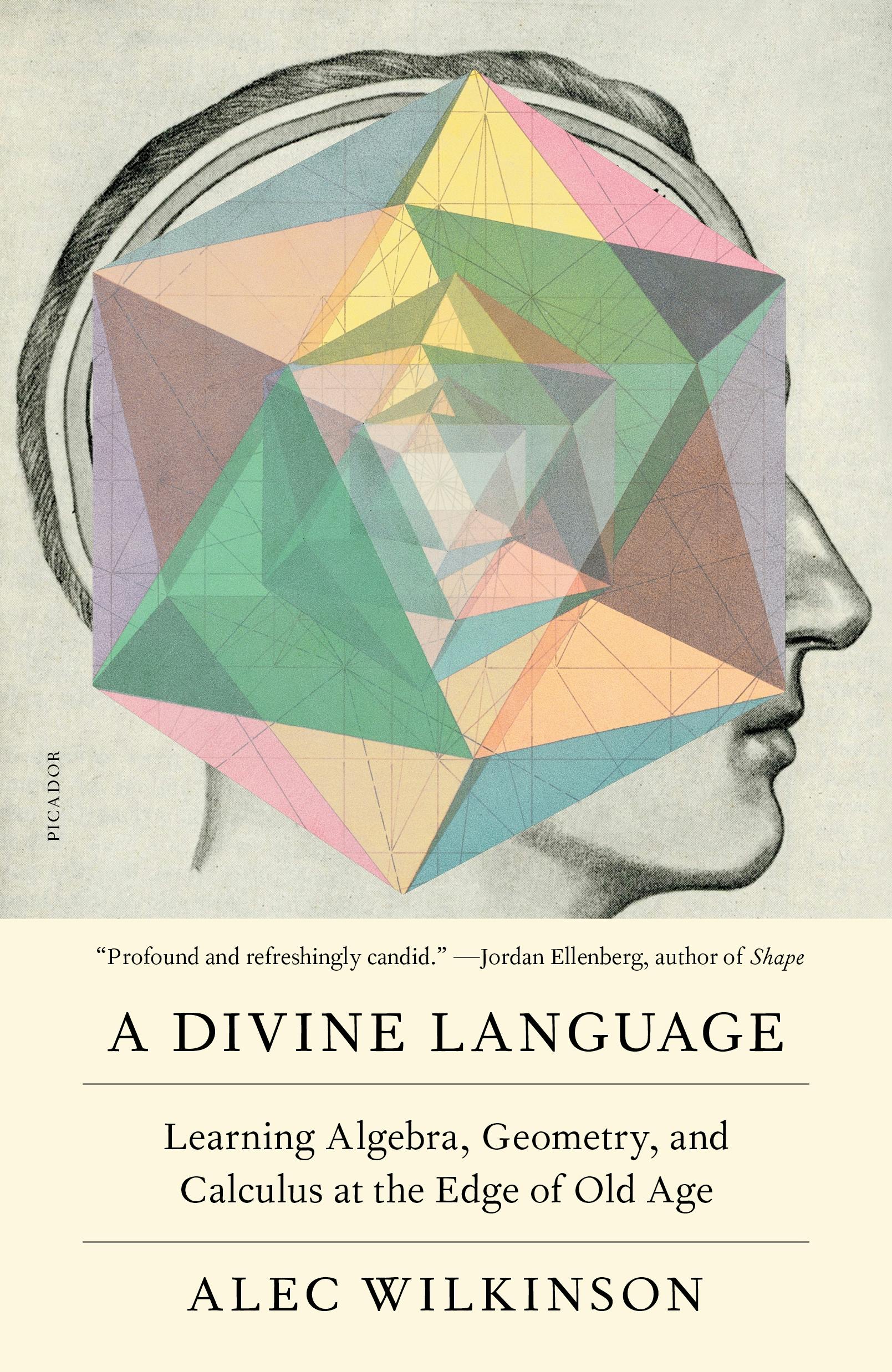
'My impression was that algebra was less a subject than a practice into which one was inducted by the algebra priests after a series of mortifications. The letters and equations that the teacher drew on the board did not seem related to the numbers I had handled in other classrooms. For one thing, a problem in arithmetic was vertical, one number beneath another, and a problem in algebra, an equation, was horizontal. I felt as if in a permanent present, unable to see how the past and the future were joined. In Ulysses James Joyce writes that the present is the drain that the future goes down on its way to becoming the past.' p.12.
'The mathematician Alonzo Church, who taught Alan Turing, told another of his students, David Berlinski, "Any idiot can learn anything in mathematics. It requires only patience." I would sit with a pencil and paper trying to solve an algebra problem and sometimes go only so far before my mind would halt, because I had could used up what little I knew that might apply. It hadn't occurred to me to think of algebra as the bright boys and girls I had been among had thought of it, as a series of related procedures. They were constructing a map. I was collecting postcards from places where anxiety or incuriousness had kept me from leaving my hotel.' p.31.
(my emphasis)


Alec Wilkinson. (2022) A Divine Language. Learning Algebra, Geometry, and Calculus at the Edge of Old Age. New York: Farrar, Straus and Giroux. https://us.macmillan.com/books/9781250168580/adivinelanguage/

Previously: math :: logic

Wednesday, November 06, 2024

Dear Doctor, I have a list . . .

It seems reasonable to suggest that my trips to see the GP as a child:

"What's the problem Mrs Jones?"
"It's Peter, he's not eating!"
"Well, does he seem ill? ... Is he lying down all the time?"
"No, he's running around all day"
"Well he sounds OK but let's check" ... ... ...
"Say arr!"
 (That's to me - not you reader!)
"Argh!"
"Mmm.. ok, ok. ... What does he eat?"
"Tomato soup, chips, chicken, beans on toast, raw carrot, boiled egg."
"Oh! And jam butties!"
"Well he's of slim build, no doubt underweight, but he's fine. Keep the jam butties rolling, and I suspect he'll keep running around."
- were in the days pre-one-problem-per-visit to the surgery. Even now I wonder is this an urban (rural) myth. But then it rears itself with a comment by family, or overheard. The 1960s and 1970s were a different time, a different age. We always saw the same doctor. Continuity mattered then. Thankfully, I was not a regular 'visitor', or the more derogatory term frequent flyer.

individual
|
INTERPERSONAL : SCIENCES
humanistic ------------------------------- mechanistic
SOCIOLOGY : POLITICAL
|
group

Ever since starting in the NHS as a nursing assistant, you became aware of the anxiety provoked by many patients when it is their turn to see the doctor. Being asked to bring the patient and any relative(s) through. It often entailed a walk.


I remember one instance their being 12 professionals. Learners can soon increase numbers and restrictions were imposed. Voices were raised. Patients did see the doctor separately.

Back in 1980s, I became a CMHN (CPN) in 1985, I used to encourage patient's to prepare, to make notes of points - questions they wanted to ask. I framed it as their time, their opportunity. A learning opportunity too.

Of course, humour always needs to be used carefully, but on occasion we would joke about walking into the meeting with a list.*


In case of long-term mental illness families are also greatly involved. Sometimes a case review would take place in the patient's home. If it's care in the community, delivered by the community team then surely the administration can be organised in support? 

At times, I would offer to assist and the team were always responsive. This role of advocacy has changed, transformed over the decades, but it is still there. As a nurse you listen for the voice: but have to be ready to 'pick this up' on another's behalf. Ready 

*Lists: Long a tool for safety and situational awareness.

Friday, December 08, 2023

The Digital Collective (DC) a Symposium: Digitalisation, Subjectivities, and Care

Dear colleagues, 

We recognise that many people who wanted to join our symposium on Digitalisation, subjectivities, and care were unable to join in person. For this and other reasons we have moved our symposium to be fully online. Our intention is for the symposium to be accessible to all of our colleagues including those who are outside the NL. 

If this is you, we hope you will now consider submitting an abstract, and as such we have extended the deadline to 31 January 2024.

Decisions will be made by 14 February 2024.

Please find the amended call below.

CFP: Digitalisation, subjectivities, and care
7 March 2024, 9.30am – 6pm, online
Deadline abstract submission: 27 November

The Digital Collective (DC) at the University of Twente in the Netherlands is planning a symposium on digitalisation in care. More information below. Please consider submitting an abstract for a talk or poster presentation, deadline: 31 January 2024. 

Any questions to: dc-bms AT utwente.nl 

Introduction

Digitalisation is more than a technological phenomenon. It concerns an ever shifting relation between digital technologies and societal developments. Digital tools are increasingly common in care contexts, reshaping practices, institutions, relations, and social structures. Understanding digitalisation of care therefore requires a multidisciplinary approach to distinct yet related issues that cover the scale of technology innovation, societal impacts (benefits and drawbacks), as well as the pace of development and its ubiquitous nature. In this interdisciplinary symposium we will therefore explore the relation between digital tools and those who use them, willingly or otherwise. 

Topics of interest:

Possible topics related to digitalisation include, but are not limited to: 

  • Digital users and digital tools
  • Care institutions
  • Data development / use in digital care contexts
  • Epistemic injustice in digital care contexts 
  • Perspectives on ‘users’ of digital care content
  • Realities and subjectivities of ‘digital users’ 
  • (Multi-)methodological approaches to digital care
  • Care labour economies
  • Global justice perspectives on care
  • Human-technology relations
  • Health economics 
  • Health Technology Assessment of digital health technologies

The DC is a multidisciplinary platform and we welcome submissions from a broad range of disciplinary and interdisciplinary perspectives, including from outside academia.

Overview of the symposium:

Schedule and further information about the day to follow.

Submission deadlines:

  • Extended abstract submission: Wednesday, 31 January 2024
  • Notification of decisions: Wednesday, 14 February 2024

Please note:

  • Extended abstracts should be between 500 and 1000 words. 
  • Submissions should be sent by email to dc-bms AT utwente.nl 
  • Poster proposals should be sent to the same email, and clearly labelled as such. 
  • If you want your work to be considered for both a presentation and a poster, please make this clear in your submission. Abstracts not accepted for presentation may be invited to present a poster instead.
  • Each submission will receive at least two reviews. 

Additional information:

The Digital Collective (DC) is an interdisciplinary research platform on digitalisation at the University of Twente in the Netherlands. DC consists of social scientists and philosophers specialised in digitalisation and with domain expertise in health, higher education, artificial intelligence, and related technologies. 

After the symposium the DC intends to build a consortium with a view to developing collaborative work, including for a Horizon Europe funding proposal.


Event and venue information:


The event will be free for all participants. It will be fully online. Further details to follow.


Symposium organisers and programme Committee:

Please send questions to: dc-bms AT utwente.nl 

Dr Y. J. Erden

Associate Professor in Philosophy
University of Twente
AISB Vice Chair 

My source:

Philos-L "The Liverpool List" is run by the Department of Philosophy, University of Liverpool https://www.liverpool.ac.uk/philosophy/philos-l/ 

Follow the list on Twitter @PhilosL. Follow the Department of Philosophy @LiverpoolPhilos 

n.b. With the event now including provision for online presentations I am submitting an abstract.

Thursday, January 26, 2023

Edge(s) Computing ... IEEE EDGE 2023

IEEE EDGE 2023 - CALL FOR PAPERS

c/o AI-SGES list


“It’s the edges of the maps that fascinate ...”
― David Mitchell, The Bone Clocks
[Goodreads.com]


 INDIVIDUAL
|
 INTERPERSONAL    :     SCIENCES               
HUMANISTIC --------------------------------------  MECHANISTIC   
SOCIOLOGY  :   POLITICAL 
|
GROUP
'domains'

"Edge computing, as the convergence of computing and communications executed close to data collection and places of storage and application, provides a paradigm that offers several research and application opportunities across a wide range of domains." ... [IEEE EDGE 2023] ...

'domains'
'domains'


Friday, March 25, 2022

"How Universities Have Betrayed Reason and Humanity—And What's to Be Done About It" c/o Nicholas Maxwell

In order to make progress towards a good, civilized world – one in which there is peace, democracy, justice, individual liberty, and sustainable prosperity, for everyone – we need to learn how to do it. That in turn requires that our institutions of learning, our universities, are rationally designed and devoted to the job. They are not. For a century or so, they have pursued knowledge and technological know-how, and have not engaged in public education about how to solve those problems of living, local and global, that we need to solve to make progress towards a better world. The pursuit of knowledge and technological know-how dissociated from a more fundamental concern to help solve problems of living has actually made possible the genesis of many of our global problems: the climate and ecological crises, the lethal character of modern war, the menace of nuclear weapons, pollution of earth, sea and air, population growth, the degradation of democracy as a result of social media and the internet. In giving priority to the pursuit of knowledge and technology, as at present, universities betray reason and humanity. We urgently need a revolution in our universities so that the basic task becomes to help humanity resolve conflicts and problems of living in increasingly cooperatively rational ways – the pursuit of knowledge being important but secondary. 

See From Knowledge to Wisdom: https://philpapers.org/rec/MAXFKT-3

See also “How Universities Have Betrayed Reason and Humanity—And What's to Be Done About It”, Frontiers, https://www.frontiersin.org/articles/10.3389/frsus.2021.631631/full

Best wishes

Nicholas Maxwell

Science and Technology Studies, University College London 

Website: www.ucl.ac.uk/from-knowledge-to-wisdom

Publications online: http://philpapers.org/profile/17092http://discovery.ucl.ac.uk/view/people/ANMAX22.date.html

My source: 

Philos-L "The Liverpool List" https://www.liverpool.ac.uk/philosophy/philos-l/


Wednesday, July 07, 2021

SIMPOL Supporters Q&A - Corporation tax

Dear Peter,

As a supporter of the Simultaneous Policy (SIMPOL) campaign to solve global problems, we’d love you to join us at our next SIMPOL Supporters Q&A zoom meeting. It’ll be on Tuesday 13th July at 8pm UK time.

We’ll be discussing the recent international agreement on a minimum level of corporation tax signed by over 130 countries. But will it work? To answer that question and others, we’re delighted to have Richard Murphy of the Tax Justice Network with us. He’ll explain the agreement, whether it’ll be effective, and answer your questions. Your hosts will be Rob Cobbold of the Conscious Evolution Podcast and me, John Bunzl, SIMPOL’s founder.

Edited: please ask people to register by sending an email to info@simpol.org and we will then send them the link.

You’ll be very welcome. We look forward to seeing you then!

Best wishes,

John

John Bunzl – Trustee

International Simultaneous Policy Organisation

https://www.simpol.org

Topic: Simpol Supporters Q&A zoom

Time: Jul 13, 2021 08:00 PM London

Tuesday, March 09, 2021

Hodges' model: What is the Question? (ii)

individual
|
INTERPERSONAL : SCIENCES
humanistic ----------------------------------------------- mechanistic
SOCIOLOGY : POLITICAL
|
group
What is the basis for meta-cognitive and meta-conceptual claims for Hodges' model?

Does Hodges' model have a role in secondary education and if so, what is it?

If Hodges' model facilitates reflection and is reflexive how is this achieved and demonstrated?

Is Hodges' model a meta-semantic framework and if so, is this what provides genericity?

What is the foundation of the axes in Hodges' model and what characteristics can be described?
Is Hodges' model safe? "Cold, Warm, Hot, Hotter!" nearer to 'navel gazing' than 'reflective practice'?

Are 'concepts' sufficient to explain the structure of Hodges' model, and account for its claimed role(s) in assessment, planning, evaluation and assurance?

Is Hodges' model a constant: as the contemporary model?

Are 'individual', 'group', 'humanistic', and 'mechanistic' sufficient as conceptual anchors
; and if so are they sufficient to give rise to the two continua that then invoke four knowledge (care) domains?
Can Hodges' model simultaneously preserve, protect and assure 'patiency' whilst also facilitating self-care?

What forms of literacy are encountered by users of Hodges' model and are they accessible to the public, patients and carers?

Hodges' model: Show me the praxis.

What does Hodges' model say about holism (and consequently reductivism) and why should anyone listen?

Is there such a thing as a generic 'model of care' in a multidisciplinary world?

Is there a 'logic' to the seemingly diametric opposition of 'power' as exercised here and the two individual domains in Hodges' model?

If claims for Hodges' model of universality, genericity and global scope are 'true' is this also a risk for healthcare professions and specialisation, as it supports the 'universal worker' and automated processes?


Monday, March 01, 2021

Hodges' model: What is the Question? (i)

individual
|
INTERPERSONAL : SCIENCES
humanistic ----------------------------------------------- mechanistic
SOCIOLOGY : POLITICAL
|
group
Can Hodges' model assist student nurses in assessment and  evaluation of their well-being through their course of study?

What sort of 'spaces' do we find in Hodges' model and do they matter or meta?

What is Hodges' model?

Is there a theory implicit in Hodges' model?

What theories might underpin this 'model'?

The Demarcation problem: Hodges' model - is this science or non-science?
Does Hodges' model display consistency when used within a specific cohort of students and across disciplinary student groups?

What is a 'span' and 'career' in the 21st century, and why do they matter to the individual and group?

Created in the 1980s is there a political need for Hodges' model in the 2020s?

What are 'legacy' problems in healthcare and nursing, and how can Hodges' model characterise them?


Prompted by post-graduate study and avoiding reference to methods and/or methodology, plus:


Over many years, many questions have arisen.

Resnik, David B. A pragmatic approach to the demarcation problem. Stud. Hist. Phil. Sci., 2000, 31: 2, 249-267.


Wednesday, February 24, 2021

'Design Thinking' in and out of four boxes...

In 2019 Charles Orton-Jones gave a brief (single page) account of design thinking in sales, with a description of its five components:

Empathise

Define the problem

Ideate

Prototype

Testing

Below, I've mapped each to Hodges' model (and in parallel):

INDIVIDUAL
|
INTERPERSONAL : SCIENCES
HUMANISTIC----------------------------------------------- MECHANISTIC
SOCIOLOGY : POLITICAL
|
  GROUP
Empathise
Ideate
Define the Problem
Prototype

Define the Problem
Prototype
Testing

Empathise
Ideate
Define the Problem
Prototype
Testing

Empathise
Ideate
Define the Problem
Prototype
Testing


There is often conceptual overlap and relationships when considering the most mundane, taken-for-granted of phenomena and events. This overlap increases rapidly with more complicated situations. This applies in the case of 'design thinking'. Ideate I take as a mental activity, but it is the flow and interplay of ideas: communication that counts. Empathy is imbued individually, but it is delivered and is realised in the social domain - as empathise suggests. Hopefully, from empathy with group rapport, trust, dignity and respect coherence will follow.

Politically, funding, team constraints, leadership may all influence defining the problem, prototyping and testing. Ideation is 'political' too. We forget this at our peril. Are we sure the protected characteristics have been factored in? You might also test the prototype against the original idea(s): thereby bringing in values. While this application is commercial sales, you are in personalised and specialised 'sales' in healthcare. 

While the above looks like duplication, the parallel approach can help assure the design thinking process as a whole. There is an open question here, but I'm sure despite the duplication and 'travel' to-and-fro within the model the structure helps instill some discipline with efficiency - economy of effort? The model acts as a marshalling (classification) yard.

As an example, this was brought home today on twitter, with a question about dealing with people who have a fear of needles. This may be children, a percentage of the general population and people with a learning disability. We see then how this overlap can be important. By default then working with the above design thinking + h2cm approach to achieve (variously) individualised, integrated, collaborative care then you might also be doing co-design and co-creation. Now that is sales ...!

My source: Orton-Jones, C. Design thinking is making an impact, Raconteur, 20.6.19. p.18.


Wednesday, June 03, 2020

RA of Eng - Healthcare challenges needing engineering expertise


individual
|
INTERPERSONAL : SCIENCES
humanistic ----------------------------------------------- mechanistic
SOCIOLOGY : POLITICAL
|
group - population


The Royal Academy of Engineering is keen to help identify potential solutions and facilitate useful contacts across its national and international engineering networks that could help our governments address problems and assist the public health response.

https://www.raeng.org.uk/policy/engineering-response-covid-19-coronavirus/healthcare

We would like to hear from frontline medics and policymakers who are encountering critical issues, so that we can convene expert teams of engineers to help solve these problems.


Wednesday, January 22, 2020

CfP: The Future as a Problem. Between Philosophy and Cultural Studies

Trόpos
Trόpos. Rivista di Ermeneutica e critica filosofica

ed. by Gianni Vattimo and Gaetano Chiurazzi
2020, n. 1

CALL FOR PAPERS
The Future as a Problem. Between Philosophy and Cultural Studies
Edited by Daina Habdankaitė and Davide Sisto

The upcoming issue of Tropos will be dedicated to the concept of future, with a view to reconstructing its peculiar hermeneutics, which is, its theoretical meaning and many nuances.

The topics include but are not limited to:

- Future and technology: political, social and ethical problematics;
- Ontology of the future: classic and contemporary approaches;
- Virtuality and/or possibility in theory and/or in praxis;
- The future of philosophy as a philosophical problem.

Deadlines
Submission deadline: March 31, 2020
Results of blind reviews: April 30, 2020
Publication date: July 2020

Submission Guidelines
Papers should be submitted to:

- Daina Habdankaitė: d.habdankaite AT gmail.com
- Davide Sisto: da.sisto AT gmail.com
- Papers should be in English, French, or Italian.
- Papers should be prepared for blind review (double)
- Each submission should consist of two separate documents containing the following:

1) The full paper including:

- Title
- The full paper should not exceed 50,000 characters in total.
- An abstract of no more than 200 words - also including an English title
- 5 keywords

2) A separate cover letter including the following information:

- The title of the paper
- Your name, affiliation and contact information
- A biographical presentation of 50-60 words.

Presentation of the topic

A quick glance at the current political, social, technological and artistic reality reveals increasing popularity of the discourse about the future which is reconceptualized and scrutinized from both theoretical and practical approaches. As soon as it enters the theoretical field, the question of the future becomes a question of the future of philosophy, to the point that it has been said that the future of philosophy itself might be the philosophy of technology (J. C. Pitt). There is a prominent idea that the technological future will cause a revolution in interpersonal relations: the increasingly frequent interaction with AI (vocal assistants, chatbots, etc.) is generating new relationships between human beings and robots, causing problems that are still unclear, but are starting to attract the attention of scholars and researchers.

The omnipresence of digital objects, especially within social networks, has often determined a pathological nostalgia for the past: when the past tends to overlap with the present, making itself indistinguishable from the latter, we tend to look back and to not look in front of us. The inability to distinguish the present from the past is also connected to the modus essendi of contemporary neoliberalism, which in the name of "there is no alternative" forces us to spend all our energy in recovering the past: we would be not able to build a new future anymore since it appears impossible to be done a priori.

This tendency, according to which we refuse the unusual and keep alive the usual, has been described, in the context of Cultural Studies, as retromania (S. Reynolds), or as slow cancellation of the future (M. Fisher, F. Bifo Berardi) This general pessimism is also connected to the idea that we are approaching the end of the world. The economic and the environmental crisis, combined with the eternal and suffocating presence of the past, are determining the spread of apocalyptic philosophies that, starting from the cosmic pessimism of G. Anders, stress that the end of humanity is near (D. Danowski; E. Viveiros de Castro; E. Thacker; J. Bridle), or even that the end of the Earth itself is coming, to the point that the even the bringing a new life to the world is questioned from the moral standpoint (D. Benatar; T. Ligotti).

On the other hand, an optimistic view of our technological future can be also encountered. The present age focused on technological and digital enhancement has produced the diffusion of transhumanist ideas revolving around the vision of the entire humanity soon gaining access to the eternal life, sometimes in the form of the digital immortality, through which human beings are to be replaced with their digital identities (from avatars to holograms). In other words, there is hope for death to be defeated.

From a more general point of view, the future is a challenging philosophical problem, engaging discourses in the realms ranging from metaphysics and ontology to politics and ethics. After the spectrality of Derrida and virtuality of Deleuze, that have marked the discourse of the 20th century, new ontologies are being formed as either a direct response to the limits of deconstruction, a continuation of non-essence based ontology or an attempt to make a significant conceptual shift in contemporary metaphysics. With the rise of different versions of speculative realism (Q. Meillassoux, G. Harman, R. Brassier, I. H. Grant) and new materialisms (K. Barad, R. Braidotti, E. Grosz, J. Benett) classical philosophical notions of virtuality, potentiality, matter, technology, human and many others are being reshaped and rearticulated not without an attempt at building bridges with other discourses such as science, feminism, science fiction, visual arts, etc. The vast array of different takes on classic philosophical problems share a similar urge for reshaping philosophical discourse as such and very often reconceptualizing the question of the future turns out to be also an attempt at reimagining the future of philosophy itself.
...

General information
Publisher Website:
http://www.aracneeditrice.it/aracneweb/index.php/rivista.html?col=tropos
Journal Website:
http://troposonline.wordpress.com
Journal Email Address:
tropos.filosofia AT unito.it

Indexed in: Philosopher’s Index, Philosophy Research Index, Catalogo Italiano dei Periodici (ACNP)
Questions are welcome and should be directed at the editors of the current issue:

- Daina Habdankaitė d.habdankaite AT gmail.com
- Davide Sisto: da.sisto AT gmail.com

My source:
Philos-L "The Liverpool List" is run by the Department of Philosophy, University of Liverpool https://www.liverpool.ac.uk/philosophy/philos-l/ Messages to the list are archived at http://listserv.liv.ac.uk/archives/philos-l.html.
Recent posts can also be read in a Facebook group: https://www.facebook.com/PhilosL/ Follow the list on Twitter @PhilosL. Follow the Department of Philosophy @LiverpoolPhilos
Thursday, January 16, 2020

Social Care: in the round and square c/o King's Fund

Simon Bottery's Long Read -

What’s your problem, social care? The eight key areas for reform

- and listed below, have been mapped to Hodges' model. The full article and comments are well worth reading and may help readers discern the relationships between the key areas identified.
  1. Means testing: it’s not like the NHS 
  2. Catastrophic costs: selling homes to pay for care 
  3. Unmet need: people going without the care and support they need 
  4. Quality of care: 15-minute care visits and neglect 
  5. Workforce pay and conditions: underpaid, overworked staff 
  6. Market fragility: care home companies going out of business 
  7. Disjointed care: delayed transfers of care and lack of integration with health 
  8. The postcode lottery: unwarranted variation in access and performance

I have associated each with the respective knowledge (care) domain in which they are placed:


individual
|
INTERPERSONAL : SCIENCES
humanistic ----------------------------------------------- mechanistic
SOCIOLOGY : POLITICAL
|
group - population
1. Parity of Esteem in Means Testing
2. (Catastrophic) Cost to me, anxiety, depression, stress
3. Unmet need (mental health, counselling ...)
4. Quality of Care (Mental Health, Well-Being..)
5. Workforce (values, person-centred, self-esteem, job-well-done, BE the Difference?)
6. Market fragility (attractiveness as career pathway, having a leader)
7. Disjointed care (number of carers, lived experience...)
8. Postcode (I thought this had been addressed?)
(postcode? - a remote 'thing' outside through the window and (summer) garden]


1. Parity of Esteem in Means Testing
2. (Catastrophic) Cost to NHS - innovation, change, prevention, transformation
3. Unmet need (physical, access ...)
4. Quality of Care (Time, Logistics)
5. Workforce (tasks, scheduling, physically reasonable?)
6. Market fragility (scale, bed occupancy, local demographics...)
7. Disjointed care (geography, transfers, A&E admissions...)
8. Postcode ('literally') North, West, East, South,
Regions, London, Urban, Rural ...

1. What is your
Parity across

2. (Catastrophic) Cost to my family.
3. Unmet need (socialising, access, carer ..)
4. Quality of Care (Relationships, Belonging, Communication, Family Groups..)
5. Workforce (job satisfaction, status, social worth ..)
6. Market fragility (Public perception, marketing, negativity bias - local news, time for outreach, intergenerational engagement...)
7. Disjointed care (input of family, local provisions, self-funding - budgets...)
8. Postcode (pre-social care, pre-lottery?)


Means (let's Test that.)
here too?

 2. (Catastrophic) Cost to the State?
3. Unmet need (my choices, informal carer ...)
 4. Quality of Care (Value for £, Measures, Inspection, safety..)
5. Workforce (pay and conditions, minimum wage?, Unions, contracts, training, BREXIT ..)
6. Market fragility (FUNDING settlements, estate, investment, staff turnover, Qualified staff, commercial history, profit, governance..)
7. Disjointed care (commissioning, ...)
8. Postcode (local policy, funding, protocols ..)


Friday, June 21, 2019

The Art & Science of Health: [conceptual scraps iii]

In clinical administration and informatics the question of 'ownership of information' is one of what I've described as legacy problems. Here's a stab at a definition:

A legacy problem is characterised by being:

An aspiration that presents as a problem due to its scale, complexity, and the fact that they are passed-on from one generation of professionals to another. As such legacy problems are common across disciplinary and professional groups. They are embedded within professional education, teaching, learning, practice, management and are expressed in successive  policy developments and within public and media discourse. In scale legacy problems are inherited by new learners and governments.
This is admittedly a broad brush treatment - and a work in progress (I focus upon and list the characteristics). Here, I'm not concerned with the whys and wherefores, or the minutiae. (Perhaps this post is a result of not burn-out(!?) but professional and organisational exposure otherwise known as experience?)

Clinically then legacy problems include:
  • integrated care;
- across physical, mental health and social care
- between disciplines (location, co-working - teams)
- as experienced by the patient, carer (as proxy)
- financially
  • holistic care;
  • person centred care;
  • reflective practice;
  • critical thinking;
To these we can add:
  • the electronic health record
    • and as mentioned above 'ownership' of the record (as a whole and the data within).
The question is - are the above being miscategorised? Are they problems or features of healthcare that no matter how much you might wish you cannot dodge them?

Records are critical to the definitions of being a professional and professionalism - public safety, care planning and delivery, accountability, responsibility, research... Perhaps though the existence and consequent longevity of the above are bound to give rise to their analogues and not just their solution, but how they are framed?

Comprehensive record anyone and is that a computer before me...?

What are your thoughts - h2cmng@yahoo.co.uk I'd be pleased to hear from you. Can you add to the list?

To be continued ... [ and there's the legacy conundrum that is the National Health Service? ]

See also:

Daniel Bayley: The problem with Patient Online and the NHS App
Related posts i & ii:

The Art & Science of Health: [conceptual scraps i]

The Art & Science of Health: [conceptual scraps ii]

Sunday, January 06, 2019

The Art & Science of Health: [conceptual scraps ii]

The contrast here within health care is quite stark, we can distinguish between scraps of paper in two ways ...

  1. Whatever we do with care needs; confirm them from the referral and possibly (usually) identify additional care needs (and educational opportunities also..?), assess, plan, intervene, and evaluate - that scrap of paper (or its digital analogue) should initially be blank, untainted by judgements, bias and assumptions.
  2. As soon as the scrap of paper is populated - scribed-upon then its value and the responsibility of those who access it subsequently is suddenly weighed and measured by law and accountability.
In the first case, ownership is not relevant, in that there is nothing, as yet, to 'own'. Values however can still be represented, if the staff's attitude towards the new patient, client, service user or administration terms referral, contact, triage case is similarly 'neutral'.*

In the second case, when the print hits the page by whatever means the stakes are suddenly raised. The law has a say in what is expected, permissible and reasonable conduct by those gathering data, creating a record, holding, copying and transferring the record in part, or whole and its accuracy, destruction and disposal.

*Of course, even when blank, forms - templates can have proprietary value and may well be protected, copyrighted and trademarked.

to be continued ...

Related post - Part 1:
The Art & Science of Health: [conceptual scraps i]

Monday, October 08, 2018

Book Review: [ii] Health System Redesign - How to Make Health Care Person-Centered, Equitable, and Sustainable

Part 1 gets straight to the matter of "challenging the orthodoxy" with a two page introduction to complexity and health. Part 1 covers:

  • systems sciences
  • visualization of complex systems (Capra's vortex metaphor)
  • understanding the co-existence of different degrees of complexity and their dynamics within complex adaptive organisations based on Kurtz and Snowden's Cynefin model.
  • health as a "complex adaptive experiential state"
All four points here are very pertinent to where we are in health and healthcare (the book rightly stresses this differentiation) and current and ongoing 21st century issues. The use of Capra helps to distinguish scale and the levels inevitably existent, experienced, and described in health and healthcare systems.

If you are familiar with Hodges' model and the Cynefin model, then the answer is yes - seeing the Cynefin model did make me hoot. (I remember Dave Snowden's work from Plaxo and a presentation he did in Lancaster back in 2007). More importantly, part 1 introduces where the focus needs to be to facilitate change; on the core driver of the system, the system's long-term direction, a specific system view and the need for a solid grounding in theoretical and applied approaches. This is were the visual tools and producing a view - perspective are so important. Chapter 2 contrasts the simple scientific world view and the complex scientific. The reader is asked to consider numerous background points, from the colloquial meaning of complex/complexity to the scientific. How do the words 'complex' and 'complicated' differ? At small scale the result is greater certainty BUT loss of context, while at the large scale we find greater uncertainty AND loss of detail.

https://www.springer.com/us/book/9783319646046
Figure 2.3 shows the key features of complex systems (also indicating the dynamics - '+' '-'):
  • System boundaries
  • Interconnectedness
  • Feedback
  • Impact of starting (initial) condition
Some of the figures point to their means of creation "The essence of systems thinking" (Figure 2.4) produced through Insightmaker. Sturmberg's seeks to ground the discussion too by reference to the everyday. Table 2.1 runs through how systems can be related to the experience of a 'Long day at work'. Addenda are put to immediate effect with a reference to a map of the history of complexity science; the philosophy of complex adaptive systems; and the complexity and difficult questions.

As already suggested Chapter 3 on the visualisation of complex adaptive systems had my attention. The vortex metaphor (Capra) seems trite on first encounter, but it works.* The four different ways to map a system:
  1. Systems map
  2. Influence map
  3. Multiple case diagram
  4. Sign graph diagram
are quite important as if you can take the explanations onboard you really will be on the way to fully understanding and utilising theoretical and applied approaches. The learning here is allied with understanding common system dynamic behaviours which are also illustrated and explained. Figure 3.4 shows the Cynefin framework, which is still in my head. The Cynefin model deals with the continua of:
  • uncertain - certain
  • non-linear - linear
  • Contrasts - Learning and Teaching
  • and four quadrants that combine what is complex, knowable or complicated, chaos, and known or obvious (simple). The three references here span 1996-2003.
At chapter 4 - I was worried - 'Defining Health' (now there's a task) but this is also interesting, rewarding and well placed. Core notions of health are tabled (4.1) from 1911 to 2007. Health is distinguished from dis-ease. I must follow up the footnote on p.59 Marja Jylhä and her framework of self-perception of health. 

The illustrations on pp.60-61 are frustrating.

Very!

Not because they shouldn't be there, but because they are a gift that remain (as far as I am aware) unrealised in respect of those of us working in the humanities. We still lack the visualisation tools that we need.

If I mention Figure 4.1 "The somato-psycho-socio-semiotic model of health" you will get the drift and overlap with Hodges' model. There is more with 4.2 on Attractors in Health and Illness and the system dynamics of health. The political attractor is missing (and its 'gravitational' impact) in this rendering, but the barriers to progress are also raised at the book's end. Given the topic of health, the text is not science light, with the physiology of health and disease also used to explain points, so we have, gene networks, the autonomic nervous system, the hypothalamic-pituitary-adrenal axis and bioenergetics in the mitochondrion. While not in-depth the potential application across external factors-personal experiences and internal mechanisms are demonstrated. The role of the patient, public and carers are central today and realised to various degree in theory, practice, management and policy. Self-rated health is briefly mentioned and with community health and health services utilisation this closes part 1.

More to follow...

Sturmberg JP. Health System Redesign. How to Make Health Care Person-Centered, Equitable, and Sustainable. Cham, Switzerland: Springer; 2018.

See also first part...

Saturday, September 22, 2018

Book Review: [i] Health System Redesign - How to Make Health Care Person-Centered, Equitable, and Sustainable


https://www.springer.com/us/book/9783319646046
Health System Redesign
The 'summer reading' is almost complete (p.245/290) and described as such due to it being a review and a specific deadline is not helpful. (You may have noticed with Drupal and the new site!). Fortuitously, starting the book coincided with my attending the UKSS conference in Portsmouth. The exposure to systems and complexity - as in complexity science was welcome. I would really like to write a paper on Hodges' model and complexity and this book would be a primary reference.

The foreword is by the President of the Lown Institute, this is a think-tank "advocating a radically better and uniquely American health system that overturns high-cost, low-value care." Sturmberg provides the means for this over-turning whilst beforehand explaining what is happening in the health system and health care systems worldwide. There is a difference, as we must change mindsets and facilitate the health system reducing the impact, dependence and expense of existing health care systems. What we have is no longer sustainable.

Even in Sturmberg's preface I can see why this book through its title had an instant appeal to me and should do so to others in the health, social care, policy and educational communities.

The book addresses three key themes:
  1. Understanding complexity—what are complexity sciences, and how does complexity thinking shape our understanding of health
  2. Envisioning a “best adapted” health system
  3. Achieving a person-centred, equitable and sustainable health system
The promised references follow the chapters (as expected!), but often with addenda that provide more background, insight and further reading if needed. Page 2 provides the first of many figures throughout the book, as with copious footnotes. Some people and publishers find footnotes untidy or contributing noise. I found these informative, pointing in some instance to video resources and copies of diagrams that are too detailed for a book. Inclusion still conveys some meaning given the subject matter of complexity and scale through the levels of nano, micro, meso and macro.

The book is clearly laid out, chapter 1 precedes Part 1 to set the context and agenda. Sturmberg explains this is not a theory book, but the explanations are progressive and a good foundation for further study (that must follow). Some of the challenges in teaching and learning systems thinking and health(care) systems redesign are discussed, as students are bound to encounter them not only in the literature, but in many of the assumptions that they are being socialised into in practice. A good example, is Table 1.1 Disambiguation of systems complexity (p.5). Like the use of figures, tables are liberally but effectively distributed throughout to reinforce the discussion. I like the way that systems thinking tools are set out in Table 1.2 across three pages. The tables and figures are not just page-fillers though, but sources to return to.

The differing sections that apply systems thinking are set with the implications for health care. As already mentioned some of the figures are colour reproductions and suffer due to the print size. To compensate the original source is usually provided (Addendum 2, Obamacare Health System Chart is a prime example that also time places pressure on any text). This works well as the author grapples to illustrate scale from the individual to the organisational level, industrial and processes and policy makers.

I know a review is about the book, but in this case especially I cannot but help see how this topic supports and validates (imho!) my own work and interests. Page 9 confirms how h2cm not only incorporates "design thinking" as it can readily combine the sciences and the arts (as in various blog posts). As I have stated (for 30 years) the POLITICAL domain in Hodges' model is crucial in the 21st century. So, even as I reach Part 1 for this review, the importance of global health; policy, organisations, public engagement are stressed if change is to follow. Many sections have a short introduction that ends with questions for readers to reflect on their own health systems experiences. As a summer reading project through to part 1 I was very pleased to have an 'ice-cream' of my favourite flavour that was going to run and run...

Sturmberg JP. Health System Redesign. How to Make Health Care Person-Centered, Equitable, and Sustainable. Cham, Switzerland: Springer; 2018.

More to follow three - four posts in total?


Sunday, June 17, 2018

Book: Health System Redesign How to Make Health Care Person-Centered, Equitable, and Sustainable

individual
|
INTERPERSONAL : SCIENCES
humanistic --------------------------------------- mechanistic
SOCIOLOGY : POLITICAL
|
group
HEALTH


Health System Redesign


SYSTEM

REDESIGN

Thanks to Prof. Sturmberg and Springer I have some summer reading. Having received the book it really does look well-worth reading. Review to follow here...
