Hodges' Model: Welcome to the QUAD: civilisation

Hodges' model is a conceptual framework to support reflection and critical thinking. Situated, the model can help integrate all disciplines (academic and professional). Amid news items, are posts that illustrate the scope and application of the model. A bibliography and A4 template are provided in the sidebar. Welcome to the QUAD ...

Showing posts with label civilisation. Show all posts

Friday, September 26, 2025

Book: Atlas of Finance

Individual
|
      INTERPERSONAL    :     SCIENCES               
HUMANISTIC  --------------------------------------  MECHANISTIC      
 SOCIOLOGY  :    POLITICAL 
|


Dariusz Wójcik, James Cheshire, Oliver Uberti. (2024). Atlas of Finance: Mapping the Global Story of Money. Yale University Press. https://atlasoffinance.com/

Previously: 'atlas' : 'finance' : 'visualization'

My source:Guthrie, J. Tresure maps. Life& Arts. FT Weekend. 26/27 October 2024. p.12.

Wednesday, September 18, 2024

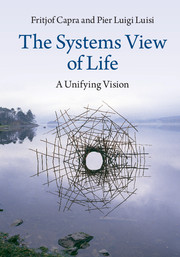
Book: 'The Systems View of Life - A Unifying Vision' [i]

The Systems View of Life -
A Unifying Vision
Published in 2014; I needed this book in the early 1990s, as did we all.

As a review request I'm grateful to CUP for forwarding a copy - that is much easier on the eyes than a screen. This book deserves a much longer-tail.

Reading Resurgence for many years, joining The Ecology Party before they turned Green, and aware of systems, cybernetics this book has brought a great deal together. It has helped me in further thought and formulation about Hodges' model: A system of systems? 

Since 2014 clearly much has changed, I will highlight points where a new edition would be welcome. Although CUP and the authors could find themselves frenetic, such we hope is the pace of change now - or from now on, especially pre-COP29?

Come on petro-states it's time to really deliver.

Even in paperback this book is a reassuring handful, running to 452 pages, excluding the bibliography and index. Part 1 reinforced the encouraging signs in the introduction:
'The basic tension is one between the parts and the whole. The emphasis on the parts has been called mechanistic, reductionist, or atomistic; the emphasis on the whole, holistic, organismic, or ecological. In twentieth-century science, the holistic perspective has become known as "systemic" and the way of thinking it implies as "systems thinking,'' as we have mentioned.

In biology, the tension between mechanism and holism has been a recurring theme throughout its history. At the dawn of Western philosophy and science, the Pythagoreans distinguished "number," or pattern, from substance, or matter, viewing it as something which limits matter and gives it shape. The argument was: do you ask what it is made of - earth, fire, water, etc. - or do you ask what its pattern is?' p.4.
  • Preface
  • Acknowledgements
  • Introduction: paradigms in science and society
  • Part I. The Mechanistic World View:
    • 1. The Newtonian world-machine
    • 2. The mechanistic view of life
    • 3. Mechanistic social thought
  • Part II. The Rise of Systems Thinking:
    • 4. From the parts to the whole
    • 5. Classical systems theories
    • 6. Complexity theory
  • Part III. A New Conception of Life:
    • 7. What is life?
    • 8. Order and complexity in the living world
    • 9. Darwin and biological evolution
    • 10. The quest for the origin of life on Earth
    • 11. The human adventure
    • 12. Mind and consciousness
    • 13. Science and spirituality
    • 14. Life, mind, and society
    • 15. The systems view of health
  • Part IV. Sustaining the Web of Life:
    • 16. The ecological dimension of life
    • 17. Connecting the dots: systems thinking and the state of the world
    • 18. Systemic solutions
  • Bibliography
  • Index
This is an excellent primer for students of biology - human biology, including eager learners in secondary school - there is technical discussion that can serve as initial exposure to new terminology, extending vocabulary. The scope of the book however covers all academic subjects, chemistry, physics, anthropology, sociology, general studies, economics and of course ecology, environmental studies.

The book is clearly well-designed and presented. Readable generally and when dealing with technical concepts. Each chapter benefits from illustrations and use of boxes, with short guest essays introduced throughout. There is less reliance on tables. Each chapter is well referenced, and towards the end chapters 17-18 urls are provided. Obviously, the references and urls are dated now; a matter we will return to. Despite the passing decade, the quality of the book still shines through.

I just noticed the cover is attributed to Andy Goldsworthy 1988, Derwent Water, Cumbria and remember out with the family, coming across Goldsworthy's work in Grizedale forest.

I will share news of my reading over several posts and many other connections.

Many thanks to CUP for the hard copy - which has been an informative companion - over the past 4-6 weeks.

Fritjof Capra and Pier Luigi Luisi (2014) The Systems View of Life - A Unifying Vision. Cambridge: Cambridge University Press.

https://www.cambridge.org/gb/universitypress/subjects/life-sciences/genomics-bioinformatics-and-systems-biology/systems-view-life-unifying-vision?format=HB&isbn=9781107011366

Friday, March 25, 2022

"How Universities Have Betrayed Reason and Humanity—And What's to Be Done About It" c/o Nicholas Maxwell

In order to make progress towards a good, civilized world – one in which there is peace, democracy, justice, individual liberty, and sustainable prosperity, for everyone – we need to learn how to do it. That in turn requires that our institutions of learning, our universities, are rationally designed and devoted to the job. They are not. For a century or so, they have pursued knowledge and technological know-how, and have not engaged in public education about how to solve those problems of living, local and global, that we need to solve to make progress towards a better world. The pursuit of knowledge and technological know-how dissociated from a more fundamental concern to help solve problems of living has actually made possible the genesis of many of our global problems: the climate and ecological crises, the lethal character of modern war, the menace of nuclear weapons, pollution of earth, sea and air, population growth, the degradation of democracy as a result of social media and the internet. In giving priority to the pursuit of knowledge and technology, as at present, universities betray reason and humanity. We urgently need a revolution in our universities so that the basic task becomes to help humanity resolve conflicts and problems of living in increasingly cooperatively rational ways – the pursuit of knowledge being important but secondary. 

See From Knowledge to Wisdom: https://philpapers.org/rec/MAXFKT-3

See also “How Universities Have Betrayed Reason and Humanity—And What's to Be Done About It”, Frontiers, https://www.frontiersin.org/articles/10.3389/frsus.2021.631631/full

Best wishes

Nicholas Maxwell

Science and Technology Studies, University College London 

Website: www.ucl.ac.uk/from-knowledge-to-wisdom

Publications online: http://philpapers.org/profile/17092http://discovery.ucl.ac.uk/view/people/ANMAX22.date.html

My source: 

Philos-L "The Liverpool List" https://www.liverpool.ac.uk/philosophy/philos-l/


Friday, March 27, 2015

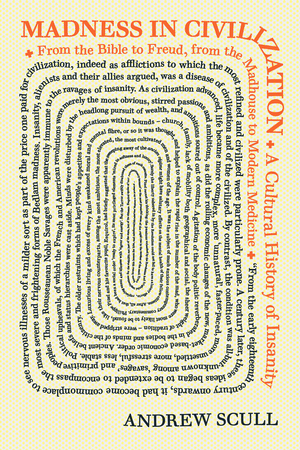
Book: Madness in Civilization - A cultural history of insanity

individual
INTERPERSONAL : SCIENCES
humanistic ------------------------------------------- mechanistic
SOCIOLOGY : POLITICAL
group
Need for asylum
http://press.princeton.edu/titles/10439.html
Book cover: Madness in Civilization
physical health
diagnosis
treatments

stigma, sense making, community care,
social history

power, institutionalised care, custodial,
parity of esteem, 'asylum'


Image source:
https://press.princeton.edu/books/hardcover/9780691166155/madness-in-civilization

Sunday, March 09, 2014

THE LANCET From public to planetary health: a manifesto

A new vision for planetary health


This manifesto for transforming public health calls for a social movement to support collective public health action at all levels of society. Our aim is to respond to the threats we face: threats to human health and wellbeing, threats to the sustainability of our civilisation, and threats to the natural and human-made systems that support us.

Our vision is for a planet that nourishes and sustains the diversity of life with which we co-exist and on which we depend. Our goal is to create a movement for planetary health.

If you agree with the broad thrust of the manifesto (not necessarily every detail), please register your agreement here ...