Hodges' Model: Welcome to the QUAD: problem solving

Hodges' model is a conceptual framework to support reflection and critical thinking. Situated, the model can help integrate all disciplines (academic and professional). Amid news items, are posts that illustrate the scope and application of the model. A bibliography and A4 template are provided in the sidebar. Welcome to the QUAD ...

Showing posts with label problem solving. Show all posts

Wednesday, September 16, 2026

Philosophical Counselling Reading Group [and Hodges' model]

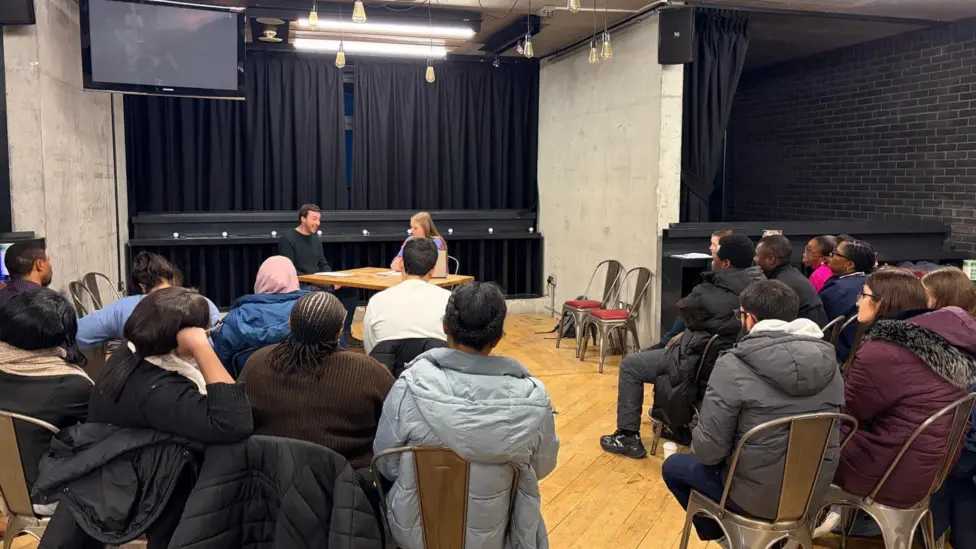
The discovery of a reading group on philosophical counselling (PC), through University of Liverpool, continues to prove helpful; to utilise professional experience, that included counselling, family therapy, cognitive therapy in psychoses, and practical experience as a mental health nurse (in-patient and community). There is overlap with Hodges' model, but it's fascinating and rewarding to listen and learn from practitioners of PC. As noted before, I was aware of PC through two popular philosophy magazines. This time around we read:

Ran Lahav, “Philosophical Counseling and Self-Transformation,” in Philosophy, Counseling, and Psychotherapy, eds. Elliot D. Cohen & S. Samuel Zinaich, Jr. (Newcastle upon Tyne: Cambridge Scholars Publishing, 2013), 82.

Abstract

This paper presents my approach to philosophical counseling, which is geared towards self-transformation, and is inspired by important thinkers throughout the history of Western philosophy whom I call transformational thinkers. I take from these thinkers the realization that our daily life is normally confined to rigid and superficial attitudes towards ourselves and our world. This is because individuals’ everyday attitudes are based on limited understandings of life, which form what I call the person’s perimeter, or perimetral worldview. The goal of philosophical counseling, as I see it, is to help counselees transcend their constricted perimetral worldview, or in the language of Plato – to realize that they are imprisoned in a “cave,” and then to step out of it towards a fuller reality. A case study is presented to illustrate the two main stages of the counseling process. 

I know there is the (biblical) phrase 'Seek and you will find'; but there is also the notion of seeing only what you seek, and missing other content - contexts. This is marked in beliefs and the development of delusional ideas. 

Of interest to me, Lahav discusses (as indicated above) a person’s perimeter, or perimetral worldview. 

We still hear how difficult it is for people to access help. I wondered (again) about referral pathways for PC? The nature of the person's problems that prompts them to seek help? Lahav acknowledges the complexity here. Speaking of 'prompt', of course now there is AI in the mix. Lahav points out how PC does not quite have the foundation and hence theoretical impetus (and rigour?) that Freud provided to psychoanalysis and psychotherapy. 

PC is, however, to some extent a broad field: '... philosophical practice has come to include several different formats in which it is practiced: one-time workshops for the general public, philosophical retreats, long-term self-reflection groups, the philosophical café, and of course philosophical counseling'. 

I wonder if philosophical counsellor's could have a role, post AI / agentic ai interventions. This could provide a step-down assurance, and be rolled into 'treatment / intervention programmes'. This could help retain the humanistic element of duty of care, underscore the person_al in care architectures/systems and provide a step-down - just in-case AI has missed, or upset something? The acknowledged strength of AI in not being subjective is balanced. Although evidence also points to misogynistic responses derived through what can be biased, and prejudiced learning sources: thus a reflection of 'society'.

In the introduction, more encouragement with reference to situated, a general map, and basic - fundamental aspects. There are (at least) two domains: 'the domain of philosophical discourse and the domain of everyday life and predicaments'. 

Hodges' model was created to facilitate the FIRST approach in PC, the Critical Thinking Approach, with an associated subtype of Problem-Solving Approach. 

It was also designed to help with the theory-practice gap. Lahav describes this in the how and what of philosophy and PC itself. I wondered to what extent if the approach of PC 'leave out the more important “what” of great philosophies.' then would a counselee be denied avenues to learning, as we may be drawn to specific philosophical schools of thought, and crucially reasoning?

The SECOND approach to PC is the Edification Approach. The author has adopted this second approach in practice.

Guess what? Yes, you've got it. Hodges' model can actually close a circle here. Or, more accurately help sustain the reflective, reflexive, recursive ... reasoning loop as needed. Another objective of Hodges' model is to produce reflective practitioners, critical thinkers and lifelong learners.

A take-away for me is the 'perimeter and the perimetral worldview'. A search for 'perimeter' here on W2tQ is null.^ I'm also wondering about transformation (in the title) and throughout the paper.

There may be an example here were a domain of Hodges' model can itself reflect the model, as in the Intra- Interpersonal domain below.

Lahav employs a case study to illustrate his thought and practice. The discussion really helped improve my reading and understanding of this.

individual
|
INTERPERSONAL
: SCIENCES             
humanistic ------------------------------- mechanistic
SOCIOLOGY : POLITICAL   
|
group

Psychology   | Philosophy(-isms)
________________________________
Psycho-Social|  Psychotherapies 

basic - fundamental

general map


case study

referral pathways

^'Peripheral' does feature in posts.

Sunday, May 10, 2026

Final Call December AI-2026: Cambridge, UK :: June: Virtual seminar on 'A Future with AI Agents'

FINAL CALL FOR PAPERS AND POSTERS

The proceedings of the AI-20xx conference series are now published by Springer in Lecture Notes in Artificial Intelligence (LNAI), a sub-series of the distinguished Lecture Notes in Computer Science (LNCS) series of conference proceedings.

AI-2026: Cambridge, UK, December 15th-17th 2026

Organised by BCS SGAI: The British Computer Society Specialist Group on Artificial Intelligence (a EurAi Member Society).The leading series of UK-based international conferences on Artificial Intelligence and one of the longest running AI conference series in Europe.

CALL FOR CONTRIBUTIONS

AI-2026 is the forty-sixth SGAI International Conference on Innovative Techniques and Applications of Artificial Intelligence. The scope of the conference comprises the whole range of AI technologies and application areas. AI-2026 reviews recent technical advances in AI technologies and shows how these advances have been applied to solve business problems. Key features are:
  • Papers will be published by Springer in the Lecture Notes in Artificial Intelligence (LNAI) subseries of the popular Lecture Notes in Computer Science (LNCS) series (
  • Papers are invited in two streams. The Technical Stream presents the best of recent developments in AI, covering a wide range of technical areas. The Application Stream is the largest annual showcase in Europe of real applications using AI technology.
  • It is expected that the best papers will be reprinted in expanded form in an international journal.
  • A mixture of full papers (maximum 14 A4 pages) presented orally and short papers (maximum 6 A4 pages) presented as posters. Papers of both kinds will be included in the proceedings.
  • Prizes for best paper and best student paper in each stream and best presented short/poster paper.
  • Invited keynote lectures.
  • The first day comprises tutorials and workshops to provide greater depth in selected topics. (Separate one-day registration for this day is also available.
  • A panel session or a debate on a topical subject.
  • An 'AI Open Mic' session to allow delegates to have their say about any aspect of AI.
  • In addition to the formal sessions, the conference programme includes a welcome reception and a Gala Dinner.
AI-2026 offers a valuable opportunity to keep up to date with developments in AI and to share experiences in the practical issues of developing AI systems.

:::: PLUS :::::

-------- Virtual Meeting seminar on A Future with AI Agents --------

The next in our series of free evening virtual seminars will be on Wednesday June 10th from 6 p.m. to 7.30 p.m. (UK time). The topic will be A Future with AI Agents.
 
Humans are becoming the minority online with bots generating almost 50% of all internet traffic. The World Economic Forum recognised that the advancement of agentic AI is obvious and the agent-driven economy is here. The global AI agents market is growing from a $5.4 billion market in 2024 to $236 billion by 2034. Come along and find out about some technical foundations of agentic systems and how to build a minimal AI agent from scratch.
 
The speakers will be

Anirban Lahiri (Arndit Ltd., Cambridge, United Kingdom) on Agentic AI: A Friend or Foe'
Dr Mercedes Arguello Casteleiro (SGAI) on 'AI Agents 101'

The virtual seminar series is free and open to all. For further details and for the zoom link to use go to https://bcs-sgai.org/seminars/2026-06-10/.
 
Details of future SGAI events will be placed on the website at https://bcs-sgai.org as they become available. To register to be sent information about future SGAI events by email go to https://www.bcs-sgai.org/register/.
 
Max Bramer
Chair, BCS SGAI
----------------------------------------------------
Chair, British Computer Society Specialist Group on Artificial Intelligence
Emeritus Professor, School of Computing, University of Portsmouth, UK
http://www.maxbramer.org
 
My source: AI-SGES list

Monday, January 26, 2026

'Drama classes help GPs handle difficult patients' c/o BBC

'Hull Truck Theatre has just won the Innovation prize at the Stage Awards for their new training scheme for GPs. Associate Director Tom Saunders and GP Dr Eman Shamsaee discuss why drama classes are helping doctors treat patients.' 

BBC Radio 4 'Front Row' https://www.bbc.co.uk/sounds/play/m002q2jz (15 mins ...)

◇

Holly Phillips, East Yorkshire and Lincolnshire and Ian Youngs, Culture Reporter

Published - 21 January 2026

'A theatre company is using drama training to help doctors deal with challenging patients.

Hull Truck Theatre's classes feature actors performing difficult GP consultations, with GPs giving feedback before taking over the consultation themselves.

The theatre recently won the Innovation Award at the Stage Awards for the programme.

Dr Eman Shamsaee, who has taken part in the training scheme, described it as a "really creative way of doing GP training".'

BBC News:  Drama classes help GPs handle difficult patients

INDIVIDUAL
|
 INTERPERSONAL    :     SCIENCES               
HUMANISTIC --------------------------------------  MECHANISTIC      
SOCIOLOGY  :   POLITICAL 
|
GROUP


The training programme has completed its pilot stage and is now in the delivery phase


A reminder of co-working to deliver STORM training with a Clinical Psychologist colleague. 

See also: 'communication' : 'primary care' : 'GP' : 'drama'

Friday, December 19, 2025

ii Learn your lines and the hyperplanes will follow

With these lines, partitions, axes and domains in mind, when a clinical practitioner is presented with a new person, whether as a patient, client, or carer ... they can, using Hodges' model (and other tools!) approach their assessment in an open and receptive manner.

This means that the information provided by the 'patient' can be readily fielded, captured whatever the context and situation.

As noted previously, my study of Hodges' model began in the late 1980s. Application in my work as a community mental health nurse, with an interest in informatics followed quite naturally(?). Primed as I was, for various reasons to carry this forward, I also carried a mathematical learning disability. At the risk of getting bogged down in my thought, use and approach to Hodges' model I need a challenge.

Mathematics is the challenge for me. It's fascinating how we have in-built 'calculators' that can help us catch a ball, and judge fairly well where to throw a ball for interception. There seems then to be an informal or naïve  mathematics, at work unconsciously. Does the same apply to Hodges' model? If so, how can I isolate, and identify it?

  • Is it represented somewhere, implicit in Hodges' model itself?
  • Is it (once again) to be found in the user of the model?
  • Is it (more likely, and obviously) a combination of these two?
  • Or, is it a product of the system, or a series of systems? 

I was reminded of what is a Sober toy, several years ago:

Is Hodges' model a selection machine?

All four original purposes of Hodges' model:

  1. Person-centred, integrated and holistic care;
  2. To bridge the theory - practice gap;
  3. To facilitate reflection and reflective practice;
  4. To support curriculum development;

- are concerned with conjunction and choice, selection. So is life itself through distinction, difference, and differentiation.

Hodges' model is a selection machine, that is both fhuman and machine driven.

A clinician may obtain the referral information through an email, a history of previous contacts can be retrieved from a clinical information system; the context and purpose supporting access to the information.   

A whole series of blog posts describe the role of Hodges' model to help assure parity of esteem across mental and physical health. What does this mean in practice?

For the practitioner, they take selected data from the referral, a history - if available, an initial telephone contact, a conversation with a colleague who remembers the person re-referred and starts to populate Hodges' model. What are the psychological concepts that arise? What are the physical?

If a referral in whatever form, or a database record can be viewed as a bag-of-words, then Hodges' model is a collection of care concepts. Four bags then. Sets or classes. An experienced user of Hodges' model may position care concepts that throws attention on the INDIVIDUAL↔GROUP axis. Lying between the INTRA- INTERPERSONAL and SCIENCES domains, this axis (like all the others) earns its keep. There is work to be done that is also of interest in machine learning:

'A support vector machine (SVM) is a supervised machine learning algorithm that classifies data by finding an optimal line or hyperplane that maximizes the distance between each class in an N-dimensional space.

SVMs were developed in the 1990s by Vladimir N. Vapnik and his colleagues, and they published this work in a paper titled "Support Vector Method for Function Approximation, Regression Estimation, and Signal Processing"1 in 1995.' 

https://www.ibm.com/think/topics/support-vector-machine

Strange to think that perhaps the VERTICAL axis and others in Hodges' model are not precisely S-N-E-W in their bearing? There may also be several vectors at work in fact?

Image: c/o https://www.ibm.com/think/topics/support-vector-machine

The word 'naïve' has been bubbling away for a good-many years. A close colleague Silvana Bettiol, Univ. of Tasmania kindly read my draft on Hodges' model as a mathematical object, and mentioned the introduction points to Bayes theorem even if informally. Even in those initial 'clinical' encounters (and social meetings, that attend to empathy, rapport and engagement...) complex judgements are being made, beliefs tested, from what is often partial and disparate sources of information.

Checking other leads led to Frequentist and Bayesian Approaches

'Statistical inference is a series of methods used to make decisions and draw conclusions based on available data. There are two primary approaches for inference: Frequentist and Bayesian. Each framework relies on a different philosophical perspective on probability and modeling, leading to different techniques and interpretations. Each has its own strengths and drawbacks, so understanding the distinctions between them is vital for researchers, data scientists, and statisticians who aim to choose the most suitable approach for their specific analysis.'
https://www.statology.org/comparing-frequentist-and-bayesian-approaches/

More reading required and threads to run.

Earlier this week I posted re. Cromer's book -

Cromer, A. (1997) Connected Knowledge: Science, Philosophy, and Education, Oxford: Oxford University Press

Before passing the book on, p.198, Chapter 8 notes, #4:

'"Understanding" is a commonly used English word which has no precise meaning. It's sometimes taken to mean the ability to apply knowledge to new situations. In this sense, it is a very high-level skill. Benchmarks for Science Literacy says, "Learning to solve problems in a variety of subject-matter contexts, if supplemented on occasion by explicit reflection on that experience, may result in the development of a generalized problem-solving ability that can be applied in new contexts' (American Association for the Advancement of Science, 1993)." The key word here is "may." 'We really don't know how to help students develop a generalized problem-solving ability, or whether there is such an ability apart from mere knowledge of many different problem-solving strategies. Whatever the case, since we do know how to teach students to solve specific, problems. this should be the primary focus of science education' p.198.

Ack. IBM.

Wednesday, December 10, 2025

Problem solving, case formulation and policy formulation

On W2tQ this year, and possibly in a previous paper, or conference presentation, I've stated that the nursing process is basically a problem solving algorithm. Nothing profound there of course. 

'Problem solving' is a developmental threshold and an evolutionary skill obvious in humans, with learning passed on across generations. Evidence of problem solving in animals and nature is becoming increasingly apparent; with examples over recent decades of problems solved not witnessed before.

In healthcare, and psychotherapy more specifically, we shift to case formulation. Again a step-wise process to arise at a sufficiently complete rationale for therapy. Ideally, this extends beyond the individual. As an parent, grandparent, guardian, teacher, supervisor ... teaches a child so therapy is an opportunity for learning and, it must be added, unlearning.

Returning to (and passing on):

Hague, R., & Harrop, M. (2007). Comparative Government and Politics (7th ed.). New York, NY: Palgrave Macmillan.

Chapter 18 (pp.377-395) concerns 'Public Policy'. Clearly, here there is a shift from the individual to the collective, population and citizenry. The chapter's second page on 'Initiation and Formulation' quickly provides a flowchart 'Figure 18.1 Stages of the policy process'. Box 18.1 informs readers about 'Rational and incremental models and policy-making' (p.380):
'The key contrast between the two models is this. The rational model views policy formulation as emerging from a systematic search for the most efficient means of achieving defined goals. By contrast, the incremental model sees policy as emerging from a compromise between actors who have goals which are ill-defined or even contradictory. Where the rational model seeks the best policy in theory, an incremental framework seeks out a practical policy acceptable to all the interests involved.' p.380.
The book highlights Simon (1983) as a source for the rational or synoptic model:
 
Simon H.A. (1983) Reason in human affairs. Oxford: Basil Blackwell.

Plus, for the incremental model:

Lindblom, C.E. 1979. Still muddling, not yet through. Public Administration Review 39: 517–526.

If needed, online, you will find accounts and diagrams on problem solving, the nursing process, case formulation and policy formulation. That's quite a family is it not? 

While not referred to as explicitly today, the nursing process (now routinized) should address parity and integrate care across mental and physical health. The individual (person, patient) should be assessed and care planned with their social and community context taken into account. Collaboration in care should help assure that this is indeed the case. The nursing process in the sociological domain acknowledges the role of parents, guardians, and families as informal carers. The social care sector can also be represented and further the objectives of a more open and integrated care community as per the local situation. While not added to the sciences domain; case formulation should also factor in the physical and political. 

Politically, are all instances of problem solving, and formulation recognised for their importance and influence on outcomes and effectiveness, economy, efficiency (another 'box' p.357), plus efficacy? Are services politically afforded the resources, as defined across the domains of Hodges' model required to deliver, improve and change (achieve sustainability, educational, preventive)? 

The elephant here of course are the determinantS. Ultimately, all these forms of problem solving should be at 'home' in the political domain, but they are rarely there. It is not just the practitioner who can make the difference - be the difference.

Enough of l-implementation

Policy needs to be fit for 21st century purposes, and not hollowed-out but allowed out - beyond the legislative walls where it can make a real difference.

individual
|
INTERPERSONAL : SCIENCES
humanistic -------------------------------------------  mechanistic
SOCIOLOGY : POLITICAL
|
group-population

Nursing process

Case 
formulation

Nursing process

Nursing process

Case 
formulation


Policy
formulation


Tuesday, August 12, 2025

Revisiting the G7 ... G20

'Under the Trump administration, the US is retreating from the global leadership role it has played since the end of the second world war. The world is bedevilled with challenges and there is a desperate need for stability and co-ordinated solutions to global problems. Where will the leadership to solve them come from? 

Some have argued that we are now in a "G zero" world in which no one is in charge. There is great uncertainty and the powerful dictate solutions to smaller players. Others say we are moving to a regional carve up - a G3 where the US. Russia and China have spheres of influence in a modern day version of the Three Emperors League. 
Some version of a new multi-polar order may yet take shape. But it also seems clear that a G minus one world is starting to fill the vacuum in some domains — with countries coming together to find solutions to global problems without the US.' p.11.
 
Individual
|
      INTERPERSONAL    :     SCIENCES               
HUMANISTIC  --------------------------------------  MECHANISTIC      
 SOCIOLOGY  :    POLITICAL 
|
Group
imaginary -

*You cast your vote and get the 
global leadership we all deserve. ...

- numbers


... Discuss.

G20
G7
G-0?
Goto*


My source: 
Minouche Shafik, How to live in a G minus one world, Opinion, FTWeekend. 26-27 July 2025, p.11.
https://www.ft.com/content/7b884f20-e44e-4afe-9c0c-0c602f76b3f6

Previously: 'G7'

Monday, March 03, 2025

Finding a space for Lived Experience

Individual
|
      INTERPERSONAL    :     SCIENCES               
HUMANISTIC  --------------------------------------  MECHANISTIC      
 SOCIOLOGY  :    POLITICAL 
|
Group

Whatever your personal - emotional - journey, your experience, ongoing expectations ... hope: hope-fully this is you. You can, or have discovered the potential here. Whether or not the strengths you possess, are recognised due to what others see elsewhere. 


Lived experience brings so many pathways. So many rooms and spaces to explore. Whatever the physical challenges: whether well: 'all-good thanks'; or dealing with one or more diagnoses - acutely, in recovery, relapse, may all points of the compass be open to you.


Whatever your life experience: your health career began down here [and across there ->], shaped by your life chances. These days they call them the determinants. They are many, and can influence your social network, whether you have one ...


As you (literally) negotiate - even if you fail repeatedly - the systems, that the system throws your way, trying to make ends-meet; in work or out, never under-estimate what a person can do. Here lived experience can pay dividends, across the divides that really matter.


Welcome to your space ...
and may it include hope shared and delivered ...

Sunday, March 02, 2025

Alliance for Responsible Citizenship

Last month on two occasions, I came across the Alliance for Responsible Citizenship (which is a registered company). 


In the Sunday Times, "Philippa Stroud: ‘Everyone’s moaning — I think humanity can sort things out’":

https://www.thetimes.com/uk/politics/article/philippa-stroud-alliance-responsible-citizenship-km8z26b8b

and Financial Times "'Part megachurch, part political rally: inside London’s ‘rightwing Davos’".

https://www.ft.com/content/7ff1614c-38a2-4b5c-81d3-80cea1196dad 

Apparently, a right wing, conservative movement with a three-day conference, one commentary suggested it has struggled to define itself, which is understandable given the ongoing (increasing?) prompts for its creation.

You recognise early on in your nursing career and not just as a student (pre-Project 2000 UK), but as a Nursing Assistant that character is a key element in your professional development. By the time you qualify, you more accurately see that without a doubt it is your formative education that is a critical factor. That and your 'home' circumstances - and not necessarily the two-parents good, one bad formulation. This is why with students excluded from school, society is taking a wrong turn. There is obviously a problem but what is the 'correct' approach?

An 'alliance' already suggests a given level of organisation. By definition 'grassroots movements' must struggle to establish and retain their identity.

This is a project Hodges' model can help address - with a balanced but not necessarily a neutral output.


Individual
|
      INTERPERSONAL    :     SCIENCES               
HUMANISTIC  --------------------------------------  MECHANISTIC      
 SOCIOLOGY  :    POLITICAL 
|
Group

identity
personality
attitude aptitude
character
faith
individual beliefs
religious engagement
courage
hope
threshold concepts
my destiny
well-being
trust


future
physical thresholds 
waste
climate change
circular economy
AI
truth - information disorder
science
technology
PAST - work - FUTURE
our future destiny -
(what does the clock say?)
future generations?

grassroots social movement
arts
family
community
culture - diversity
social - cultural identity
society - support
social change
social capital
social contract
social values
our shared destiny
our children's children
welfare - living wage
employment - leisure
quality of life

power
political systems
past policy UK: 'Troubled Families'
economics
organisations, institutions
corporations
political (manifest! - 
colonialism ) destiny
policy
systems
political engagement
health of leaders
trust
international law - justice
control of fraud, corruption, crime
human rights
political thresholds


Monday, December 09, 2024

Baseball: One of the games people play ... Fisher (2001) ii

Returning to Fisher's excellent book I mentioned an analogy from basket ball in discussion about Richard Paul's definition of critical thinking and 'thinking about your thinking'.
'Critical thinking is that mode of thinking - about any subject, content or problem - in which the thinker improves the quality of his or her thinking by skilfully taking charge of the structures inherent in thinking and imposing intellectual standards upon them. (Paul, Fisher and Nosich,1993, p. 4).' pp.4-5.
Fisher's daughter aged eleven wanted to learn how to play basket ball and attended coaching sessions. At the first the raw recruits were divided into two teams and with simplified rules set to play. Initially, getting the ball and in a position to score: shoot.

After the chaos, the coach had them practice shooting after he demonstrated how they had been playing. He explained and pointed out the basics of technique and 'drew attention to how he held the ball, where he looked, how he stood and so on.' p.5. Acknowledging their efforts, they subsequently moved on to passing, then guarding, or marking - practising each skill. 

This is a great analogy and can be applied to health, social care, medicine, nursing and other novices. Hodges' model is the basket ball, tennis, squash court, football, hockey pitch. You might move to a position to obtain an advantageous point of view. In reflective, critical thinking terms, additional data to support or negate a line of thought.

The axes of Hodges' model, serve as a scaffold to help structure our 'game player', and possibly better co-ordinate a group or team's efforts. The domains of Hodges' model cover the knowledge or subject bases that will relate to any context. Hodges' model is situated. If there is need to consider spiritual matters - experiences, then a conceptual journey ... at least, as befits an individual's or group's beliefs and purpose can be made. So forms if intelligence (emotional, cultural, spiritual ...) can also be factored in, as necessary.
 
Are there relational, logical, even mathematical standards that can be applied (formally, in theory) to our thinking? Does 'subject, content or problem' equate with 'situated'? Another book to pass on.

Fisher, A. (2001) Critical Thinking: An Introduction. Cambridge University Press, Cambridge, England. PB. 


Post: ... 'anyone for tennis'.

Sunday, December 08, 2024

Critical thinking: several definitions

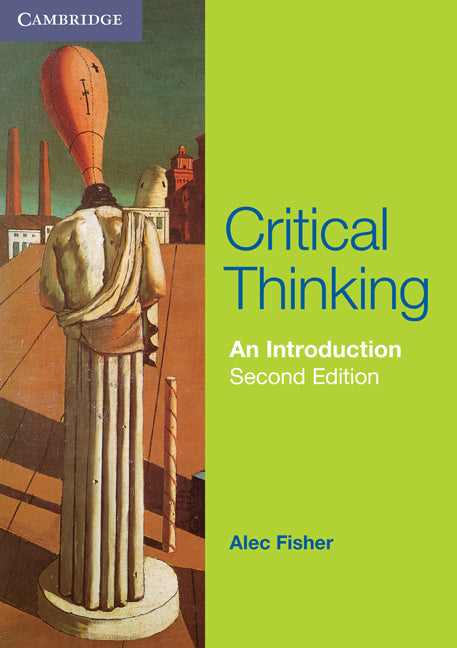
Critical Thinking 
2nd Ed. Cover


An original purpose of Hodges' model was to facilitate reflection, and so help to develop practitioners who were also competent reflective practitioners, and critical thinkers.

Continuing to clear books, I've arrived at:

Fisher, A. (2001) Critical Thinking: An Introduction. Cambridge University Press, Cambridge, England. PB. 

Now in a 2nd edition (2011), my copy has several definitions of 'critical thinking' quoted below, with my emphasis.

There is a pdf of this 1st edition online which may be useful. The reward of the book, however, is in the discussion about each definition and how more recent work has built upon Dewey's legacy.  There is also a baseball analogy, which I will return to soon, or append here. I have omitted a definition by Richard Paul, which is nonetheless important to me, as it draws on meta-cognitive qualities:
"1.1.1 John Dewey and 'reflective thinking' ...

In fact, people have been thinking about critical thinking and have been researching how to teach it for about a hundred years In a way, Socrates began this approach to learning over 2,000 years ago, but John Dewey, the American philosopher, psychologist and educator, is widely regarded as the 'father' of the modern critical thinking tradition. He called it 'reflective thinking' and defined it as: 
"Active, persistent, and careful consideration of a belief or supposed form of knowledge in the light of the grounds which support it and the further conclusions to which it tends. (Dewey, 1909, p. 9)."' p.2.
 'Glaser defined critical thinking as:
(1) an attitude of being disposed to consider in a thoughtful way problems and subjects that come within range of one's experience; (2) knowledge of the methods of logical enquiry and reasoning; and (3) some skill in applying those methods. Critical thinking calls for a persistent effort to examine any belief or supposed form of knowledge in the light of the evidence that supports it and the further conclusions to which it tends. (Glaser, 1941, p.5).' p.3.
1.1.3 Robert Ennis - a widely used definition ...
'Critical thinking is reasonable, reflective thinking that is focused on deciding what to believe or do. (Cf. Norris and Ennis, 1989).' p.4.
Notice the emphasis on being 'reasonable' and 'reflective', which picks up on earlier definitions, but notice also that Ennis speaks of 'deciding what to do', which was not explicitly mentioned earlier; so decision making is part of critical thinking in Ennis's conception. Unlike Dewey's definition, this definition needs no further explanation

A final definition of critical thinking 
One last definition is worth reviewing. Michael Scriven has recently argued that critical thinking is 'an academic competency akin to defines it thus: reading and writing' and is of similarly fundamental importance. He defines it thus:
'Critical thinking is skilled and active interpretation and evaluation of observations and communications, information and argumentation. (Fisher and Scriven, 1997, p. 21).' p.10."

Friday, November 29, 2024

'Domain-specific is wider than specific domain knowledge' Kalyuga (2013)

 'Developing learner ability to apply knowledge in relatively new situations is an important aim of learning and instruction, and many instructional programs and materials explicitly state this goal. However, not many of them demonstrate a consistency in achieving this goal using sufficiently well-specified instructional procedures and techniques. According to a popular view, transferable knowledge and skills in complex domains result from problem solving experiences (e.g. Inagaki and Miyake 2007). At the same time, there is evidence indicating the importance and effectiveness of explicit learning generalized theoretical frameworks and abstract conceptual knowledge for deep understanding of tasks and en hancing transfer capabilities (Karpov and Bransford 1995; Hinds et al. 2001). Gick and Holyoak (1983) convincingly demonstrated the value of the acquisition of abstract schémas as mediators of analogical transfer between very different task areas.'

'Many studies in expert problem solving have demonstrated that relying on highly contextualized domain-specific knowledge associated with concrete situations is the most effective way to solve problems in familiar task areas and that expert performance is largely based on the acquisition of organized domain-specific knowledge structures (schémas; Chi et al. 1982). ... For example, the game of chess has traditionally represented a classical example of expertise based on the acquisition of a huge amount of highly specific knowledge structures (chunks) corresponding to various concrete game situations (De Groot 1965; Chase and Simon 1973). However, more recent studies have indicated that experts use not only concrete chunks but also more general patterns, such as "templates" (Gobet and Simon 1998) or generalized chunks (Walczak and Fishwick 1997) representing typical classes of chess positions with substantial variations in concrete board locations. Based on his observations of the behaviour of rats in maze situations, Tolman (1948) was one of the first to discuss the role of broad vs. narrow cognitive constructs (cognitive maps) in both animal and human learning. 

Domain-specific knowledge that is applicable only to a limited range of tasks represents the most powerful tool for dealing with these tasks in terms of efficiency of achieving immediate results. On the other hand, knowledge that can be applied more broadly is likely to be less efficient for solving specific problems since it would require additional searching, reasoning, and elaborating activities, whilst specific knowledge directly leads to a definite solutions.' pp.1478-1479.

Kalyuga, S. (2013). Enhancing transfer by learning generalized domain knowledge structures. European Journal of Psychology of Education, 28(4), 1477–1493. http://www.jstor.org/stable/23580919

Tuesday, May 21, 2024

'Holistic pluralism'

Individual
|
      INTERPERSONAL    :     SCIENCES               
HUMANISTIC  --------------------------------------  MECHANISTIC      
 SOCIOLOGY  :    POLITICAL 
|
Group
Rational choice theory

Natural sciences

theoretical & methodological pluralism

functionalism


Social sciences - Humanities


policy


from Abstract:

"The theoretical and methodological pluralism that we suggest here, holistic pluralism, is one way to overcome incommensurability between the natural and the social sciences while avoiding functionalism, technological and environmental determinism, and over-reliance on rational choice theory." 

from Introduction:

"The fact that sustainability science is “dealing with interconnected problems” (Kauffman and Arico 2014:413) requires that researchers in the field take a comprehensive, integrated, and participatory approach to science and reality (Sala et al. 2013). This explicit ambition to integrate knowledge—across scales, sectors, and substance domains, and across the nature-society, science-society, and knowledge-action divides—implies that sustainability science must inherently live up to (at least) three things. It must build on several foundational disciplines and have the capacity for interdisciplinarity; it must embrace theoretical and methodological pluralism and have the capacity for reflexivity (Isgren et al. 2017); and it must integrate knowledge generated from engaging with different disciplines, theories, methods, and contexts, and thus aspire to transdisciplinarity. Rather than merging or unifying the actual disciplines or their theories and methods into integrated frameworks, we argue that pluralism is the best way forward for dealing with sustainability challenges, such as biodiversity loss, climate change, land use change, water scarcity, and ill health. In this article, we use ontological, epistemological, and theoretical reasoning to support our argument. The critical ambition is to provide the rationale for a new approach that has the potential to capture the best available knowledge on social and natural dimensions of sustainability; we call it social fields and natural systems. The problem-solving ambition is to describe the approach and illustrate it in two empirical examples. If successful, this will show how holistic pluralism is one possible way of integrating knowledge across the social and natural science divide."
Figure 2 Olsson, L., & Jerneck, A. (2018).

It may be useful to consider figure 2, using the domains of Hodges' model?

Note how in Hodges' model, as 'political ecology' seeks to interrogate the relationship between society and nature (the environment, the sciences): we see a diametric relation. Inevitably then, the political ecologist must also negotiate, interpret, seek the policy evidence from within; perhaps an output, a creation of citizens?

Olsson, L., & Jerneck, A. (2018). Social fields and natural systems: integrating knowledge about society and nature. Ecology and Society, 23(3). https://www.jstor.org/stable/26799148

Wednesday, January 24, 2024

Psycho-Philosophical Creativity - Csikszentmihalyi (1934-2021)

"Hungarian-American psychologist Mihaly Csikszentmihalyi (1934-2021) identified a type of highly focused mental state conducive to productivity and creativity. He called it the 'flow'. He described flow as "being completely involved in an activity for its own sake. The ego falls away. Time flies. Every action, movement, and thought follows inevitably from the previous one, like playing jazz. Your whole being is involved, and you're using your skills to the utmost." Csikszentmihalyi advanced a model odf creativity that stresses the importance of a 'specific domain' to make meaningful contributions within a culture - a time and place in history where many variables come together to form a situation where creativity can bloom. . . .

Csikszentmihalyi work focuses on creativity as a cultural phenomenon. It is useful, he says, to think about culture as systems of interrelated domains. He puts forward a model of creativity consisting of a domain, a field, and a person. The domain is the wider area of cultural application, whether that be sculpture, mathematics, reason or science. Inside the domain is the specific field; and inside the field is the person. Csikszentmihalyi outlines the creative person as having "a sense that one's skills are adequate to cope with the challenges at hand, in a goal directed, rule-bound action system" (Flow: The Psychology of Optimal Experience, 1990)." p.10.

 Individual
   |
      INTERPERSONAL    :     SCIENCES               
HUMANISTIC  --------------------------------------  MECHANISTIC      
 SOCIOLOGY  :   POLITICAL 
|
Group
person

domain

field

creativity

person

domain

field

creativity


domain

field

culture

creativity

domain

field

culture

creativity


Culture also extends to the psychological (mental life) and physical (sciences); person(s) are supported, it is hoped, by their society, and political structures and services.

'Domain(s) can be organised, designated and structured in other ways. This would include, the center of Hodges' model not necessarily being fixed.

There is a paper to be written on Hodges' model related to inter- multi- transdisciplinarity.

Jones, L., Plaiting Gravy, Philosophy Now. Creativity. December 2022 / January 2023: Issue 153. pp.9-11.

Wednesday, June 14, 2023

[ Towards . . .] A Geometry of Care*

Context -
"Introduction: We present a new model of skilled performance in geometry proof problem solving called the Diagram Configuration model (DC)." p.577.

INDIVIDUAL
|
INTERPERSONAL    :     SCIENCES               
HUMANISTIC --------------------------------------  MECHANISTIC      
SOCIOLOGY  :   POLITICAL 
|
GROUP
"A safe abstraction only ignores irrelevant details, i.e., details which only discriminate between objects that are functionally equivalent with respect to the problem solving task." p.582.

So much to consider here, I may be overstretching analogies but then Hodges' model can act as both a conceptual rack and resolver.


"For instance, to use the side-angle-side rule for inferring triangle congruence a problem solver must locate three congruence relationships - two between corresponding sides of the triangles and one between corresponding angles. In searching for a list of statements for these three relationships, one might need to consider numerous possible combinations of three statements that exist in the list. However, if these relationships are marked on a diagram, one can quickly identify them since the side-angle-side configuration comes together in each triangle at a single vertex. In other words, related information is often easier to find in a diagram because it is typically in the same locality whereas the same information may be separated in a in a list of statements. This is the locality feature of diagrams." p.584.


not just 'local' -


- but intra- interdomain -
with constant stress on safety.


Koedinger, K.R. & Anderson, J.R. (1995) Abstract Planning and Perceptual Chunks. In  Diagrammatic Reasoning: Cognitive and Computational Perspectives. Janice Glasgow, N Hari Narayanan, B. Chandrasekaran (Eds.). Massachusetts: AAAI PRESS / MIT Press. pp.577-625.

Book cover: https://dl.acm.org/doi/book/10.5555/546459

*There may be several? But -
"One of the places where the Geometry tutor expert (GTE) gets bogged down while attempting difficult problems is in the fruitless application of algebra inferences. Algebra expressions can be combined and manipulated in infinite variety and as a result, algebra inferences often lead problem solvers into black holes in the search space from which they may never return." (17.4.3 Avoiding Algebra in the Diagram Configuration Space),  p.593. 


Monday, November 21, 2022

MADE in the UK - SOLD to the World


MADE
 in the UK

SOLD to the World


Well, yes.
I'm certainly trying to 'sell' something to the World ...
but this thing - #h2cm is free ...


... it provides a means to listen, make, and see the world and each other, in ways that can help us all face and solve the problems of this century and those to follow - because there is more than hope in humanity
.


c/o GOV.UK Export Strategy


Images: 

https://www.adsgroup.org.uk/blog/made-in-the-uk-sold-to-the-world/

https://www.knightslowe.co.uk/made-in-the-uk-sold-to-the-world-how-will-britains-new-trading-strategy-boost-exports/

Previous posts:

'global'

'justice'

Sunday, July 03, 2022

New WHO Quality Toolkit - 'Take ii"


Further to last months post, I've worried at times about the axes of Hodges' model and their status and function. Can I let the axis stand for itself?

INDIVIDUAL
|
|
|
GROUP

Do I expand (explode) the conceptual labels?

self - INDIVIDUAL - person
|
|
|
relationship - family - GROUP - community - population

There seems to be an asymmetry, when you traverse the axis - and its horizontal counterpart; from wherever you start. Perhaps, I worry too much as if the axis was regular then the generic property of the model overall would be diminished. Is this an axis at all?

The website for the Quality Toolkit at: https://qualityhealthservices.who.int/quality-toolkit

- explains the toolkit's scope that includes:

"This new online resource is a user-friendly toolkit to support action on improving the quality of health services at every level of the health system, from national and district to facility and community levels."

I have only scratched the surface here and hope to revisit again - in more detail. Please see below for reflections on the levels by which the toolkit can support action to improve the quality of health services. I have tried to suggest proximity and distance between the SOCIOLOGICAL and POLITICAL (policy). Perhaps, what is a 'clinic' has a name, that it is known by - a key part of the community. The community is closer to the people - to the would-be users of the facility. You can appreciate(?) here the challenge of getting the local community involved in their services. What is 'NATIONAL' should not be remote. Can people compare and contrast with what they are offered? 
 
On the website I note there are video presentations also. The prospect of regular updates for the toolkit is also welcome.

INDIVIDUAL
|
 INTERPERSONAL    :     SCIENCES               
HUMANISTIC --------------------------------------  MECHANISTIC      
SOCIOLOGY  :   POLITICAL 
|
GROUP

psychological access

'My' clinic

Trust, I feel safe)

(feeling safe)

Tell others - my experience..


physical access

clinic

(appearance, facilities, safety)

controlled environment

(cleanliness, sterile..,
or more social)


'the centre'

COMMUNITY

DISTRICT

national


facility
(policy translation / coherence?)

community

district

NATIONAL


Original source: Jules Storr, Independent Consultant, S3 Global & working with WHO as part of the Quality Toolkit development team - via HIFA

Previously: New WHO Quality Toolkit

'Take II'? Quality means getting it right first time (even as you persist in what you are doing - your aspirations and quality improvement). Vitally, this means you, the team make a positive impression for the person, the individual, client .. carer, group. 

If they need to - they will recognise their own ability, knowledge, follow advice, they will come back, they leave not to return soon as they can now self-care and care for others in their home, community ...

 Please note: This post and that previous is not intended to denote endorsement of Hodges' model.


Thursday, June 23, 2022

New WHO Quality Toolkit


"On Monday 20 June WHO launched the Quality Toolkit - a new interactive, online resource for anyone at any level of the health system interested in improving the quality of health services.

The Quality Toolkit provides users with tools to facilitate specific actions to enhance the quality of health services. It is a companion resource to WHO Quality Health Services: a planning guide which provides an outline of key actions to be taken across the health system. The Toolkit then supports these actions with numerous tools. It also enhances understanding of the key interlinkages across the health system when implementing any tool.

The Toolkit incorporates key WHO-published tools and other materials related to quality of health services. It will be updated periodically to reflect new and emerging information relevant to improving quality of health services, including WHO technical products currently under development.

The Quality Toolkit is available at: https://qualityhealthservices.who.int/quality-toolkit

HIFA members are invited to navigate the Toolkit and consider how they might use the tools as part of their improvement efforts. WHO welcomes feedback on the Toolkit qualitytoolkit AT who.int "

Via - HIFA - https://www.hifa.org/

I - IDENTIFY tools and resources relevant to quality of care
M - MAP those tools against improvement needs or identify gaps
P - PLAN implementation of activities for improving quality of care
R - RECOGNIZE interlinkages between technical areas and the process of change
O - OPTIMIZE multi-level action
V - VISUALIZE journeys for improving quality of care
E - ENGAGE stakeholders across the health system


INDIVIDUAL
|
 INTERPERSONAL    :     SCIENCES               
HUMANISTIC --------------------------------------  MECHANISTIC      
SOCIOLOGY  :   POLITICAL 
|
GROUP

IDENTIFY (context)

PLAN^ (mental health)

RECOGNIZE*

needs

gaps


IDENTIFY (context)

MAP / VISUALIZE

PLAN^ (physical health)

OPTIMIZE

technical areas
gaps
needs


IDENTIFY (context)

ENGAGE

needs
gaps


IDENTIFY (context)

RECOGNIZE*

needs
gaps


Above rendering idealised and all embedded within spiritual and ethnocultural context.

*Recognition required politically to avoid individual frustration and facilitate (policy ...) coherence.

^Planning should (must) take into account need for parity of esteem between mental and physical health (with triage situations acknowledged).


Source: Jules Storr, Independent Consultant, S3 Global & working with WHO as part of the Quality Toolkit development team - via HIFA